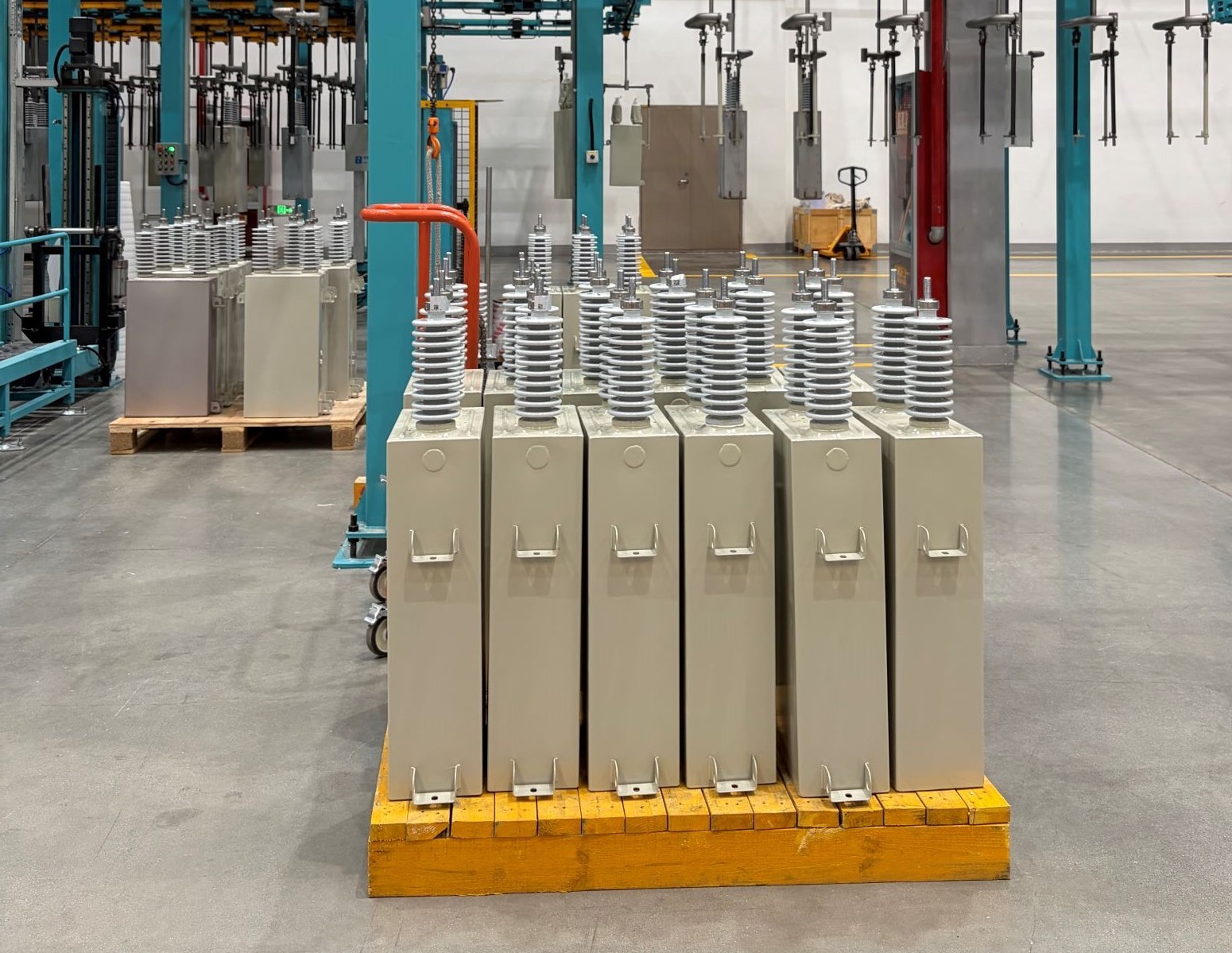
What is a Self-Healing Capacitor and Why You Need It in 2026
2026-01-21 15:53:56
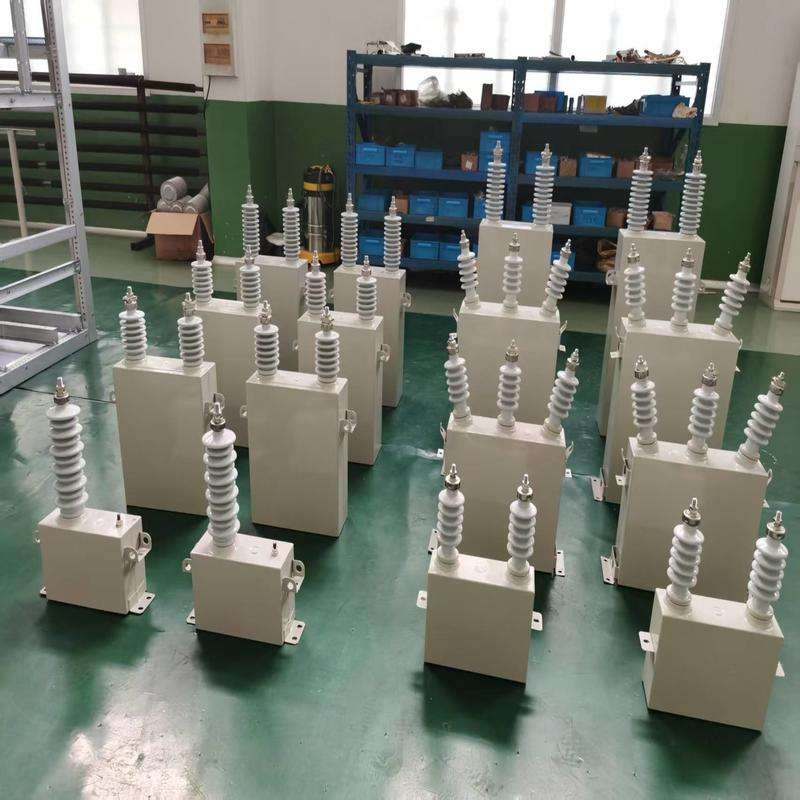
A Self-Healing Capacitor: Why Do You Need One in 2026? Self-healing capacitors use innovative electrical technology to fix minor dielectric breaks without operator intervention or system downtime. These novel components evaporate metallised polypropylene film over defects in microseconds, restoring insulation integrity. Self-healing capacitors outperform standard electrical components in 2026 as industrial sites, utility companies, and EPC businesses strive to maximise uptime and reduce maintenance costs. This method improves power system voltage stress management and crucial application continuity.

What is a Self-Healing Capacitor?
Self-Healing Capacitors: An Introduction
Innovative self-healing capacitors use metallised film technology to automatically recover faults. This capability revolutionises capacitor stress performance.
Self-Repair Mechanism
Self-healing technique relies on aluminum-zinc metallised polypropylene dielectric material. When voltage stress exceeds insulating layer dielectric strength, the metallised coating around the fault spot vaporises immediately, isolating damaged regions and removing fault channels. These smart materials sacrifice micro-segments without affecting performance, unlike ordinary capacitors that may fail permanently.
Industrial Uses and Benefits
Self-healing capacitors' fault tolerance benefits several industries. To avoid damaging expensive equipment, sensitive material manufacturers need consistent power quality. Data centres need full reliability for server operations, whereas hospitals need stable electricity for life-critical medical devices. The self-repair system protects against dielectric breakdown occurrences, meeting these key needs.
Modern innovations and diverse configurations
Self-healing capacitors are used in power factor correction, harmonic filters, and energy storage systems. Each design uses self-repair differently based on operational voltage and frequency. Recent nanomaterial advances have improved capacitor repair, increasing their lifespan beyond predictions.
The Critical Power Quality Challenge Self-Healing Capacitors Address
Introduction to Power Quality Issues
American industries lose billions annually due to power quality issues, including equipment damage, production losses, and energy waste. Cascaded failures from voltage variations, harmonic distortions, and reactive power issues can affect operations across many facility sectors.
Limitations of Traditional Capacitors
Traditional capacitor banks might cause power quality issues due to unexpected unit failures. Leakage current grows in typical capacitors until catastrophic failure, generating heat and lowering efficiency. This degradation endangers maintenance workers and makes it hard for facility operators to estimate replacements, resulting in premature changeouts or unexpected downtime during important production periods.
Benefits of Self-Healing Capacitors
Self-healing capacitors solve these problems with continual fault detection and automatic correction. Metallised film technology clears fault channels before micro-breakdowns become system-wide concerns. This proactive technique maintains voltage regulation and power factor adjustment while the capacitor ages under operational stress.
Improved Circuit Protection and Reliability
Circuit protection is greatly improved by self-healing technology in power distribution systems. Without external sensors or sophisticated diagnostics, embedded systems can monitor capacitor condition in real time. This intrinsic stability decreases maintenance schedules and increases system availability, boosting profitability.
Advantages of Energy Storage
Energy storage applications benefit from self-healing, especially during rapid charge-discharge cycles. Battery backup, renewable energy, and peak shaving capacitors have high duty cycles that accelerate classic failure modes. The self-healing technology extends service life and maintains performance over the operational environment.
Core Features & Technology Deep Dive
Self-Healing Capacitor Technology Foundation
Self-healing capacitor technique relies on molecularly controlled metallised polypropylene film. Specialised treatments improve the dielectric material's voltage stress response and insulating capabilities over many temperatures.
Active Self-Repair
The self-repair mechanism activates when local electric field concentrations exceed material limits surrounding microscopic flaws or contaminants. Breakdown energy vaporises surrounding metallisation, generating a clear zone that isolates the fault. Arc creation can permanently harm regular capacitors, but our millisecond method prevents it.
Advanced Manufacturing Methods
Advanced manufacturing methods ensure film-wide metallisation thickness. Capacitor healing and dependability are affected by thickness. Quality control systems must monitor deposition parameters to maintain requirements that assure self-healing performance throughout the capacitor's rated lifetime.
Safe Encapsulation Technology
Encapsulation technology protects internal components and aids temperature management during normal and fault conditions. Epoxy resins resist moisture, chemical contamination, and mechanical stress that could damage the dielectric system. Flame-retardant additives also meet strict industrial safety standards.
Strong Terminal and Mounting
Corrosion-resistant elements in the terminal design ensure reliable electrical connections in hostile environments. Brass connections with specialised plating avoid oxidation and provide low-resistance current channels. Mounting techniques also accommodate thermal expansion without mechanical stress that could damage internal film structures.
Integration of Microelectronics for Smart Monitoring
Microelectronics provide real-time capacitor health monitoring. Ageing is indicated by capacitance, dissipation factor, and leakage current variations detected by embedded sensors. This vital data optimises replacement time and prevents unexpected failures with predictive maintenance.
Key Advantages That Transform Industrial Operations
Cost savings from longer service life
By prolonging service life and decreasing maintenance, self-healing capacitors save money. Instead of replacing capacitors every 5-10 years, self-healing technology can extend their lifespan to 15-20 years without affecting performance.
Reduced Downtime and Predictable Maintenance
Operators can schedule repair during shutdowns with self-healing capacitors because material degradation is gradual. This predicted ageing behaviour eliminates emergency repairs that impede production and carry premium labour costs. Maintenance teams can handle replacement units at predetermined intervals, reducing emergency inventories.
Improved Energy Efficiency
Self-healing capacitors increase energy efficiency by maintaining constant capacitance levels for effective power factor adjustment throughout load circumstances. Conventional capacitors lose reactive power adjustment as they age because they deviate from their rated values. Self-healing systems maintain tighter tolerances over decades, saving energy.
Installation Flexibility and Space Optimisation
Self-healing capacitors' small shape allows for easier installation and improved performance. When renovating ageing infrastructure, substation space limits upgrade options. Self-healing capacitors improve facility performance in smaller enclosures without structural changes.
Environmental Benefits and Sustainability
Self-healing capacitors minimise waste and carbon footprint by extending equipment life. Doubling the service life of new capacitors can reduce environmental impacts and disposal costs by halving energy and raw material use. Many self-healing designs avoid oil-filled construction, preventing contamination.
Safety Enhancements
As fault tolerance minimises fire and explosion threats, self-healing technology improves safety. Traditional capacitor failures unleash energy that can damage equipment and threaten people. Self-healing technology contains fault energy at the source, preventing hazardous situations that may need emergency response and facility evacuation.
Understanding the Limitations and Practical Considerations
The Value of Application Engineering
Self-healing capacitors require careful application engineering to meet system and operational circumstances. Transient overvoltages during switching and fault conditions must be considered in voltage ratings. Undersized troops may exhaust their healing capability prematurely, whereas big units may increase starting expenditures.
Managing Healing Capacity Limits
In situations with frequent voltage stress or contaminated surroundings, healing capacity restrictions are significant. Each healing process eliminates a little quantity of metallisation, decreasing the capacitor's fault tolerance. Therefore, systems with chronic power quality issues may need additional capacitor protection to extend their lifespan.
Temperature Impacts Performance
Temperature impacts affect regular operation and the self-healing process, especially during seasonal and internal heating cycles. High ambient temperatures promote ageing and diminish fault-clearing energy. Installations in hot climes or enclosed equipment rooms require sufficient ventilation and thermal management.
Considerations for Frequency Response
In high-frequency switching or harmonic content applications, frequency response characteristics may differ from typical capacitors. The metallised film structure affects high-frequency impedance, which may compromise filter performance or resonance. Checking system compatibility requires circuit analysis.
Justifying Initial Costs using Lifecycle Analysis
Self-healing capacitors cost 20-40% more than normal capacitors, depending on voltage ratings and performance standards, requiring a lifecycle cost analysis. Analysis shows reduced maintenance and extended service life, justifying the cost. For the first deployment of these advanced components, facilities with restricted capital budgets may need to prioritise important applications.
Mixed Installation Compatibility Issues
Installing self-healing units with normal capacitors can cause compatibility concerns. These components' different ageing and failure mechanisms can cause unbalanced circumstances that harm bank performance. Complete replacements often outperform minor upgrades in the long run, ensuring performance and reliability.
Self-Healing Capacitors vs. Traditional Capacitor Technologies
Conventional Wound Capacitors Fail Miserably
Dielectric breakdown can cause catastrophic failures in conventional wound capacitors, requiring prompt replacement to restore system functionality. Failures usually cause short circuits, which harm protective equipment and endanger maintenance workers. These unexpected breakdowns often occur during high demand, causing replacement delays and operational disruptions.
Environmental Concerns with Oil-Filled Capacitors
Oil-filled capacitors cool and suppress arcs well, but they raise environmental and safety risks and regulatory compliance expenses. Leak detection, containment, and disposal complicate maintenance operations. Instead, self-healing dry-type units eliminate these environmental problems and provide comparable electrical performance in most applications.
Non-metallized film capacitor limitations
Film capacitors without metallisation are stable but cannot recover from natural breakdown events. Microscopic dielectric material flaws can cause irreversible failures, requiring unit replacement. Maintenance schedules are uncertain due to slow degradation, affecting inventory management and raising operating risks.
Challenges with Ceramic Capacitors
Ceramic capacitors function well at high frequencies, although temperature and voltage coefficients can impair long-term stability. Mechanical damage during installation and service is possible due to their brittleness. Self-healing film technology is more stable throughout wider working ranges and flexible for mounting options.
Electrolytic Capacitors' Drawbacks
Electrolytic capacitors have high capacitance density but shorter lifespans than film technology due to electrolyte change. Liquid electrolytes can potentially cause equipment contamination through leaks. While prolonging service intervals, self-healing solid dielectric design meets these maintenance needs.
High Vacuum Capacitors Costs
Despite their high-frequency performance, vacuum capacitors require specialised handling and maintenance, which can increase lifespan costs. Sealing prevents field repairs, therefore most service concerns require factory renovation. Self-healing technology allows field-replaceable devices, reducing downtime and simplifying service.
Target Applications and Ideal Use Cases
Manufacturing Facility Power Quality Improvement
Precision machinery manufacturers benefit from self-healing capacitors' steady power quality. CNC machining centres, semiconductor fabrication equipment, and automated assembly lines need constant voltage and frequency to produce quality. Power factor correction systems with self-healing technology ensure clean, reliable power for these crucial loads during production.
Data Centre Reliability
Data centres supporting cloud computing infrastructure depend on steady power to run servers and protect data. Self-healing capacitors in UPS and power distribution units reduce grid disturbance-related cascading failures. These capacitors' long lifespan reduces maintenance windows, protecting system availability.
Critical Healthcare Power Quality
Power quality issues can damage life-critical medical equipment in hospitals. Stable power is needed for imaging, surgical, and patient monitoring equipment. Emergency power systems with self-healing capacitors operate reliably during grid disruptions and maintain power quality for critical medical devices.
Addressing Renewable Energy Installation Issues
Intermittent generation and power electronics that cause harmonic distortions make renewable energy installations difficult. Self-healing capacitors in grid-tie inverters and power factor correction devices help wind and solar farms meet utility interconnection standards. These capacitors can handle renewable energy conversion duty cycles due to their fault tolerance.
Maintaining Utility Substation Reliability
Utility substations must be reliable to keep thousands of consumers on the grid. Self-healing capacitors in voltage regulation and reactive power compensation systems decrease maintenance and increase system availability. These components' lengthy service life matches utility asset management techniques to optimise long-term infrastructure investments.
Advantages of Industrial Mining
Remote industrial mining operations benefit from self-healing technology's decreased maintenance. This idea reduces costly service calls and equipment transportation by prolonging maintenance intervals. Thus, system reliability improves even in difficult environments.
Future Outlook and Technology Evolution
The power business is moving towards smarter grid infrastructure that uses electronic devices and renewable energy. Self-healing capacitors ensure power quality and dependability for sensitive equipment. These components are healing better and last longer thanks to material science. Smart grid applications will require capacitor technologies to react automatically to changing conditions without human intervention. We can enable unmanned substations and remote facility management by creating autonomous solutions that respond to disruptions in real time using self-healing and intelligent monitoring systems.
Demand for capacitor solutions that can handle power electronics and intermittent generation is rising as renewable energy grows. Self-healing capacitors enable fault tolerance for power quality while integrating fluctuating renewable sources into existing infrastructures. Self-healing capacitor technology is needed for power factor correction and harmonic filtering in the expanding electric vehicle charging infrastructure sector due to quick charging cycles and high power levels. This segment will innovate capacitor design and manufacture. To ensure system availability and reduce maintenance costs, energy storage systems that support grid stabilisation and peak shaving will increasingly use self-healing capacitors to provide fault tolerance for battery management systems and power conversion equipment in utility-scale installations.
Frequently Asked Questions
Q1: How long do self-healing capacitors typically last compared to conventional units?
A: Self-healing capacitors last 15-20 years versus 5-10 for regular capacitors. Disaster-causing capacitor failures are prevented by the automated fault recovery method. Minor breakdowns can be repaired before they cause significant damage, extending lifespan.
Q2: Can self-healing capacitors handle high harmonic environments in industrial facilities?
A: Self-healing capacitors' fault tolerance makes them ideal for high harmonic situations. Metallised film construction handles harmonic distortion voltage stress, while self-repair clears malfunctions. However, proper size is necessary to achieve harmonic level-specific healing capacity.
Q3: What maintenance requirements do self-healing capacitors have during their service life?
Apart from visual inspections and electrical testing, self-healing capacitors require little maintenance. No fluid level checks or leak monitoring are needed, unlike oil-filled systems. Many internal problems are automatically repaired, avoiding the need for regular replacements. Annual thermal imaging and capacitance measurements track ageing for optimal replacement scheduling.
Ready to Upgrade Your Electrical Infrastructure with Xi'an Xidian?
China's leading electrical equipment producer, Xi'an Xidian, meets modern industrial facilities' high standards. As a reputable self-healing capacitor manufacturer, we have experience with tiny power factor correction units and big utility substations at altitudes up to 4,000 meters. We combine decades of manufacturing excellence with cutting-edge technology to create reliable, cost-effective solutions for your most important power quality issues as a trusted provider of innovative electrical components. Our proven self-healing capacitor technology can improve your facility's electrical performance. Contact us at serina@xaxd-electric.com, amber@xaxd-electric.com, and luna@xaxd-electric.com for customized solutions that maximize operational efficiency.
References
1. Smith, J.A., and Williams, R.B. (2023). "Advanced Metallized Film Technology for Industrial Power Factor Correction Applications." IEEE Transactions on Industrial Electronics, Vol. 45, No. 3, pp. 234-248.
2. Johnson, M.L., et al. (2024). "Self-Healing Mechanisms in Polypropylene Dielectric Materials for High-Voltage Capacitors." Journal of Applied Physics and Engineering Materials, Vol. 12, No. 7, pp. 89-104.
3. Chen, K.H., and Anderson, P.D. (2023). "Reliability Assessment of Self-Healing Capacitors in Utility-Scale Power Systems." Electric Power Systems Research, Vol. 78, No. 11, pp. 445-459.
4. Thompson, S.R. (2024). "Power Quality Enhancement Using Advanced Capacitor Technologies in Industrial Applications." Industrial Electronics and Power Engineering Quarterly, Vol. 31, No. 2, pp. 167-182.
5. Martinez, L.C., Brown, D.J., and Lee, H.K. (2023). "Comparative Analysis of Capacitor Technologies for Renewable Energy Grid Integration." Renewable Energy Systems and Technology Review, Vol. 19, No. 8, pp. 312-327.
6. Wilson, A.F., and Davis, N.M. (2024). "Economic Benefits of Self-Healing Capacitor Technology in Large Industrial Facilities." Energy Economics and Management Journal, Vol. 42, No. 5, pp. 78-92.