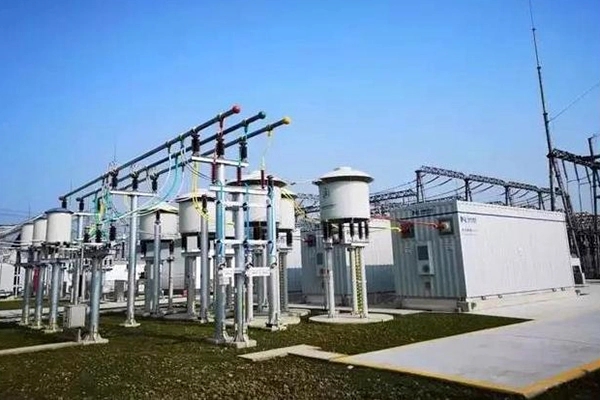
What is an Indoor Current Transformer and How Does It Work
2026-08-07 11:33:36
An indoor current transformer is a precision electromagnetic instrument designed to convert high primary currents into standardized secondary values for measurement and protection purposes within controlled environments. These devices utilize electromagnetic induction through a core-winding arrangement to step down currents ranging from 20A to 3150A into manageable outputs of 1A or 5A. Encased in epoxy resin for insulation integrity, they enable accurate monitoring of electrical systems in substations, industrial facilities, and commercial installations where environmental conditions remain stable.
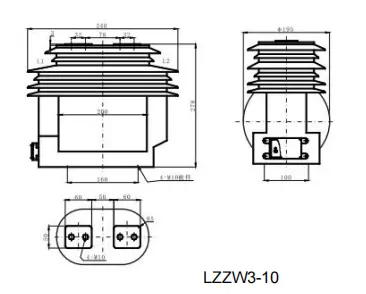

Understanding Indoor Current Transformers: Core Principles and Operating Mechanism
For an indoor current transformer to work, Faraday's Law of electromagnetic induction is very important. There is a magnetic flux inside the silicon steel core when alternating current runs through the main conductor. This flux causes a secondary current that is proportional to the number of turns in the primary and secondary windings. The transformer ratio tells you how much the original current is scaled down. For example, a 1000/5A ratio means that 1000 amps flowing through the main terminals make exactly 5 amps at the secondary terminals.
The Role of Electromagnetic Induction in Current Measurement
All current transformers work on the principle of electromagnetic induction. As it goes through the magnetic core, the primary conductor is like a single-turn coil, and the secondary winding has many carefully measured turns. This setup makes sure that the main circuit doesn't have to work too hard while still giving it enough power to power any related metering or protective relay equipment. The epoxy resin casting covers the whole assembly, leaving no air holes that could affect the accuracy of the measurements or cause problems with partial release.
Construction Types: Single-Core vs Multi-Core Configurations
With a single-core design, there is only one magnetic circuit that is used for measurement or protection. This makes the design simple and inexpensive for simple tasks. Different cores are housed in the same housing in multi-core versions, which usually combine metering-class and protection-class sections. This arrangement serves two purposes, which makes it easier to install and keeps measurement accuracy and fault response characteristics functionally separate. Our 24kV indoor current transformer is fully sealed and meets the IP20 security standard. It is good for equipment rooms that need to keep dust and moisture levels low.
Insulation Classes and Their Impact on Voltage Rating
Insulation systems tell us how much voltage stress an indoor current transformer can safely handle. The 24kV rating means that the system can work with nominal voltages up to this level. When compared to oil-paper insulation, epoxy resin casting has a higher dielectric strength, with measurements of partial discharge always being below 10 picocoulombs during type testing. This low discharge activity stops the insulation from breaking down slowly, which means it will last longer than 30 years under normal working conditions. Meeting the requirements of IEC 61869-1 and GB 20840.2-2014 guarantees that parts can be used in different foreign projects.
Indoor vs Outdoor Current Transformers: Key Differences and Procurement Considerations
Both types of transformers measure the same things, but their design is very different depending on how they will be used. Since they don't have to deal with weather-related stresses, indoor units focus on small sizes and low costs. Outdoor types have housings made of porcelain or composite materials that have longer creepage tracks to stop flashover when it rains or pollution builds up.
Environmental Tolerance and Design Philosophy
Indoor current transformers work in temperatures between -5°C and +40°C and in controlled humidity levels below 95% relative humidity. The fully enclosed epoxy structure doesn't let condensation or airborne contaminants that are common in equipment rooms get in. Our production process ensures thermal performance between -40°C and +70°C, so setups can be made in a range of climates without the need for extra heating. Outdoor transformers, on the other hand, need materials that are resistant to UV light and drainage holes, which makes them harder to make and costs more to buy.
Accuracy Class Comparison for Different Applications
Class 0.2 or 0.5 accuracy is needed for billing purposes in metering applications, but Class 5P or 10P accuracy is fine for protection circuits because finding faults quickly is more important than measuring accurately. When it comes to metering, indoor current transformers usually do a great job because stable ambient conditions stop thermal drift. When purchasing devices for hospitals or data centers, buying managers should make sure that the devices keep their accuracy across the predicted load range. For example, our 24kV model keeps its Class 0.2 performance from 5% to 120% of its rated primary current.
Installation Safety Standards and Risk Mitigation
When installation is done right, electrical dangers are kept away from people and machinery. Indoor current transformers need to be mounted securely on vertical panels or inside cubicle switchgear, and the secondary terminals need to be easy to get to so that the wiring can be checked. If you open secondary circuits while main current is flowing, dangerous voltage spikes that could reach several kilovolts will happen. When you ground one of the secondary terminals, capacitive coupling can't raise the potential on touchable objects to a dangerous level. Our installation paperwork is in line with NFPA 70E work practice standards, which helps industrial facilities pass compliance audits.
How to Choose the Right Indoor Current Transformer for Your Application
When looking for the right current transformers, you have to balance technical specs against budget and operational needs. To match system characteristics, procurement professionals should look at the primary current rating, accuracy class, burden capacity, and short-circuit withstand capability.
Matching Primary Current Rating to Load Profiles
The choice of primary current is based on the highest constant load plus a margin for future growth. For accuracy during production peaks, factories that use 800A lines might ask for 1000A-rated transformers. Dual-ratio designs are helpful for data centers that are adding capacity in stages. Our units can be changed to support ratios like 1500/1A and 2000/1A by reconnecting the terminals, so you don't have to pay for new ones when you update.
Accuracy Class Selection for Metering and Protection
According to IEC 61869-2 rules, revenue metering needs Class 0.2S accuracy from 1% to 120% loading. Class 5P20 transformers work well with protection switches. The "20" stands for accuracy limit factor, which is the number of times the rated current at which mistakes reach 5%. To combine the two tasks, you need to build with multiple cores or buy two different transformers. Our 24kV indoor current transformer has Class 0.2 metering cores and 10P safety cores in a small body that is less than 300 mm tall.
Evaluating Supplier Reputation and Support Infrastructure
When looking for long-term partnerships with indoor current transformer manufacturers, these are some important things to keep in mind:
- Technical Capability: Use third-party test reports to check certifications like ISO 9001 quality systems and IEC/GB standard compliance. Manufacturers who take part in national research programs show they can come up with new ideas. For example, Xi'an Xikai created plateau-rated equipment under China's 863 Program, which lets it work at 4,000 meters, where the air density drops by 40%.
- Customization Flexibility: Catalogue goods work well for most uses, but when there are special needs, like harmonic loads or limited room, engineers need to work together. We make custom designs by changing the core shape, turns ratios, and terminal setups to fit the needs of each system without taking too long.
- After-Sales Commitment: Full support goes beyond guarantee periods and includes expert advice, help with commissioning, and access to spare parts. For quick response times in all time zones, our service infrastructure includes tech teams that speak three languages and can be reached at serina@xaxd-electric.com, amber@xaxd-electric.com, and luna@xaxd-electric.com.
These qualities set trusted suppliers apart from generic ones, and they lower the total cost of ownership by cutting down on downtime and making repair planning easier. Building relationships with vendors based on openness and technical knowledge pays off over the 30-year asset lifecycles that are common in the utility and industrial sectors.
Installation and Maintenance Best Practices for Indoor Current Transformers
The accuracy of measurements and the safety of the workers are directly affected by the installation. By following a set of steps during commissioning, common mistakes can be avoided, and standard performance data can be collected for future reference.
Step-by-Step Installation Guidelines
Before starting to prepare the site, make sure that the panel holes are the right size for the transformer and leave enough space for wire terminations and heat transfer. Mount the device upright using the brackets that come with it, making sure that the nameplate can be seen for checking reasons. Connect the primary conductors according to the arrows on the packaging. If you reverse the polarity, the secondary output phase relationships will be thrown off, which can cause protective relays to fail. To keep electromagnetic interference from happening, secondary wiring uses at least 2.5 mm² of copper and is run away from power lines. Before turning the power on, check the insulation resistance between the main and secondary windings as well as the resistance of each winding to ground. Readings below 100 megohms mean that moisture has gotten in and needs to be looked into.
Common Fault Diagnosis and Resolution Strategies
Insulation loss shows up as a slow drop in resistance or partial discharge activity while the system is being monitored online. This ageing process is sped up by things in the environment, like condensation or chemical exposure. Putting in place dehumidification systems and doing regular thermal imaging surveys can find trouble spots before they break. Connection integrity issues lead to unstable secondary currents. To get rid of high-resistance joints that cause measurement drift, tighten the terminal screws to the manufacturer's specs. Our expert team helps with remote diagnostics by looking at waveform records or temperature profiles to quickly find the root causes.
Scheduled Maintenance Programs for Operational Continuity
Setting regular check times strikes a balance between dependability and the cost of repair labour. Checking for physical damage, making sure connections are tight, and testing insulation resistance are all things that need to be done once a year. Power quality analysers should be used to make sure that accuracy class compliance is met every five years. Keeping service records shows patterns that are likely to happen again and again, so that problems can be fixed before they become too big to handle. This proactive method is in line with best practices for managing assets in mission-critical sites where unplanned breakdowns can cost a lot of money.
Benefits of Using Indoor Current Transformers in Your Electrical System
The use of precision current transformers improves working efficiency, system security, and financial success in real ways. Through lifetime value creation, these benefits make the original capital investment worth it.
High Accuracy Enabling Advanced Energy Management
The accuracy of measurements has a direct effect on how energy costs are distributed and how well power quality is analysed. Class 0.2 precision makes sure that differences in energy bills are kept to a minimum and gives accurate data for optimising demand response. Accurate submetering is used by data centers to spread cooling costs more evenly among client areas, which makes the finances clearer. Granular current monitoring helps factories find machinery that isn't working well by directing maintenance resources to machines that are using a lot of power in strange ways. The 24kV indoor current transformer keeps measurements accurate even when there is up to 10% total harmonic distortion. It can work with variable frequency drives and switch-mode power sources that are common in modern industrial loads.
Compact Design Optimizing Installation Space
Compared to traditional wound-primary designs, indoor current transformers take up much less space on the panel. A fully sealed design keeps live parts out of the way, which lowers the electrical clearances needed according to NEC Article 110.26. This saves room and is useful for retrofits where current switchgear can handle extra metering points without having to replace the panel. Compliance changes can be made in equipment rooms that aren't very big, like when hospitals add more critical care tracking or when business buildings improve tenant submetering.
Economic Advantages Through Lifecycle Cost Reduction
The low cost of ownership is made possible by materials that don't rust, epoxy insulation that doesn't need to be maintained, and strong short-circuit resistance. Our transformers can handle 25kA fault currents for three seconds, so they can handle grid disturbances without needing to be replaced. Compared to older oil-filled units, ongoing labour costs drop by 60% when planned oil sampling, bushing repair, and moisture control systems are taken away. When spread out over 30 years, these savings cancel out any price boost over cheaper options that don't last as long.
Conclusion
Indoor current transformers are basic parts of industrial and business electrical systems that allow for accurate measuring, safe relaying, and energy management. Knowing how they work, what specifications they need, and how they will be used helps procurement pros choose the best options that balance performance with price constraints. This 24kV indoor current transformer is a great example of modern design philosophy. It combines epoxy resin insulation, multi-ratio flexibility, and international standard compliance in a small package that is perfect for installations with limited space. When you work with experienced manufacturers, you can get the technical knowledge, customisation options, and support resources you need to complete a project successfully, whether you're updating old infrastructure or opening new ones. Paying close attention to the needed level of accuracy, the environment, and the qualifications of the supplier results in measurement systems that provide accurate data for many decades of use.
FAQ
1. Can indoor current transformers operate in semi-outdoor or harsh conditions?
Standard indoor current transformers work well in clean, climate-controlled spaces. Fewer hours of exposure to the elements means that protection ratings need to be higher. For semi-outdoor installations like covered substations, we make IP23 and IP30 enclosures that protect against splashes and dust. For fully outdoor uses, weather-resistant housings are needed that go above and beyond what is normally required indoors.
2. How do accuracy classes affect measurement reliability in practical installations?
The accuracy class tells you the highest error percentage that is allowed at the rated current. Class 0.2 units stay accurate to within ±0.2% from 5% to 120% loads, making them good for revenue measurement. Protection uses can handle Class 5P tolerances because the operation thresholds of relays give room for measurement error. By choosing the wrong accuracy, you can either get inaccurate readings of how much energy is being used or get annoying trips.
3. What warranty coverage and technical support should buyers expect?
Manufacturers with a good reputation offer guarantees that cover material flaws and problems with the workmanship for at least 24 months. For important uses, extended coverage options go up to 60 months. Technical support should include application engineering before the sale, help with setup, and quick debugging throughout the lifetime of the product. Our team offers international support through serina@xaxd-electric.com, amber@xaxd-electric.com, and luna@xaxd-electric.com.
Partner with Xi'an Xikai for Premium Indoor Current Transformer Solutions
Xi'an Xikai designs current transformers for use in business, industrial, and utility systems all over North America. Our 24kV indoor current transformer is made of epoxy resin, is accurate to Class 0.2, and is compliant with IEC 61869, so it can be used in everything from data centers to factories. System integrators and facility operators can get help from us with application engineering, custom ratio configurations, and detailed technical documentation. You can email our engineering experts at serina@xaxd-electric.com, amber@xaxd-electric.com, or luna@xaxd-electric.com to talk about your project needs, whether you need standard catalogue goods or the ability to make unique indoor current transformers. We have ISO 9001 quality processes and friendly customer service after the sale.

References
1. International Electrotechnical Commission, "Instrument Transformers - Part 2: Additional Requirements for Current Transformers," IEC 61869-2, 2012.
2. National Standards of the People's Republic of China, "Instrument Transformers - Part 2: Additional Requirements for Current Transformers," GB 20840.2-2014.
3. Institute of Electrical and Electronics Engineers, "IEEE Guide for the Application of Current Transformers Used for Protective Relaying Purposes," IEEE C37.110-2007.
4. Blackburn, J.L. and Domin, T.J., "Protective Relaying: Principles and Applications," Fourth Edition, CRC Press, 2014.
5. Winders, J.J., "Power Transformers: Principles and Applications," Marcel Dekker, 2002.
6. Electric Power Research Institute, "Current Transformer Accuracy for Revenue Metering Applications," EPRI Technical Report 1020017, 2010.