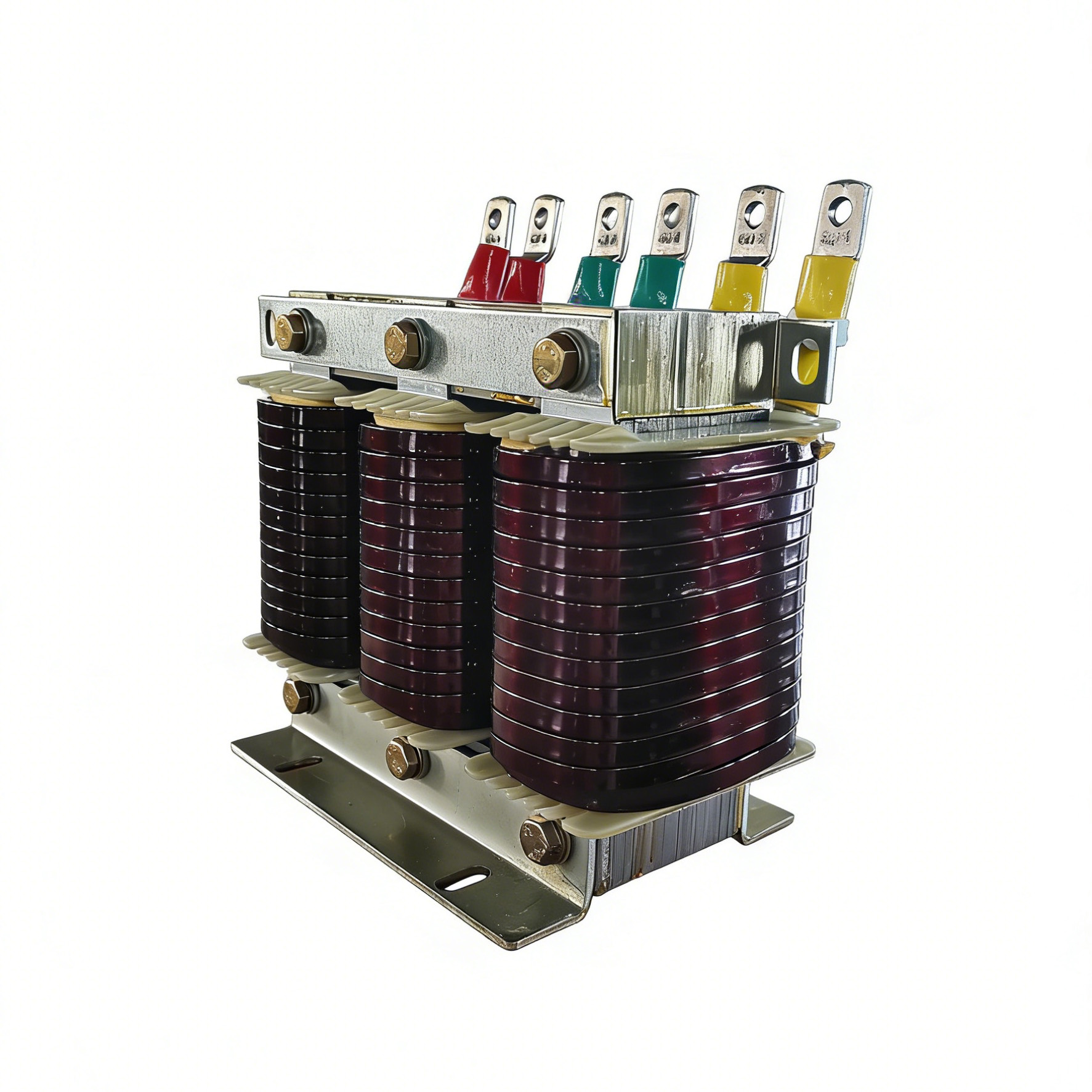
Voltage Transformer and its Application Explained
2026-08-07 11:33:37
A voltage transformer serves as a critical instrument for stepping down high voltage levels to measurable, safe values—enabling accurate metering, protection relay coordination, and system monitoring across industrial grids. Also known as potential transformers (PT), these devices convert primary voltages ranging from 3kV to 765kV into standardized secondary outputs, typically 110V or 120V, through electromagnetic induction. Understanding their operational principles, application contexts, and selection criteria empowers procurement managers and facility engineers to safeguard equipment, reduce energy waste, and maintain compliance with standards like IEC 61869 and IEEE C57.13. This comprehensive guide walks you through everything from fundamental working mechanisms to procurement strategies, equipping you with actionable insights for specifying and sourcing the right solution for substations, data centers, manufacturing plants, and utility networks.
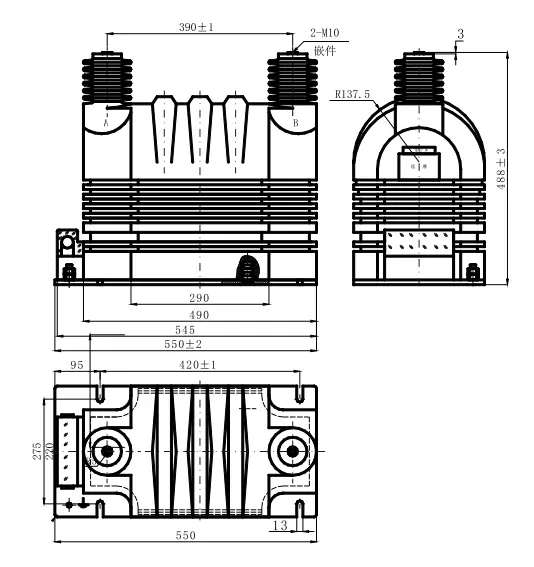

Understanding Voltage Transformers: Principles and Types
Core Operating Principle
Faraday's law of electromagnetic induction tells us how voltage transformers work. An alternating current flows through the primary winding and creates a magnetic flux in the core, which is made of laminated silicon steel. This flux causes a voltage in the secondary coil that is related to the number of turns. In contrast to power transformers, these units only deal with small amounts of power (30VA to 200VA), putting accuracy ahead of energy transfer. The design keeps phase shifts to a minimum (often less than 30 minutes) to ensure accuracy in applications like income tracking and protective relays.
Electromagnetic vs. Electronic Variants
Medium-voltage (3kV–36kV) systems mostly use traditional electromagnetic models because they are reliable and cost-effective. These units are sealed with epoxy resin, which provides IP67 protection against dust and moisture getting in. Ultra-high-voltage transmission systems (110kV) that have to deal with size and weight issues can use electronic alternatives that use optical sensors or capacitive dividers. But electromagnetic designs are still the best choice for substations in factories, hospitals, and business buildings because they offer better transient reaction and don't need an outside power source.
Phase Configurations and Voltage Classes
Single-phase units check the voltage from the line to ground, while three-phase units check the voltage from the line to the line in balanced three-wire or four-wire systems. There are different types of voltage, from 3.3kV for distribution feeders to 35kV for primary substations. The letters in a common model name, like JDZX8-24W, stand for different things: J (voltage transformer), D (single-phase), Z (cast insulation), X (residual voltage winding for ground fault detection), 8 (design series), 24 (24kV voltage class), and W (outdoor-rated). Knowing these names makes it easier to talk about specifications with suppliers and makes sure that the new equipment will work with the old switchgear.
Applications and Use Cases of Voltage Transformers in Industry
Metering and Revenue Billing
At grid interconnection points, utility companies put these instruments in place to measure energy use with an accuracy class of ±0.2%. This meets regulatory requirements for commercial billing. In data centers, voltage transformers work with digital meters to keep track of power usage effectiveness (PUE). This lets managers find the best cooling loads and get better demand charges. Our 24kV indoor model has a secondary output range of 30/80/200VA, which means it can handle multiple metering circuits at the same time without losing accuracy. This is an important thing to think about for facilities that need to handle both revenue metering and internal submetering tasks.
Protective Relaying and Fault Detection
These things are used in factories to send voltage messages to overcurrent switches, distance protection schemes, and differential protection systems. When there is a phase-to-ground fault, the residual voltage winding finds zero-sequence voltages. This causes separation to happen before the damage to the equipment gets worse. IEC 61869-2 says that modern epoxy-cast designs can handle impulse voltages of up to 105kV, which means they can keep working even when lightning strikes or switching surges happen. This toughness is very useful in places like steel mills and petroleum plants where unexpected shutdowns cost more than $50,000 per hour.
Renewable Energy Integration
Potential transformers keep power factor and harmonic distortion limits (THD <5%) in solar farms and wind parks by synchronizing inverter outputs with grid voltage. Our 24kV units can work with both 50Hz and 60Hz frequencies, so they can meet the needs of international projects in Asia, Europe, and the Americas. The new electromagnetic design cuts core losses by 30% compared to older models. This meets ISO 50001 standards for energy management and lowers the amount of extra power used in substations.
Commercial Building Automation
These transformers are connected to building management systems (BMS) in hospitals and large office buildings so that voltage levels can be checked in real time. When the supply voltage changes more than ±10%, backup generators are turned on by automated transfer switches. This keeps sensitive MRI equipment and server racks safe. The small size, made possible by vacuum-cast resin construction, makes upgrading in electrical rooms with limited space possible without having to make major changes to the infrastructure.
How to Choose the Best Voltage Transformer for Your Needs
Voltage Level and Phase Configuration
By matching the primary voltage rating to the nominal voltage of your system, you can avoid overstressing the insulation and getting inaccurate readings. It is safe for a 24kV voltage transformer unit to work on 20.8kV lines with a 15% overvoltage margin, which can handle short-term voltage spikes during load rejection. Single-phase models are good for tracking the power in homes, while three-phase assemblies are better for industry substations that need to do full phasor analysis. Check to see if your application needs an open-delta configuration for measuring lines or a wye-connected grounded neutral for protecting against ground faults.
Accuracy Class and Burden Requirements
For revenue metering, you need a 0.2 accuracy class (ratio error ≤0.2%), but for safe sharing, you can use a 0.5 or 3P class. To find the linked load, add up the impedances of the meter, relay, and wiring, which are given in volt-amperes. You can choose between 30VA, 80VA, or 200VA ratings on our 24kV indoor transformer. It can support multiple protection zones without overloading the core. By increasing the burden rating by 20%, you can plan for future circuit additions and avoid having to pay for replacements too soon.
Environmental Considerations and Certifications
For dust to stay out, indoor units need to have at least IP40 protection. Outdoor units, on the other hand, need to have IP65 ratings and UV-resistant silicone rubber insulators to be able to handle temperature changes from -40°C to +55°C. Coastal sites need longer creepage distances to stop flashovers from salt fog. Suppliers with IEC 61869-1/2, IEEE C57.13, and GB 20840.2-2014 certifications should be given priority. This will ensure global interoperability. Every unit we make goes through 100% routine testing, which includes partial discharge verification (<10pC). This keeps infant mortality failures from getting in the way of launch plans.
When normal catalogue ratios don't meet project requirements, it's helpful to choose a maker that can make changes. We often change secondary voltages (for example, 24kV/120V instead of 24kV/110V) and add surge safety varistors to places where lightning is common. You can tell the difference between transactional sellers and trusted partners by looking at supplier wait times, regional warehouse availability, and how quickly technical support responds. Long buying cycles can slow down projects, but our three-week response time for large orders and localized service teams in Asia, Europe, and the Americas keep them on schedule.
Maintenance, Testing, and Troubleshooting of Voltage Transformers
Routine Inspection Protocols
Visual inspections every three months find early signs of wear and tear: look for oil seepage in bushing seals, cracks in porcelain insulators, and make sure the integrity of the grounding wire. Voltage transformer hotspots, which usually show up as 10°C to 15°C temperature differences above ambient, are found during thermal imaging scans. They are signs of internal winding flaws or loose connections. Tracking tracks can't form on epoxy surfaces if the area around the enclosure stays clean. This is especially important in dusty cement or mine settings.
Diagnostic Testing Methods
The accuracy of the winding ratio is checked by comparing the recorded secondary voltage to the estimated numbers. A deviation of ±0.5% is considered appropriate. Using a 5kV megohmmeter to measure insulation resistance checks the integrity of the dielectric; readings below 5000 MΩ need more research. Before putting the equipment back into service after repair, power frequency withstand tests (55kV for one minute on 24kV types) make sure there is enough insulation. Impulse voltage tests act like lightning hits to make sure the gadget can handle 105kV BIL (basic impulse level).
Common Faults and Troubleshooting
Ratio mistakes that are bigger than the nameplate limits are usually caused by shorted turns that happen when insulation breaks down. Winding resistance tests can show this. People can get electrocuted when there are secondary open circuits because of loose wire connections. These circuits create dangerously high voltages. This risk can be reduced by adding shorting links and secondary fuse protection during maintenance work. Ultrasonic monitors or dissolved gas analysis can show that there is partial discharge activity, which means that the insulator is about to fail. We use vacuum casting methods to get rid of any internal gaps. This lets us get partial discharge levels below 10 picocoulombs, which means that the products can be used for more than 30 years in most industry settings.
Procurement Guide: Buying Voltage Transformers for Your Business
Sourcing Channels and Supplier Evaluation
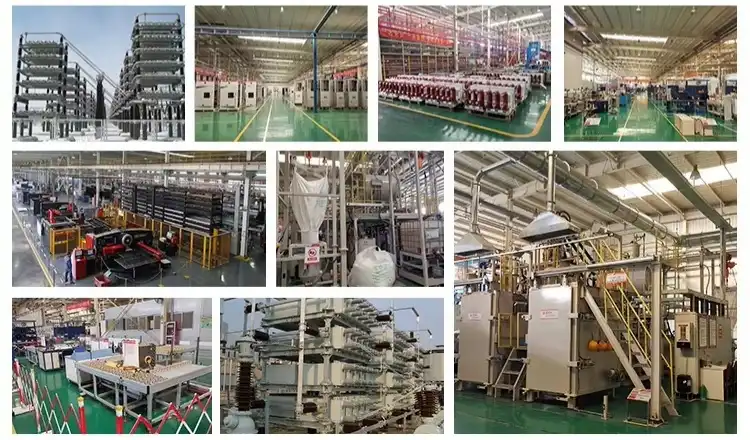
When you work directly with manufacturers like Xi'an Xikai, you can get engineering help, custom ratio configurations, and prices that are competitive without the markups that distributors add. Authorised regional distributors can deliver standard catalogue items faster, but they can't make many changes to the items you order. Voltage transformer buyers should ask for third-party test reports that show suppliers meet IEC 61869-2 and IEEE C57.13 standards when you are evaluating them. Check the production capacity. Plants that make 10,000 or more units a year show economies of scale that keep prices and delivery times stable.
Cost Drivers and Pricing Frameworks
The cost of a transformer depends on its voltage class, the level of accuracy needed, and the materials used to cover it. The price of an indoor 24kV unit with 0.2 accuracy and epoxy casting is usually between $800 and $2,500 per phase. The price is affected by secondary load rates and extra features such as surge arresters or residual voltage windings. Customization raises prices by 10–20% but stops changes in the field that could void the guarantee. Certifications like UL, CE, and GOST require manufacturers to pay for third-party testing, which results in slightly higher prices but makes sure that products sold in foreign markets follow the rules.
Leading Manufacturers and Trusted Brands
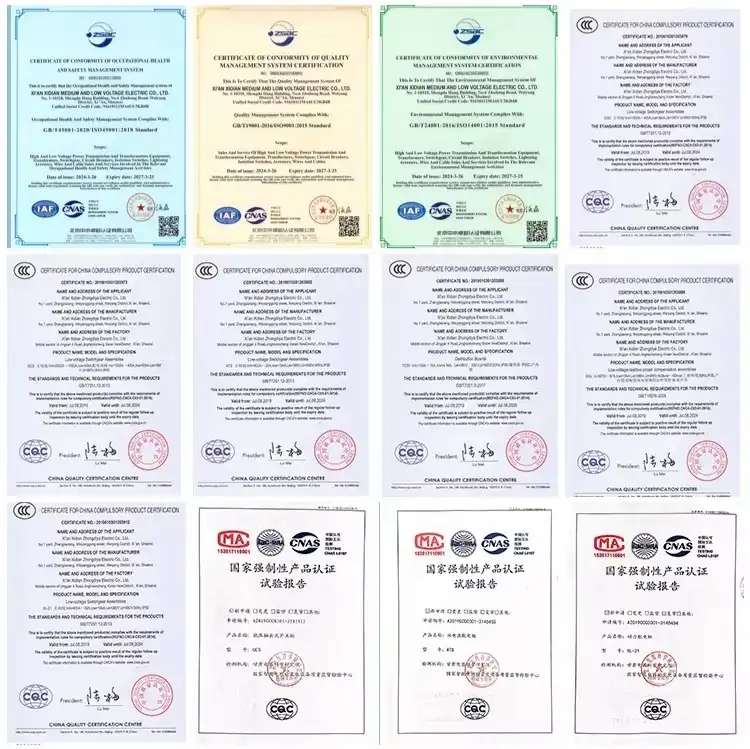
Utility-scale projects needing proven track records and large service networks are mostly done by global names like Siemens, ABB, and Schneider Electric. Chinese companies are competing more and more by offering lower prices and quick customization. Xi'an Xikai is a good example of this trend because it supplies State Grid systems and international projects in over 30 countries. We have been making things for 25 years and have more than 12 patents in core design optimization and smart grid interface technologies. Our ISO 9001 and ISO 14001 certifications show that our quality management systems are up to the high standards required by EPC firms.
When EPC contractors narrow down their list of potential vendors, they look for ones that are stable, flexible, and offer good technical support after the sale. We keep regional stores filled with common voltage classes so that urgent replacements can be sent out within two days. Load flow studies, protection coordination reviews, and commissioning assistance are some of the technical consultation services that add value above and beyond commodity pricing. Asking for examples of related projects, like hospital microgrids or solar farm substations, can help you understand how well the product works in real life and how reliable the seller is.
Conclusion
Modern electrical infrastructure is built around voltage transformers, which turn dangerously high voltages into usable measurement signals that keep equipment safe, make sure billing is correct, and allow automation. To choose the right model, you need to carefully look at the voltage ratings, accuracy classes, environmental conditions, and the supplier's abilities. The 24kV indoor electromagnetic variant we've talked about in this guide is a good example of the mix that building managers and utility engineers are looking for between accuracy, durability, and cost-effectiveness. Routine maintenance and diagnostic tests keep measurements accurate and stop catastrophic breakdowns that put people's safety and the continuation of operations at risk. As the use of renewable energy and digitalization grows, working with makers that offer smart grid compatibility and quick technical support will help your company easily handle the changing challenges of the grid.
FAQ
1. 2What differentiates voltage transformers from current transformers?
Voltage transformers lower voltage levels so they can be used for testing and safety purposes. They work with very little load, almost like there is no load at all. Current transformers lower the amount of current going through them. Their primary winding can handle full load currents. Both voltage and current units protect the circuit, but voltage units connect in parallel (like voltmeters), and current units connect in series (like ammeters). Misaligned interchangeability can lead to mistakes in measurements or damage to equipment.
2. How often should we test voltage transformers in industrial facilities?
Non-critical installations only need to be tested once a year, but substations that serve hospitals or data centers should be checked every six months. Checks that are done regularly include checking the turn ratio, measuring the insulation resistance, and looking for physical damage. After bad weather or nearby fault events, test the equipment without planning to in order to find temporary damage before putting it back into service.
3. Can electronic voltage transformers replace electromagnetic models in 24kV substations?
When the voltage is above 110kV and saving space and weight is worth the extra cost, electronic versions are best. At 24kV distribution levels, electromagnetic designs offer better cost-performance ratios, are easier to maintain, and don't let electromagnetic interference happen. Electronic units need extra power supplies and can't handle too much overload, which are big problems in industrial settings where motors often start up quickly or when capacitor banks switch over voltage temporarily.
Partner with Xi'an Xikai for Reliable Voltage Transformer Solutions
Xi'an Xikai Medium & Low Voltage Electric Co., Ltd. is a reliable company that makes voltage transformers for industry, utility, and business uses around the world that need high-quality solutions. Our 24kV indoor models have high-quality epoxy resin covering and electromagnetic cores that have been optimized. This gives them a ratio error of less than 0.5 percent and 30% less energy loss than other designs. We can make changes to your order, like adding non-standard secondary voltages or built-in surge protection. Our three-week lead times and technical teams in Asia, Europe, and the Americas make this possible. We have certifications in ISO 9001, IEC 61869, and IEEE C57.13, and we've worked on State Grid projects, renewable energy installations, and critical infrastructure systems in more than 30 countries. Contact our engineering team at serina@xaxd-electric.com, amber@xaxd-electric.com, or luna@xaxd-electric.com to talk about your needs, get technical datasheets, or get a quote that is specifically made for your project.
References
1. International Electrotechnical Commission. Instrument Transformers – Part 2: Additional Requirements for Voltage Transformers (IEC 61869-2:2012).
2. Institute of Electrical and Electronics Engineers. Standard Requirements for Instrument Transformers (IEEE C57.13-2016).
3. Standardization Administration of China. Instrument Transformers – Part 2: Additional Requirements for Voltage Transformers (GB 20840.2-2014).
4. Electrical Power Research Institute. Application Guide for Voltage Transformers in Distribution Systems, Technical Report 1025326, 2018.
5. Anderson, Paul M. Power System Protection. IEEE Press Series on Power Engineering, 2nd Edition, 2019.
6. Horowitz, Stanley H., and Phadke, Arun G. Power System Relaying. John Wiley & Sons, 4th Edition, 2014.