Everything you need to know about a voltage transformer
2026-08-07 11:33:34
A voltage transformer serves as the backbone of reliable electrical measurement and protection in modern power systems, stepping down high voltages to safe, measurable levels for instrumentation and control circuits. Whether you operate a data center requiring precision power quality or manage utility grid infrastructure, understanding how these devices function, their specifications, and their procurement considerations directly impacts your operational uptime and cost efficiency. This comprehensive guide walks you through essential technical knowledge, application scenarios, selection criteria, and procurement strategies to help you make confident decisions when specifying or purchasing these critical components for your facility.
What Is a Voltage Transformer and How Does It Work?
Defining the Voltage Transformer
Voltage transformers, which are also sometimes called potential transformers (PTs), are electromagnetic devices that lower high main voltages to secondary voltages that can be used by tracking, relaying, and metering equipment. In contrast to power transformers, which move large amounts of energy, these devices focus on precise measurements and data integrity. They keep proportional voltage relationships while protecting sensitive control circuits from dangerous primary voltages. This makes sure that your protective relays and meters get correct data without being exposed to lethal potentials.
Operating Principles and Core Components
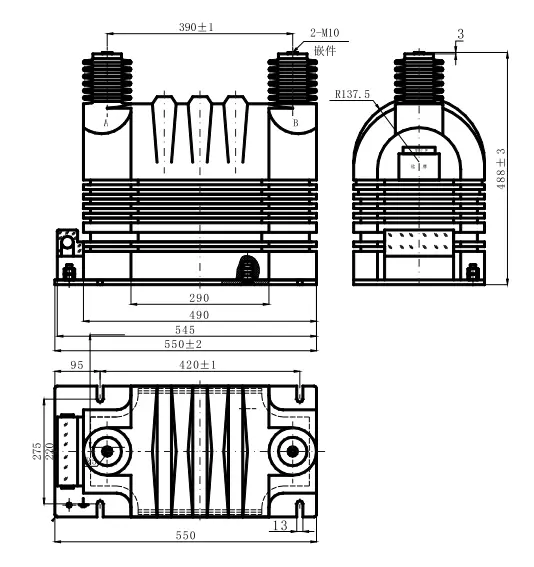
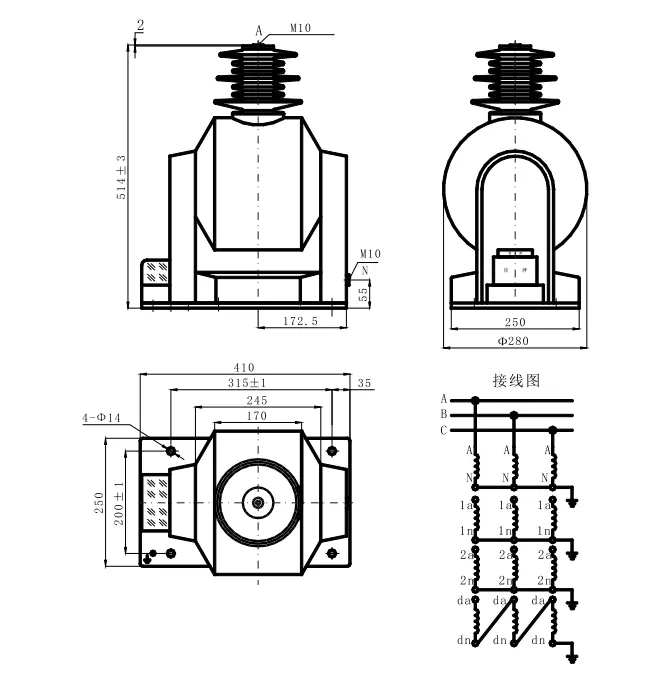
Electromagnetic induction is how the device works. A magnetic flux is created when alternating current flows through the primary winding that is wrapped around a silicon steel core that has been laminated. The secondary winding gets a corresponding voltage from this flow. For example, our 24kV Indoor voltage transformer lowers a 24kV primary input to a 480V secondary output, which can be changed to 380V, 220V, or 110V depending on your needs. It does this while keeping phase relationships within 30 minutes of variation. The epoxy resin casting completely surrounds the electromagnetic assembly, protecting it against dust, water, and partial discharge (IP67 rating). This is very important for indoor substations where space is limited, and solutions need to be small and long-lasting.
Distinguishing Between Transformer Types
It is important to know the difference between isolation transformers, current transformers (CTs), and voltage transformers. The secondary windings of a current transformer are connected to low-impedance devices, while the secondary windings of a voltage transformer are connected to high-impedance devices, such as voltmeters, to measure changes in potential. Isolation transformers separate galvanic currents without changing the voltage ratios. Knowing these differences can help you choose the right instrument for your security system. Using the wrong type can cause measurement mistakes, damage to the equipment, or safety risks during fault conditions.
Key Factors and Comparisons When Choosing a Voltage Transformer
Accuracy and Efficiency Considerations
The accuracy of your income meters and the time it takes for safety relays to respond are directly related to how precisely you measure. Our devices meet IEC 61869-3 accuracy classes 0.2 and 0.5, which means they keep ratio mistakes ≤0.5% even when the load changes. This level of accuracy is important when you're billing customers for megawatt-hours or when safety equipment needs to tell the difference between normal transients and real faults. Total cost of ownership is also affected by efficiency. Our voltage transformers' optimised core materials cut hysteresis and eddy current losses by up to 30%, which is in line with ISO 50001 energy management standards and will lower your facility's operating costs over the device's 25-year life.
Construction Materials and Durability
Winding materials have a big effect on how well they work and how long they last. Copper windings are better at conducting electricity and keeping heat in than aluminium ones, so they reduce resistance losses and heat production. Our vacuum casting method gets rid of any air pockets in the epoxy resin. This stops the partial discharge that wears down insulation over time. The cold-rolled silicon steel cores keep the magnetic flux density high while minimising core losses. Because of these choices in construction, the devices can handle short-term overvoltages of up to 100 times their rated capacity, work reliably from -25°C to +55°C, and need very little maintenance over the course of their useful lives.
Voltage Transformer Versus Potential Transformer: Clarifying Terminology
Though "potential transformer" properly refers to the measurement-specific instrument category, industry workers frequently use "voltage transformer" and "potential transformer" interchangeably. Both words refer to devices that step down voltage for instrumentation reasons. They are different from distribution transformers, which provide power to loads. When looking at the device's specs, make sure it meets instrumentation standards (IEC 61869-1/2, IEEE C57.13, GB 20840.2-2014) instead of power transformer standards. This difference makes sure that the equipment you get is made for accurate measurements instead of huge power transfer. This keeps specification mismatches from happening, which could weaken your security systems.
Voltage Transformer Applications and Use Cases
Power Transmission and Distribution Systems
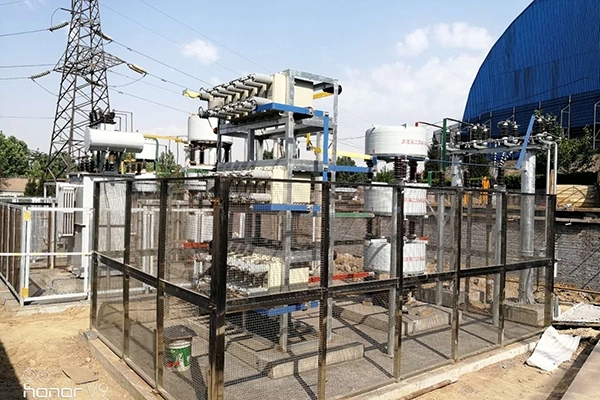
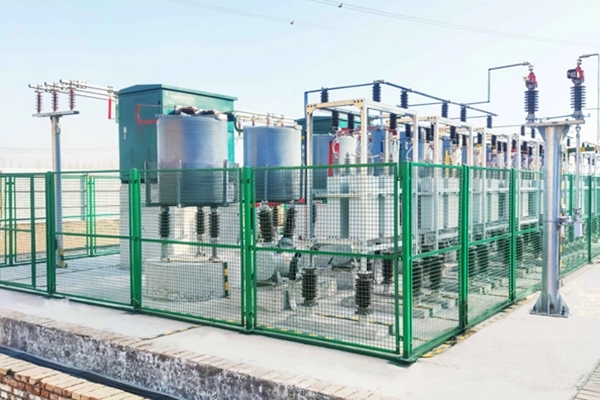
Utilities put these tools in transmission networks to keep an eye on voltage levels, find problems with the system, and make sure that safe relaying works across grids that are linked to each other. Our 24kV device works well for medium-voltage distribution tasks that are popular in business parks, college networks, and city utilities. The 17.5/55/105kV insulation levels (basic, lightning impulse, and power frequency withstand) protect well against switching surges and lightning-induced transients. They keep measurements accurate during grid disturbances that would otherwise make your monitoring systems blind when you need to see.
Industrial and Commercial Facility Protection
Manufacturing plants depend on accurate voltage measurements to keep production from stopping, which costs a lot of money. To keep an eye on supply stability, our voltage transformers work with motor protection relays, power quality analysers, and energy management systems. The 30/80/200VA secondary output choices are helpful for data centers because they make it easier for simple metering circuits to work and give more power to multiple switches and recorders at the same time. These devices are used in hospitals and business buildings to find problems with the power supply before they cause harmful voltage sags or swells in sensitive equipment. This keeps life-safety systems safe and lowers the costs of repairs needed when equipment breaks down too soon.
Emerging Smart Grid and Renewable Energy Integration
Modern grid designs need to be able to communicate digitally. Our electromagnetic design puts measurement accuracy first, and the devices work perfectly with IEC 61850-ready digital substations, allowing for real-time monitoring in power systems that are connected to the internet of things. Voltage changes happen because intermittent generation occurs in renewable energy installations like solar farms and wind parks. Our voltage transformers keep voltage readings stable even when inverter-based resources cause harmonics and quick changes. This lets grid operators keep power quality standards while adding variable generation sources.
With proper upkeep, you can make things last longer and keep them from breaking down when you least expect it. As part of routine testing, insulation resistance is measured once a year, ratio accuracy is checked every other year, and damage or moisture entry is checked during planned power outages. Our epoxy resin design gets rid of the need to test for oil in liquid-filled units, which makes upkeep easier. Check that the burden connections haven't changed, that there aren't any loose terminations that are causing contact resistance, and that there aren't any foreign objects that are bridging the insulation surfaces. These are all simple checks that can fix most field problems without having to replace parts.
Procurement Guide for Voltage Transformers: What You Need to Know
Selecting Reliable Suppliers and Evaluating Support
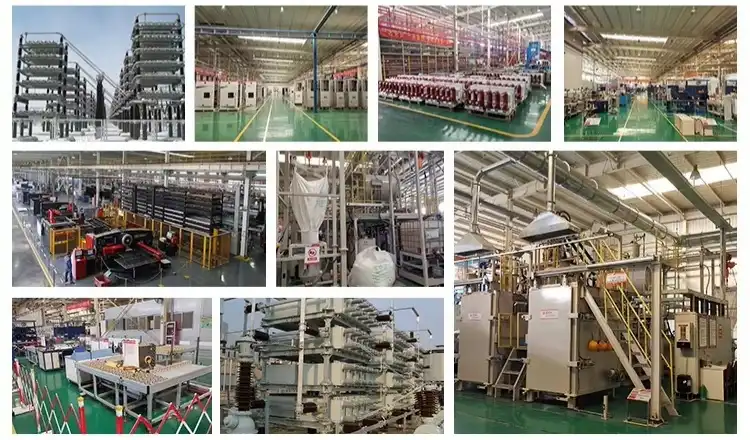
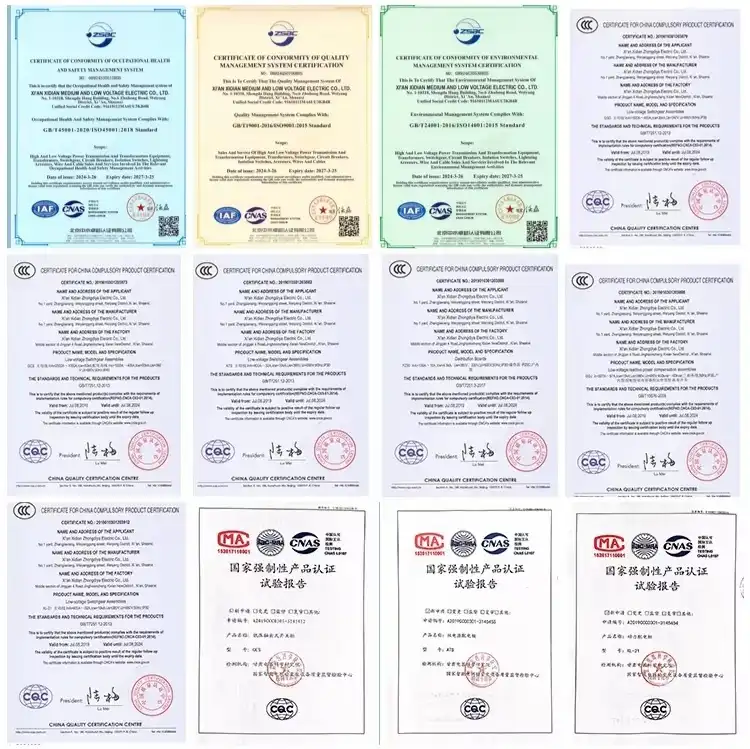
Depending on how reliable your suppliers are, your project will either stay on schedule or have to deal with costly delays. Xi'an Xikai Medium & Low Voltage Electric Co., Ltd. has one of the biggest factories in China that makes medium and low-voltage electrical equipment. They have been providing national grids in over 30 countries for 25 years. When looking at suppliers, look at the certifications they have. For example, ISO 9001 for quality management, ISO 14001 for environmental compliance, and product-specific certifications like 3C (China) show that they are dedicated to making high-quality products and following the rules.
The ability to provide technical help is just as important. Can the seller make voltage ratios (like 24kV/120V) that are specific to the job? Do they offer add-ons for surge protection or lower rates for installations above 1,000 meters? We design plateau-type tools that can work at elevations of up to 4,000 meters and still meet all performance standards. This makes it possible to avoid the design compromises that happen when standard goods are used in non-standard ways. This lowers the costs of engineering rework and field modifications.
Lead Times, Warranty Conditions, and After-Sales Service
For bulk sales, our catalogue goods usually have wait times of three weeks, but we do offer faster choices for urgent retrofits. Most warranties cover manufacturing defects for 24 to 36 months, but make sure you know the difference between a factory defect and a bad installation. For example, some suppliers won't pay for damage caused by mistakes in shipping or commissioning. For the expected 25-year service life of the device, after-sales support should include access to spare parts, technical help for troubleshooting, and up-to-date documentation as standards change.
Pricing Variables and Bulk Purchasing Benefits
The price per unit depends on the voltage grade, the secondary burden capacity, the accuracy class, and the features of the building. Tighter manufacturing tolerances are needed for higher accuracy classes, which raises costs but lowers measurement uncertainty in revenue metering applications. When you buy in bulk, you can save money by standardising on a single voltage rating and load capacity across your whole building. This makes it easier to keep track of spare parts and lowers the cost per unit by 15–25% compared to buying things with different specs. When buying things for multi-site deployments or phased projects with known future needs, try to get volume discounts.
Logistics and International Procurement Considerations
Coordinating shipping, clearing customs, and making sure import laws are followed are all parts of international buying for voltage transformers. Our regional warehouses in Asia, Europe, and the Americas speed up delivery times and make handling easier for site managers in countries with multiple languages. Check to see if the price includes taxes and delivery to the destination, or if you need to make your own freight arrangements. For big orders, sending in a normal 40-foot container saves money because it can hold about 500 units of our 24kV model, which lowers the freight charges per unit. To avoid expensive mistakes during commissioning, make sure that the voltage levels and frequency specifications (50Hz vs. 60Hz) meet the standards of the grid where the power will be sent.
Leading Brands and Supplier Spotlight
Global Industry Leaders
The global instrument transformer market is led by Siemens, ABB, and Schneider Electric, which all have a wide range of products and a lot of installed bases. These companies make high-tech diagnostic tools, have decades of operating data to prove their reliability, and have global service networks that provide local help. Their goods usually have higher prices, which is based on their name image, the fact that they come with a lot of technical documentation, and the fact that they can work with older systems, which is helpful when adding new protection to old substations.
Xi'an Xikai: Specialized Expertise in Medium-Voltage Applications
About 100 medium and low-voltage electrical products in seven categories and 34 series are available from Xi'an Xikai. High- and low-voltage switchgear, dry transformers, indoor and outdoor vacuum circuit breakers, instrument transformers, air-insulated switchgear, prefabricated substations, and power electronics are examples. Our flagship products function well worldwide because of patented technology developed over decades of research and user feedback.
Petrochemicals, rail, energy and water conservation, construction, environmental protection, renewable energy, State Grid systems, and steel and metallurgy use our solutions. Caustic petrochemical atmospheres, vibrating rail systems, and high-elevation hydropower facilities suit this extensive use. The 24kV Indoor voltage transformer demonstrates our engineering approach: it is built to last (passes all routine tests, including partial discharges of less than 10pC and can handle 55kV/1min and impulse voltages of 105kV), meet standards (IEC 61869-1/2, IEEE C57.13, and GB 20840.2-2014), and be operational in harsh environments.
Experts like Xi'an Xikai can customise, respond quickly, and save money without sacrificing quality. Our technical team works with procurement and project engineers to develop solutions for non-standard voltage ratios, seismic ratings, and digital substation structures with communication ports. Open communication, technical validation, and plant acceptance testing before export decrease procurement risk in this cooperative method.
Conclusion
Finding the right voltage transformer means combining technical needs, budget limitations, and standards for long-term dependability. These devices are the building blocks for measuring protective relaying, revenue metering, and power quality monitoring in commercial infrastructure, utility grids, and industrial facilities. Knowing how things work, how accurate they need to be, how they're built, and what they'll be used for lets you choose equipment that will keep operations running smoothly, keep workers safe, and give you accurate data for decades to come. When you work with experienced suppliers who can provide technical customisation, quick support, and a history of success, procurement goes from being a one-time purchase to a strategic partnership that helps your facility run at its best.
FAQ
1. How do I select the correct voltage rating for my application?
The primary voltage rating of the transformer should match the nominal operating voltage of your system. The 24kV rating works for systems with nominal voltages between 20kV and 25kV, giving enough insulation for normal overvoltages. Check that the insulation level (basic, lightning impulse, and power frequency withstand voltages) is higher than what is needed for your system according to IEEE 1313.1 or IEC 60071 standards. Talk to your supplier's engineering team to make sure the ratings are correct when the expected altitude, pollution levels, or short-term overvoltage levels are higher than usual.
2. Can voltage transformers be customized for unique industrial needs?
Manufacturers like Xi'an Xikai often change the voltage transformers, load limits, and mounting arrangements to fit the needs of a particular project. Custom choices include voltage outputs that aren't standard, higher accuracy classes for accurate metering, built-in fuses for main protection, and changes to fit harsh environments like earthquake zones or areas with high temperatures. Talk about the specific limitations of your application as early as possible in the procurement process. Custom designs take longer to make, but they prevent changes in the field that could compromise safety and warranty coverage.
3. What maintenance schedules prevent failure and costly downtime?
A visual check for physical damage, insulation resistance testing (usually >2G at rated voltage), and confirmation of tightness of terminations should all be part of the annual maintenance. Ratio precision and phase shift should be checked every two years to make sure they stay within the limits set. Because the epoxy resin construction doesn't need oil samples or dissolved gas analyses like liquid-filled units do, it makes upkeep a lot easier. Keep thorough repair logs that include test results. Trending data shows that things get worse over time before they break down completely, which lets you plan for replacements ahead of time and avoids unplanned outages.
Partner with Xi'an Xikai for Your Voltage Transformer Procurement
Xi'an Xikai is ready to help you with your voltage measurement and protection needs. They have been providing critical infrastructure around the world for 25 years, so they know what they're doing. Our 24kV Indoor voltage transformer gives industrial facilities, utility operators, and EPC developers the accurate measurements, reliable operation, and customisation options they need. Our technical experts are available for application talks, thorough specifications reviews, and reasonable quotes that are tailored to the needs of your project. Procurement professionals and engineering teams are welcome to work with us.
Email serina@xaxd-electric.com, amber@xaxd-electric.com, or luna@xaxd-electric.com to talk to our experienced team about your needs. Whether you need standard catalogue items that can be sent right away or custom-engineered solutions for specific uses, Xi'an Xikai can help you with everything, from the initial specification to commissioning and maintenance throughout the product's life. There you'll find detailed datasheets, application guides, and case studies that show how dedicated we are to operational excellence. As a reputable voltage transformer maker, we offer both large-scale production and engineering flexibility. This lets us provide you with high-quality goods and quick service that meet your practical needs and budget.
References
1. Institute of Electrical and Electronics Engineers. "IEEE Standard for Instrument Transformers: Part 1 – General Requirements." IEEE Std C57.13-2016. 2016.
2. International Electrotechnical Commission. "Instrument Transformers – Part 2: Additional Requirements for Voltage Transformers." IEC 61869-2:2012. 2012.
3. Zhang, Wei and Liu, Hongguang. "Modern Protective Relaying: Theory and Applications in Power Systems." China Electric Power Press. 2018.
4. National Electrical Manufacturers Association. "Application Guide for Instrument Transformers in Electric Utility Revenue Metering." NEMA TR 1-2015. 2015.
5. Working Group C4.304. "Application of Instrument Transformers in Digital Substations." CIGRE Technical Brochure 842. International Council on Large Electric Systems. 2021.
6. American National Standards Institute. "Standard Requirements for Instrument Transformers: Accuracy and Safety Considerations." ANSI/IEEE C57.13.1-2020. 2020.