
What Is Metal-Clad Switchgear? A Complete Guide
2026-05-28 15:56:06
The development of Metal-Clad Switchgear in electrical power distribution systems protects workers and equipment while ensuring operational continuity. It has grounded metal enclosures with circuit breakers and compartments for each functioning component. The reinforced steel construction of Armored Metal-Enclosed Switchgear makes it ideal for high-voltage applications in industrial plants, Data Centers, hospitals, and utility substations where safety and reliability are paramount.
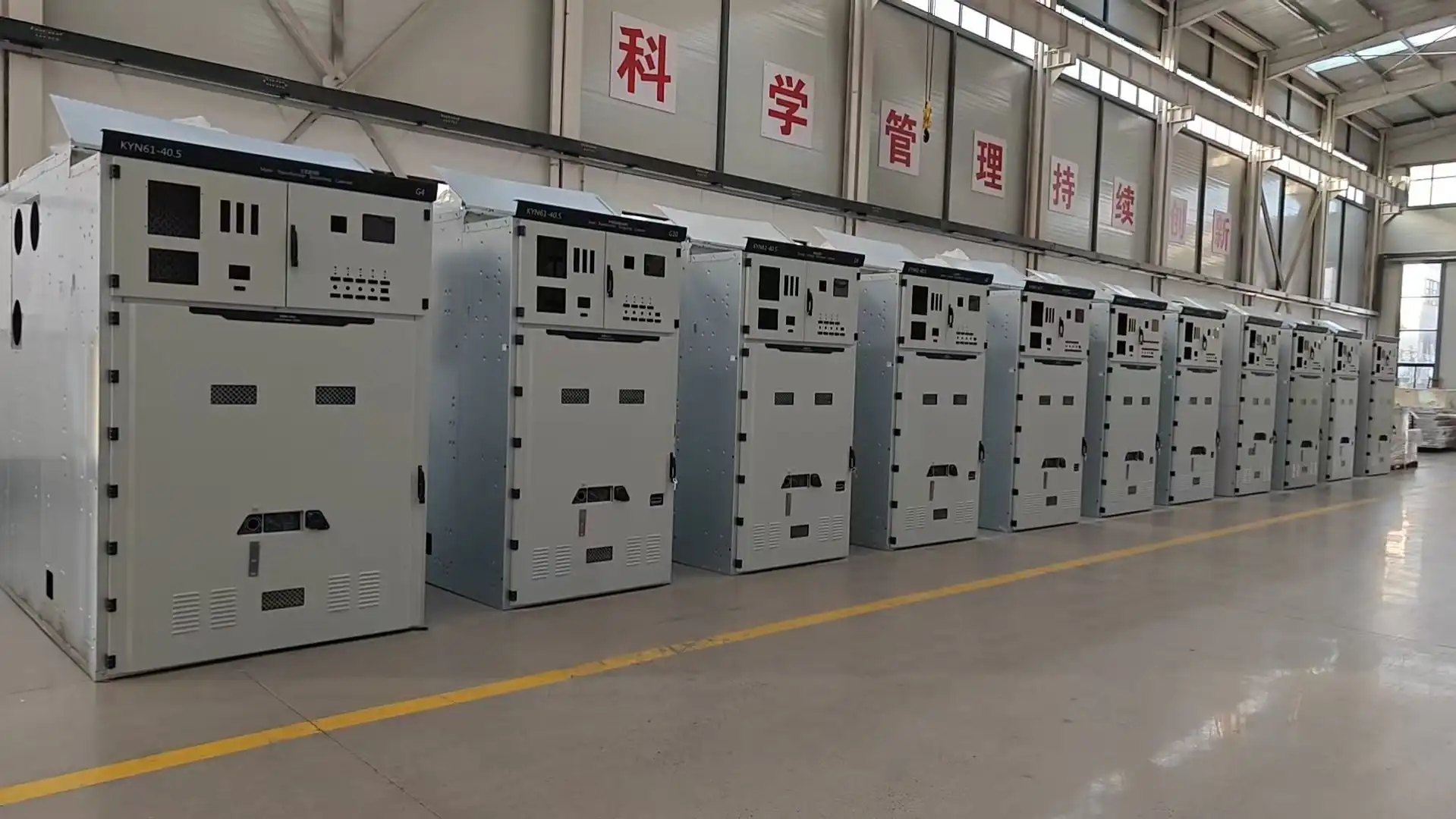
Understanding Metal-Clad Switchgear and Armored Metal-Enclosed Switchgear
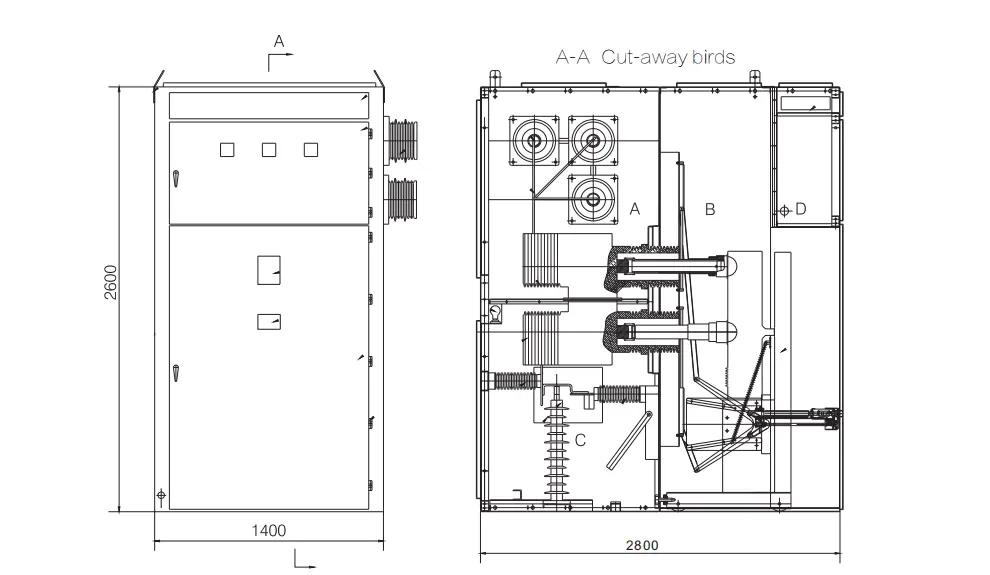
Medium- and high-voltage power distribution networks rely on Metal-Clad Switchgear. The design concept compartmentalizes the busbar chamber, circuit breaker section, cable termination area, and control equipment into metal-enclosed zones. This division prevents fault propagation and lets maintenance staff service individual components without de-energizing the system.
The name indicates crucial design features. Products like the KYN61-40.5 have "KYN" for Metal-Clad construction (K), Removable or withdrawable breaker mechanism (Y), and Indoor application appropriateness (N). These systems provide intermediate power distribution between step-down transformers and end-use equipment at 3.6kV to 40.5kV.
Core Components and Operating Principles
Metal-Clad Switchgear has a vacuum circuit breaker on a trolley or handcart. Technicians may move the breaker out of the box for inspection or repair without disrupting nearby circuits thanks to its design. Tulip-style connections attach the breaker to the main busbar and allow smooth mechanical withdrawal.
Air gaps and solid dielectric materials, especially epoxy resin insulators at essential connections, form insulation systems. Material can endure power-frequency voltage stress during regular operation and lightning impulse voltages during transient occurrences. This technique is shown by the KYN61-40.5 Removable Metal-Clad Switchgear, which has a 40.5kV rated voltage and 630A to 2500A current capacity, making it ideal for harsh industrial situations up to 2000m altitude and -10°C to +40°C temperature extremes.
Safety is emphasized by the "Five-Prevention" mechanical interlock system. This mechanism prevents dangerous sequences by blocking disconnector operation under load, breaker closure onto faulted circuits, earthing switch operation while circuits are energized, cable compartment access during live conditions, and handcart movement. These interlocks use mechanical links instead of electronic controllers to provide fail-safe protection during control power loss.
Industrial Applications and Relevance
Armored Metal-Enclosed Switchgear protects CNC machines and robotic assembly lines against voltage sags and harmonic distortion in manufacturing facilities. Automotive manufacturers might lose $50,000 per minute from an unscheduled stoppage. Metal-Clad Switchgear tested to IEC 62271-200 standards has inherent arc faults in relief channels to prevent catastrophic equipment damage and safeguard surrounding workers.
Data Centers have specific power quality issues that affect computing correctness and storage integrity. These facilities increasingly demand Metal-Clad Switchgear with real-time temperature, partial discharge, and contact wear monitoring. This predictive maintenance method detects deterioration trends before breakdown, reducing unexpected interruptions.
Transmission and distribution utilities rely on Metal-Clad Switchgear for substation dependability. This device must work with protective relays to isolate failed line portions while preserving service to unaffected clients. Vacuum circuit breakers in Metal-Clad Switchgear enclosures interrupt fault currents in 3-5 cycles at 60Hz to minimize grid instability.
Key Design Features and Safety Standards of Armored Metal-Enclosed Switchgear
Armored Metal-Enclosed Switchgear designs may resist harsh industrial conditions that ordinary enclosures cannot. These systems are built with aluminum-zinc coated steel sheets instead of painted steel for better corrosion resistance and electrical grounding continuity. This coating technique self-heals scratches, protecting equipment throughout its lifespan.
Modular Architecture and Maintenance Accessibility
Modern armored switchgear features modular design simplifying installation. Factory-assembled bays arrive at project sites, cutting field labor and speeding commissioning. With modular Metal-Clad Switchgear, a 12-bay lineup assembles in two weeks instead of six. The retractable breaker allows technicians to remove trolleys, examine contacts, and restore service in hours. Cable chambers have ample space with IP4X protection against dust and moisture.
Compliance with International Standards
IEC 62271-200 specifies mechanical endurance testing (minimum 2000 operations), temperature rise limits, short-circuit ratings, and arc fault containment. North American projects use ANSI/IEEE C37.20.2. Reputable manufacturers produce items for both standards. The KYN61-40.5 meets IEC 62271-200, GB/T 11022, and DL/T 404-1997. Factory testing includes power-frequency withstand voltage at 95kV for one minute and partial discharge below 100 picocoulombs.
Advanced Safety Mechanisms
Metal-Clad Switchgear has multiple arc fault prevention layers. Pressure relief vents direct explosive gases away from personnel. Metal barriers prevent arcing to nearby equipment. Arc flash detection trips breakers within milliseconds. Ground fault detection identifies low-magnitude faults in resistance-grounded systems that insufficient current for overcurrent protection but might cause catastrophic faults if ignored. Metal-Clad Switchgear isolates these problems safely.
Comparing Armored Metal-Enclosed Switchgear with Other Switchgear Types
Knowing the differences in switchgear configurations helps procurement teams choose the best Armored Metal-Enclosed Switchgear for applications. Comparisons must include initial capital expenditures, installation complexity, space constraints, maintenance needs, and estimated service life.
Metal-Clad Versus Air-Insulated Switchgear
Air-insulated switchgear (AIS) insulates live conductors and grounded structures with ambient air. Traditional dielectric strength demands huge equipment footprints due to physical isolation. Land and reduced equipment costs make AIS popular in outdoor substations. Indoor installations with premium real estate have prohibitive spacing requirements.
Metal-Clad Switchgear compresses clearances with strong insulation barriers and metal sections. One-third the floor space of identical AIS equipment is covered by a 40.5kV metal-clad lineup. The density advantage is crucial for urban substations, industrial facilities with limited electrical space, and retrofit projects in existing structures. AIS installations in coastal areas or industrial operations that emit corrosive gases face environmental contamination, but the enclosed design protects them.
Maintenance needs vary greatly between technology. AIS requires regular monitoring of exposed insulator surfaces for contamination, which can induce flashover in damp or foggy situations. Pressure washing or manual cleaning require work and downtime. Enclosed Metal-Clad Switchgear solves these problems by protecting internal components from environmental exposure.
Gas-Insulated Switchgear Considerations
Gas-insulated switchgear (GIS) uses pressured sulfur hexafluoride (SF6) gas as insulation and is the smallest power distribution technology. This arrangement saves space by decreasing equipment volume to 10% of air-insulated counterparts. GIS is used in high-voltage transmission substations when land prices justify the equipment premium or in subterranean installations where space constraints prevent other technologies.
The cost gap between GIS and Metal-Clad Switchgear remains large. At medium voltage ratings, GIS installations cost three to five times more than metal-enclosed configurations. Due to this economic reality, GIS adoption is limited to situations where its extreme compactness and environmental immunity give operational benefits that justify the cost.
Environmental factors increasingly impact technological choice. SF6 has 23,500 times the global warming potential of carbon dioxide, spurring regulatory and business efforts to decrease emissions. Modern GIS uses sealed compartments to reduce gas leakage, but end-of-life equipment disposal and gas recovery necessitate unique methods. These issues are eliminated with Metal-Clad Switchgear due to vacuum interruption technology and air insulation.
Industry giants ABB, Siemens, and Schneider Electric provide switchgear portfolios for all kinds. Their engineering support helps clients choose based on voltage rating, fault current duty, space, climatic circumstances, and budget. These manufacturers have global service networks to support installed equipment for life.
Maintenance, Reliability, and Operational Benefits
System dependability is inextricably linked to proactive maintenance. Armored Metal-Enclosed Switchgear that is well-maintained can last over thirty years, whereas neglected equipment may fail within fifteen. Creating regular inspection and testing processes preserves these systems' large capital investments.
Routine Inspection Best Practices
Annual visual inspections should check enclosure integrity, moisture or contamination, peculiar scents suggesting overheating, bolted connection security, and mechanical interlock functionality. Before failures require emergency repairs, these non-invasive tests detect issues.
Depending on operational workload and environmental severity, comprehensive maintenance lasts three to five years. To check for erosion or misalignment, technicians remove circuit breakers and measure contact resistance. Values over 40 microhms usually require replacement. Vacuum bottle integrity testing shows the interrupter maintains sufficient vacuum for fault interruption. Lubricating breaker functioning mechanisms according to manufacturer standards ensures smooth mechanical action over thousands of operations.
Temperature monitoring reveals switchgear assembly connection quality. Thermal imaging under load shows high-resistance hotspots at busbar joints, cable terminations, and breaker contacts. Fixing these anomalies prevents increased heating that causes insulation deterioration and catastrophic collapse. The replaceable breaker design of Metal-Clad Switchgear allows offline testing without de-energizing nearby equipment, making maintenance easier.
Quantifying Reliability and Cost Benefits
Reliability metrics profoundly affect facility economics. When properly maintained and operated within design conditions, KYN61-40.5 Metal-Clad Switchgear has MTBF above 100,000 hours. This dependability meets mission-critical facility availability standards with availability exceeding 99.9%.
Unplanned downtime costs go beyond equipment repair. Manufacturing firms evaluate missed production income, hospitals examine patient safety, Data Centers consider SLA fines, and utilities must meet dependability performance requirements. A four-hour power outage may cost a pharmaceutical company $200,000 in productivity and batch rejection. Sturdy structure and full protective measures reduce risk and justify premium equipment investment.
Energy efficiency increasingly influences switchgear selection. Optimized contact designs and low-resistance busbar connections reduce I²R losses during normal operation. Switchgear losses may seem little, but they add up in big systems. A 2000A Metal-Clad Switchgear lineup with 10 microhm contact resistance per bay uses 40 watts per bay constantly. This reflects $350 in annual energy costs for ten bays working 8760 hours at $0.10 per kilowatt-hour. Higher current ratings or defective connections increase this amount.
Implementations show these benefits in practice. A semiconductor production factory replaced outdated switchgear with Metal-Clad Switchgear, decreasing unexpected outages from three per year to zero over five years. Avoiding production losses alone repaid the equipment expenditure in 18 months. The municipal water company replaced outside air-insulated switchgear with indoor Metal-Clad Switchgear installations to eliminate moisture-related failures that have disrupted vital pumping station service.
Procurement and Customization Guide for Armored Metal-Enclosed Switchgear
Understanding technical criteria and commercial concerns is essential for Armored Metal-Enclosed Switchgear purchase. These complicated systems require tight coordination between buyers, consulting engineers, and equipment makers from project start to commissioning and beyond.
Defining Technical Requirements
Complete load analysis and fault current calculations start accurate specification development. Engineers must determine voltage, continuous current, short-circuit interrupting, and short-time withstand ratings. The KYN61-40.5 Removable Metal-Clad Switchgear meets industrial distribution needs with current ratings from 630A to 2500A. To support future load increase without premature replacement, projects usually design equipment rated 20–30% over initial demand.
Environmental factors greatly affect equipment setup. Indoor installation at elevations below 1000 meters and ambient temperatures between -10°C and +40°C is typical for Metal-Clad Switchgear. Elevated facilities need derating or insulation to compensate for lower air density. The KYN61-40.5 works consistently up to 2000m in hilly areas with thinner air. Integrated climate control systems or unique materials may be needed at extreme temperatures.
Busbar material, circuit breaker requirements, protective relay integration, communication protocol compatibility, and auxiliary systems like metering, indicator, and control power supply may be customized. To decrease weight and material environmental effect, sustainable projects may specify aluminum busbars with slightly bigger cross-sections to retain existing capacity. Smart grid facilities need IEC 61850 switchgear for real-time data interchange with facility management systems.
Understanding Lead Times and Delivery
Metal-Clad Switchgear requires precise production, assembly, and testing that cannot be hurried. Heavy customization can take twenty weeks from order placed to factory shipment, whereas standard setups take twelve to sixteen weeks. Procurement teams must order equipment far before on-site delivery dates to allow for these delays.
Shipping logistics and component availability depend on global supply chain dynamics. International projects must handle customs, documentation, and import tariffs. Good suppliers follow export regulations and may advise on business problems. Factory acceptance testing (FAT) lets buyer representatives see equipment tested before shipping, ensuring conformity with requirements and allowing them to resolve issues while the equipment is being manufactured.
Installation planning should include equipment delivery and placement rigging. At 2000 kilos, a fully completed 40.5kV Metal-Clad Switchgear bay requires lifting equipment and floor loading capabilities. Modular designs with transportable portions make huge assemblies easier to move into facilities with limited access.
Supplier Selection and Partnership
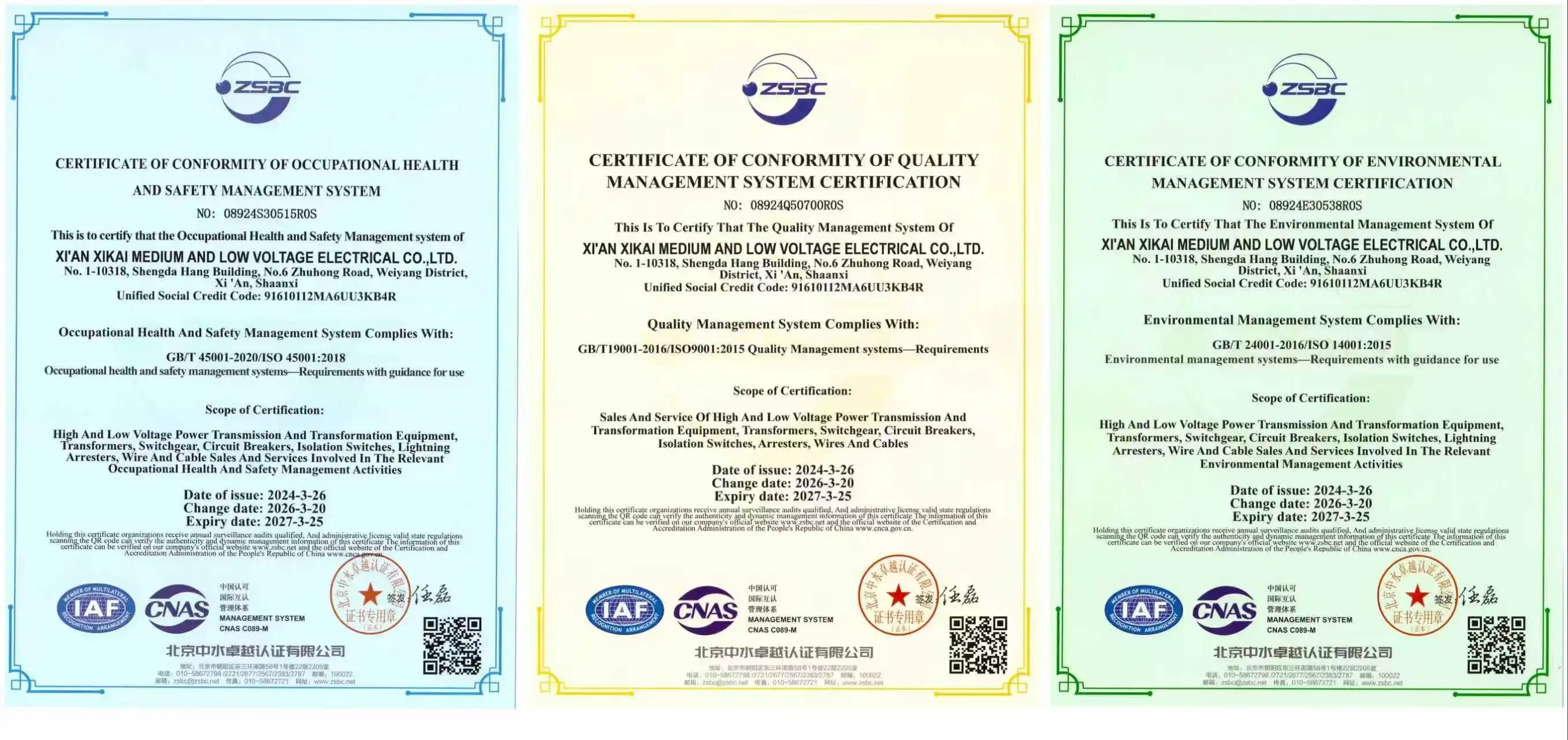
Technical competence, manufacturing quality systems, commercial stability, and service support infrastructure are considered while selecting equipment providers. ISO 9001-certified manufacturers have systematic design control, procurement, production, and testing procedures. ISO 14001 accreditation shows dedication to waste reduction and energy efficiency in production.
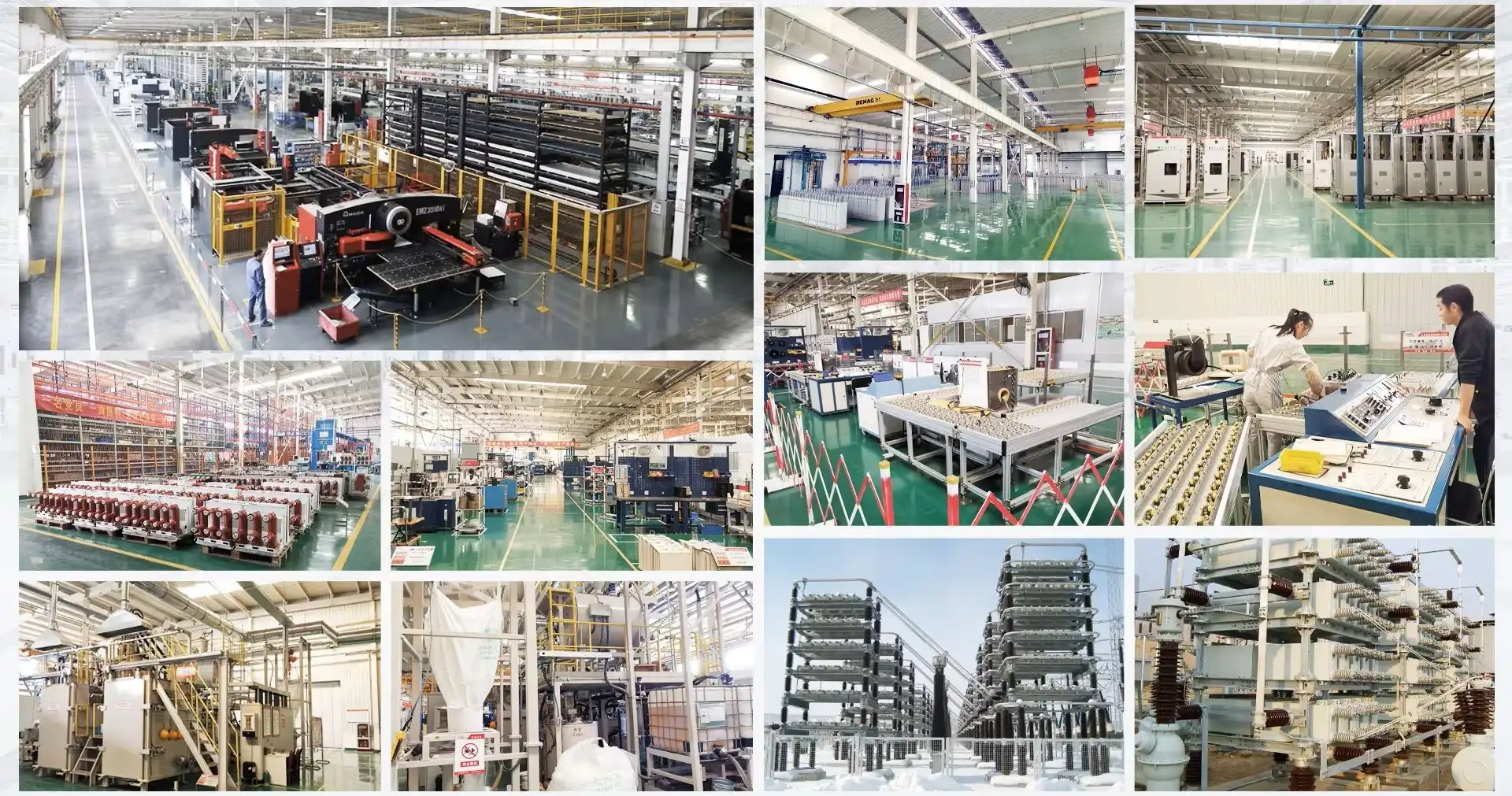
For armored metal-enclosed switchgear projects, Xi'an Xikai Medium & Low Voltage Electric Co., Ltd. has a complete supplier connection. The firm offers seven categories, thirty-four series, and over 100 variations with 25 years of production expertise and National High-Tech Enterprise status. Their KYN61-40.5 Removable Metal-Clad Switchgear uses eighteen unique innovations to solve industrial problems, especially at 4000 meters altitude where specialized designs adjust for decreasing air pressure.
Purchasing experts favor vendors that provide lifecycle support beyond equipment delivery. Metal-Clad Switchgear warranties normally last five years and cover manufacturing faults and component failures. Commissioning and troubleshooting require technical help with response times under 72 hours, industry best practices. Facility staff training on correct operation and maintenance improves equipment dependability and lifespan.
The firm services State Grid systems, steel and metallurgy facilities, petrochemical sites, rail transportation projects, and renewable energy projects. This extensive application experience helps handle specific project requirements. Regional service centers with factory-trained experts provide prompt assistance throughout equipment life, especially for widely dispersed utility networks or international industrial firms.
Contacting experienced armored metal-enclosed switchgear manufacturers early in project development improves results. Contact Xi'an Xikai's engineering teams at serina@xaxd-electric.com, amber@xaxd-electric.com, or luna@xaxd-electric.com to discuss application requirements, customization choices, and operating objectives. Consultative partnerships transform broad performance goals into technical requirements to ensure equipment fulfills installation demands.
Conclusion
In demanding industrial and utility applications, Metal-Clad Switchgear technology ensures dependable, safe electrical distribution. Armored Metal-Enclosed Switchgear meets the strict needs of establishments where downtime is costly and staff safety is vital. Knowing design principles, comparative advantages, maintenance needs, and procurement factors helps make decisions that optimize project success and long-term operating performance. Metal-Clad Switchgear is essential to contemporary power distribution infrastructure as electrical systems integrate, monitor, and improve efficiency.
FAQ
1. How does altitude affect metal-clad switchgear performance?
Higher altitudes have lower air density, reducing dielectric strength and necessitating more clearances or insulation. Standard equipment works well up to 1000 meters. The KYN61-40.5 optimizes insulation coordination for 2000-meter projects. Engineering study is needed to establish derating factors or equipment adjustments for projects exceeding these criteria.
2. What distinguishes VS1 from VD4 vacuum circuit breakers in metal-clad switchgear?
VS1 circuit breakers are affordable household technology that performs well in industrial applications. ABB VD4 breakers add mechanical endurance and are used for international certifications and extreme operational duty. Compatible handcart dimensions and tulip contact interfaces allow both breaker types to work with Metal-Clad Switchgear.
3. How often should comprehensive maintenance be performed on Armored Metal-Enclosed Switchgear?
Annual visual checks reveal urgent issues. Every three to five years, depending on operational workload and environmental severity, contact inspection, resistance measurement, and mechanism lubrication are performed. Avoid premature component deterioration with more frequent comprehensive inspections in high-cycle applications or hostile environments. How often should Armored Metal-Enclosed Switchgear be fully maintained?
Partner with a Trusted Armored Metal-Enclosed Switchgear Manufacturer
With proven Armored Metal-Enclosed Switchgear solutions, Xi'an Xikai Medium & Low Voltage Electric Co., Ltd. can assist your critical power distribution projects. Our KYN61-40.5 Removable Metal-Clad Switchgear provides dependable 40.5kV distribution with current capacities from 630A to 2500A and 18 unique improvements and IEC compliance. We customize setups for industrial buildings, utility systems, and EPC contractors in varied industries to meet environmental and operational needs. Our engineers help with application analysis, equipment selection, installation, and predictive maintenance. Reach our specialists at serina@xaxd-electric.com, amber@xaxd-electric.com, or luna@xaxd-electric.com.
References
1. IEEE Standards Association, "IEEE Standard for Metal-Clad Switchgear," IEEE Std C37.20.2, Institute of Electrical and Electronics Engineers, New York, 2015.
2. International Electrotechnical Commission, "High-voltage switchgear and controlgear - Part 200: AC metal-enclosed switchgear and controlgear for rated voltages above 1 kV and up to and including 52 kV," IEC 62271-200, Geneva, Switzerland, 2011.
3. Garzon, R.D., "High Voltage Circuit Breakers: Design and Applications," Second Edition, Marcel Dekker Publishing, New York, 2002.
4. Das, J.C., "Arc Flash Hazard Analysis and Mitigation," IEEE Press Series on Power Engineering, John Wiley & Sons, Hoboken, New Jersey, 2012.
5. McDonald, J.D., "Electric Power Substations Engineering," Third Edition, CRC Press, Boca Raton, Florida, 2012.
6. National Electric Manufacturers Association, "Guidelines for Factory and Field Testing of Metal-Enclosed Switchgear," NEMA SG 8, Rosslyn, Virginia, 2018.

_1773019042224.png)
