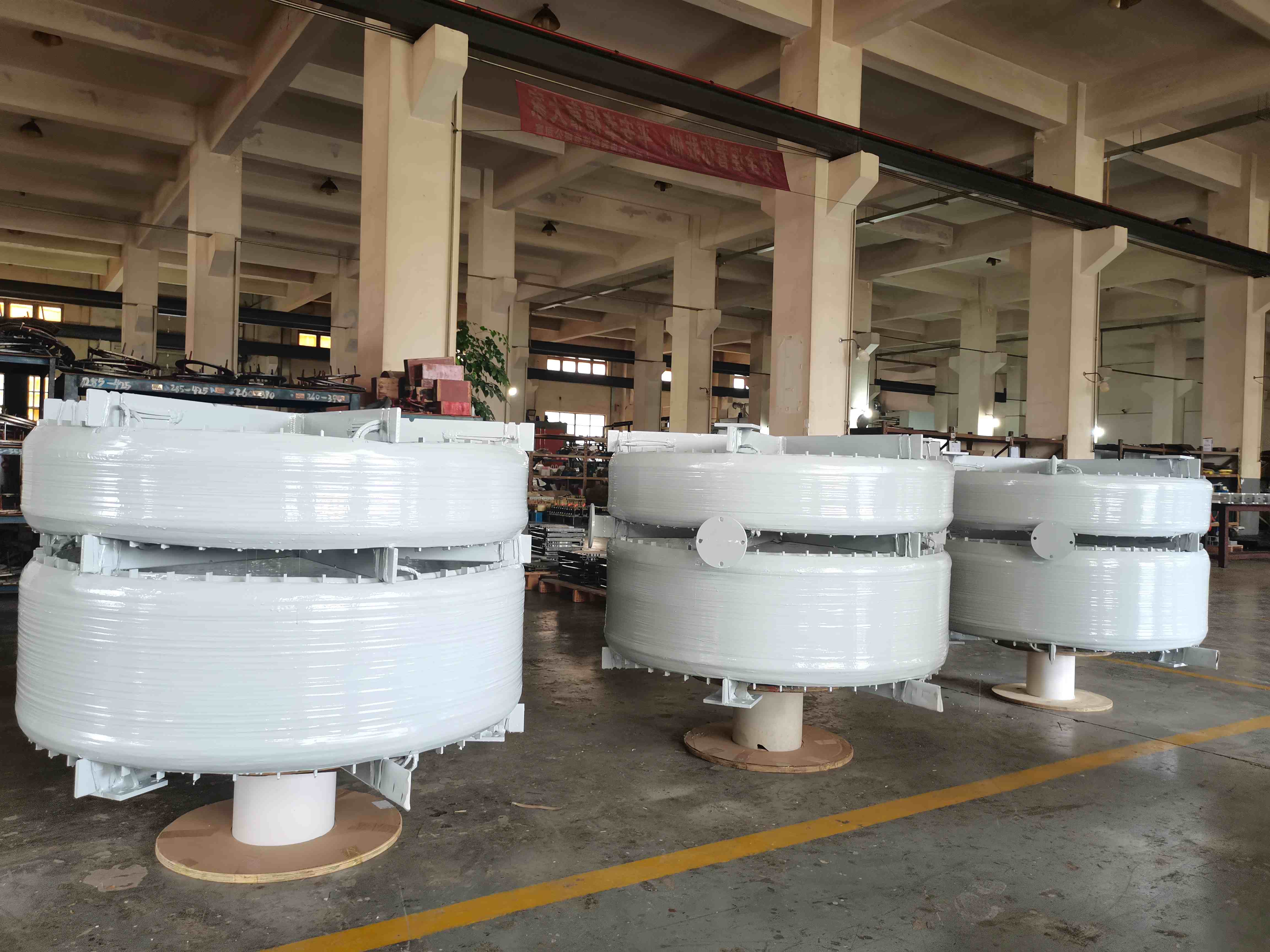
Why do we need reactive power compensation?
2026-05-28 15:56:04
Electrical systems struggle with unseen energy that travels between sources and loads without doing any work. Reactive power correction solves this problem. Motors, transformers, and arc furnaces use reactive power, which increases current flow, overheats conductors, and destabilizes voltage. The AKW Outdoor Frame-type Reactive Power Compensation Device injects capacitive reactive power to combat these inefficiencies, keeping power factors over 0.95 and safeguarding your bottom line from utility penalties and equipment failures.
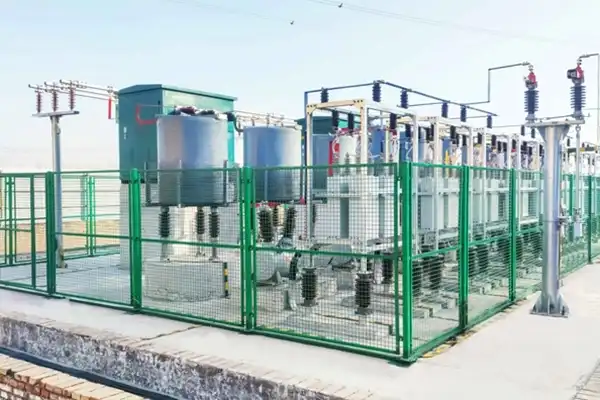
Understanding Reactive Power and Its Operational Challenges
The Hidden Cost of Poor Power Factor
Manufacturing facilities and data centers commonly run without adjustment with power factors between 0.70 and 0.85. Utility providers must offer far more current than necessary to produce the same active power due to low efficiency. You pay for wasted energy transported through cables that heat up and lose capacity for productive loads. US utilities increasingly apply demand charges and power factor penalties, often adding 15-30% to monthly rates for facilities below 0.90 power factor criteria.
Voltage Instability Threatens Equipment Reliability
When reactive power demand changes, voltage sags and swells occur. Hospitals, server rooms, and precise production lines demand consistent voltage within ±5% tolerance for sensitive equipment. Uncorrected reactive loads generate voltage decreases during peak demand, causing variable frequency drive shutdowns and solid-state equipment failure. Grid operators struggle to maintain transmission voltage profiles across long distances, especially when adding intermittent renewable production.
System Capacity Limitations Stifle Growth
Your electrical system is limited. When reactive current uses 30-40% of that capacity, you have less room for production lines or server racks. Transformer and switchgear upgrades cost hundreds of thousands. Compensation devices reduce overall current demand without affecting productive load, freeing up capacity.
How Frame-Type Reactive Power Compensation Works in Outdoor Environments?
Core Components and Operating Principles
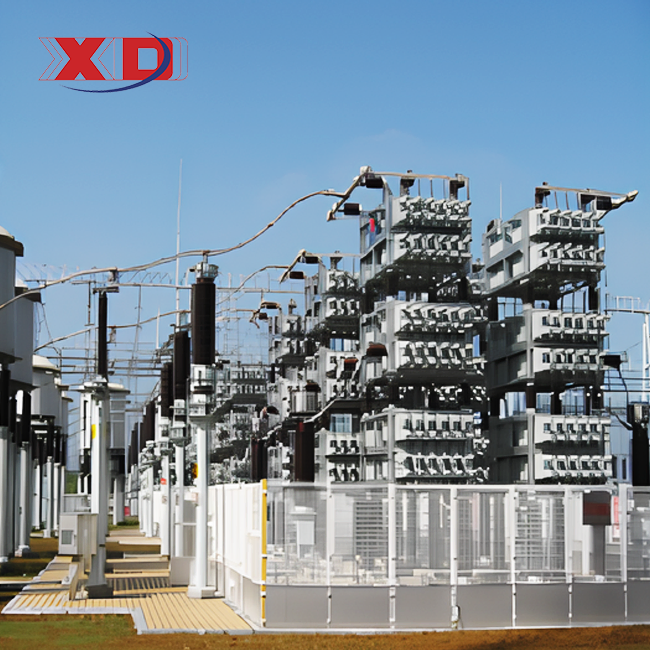
AKW Outdoor Frame-type Reactive Power Compensation Devices use sturdy galvanized steel constructions with high-voltage capacitors for system voltages of 6kV and higher without enclosure. Series reactors reduce harmonic resonance in each capacitor bank, which is important when variable speed motors and LED illumination cause frequency distortion. To maintain target correction levels, advanced controllers monitor voltage, current, and power factor at millisecond intervals and switch capacitor stages on or off.
The weatherproof design is vital for substations where interior space is expensive. The 300 kvar to 240 Mvar units accommodate modest industrial feeders and utility transmission substations. They operate reliably from -25℃ to +45℃, suitable for climates from Minnesota winters to Arizona summers.
Protection and Monitoring Features
Inbuilt safeties prevent overvoltage, capacitor element failure, and unbalanced phase currents. Resistors safely bleed leftover voltage within five minutes of disconnection, safeguarding maintenance staff. SCADA systems allow operators to track compensation performance, identify degraded capacitors before failure, and improve switching patterns based on historical load profiles in many installations.
Measurable Benefits for Industrial and Utility Operations
Energy Efficiency and Cost Reduction
Power factor correction from 0.80 to 0.95 decreases line losses by 28% for the same active power supply. Reduced distribution losses might save a 5-megawatt industrial site 80-120 MWh per year, or $8,000–$12,000 in energy expenses, depending on local rates. Utility power factor fines elimination offers 10-25% to monthly savings. The AKW Outdoor Frame-type Reactive Power Compensation Device pays for itself in 18–36 months through energy savings and avoided penalties.
Extended Equipment Lifespan
Cables, transformers, and switchgear run cooler with lower current flow. Heat is the principal electrical insulation aging process. Compensation reduces operating temperatures by 15-20°C, extending transformer life by 5-7 years. Reduced thermal stress and steady voltage supply prevent unexpected downtime and maintenance for motor bearings and windings.
Regulatory Compliance and Sustainability
Properly constructed compensating equipment simplifies IEEE 519 harmonic limitations and ANSI C84.1 voltage regulation. Quality frame-type units' series reactors prevent harmonic amplification that would violate grid interconnection agreements. Every kilowatt-hour of line loss removed reduces CO2 emissions from average U.S. grid power mixtures by 0.7 pounds.
Here are the core advantages compensation delivers across facility types:
- Utility penalty elimination: Power factor charges disappear when readings stay above contractual levels, safeguarding budget predictability.
- Voltage profile improvement: Correction raises end-of-line voltage by 3-8%, putting remote loads within equipment tolerance ranges.
- Thermal capacity recovery: Transformers and cables work 15-25% below thermal limitations, allowing load increase without infrastructure modifications.
- Grid stability contribution: Distributed compensation enhances voltage management and minimizes reactive power flows over crowded corridors, stabilizing utility transmission networks.
These benefits help facility managers balance energy costs, dependability goals, and capital budgets. System integrators use these advantages to build electrical systems that match customer needs without oversizing generating and distribution equipment.
Comparing Outdoor Frame-Type Solutions to Alternative Technologies
Traditional Indoor Capacitor Banks vs. Outdoor Frame Designs
Indoor low-voltage capacitor banks support 480V or 600V distribution systems. They need electrical rooms with forced ventilation and temperature control to dissipate heat. AKW Outdoor Frame-type Reactive Power Compensation Device medium-voltage exterior frame units immediately compensate for losses at 6kV, 13.8kV, or 34.5kV distribution buses without constructing expenses. Instead of re-engineering enclosed rooms, outdoor design allows natural convection cooling and capacity increase by adding frames.
Static vs. Dynamic Compensation Technologies
Arc furnace sub-cycle flicker applications benefit from static VAR compensators and STATCOMs' quicker reaction times. These power electronics solutions cost 3-5 times more than capacitor-based frame-type systems and need advanced maintenance. Frame-type capacitor adjustment improves power factor in 90% of industrial and utility applications where load changes take seconds or minutes rather than milliseconds at reduced capital and maintenance costs.
Maintenance Requirements and Lifecycle Economics
Quality outdoor compensators need capacitor testing every 3-5 years and annual visual checks. Modular design lets capacitor cans be replaced without system downtime. Even in coastal or industrial locations, robust design with broad creepage distances and pollutant resistance reduces insulator cleaning cycles. Hot-dip galvanized frames and sealed capacitor designs deliver 20-25 years of performance with minimum maintenance, unlike indoor systems that need filter replacements and cooling system maintenance.
Practical Procurement and Installation Guidelines
Capacity and Voltage Selection Process
Start with a one-week power quality audit of voltage, current, active power, reactive power, and harmonic spectrum across all operational modes. Use the formula kvar = kW × (tan θ₁ - tan θ₂), where θ₁ is the current power factor angle and θ₂ is the goal, to calculate compensatory capacity. System voltage should match your distribution configuration—6kV, 10kV, 13.8kV, or 34.5kV in North America. Modular systems with 20-30% capacity extension can accommodate future load growth.
Environmental and Site Considerations
NFPA 70E requires equipment-sized concrete pad foundations and maintenance clearances for AKW Outdoor Frame-type Reactive Power Compensation Device outdoor frame installations. At elevations exceeding 1,000 meters, insulation coordination and air clearances must be adjusted. Check that equipment ratings match ambient temperature ranges (-25℃ to +45℃). Extreme climates may require improved standards. In seismic zones 3-4, structural bracing and flexible bus connections are needed to resist ground motion without insulation breakdown.
Integration with Existing Power Management Systems
Modern compensators integrate with building management systems and utility SCADA networks via modbus RTU, DNP3, or IEC 61850. Specify real-time power factor, reactive power flow, capacitor bank status, alert circumstances, and energy metrics. To guarantee fault coordination, coordinate protection settings with overcurrent and voltage relays. Harmonic analysis should determine the series reactor percentage (6% or 12%) to detune the capacitor bank from system harmonics.
Installation teams should check grounding, discharge resistor operation, power factor step response, and protection trip verification during commissioning. For optimal configuration, quality manufacturers give extensive installation instructions and remote starting technical help.
Conclusion
Reactive power compensation optimises electrical systems, saving money, improving dependability, and extending equipment life. Robust frame-type outdoor solutions for utility substations, industrial facilities, and commercial complexes in harsh environments handle medium and high-voltage applications. These AKW Outdoor Frame-type Reactive Power Compensation Device systems are ideal for electrical system excellence organizations because to their proven capacitor technology, clever controls, and weather-resistant design. Proper remuneration protects your business from utility fines, frees system capacity for expansion, and shows energy stewardship that stakeholders and regulators reward.
FAQ
1. What distinguishes outdoor frame-type compensators from cabinet-enclosed designs?
Frame-type units place capacitors, reactors, and protective devices on open galvanized steel structures for direct weather exposure. Climate-controlled buildings and forced ventilation systems for enclosed cabinets are unnecessary. Open architecture improves heat dissipation through natural convection, decreases installation costs by eliminating building construction, and facilitates capacity growth. Their small design minimizes space and ensures functioning from -25℃ to +45℃.
2. How do these devices handle harsh environmental conditions?
In industrial, coastal, and desert areas, quality frame-type compensators with large creepage distance insulators withstand pollution. Sealed capacitors with good sealing prevent moisture penetration. For decades, hot-dip galvanized frames resist corrosion. Strong mechanical and seismic performance enable stability under adverse weather and ground motion. IP54 or IP55 certifications protect control electronics from dust and water while allowing maintenance.
3. Can compensation systems integrate with renewable energy installations?
Compensation is especially useful in solar and wind systems where power factor fluctuates with generation output. As generation varies throughout the day, frame-type devices at collecting substations regulate voltage for grid connectivity. Quality series reactors filter harmonic distortion from inverter-based generation, enabling facilities meet IEEE 519. Dynamic control adjusts compensation levels to match renewable production, optimizing power factor without operator involvement.
Partner with Xi'an Xikai for Comprehensive Reactive Power Solutions
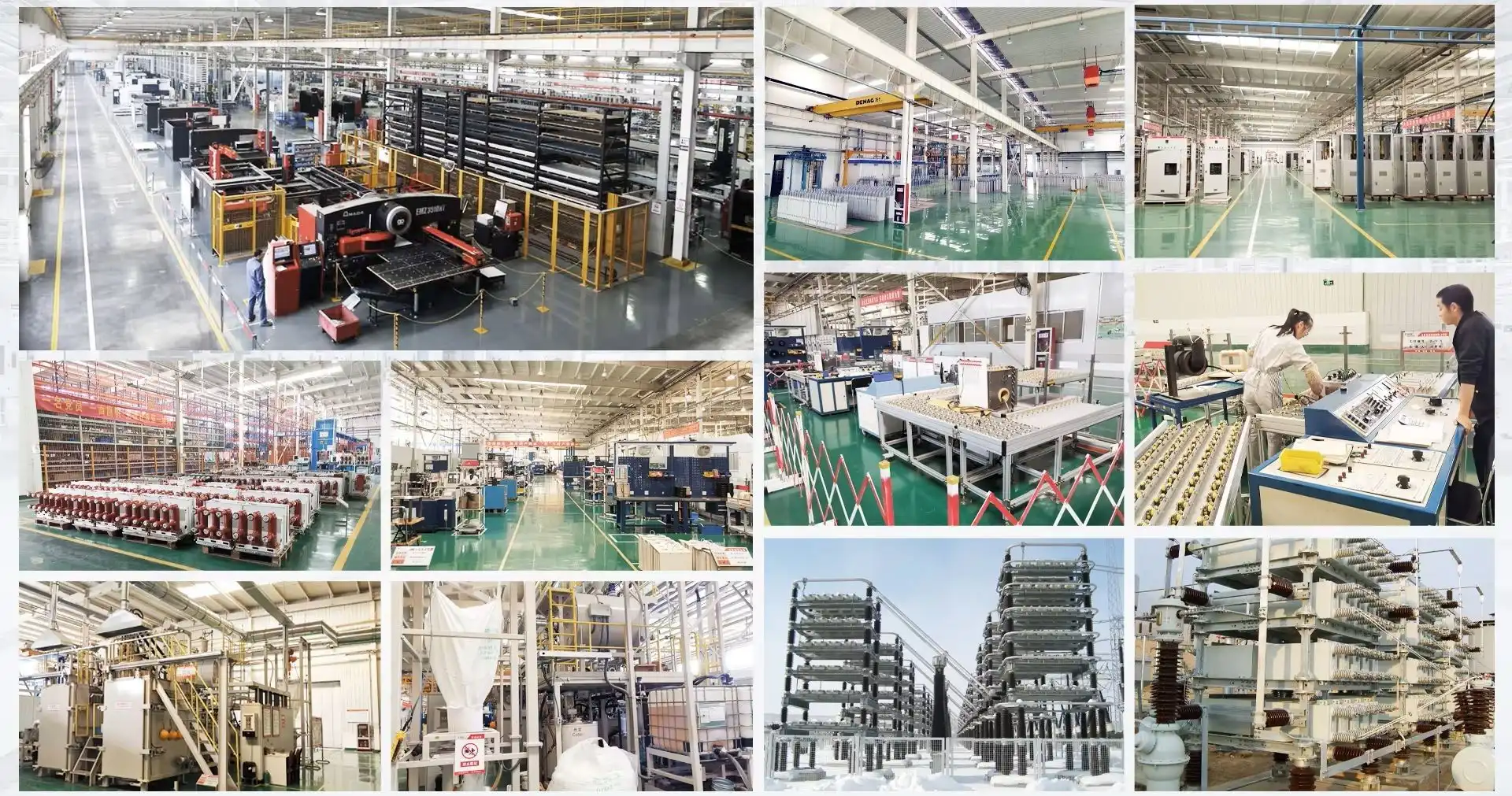
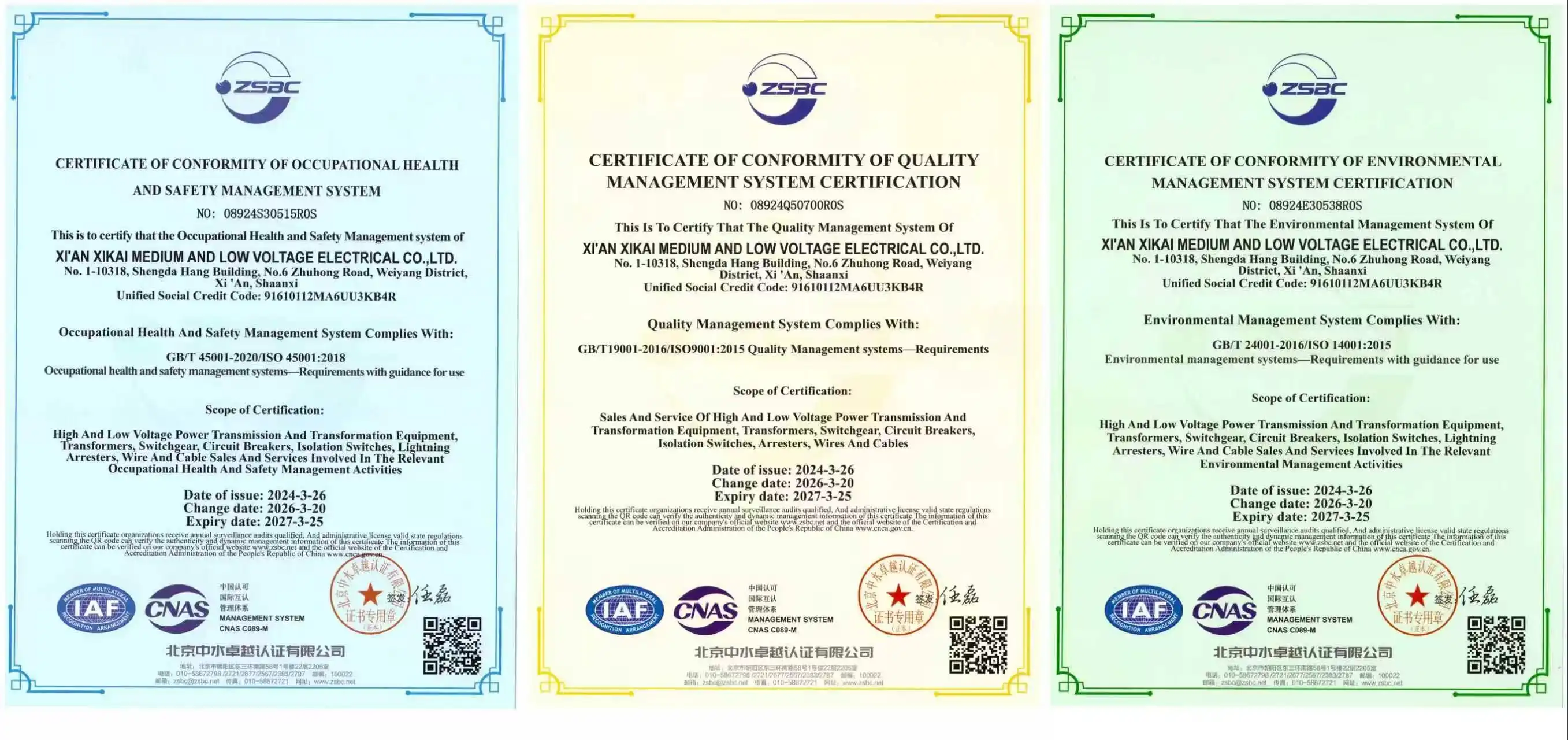
Xi'an Xikai Medium & Low Voltage Electric Co., Ltd. provides facility-specific engineering compensation solutions. ISO 9001-certified production and considerable field expertise support our AKW Outdoor Frame-type Reactive Power Compensation Devices for utility transmission systems, heavy industrial activities, and commercial sites throughout North America.
A prominent manufacturer and supplier, we provide scalable systems from 300 kvar to 240 Mvar, supporting system voltages from 6kV to 35kV with customizable possibilities for unique specifications. Our technical staff does load analysis and harmonic studies with your engineers during selection to optimize performance. Complete support covers installation, commissioning, and technical support. Contact our applications engineering team at serina@xaxd-electric.com, amber@xaxd-electric.com, or luna@xaxd-electric.com to explore how our proven compensation technology can improve electrical system efficiency and reliability.
References
1. Institute of Electrical and Electronics Engineers. (2014). IEEE Standard 519-2014: IEEE Recommended Practice and Requirements for Harmonic Control in Electric Power Systems.
2. Dugan, Roger C., McGranaghan, Mark F., and Beaty, H. Wayne. (2012). Electrical Power Systems Quality, Third Edition. McGraw-Hill Education.
3. National Electrical Manufacturers Association. (2013). NEMA CP 1-2013: Shunt Capacitors for Power Factor Correction and Voltage Control.
4. Electric Power Research Institute. (2015). Power Factor Correction and Harmonic Mitigation in Industrial Distribution Systems: Technical Guidelines and Best Practices.
5. International Electrotechnical Commission. (2011). IEC 60871-1:2005+AMD1:2011: Shunt Capacitors for A.C. Power Systems Having a Rated Voltage Above 1000 V.
6. American National Standards Institute. (2016). ANSI C84.1-2016: Electric Power Systems and Equipment—Voltage Ratings (60 Hertz).