What Is Metallized Film Capacitor and How It Works in Reactive Power Systems
2026-06-26 17:43:52
When you're in charge of power quality in factories, data centers, or electricity grids, knowing the right parts can mean the difference between expensive downtime and smooth operation. A Metallized Film Capacitor is one of the most important technologies in reactive power adjustment because it can fix itself, is very reliable, and lasts a long time. Ultrathin layers of metal, usually aluminum or zinc, are vacuum-deposited onto plastic film dielectrics like polyester or polypropylene to make these passive parts. Because of how they are built, they can fix power factor imbalances, keep voltage changes stable, and block harmonics in AC systems. This makes them essential for engineers and procurement managers looking for long-lasting, low-cost ways to condition power.
 |
 |
Introduction
Industrial and commercial processes always have problems with reactive power control. Inductive loads from motors, transformers, and HVAC systems throw off the balance between voltage and current. This wastes energy, damages equipment, and costs the power company money. This guide solves these problems by looking at how Metallized Film Capacitors work in reactive power systems, mainly when they are used to fix power factor problems. This content is useful for purchasing managers, electrical engineers, EPC companies, and system designers because it tells them how to choose products, how to buy them, and what their technical specs are. By knowing how these capacitors help with voltage stabilization, harmonic filtering, and making energy use more efficient, B2B buyers can make smart choices that increase working uptime, lower energy costs, and make sure that regulations are followed in a wide range of industrial settings.
Understanding Metallized Film Capacitors: Construction and Working Principle
Core Structural Design
Metallized Film Capacitors are different from standard film-foil types because of how they are built. Thin plastic films, usually 3 to 12 micrometers thick, go through vacuum metallization during production. This is where electrode layers only 0.02 to 0.1 micrometers thick are put directly onto the insulating surface. This process makes parts that are very small and have a high mass efficiency. The films are wound around each other to make cylinders or rectangles. They are then put in protected cases and given connections for connecting to electricity. Ceramic and electrolytic capacitors have limited capacitance values at higher voltages and shorter lifespans, respectively. Metallized film designs, on the other hand, operate without polarity limits and are more stable across a wider temperature range.
Self-Healing Mechanism Explained
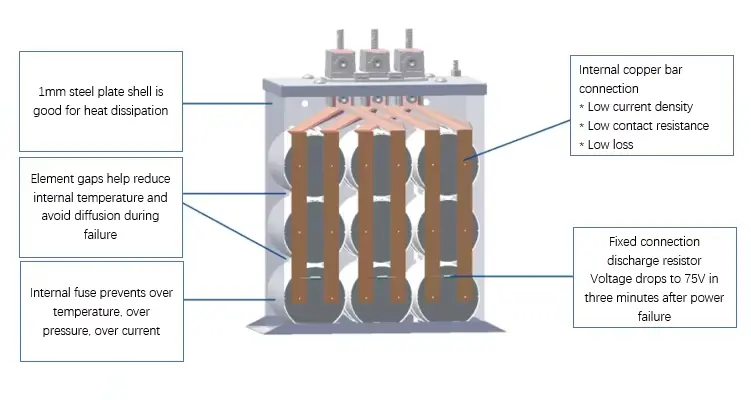
The trait of self-healing is the main benefit. When voltage stress leads to localized dielectric breakdown, the arc energy burns off the thin layer of metal around the fault point in a matter of microseconds. This makes an insulating gap that keeps the flaw from affecting the capacitor's general function. The part keeps working with very little capacitor loss, so it doesn't have the catastrophic short-circuit failures that happen with electrolytic options. This trait is very useful in reactive power systems that get a lot of voltage jumps from switching events or lightning strikes. The self-healing mechanism increases the operational lifespan beyond 100,000 hours in properly derated applications. This saves facility owners money on repair costs and system downtime.
Operating Principle in Reactive Power Compensation
When connected to an AC power source, inductive loads draw delayed current, which makes reactive power demand. To counteract this effect, Metallized Film Capacitors add leading current, bringing the power factor closer to unity. These parts match the voltage and current steps so that line losses are kept to a minimum, transformers don't get too hot, and real power use is maximized. In power factor adjustment banks, several capacitor units join in different ways, like delta, wye, or grounded wye, to meet the voltage and reactive power needs of the system. The low dissipation factor—usually less than 0.001 at 50Hz—makes sure that very little internal heat is produced. This keeps the performance stable even when AC stress is applied continuously at the rated voltage.
Key Characteristics and Advantages of Metallized Film Capacitors
Electrical Performance Parameters
Capacitance steadiness is very good no matter what the working conditions are. Polypropylene-based versions keep their tolerance within ±3% at temperatures ranging from -25°C to 50°C, while polyester versions are better for setups with limited room because they use less volume. Insulation resistance is higher than 30,000 megohm-microfarads, which stops leaking currents that lower efficiency. It can handle frequencies from DC to several hundred kilohertz, which means it can be used for both fundamental frequency adjustment and harmonic filters. Electrolytic capacitors lose their capacitance at high frequencies, but Metallized Film Capacitors technology keeps its impedance features stable. This makes it ideal for modern variable frequency drive settings where harmonic content is a big problem.
Comparison with Alternative Technologies
When compared to other types of capacitors, the benefits become clear. Ceramic capacitors can handle high frequencies, but they have problems with piezoelectric effects and changes in the voltage coefficient that make them less capacitance when voltage is applied. Electrolytic capacitors have a high capacitance density, but they need to be watched for orientation, can't handle high temperatures, and fail when a huge amount of pressure builds up. Wire-wound film capacitors can handle more power, but they can't fix themselves and take up more space. When used with high power, tantalum capacitors can be unreliable. Metallized Film Capacitors strike a balance between these trade-offs, providing fail-safe operation, non-polar properties, and temperature robustness that meet the strict needs of industrial power systems.
Real-World Industrial Applications
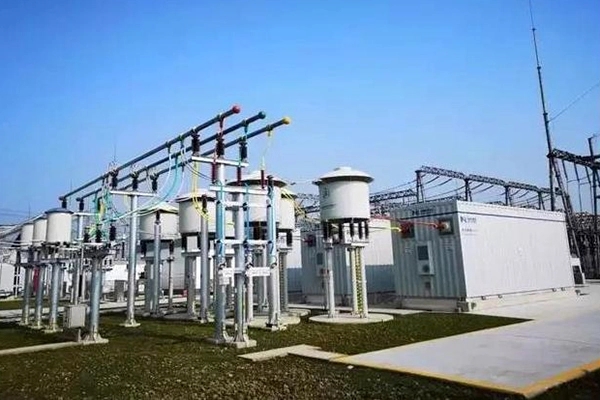
Power factor penalties happen in manufacturing plants that use CNC machining centers when inductive motor loads make up most of the consumption patterns. By adding Metallized Film Capacitor banks, these extra fees are taken away, and delivery costs are cut by 15–30%. Uninterruptible power supplies are used in data centers. These supplies block switching noise and keep the DC bus voltage stable. Metallized Film Capacitors are needed for renewable energy systems like solar inverters and wind turbine converters to handle ripple currents that are more than 100 times their stated capacity during grid synchronization events. Hospitals need solutions that are flame-resistant, quiet, and meet NFPA 70 fire codes. Designs made of metallized film work at less than 45dB and have thermally-rated casings. These different uses show how flexible the technology is across a wide range of industries, from steel mills to business buildings, meeting different power conditioning needs with standard component platforms.
How to Select the Best Metallized Film Capacitor for Your Application
Voltage and Capacitance Specification
The first step in selection is figuring out how much reactive power adjustment is needed. Figure out the required capacitance values by figuring out the desired power factor increase and the features of the current inductive load. To account for short-term overvoltages, voltage ratings must be higher than the system's standard voltage by a safety range, which is usually 1.1 to 1.3 times. Choose models with a rating of 525V or higher for 480V systems. The accuracy of tuning is affected by the capacitance tolerance. Standard differences are ±5% to ±10%, but tighter limits are possible for precise uses. Check that the ripple current values take into account the harmonic content that is present in setups with a variable speed drive or a rectifier that does most of the work. This is because too much current stress speeds up aging by heating up the components inside.
Dielectric Material Considerations
Polypropylene film has the lowest dissipation factor and best high-frequency performance. This makes it perfect for harmonic filters or uses where the ambient temperature needs to be raised to 85°C with derating. Polyester film has a 30–40% higher volumetric efficiency but a slightly higher loss tangent. It can be used for general power factor correction where room limits are the most important design issue. Mixed dielectric constructions use the heat stability of polypropylene and the density of polyester. The environment affects the choice of material. For example, places with a lot of humidity need better encapsulation and termination closing to keep moisture out, which eats away at the metal layers and causes them to fail early.
Introducing the 50KVAR Self-Healing Capacitor for PFC: Square BKMJ Series
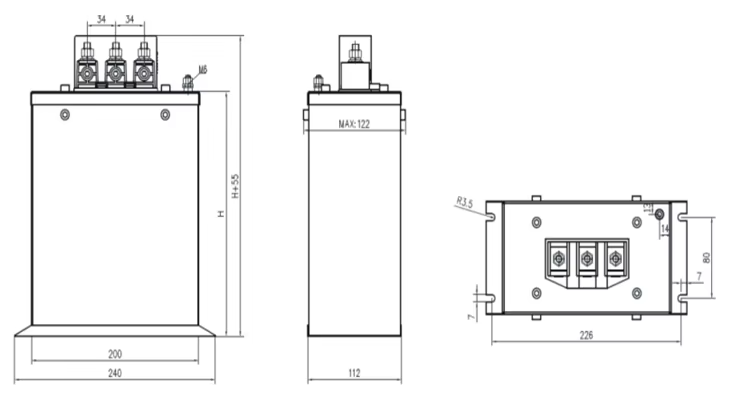
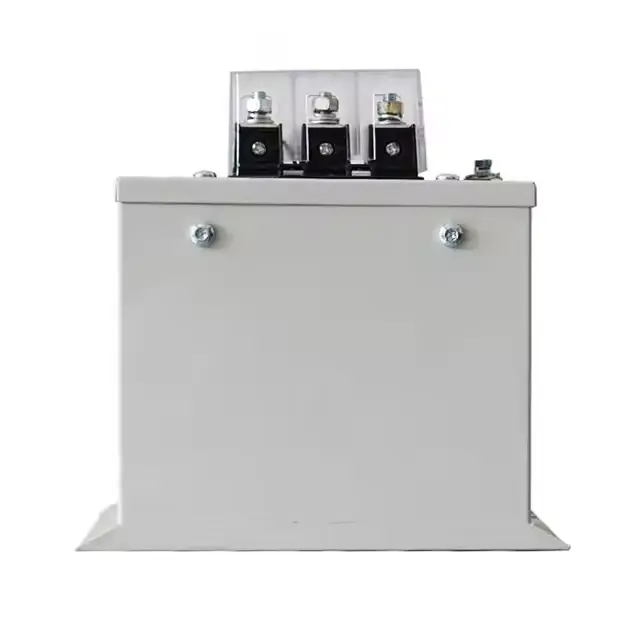
The 50KVAR Self-Healing Capacitor for Power Factor Correction (Square BKMJ series) is a reliable solution for medium-voltage industrial systems, designed for efficient indoor installation across 100V–1000V applications. Its galvanized steel housing withstands harsh environments from -25°C to 50°C and altitudes up to 2000 meters, while maintaining an ultra-low dissipation factor below 0.001 at 20°C/50Hz, minimizing energy loss and extending service life. Self-healing metallized film technology isolates dielectric faults instantly, preventing failure propagation and reducing maintenance needs. Flexible configurations (delta, wye, grounded wye, or three-phase ungrounded) are supported via M6–M10 terminals, with installation requiring ≥50 mm wall clearance for cooling. A capacitance tolerance of -5% to +10% allows precise reactive power tuning without overcompensation risks. Suitable for CNC plants, automated lines, renewable energy systems, and commercial facilities, it mitigates power factor penalties, absorbs high surge currents during motor start-up, reduces harmonic issues, and ensures stable grid performance. With quiet operation (<45 dB), flame-resistant materials, and compliance with NFPA 70 standards, it is ideal for both new EPC projects and retrofit applications.
Procurement Guide: Where and How to Buy Metallized Film Capacitors for Bulk Orders
Supplier Qualification and Certification
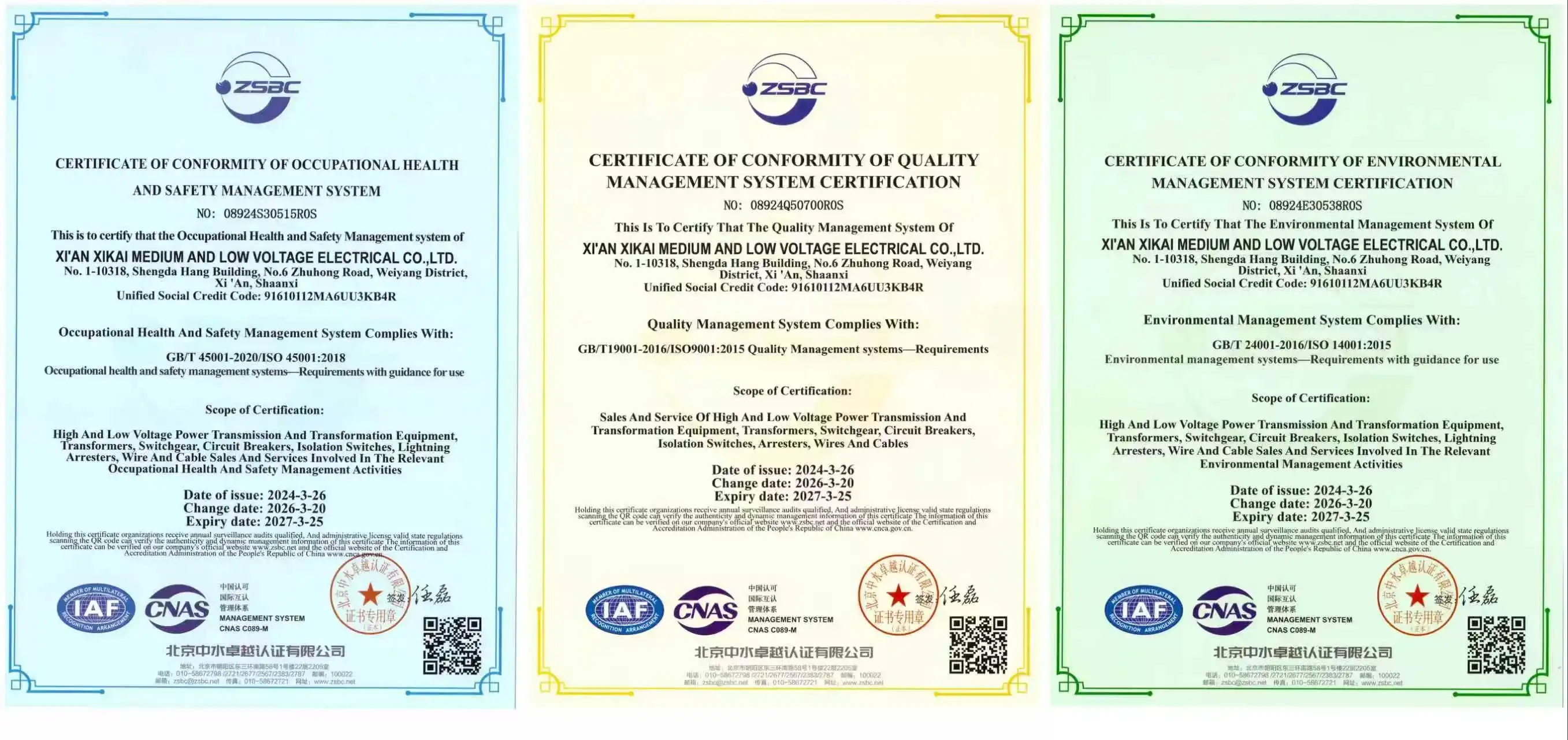
Checking sellers' industry certifications that show they follow quality management and rules is the first step to successful buying. ISO 9001 certification verifies controls for the manufacturing process, and ISO 14001 certification verifies environmental management systems that reduce trash from output. RoHS compliance makes sure that harmful chemicals like lead and mercury stay below the limits that are allowed. This is very important for technology that is going to be sold in Europe. REACH registration shows that chemical safety data is open, which is needed by EU rules. Before committing to big orders, make sure that Metallized Film Capacitors meet published specifications by asking for third-party test reports that back up performance claims. These reports should include dielectric strength tests, temperature cycling endurance, and self-healing validation.
Pricing Structures and Order Logistics
Large quantities of Metallized Film Capacitors are priced based on their number, with big price drops happening at 500, 1000, and 5000 units. When production schedules and foreign shipping are taken into account, lead times for typical configurations are between four and six weeks. Custom designs, like specific voltage ratings, terminal arrangements, or housing changes, make lead times eight to twelve weeks longer and need to be taken into account early on in the project planning stages. Payment terms usually include a 30% deposit, with the rest due after review but before shipping. However, buyers who have worked with the seller before may be able to arrange net-30 or net-60 terms. When planning logistics, you should think about which incoterms to use. For example, FOB shipping point passes risk at departure, while CIF delivery includes insurance and freight to the target port, which makes the import process easier.
Customization Capabilities for OEM Requirements
For OEM applications, customization extends beyond standard specifications to meet project-specific requirements. Voltage ratings can be adapted for non-standard systems such as 690V or 600V networks, while capacitance is tuned to precise reactive power targets. Terminal configurations can be modified to match busbar layouts or panel constraints, and enclosures can include custom branding, part numbers, or QR codes. Packaging can also be tailored for automated lines or international logistics, with engineering collaboration enabling faster design validation and reduced development risk.
Future Trends and Innovations in Metallized Film Capacitors for Reactive Power Systems
Advanced Dielectric Materials Development
The goal of research into the next generation of dielectric films is to make them stronger against breakdown while also making them thinner. This will allow for higher capacitance densities without lowering the voltage values. Nanocomposite materials with ceramic bits mixed in with polymer layers have 20–30% higher energy density than regular polypropylene films. These improvements help the move toward smaller sizes that is being driven by uses that need to save room, like modular UPS systems and compact motor drives. At the same time, high-temperature polymer versions raise the operating temperature to 125°C, which means they can be used in more aerospace, automotive, and geothermal uses where temperatures are higher than usual.
Smart Capacitor Integration and Monitoring
Connecting passive Metallized Film Capacitors to the internet of things turns them into active tracking points in smart power distribution networks. Embedded sensors measure the temperature inside, the leaking current, and the capacitance shift. They send this information to predictive maintenance platforms using wireless protocols. This real-time insight makes condition-based replacement methods possible, which stops unplanned breakdowns by finding degradation before it leads to a catastrophic failure. Automated switching systems change the engagement of capacitor banks on the fly in response to changes in the load. This makes the power factor more efficient all the time instead of depending on set compensation plans. These smart features work with larger efforts to update the power grid, making transport and distribution systems more reliable and efficient.
Sustainability and Lifecycle Management
Concerns for the environment have led to the creation of container materials that can be recycled and lead-free ending methods that make it easier to get rid of old electronics. Extended producer responsibility rules in European and Asian markets encourage companies to make goods that make it easier to recycle and reuse materials. Lifecycle studies measure the amount of stored energy and carbon that a product or service uses. This helps buyers choose providers that are good for the environment. Refurbishment programs reuse working capacitor parts from old equipment, which cuts down on the use of new materials and provides cost-effective options for projects that need to stick to a budget. These efforts to protect the environment are similar to corporate social responsibility goals that are having a bigger effect on what international facility owners and utilities that are trying to reach carbon neutrality goals buy.
Conclusion
Metallized Film Capacitors offer the best reliability, safety, and performance in reactive power systems. This makes them necessary parts for industrial facilities, utility workers, and system designers that want to improve operations. Their ability to self-heal, keep their shape at high temperatures, and not be affected by polarity are all very useful in fixing power factor, reducing harmonics, and controlling voltage. To find the best option, you need to carefully look at voltage levels, dielectric materials, environmental conditions, and the supplier's ability to match technical specs with project needs. The 50KVAR Self-Healing Capacitor for PFC is a great example of useful tech that is made to provide the most uptime and energy economy. As power systems move toward better, more environmentally friendly designs, Metallized Film Capacitors will continue to be very important for keeping the grid stable and equipment lasting a long time.
FAQ
1.What factors have the greatest impact on Metallized Film Capacitor lifespan in reactive power environments?
Operating temperature is the most important factor when it comes to lifespan, since every 10°C drop in atmospheric conditions doubles the expected service life. Minimizing dielectric stress means reducing the applied voltage to 70–80% of the maximum capacity. Due to higher ripple current heating, harmonic content speeds up age. When sizing capacitors, it is important to pay close attention to overall harmonic distortion levels. Metals corrode when they come into contact with moisture, so covering integrity is very important for installs near the coast or outside. The partial discharge inception voltage changes with elevation; systems above 1000 meters need derating or higher voltage ratings.
2.In terms of power factor adjustment, how do Metallized Film Capacitors stack up against electrolytic capacitors?
Metallized Film Capacitors don't work with polarity, so fitting mistakes caused by reverse polarity don't damage electrolytic types. Their self-healing system makes them fail-safe, which is different from electrolytic pressure buildup and breakage risks. Temperature stability is still better, with only a small change in capacitance from -25°C to 85°C compared to 20–30% change in electrolytics. Lifespan is more than 100,000 hours, while electrolytics only last between 5,000 and 10,000 hours in the same settings. Even though the starting costs are higher, metallized film technology has lower total ownership costs because it doesn't need to be replaced as often and is more reliable.
3.Can Metallized Film Capacitors be changed to fit high-voltage commercial needs that aren't covered by the catalog?
Customization options include voltage levels above 1000V for specific medium-voltage uses, capacitance values that are fine-tuned for accurate reactive power estimates, and terminal configurations that fit different busbar shapes. Changes to the enclosure can be made to fit harsh environments by adding a conformal covering, sealing the connections, or giving the enclosure explosion-proof ratings for dangerous areas. Custom designs usually have lead times of eight to twelve weeks, and there is a minimum order quantity that is needed to cover the costs of engineering support and performance gains that are specific to the application.
Partner with Xi'an Xikai for Reliable Metallized Film Capacitor Solutions
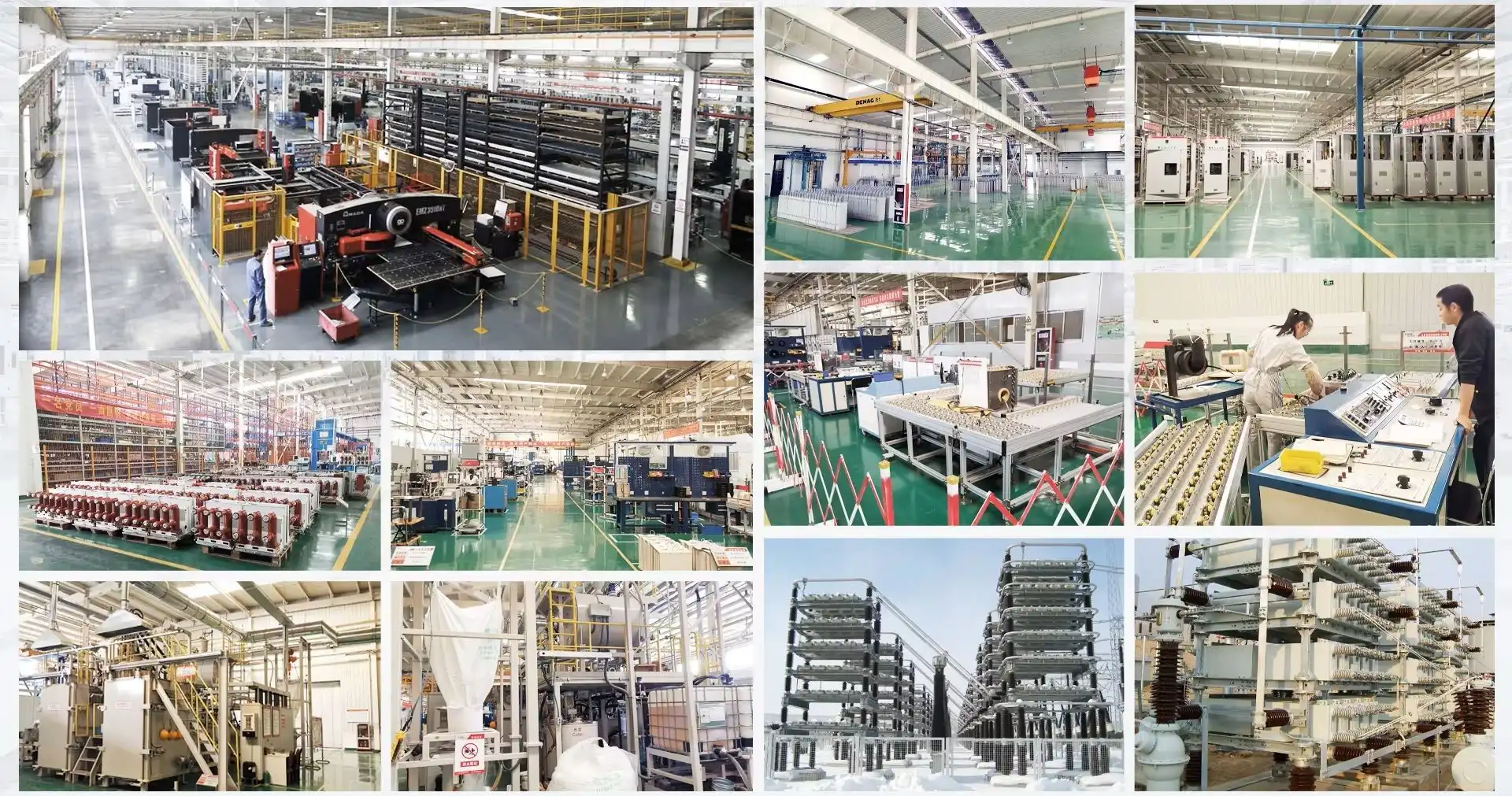
Xi'an Xikai Medium & Low Voltage Electric Co., Ltd. has been making things for decades and can help businesses and factories with their power delivery problems. We are a Metallized Film Capacitor seller that is dedicated to quality and new ideas. We offer complete reactive power compensation solutions that are backed by ISO certification and strict testing methods. Our 50KVAR Self-Healing Capacitor for PFC (Square BKMJ series) is built to last and can handle the tough conditions found in industrial plants, data centers, and power substations. Its self-healing technology has been tested and proven to work. Our engineering team works closely with buying professionals to make sure that the system works well and doesn't cost too much, whether you need standard settings or specifications that are made just for you. Get in touch with our experts at serina@xaxd-electric.com、amber@xaxd-electric.com、 luna@xaxd-electric.com to get detailed datasheets, sample evaluations, and quotes that are specifically made to meet your power quality needs.
References
1. Institute of Electrical and Electronics Engineers. (2019). IEEE Standard 18-2012: IEEE Standard for Shunt Power Capacitors. IEEE Standards Association.
2. Sarjeant, W.J., Zirnheld, J., & MacDougall, F.W. (1998). "Capacitors: Past, Present, and Future." In Handbook of Low and High Dielectric Constant Materials and Their Applications. Academic Press.
3. International Electrotechnical Commission. (2014). IEC 60831-1: Shunt Power Capacitors of the Self-Healing Type for A.C. Systems Having a Rated Voltage up to and Including 1000V. IEC Central Office.
4. Rabih, A.A., & Karady, G.G. (2013). "Performance Analysis of Metallized Polypropylene Film Capacitors in Reactive Power Compensation." IEEE Transactions on Power Delivery, 28(4), 2234-2241.
5. Beltle, M., & Tenbohlen, S. (2018). "Self-Healing Mechanisms in Metallized Film Capacitors for High-Voltage Applications." Journal of Electrostatics, 94, 82-89.
6. Reed, C.W., & Cichanowski, S.W. (1994). "The Fundamentals of Aging in HV Polymer-Film Capacitors." IEEE Transactions on Dielectrics and Electrical Insulation, 1(5), 904-922.