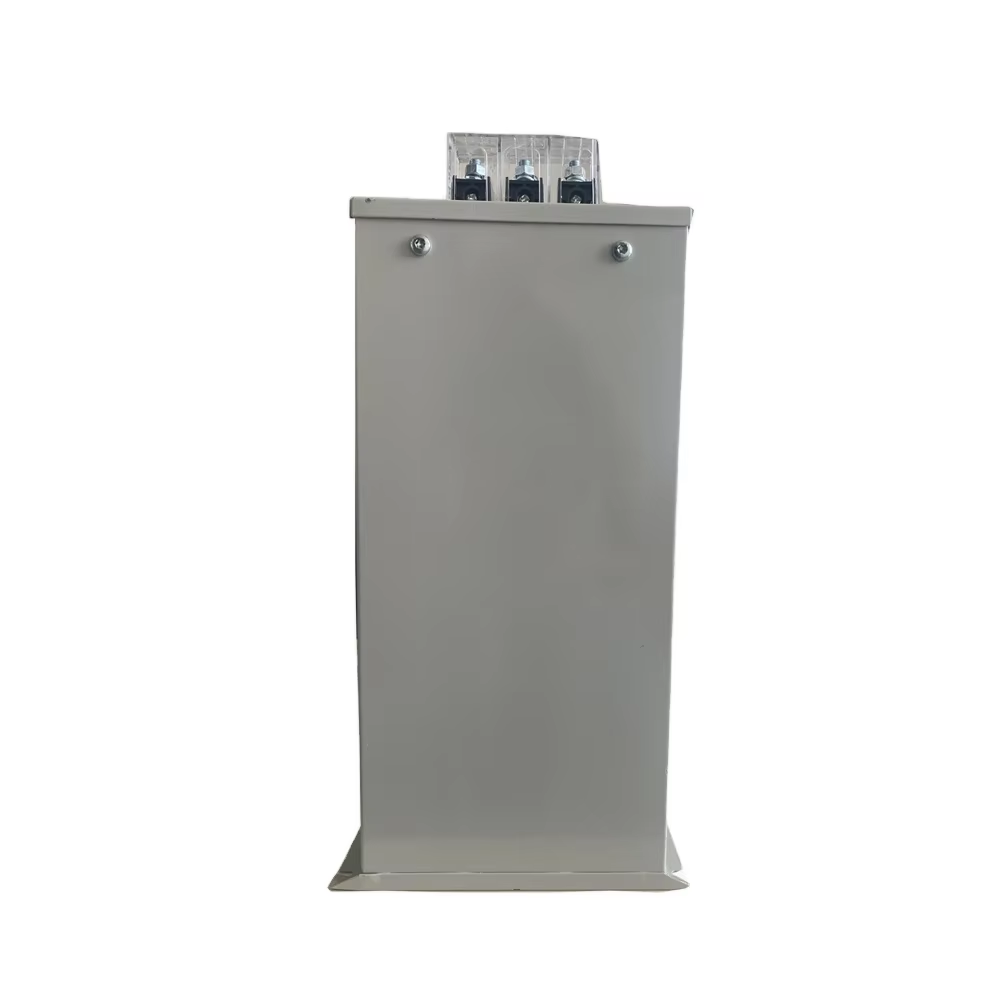
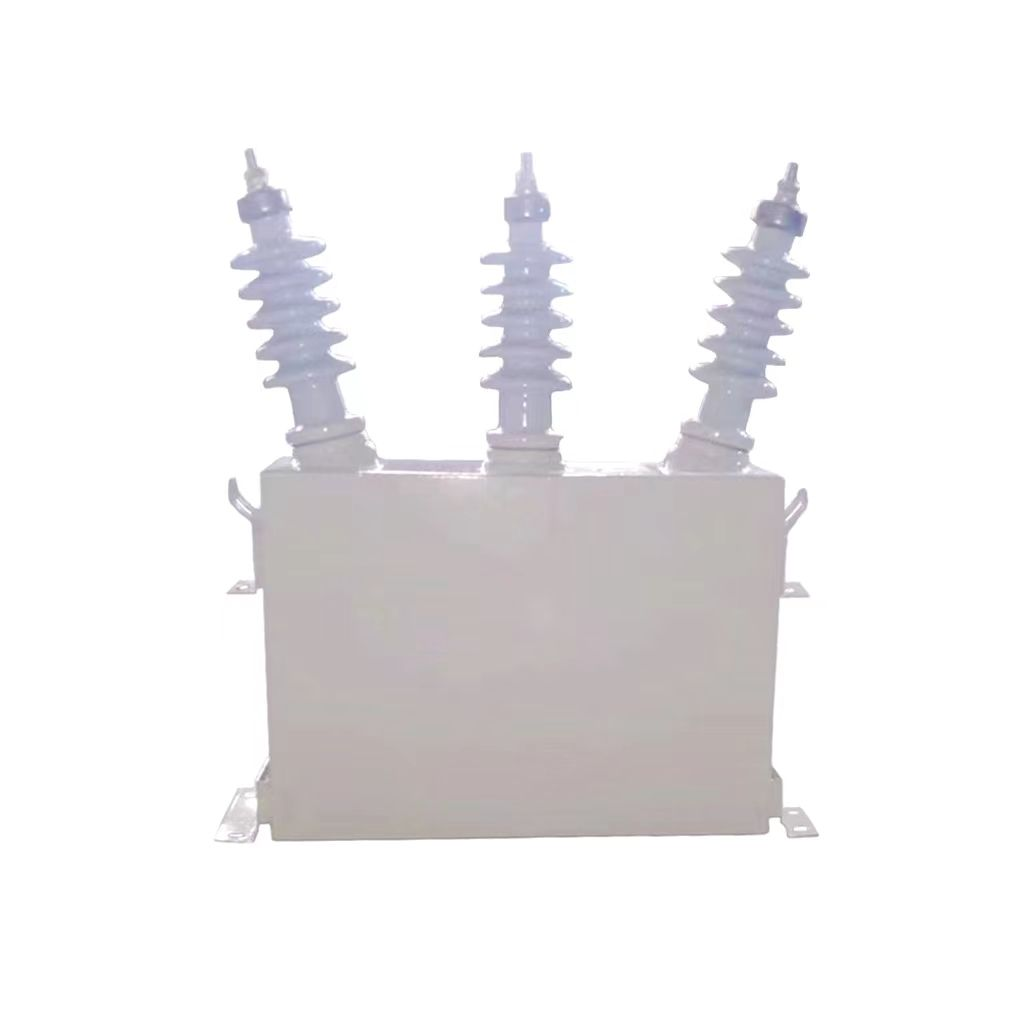
Key Benefits of Shunt Capacitors for Industrial Applications
2026-04-09 15:47:26
Reactive power compensation is very important when your manufacturing plant has to deal with power factor penalties or when your data center has trouble with voltage instability. High Voltage Shunt Capacitor systems work well because they send out leading current that balances out lagging loads from things like motors, transformers, and arc furnaces. These gadgets improve the way the grid works, keep voltage levels stable, and cut down on transmission losses. In the end, they lower costs and keep sensitive equipment safe. Shunt capacitors are essential for keeping power quality stable and extending the life of infrastructure in many fields, from steel production to hospital buildings.
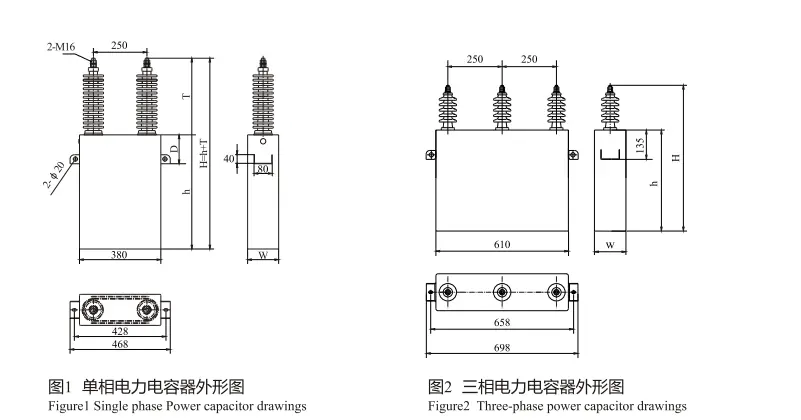
Understanding High Voltage Shunt Capacitors
Every industrial facility that uses heavy machinery and runs all the time has problems with power quality. Electrical systems are inefficient because of reactive power, which is the power that doesn't work and moves back and forth between sources and inductive loads. In this case, High Voltage Shunt Capacitor units make a real difference.
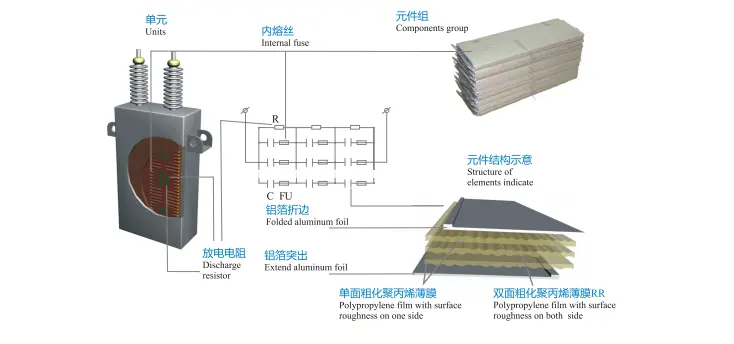
What Are Shunt Capacitors and How Do They Function?
High Voltage Shunt Capacitors provide leading current to offset lagging currents from inductive loads like motors and welding machines. By improving power factor toward unity, they reduce total grid current and transmission losses. Modern designs use metalized polypropylene film dielectrics for low dissipation and high breakdown resistance, with over-voltage protection and discharge resistors to safely dissipate residual voltage. They operate at 50Hz or 60Hz to meet global grid standards.
Types of Shunt Capacitors for Industrial Demands
Capacitor banks come in fixed, switched, and automatic types. Fixed banks provide constant reactive support, switched banks adapt to load changes, and automatic banks use controllers for real-time adjustments. The BKMJ0.4KV Submerged Arc Furnace Capacitor handles harsh conditions, supports currents up to 2.5× rated value, and features self-healing technology with a dry-type construction, ensuring long service life even in demanding metallurgical applications.
Core Benefits of High Voltage Shunt Capacitors in Industrial Settings
When you use reactive compensation technology, you get real financial and operational benefits that have a direct effect on your bottom line. In the United States, utilities charge more when the power factor falls below 0.95, and the fees get higher as efficiency goes down. Aside from not having to pay these fees, High Voltage Shunt Capacitor systems that are the right size unlock many other benefits.
Power Factor Correction and Cost Reduction
Low power factor forces systems to carry excess current, raising demand charges and transmission losses. High Voltage Shunt Capacitors supply reactive power locally, reducing current through transformers and cables. Correcting a 0.70 power factor to 0.95 can cut current by 43%, saving industrial users 15–25% of annual electricity costs. Low-loss, dry-type designs like the BKMJ0.4KV minimize active power use and simplify maintenance during plant upgrades.
Voltage Stabilization and Equipment Protection
Long feeders and heavy loads cause voltage drops, harming motors, lighting, and sensitive electronics. Shunt capacitors raise voltage at connection points, keeping end-of-line equipment within spec. Built-in over-voltage protection devices safeguard loads from surges, lightning, and switching transients, working with facility-wide surge plans to prevent insulation puncture and solid-state damage.
Extended Equipment Lifespan and Reduced Maintenance
High currents and poor power factor accelerate aging of transformers, motors, and cables. Reactive compensation lowers system current, reducing heat and insulation stress. Circuit breakers and contactors experience less wear, while self-healing capacitor technology maintains capacitance despite localized dielectric faults, ensuring continuous operation in 24/7 production environments.
Real-World ROI Analysis
A steel mill improved power factor from 0.68 to 0.96 using switched capacitor banks, eliminating $47,000 monthly fines and cutting demand charges by 18%. With a $285,000 investment, annual savings reached $623,000, giving a 5.5-month payback. Over 15 years, net present value exceeded $7.2 million, showing reactive compensation’s strong role in operational cost reduction and energy efficiency.
Choosing the Right High Voltage Shunt Capacitor for Your Industry
To choose the right reactive compensation equipment, you need to carefully look at your power system's features, load profiles, and operational limits. If the specifications aren't right, it could lead to bad correction, harmonic resonance, or equipment breaking down too soon. High Voltage Shunt Capacitor selection is critical to avoiding these pitfalls.
Shunt Versus Series Capacitor Applications
Series capacitors connect in-line with transmission conductors to lower line reactance, mainly helping utilities move power over long distances. High Voltage Shunt Capacitors connect in parallel at the load, ideal for industrial and commercial sites. Parallel installation supports voltage locally, allows incremental capacity, and is easier to retrofit. Shunt designs dominate industrial reactive compensation projects due to these practical advantages.
Key Selection Criteria for Industrial Applications
Voltage rating, reactive power capacity, harmonic environment, and environmental conditions are key. Capacitors like the BKMJ0.4KV suit low-voltage industrial panels, withstand harmonic surges, and operate in harsh temperatures. Correct kVAR sizing uses kVar = kW × (tan θ₁ − tan θ₂), while detuned reactors prevent resonance. Control strategy—fixed, switched, or automatic—depends on load variability and facility needs.
Quality Benchmarks and Manufacturing Standards
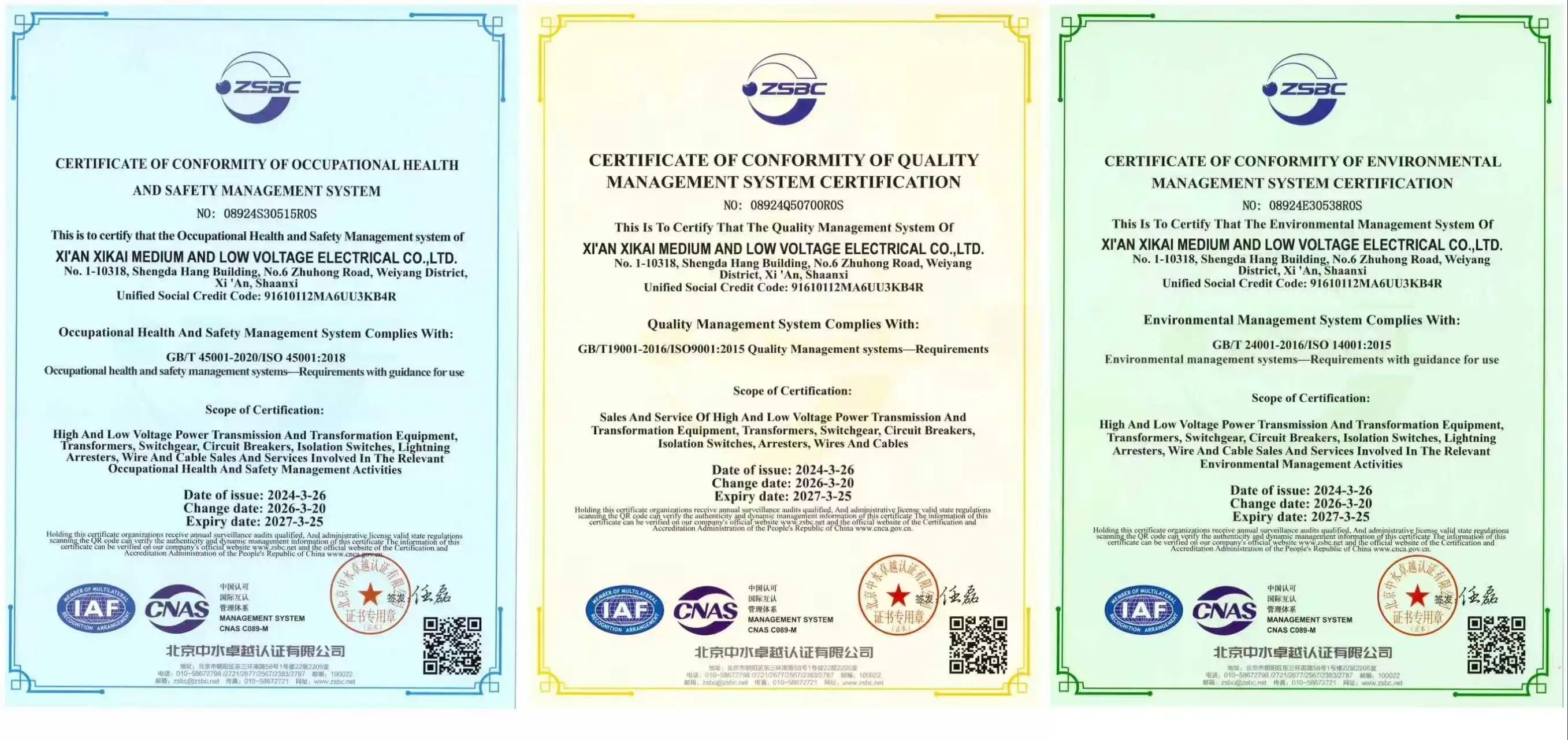
Reputable manufacturers follow IEC 60831/60871, IEEE 18, UL, CE, and CCC standards. Xi'an Xikai tests each capacitor for dielectric strength, capacitance, partial discharge, and thermal endurance under ISO 9001 processes. Automated production ensures consistency, while third-party validation provides confidence in performance, reliability, and safety across industrial applications.
Custom Solutions and Procurement Strategies
Custom designs handle unique voltages, space limitations, harsh conditions, or integration with existing equipment. Procurement should consider total cost of ownership, including technical support, warranty, spares, and delivery reliability. Bulk orders and multi-year supply agreements reduce costs, while partnering with experienced suppliers ensures long-term compatibility for multi-site or phased installations.
Maintenance, Testing, and Troubleshooting for Optimal Performance
Reactive compensation systems work well for decades if they are properly maintained, but if they aren't, they break down quickly and cost a lot to fix. Setting up proactive maintenance plans will protect your High Voltage Shunt Capacitor investment and make sure that the power quality benefits keep coming.
Routine Maintenance Schedules and Best Practices
Check capacitor casings for bulging, leakage, and discoloration every three months. Thermographic scans identify hot spots before they cause problems because weak connections produce heat. Test bus connections and terminal lug torque to avoid vibration and temperature loosening. Annual maintenance comprises removing dust and other heat-blockers, testing the discharge resistor using an ohmmeter, and monitoring the system's protective relay settings. Switchgear contacts may be inspected and lubricated to prevent arcing and wear on High Voltage Shunt Capacitor systems. Previous technologies required oil samples and dielectric fluid testing. The dry-type BKMJ0.4KV capacitor does not. Its sealed design avoids dielectric degradation by moisture. Discharge resistors lower residual voltage in minutes after unplugging. Regular inspections simplify maintenance and increase worker safety.
Testing Methodologies for Performance Verification
Equipment maintains rated values within error limitations during capacitance testing. Growing capacitance loss shows difficulties with the BKMJ0.4KV standard's -5% to +10% variation. Portable capacitance bridges or power quality analyzers measure off-power readings. DC voltage is applied between terminals and ground during insulation resistance testing. Measurement of leakage current suggests insulation. Exceed manufacturer minimums for megohms. Minimum values for low-voltage units are 1000 MΩ or above. Insulation decreases with age or dampness. Tan delta testing evaluates dielectric losses by monitoring applied voltage-produced current phase angle. Dielectrics with tan delta values < 0.0005 have modest losses, but worn insulation has high losses. The exact evaluation may identify wear and tear before it emerges, allowing predictive replacement.
Troubleshooting Common Faults and Failure Modes
Most capacitor bank failures cause one unit to bulge, break, or die. Fuse internals isolate damaged parts without upstream protection. This ensures reactive compensation when one unit fails. Monitoring systems use unbalanced currents to find High Voltage Shunt Capacitor problems in multi-unit assemblies. Overvoltage and overcurrent from harmonic resonance strain capacitors beyond design. This problem produces loudness, rapid heating, and early failures despite correct size. Resonance frequencies help power quality recorders choose the best reactor for harmonic analysis. With a maximum current rating of 2.5×In, the BKMJ0.4KV capacitor can handle harmonic currents in arc furnace and welding applications. Harmonics, voltage fluctuations, and activation inrush currents may activate safety relays without reason. Adjusting relay settings or applying microprocessor-based harmonic constraint prevention may fix many incorrect trips. For manual switching, synchronous closure contactors that activate at voltage zero-crossings and restrict inrush currents minimize contact bouncing and arcing.
Environmental and Operational Factors Affecting Lifespan
Temperature accelerates High Voltage Shunt Capacitors' aging. Insulation life halves for every 10°C above recommended. Maintaining design operating temperatures needs airflow around capacitor installations and shaded electronics. Stress from voltage increases dielectric breakdown. Continuous use at 110% of rated voltages drastically lowers service life. Overvoltage grid installations should use voltage regulation or a cautious rating. Frequency changes contact wear and surge stress. Solid-state switching prevents mechanical contact degradation in applications that are switched on and off often. The BKMJ0.4KV capacitor's self-healing dielectric can sustain arc furnace surge pressures, when load changes rapidly during heat cycles.
Real-World Applications and Case Studies
Learning about how reactive compensation is used successfully in industrial facilities can help you plan your own installation. Different fields have shown that properly designed High Voltage Shunt Capacitor systems have big benefits.
Manufacturing Sector Implementations
Conveyor systems, robotic welders, and paint booth ventilation lower car assembly facility power factors. Switched High Voltage Shunt Capacitor banks were at two Michigan distribution substations. The utility paid $68,000 per month for a power factor of 0.72 before installation. The power factor was 0.97 following installation, avoiding fines and lowering peak demand by $94,000. The $420,000 upgrade paid for itself in 4.1 years and freed up 1.8 MVA of transformer capacity, enabling the production line to grow without transformers. CNC machining problems result from reactive loads from many motors and spindle drives. Automated High Voltage Shunt Capacitor banks saved a precision airplane parts factory 22% in electrical operating costs. Voltage stability increased, lowering variances from ±4% to ±1%. This cut spindle motor failures 40% in two years.
Mining and Metallurgical Applications
Underground mining conveyors, crushing machinery, and ventilation fans are housed in many miles of tunnels. Underground distribution networks in Arizona copper mines installed 6.2 MVAr of distributed High Voltage Shunt Capacitors. The remote load center voltage increased from 88% to 96% nominal. Motors could provide maximum torque and save 11% energy. Motor rewind fell 30% and electricity use lowered $340,000 annually. The BKMJ0.4KV Submerged Arc Furnace Capacitor can handle harsh metallurgical conditions. Arc furnace reactive loads change quickly. These furnaces produce steel, ferrochrome, and silicon alloys. Due to harmonic distortion, these systems need High Voltage Shunt Capacitor devices that can handle greater surges. Special furnace capacitors have 15-20% higher power factor and last over eight years under high electrical and thermal demands. Drier construction reduces pollution in areas with strict legislation, and operating below 45dB passes occupational noise exposure standards.
Commercial Building Retrofits
Hospital electricity quality is problematic. Imaging, operating room, and life-support devices require reliable power. Reactive loads from HVAC, elevators, and food service equipment change regularly. Automated High Voltage Shunt Capacitor banks and power factor controllers gave a 600-bed Texas hospital 0.98 power factor. Electricity penalties and demand charges were eliminated, saving $127,000 yearly. Due to lower harmonic distortion, UPS batteries last 25% longer, delaying a $380,000 UPS replacement project. Data centers must use plenty of power and maintain uptime. Colocation facilities in Virginia used modular High Voltage Shunt Capacitor systems with rack-level power delivery. This distributed compensation system reduced feeder current by 18% and improved voltage control. The facility saved $240,000 a year and delivered 720kW of capacity within utility service limits, permitting more customer rack installations without infrastructure modifications. Flame-resistant capacitor enclosures met NFPA 70 high-density equipment space fire regulations.
Integration with Smart Grid and Automation Technologies
Industrial power management increasingly uses digital connectivity and automation. Intelligent High Voltage Shunt Capacitor controllers can monitor Modbus, DNP3, or IEC 61850 data. This connection helps capacitors, voltage regulators, and on-load tap changers minimize losses and optimize voltage profiles. Renewable energy integration benefits from reactive compensation. Wind and solar farms provide weather-dependent electricity, making voltage management harder. With slower mechanical tap changers, High Voltage Shunt Capacitor banks can quickly react to voltage swings and stabilize the grid. In a 50MW California solar project, dynamic reactive adjustment enhanced energy output by 4%. The installation increased energy production by $180,000 yearly. High Voltage Shunt Capacitor controllers provide real-time power factor data to energy management systems to detect wasteful operations and malfunctioning equipment. Rapid power factor drop may signal a process, insulation, or motor bearing problem before equipment failure. Predictive maintenance procedures save downtime with this early warning function.
Conclusion
High Voltage Shunt Capacitor units add value to all areas of industrial power management, from lowering utility costs directly to extending the life of equipment and making operations more reliable. Payback periods of less than three years have been shown over and over again in manufacturing plants, mines, and commercial buildings. The benefits last for decades. Reactive power compensation is one of the best investments that facility managers and engineering teams can make as electrical infrastructure gets older and energy costs rise. Using modern capacitor technologies with self-healing dielectrics, built-in protection, and smart controls makes them work well even in harsh environments like arc furnaces and places with a lot of harmonics. If you're having problems with utility penalties, voltage stability, or capacity limits, properly engineered systems can help. These systems are backed by a lot of field experience and strict testing standards.
FAQ
1. What distinguishes a High Voltage Shunt Capacitor from a standard capacitor bank?
Shunt capacitor systems for 1kV+ applications. Utility substations and industrial distribution networks benefit from their insulation, dielectric strength, and structure. Standard capacitor banks may be reactive compensation gear or lower-voltage devices without high-voltage design requirements. High-voltage consumption requires wider safety margins, impulse management, and IEC 60871 and IEEE 18 compliance. Factory equipment employing 3.3kV to 33kV must be properly rated and have stress-resistant bushings, enclosures, and safety devices.
2. How long should I expect my shunt capacitors to last?
Operating voltage, ambient temperature, switching frequency, and harmonic environment affect service life. When used continuously at rated voltage and temperature, high voltage shunt capacitors last 15–20 years. The BKMJ0.4KV capacitor can resist over 100,000 hours in heat cycle and surge stresses in an arc furnace due to self-healing technology and excellent dielectric materials. Product life is extended by preventative maintenance. However, chronic overvoltage, high temperatures, and harmonic resonance may shorten service life to five years. Environment does matter. Desert temperatures accelerate aging, whereas salt damages coastal infrastructure. Conservative application rates and excellent manufacturing assure durability.
3. How can I ensure the capacitor I select meets my operational requirements?
Perform a thorough power system investigation, including load profiles, power factor measurements, and harmonic spectrum analysis. Buy High Voltage Shunt Capacitors from application engineering and catalog sellers. Reputable manufacturers assess system demands and propose equipment and configuration. Check the specified equipment's certifications. North America uses UL or CSA, Europe CE, China CCC. Get IEC or IEEE voltage class test results. Consider vendors who served comparable companies. This prevents common specification mistakes. Xi'an Xikai engineers assess power system design, load characteristics, and operational limits to offer reactive compensation. Their 30 years of production and industry experience help them do this.
Partner with Xi'an Xikai for Superior Reactive Power Solutions
To get the best power quality and operational efficiency, you need to work with a High Voltage Shunt Capacitor supplier that knows how complicated industrial electrical systems can be. Xi'an Xikai has been making high-quality products for over 30 years and can help you with your power infrastructure problems. Our BKMJ0.4KV Submerged Arc Furnace Capacitor and full line of reactive compensation products have been used successfully in heavy industrial, manufacturing, and metallurgy settings. We offer the dependability your business needs with quality systems that are ISO 9001-certified, production technologies that are patented, and global compliance certifications such as IEC, UL, and CE. Our engineering team can make solutions that are specific to your voltage levels, harmonic environments, and needs for operation. To talk about your power factor correction needs, email serina@xaxd-electric.com, amber@xaxd-electric.com, or luna@xaxd-electric.com.
References
1. Institute of Electrical and Electronics Engineers. "IEEE Standard 18-2012: IEEE Standard for Shunt Power Capacitors." IEEE Standards Association, 2012.
2. International Electrotechnical Commission. "IEC 60871-1:2014 Shunt Capacitors for A.C. Power Systems Having a Rated Voltage Above 1000V - Part 1: General." IEC Technical Committee 33, 2014.
3. Das, J.C. "Power System Analysis: Short-Circuit Load Flow and Harmonics, Second Edition." CRC Press, 2011.
4. Electric Power Research Institute. "Application Guide for Capacitor Banks on Utility Distribution Systems." EPRI Technical Report 1020458, 2010.
5. National Electrical Manufacturers Association. "NEMA CP 1-2017: Shunt Capacitors." NEMA Standards Publication, 2017.
6. Arrillaga, J., and Watson, N.R. "Power System Harmonics, Second Edition." John Wiley & Sons, 2003.