Why Active Power Filters are Essential for Modern Manufacturing
2026-09-14 15:50:11
Modern manufacturing environments run on precision, and power quality sits at the heart of that precision. An active power filter (APF) is a power electronics device that continuously monitors the electrical network, injects compensating currents in real time, and cancels harmonic distortions before they damage sensitive equipment. Unlike passive alternatives, an active power filter adapts dynamically to shifting load conditions—making it indispensable in data centers, hospitals, and precision manufacturing plants where even minor voltage irregularities translate directly into equipment failure, production loss, or regulatory non-compliance.


Understanding Active Power Filters and Their Role in Manufacturing
Harmonic Sources, Real-Time Correction, and Topology Selection
Many modern industrial loads, like variable frequency drives, CNC machines, UPS systems, and LED lighting, produce harmonics. These loads all add non-linear currents to the grid. Total harmonic distortion (THD) can go over 40% if it is not controlled, which damages transformer insulation, trips safety switches, and shortens the life of motors.
This is taken care of by an active power filter, which works as a parallel correction device. Its built-in DSP driver takes samples of the line current every microsecond, figures out the harmonic content, and then adds a correction current that is equal to and opposite to the sample current. This gets rid of distortion in real time. Three main layouts are useful in different situations:
- Shunt APF is connected in parallel with the load and gets rid of the current harmonics. This is the arrangement that is most often used in factories.
- Series APF links in series with the source and evens out voltage harmonics. This keeps sensitive equipment further downstream safe from shocks further upstream.
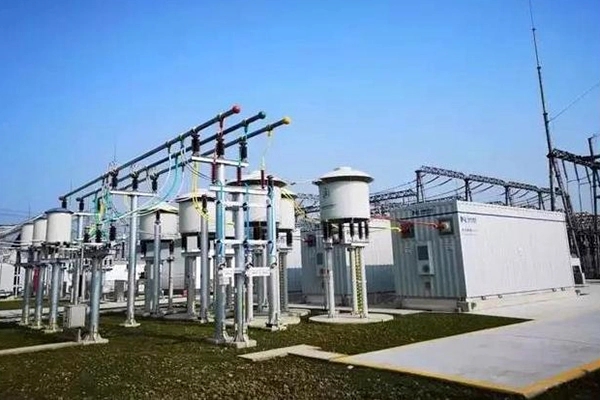
- Hybrid APF combines active and passive stages, which lowers costs while keeping filtering accuracy high. This makes it a good choice for large-scale substation applications.
Figuring out which layout works best for your facility's load profile is the first thing that needs to be done to find a solution that works on the plant floor.
Why Active Power Filters Surpass Traditional Solutions
Resonance-Free Performance and Rapid Harmonic Mitigation
For many years, passive LC filters have been used in factories. They do, however, only target fixed harmonic frequencies, resonate with network impedance when load conditions change, and take up a lot of space on the panel. A passive filter might make harmonics louder instead of weaker when a factory adds a new drive or the grid impedance changes. This is a risk that no hospital or data center can take.
Through its active structure, the active power filter completely gets rid of the risk of resonance. The device works well even when the grid power is low, and it can react to changes in harmonics within 10 milliseconds, which is quick enough to protect equipment run by microprocessors from short-term disturbances. Harmonic reduction rates hit 97%, which means that THD is well below the 5% limit set by IEEE 519-2022 for most industrial busses.
A manufacturing integrator that used APFs on a CNC assembly line saw a rise in power factor from 0.72 to 0.98 within the first billing cycle. This meant that the utility stopped charging monthly penalty fees and the operating temperature of the transformer dropped by 12°C, which greatly increased the insulation's life. There aren't just small wins here; these are real practical cost savings that usually pay for themselves in 18 to 24 months.
Because of these performance traits, the active power filter is the technically sound choice for purchase engineers looking at ways to reduce harmonics in tough settings.
Key Considerations When Selecting and Installing Active Power Filters
Load Profiling, Modular Expansion, and System Compatibility
It takes more than matching voltage and current ratings to choose the right harmonic compensation device. Here are the main technical and installation factors that affect how well or how poorly a deployment works:
- Load profile analysis: Check the power quality during at least one full production run. Before setting the filter capacity, you should find the dominant harmonic orders (5th, 7th, 11th, and 13th for three-phase drives), the peak demand currents, and the power factor baseline.
- Modular sizing: Xi'an Xikai's rack-mounted and wall-mounted active power filter modules can be expanded in parallel, so you can start with the capacity your current load needs and add modules as the facility grows, without having to buy a whole new unit.
- Compatibility verification: Make sure that the APF's current input point doesn't mess up any soft-starters or adjustment capacitor banks that are already in place. One of the main reasons why fields don't work as well as they should is that old reactive power compensation equipment and a new APF don't work well together.
- Environmental and installation standards: The area where the installation takes place must stay at the temperature and humidity levels set by the maker. To keep the APF's own switching signals from getting into sensitive sensor circuits, wiring must follow EMC cable division rules.
- Communication and monitoring: Newer APF units work with Modbus RTU/TCP and PROFINET protocols, which lets them connect to building energy management systems (BEMS) and SCADA platforms for checking problems from afar and planning repair ahead of time.
Addressing these factors at the specification stage keeps expensive fixes from having to be made after the system is up and running, and it gives both the integrator and the end client confidence in the system's long-term dependability.
Leading Active Power Filter Brands and Procurement Insights
Brand Capabilities, Certification Portfolios, and Pre-Sale Support
On the global market, there are well-known providers like Schneider Electric, Siemens, ABB, Eaton, and Mitsubishi Electric. These companies are known for their deep tech knowledge and large service networks. But when buying between 5 and 50 units, it's not just about knowing the name. When the end customer has final say over the standard, warranty terms, on-site commissioning support, spare parts availability, and the supplier's willingness to do a pre-sale load analysis are all things that set sellers apart.
The active power filter products made by Xi'an Xikai are designed to meet the needs of system designers and EPC companies. Before it is shipped, every unit goes through a 72-hour aging test and a 100% load validation. This is a quality assurance process that directly addresses the reliability issues that engineers working on data center and hospital projects often have in the field. ISO 9001, ISO 14001, CE, UL, and CCC are some of the certifications that cover both Chinese projects and international deployments in Europe and Southeast Asia.
Before you sign a contract with an active power filter supplier, make sure you get documented THD test reports from similar installations, find out how to get on-site technical support, and make sure the supplier offers site survey services. With these criteria, you can tell the difference between vendors who can deliver results over and over again and those who only work well in a lab setting.
Future Trends and Impact of Active Power Filters in Manufacturing
AI-Driven Diagnostics, Sustainability, and Scalable Investment
The way buildings use energy is changing because of Industry 4.0. The next wave of devices that reduce harmonics has diagnostics that are linked to the cloud, harmonic prediction that is helped by AI, and smooth contact with digital energy management platforms. An active power filter with predictive analytics can show when IGBT performance is dropping weeks before a fault happens. This changes maintenance from being reactive to being condition-based, which is very important for facilities that have to meet strict uptime SLAs.
Mandates for sustainability are making things even more urgent. China's "dual carbon" targets and the EU's Energy Efficiency Directive both require facilities to use less energy for things that aren't useful. In the distribution system, harmonic currents cause I²R losses to rise. Getting rid of them with an active power filter that is the right size cuts kilowatt-hour use directly and lowers carbon intensity per unit of production output.
When purchasing managers make plans for long-term capital projects, they should make sure that the active power filter they choose has open communication methods and the ability to be expanded in modules. This way, the investment will still be useful as facility loads change and regulatory limits get higher.

Conclusion
Power quality isn't just an afterthought anymore; it's an important factor in any facility where sensitive loads, energy saving goals, and uptime promises all come together. In a single modular device, an active power filter can reduce dynamic harmonics, balance reactive power, and save energy that can be measured. The technology has grown up to the point where the performance case is clear and the procurement pathway is well established. This is true for everything from CNC production lines to hospital distribution boards. Getting a good active power filter now will protect your equipment, keep you from getting fined by the power company, and get your building ready for the better, cleaner grid that standards in the industrial world are calling for more and more.
FAQ
1. How does an active power filter improve process reliability?
An active power filter keeps THD below the IEEE 519-2022 limits by constantly putting in compensating currents. This stops sensitive drives and PLCs from failing for no reason, keeps the transformer from getting too hot, and keeps the voltage stable at the point of common coupling. This directly extends the average time between failures for equipment further down the line.
2. What distinguishes an active power filter from a passive filter?
LC components are used in a passive filter to focus on one or two set harmonic frequencies. Real-time DSP control lets an active power filter block a wide range of harmonics at the same time. It can handle changes in load without resonating, takes up less room on the panel, and keeps working even when grid resistance conditions change.
3. How do I determine the correct APF capacity for my facility?
The observed harmonic current at the installation point, not the total associated load, tells us how much power the active power filter system can hold. An analyzer of power quality should keep track of at least one typical production cycle. The APF's rating compensation current needs to be at least equal to the survey's peak harmonic current, plus an extra 20% to allow for load growth.
Partner with Xi'an Xikai for Proven Harmonic Mitigation
The active power filter line from Xi'an Xikai is made for system integrators who can't afford poor performance in the field. We can help you with your project from the planning stages all the way through to the final installation. Our services include CE, UL, and CCC certifications, 72-hour aging tests, flexible rack-mounted or wall-mounted setups, and a dedicated pre-sale load analysis. Get in touch with our technology team to talk about your application and ask for a site-specific proposal:
- Website: xaxd-electric.com
- Email: serina@xaxd-electric.com | amber@xaxd-electric.com | luna@xaxd-electric.com
Find a qualified active power filter provider that will help you after the sale as a promise, not an accident.

References
1. IEEE Standards Association. IEEE 519-2022: Recommended Practice and Requirements for Harmonic Control in Electric Power Systems. IEEE, 2022.
2. Akagi, H. "Active Harmonic Filters." Proceedings of the IEEE, Vol. 93, No. 12, 2005.
3. Bhattacharya, S., & Divan, D. "Synchronous Frame Based Controller Implementation for a Hybrid Series Active Filter System." IEEE Industry Applications Conference, 1995.
4. International Energy Agency. Energy Efficiency 2023: Analysis and Outlook to 2026. IEA, 2023.
5. Singh, B., Al-Haddad, K., & Chandra, A. "A Review of Active Filters for Power Quality Improvement." IEEE Transactions on Industrial Electronics, Vol. 46, No. 5, 1999.
6. European Commission. Energy Efficiency Directive (2023/1791/EU). Official Journal of the European Union, 2023.