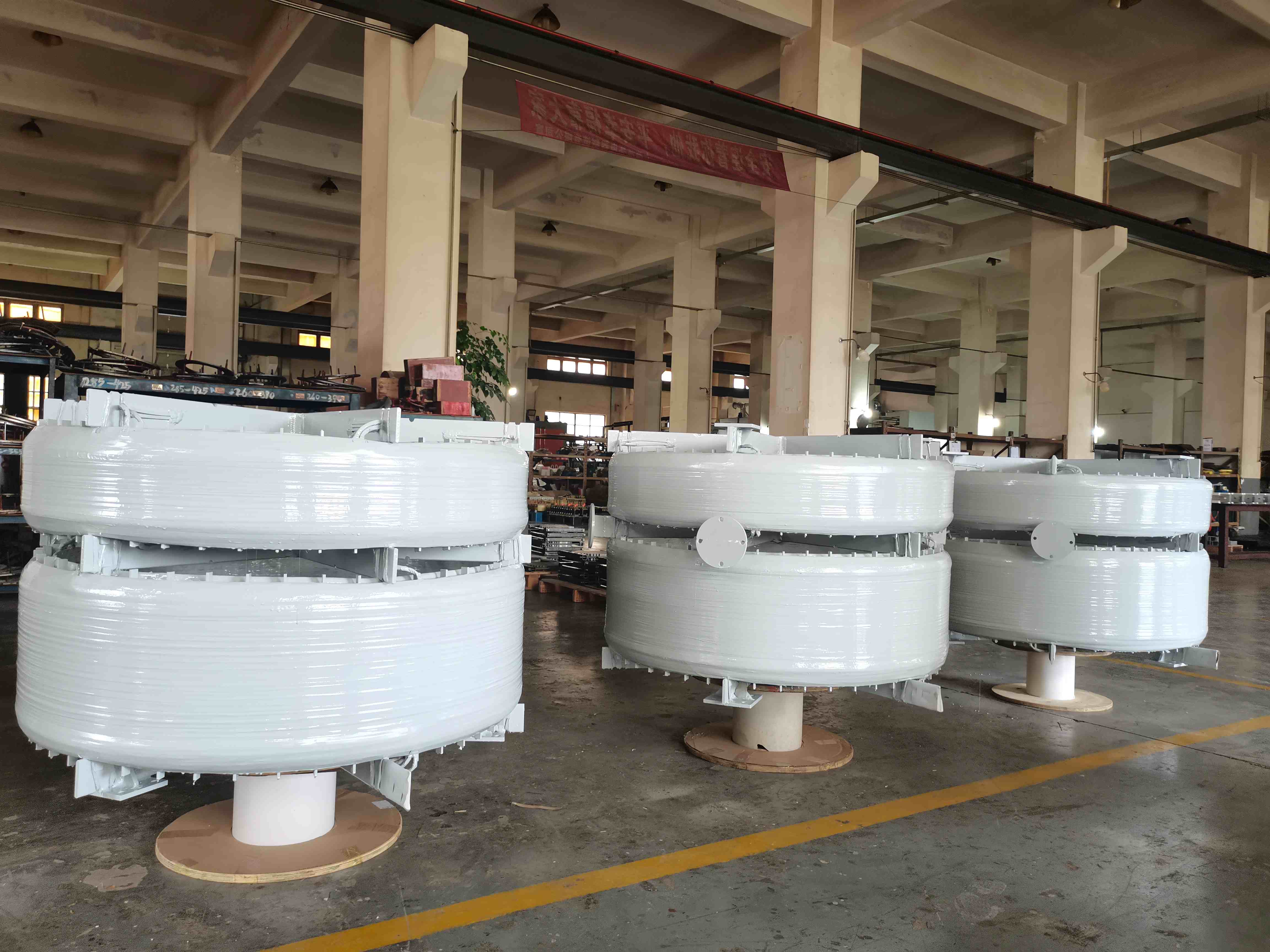
What are the advantages of using an active power filter?
2026-09-14 15:50:08
Using an active power filter (APF) delivers measurable improvements to power quality in industrial and commercial facilities. Unlike conventional passive solutions, an active power filter dynamically detects and cancels harmonic currents in real time, achieving harmonic suppression rates of up to 97% with response speeds as fast as 10ms. This translates directly into reduced transformer overheating, lower energy waste, and extended equipment service life. For data centers, hospitals, and precision manufacturing environments where power quality is non-negotiable, deploying an active power filter is one of the most reliable paths to grid stability and regulatory compliance.


Understanding Active Power Filters and Their Operating Principles
Understanding how active power filter work is important. Variable frequency drives, UPS systems, server loads, and nonlinear industrial equipment are all causing more and more damage to modern power lines. These loads add harmonic currents that change the shape of voltage waves, cause annoying trips, and damage equipment before it should.
How an Active Power Filter Works
Using current sensors, an active power filter keeps an eye on the load current all the time. In real time, its built-in DSP-based control program figures out the harmonic components and tells IGBT-based power electronics to add equal-and-opposite adjustment currents to the network. Within 10ms, this cancelation process takes place, flattening the current waveform before the distortion spreads upstream. Instead of passive LC filters that aim for set harmonic orders, an active power filter changes based on changing load conditions. This is a huge benefit in places with changing harmonic spectra, like data halls and hospital imaging rooms.
The active design in Xi'an Xikai's APF stops resonance and harmonic amplification, which is a technical flaw that keeps passive filters from being used in complicated setups. It keeps its high compensation efficiency even when the grid power is low, which happens a lot in industrial parks and older business buildings.
Key Advantages of Using Active Power Filters in Industrial Applications
Dynamic Harmonic Suppression, Grid Resilience, and Cost Efficiency
A lot of the time, procurement experts want to know what makes an active power filter different from older adjustment technologies. The answer lies in four areas of success that can be measured:
Here are the main benefits this device brings to industrial settings:
- Dynamic Harmonic Suppression: The active power filter targets multiple harmonic orders at the same time, from the 2nd to the 50th, and in most setups, it lowers the THDi to less than 5%. This keeps sensitive loads from breaking down, like MRI machines, CNC controls, and server rack power supplies.
- Resistance to Grid Fluctuations: Active power filters fix both harmonic distortion and reactive power fluctuations right away. The units from Xi'an Xikai can handle surge currents of up to 100 times their rated capacity. This means that they can be used in substations that have intermittent renewable inverters.
- Energy Cost Reduction: Facilities usually report measurable drops in electricity billing penalties after bringing the power factor closer to unity and getting rid of harmonic-related I²R losses. A better power factor also lowers the load on the transformer and the temperature of the cables.
- Rugged Reliability: The flexible rack-mounted and wall-mounted designs let you add more space without having to shut down the system. The units are very quiet (less than 45dB) and use flame-resistant parts that meet NFPA 70 fire rules. This is important for business and hospital retrofits.
These benefits solve the main issue that integration engineers face the most: a site with mixed and complex harmonic loads, where a passive filter would either not work well enough or cause resonance with existing capacitor banks.
Comparing Active Power Filters with Alternative Solutions
It is important to think about the long-term costs and benefits of an active power filter, a passive filter, an SVC, or a power factor correction capacitor bank when making your choice.
Active vs. Passive Filters
Fixed LC networks set to certain harmonic frequencies are used in passive filters. They are cheap, but they can't be changed. For example, a passive filter made for the 5th harmonic doesn't help with the 7th or 11th harmonic. Even worse, passive filters can connect to the upstream grid and create resonance circuits that boost certain harmonic orders instead of lowering them. Through its closed-loop active input method, an active power filter completely gets rid of this risk.
Active Filters vs. SVCs and Capacitor Banks
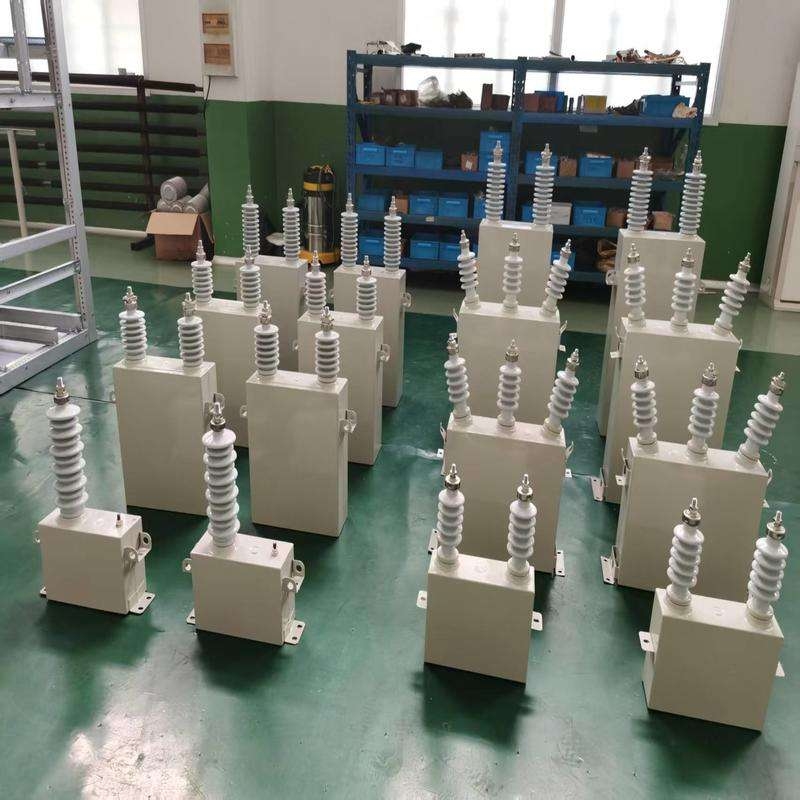
Static VAR compensators and capacitor banks deal with reactive power, but they don't do much to filter out harmonics. In places with a lot of THDi, using capacitor banks without harmonic protection can make the capacitors break down faster and can void equipment warranties. An active power filter does both reactive compensation and harmonic cancelation in one unit. This saves space on the panel and makes it easier to plan maintenance.
System integrators who work on projects in places like data centers, hospitals, or precision manufacturing sites can save money over the course of their entire life by combining harmonic governance into a single active solution instead of stacking several passive devices.
Procurement Considerations for Industrial Active Power Filters
It's not enough to just look at the standard numbers when choosing an active power filter for a project. Here are some things that affect long-term success and project ROI.
Technical Specification Priorities
Before narrowing down the list of suppliers, technical leads should check three things: response speed, harmonic cancelation bandwidth, and compatibility with existing switchgear. The APF from Xi'an Xikai has a dynamic response time of 10ms and supports modular expansion, which means it can be added to existing compensation cabinets without having to redesign the whole panel.
Certifications are important during the buying process, especially for operations that take place in other countries. The active power filter from Xi'an Xikai is certified by ISO 9001, ISO 14001, CE, UL, and CCC. Before being shipped, each unit goes through 72-hour aging tests and 100% load validation. This is part of the quality control process and it helps keep on-site launching problems to a minimum.
Harmonic surveys and custom solution plans are usually done on-site for projects with 5 to 50 units in a single data center or hospital building. Getting technical help before the sale greatly lowers the chance of performance gaps after installation, which usually happen because the site wasn't properly characterized.
Installation, Troubleshooting, and Maintenance of Active Power Filters
When well-specified equipment is installed correctly, it either proves its worth or lets you down. To work properly, an active power filter needs to have the right current transformer placed, the right parameters set, and it needs to work with upstream safety switches.
Practical Installation and Maintenance Guidance
Before it can be used, the control method has to be tuned to the site's real harmonic profile. Most new APFs, like the ones made by Xi'an Xikai, have a front-panel interface that lets you see waveforms and analyze harmonics in real time. This makes setting up the unit easier at first. Because the operational noise level is less than 45dB, acoustic isolation is easy for wall-mounted configurations in commercial buildings.
Updating the firmware, checking the ventilation, and checking the IGBT modules and filter inductors on a regular basis are the main parts of routine maintenance. When compared to single-piece passive filter systems, planned maintenance times are much shorter with modular design because each module can be replaced separately. The ability to watch from afar also makes it possible to find problems before they cause annoying trips.

Conclusion
Harmonic distortion and reactive power imbalance can be fixed more precisely with an active power filter than with a passive or hybrid one. With its 97% harmonic suppression, 10ms response speed, modular scalability, and certified build quality, active filtering is the best choice for demanding installations. This is true for both data centers that need to keep their equipment running all the time and hospitals that need to keep life-critical equipment safe. When detailed site surveys and technical proposals are used to support purchasing choices, the investment always leads to lower operational risk and measurable energy savings over the lifetime of the equipment.
FAQ
1. Can an active power filter completely eliminate harmonic distortion?
Harmonics can't be completely removed by technology, but an active power filter that works well can lower THDi to below 5% in most industrial settings, which is well below the compliance levels set by IEEE 519 and IEC 61000-3-2. Residual error depends on how the load changes and how well the fitting was done.
2. Which industries benefit most from APF deployment?
The most benefits are seen in data centers, hospitals, semiconductor factories, and places with a lot of VFD or UPS units. A strong candidate is any place where nonlinear loads cause 5th, 7th, or 11th harmonic currents that are higher than the allowed limits by the government.
3. How does an active power filter affect energy costs?
Most of the time, facilities can lower their utility bills by fixing the power factor and getting rid of harmonic-related distribution losses. The size of the improvement depends on the baseline power factor and the severity of the harmonics, but it can be seen in the first billing cycle after installation.
Partner With Xi'an Xikai for Your Next Active Power Filter Project
Xi'an Xikai has certified active power filter solutions that are made for places like hospitals, data centers, and precision manufacturing. For projects with 5 to 50 units, our technical team does harmonic surveys on-site, makes custom integration proposals, and helps with things after the project is up and running. As an active power filter provider that is certified by ISO 9001, CE, and UL, you can trust us to back up every package with full load validation and 72-hour aging tests. You can email our tech team at serina@xaxd-electric.com, amber@xaxd-electric.com, or luna@xaxd-electric.com, or you can go to xaxd-electric.com and ask for a site-specific meeting.

References
1. IEEE Std 519-2022, IEEE Recommended Practice and Requirements for Harmonic Control in Electric Power Systems, IEEE, 2022.
2. IEC 61000-3-2:2018, Electromagnetic Compatibility (EMC) – Limits for Harmonic Current Emissions, International Electrotechnical Commission, 2018.
3. Akagi, H., New Trends in Active Filters for Power Conditioning, IEEE Transactions on Industry Applications, 1996.
4. Singh, B., Al-Haddad, K., & Chandra, A., A Review of Active Filters for Power Quality Improvement, IEEE Transactions on Industrial Electronics, 1999.
5. Bollen, M. H. J., Understanding Power Quality Problems: Voltage Sags and Interruptions, IEEE Press / Wiley, 2000.
6. Das, J. C., Power System Harmonics and Passive Filter Designs, Wiley-IEEE Press, 2015.