How a Filter Capacitor Reduces Ripple in Power Supplies
2026-09-14 15:50:14
A filter capacitor is one of the most consequential components in any power supply design. Placed in parallel with the load, it charges during voltage peaks and releases stored energy during voltage valleys, effectively smoothing pulsating DC into a stable waveform. Without this mechanism, rectified AC output carries residual ripple that degrades signal integrity, shortens component lifespan, and triggers logic instability in sensitive electronics. For procurement engineers and system integrators working in high-voltage environments—from traction substations to electrolytic aluminum plants—selecting the right filter capacitor is not optional. It is a foundational engineering decision.


Understanding the Basics of Filter Capacitors in Power Supplies
What Is a Filter Capacitor and How Does It Differ from a Smoothing Capacitor?
People often use the terms equally, but there is a real difference between them. A smoothing capacitor's main job is to get rid of the low-frequency noise that happens after rectification, which is usually around 100 Hz or 120 Hz. A filter capacitor, on the other hand, might be able to deal with a wider range of frequencies, such as high-frequency switching noise in SMPS circuits. The filter capacitor in high-voltage passive filter banks used in railroad traction substations works with a tuned LC network to cut down on certain harmonic orders instead of just smoothing out the waveform as a whole.
Capacitor Types Used in Ripple Reduction
Electrolytic capacitors are the best at storing large amounts of energy because they have a high capacitance density. However, their performance at higher frequencies is limited by their relatively high ESR. Ceramic capacitors are great at separating high frequencies, but they don't have enough capacitance volume for heavy industrial filtering. For high-voltage filter uses, film capacitors—especially metallized polypropylene film types—have the best mix of properties: stable capacitance over temperature, very low dielectric loss (tan δ as low as 0.0002 to 0.0005), and strong self-healing behavior when there is a brief overvoltage. Polypropylene film is the usual dielectric for single-phase high-voltage filter duty in the business.
Technical Assessment: How Filter Capacitors Influence Ripple Reduction
Calculating Capacitor Value for Target Ripple Attenuation
What is the usual way to figure out how much capacitance is needed in a single-phase rectifier circuit using a filter capacitor? C = I_load / (2 × f × ΔV), where I_load is the average load current, f is the supply frequency, and ΔV is the maximum peak-to-peak ripple voltage that is allowed. As an example, a 10 A load at 50 Hz and 1 V of ΔV needs about 100,000 µF. When buying high-voltage passive filter banks, the precise capacitance limit (usually ±3% to ±5%) is very important because it determines the value of the capacitor based on the reactive power needed at the set harmonic frequency.
Selection Criteria: ESR, Voltage Rating, and Temperature Tolerance
Low ESR is very important. High ESR gives off heat from ripple currents, which speeds up dielectric aging and lowers the efficiency of filtering. The dissipation factor (tan δ) of power capacitors for shunt correction should not be higher than 0.0005, according to IEC 60831. This is a standard that represents real-life electrical and thermal stress situations. The voltage rating must include enough of a safety margin above the operating voltage of the system. For example, in LC filter circuits, the series reactor causes a voltage rise across the capacitor terminals (the Ferranti effect), so a 10 kV system might need capacitors rated at 11 kV or higher. Temperature tolerance should be checked against the actual installation environment. This is especially important for substations that are outside and enclosures that are next to railroad tracks.
Comparative Analysis of Filter Capacitor Options for B2B Applications
Film vs. Electrolytic vs. Ceramic for High-Voltage Industrial Use
There are trade-offs that come with each technology that are very important during the buying stage. Electrolytic units are a cheap way to filter large amounts of low-voltage electricity, but they can't handle high-voltage AC filter duty because of problems with polarity and high-frequency loss. Ceramic capacitors work well for high-frequency filtering, but they can't handle the large amounts of reactive power that are needed in substation filter banks. For high-voltage single-phase filter needs, metallized polypropylene film capacitors are still the best choice. They have low dielectric absorption, consistent capacitance across the operating temperature range, and real self-healing capabilities. These are the qualities that directly increase service life in places like traction substations and electrolytic aluminum facilities where there are a lot of harmonics.
When procurement engineers are comparing suppliers, they should look at more than just the headline numbers on the datasheets. They should also look at the tan δ measurement method, the internal fuse design, the partial discharge (PD) extinction voltage, and the type test results that were recorded according to IEC 60831-1 or similar standards. These factors set trustworthy filter capacitor sellers apart from those selling goods that look a lot alike.
Introducing Xi'an Xikai's High Voltage Single Phase Filter Capacitor
Precision Engineering for Harmonic Mitigation and Operational Reliability
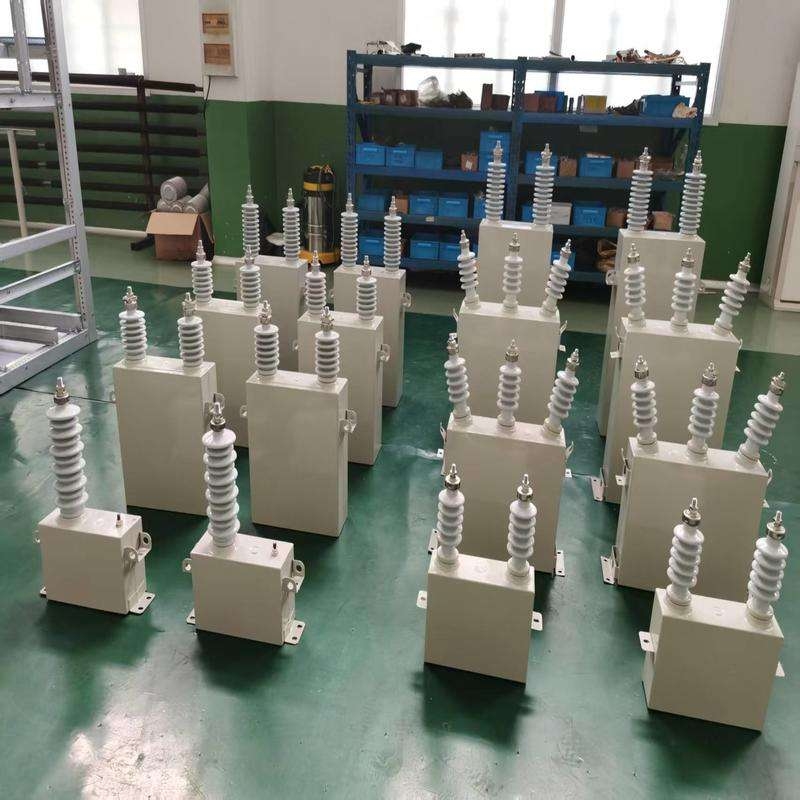
The High Voltage Single Phase Filter Capacitor was made by Xi'an Xikai Medium & Low Voltage Electric Co., Ltd. to meet the exact technical needs of high-voltage passive filter banks and railroad traction substations. Here are some of the most important technical benefits of this device:
- Precision-tuned harmonic attenuation: The capacitor can lower voltage distortion by up to 70%, which means it can be used in power grids and heavy machinery that is constantly under harmonic stress.
- Internal fuse architecture: Using the most advanced internal fuse technology available, the design instantly cuts off any damaged part, stopping failures from spreading and letting the healthy sections keep working. This directly fixes the problem of a single point failure that happens a lot in high-voltage capacitor strings.
- Discharge resistor integration: Built-in discharge resistors in the filter capacitor get rid of any remaining charge after de-energization. This fixes the overvoltage issue that can happen across series sections, which is a small but important design improvement.
- Argon arc welded, leak-proof enclosure: The aluminum-alloy tank uses automatic argon arc welding at the bushing connections, which gets rid of the dielectric fluid leakage paths that are a problem with older bushing attachment methods.
- Low noise and high overload tolerance: Under normal operating conditions, acoustic emissions stay below 45 dB, and surge current handling reaches up to 100 rated capacity. This is important for grid-connected applications that often experience transient overcurrents.
These benefits work together to solve two problems that keep coming up when people try to buy high-voltage filter capacitors: the need for very precise manufacturing to meet specifications for tan δ ≤ 0.0005 and partial discharge; and the need for operational reliability in railroad and industrial settings where unplanned outages can have big financial and safety effects.
Each unit goes through tests to make sure it is made of ISO 9001-certified materials, a hermetic seal that is checked by cycling the load for 72 hours, thermal shocks, and impulse voltages. These tests make sure that the performance in the type test matches what happens in real life, not just what the lab says will happen.
Procurement and Installation Guidance
Specifying and Sourcing with Confidence
Procurement cycles usually last between two and four months for first sample orders that include type testing. Engineering teams should send in details about the necessary tan δ limit, the working frequency, the atmospheric temperature range, the altitude, the reactive power output, and the capacitance value and tolerance. Giving information about the installation environment, such as whether it is indoors or outdoors, the height above sea level, and the classification of the seismic zone, helps the manufacturer set up the enclosure and thermal management correctly. Xi'an Xikai's equipment can work at heights of up to 4,000 meters, which makes it useful for projects in South Asia and Western China that are in high places.
Installation, Testing, and Maintenance Essentials
The three mandatory steps for commissioning are making sure the installation is in the right place, there is enough space for heat to escape, and the discharge resistor works before any upkeep can be done. To set baseline values during commissioning, use an ESR meter that has been calibrated and a capacitance bridge. According to standard practice in the industry, a capacitance drift of more than 3% to 5% from the initial value or a tan δ rise of more than 3× the initial observed value means that the device is getting close to the end of its useful life and should be replaced before it fails unexpectedly.

Conclusion
A well-chosen filter capacitor does more than just lower ripple; it also keeps the voltage stable and the whole power system in line with harmonics. It's not just the capacitance value that engineers use to choose capacitors for high-voltage passive filter banks or railroad traction substations; tan δ, partial discharge performance, internal fuse integrity, and enclosure quality are also important factors that determine whether a capacitor will work reliably over its intended design life. The High Voltage Single Phase Filter Capacitor from Xi'an Xikai is made to meet these exact standards. It has been used in grid and rail uses for decades, so the company has created strict type testing and manufacturing methods.
FAQ
1. What is the difference between a filter capacitor and a smoothing capacitor?
A smoothing capacitor's main job is to lower rectification ripple at low frequencies, usually around 100 or 120 Hz. In a tuned LC network, a filter capacitor aims for a certain frequency spectrum, which is usually a certain harmonic order. The capacitor in high-voltage passive filter banks is not just a big energy store; it is also a precise reacting element.
2. How do I determine the correct capacitance for a high-voltage filter bank?
To find the capacitance, you need to know how much reactive power you need at the working frequency, system voltage, and adjusted harmonic frequency. Capacitance tolerances of ±3% to ±5% are normal for single-phase power center use. To account for the rise in voltage caused by the Ferranti effect across the series reactor, you should always include a voltage margin above the peak operating voltage.
3. Are ceramic capacitors suitable for high-voltage filter duty?
For high-frequency decoupling at low to medium voltages, ceramic capacitors work well. They aren't good for high-voltage single-phase filter banks because they can't handle the voltage or capacitance well enough. Polypropylene film capacitors that have been metallized are the standard for this duty class.
Partner with Xi'an Xikai for Your Filter Capacitor Requirements
Engineers at Xi'an Xikai make filter capacitors that are used in high-voltage passive filter banks, railroad traction substations, and electrolytic aluminum facilities. Our High Voltage Single Phase Filter Capacitor is approved by IEC 60831 standards, has an internal switch for safety, and has been through extensive type testing. Get in touch with our technical team to talk about specs, MOQ, and custom setups that fit the needs of your project. Please email us at serina@xaxd-electric.com, amber@xaxd-electric.com, or luna@xaxd-electric.com, or visit xaxd-electric.com.

References
1. IEC 60831-1: Shunt power capacitors of the self-healing type for a.c. systems — Part 1: General — Performance, testing and rating — Safety requirements, International Electrotechnical Commission, 2014.
2. Mohan, N., Undeland, T. M., & Robbins, W. P. — Power Electronics: Converters, Applications, and Design, John Wiley & Sons, 2003.
3. Rashid, M. H. — Power Electronics Handbook: Devices, Circuits, and Applications, Butterworth-Heinemann, 2018.
4. IEEE Std 18-2012 — IEEE Standard for Shunt Power Capacitors, Institute of Electrical and Electronics Engineers, 2012.
5. Overshott, K. J. — "Capacitor Technology and Dielectric Loss in Film Capacitors," IEEE Transactions on Dielectrics and Electrical Insulation, 1998.
6. Arrillaga, J., & Watson, N. R. — Power System Harmonics, John Wiley & Sons, 2nd Edition, 2003.