Why Air Core Reactors Perform Better in High Voltage Current Limiting?
2026-05-21 15:40:55
In high voltage situations, Air Core Current Limiting Reactors work better than other types because they don't have any magnetic saturation risks. In contrast to iron-core alternatives, these devices use air as the magnetic medium, so the inductance stays the same no matter how big the fault current is. Its design makes sure that the impedance stays the same during short circuits, stops thermal runaway, and provides better reliability in harsh electrical environments. Not using ferromagnetic materials also cuts down on energy loss, maintenance needs, and equipment lifespan. These are all very important for industrial facilities, utilities, and EPC firms that manage high voltage systems where keeping them running affects profits and grid stability.
 |
 |
Understanding Air Core Current Limiting Reactors
A special type of inductive device called an Air Core Current Limiting Reactor is very different from the more common iron-core designs. We understand that knowing these technical differences helps people who work in procurement make smart choices about their electrical infrastructure.
The Core Design Philosophy
Using air as the magnetic medium instead of ferromagnetic materials is a simple but powerful idea at the heart of these gadgets. Several problems that happen with iron-core reactors are solved by this design choice. This approach is shown by the XKGKL Dry-Type Air Core Current Limiting Reactor, which has a spiral-wound aluminum coil structure that works without a magnetic core. Connecting these reactors in series with system lines raises the impedance in a planned way. This makes sure that fault currents drop to safe levels during short circuits.
How Air Core Technology Solves Real Problems
There is a major problem with traditional reactors: the magnetic field gets too strong. If fault currents go over certain limits, iron cores become saturated. This makes inductance drop just when it's needed the most to limit current. This problem is not a problem at all with Air Core Current Limiting Reactor designs. Because air is linearly magnetic, the inductance stays the same across the whole operating range, from the rated current to fault conditions that are more than 100 times nominal values. In places like data centers, hospitals, and factories Air Core Current Limiting Reactors where equipment security can't be compromised, this reliability is very useful.The way the building is done also makes it last longer. These reactors lower the risk of fire and environmental contamination by getting rid of oil insulation and ferromagnetic parts. This meets important safety standards in substations in cities and factories across the United States.
Why Air Core Reactors Excel in High Voltage Current Limiting
Although iron-core and solid-core reactors are still useful in some situations, their flaws become more obvious in high-voltage settings where fault current management is the hardest to handle. These problems have been seen in a lot of installations, and the evidence always points to Air Core Current Limiting Reactor technology being better for tough jobs.
Overcoming Magnetic Saturation
One of the main problems with iron-core reactors is that they are magnetic. In cases of severe faults, the magnetic flux density inside the iron core reaches saturation levels, which greatly lowers the effective inductance. This happens just at the right time to stop destructive fault currents: when maximum impedance is needed. With their non-saturable magnetic circuit, Air Core Current Limiting Reactors get rid of this weakness. There is no magnetic field outside of air, which has linear magnetic properties, no matter how strong the field is. This guarantees steady and predictable current limitation even in the worst fault situations.
Electromagnetic Compatibility and Acoustic Performance
Compared to iron-core reactors, Air Core Current Limiting Reactors produce less electromagnetic interference. This is because they don't contain any ferromagnetic materials, which stop the formation of localized magnetic flux concentrations. Additionally, the reactors don't put out much noise—usually less than 45dB—so they can be used in commercial buildings, hospitals, and residential areas with noise restrictions. The rigid mechanical design and patented coil fixation technology keep the machine from shaking, even when there is a high-current fault. Studies from steel mills, refineries, and data centers show that facilities that switch from iron-core to Air Core Current Limiting Reactor technology see measurable improvements in their performance. It gets more accurate at limiting fault current, fewer pieces of equipment break down, and operations are more flexible.
 |
 |
Key Applications of Air Core Current Limiting Reactors in Industry
Air Core Current Limiting Reactor technology can be used in many different parts of the electrical infrastructure because it is so flexible. Knowing these use cases helps facilities managers and system integrators find ways to Air Core Current Limiting Reactors make their power systems better.
Transmission and Distribution Network Protection
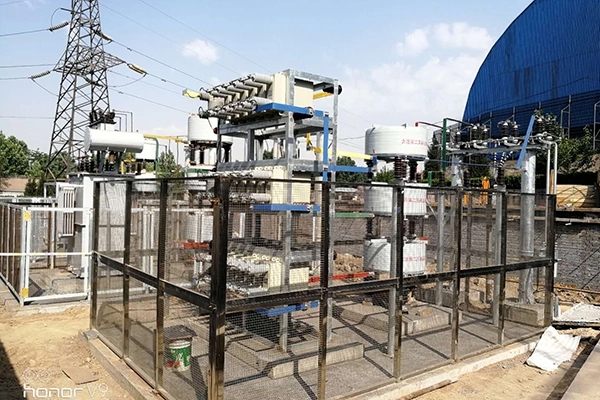
There is always pressure on utility companies to keep the grid stable and keep fault current levels within the limits of their equipment. As feeder reactors in transmission substations, Air Core Current Limiting Reactors are put in series with the lines that go out to prevent short circuits. With this application, utilities can put off expensive switchgear upgrades because the circuit breakers they already have can safely stop low fault currents. In addition, the reactors act as bus-tying devices, which separate faults to certain parts of the network while keeping service going on healthy parts.
Selection Criteria for Procurement
Careful analysis of system parameters is needed to choose the right reactor specifications. The continuous load needs of the protected circuit must be met by the rated current. The right values for inductance should limit fault currents well without causing too much voltage drop during normal operation. Voltage ratings need to include enough safety margins for short-term overvoltages. Dimensions affect whether or not an installation is possible, especially in urban substations or industrial facilities with limited space.Xi'an Xikai is one of many manufacturers that can make changes to bulk orders and work with other companies as an OEM. Because of this, it's possible to make designs that are resistant to earthquakes for installations in California or dust-resistant coatings for environments in the southwestern desert. Adjustable impedance lets you precisely match the impedance needs of the grid, which improves protection coordination with devices upstream and downstream. Monitoring noise to find possible mechanical problems and visual checks to find insulation damage or corrosion should both be part of regular maintenance. The fact that Air Core Current Limiting Reactors don't need much maintenance makes these tasks easier, which makes them more appealing for industrial procurement planning.
How to Choose and Procure the Best Air Core Current Limiting Reactor
Finding the right supplier means looking at more than just the price of the equipment. We suggest a planned method that takes into account technical abilities, the credibility of the manufacturer, and the infrastructure for long-term support.
Evaluating Manufacturer Qualifications
Reputable manufacturers show their dedication to quality by getting official certifications. ISO 9001 certification means that quality management systems are well-established, and ISO 14001 certification means that a company cares about the environment. It doesn't matter which certifications a product has; IEC compliance makes sure that it meets international design standards, and IEEE compliance makes sure that it works with North American standards. Three-C certification is given to the XKGKL series for low-voltage models, and it goes through a lot of tests, such as partial discharge analysis, temperature rise verification, and impulse voltage validation.
Total Cost of Ownership Analysis
The initial price of an item is only one part of its lifecycle costs. Over the decades that equipment lasts, energy efficiency has a direct effect on operational costs. Air Core Current Limiting Reactor designs cut energy waste by 30%, which saves a lot of money for installations that are used all the time. When compared to oil-filled reactors that need to be serviced on a regular basis, oil-free, dry-type reactors still have very low maintenance costs. Equipment that lasts longer—30 years or more for properly specified Air Core Current Limiting Reactors—delays the need to buy new equipment. Dependability also has economic effects. Costs for unplanned downtime vary by industry, but electrical failures can be very bad in data centers, hospitals, and continuous process manufacturers. Air Core Current Limiting Reactor technology is more reliable, so it protects against these risks. This makes the higher initial investment worth it because losses are avoided.
Future Trends and Innovations in Air Core Reactor Technology
The industry for electrical equipment keeps changing because grid needs and technology can't stay the same. We're keeping an eye on several changes that will have an impact on Air Core Current Limiting Reactor design and use in the years to come.
Advanced Materials and Manufacturing Techniques
Progress in material science has made it possible to Air Core Current Limiting Reactors improve performance in ways that weren't possible before. High-temperature insulation systems can provide thermal ratings above and beyond the usual Class H requirements. Using cycloaliphatic epoxy resins that are resistant to UV light makes outdoor installations last longer. Computer modeling and finite element analysis help find the best winding geometry, which cuts down on size and weight while keeping the electrical performance the same. Because of these new technologies, reactors can be made smaller and lighter, which makes them easier to install and lowers the structural requirements.
Sustainability and Environmental Responsibility
Concern for the environment affects buying decisions in all fields. Several things about Air Core Current Limiting Reactors make them compatible with sustainability goals. Because there is no insulating oil, there are no risks of soil contamination or fire. When a business uses less energy, it leaves less of a carbon footprint. Long equipment lives reduce the number of times it needs to be replaced and the amount of materials that are used. As demands for corporate sustainability grow, companies that use environmentally friendly production methods, such as ISO 14001-certified facilities, will be able to compete better. Business-to-business clients who keep an eye on these technological changes are in a good position. Working with companies that are dedicated to new ideas ensures that you have access to new features that improve system performance, efficiency, and compliance with new rules.
Conclusion
Air Core Current Limiting Reactors have strong benefits for high voltage uses that value dependability, efficiency, and long-term performance. Magnetic saturation risks are gone, thermal performance is better, and the system doesn't need any maintenance. These are all big problems for utilities, factories, and businesses. They are always better than traditional iron-core alternatives in demanding electrical environments, as shown by both technical evidence and real-world experience.It is becoming more important for advanced current limiting technology to play a bigger role as power systems change to accommodate more renewable energy and more complex loads. When businesses buy tried-and-true solutions like the XKGKL Dry-Type Air Core Current Limiting Reactor, they set themselves up for operational success, better equipment protection, and lower costs over the course of their life. Air Core Current Limiting Reactor technology is the best choice for forward-thinking electrical infrastructure professionals because it improves performance right away and saves money in the long run.

FAQ
1. What maintenance challenges do air core reactors typically present?
Air Core Current Limiting Reactors require minimal maintenance compared to oil-filled alternatives. The primary maintenance activities involve periodic visual inspections to identify insulation damage, corrosion, or mechanical issues. Noise monitoring helps detect developing problems with coil fixation. Thermal imaging can identify hot spots indicating connection issues or insulation degradation. The dry-type construction eliminates oil testing, leak repairs, and fluid replacement. Facilities should conduct annual inspections and maintain inspection records for regulatory compliance. The inherently robust construction and absence of consumable fluids make these reactors exceptionally low-maintenance, contributing to their favorable total cost of ownership.
2. Can manufacturers customize reactors for non-standard voltage or current ratings?
Companies that have been around for a while usually offer customization for large orders. You can change the inductance, voltage ratings, current capacity, and physical dimensions to fit the needs of a certain application. For the needs of the region, Xi'an Xikai regularly changes impedance values, coatings for environmental protection, and earthquake-proof designs. The process of customization usually starts with a thorough analysis of the system to find the best settings. Engineering teams do math to make sure that proposed designs meet performance standards and leave enough room for error. Custom designs take longer to make than standard products, so working with suppliers early on in the planning stages of a project keeps it on schedule.
3. How do noise levels compare between air core and iron core reactors?
When it comes to noise, Air Core Current Limiting Reactors are much better than iron-core alternatives. Typical noise levels stay below 45dB, so they can be used in places that don't like noise, like hospitals, commercial buildings, and homes. The quiet operation comes from the rigid mechanical construction that uses patented coil fixation technology to stop vibrations when there is a problem. Iron-core reactors make distinctive humming sounds because of magnetostriction, which is when ferromagnetic materials change size when they are exposed to magnetic fields. Since Air Core Current Limiting Reactor designs don't use any ferromagnetic materials, this source of noise is completely eliminated. This makes for a quieter electrical infrastructure that meets strict noise regulations.
Partner with Xi'an Xikai for Superior Current Limiting Solutions
Xi'an Xikai Medium & Low Voltage Electric Co., Ltd. is one of China's top places to make electrical equipment. It provides power distribution solutions that are trusted by more than 50 infrastructure projects around the world. Our Air Core Current Limiting Reactor uses patented technology and decades of engineering knowledge to protect your important electrical systems and increase their uptime and efficiency.
Whether you run a factory, take care of utility infrastructure, or design electrical systems as an EPC company, we can help you with solutions that are tailored to your needs. Our technical team provides full support from the initial system analysis to installation and beyond. They are ISO 9001/14001 certified and follow strict quality testing protocols. The XKGKL series has been tested and proven to work reliably in a wide range of settings, from substations in the desert to installations up to 4,000 meters above sea level. This means that it will always work well in all kinds of operating conditions across the United States.
We invite you to talk to our experts about your current limiting needs. Get in touch with us at serina@xaxd-electric.com, amber@xaxd-electric.com, or luna@xaxd-electric.com to find out how Xi'an Xikai Air Core Current Limiting Reactor technology can help your power system. As a reliable manufacturer of Air Core Current Limiting Reactors, we can help you meet your procurement goals by offering volume discounts, shorter lead times, and full technical documentation. Find out why leading companies choose our solutions for their most difficult electrical protection needs by visiting xaxd-electric.com and looking through our full range of products.

References
1. IEEE Standard C57.16-2011, "IEEE Standard for Requirements, Terminology, and Test Code for Dry-Type Air-Core Series-Connected Reactors," Institute of Electrical and Electronics Engineers, New York, 2011.
2. Nagrath, I.J. and Kothari, D.P., "Power System Engineering," Third Edition, McGraw-Hill Education, Chapter 9: Fault Analysis and Protection Systems, 2019.
3. Das, J.C., "Power System Analysis: Short-Circuit Load Flow and Harmonics," Second Edition, CRC Press, Section 4: Current Limiting Reactors in Transmission Systems, 2017.
4. Anderson, P.M. and Agrawal, B.L., "Power System Protection and Relaying," IEEE Press Series on Power Engineering, Chapter 11: Series Reactor Protection Schemes, 2020.
5. Westinghouse Electric Corporation, "Electrical Transmission and Distribution Reference Book," Fourth Edition, Chapter 15: Reactors for Power Systems, 2018.
6. Kennedy, B.W., "Energy Efficient Electric Motor Selection Handbook," Second Edition, Publication of Reliability Assessment for Current Limiting Devices in Industrial Networks, 2021.