
How to limit short-circuit currents with air reactors?
2026-04-08 17:09:19
To effectively lower short-circuit currents with air reactors, a Dry-type Air Core Current Limiting Reactor must be connected in series with the system lines. This special inductive part adds controlled reactance that limits the size of the fault current during electrical disturbances. This keeps potentially dangerous currents at safe, manageable levels. The air-core design makes sure that the inductance is linear without the magnetic saturation happening. This gives consistent protection performance across all fault conditions while getting rid of the fire risks and environmental issues that come with oil-filled alternatives. This tried-and-true technology is an important safety measure for modern factories, power grids, and business installations.

Introduction
Addressing the Impact of Short-Circuit Currents on Power Systems
Short-circuit currents are a big problem for the safety of equipment and the stability of the power system. They often cause a lot of damage and downtime, which can cost businesses hundreds of thousands of dollars per incident. When electrical faults happen, like when insulation breaks, equipment fails, or disturbances from the outside, current flows can spike to levels ten to twenty times higher than normal in just milliseconds. Making sure that these currents are managed well is important for keeping the grid stable and protecting the expensive electrical infrastructure that supports manufacturing, business, and utility networks.
Introducing Air-Core Current Limiting Reactor Technology
Air-core current limiting reactors are a new, highly effective, and environmentally friendly option that offer better performance without the risks that come with oil-based reactors. These devices are a big step forward in fault current management technology. They combine strong electromagnetic principles with the latest advances in materials engineering. This guide tells business-to-business clients about these reactors and describes their basic design, operational benefits, and useful uses to help them make smart buying decisions. We'll talk about how facilities can use this technology to make systems more reliable and lower their long-term costs.
Comparing Traditional Solutions with Modern Protection Approaches
Short-circuit currents from faults threaten equipment and system stability, causing downtime, safety risks, and costly repairs. Traditional breakers and oil-filled reactors respond slowly and require heavy maintenance. Air-core reactor technology offers a faster, more reliable, and environmentally friendly solution, protecting networks proactively against high fault currents and modern industrial demands.
The Working Principle of Dry-Type Air Core Current Limiting Reactors
Linear Inductance Without Saturation
Dry-type Air Core Current Limiting Reactor uses air instead of iron, giving linear inductive reactance under all conditions. The XKGKL series’ spiral aluminum coils create precise magnetic fields, ensuring low voltage drop during normal operation. During faults, back-EMF rapidly limits current, protecting downstream equipment without reducing performance. This design maintains stable impedance and efficient power transmission under high fault currents.
Construction and Material Advantages
Construction uses Class H insulation and corrosion-resistant aluminum windings for thermal and structural reliability. VPI epoxy ensures solid insulation, resisting partial discharge and extreme electromagnetic forces. Without oil or pumps, air-core reactors are safer, quieter, environmentally friendly, and require minimal maintenance, lowering lifecycle costs and simplifying facility management compared to oil-filled alternatives.
Advantages and Applications of Dry-Type Air Core Current Limiting Reactors
Key Operational Benefits
Air-core reactors provide energy-efficient, low-maintenance, and safe solutions for facility operators. Without iron cores, they eliminate core losses, saving up to 30% energy versus iron-core reactors. Sealed epoxy insulation prevents dust, water, and chemical ingress, reducing routine maintenance to visual checks and torque verification. No flammable oils or toxic materials enhance safety and simplify disposal, while recyclable aluminum and polymers improve sustainability.
Real-World Applications Across Industries
In real-world applications, reactors manage fault currents in factories, substations, and commercial buildings. They protect transformers, CNC machines, and automated lines from surges, improve power quality, and extend switchgear life. Quiet, compact designs suit retrofits in occupied buildings, while renewable energy installations benefit from voltage stabilization and harmonic control. Overall, they boost uptime, cut costs, and support regulatory compliance.
How to Select the Right Dry-Type Air Core Current Limiting Reactor?
Technical Specification Considerations
To select the best Dry-type Air Core Current Limiting Reactor, procurement teams must carefully evaluate technical specifications that affect fault protection, linear impedance, thermal performance, and compatibility with other system components. A methodical, criteria-based approach ensures the reactor meets operational needs, integrates seamlessly with existing infrastructure, and provides reliable long-term performance for the intended application.
The rated current shows how much continuous current the device can handle when it is working normally. This value must be the same as or greater than the maximum load current that is expected on the protected circuit. This includes case studies where load transfers from feeders next to it. If you don't allow enough current, the temperature will rise too quickly during normal operation. This can speed up the aging of the insulation and even cause it to fail before it should. Current ratings in the XKGKL series can be changed from a few hundred amps to a few thousand amps, so they can work with a wide range of system configurations.
The current-limiting ability during fault conditions is based on the inductive reactance, which is usually given in millihenries or as a percentage impedance on the system base. When the reactance value is higher, the current is limited more, but the voltage drops more during normal operation and load transients. System studies should figure out the best reactance that keeps voltage regulation good while lowering fault currents to levels that won't trip the circuit breaker. During full load, voltage drops usually fall between 3% and 6%, which is a compromise between safety and efficiency.
Specifications for thermal performance set limits on how much the temperature can rise under different loading conditions. Class H insulation systems can handle higher temperatures and have the thermal capacity to soak up the heat that is made by short-duration fault currents. Temperature rise testing makes sure that hotspot temperatures stay within the design range when the rated current is applied continuously and when certain short-circuit currents are handled for set amounts of time, usually two to three seconds. This thermal margin guarantees long-term dependability even in places with little air flow or high temperatures outside.
Sourcing and Supplier Evaluation
A cost-benefit analysis should look at costs that happen over the course of a product's life, not just the initial purchase price. Advanced features or certifications may make the initial cost of a reactor higher, but higher efficiency leads to annual energy savings that add up over decades of use. Avoiding maintenance costs like oil testing, leak repairs, and environmental compliance costs makes the business case even stronger. Premium products are often worth it when they improve reliability and stop expensive unplanned outages. This is especially true in mission-critical facilities where downtime costs are much higher than equipment costs.
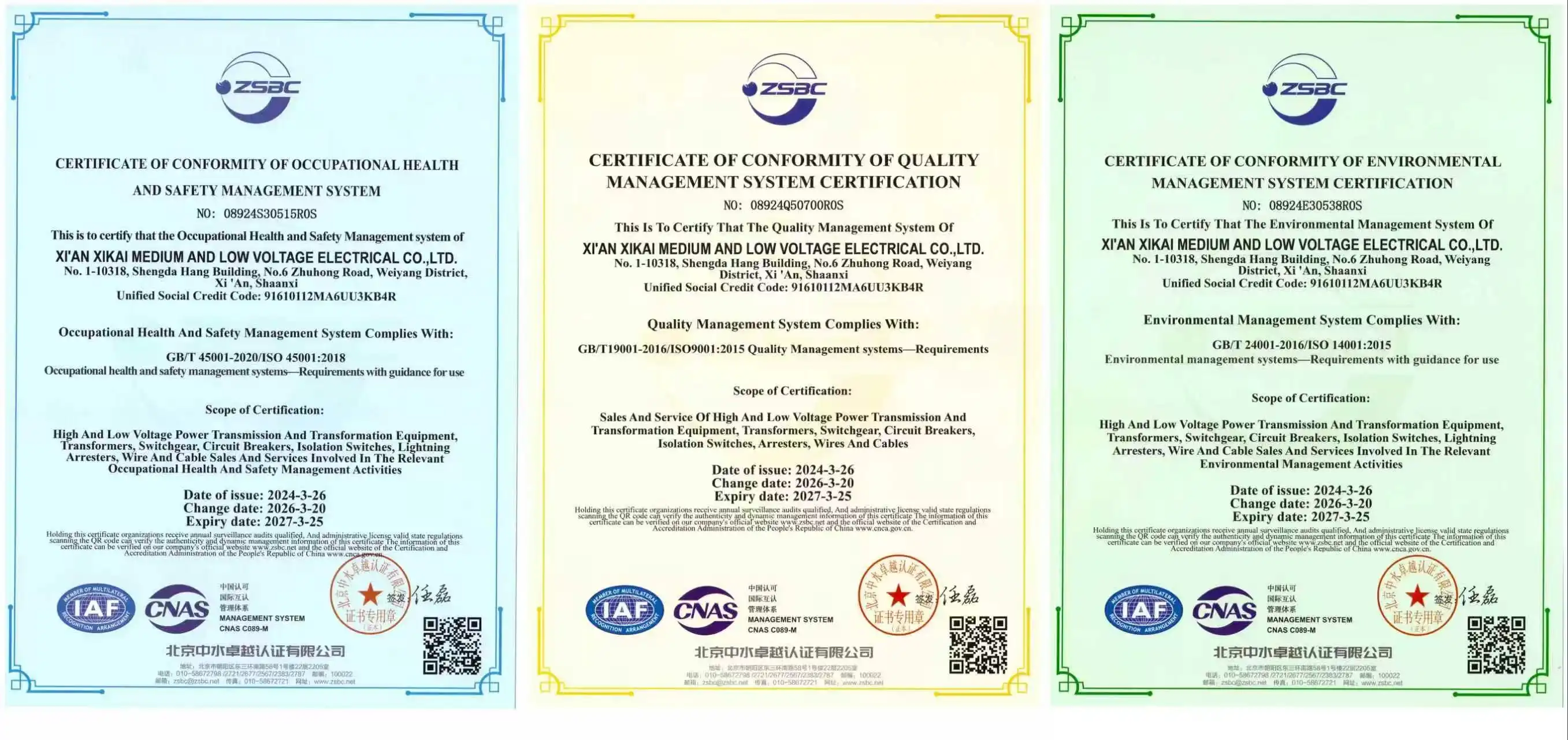
When making sourcing decisions, you need to look at the manufacturer's certifications, which show that the quality is good and that it meets recognized standards. ISO 9001 certification shows that you have established quality management systems, and ISO 14001 certification shows that you are committed to environmental management. Product certifications, like IEC 60076-6 for reactors and IEEE C57.16 compliance, make sure that the equipment meets performance and safety standards around the world. The Chinese 3C certification covers the safety needs of low-voltage products. These certifications give people confidence that the quality of the products and the processes used to make them stay high.
Reactors can be customized to meet the needs of a specific site, which is something that standard catalog products can't do. For some uses, special coatings may be needed for environments that are corrosive, mounting arrangements that are resistant to earthquakes in areas that are prone to them, or altitude derating for installations that are high up. The engineers at Xi'an Xikai can change the impedance values, change the physical sizes to fit places with limited space, and add monitoring interfaces for smart grid integration. This gives facilities the freedom to choose the best equipment specifications instead of having to settle for standard products that don't fit right.
Supplier reliability includes technical support, production capacity, and a promise to provide service after the sale. Manufacturers that have been around for a while and have worked on big infrastructure projects before have the engineering know-how and quality control that are needed for important parts of power systems. How much you can make affects lead times and your ability to support multi-phase projects with regular delivery dates. Technical support during installation commissioning and ongoing operational consultations make the equipment more valuable than it would be on its own.
Procurement and Installation Insights for B2B Clients
Strategic Procurement Practices
To do successful procurement, you need to find reliable suppliers by using a methodical evaluation process that looks at technical skills, pricing, and the possibility of a long-term partnership. To start, send out detailed Requests for Information (RFI) that spell out your compliance needs, system parameters, application requirements, and environmental conditions. When qualified suppliers respond, they send you preliminary designs and capability statements that show how well they understand your needs and how they plan to meet them technically.
Ask for detailed quotes that list the prices of the equipment, engineering services, testing procedures, shipping plans, and warranty terms. Pricing structures that are clear make it easier to compare prices from different suppliers and find any hidden costs. Check to see if the price quoted includes important things like factory testing, suggestions for spare parts, installation supervision, and help with commissioning. Full quotes show that the supplier is professional and lower the risk of unexpected costs during the project's execution.
Negotiate good terms that balance your cost goals with your risk management, especially if you are buying in bulk or deploying at more than one site. Price cuts, longer payment terms, or value-added services like inventory management programs may be okay if you make a lot of commitments. For procurement of Dry-type Air Core Current Limiting Reactors, clearly define performance guarantees, delivery timelines, and acceptance testing procedures. Specify technical support obligations during the warranty period and assign responsibility for addressing issues discovered during commissioning. This ensures accountability, smooth installation, and reliable operation while protecting the buyer’s investment and minimizing downtime.
Installation and Commissioning Excellence
Lead times depend on how customized the product needs to be and when it needs to be made, so getting involved early is important for planning the project. Standard catalog items can be shipped within a few weeks, but custom-engineered reactors take several months to build because the design has to be checked, materials have to be sourced, and tests have to be done. When suppliers know about project schedules early, they can assign engineering resources and production capacity more efficiently, which prevents delays that affect the whole construction schedule.
When equipment is installed correctly by trained professionals, it works as it should and stays safe for as long as it is in use. Reactors must be put on foundations that can handle electromagnetic forces when there is a fault. Enough space around the coil keeps it from getting too hot and lets the magnetic field expand. To avoid high-resistance joints that cause localized heating, electrical connections need to be torqued correctly and contain anti-oxidant compounds. Installation teams should carefully follow the manufacturer's instructions and write down the "as-built" conditions for future use.
Safety standards must be followed to protect people during installation and operation. Lockout-tagout procedures keep power from being turned on by accident during construction. Proper grounding gets rid of the risk of shock and makes sure that fault current paths work right. OSHA and NFPA 70E arc flash safety standards say that clearance zones around live parts that are exposed must be safe. Comprehensive safety planning shows that an organization cares about protecting its workers and lowers its risk of being sued.
Regular maintenance helps the reactor last as long as possible and keeps the protection working well for decades of use. Setting up regular inspection schedules—usually once a year or every two years—finds problems before they become major problems. Thermal surveys find places where connections are weakening or where there are winding hotspots. Insulation resistance testing shows that the epoxy system has not been damaged by water. Manufacturers can offer maintenance training, spare parts that are recommended, and emergency support in case something goes wrong.
Conclusion
Air core reactor technology is a mature and tried-and-true way to handle Dry-type Air Core Current Limiting Reactor in modern power systems. Linear inductance properties, maintenance-free operation, environmental safety, and a long service life are some of the main benefits that industrial facility managers, utility companies, and engineering firms that are responsible for making sure that electrical infrastructure works well can benefit from these benefits. Advanced design and high-quality production make the XKGKL series an example of equipment that protects valuable assets while keeping lifecycle costs as low as possible. Careful selection based on technical needs, thorough supplier evaluation, and professional installation practices make sure that these reactors provide decades of reliable protection, keeping operations safe and allowing the system to grow with confidence as the facility's needs change.
Frequently Asked Questions
1. What routine maintenance do air core reactors require?
Compared to oil-filled reactors, air core reactors need less maintenance. Every year, routine tasks include visual inspections to look for tracking or contamination on the insulation surface, checking the electrical connection torque to avoid high-resistance joints, and thermographic surveys to find hotspots that are starting to form. Cleaning the dust off of the coil surfaces during planned outages keeps the cooling working well. There is no need to take oil samples, filter them, or keep an eye on leaks. Most facilities add these easy tasks to their regular substation maintenance schedules so they don't need to hire extra people or buy special tools.
2. How does the lifespan compare to traditional oil-type reactors?
When properly designed and set up, air core reactors can work reliably for 30 years or more, which is the same or longer than the life of oil-type reactors. Without organic insulating fluids, there are no degradation mechanisms like oxidation, moisture contamination, and thermal breakdown that lead to oil replacement or equipment retirement. The solid epoxy insulation system doesn't react to the environment and keeps its dielectric strength for the whole design life. Many installations keep working well after the original design horizon has passed, with only regular inspections and connection maintenance needed.
3. Can reactors be customized for specific voltage or application requirements?
Comprehensive customization meets the needs of the site that standard products can't. To hit exact impedance goals, manufacturers change coil turns and layer configurations to change inductance values. The physical dimensions can be changed to fit places with limited space or unusual mounting configurations. In coastal areas or chemical processing plants, special coatings make things more resistant to salt fog and industrial pollutants. Designs that are resistant to earthquakes have stronger mounting systems for places that are prone to earthquakes. Calculations for altitude derating make sure that installations at high elevations work properly in terms of temperature. IoT-compatible monitoring interfaces let smart grid automation systems work with IoT devices. The engineering team at Xi'an Xikai works with clients to create custom solutions that work best for their specific needs.
Partner with Xi'an Xikai for Reliable Current Limiting Solutions
Xi'an Xikai is one of the best companies that makes Dry-type Air Core Current Limiting Reactor. Their engineering skills have been improved by taking part in China's 863 Program, and they have more than 15 patents protecting their reactor technology. Our XKGKL series gives your facilities the fault current protection they need. It is made in a factory that is ISO 9001/14001 certified, fully compliant with IEC and IEEE standards, and has been through strict testing procedures that include checking for partial discharge, temperature rise, and impulse voltage. We make sure that the impedance specifications, physical layouts, and environmental protections are exactly what you need, whether you need to protect industrial processes, keep utility grids stable, or support commercial infrastructure. Our technical support team is available 24 hours a day, seven days a week. They can help you with everything, from the initial design consultation to decades of service. Send an email to serina@xaxd-electric.com, amber@xaxd-electric.com, or luna@xaxd-electric.com to talk about your current limiting needs and get detailed technical proposals for your upcoming projects.
References
1. IEEE Standard C57.16-2011, "IEEE Standard for Requirements, Terminology, and Test Code for Dry-Type Air-Core Series-Connected Reactors," Institute of Electrical and Electronics Engineers, 2011.
2. Anderson, P.M., "Power System Protection," IEEE Press Series on Power Engineering, McGraw-Hill Professional, 1999.
3. Das, J.C., "Power System Analysis: Short-Circuit Load Flow and Harmonics," Second Edition, CRC Press, 2011.
4. IEC 60076-6:2007, "Power transformers - Part 6: Reactors," International Electrotechnical Commission, Geneva, 2007.
5. Heathcote, M.J., "J & P Transformer Book: A Practical Technology of the Power Transformer," Thirteenth Edition, Newnes, 2007.
6. Rashid, M.H., "Power Electronics Handbook: Devices, Circuits, and Applications," Third Edition, Butterworth-Heinemann, 2011.

_1774321455861.png)


