Why Automatic Changeover Switch is Essential for Power Backup
2026-05-13 16:08:18
An Automatic Changeover Switch serves as the critical safeguard between business operations and costly downtime. This intelligent device automatically transitions electrical loads from a failing primary power source to a reliable backup generator or secondary supply—typically within milliseconds—eliminating human intervention during emergencies. Without this automated protection, facilities risk equipment damage, data loss, and interrupted services that can cost thousands per minute in industries like healthcare, manufacturing, and data management.
Understanding Automatic Changeover Switches: What They Are and How They Work
The Fundamental Role in Modern Power Systems
We've seen how power outages can make it impossible for businesses in many industries to run. The main power supply's voltage levels, frequency stability, and phase integrity are constantly checked by an Automatic Changeover Switch. When parameters go beyond certain limits, like when voltage drops below 85% or phase loss occurs completely, the control logic starts an instant response process. Microprocessor-based systems look at these conditions in real time and can tell the difference between short-term changes and real power outages that need the backup to be activated. The operating order is based on a clear set of rules. Once the device notices long-lasting problems, it opens the main supply breaker and sends a start signal to the backup generator. The transfer breaker closes when the backup source is steady, which usually takes 8–15 seconds for diesel generators. This gives power back to important loads. Modern models use delayed transition logic to give motors and sensitive electronics time to cool down. This keeps energy from rising during the turn.
Key Types and Their Applications
There are three main designs that meet different operating needs:
- Open Transition Systems: The most common design cuts power for 50 to 100 milliseconds during transfer to keep sources from accidentally being connected in parallel. This low-cost option is used in business buildings and manufacturing plants with strict equipment tolerances. The short power loss doesn't pose much of a threat to HVAC systems, lighting circuits, and other machines.
- Closed Transition Systems: Places that are too important to stop, like surgery rooms in hospitals and factories that make semiconductors, can't have any. Before doing a smooth make-before-break transfer, these high-tech tools make sure that the voltage, phase angle, and frequency of both sources are in sync. The complexity makes the equipment 30–40% more expensive, but it ensures that life-safety systems and accurate tools always have power.
- Delayed Transition Systems: This method finds an intermediate point where both sources are disconnected for 0.5 to 5 seconds. This "air gap" interval keeps the generator from getting damaged by leftover inductive loads and keeps closed transition designs from being too hard to sync up. This balanced approach is good for water treatment plants and commercial cooling systems.
Technical Wiring and Safety Considerations
Electrical rules must be followed to the letter for proper fitting. The mechanical locking device stops both input breakers from closing at the same time. If this happened, the outputs of the utility and generator would be parallel, which could damage equipment and hurt people. Our engineering teams focus on two types of protection: mechanical bars that stop multiple breakers from working at the same time and electrical disconnect circuits that turn off control power if something goes wrong. Control power needs (usually 24V DC or 120V AC), generator start relay outputs, Automatic Changeover Switch, and status indication circuits must all be shown in wiring layouts. Pay extra attention to the isolation of the neutral conductor: both the phase and the neutral must separate during transfer to stop backfeeding and keep the purity of the ground reference. Third-party checks make sure that the standards set by NFPA 70 (National Electrical Code) and IEC 60947-6-1 are met before the system is put into service.
Why an Automatic Changeover Switch is Critical for Power Backup in B2B Environments
The Hidden Costs of Manual Transfer Methods
Manual swapping methods have a lot of problems that could go wrong. Response times are usually 3 to 8 minutes, which is a long time when production lines stop, or server farms lose their cool. This is because people have to figure out what's wrong, find the transfer equipment, and turn it on. Mistakes made by people can make the problem worse: the wrong throw sequences can turn on equipment from both sources at the same time, causing arc flashes that hurt workers and damage things worth hundreds of thousands of dollars. Outages caused by bad weather usually happen at night or on the weekends, when skilled electricians might not be available. Restoration times were often 45 minutes because trained staff had to drive from home during storms. At the same time, medicine stocks that were sensitive to temperature went bad, and expensive workpieces were thrown away when CNC machines lost their calibration in the middle of a cycle.
Business Continuity Advantages
An Automatic Changeover Switch shift has measurable benefits that have a direct effect on making money. Production plans are kept when operations don't stop. In the building of cars, just one hour of downtime costs $2–3 million in lost output and supply chain problems. Data centers that work with financial institutions are fined by regulators if they have service interruptions that happen more often than the 99.99% uptime that they agreed to in their contracts. Improving safety isn't just about stopping arc flash dangers. Automatic methods get rid of the need for people to reach live devices in an emergency, which lowers the risk of liability. Hospitals make sure that life-support systems work all the time, and wastewater treatment plants keep the environment clean when pumps break. Insurance companies lower premiums when they see lower risk. For example, when approved, automatic transfer systems protect vital infrastructure, and business property plans often discount 8–12%. Maintenance costs go down by a lot compared to manual options. Every time there is a move, automated units record voltage levels, reaction times, and other system health data. Predictive maintenance algorithms look at this operating data to plan when to replace parts before they break. This makes equipment last 15 to 20 years instead of 8 to 12 years for switches that are handled by hand and can get arc damage from not being sequenced correctly.
Real-World Impact Across Industries
Over the course of three years, a factory client in the Midwest that worked with car parts had 14 manual transfer events that cost $890,000 in wasted parts and overtime pay. After adding our microprocessor-controlled transfer system with response times of less than a second, they had no production interruptions for 18 months. It took 11 months to pay back the loan. The expectations on people who run data centers are just as serious. A single rack of current computers uses between 15 and 25 kilowatts of power and makes a lot of heat. If the cooling system is interrupted for just 90 seconds, hundreds of computers can all shut down because of heat. Colocation companies that work with businesses require transfer times of less than 10 milliseconds to keep their SLA promises and avoid service credits that cut into their profits. The most difficult application is in healthcare centers. Procedures in the operating room can't stop for power outages—cardiac surgeries, breathing support, and imaging tools need to work all the time. Our solutions have 100% success rates for transfers and meet the standards set by the Joint Commission for life-safety systems.
Comparing Automatic Changeover Switches with Other Transfer Solutions
Distinguishing Automation Levels and Performance
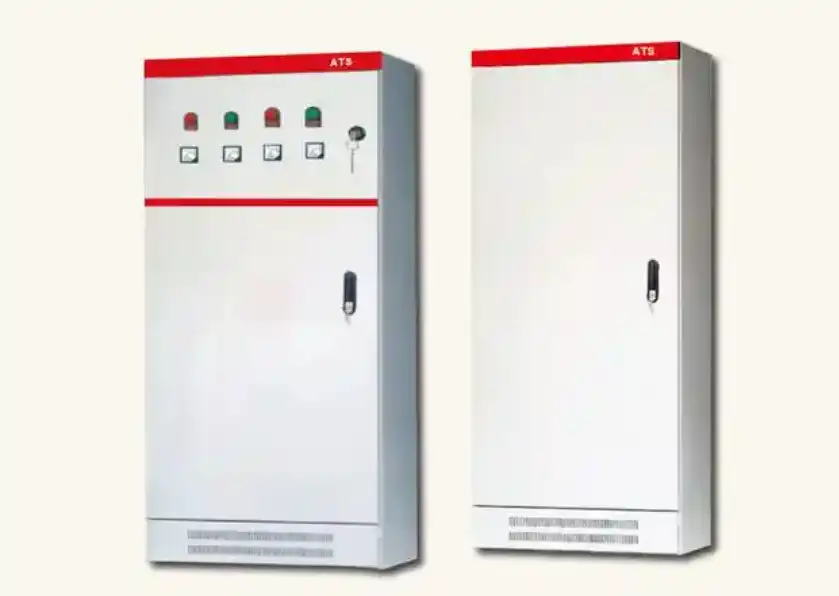
A lot of people get Automatic Changeover Switch units and manual transfer switches mixed up. Manual units need to be operated by trained people, which adds time and the risk of mistakes. They are a cheap way to power non-essential loads that won't be affected by a power outage for a few minutes, like emergency lights in parking garages or irrigation pumps at a leisure center. The difference in language between ACS and ATS depends on where you live and what the maker uses. Both describe self-acting power transfer systems in terms of how they work. "Changeover switch" is used by some engineers for simpler electromechanical designs, while "transfer switch" is used for intelligence run by a computer. Our product line includes both designs, so procurement teams can choose the level of complexity that best fits the needs of the application and the budget. Response time makes a big difference between groups. Basic automatic units can make changes in one to three seconds, which is long enough for most business buildings, where a brief loss of light doesn't cause too much trouble. Critical power systems need responses of less than 20 milliseconds, which can only be achieved with solid-state switching elements or high-speed Automatic Changeover Switch mechanical contactors mixed with predictive algorithms.
Matching Technology to Operational Demands
The main decision criterion is the load ability. We have current rates from 100A to 3200A and voltage ranges from 220V to 660V AC, so we can work with a wide range of businesses, from small shops to large industrial buildings. According to NEC Article 700, procurement workers should figure out the total linked load and then use a 125% safety factor. Verifying the generator's fit makes sure it has enough starting power. Motors draw 6–8 times their running current when they speed up, so the generator needs to be big enough to handle 150–200% of their steady-state load. The installation setting has a big effect on the choice of covering. The temperature and humidity inside electrical rooms are kept under control, so standard NEMA 1 or IP20 covers can be used. For use outside or in dusty factories, devices need to be protected against water and dust with an IP65 rating. Corrosive air near chemical processing or seaside sites calls for construction in stainless steel and conformal coating on circuit boards. Our engineering team takes these requirements into account when reviewing applications. When figuring out cost-effectiveness, you have to take into account all of your ownership costs, not just the original buy price. Premium models with diagnostic tools and flexible parts cost 40–60% more up front, but they save you three to eight thousand dollars a year on upkeep costs by predicting when to service them and replacing parts more quickly. A ten-year lifecycle study always shows that installing high-quality equipment to protect businesses that make money or important assets is the best choice.
Installation, Testing, and Maintenance Guide for Automatic Changeover Switches
Professional Installation Standards
A careful site evaluation is the first step in proper commissioning. Electrical workers check the coordination of upstream protection, making sure that the ratings and limits for arc flashes on circuit breakers match the requirements of the Automatic Changeover Switch. The place where the unit is mounted needs to have enough air flow because units rated above 800A produce a lot of heat and need temperature-controlled areas or forced air cooling. In seismic zones, you need to use stronger fixing gear that meets the requirements of the International Building Code (IBC). The installation of control wires needs to be done with great care. In generator start circuits, dry contact seals rated for magnetic loads are usually used. To keep voltage spikes from damaging electronic controls, suppression diodes or RC networks are needed. Integrating remote tracking through Modbus RTU or TCP protocols lets building management systems keep track of transfer events and get alarm alerts. Our technical support team helps with setup and checks the installation before turning it on to avoid costly startup fails.
Testing Protocols and Troubleshooting
There is a set order to initial acceptance testing. With grid power on and the generator off, techs use calibrated meters to check the accuracy of the voltage sensing across all three modes. A simulated power failure proves that the transfer starts at the right voltage levels (usually 85% normal) and within the time limits that were set. The test matrix is finished with the generator starting signal activation, the breaker interlocked function, and the automatic retransfer when the utility service is restored. Utility power transients can cause annoying shifts, which are a common problem that needs to be fixed. Changing the time delay options from one second to three to five seconds blocks out short disturbances while still allowing for enough emergency reaction. Control power problems, like broken fuses, dead batteries, or loose electrical connections, are often to blame for failure to transfer. When rust or dirt builds up and causes mechanical binding, it shows up as slow transfer times. This can be fixed by lubricating and cleaning the contacts.
Extending Equipment Lifespan
Schedules for preventive maintenance depend on the job cycle and the surroundings. Units that are moved every month in places where electricity problems happen a lot need to be serviced every six months. In stable power places that are activated once a year or less, repair can be done once a year. Checklists for inspections include measuring how much contact wear there is (replacement at 50% of original thickness), checking the insulation resistance (minimum 1 megohm to ground), and making sure the control circuit works. Environmental controls make parts last a lot longer. Keeping the temperature in the electrical room between 15°C and 25°C and the relative humidity below 60% stops condensation and rust from happening. Cleaning and maintaining HVAC filters stops airborne dirt and germs from getting into shelters. In outdoor setups, space heaters keep condensation from forming when it's cold outside, and air fans get rid of heat when it's hot outside, and the equipment is getting close to its thermal limits.
Procurement Insights: How to Source Reliable Automatic Changeover Switches
Strategic Vendor Evaluation
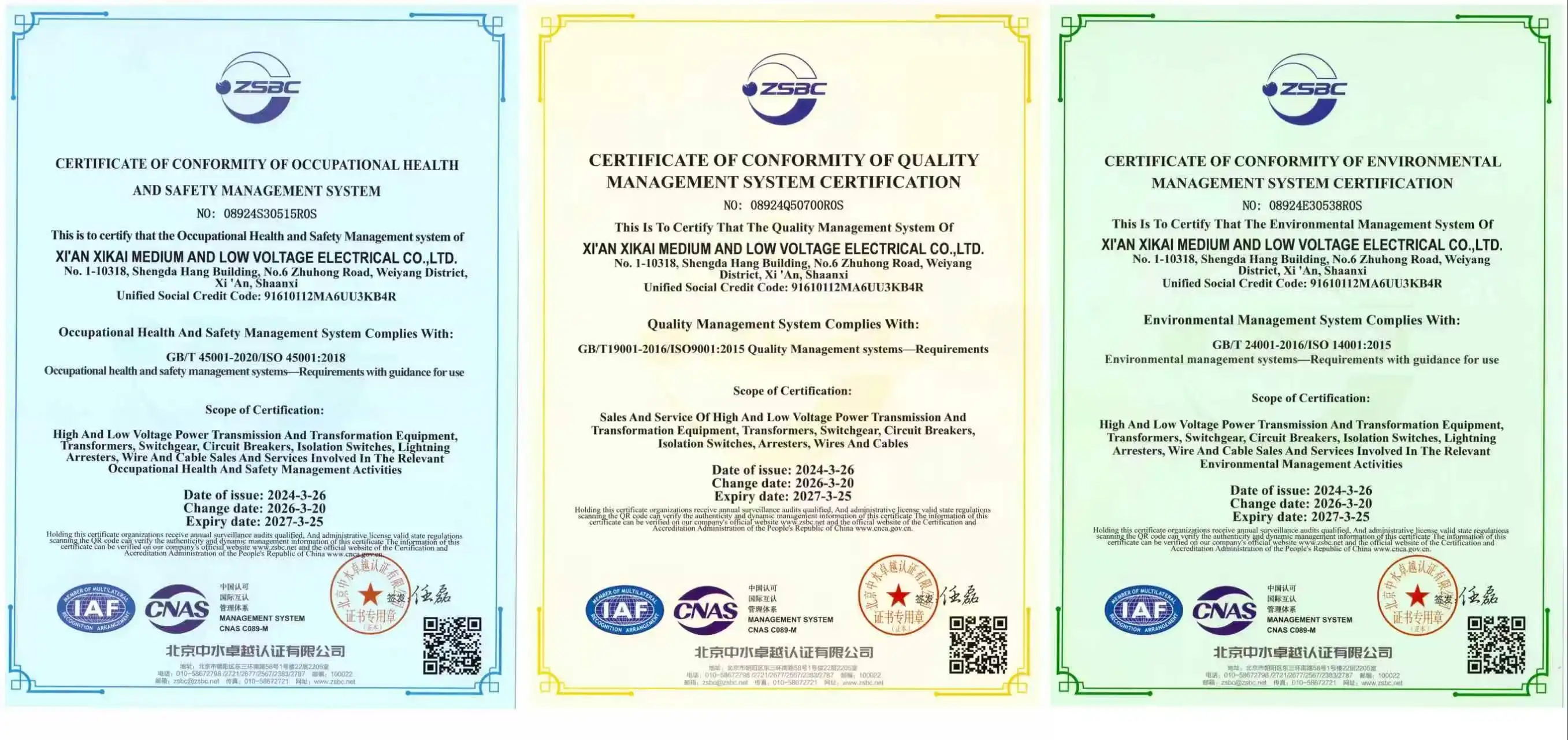
For multi-site setups, negotiating bulk purchases can save a lot of money. When purchasing Automatic Changeover Switch, managers set up standard transfer systems in 10 or more sites, they get bulk discounts of 20 to 30 percent, and make it easier to keep track of spare parts. When you combine vendors, you save money on administrative costs. For example, single-source contracts make it easier to order things, manage warranties, and coordinate technical support. Our project management teams work with EPC firms that are planning large-scale installations. They give value engineering advice that keeps performance high while making the best use of budgets. Assessing a supplier's dependability means looking at their quality control systems and their ability to help customers after the sale. Getting ISO 9001 certification means that your quality management processes are written down. ISO 14001 and ISO 45001 certifications show that you care about the environment and safety. Carefully look into the warranty terms. Five-year coverage with sure parts availability shows that the maker is confident, while a limited one-year warranty could mean that you have doubts about the trustworthiness. We've been focusing on Automatic Changeover Switch and electrical tools for more than 15 years, which gives us the institutional knowledge that helps us build long-term relationships with our customers.
Navigating Brand Selection
The market for industrial transfer switches is served by a number of well-known companies. Schneider Electric has a wide range of options that focus on digital integration and remote tracking, making them perfect for places that want to use smart building management. Siemens goods are built to last and can handle heavy industrial settings with long job cycles. ABB is an expert in high-current uses, and their models can handle up to 4000A for large-scale setups. Eaton focuses on flexible designs that can be changed in the field as practical needs change. Xi'an Xikai stands out because it can be customized to meet specific needs that go beyond what is offered in its store. Our engineering team comes up with reliable solutions for plateau settings that work at 4,000 meters above sea level, where thin air makes cooling and arc control difficult. Explosion-proof enclosures that meet hazardous site standards are sent to petrochemical operations. When we work on State Grid projects, we use what we know about the Chinese power system to make sure that they are compatible with world standards for clients from other countries.
Optimizing Purchasing Channels
The best technical help and customization options come from working directly with the maker. Our sales experts check out sites, look at single-line diagrams, and suggest the best designs based on load studies and plans for future growth. This consultative method stops people from over-specification (wasting money on features that aren't needed) and under-specification (needing to be replaced too soon as needs change). Direct buy gets rid of markups for distributors, which usually cuts costs by 15 to 25 percent for jobs over $100,000.Online markets for industrial goods give buyers more choices, but they need to be carefully checked out. Check the seller's credentials to avoid getting fake goods that don't have the right certifications or warranties. Carefully look at the different specs—the stated values should include both continuous current and short-circuit withstand capacity (SCCR). Request factory test results and certification papers before making a deal with a new provider whose prices are much lower than the market rate. This is usually a sign of low-quality parts or misleading specs.
Conclusion
Automatic Changeover Switch technology is an important part of any business that needs to keep its electricity running because it can affect safety, efficiency, or following the rules. The microseconds saved by automatic reaction stop the chain of failures that turn short power outages into long-lasting losses in production and damage to equipment that costs a lot more than the power outage itself. Matching technical specs to load traits, environmental conditions, and practical goals is important for making the right choice, whether you're looking for faster transfer speeds, more customization options, or lower lifecycle costs. Our wide range of products meets the needs of both small business sites and large industrial complexes, and our engineering know-how makes sure that the systems work together perfectly. Buying teams that put money into good transfer solutions with quick technical help and tested manufacturing skills protect their businesses from the hidden costs of power instability.
FAQ
1. What distinguishes an automatic changeover switch from a manual transfer switch?
The main difference is how they work and how long they take to respond. Manual shift switches need to be operated by trained professionals, which can take 3–8 minutes and increases the chance of human mistakes. An Automatic Changeover Switch uses voltage sensing circuits and control software to start the transfer within milliseconds to seconds without any help from a person. This keeps business going during situations when staffing levels can't be guaranteed.
2. How frequently should automatic transfer systems undergo maintenance?
Maintenance times depend on how often the transfers happen and the weather in the area. Units that work in clean inner spaces and are only moved once a year or less need to be inspected once a year. For harsh conditions or monthly transfer cycling, service should be done every six months. Checking the contacts, checking the insulation resistance, making sure the control circuit works, and simulating a transfer test while the system is loaded should all be part of every maintenance cycle.
3. Are these systems compatible with renewable energy sources like solar installations?
Modern units that are controlled by microprocessors work perfectly with mixed power systems that use a combination of green sources, utility power, and backup generators. Control code sets up priority levels, with solar or wind power usually coming in first, the utility company coming in second, and the generator coming in as a last resort. Closed-transition models with synchronization features allow grid-tie operation, in which extra renewable power is sent to utility networks while automatic transfer security is kept during outages.
4. What current ratings should procurement teams specify?
Find the total linked load, which includes all the equipment that needs to keep running when the power goes out. Use the 125% safety factor required by the NEC and then take into account any motor starting currents (6 to 8 times the running amperage). Choose the next standard rating that is higher than the estimated needs. Common ratings are 150A, 260A, 400A, 600A, 800A, 1200A, 1600A, 2000A, and 3200A. By going up in size by one step, you can handle future growth without having to buy new tools.
Ready to Protect Your Operations? Partner with Xi'an Xikai
Finding the right Automatic Changeover Switch maker requires knowledge of how power systems work and a dedication to their dependability over time. Xi'an Xikai has been focusing on medium and low-voltage electrical solutions for over 15 years, working with mission-critical businesses in State Grid infrastructure, industrial centers, and renewable energy projects. Our ATS product line has dual mechanical-electrical interlocks, microprocessor-controlled precision with sub-20ms transfer capability, and changeable rates from 100A to 3200A. It is also UL 1008, IEC 60947-6-1, and CE certified. We design solutions for tough locations, like plateau sites up to 4,000 meters high and harsh industrial settings. Send an email to serina@xaxd-electric.com, amber@xaxd-electric.com, or luna@xaxd-electric.com with your specific needs to our expert team.
References
1. National Electrical Manufacturers Association. (2019). Automatic Transfer Switches: Application Guide and Selection Criteria for Commercial and Industrial Facilities. NEMA Standards Publication.
2. Institute of Electrical and Electronics Engineers. (2021). IEEE Standard for Automatic Transfer Equipment, IEEE Std 446-2017 (Orange Book). IEEE Power and Energy Society.
3. Johnson, M.R., & Williams, P.T. (2020). Critical Power Systems Design: Engineering Reliability in Mission-Critical Facilities. McGraw-Hill Professional Engineering.
4. International Electrotechnical Commission. (2018). Low-Voltage Switchgear and Controlgear – Part 6-1: Automatic Transfer Switching Equipment. IEC 60947-6-1:2018 Standard.
5. Thompson, R.K. (2022). Power Quality and Reliability in Industrial Electrical Systems: Practical Applications and Economic Impact. CRC Press Engineering.
6. National Fire Protection Association. (2020). NFPA 110: Standard for Emergency and Standby Power Systems. NFPA Codes and Standards, 2020 Edition.