Benefits of Low Voltage Withdrawable Switchgear Systems
2026-05-13 16:08:20
Low Voltage Withdrawable Switchgear systems deliver transformative advantages for facilities requiring uninterrupted power distribution and simplified maintenance protocols. These modular assemblies enable operators to service or replace individual circuit breaker units without shutting down adjacent equipment, drastically reducing downtime costs. Enhanced safety measures, including isolated compartments that prevent arc flash incidents, protect personnel during live maintenance. The flexible architecture accommodates expanding electrical loads while optimizing floor space—critical benefits for data centers, manufacturing plants, and utility substations where operational continuity directly impacts profitability and grid reliability.
 |
 |
Understanding Low Voltage Withdrawable Switchgear
Today's power distribution needs methods that strike a balance between safety, efficiency, and flexibility. Low Voltage Withdrawable Switchgear meets these needs with smart engineering that divides functional areas while keeping operations running smoothly.
Modular Architecture and Core Components
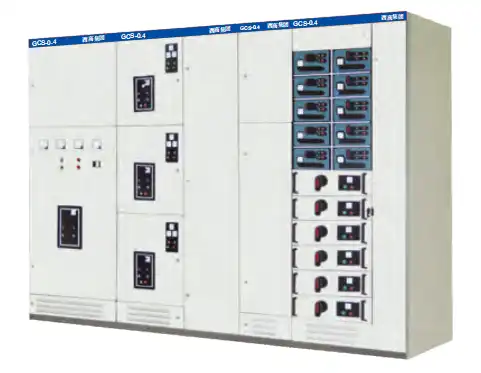
Using 8MF open-section steel profiles with 20mm modular spacing for excellent structural stability, the GCS-0.4 series is a great example of advanced low-voltage withdrawable switchgear design. There are separate drawer units in each cabinet that hold circuit breakers, safety switches, and metering equipment. In this compartmentalized method, busbars, functional units, and wire connections are kept separate. This is very different from fixed switchgear, where all of the parts are permanently placed. Horizontal busbar systems can handle currents between 630A and 4000A, while vertical setups can handle up to 1000A. This means that they can be scaled up or down depending on the needs of the project. The device that can be pulled out works with precise rotary motion systems instead of simple push-pull designs. The units can easily move between three positions: fully linked for regular use, test position for commissioning checks, and fully withdrawn for storage or repair. This level of mechanical precision makes sure that the equipment stays in the right place and makes good electrical contact for more than 20 years.
Technical Specifications Driving Performance
These systems meet world power standards with rated insulation voltages of 660V and 1000V and can work at frequencies of 50Hz and 60Hz. Under IEC 60439-1 approval, the breaking capacity goes up to 50kA, which makes sure that fault current control happens during short-circuit events. Protection class rates of IP40 combine the need for air flow with defense against solid particles bigger than 2.5 mm in diameter, which is important for industrial settings where dust or debris is present. The choice of material is very important for durability. Cold-rolled steel frames with aluminum-zinc coats don't rust in wet substations, sites near the coast, or chemical processing plants. Standard working conditions include temperatures ranging from -10°C to +40°C and heights of up to 2000 meters. Specialized versions are available for harsh environments, such as earthquake zones up to magnitude 8.
Operational Flexibility Through Safe Isolation
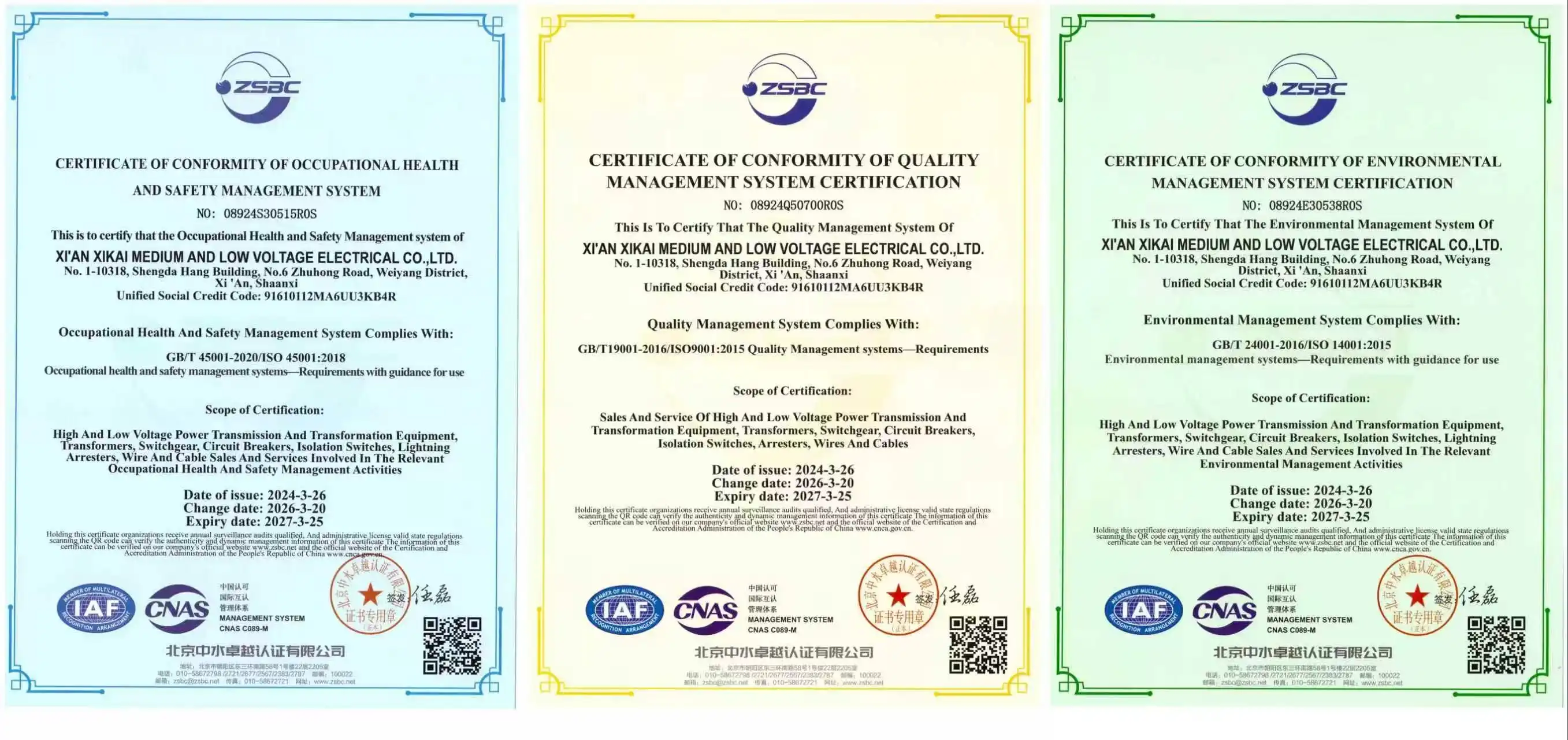
The ability to hot-swap parts for repair is what makes Low Voltage Withdrawable Switchgear technology unique. Technicians can take out broken units while neighboring lines stay on, which avoids having to shut down the whole building, which would be expensive. Mechanical interlocks stop drawers from being pulled out by mistake while they are loaded, and shutters close over busbar connections when drawers are retracted. These two safety features meet IEC 61439-2 and UL 1558 standards. This isolation goes beyond being physically apart. Each section works on its own as an arc-resistant zone, keeping possible fault energy in small areas. Units are tested at ISO 9001-certified factories that do thermal stability analysis and partial discharge tracking. This makes sure that they work well under stress conditions that are similar to electrical problems that happen in real life.
Top Benefits of Low Voltage Withdrawable Switchgear Systems
When you invest in Low Voltage Withdrawable Switchgear technology, you get measured returns in terms of safety, business uptime, and lifetime economics. Facility managers always say that upgrades from fixed setups lead to better upkeep efficiency and lower insurance rates.
Enhanced Personnel Safety During Maintenance
Arc flashes are still one of the worst electrical dangers, but equipment that can be removed greatly reduces the risks of exposure. When techs need to repair circuit breakers, all they have to do is turn the withdrawal mechanism to disconnect the contacts. This takes less than 60 seconds and doesn't require any tools. With automatic shutter systems, live busbar connections are covered right away, keeping people away from 660V or 1000V components that are live. This way of thinking about design stops the 15,000 accidents caused by arc flashes that happen every year in industrial sites. When fault energy is directed through a compartmentalized building, it goes through specialized exhaust routes instead of toward operators. This safety design is especially useful for hospitals that need constant power for life-supporting equipment, because maintenance teams can fix electricity problems without putting patient care at risk by shutting down the building.
Maximized Operational Uptime and Reliability
Statistics from the business show that downtime costs factories an average of $260,000 per hour. Low-Voltage Withdrawable Switchgear designs get rid of this cost by letting you quickly swap out parts. Replacement circuit breakers can be slid into place within minutes when contacts wear out or need to be re-calibrated. This is very different from fixed switchgear, which needs hours of turning off the power, taking it apart, and putting it back together again. Grid stability is improved by making it easier to find faults. IoT-enabled sensors are built into modern systems to keep an eye on things like harmonic distortion, load mismatches, and insulation degradation. Utility companies get tips about planned maintenance before failures happen, so they can schedule repairs for planned outages instead of having to deal with emergency breaks that spread through transmission networks.
Long-Term Cost Efficiency and Energy Optimization
The initial costs of buying something only make up 25% of the total costs of owning it over a 20-year time. The last 75% includes costs like maintenance work, replacement parts, and lost time due to downtime, all of which can be greatly decreased by using technology that can be withdrawn. CNC machining and robotic welding are used for precision production that ensures errors of just a few millimeters, which reduces contact resistance and heat generation. Lower working temperatures make parts last longer and make machine rooms' HVAC systems less busy. Environmental benefits are in line with the environmental goals of businesses. Thermal management that works well cuts down on cooling energy use by 20%, which lowers carbon emissions and meets ISO 14001 environmental standards. Steel frames and copper busbars that are used in modular buildings can be recycled at the end of their useful lives, so they don't end up in a dump.
How to Choose the Right Low-Voltage Withdrawable Switchgear
When making a procurement choice, you have to weigh the technical requirements against the project's specific restraints, such as budget limits, installation timelines, and the need for future growth. Systematic evaluation frameworks keep expensive mistakes from happening when Low Voltage Withdrawable Switchgear capabilities don't match up with building needs.
Key Technical and Compatibility Criteria
Electrical factors are what selection methods are based on. Find the highest load currents, making sure to include a 25% safety margin for future growth. Then, compare these to the values for the busbars, which range from 630A to 4000A. Pay close attention to the short-circuit current capacity—buildings that get hit by lightning often or that are near industrial arc furnaces need 50kA breaking capacity instead of the standard 25kA values. Physical measurements affect how easy it is to put. Before deciding how many cabinets to order, you should measure the ceiling heights, opening lengths, and floor loads. The GCS-0.4 series comes in a variety of designs that can be used in places with limited space. For example, an 800mm-wide box can hold as many circuits as 1200mm fixed switchgear, which is very useful for retrofit projects in older buildings where floor space is expensive.
Evaluating Withdrawable Versus Fixed Switchgear
Fixed systems have lower costs up front, but they make it very hard to do things. Because they need to be completely turned off for maintenance, they are only good for places that can handle planned downtime, like small stores or office Low Voltage Withdrawable Switchgear buildings with light loads. On the other hand, bigger original investments are worth it for Low Voltage Withdrawable Switchgear systems because they don't have to pay for downtime and have better safety features. Figure out payback times by figuring out how much downtime can be avoided. Manufacturing companies that make $500,000 a day can get their Low Voltage Withdrawable Switchgear system fees back in 18 months by keeping their production from stopping. Power outages that affect patient monitoring systems can get hospitals in trouble with the law and put them at risk of being sued, so hospitals must have withdrawable setups. Modular methods are better for scalability reasons. When adding circuits to fixed equipment, it needs to be shut down for several weeks so that the wires and structure can be changed. To add more drawer units, simply slide them into empty spaces in drawer cabinets that are retractable. This lets the cabinets' capacity grow gradually to keep up with business growth without having to interrupt building projects.
Supplier Evaluation and Certification Verification
By working with well-known makers, you can be sure of getting expert help, spare parts, and warranties that cover equipment for decades. Xi'an Xikai has been working with utility companies for 15 years in a variety of climates. This shows that they are reliable, which is very important when electricity infrastructure breakdowns threaten the safety of workers and the operations of the facility. Ask for proof that the product meets the standards set by IEC 60439-1, GB7251, and UL 1558. These certificates show that the goods passed strict tests for temperature rise, dielectric strength, and the ability to withstand short-circuits. Be wary of sellers whose prices seem too good to be true and who don't show clear proof of approval. Low-quality equipment can fail catastrophically and can void facility insurance coverage. Look at the infrastructure for help after the buy. Quality makers keep regional service centers filled with factory-trained techs who can respond to emergencies within 24 hours. Find out how many replacement parts are in stock. Important parts like circuit breakers and metering units should be able to ship within 48 hours, without having to wait for foreign freight to take more than six weeks.
Applications and Industry Use Cases
Different industries use Low Voltage Withdrawable Switchgear technology to deal with their own specific operating problems, such as harsh weather conditions or strict rules that must be followed.
Manufacturing and Heavy Industry Environments
Steel mills and car assembly plants use machines that use a lot of power, which can cause serious electricity problems. Harmonic currents and voltage transients are made by robotic welding systems, induction furnaces, and CNC machining centers. These affect the performance of other machines. Low Voltage Withdrawable Switchgear separates these loads, blocking out disturbances and allowing focused tracking of power quality. After upgrading the delivery system, facilities report 30% fewer annoying trips and longer motor life. Chemical processing plants have to deal with acidic air that has chlorine fumes and sulfur chemicals in it. Specialized switchgear setups use coatings that are made for hot conditions and protected boxes that keep their IP54 ratings. These assemblies work consistently in temperatures up to 45°C and 95% relative humidity, which are conditions that quickly break down fixed switchgear that doesn't have environmental safety features.
Mission-Critical Data Centers and Telecommunications
Server farms need power to always be on because single-second outages can damage databases and break service level agreements, which can lead to fines of millions of dollars. Dual-bus Low Voltage Withdrawable Switchgear designs give you two sets of power lines, so you can work on the main circuits while the backup systems take on all the work. Hot-swappable drawer units make it possible to update software and get new equipment without affecting customers. Seismic-rated equipment that can withstand magnitude 8 earthquakes is used in telecommunications central offices that serve urban areas. When structures move, flexible busbar connections keep the electricity going. This keeps emergency communication networks running during natural disasters when fixed lines fail to connect.
Healthcare and Commercial Building Applications
Hospitals require compliance with NFPA 99 healthcare facility electrical codes mandating emergency power systems operational within 10 seconds of utility failures. Low Voltage Withdrawable Switchgear simplifies integration with backup generators and uninterruptible power supplies, providing clear isolation points for commissioning and periodic testing. Operating room electrical panels utilize silent drawer mechanisms generating less than 45dB noise, avoiding patient disturbances during surgical procedures. Shopping malls and office towers benefit from space-efficient designs accommodating expanding tenant loads. Property managers add circuits for new restaurant kitchens or tenants who use a lot of data by installing drawer units rather than constructing additional electrical rooms—preserving rentable square footage while meeting growing power demands.
Installation and Maintenance Best Practices
Proper commissioning makes equipment last longer and keeps it from breaking down too soon. Check the torque requirements for the busbars using measured wrenches. Connections that aren't tight enough create hot spots that damage the insulation, and connections that are too tight damage the mounting hardware. Do infrared thermography scans once a year to find problems before they get worse and cause failures. Set up rotation plans for drawer units in setups with multiple circuits. When standby breakers are under load, they should be operated on a regular basis to avoid contact rust, which is a frequent failure mode that happens when emergency backup systems are not being used for long periods of time. To set baselines for predictive maintenance, keep thorough service logs that record withdrawal cycles, contact inspections, and protection relay tests.
Procurement Considerations for Low Voltage Withdrawable Switchgear
Cost goals, performance needs, and reducing risk must all be balanced in strategic buying choices Low Voltage Withdrawable Switchgear for Low Voltage Withdrawable Switchgear. Comprehensive review systems keep short-term savings from hurting operations in the long run.
Pricing Dynamics and Total Cost of Ownership
The cost of equipment depends on its current grade, its breaking ability, and how complicated its configuration is. Standard 1000A parts with a 25kA interruption capacity are priced at the base level. High-performance 4000A systems with 80kA fault ratings, on the other hand, cost more because they are made with better materials and with more precision. To find ways to save money, ask for detailed quotes that separate cabinet structures, drawer units, and extras. Lifecycle cost analysis shows what the real business value is. Over a 20-year period, model upkeep labor savings from less downtime and gains in energy efficiency. Price premiums of $150,000 for Low Voltage Withdrawable Switchgear systems that save $75,000 a year in outage costs are worth it because they have two-year payback times and big net present value benefits.
Warranty Coverage and Technical Support
Standard warranty terms cover production flaws and material problems for 18 to 24 months from the date of start. Talk about getting five years of extra coverage for important uses where the cost of replacement includes lost production and emergency service fees. Make sure you understand what the warranty doesn't cover. Usually, improper installation, unauthorized changes, and activity that goes beyond the recommended limits will void the guarantee. Having easy access to technical help is very important in an emergency. Xi'an Xikai offers support 24 hours a day, seven days a week through several contact methods, such as serina@xaxd-electric.com, amber@xaxd-electric.com, and luna@xaxd-electric.com. Check the response times for both remote troubleshooting and on-site service calls. Critical sites need emergency response promises of four hours instead of the usual next business day.
Certifications Ensuring Regulatory Compliance
International licenses prove the quality of a product and make it easier to get permits. IEC 60439-1 compliance shows that the product meets world standards for electrical safety, and UL 1558 listing shows that it meets North American building rules. When working on projects that involve government buildings or public services, it's common for extra certifications like NEMA standards and Buy American Act compliance to be needed. Environmental approvals help companies with their efforts to be more environmentally friendly. With ISO 14001 approval, you can be sure that makers use environmental management systems to cut down on production waste and emissions. RoHS compliance makes sure that products don't contain any harmful materials, which makes it easier to recycle and throw away old products.
Logistics and Installation Planning
Lead times vary from 8 to 16 weeks, based on how complicated the design is and how much the factory can make. Early on, let people know about project timelines, especially for developments that need to coordinate the arrival of equipment with building goals. There are 20–30% surcharges for expedited production, but it keeps the job from being delayed, which would cost more than $10,000 a day in contractor backup costs. Professional installation by factory-certified workers makes sure that the system is properly set up and that the guarantee stays valid. Installation teams make sure the base is level, test busbar connections for high voltage, and set up safety switches that match utility coordination studies. Plan to spend between $8,000 and $15,000 per cabinet for a complete fitting that includes tests and paperwork.
Conclusion
Investing in Low Voltage Withdrawable Switchgear technology is a smart way to improve organizational reliability, worker safety, and long-term cost savings. Electrical distribution equipment that can be serviced without shutting down the whole building has a measured value in the industrial, healthcare, data center, and utility sectors. Modern systems with a 50kA breaking capacity and flexible scalability can meet the needs of both present operations and future growth. Tough selection processes that look at technical specs, seller records, and total ownership costs make sure that systems work at their best for decades to come. Facilities that put uptime, safety, and adaptability at the top of their list of priorities always see quick payback times through lower downtime costs and more operating freedom.
FAQ
1. What advantages do withdrawable systems offer over fixed switchgear?
Low-Voltage Withdrawable Switchgear setups let you work on individual circuit breakers without turning off the power to nearby equipment, so you don't have to pay for expensive facility shutdowns. Arc flash risks are lowered by better safety features like automatic blinds and buildings with separate areas. It's easier to add more capacity in the future with modular designs, and each cabinet can hold 11 units instead of 6–8 units in set systems.
2. How frequently does withdrawable switchgear require maintenance?
Every year, routine checks are done that include scanning with infrared thermography, measuring contact resistance, and checking protection relays. Every three to five years, drawer units get a lot of care, like having their contacts replaced and their mechanisms oiled. This plan saves a lot of work compared to fixed switchgear, which needs to be taken apart into large pieces for maintenance jobs that are the same.
3. Can existing electrical systems integrate withdrawable switchgear?
Old fixed setups are often upgraded to Low Voltage Withdrawable Switchgear technology as part of retrofit projects. Modern systems can work with older wire terminations and safety coordination schemes that are already in place. Detailed site studies find electrical and physical limits, which let systems work together without having to change the infrastructure.
Partner with a Trusted Low Voltage Withdrawable Switchgear Manufacturer
To upgrade your power distribution infrastructure, you need to know what you're doing, use high-quality parts, Low Voltage Withdrawable Switchgear, and get solid help after the installation. Xi'an Xikai blends decades of excellent manufacturing with full engineering services that are suited to the specific needs of your location. The GCS-0.4 series meets the performance standards of IEC 60439-1 and UL 1558 and is backed by ISO 9001 quality control methods that guarantee reliable performance over time. We provide customized solutions that improve both safety and operating efficiency for manufacturing plants, utilities, and business buildings in a wide range of difficult environments, from high-altitude sites to corrosive industrial atmospheres. You can email our expert team at serina@xaxd-electric.com, amber@xaxd-electric.com, or luna@xaxd-electric.com to talk about the details of your project and get accurate quotes.
References
1. International Electrotechnical Commission (2009). Low-Voltage Switchgear and Controlgear Assemblies: General Rules (IEC 60439-1).
2. National Fire Protection Association (2020). NFPA 70: National Electrical Code Handbook.
3. Institute of Electrical and Electronics Engineers (2018). IEEE Standard for Metal-Enclosed Low-Voltage Power Circuit Breaker Switchgear.
4. Smith, J.R., & Martinez, L.K. (2021). Modern Power Distribution Systems: Design and Operation Principles. McGraw-Hill Professional.
5. Underwriters Laboratories (2019). UL 1558: Standard for Safety Metal-Enclosed Low-Voltage Power Circuit Breaker Switchgear.
6. Chang, H., & Roberts, P. (2022). Industrial Electrical Systems Maintenance and Safety Protocols. CRC Press.