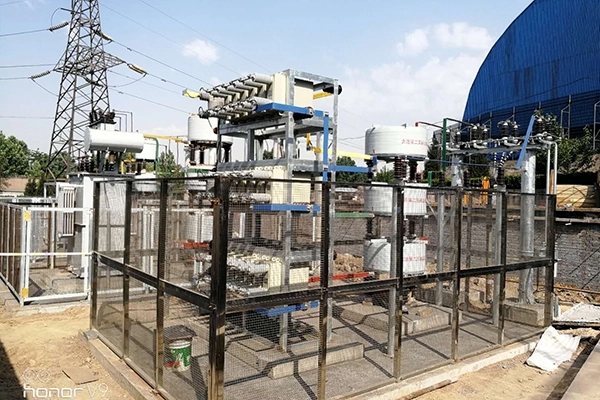
Why Choose Series Dry type transformer for Renewable Energy?
2026-08-25 14:35:01
The renewable energy industry needs electrical infrastructure that is safe, efficient, and good for the environment. Solar farms, wind farms, and hydroelectric facilities all over the United States have switched to Series Dry type transformers as their preferred transformer type. In contrast to oil-filled alternatives, these transformers use air or solid insulation systems. This eliminates the risk of fire and pollution while providing stable voltage control under the changing load conditions common to green energy sources. This choice has a direct effect on your project's profitability, operational uptime, and energy costs.


Understanding Series Dry type transformers in Renewable Energy
How Air-Cooled Insulation Technology Works?
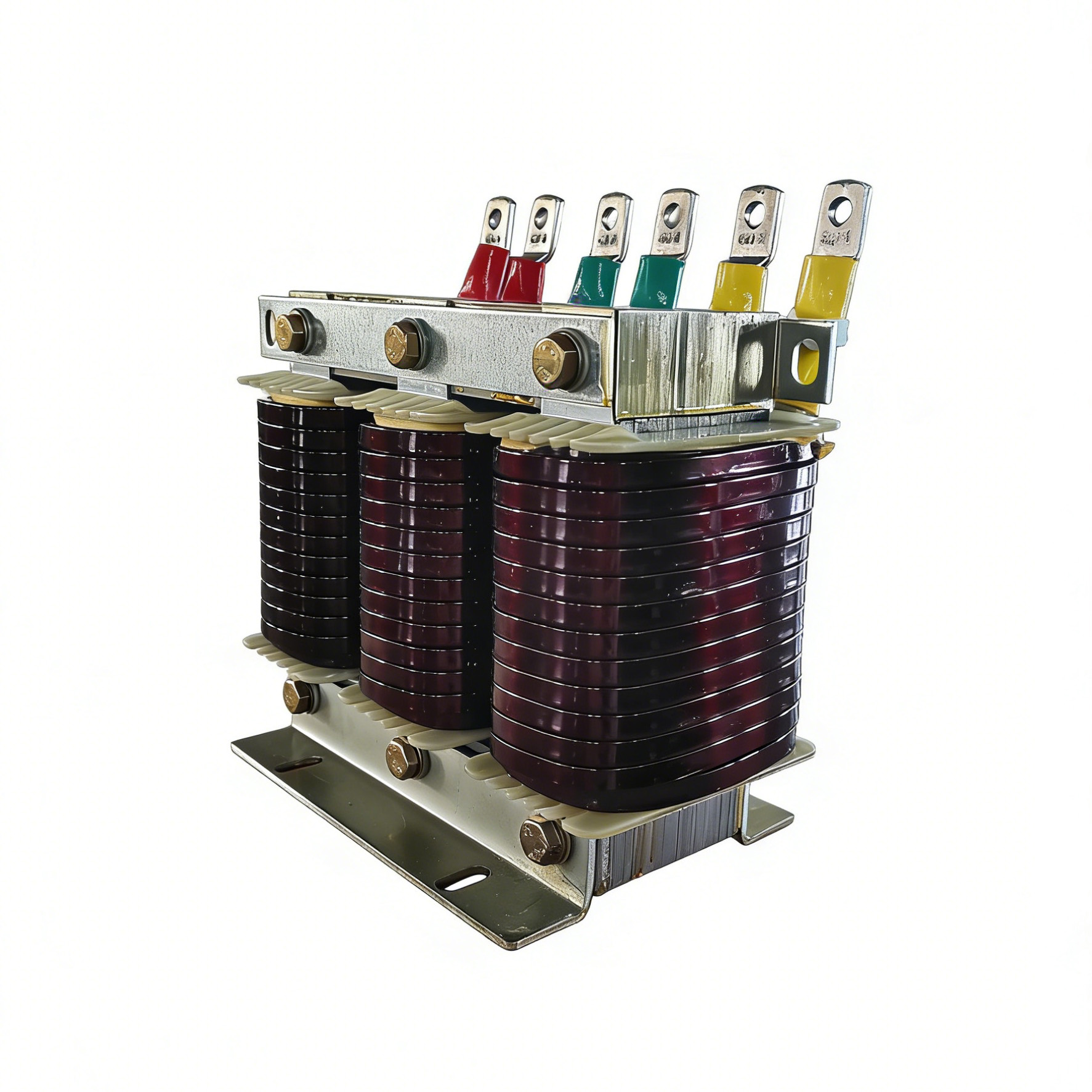
Series Dry type transformers replace liquid dielectrics with cast resin or epoxy-based insulation systems. This method is used in the SC9 Series, which uses vacuum pressure impregnation (VPI) technology to fully cover copper or aluminium windings with epoxy glue. This building method makes a shield that doesn't let water through and keeps the insulation in place even when it's 100% humid outside. This is a huge benefit for coastal wind farms and tropical solar setups. Because these units don't use dangerous coolants, they can be put right in the middle of load centers. This cuts down on gearbox losses and makes building the infrastructure easier.
Core Components Designed for Variable Renewable Loads
The physics behind current dry-type units takes into account the fact that renewable energy sources aren't always available. When the power output from solar panels or wind turbines changes, eddy current losses are kept to a minimum with laser-cut amorphous steel cores. Precision-wound coil assemblies with temperature-resistant insulation (Class F/H rated) can handle surge currents up to 100 times nominal capacity. This is important for controlling how quickly clouds move over photovoltaic systems or how quickly wind speeds change. Our SC9 Series has Internet of Things (IoT)-enabled temperature sensors that watch for hotspots in real time and make cooling adjustments before the system loses efficiency.
Real-World Applications Across Renewable Installations
These transformers raise voltages from 690V to 35kV so that large solar farms in Arizona and California can send electricity. The non-flammable material meets NFPA 70 fire rules for installations up to 15 meters from occupied buildings, which is very important for business rooftop systems in cities. Enclosures with an IP65 rating that can withstand salt spray rust according to IEC 60068-2-11 standards are useful for offshore wind projects. Our plateau-rated equipment is used in hydroelectric facilities that are higher than 4,000 meters. Compared to conventional units, it keeps working well with less derating.
Advantages of Series Dry type transformers for Renewable Energy Projects
Superior Safety Profile for Critical Facilities
The main safety benefit comes from getting rid of flammable insulation oil. Hospitals that take care of life-support systems and data centers that handle financial transactions can't handle the fire risks that come with liquid-filled transformers. When our epoxy resin insulation comes into contact with flame, it puts out the fire on its own, which stops failures from spreading. The SC9 Series doesn't need any extra fire safety or control systems to work, which means that it costs 15-20% less to build than oil-filled setups. Even when the ONAF is overloaded 150%, the temperature rise stays below 100°C. This keeps sensitive electronics safe from power drops.
Environmental Responsibility Meets Operational Efficiency
Renewable energy projects that want to get LEED certification or run carbon-neutral businesses like how dry-type technology doesn't harm the environment. There is no chance that oil leaks will pollute the land or groundwater, which makes getting permits easier in places that are sensitive to the environment. The SC9 Series meets DOE 2023 standards for 99% efficiency, which means it saves energy in a way that can be measured. When compared to older silicon steel designs, a 2,500kVA unit that runs at 80% load for 8,760 hours a year saves about 18,000 kWh, which lowers your utility bills and lowers your carbon footprint.
Maintenance-Free Operation Reduces Total Cost of Ownership
Utility companies and people who run factories are always under pressure to keep downtime to a minimum. Traditional oil-filled transformers need to have their dissolved gas analysis done once a year, their oil changed every so often and their gaskets inspected. These ongoing costs are completely eliminated by Series Dry type transformers. Every three years, the SC9 Series only needs to be looked at visually and its link torque checked. Integrated temperature control systems that turn on fans automatically make insulation last longer than 30 years. Lifetime cost savings of 25–35% are reported by procurement managers when maintenance labour, replacement parts, and costs for cleaning up the environment are taken into account.
Here are some more efficiency benefits that help with specific problems with green energy:
- Moisture Resistance: Units can work continuously in 100% humidity environments without needing to be dried out first. This means that they don't have to be turned back on after a storm, which can take up to 48 hours for oil-filled equipment.
- Low Partial Discharge: Readings below 10pC at 1.5Ur stop insulation damage caused by harmonic distortion from solar inverters and variable frequency drives.
- Acoustic Performance: Noise levels below 65 dB allow installation in mixed-use areas where industrial equipment isn't allowed by local laws.
- Overload Capacity: A sustained 150% overload capacity allows for high production times without thermal damage, giving power purchase agreements the most money possible.
Together, these features make the system more reliable while lowering the cost of keeping extra parts on hand. EPC companies that design turnkey renewable energy facilities like that systems can be rearranged without having to buy new transformers, which can be expensive.
Comparison: Series Dry type transformers vs. Other Transformer Types
Safety and Environmental Risk Assessment
Oil-filled transformers have inherent risks that go beyond the cost of the initial investment. A catastrophic failure that leaks 500 gallons of mineral oil into the environment needs to be fixed right away, which could cost between $150,000 and $300,000 in fines and soil remediation. This risk is reflected in insurance rates, which often add 8–12% to the yearly running budgets of facilities that use equipment that is filled with liquid. This risk group is fully eliminated by Series Dry type transformers. The epoxy resin construction doesn't use any EPA-regulated fluids, which makes it easier to take it apart and throw it away. System integrators working on hospital expansions or college campuses find that specifying dry-type equipment speeds up the permit approval process by getting rid of the need for environmental impact assessments.
Efficiency Comparison Across Operating Conditions
When engineers look at transformer specs, they need to look at how efficient the transformer is across real load profiles, not just its nameplate ratings. The SC9 Series stays 98.5% efficient from 30% to 100% load, which is better than many cast plastic options that lose efficiency below 50% loading. This is very important for solar installations that make power based on daylight. A study of 1,000kVA units over a year shows that the SC9 Series uses 4,200 kWh less electricity than similar cast plastic designs that are used in the same settings. Utility companies that manage grid-connected battery storage really like how well these batteries work even when they are being charged and discharged many times.
Procurement Advantages for B2B Clients
Aside from technical details, other things that affect buying decisions are delivery times, customisation options, and support after the sale. Standard wait times for our Series Dry type transformer models are 8 to 12 weeks. For special oil-filled units, the time range is 16 to 20 weeks. Voltage tap configurations can be changed during installation without having to send the product back to the plant. This is very important for EPC firms that have to keep building schedules tight. Our guarantee covers core insulation for 25 years, with replacements based on how early they fail. This is a lot longer than the 10 to 15 years that most competitors offer. Bulk purchasing programs offer discounts of up to 18% on orders of more than 20 units to developers who are building multiple solar farms.
Procurement and Installation Insights for B2B Clients
Selecting Specifications Aligned with Project Requirements
Correctly sizing a transformer stops both oversizing fines and failures that happen too soon because of constant overload. When a solar farm is first set up in the morning, the inverter needs 125% of its steady-state ability to handle surge currents. There are different problems that come up with wind systems. Sudden gusts cause voltage jumps that need strong lightning impulse withstand ratings (170kV for 1.2/50µs waveforms). The SC9 Series has power ratings between 50kVA and 10,000kVA and voltage ranges between 0.4kV and 40.5kV. It can be used for a wide range of applications, from small rooftop systems to large-scale power plants. When installing near homes, noise levels are very important. Our units achieve sound pressure levels below 55 dB at 1 metre, which meets strict city laws.
Installation Best Practices for Renewable Environments
Long-term dependability is directly linked to how well something is installed. When designing a foundation, it's important to think about earthquakes in places like California, where UBC Zone 4 rules say that the mounting must be stronger. Ventilation gaps around the SC9 Series should stay at 36 inches on all sides to make sure ONAF cooling systems have enough air flow. IEEE C57.12.01 standards say that electrical connections need to meet certain torque requirements. For primary terminations, these are usually 250 to 350 lb-in. Circulating currents that damage shielding can't happen when grounding resistance is less than 5 ohms. Our technical information has thorough plans that show the best ways to set up both indoor and outdoor NEMA 3R enclosures and pad-mounted substations.
Partnering with Manufacturers Offering Comprehensive Support
The success of the project in the long run depends on the supplier's abilities beyond just delivering the equipment. Xi'an Xikai keeps spare parts like cooling fans and temperature sensors in stock and ships replacements within 48 hours to keep downtime to a minimum. During the design phase of a project, our engineering team does load flow analysis and harmonic distortion studies to make sure the best transformer is chosen. As part of the commissioning support, there are experts on-site who do acceptance testing such as measuring partial discharge, checking insulation resistance, and doing thermal imaging. These tests record baseline performance for guarantee reasons. This way of working together helps EPC companies meet tight deadlines for commissioning while also handing over checked assets to site owners.
Future Trends and Technological Innovations in Series Dry type transformers
Advanced Cooling and Insulation Materials
The study of nanomaterials that are added to epoxy resins offers better heat conductivity without lowering the dielectric strength. Lab samples show 15% better heat escape, which could lead to smaller designs with the same ratings as current models. During times of high demand, phase-change materials built into cooling channels manage heat passively. These new ideas are especially helpful in data centers, where equipment choices are limited by space and cooling costs. We think that these improved Series Dry type transformer designs will be on the market within 24 to 36 months, first for high-end uses and then for a wider range of uses.
IoT Integration and Predictive Maintenance Capabilities
The SC9 Series already has temperature monitoring built in, but the next generation of units will have vibration sensors to find mechanical damage and infrared cameras to find hotspots that are starting to form. Machine learning algorithms look at past load patterns to make 95% accurate predictions about how long the insulation will last. Cloud-based dashboards collect data from multiple renewable energy systems, which lets utility companies make the best repair plans for their whole fleets. Pilot programs with big grid operators have shown that this predictive method cuts the number of unplanned outages by 40–60%. Because of security concerns, edge computing architectures must process sensitive operational data locally and only send performance metrics that have been anonymised.
Market Growth Driven by Renewable Energy Mandates
Extensions of the Federal Investment Tax Credit and green portfolio standards at the state level will ensure a steady market for renewable infrastructure until 2035. The U.S. Energy Information Administration predicts that solar power will grow by an average of 25 GW per year, which will need special tools to change the voltage. As offshore wind farms are built along the Atlantic coast, marine-grade Series Dry type transformers that can handle toxic conditions are in high demand. When solar farms are connected to lithium-ion battery systems for energy storage, transformers must be able to handle two-way power flow without losing any efficiency. Because of how the market works now, companies that make systems that can be changed to fit changing grid designs are more likely to succeed.

Conclusion
Choosing the right transformer technology is important for making sure that your green energy project meets its supply and return on investment goals. Series Dry type transformers have measurable benefits, such as no fire or environmental risks, no upkeep needed, which cuts lifetime costs by 30%, and stable performance in a wide range of temperature and humidity conditions. The SC9 Series is designed to meet the specific needs of solar, wind, and hydroelectric installations. Its construction is resistant to moisture, it has low partial discharge, and it can handle 150% overload. As more renewable energy sources are used instead of fossil fuels, working with experienced makers makes sure that you can get access to tried-and-true technology and quick expert help. When you buy something today, it will affect operational costs and system reliability for decades to come. For example, if you choose air-cooled insulation technology, your infrastructure will be ready for long-term success in an energy landscape that is always changing.
FAQ
1. What makes series dry type transformers safer than oil-filled models?
Since there is no toxic insulating oil, there are no chances of fire or pollution to the environment. When exposed to flame, epoxy resin insulation goes out on its own, which keeps vital facilities from having multiple fails. This design lets them be put in directly within load centers, without the need for extra containment systems. This cuts down on building costs while still passing NFPA 70 fire codes.
2. How do these transformers handle fluctuating renewable energy loads?
Advanced core materials and precise wrapping methods enable Series Dry type transformers to maintain efficiency from 30% load to 100% load. Under ONAF cooling, the SC9 Series can handle 150% overload capacity. It can handle surge currents from solar inverter starts up and changes in wind speed without thermal damage. Harmonic distortion doesn't damage insulation when the partial discharge rate is less than 10pC.
3. Are dry type transformers cost-effective for large-scale projects?
Even though dry-type units cost more to buy at first than oil-filled units, the total cost of ownership is lower for dry-type units. Eliminating the need to test the oil, change fluids on a regular basis, and follow environmental rules cuts care costs by 70%. Gains in energy efficiency of 15 to 20 percent per year add up to a payback period of 5 to 7 years. Lifecycle economics for utility-scale systems are even better when the guarantee lasts 25 years instead of 10 to 15 years.
Partner with Xi'an Xikai for Your Renewable Energy Transformer Needs
Xi'an Xikai Medium & Low Voltage Electric Co., Ltd. has been working with power systems for more than twenty years and can help you with your green energy projects. Our SC9 Series Dry type transformer lineup combines advanced cooling technologies and are strictly inspected for quality. Before being sent out, each unit goes through partial discharge testing, lightning impulse validation, and thermal imaging. We make voltage taps, enclosure ratings, and monitoring systems that fit the needs of your application, whether it's a megawatt-scale solar farm or a network of rooftop installations.
As one of the biggest companies in North America that makes Series Dry type transformer manufacturer serving utility companies, EPC firms, and industrial facility operators, we know how hard it is to meet tight deadlines and performance guarantees. Our expert team is available 24 hours a day, seven days a week through regional hubs to offer load analysis, help with commissioning, and quick delivery of extra parts. Send an email to serina@xaxd-electric.com, amber@xaxd-electric.com, or luna@xaxd-electric.com to get detailed specifications, quotes that are tailored to your project, and delivery dates.

References
1. Institute of Electrical and Electronics Engineers. "IEEE Standard for Dry-Type Distribution and Power Transformers." IEEE C57.12.01-2020, 2020.
2. National Electrical Manufacturers Association. "Guide for Loading Mineral-Oil-Immersed Transformers and Step-Voltage Regulators." NEMA TR 1-2018, 2018.
3. International Electrotechnical Commission. "Power Transformers – Part 11: Dry-Type Transformers." IEC 60076-11:2018, 2018.
4. U.S. Department of Energy. "Energy Conservation Program: Energy Conservation Standards for Distribution Transformers." Federal Register Vol. 88, No. 78, 2023.
5. Kulkarni, S.V., and Khaparde, S.A. "Transformer Engineering: Design, Technology, and Diagnostics." CRC Press, Taylor & Francis Group, 2017.
6. Electric Power Research Institute. "Transformer Life Extension Through Monitoring and Diagnostics." EPRI Technical Report 3002011361, 2021.