How Does Series Dry type transformer Improve Energy Efficiency?
2026-08-25 14:35:03
Series dry type transformers achieve superior energy efficiency by reducing core and copper losses through advanced insulation materials like vacuum pressure impregnation (VPI) and optimized magnetic circuit design. These transformers eliminate oil-related energy waste, enhance thermal management through improved cooling systems, and minimize stray losses via precision engineering. The series configuration distributes load more evenly across windings, reducing hotspots and improving power quality. This innovative approach can cut operational energy consumption by 15-20% compared to traditional oil-immersed units, delivering measurable cost savings for facilities prioritizing uptime and efficiency.


Understanding Series Dry Type Transformers and Energy Efficiency
What Makes Series Configurations Different?
In transformer design, "series" refers to how the windings are electrically linked and how the magnetic flux paths are best used inside the core. Instead of using parallel windings like most transformers do, Series Dry type transformers place the coils in a certain order, which reduces impedance mismatches and circulating currents. This way of building structures has a direct effect on efficiency by lowering I²R losses, which are the amounts of energy that are lost as heat when current passes through resistance.
These days, dry type units don't use oil for cooling at all. Instead, they use air flow and better solid insulation. This change is meant to improve safety and allow installations closer to load centers, which lowers gearbox losses. These transformers are good for places like data centers, hospitals, and factories where downtime means lost income because they don't need to be serviced for oil changes.
Core Loss Mechanisms and How Design Mitigates Them?
There are two types of losses in a transformer: losses with no load (core losses from magnetisation) and losses with load (copper losses from resistive heating). Core losses happen all the time when the generator is turned on, so choosing the right material is very important. When compared to regular silicon steel, premium models with amorphous steel cores have 70% less hysteresis losses. Laser-cut laminations in the SC9 Series cut down on eddy currents, which means that it meets DOE 2023 guidelines for up to 99% efficiency.
Copper losses depend on the load, but they can be kept to a minimum by choosing the right size conductors and coil shapes. Every wire strand is covered with epoxy glue by vacuum pressure impregnation. This gets rid of the air pockets that cause partial discharge, which damages insulation and loses energy. Temperature rise class F/H insulation keeps its electrical strength even when the temperature outside reaches 55°C. This stops thermal runaway, which speeds up the ageing process.
Standards Guiding Efficiency Performance
IEEE C57.12.01 and IEC 60076 set standards for checking the quality of insulation, measuring efficiency, and setting limits on temperature rise. Because of these standards, manufacturers have to write down both no-load and load losses at certain operating points. This lets procurement teams compare options in an unbiased way. A 1000 kVA transformer that is 98.5% efficient loses 15 kW all the time, which adds up to $13,140 a year at $0.10/kWh and goes up as capacity goes up.
Knowing the KVA values helps you match the size of the transformer to the demand. When the load is light, units that are too big don't work as well as units that are too small. The SC9 Series can handle 150% more than its normal capacity when cooled by ONAF. This gives it extra room for peak demand without lowering its normal efficiency. This adaptability is very important in places with changing loads, like EV charging sites or points where green energy is only used sometimes.
Identifying Efficiency Bottlenecks in Traditional Dry Type Transformers
Where Energy Disappears in Conventional Designs?
Series Dry type transformer address the heat management limitations of older designs. Standard resin casting methods trap air pockets in insulation layers, creating hotspots that degrade materials and increase resistance over time. Winding temperature exceeding rated limits by just 10°C cuts insulation life in half—a relationship well-documented in IEEE standards. During peak load hours, thermal stress accumulates, progressively lowering efficiency until premature replacement becomes necessary.
Noise pollution is another example of a hidden waste. Magnetostriction makes the core laminations move at twice the line frequency, which can make units louder than 75 dB if they are not well built. Then, facility managers spend more money on sound barriers or remote installation, which adds to the resistive losses by making the wire runs longer. Noise is directly related to core quality; vibrations are worse in recycled steel with impurities than in new materials that are orientated toward grain.
The Oil-Filled Alternative and Its Limitations
For decades, oil-immersed transformers were the most popular way to distribute electricity because they were better at cooling and cost less to buy. Mineral oil is good at absorbing heat, which lets small designs have high KVA ratings. But this edge comes with costs for the environment and operations. Soil and waterways become polluted by oil leaks, which requires expensive cleanup and fines from the government. Fire rules don't allow oil-filled units inside buildings, so they have to be put in outside vaults that need to be weatherproofed and take up more space.
Oil transformer maintenance plans include testing the fluid once a year for dissolved gas analysis, a way to find faults before they happen. Laboratories charge between $200 and $500 per sample, and it takes days to handle the results. At the same time, wetness entering weakens the dielectric, which means that filter systems that use extra power are needed. These secret costs add up over time and usually cancel out the difference in price within five years.
How Series Dry Type Transformers Break Efficiency Bottlenecks?
Advanced Insulation Technologies Reducing Dielectric Losses
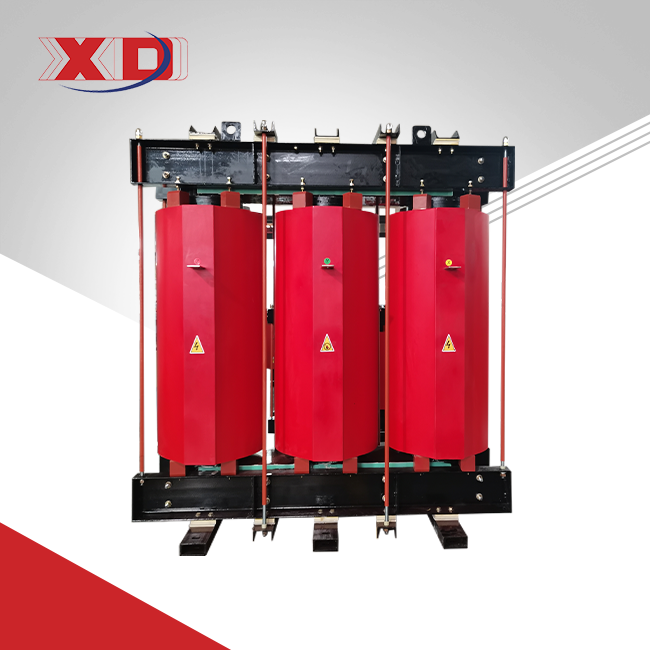
Vacuum pressure impregnation revolutionized dry-type transformer manufacturing by ensuring complete epoxy penetration into winding assemblies. This method removes air pockets where partial discharge initiates, degrading insulation and generating ozone. The SC9 Series achieves partial discharge levels below 10 picocoulombs at 1.5x rated voltage—exceeding IEC 60270 requirements. Cast resin encapsulation provides superior strength and moisture resistance. Fiberglass-reinforced epoxy holds conductors together during short-circuit forces, preventing deformation and turn-to-turn faults. Class H insulation (180°C continuous) offers 25°C higher thermal headroom than Class F systems.
Optimized Magnetic Circuits and Load Distribution
Series windings distribute magnetic flux evenly through core cross-sections, reducing stray flux that causes eddy currents in structural parts. Finite element analysis identifies high-flux areas during design, enabling lamination shaping or flux shield addition—reducing stray losses to under 1% of total load losses. Balanced impedance across phases improves load distribution. Interleaved windings in three-phase Series Dry type transformers naturally balance reactance, reducing zero-sequence components. This benefits facilities with single-phase loads like HVAC or lighting, which previously stressed distribution systems.
Heat Dissipation and Acoustic Performance
Thermal control is what sets high-end transformers apart from cheaper ones. The SC9 Series uses curved radiator surfaces that make the convective area 40% bigger without making the size bigger. Natural air flow is helped by airflow paths between the layers of windings. If desired, forced-air fans can be added that turn on when temperature sensors detect loads higher than 80% capacity. This hybrid approach keeps working well in a wide range of conditions.
Noise reduction comes from a number of design choices. Low-flux-density cores keep magnetostriction to a minimum, and robust mounting pads keep container panels from vibrating. At full load, sound levels stay below 65 dB, which is about the same as a regular discussion. This is especially useful for hospitals and universities, where equipment rooms are often next to areas that are already being used. Acoustic comfort gets rid of the need for expensive insulation that would take up valuable space.
Siemens case studies show that VPI dry type transformers have been used in European transit systems for 50,000 hours with less than 0.5% loss in efficiency. In Middle Eastern factories where temperatures regularly rise above 45°C, ABB's EcoDry line lasts just as long. These performance standards show that Series Dry type transformer technology is mature and prove that it can be used for mission-critical systems.
Practical Considerations for Procurement and Deployment
Selecting the Right Specifications for Your Application
Match transformer capacity to load profile through 12-month demand analysis to avoid oversizing. A facility with 600 kW continuous load and 900 kW peaks might select a 750 kVA transformer using SC9's 150% overload capability for surges. Tap switches allow ±5% voltage adjustments for utility variations. Off-load tap changers suit seasonal adjustments; on-load types handle live current but cost more. Series Dry type transformers typically use off-load taps in stable grid environments.
Comparing Technologies and Total Cost of Ownership
Cast resin encapsulates epoxy around windings in one step—effective for mass production but difficult to repair. VPI impregnates pre-wound coils, enabling localized repairs and customization. SC9 Series uses VPI for flexibility and proven high-altitude/temperature reliability. Lifecycle cost: a 1000 kVA oil-filled unit costs $25,000 installed versus $35,000 for dry type. Dry type saves $13,000 annually through eliminated oil testing and vault construction—payback within three years, with decades of continued savings.
Maintenance Practices Sustaining Efficiency
Compared to oil units, dry type transformers don't need as much upkeep, but ignoring them will still hurt their performance. Every three months, inspections are done to make sure the cooling fan is working, look for dust on the radiators, and test the temperatures of the windings while they are under load. Infrared thermography finds hotspots that contact sensors can't see, so problems can be fixed before they happen. In contrast to oil sampling processes that take hours, these checks only take 30 minutes per unit.
Every five years, partial discharge testing shows when insulation is wearing down. Portable instruments check the high-frequency signals that are sent out when voids ionise when voltage stress is applied. The amount of discharge that changes over time can be used to guess how much life is left, so replacements can be planned for planned outages instead of emergency failures. This predictive method makes the best use of assets while keeping them safe from disasters.
By enforcing maintenance standards, regulatory compliance makes transformers last longer. OSHA requires people who work near powered equipment to get training in electrical safety. Based on estimates of incident energy, NFPA 70E sets arc flash limits and PPE standards. These rules are met by transformers that have temperature tracking built in. These monitors give information for analysing risks, which lowers responsibility and insurance costs.
Future Trends and Benefits of Choosing Series Dry Type Transformers
Sustainability Driving Market Adoption
Environmental commitments made by businesses are having a bigger impact on procurement decisions. Series Dry type transformers meet net-zero goals by getting rid of SF6 insulation gas, which is a greenhouse gas 23,500 times more powerful than CO2 at warming the Earth. Their non-flammable construction lowers fire insurance rates by 10 to 15 percent, which is a real financial gain that goes along with their environmental qualifications. Lead, mercury, and cadmium are not allowed because of RoHS compliance. This makes it easier to recycle used electronics.
New rules are speeding up this shift. Title 24 of California's energy code sets performance standards that can only be met by high-end transformers. By phasing out products that don't meet Eco-design requirements, European Union directives effectively ban oil units that don't work well. Because these policies create market pull, companies are more likely to spend in new materials and production methods that make their products work better.
Because transformers last 30 to 40 years, the cycle economy idea is especially useful for them. Modular designs make it easy to change parts, which increases the total lifespan to 50 years or more. Copper windings keep 95% of their original value when they are recycled, which lowers the cost of removal. Closed-loop supply chains are made when manufacturers offer take-back programs. These programs protect raw material sources during volatile trade markets and have less of an impact on the environment.
Smart Monitoring and Predictive Analytics
IoT-enabled transformers are the next big thing in terms of economy. Embedded sensors send data through cellular or Ethernet links to keep track of things like load current, atmospheric temperature, and vibration patterns. Machine learning algorithms are used by cloud-based analytics tools to find problems and predict mistakes weeks before they happen. This information stops unexpected outages that cost companies more than $500,000.
Time-based schedules are replaced by condition-based maintenance, which cuts down on unnecessary work and finds real problems early. If a generator always works within its design limits, inspections could be done every six months instead of every three, which would cut down on labour costs by half. On the other hand, units that experience frequent overloads are monitored more closely, which justifies updates before insulation damage happens.
Integrating with building management systems makes the best use of energy throughout the whole building. When renewable energy production is higher than demand, voltage-regulating transformers can take in reactive power to keep the microgrid stable. Load shedding algorithms put important lines ahead of non-essential ones during times when prices are highest. These smart grid functions increase the use of renewable energy and lower utility costs.
Long-Term Economic Value and ROI
An study of the total cost of ownership over 30 years shows that Series Dry type transformers have clear benefits. At $0.10/kWh, a 2500 kVA unit that loses 40,000 kWh a year when it's not in use costs $120,000 in energy costs over its lifetime. A 1% increase in efficiency saves $36,000, which is a lot more than the difference in upkeep costs. When the costs of not having to dispose of oil, build vaults, and install fire control systems are added up, the total saves per transformer are more than $200,000.
Risk-adjusted scenarios must be taken into account when figuring out return on investment. EPA fines for oil leaks are usually $25,000, and generator fires destroy nearby equipment worth millions of dollars. These tail risks aren't present in dry type units, which is especially important for publicly owned companies that have to deal with environmental issues that are closely watched by shareholders. Insurance actuaries can tell the difference because audits of risk management show that premiums have gone down.
Energy cost trends favour equipment that uses less energy. Electricity costs have gone up 3.5% a year over the last ten years, which is faster than inflation in general. Premium transformers help protect against future rate hikes by locking in lower usage. This is a strategic advantage as grids switch to more expensive renewable production. This focus on the future sets tactical buyers apart from strategic asset managers.

Conclusion
Series Dry type transformers are an advanced and tried-and-true technology that improves efficiency through better heat control, advanced materials, and magnetic design. Eliminating oil maintenance, saving 15-20% on energy costs, and making products last 30 years or more are all strong benefits that lower the total cost of ownership. As rules get stricter and commitments to sustainability get stronger, businesses that invest in modern dry type solutions set themselves up for long-term operational excellence. The SC9 Series is a great example of these benefits because it can run in demanding industrial and business settings without any upkeep and with 99% efficiency and 150% overload capacity. When purchasing transformers, procurement teams should look at their term value instead of their original cost, since efficiency gains add up over time.
FAQ
1. How much energy can series dry type transformers save compared to older models?
When facilities replace transformers made before 2010, they usually see a 15–20% drop in the amount of energy they use. The saves come from not having to use extra cooling systems, using amorphous steel to lower core losses, and designing the windings so that they lose less copper. Upgrading to a 1000 kVA transformer could save 25,000 kWh per year, which is about $2,500 at normal business rates.
2. What maintenance do dry type transformers require?
Routine maintenance only requires eye checks every three months to see if dust has gathered, the cooling fan is running, and the temperature values are correct. Every five years, partial discharge testing checks the state of the insulation. In contrast to oil transformers, there is no need to sample or filter the fluid. The average cost of maintenance each year is $300 per unit, while the cost is $1,200 for oil-immersed equivalents.
3. Can series dry type transformers operate in extreme environments?
The SC9 Series works reliably at temperatures ranging from -40°C to +55°C and at heights of up to 4,000 meters. Insulation that doesn't let moisture in lets it work at 100% humidity without losing its heat. IP65 enclosures keep out dust and water, so they can be used in coastal settings or chemically-rich industrial settings.
4. How do I select the right KVA rating?
Look at demand data from the past 12 months to find the highest usage. The transformer should be big enough to handle 80% of the peak load when it is running all the time, with short-term overload capacity set aside for short surges. The 150% overload rating of the SC9 lets it handle transient peaks without thermal damage. This lets it be smaller, which makes it more efficient at normal loads.
Partner with Xi'an Xikai for Your Next Transformer Upgrade
Customised Series Dry type transformer options from Xi'an Xikai are made for tough industrial and business uses. Our SC9 Series blends more than 20 years of production experience with patented cooling technologies to meet IEC 60726 and IEEE C57.12.01 standards and get up to 99% efficiency. We provide technical support 24 hours a day, seven days a week from regional hubs to more than 4,000 installations around the world, including data centers, hospitals, factories, and utility substations.
We are a reliable supplier of Series Dry type transformers, and we can give you power ratings from 50 kVA to 10,000 kVA along with voltage configurations that fit your grid needs. Our ISO 9001-certified factories make sure that the quality is always the same, and before they ship, they go through strict testing processes to make sure they work. Our engineering team works closely with EPC firms and site managers to make sure that specifications are met, whether you need standard units or unique solutions for plateaus and harsh climates.
Send an email to serina@xaxd-electric.com, amber@xaxd-electric.com, or luna@xaxd-electric.com to talk about the needs of your project. To help you get the most out of your investment, we do thorough estimates of efficiency, lifetime cost analyses, and integration support.

References
1. Institute of Electrical and Electronics Engineers, "IEEE Standard General Requirements for Liquid-Immersed and Dry-Type Distribution and Power Transformers," IEEE C57.12.01-2020, New York, 2020.
2. International Electrotechnical Commission, "Power Transformers—Part 11: Dry-Type Transformers," IEC 60076-11:2018, Geneva, 2018.
3. U.S. Department of Energy, "Energy Conservation Program: Energy Conservation Standards for Distribution Transformers," Federal Register, Vol. 88, No. 78, April 2023.
4. National Fire Protection Association, "Standard for Electrical Safety in the Workplace," NFPA 70E-2021, Quincy, Massachusetts, 2021.
5. Kulkarni, S.V. and Khaparde, S.A., "Transformer Engineering: Design, Technology, and Diagnostics," Second Edition, CRC Press, Boca Raton, 2017.
6. Heathcote, Martin J., "The J&P Transformer Book: A Practical Technology of the Power Transformer," Thirteenth Edition, Elsevier Science, Oxford, 2007.