
Indoor Current Transformer: Selection Guide for Accurate Metering
2026-11-23 17:27:27
There are five things you should look for in an indoor current transformer to make sure you get an accurate reading. Make sure the accuracy class fits the meter, the rated load is the right size for the real secondary load, and the primary ratio is close to the normal load current. Then check the standard and level of insulation, and make sure the body fits your cabinet. We build 35kV epoxy resin cast units at Xi'an Xikai, so this guide is based on what we've learned. Find out how each check works, what numbers are important, and how switchgear builders can get samples and quotes with fewer changes by reading on.
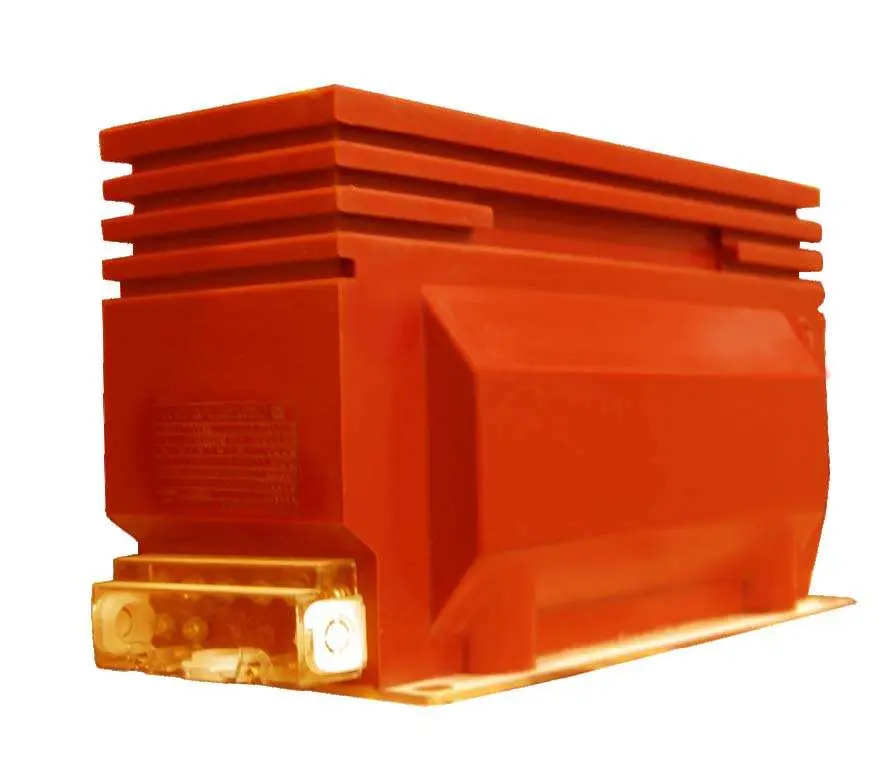
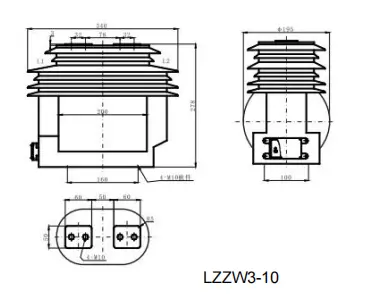
Understanding the Indoor Current Transformer Before You Select One
How an Indoor Current Transformer Works
The principle of an indoor current transformer is electromagnetic induction. The line current passes via a magnetic core in the main conductor. A lesser current in a fixed ratio (5A or 1A typically) passes through a secondary winding. Full line current is replaced by scaled signal which is read by meters, relays and monitoring instruments. This maintains isolation of the secondary circuit from the 35kV primary system. The primary must be in series with the load so that the core and windings can carry the entire line current without overheating. The same safety precaution applies to all units – never open the secondary circuit with current still flowing in the main. Shorting connections and test blocks should be always included in the design, since an open secondary might cause harmful voltages to appear across its terminals.
Metering Cores Versus Protection Cores
We do not combine metering and protection cores as they are different. The purpose of a metering core is to have a minimal ratio error and a small phase displacement for a typical load. Classes with expanded range may maintain accuracy from 1 % to 120 % of the rated current. When there is a problem, the current might become quite high, thus a protective core must still have a useful output in case of a failure. If metering cores fill up too soon, they safeguard the meters linked to them from fault current. Protection cores stop them becoming too hot until the accuracy limit factor is achieved. Dual-core indoor current transformer, giving each circuit its own core and its own load so the two never have to fight with one another. Useful if a single cabinet has to accomplish two tasks at once.
Why Epoxy Resin Casting Suits Indoor Switchgear
Most switchgear is epoxy resin casting and that’s how our 35kV unit is built too. The resin encloses the windings and the core in a totally enclosed body. This prevents the ingress of moisture, dust and chemicals which may cause corrosion. The solid cast body also removes the leak and fire hazards of oil filled versions. Once it’s in the cabinet, it doesn’t need much maintenance. The tiny size is handy if you have limited space in a compartment. There are still restrictions to indoor service so check the temperature, humidity and altitude to what is indicated before you purchase. Xi’an Xikai also develops plateau equipment that works at altitudes of up to 4,000 meters, which is important for mountain projects.
Key Parameters for Accurate Metering with an Indoor Current Transformer
Accuracy Classes: 0.2S, 0.5, 5P and 10P
The accuracy class tells you the biggest mistake a transformer can make under certain circumstances. In IEC 61869-2, class 0.2S keeps the ratio error to within ±0.2% from 20% to 120% of the rated current, and it lets the limit go all the way down to 1%. From 5% to 120%, classes 0.2 and 0.5 are used. As a safety measure, 5P limits the total error to 5% and 10P limits it to 10% at the rated accuracy limit current. This means that 5P10 has a 5% limit at ten times the rated current. The 0.2 and 0.5 on our 35kV indoor current transformer are for measuring, and the 5P and 10P are for safety. Let us know if you need 0.2S, and our engineers will check to see if the design can meet your needs. In the US, utilities usually follow IEEE C57.13, which has classes like 0.3, 0.6, and 1.2. Check your meter's specification to make sure the class mapping is correct.
Rated Burden and Secondary Capacity
The load on the secondary circuit is called the burden, and it is given in VA. It has the input for the meter or relay, the resistance of the terminals, and the resistance of the cable. There are standard values in IEC 61869-2, like 2.5, 5, 10, 15, and 30 VA. It also tests metering classes between 25% and 100% of the rated load. That range can change if the real load falls outside of it. First, find the rated output for the indoor current transformer. Then, add up all the loads that are connected and the lead resistance. It's not helpful to have a rated burden that is much higher than the actual load because it makes the machine bigger, but if it's too low, the error could be too high to be considered within the class. Our 35kV unit has a lot of power, so let us know how much load you've calculated and we'll make sure the match is right.
Ratio, Secondary Current, and Cabinet Dimensions
You can choose the ratio from both maximum current and normal load. A transformer that runs at 5% of its rated primary current for most of the day is less accurate than one that is close to the right size for the load. Our 35kV indoor current transformer can handle primary currents of 20A to 2500A and a secondary current of either 5A or 1A. Lead loss in VA is equal to current squared times resistance, so a 1A circuit loses one twenty-fifth of what a 5A circuit loses over the same wire. This makes the 1A option better for long cable runs. It doesn't matter what size something is. It doesn't matter how well the electricals match if the body doesn't fit the compartment. Compare the cabinet drawing to the body height, mounting holes, window size, and location of the terminals.
Selecting and Installing a 35kV Indoor Current Transformer
A Practical Selection Sequence
A set order is best to make sure nothing is missed. To begin, you need to know about the system's voltage, frequency, fault level, and whether the unit is for new equipment, retrofitting old equipment, or OEM integration. Next, choose the primary ratio based on the expected load and planned growth. Next, pick a 1A or 5A secondary based on the length of the cable and the devices that are connected. Figure out the real burden first, and then confirm the accuracy class. After that, compare the insulation level, lead spacing, and terminal protection to the design of the cabinet. Finally, ask for the standard declaration, records of routine tests, dimension drawings, and wiring diagrams. The technical manager and the purchasing manager can look over the same sheet of paper if they work in this order. This keeps the approval process for a new specification moving.
Reading the 35kV Indoor Current Transformer Specifications
Here are the main data points for our 35kV unit, which you can use to see if they meet the needs of your cabinet.
- Voltage and frequency: The unit is rated for 35kV systems and works at 50 Hz or 60 Hz. This dual rating lets one design serve grids in China, South Asia, Southeast Asia, the Middle East, and the United States, so your team can keep fewer part numbers and approve one drawing set across several export projects.
- Current ratings: The rated primary current runs from 20A to 2500A, and the rated secondary current is 5A or 1A. That span covers small feeders and large incomer panels, and the 1A option helps when long cable runs would add burden to a metering or protection circuit in the cabinet.
- Construction and accuracy: The indoor current transformer is epoxy resin cast, fully enclosed, and electromagnetic, and it follows GB 20840.2-2014 with IEC 61869-1 and 61869-2. Accuracy classes are 0.2 and 0.5 for metering and 5P and 10P for protection, and the design offers high accuracy, large capacity, and stable performance.
All of these points allow a technical team to quickly check the unit against a cabinet specification, all without having to hand over any drawings.
Installation and Wiring Safety
Installation that is done right protects both accuracy and people. Check the rated current, polarity, phase identification, orientation, and insulation clearance before mounting. The approved wiring diagram must match the primary markings P1 and P2 and the secondary markings S1 and S2. This is because sending the wrong signals to a relay or energy meter can happen if the polarity is switched. For secondary circuits to work, they need solid connections, a way to short out, and a clear grounding point. Check the ratio, polarity, phase sequence, continuity, insulation, and terminal tightness after installation. Write down the results and save them in the project file. Open an energized secondary no matter what. First short the secondary terminals at the test block if you have to take a meter out. Then work on the device.
Sourcing an Indoor Current Transformer for OEM Switchgear
Comparing Quotations Beyond Unit Price
When two quotes use the same ratio, they can talk about very different things. You should make a compliance matrix with rows for standard, accuracy class, burden, insulation level, dimensions, test records, delivery, and warranty. Then, before you look at price, you should mark each deviation. When a cheap unit doesn't meet the requirements for burden or class, cabinets have to be rejected and work has to be redone, which costs more than the small savings. Ask the seller to make sure that the test certificate only covers your specific setup and not a model that is similar. When you compare indoor and outdoor units, split-core and fixed units, and oil-insulated and epoxy units, make sure you compare like with like. To the review, you should add the landed cost and technical support.
Samples, Multi-Winding Orders, and Delivery Planning
When switchgear builders place monthly orders, they usually buy in bulk once a year, and a new specification usually needs a sample first. Before the sample is made, share your cabinet drawing and electrical data so that it matches the final design. For requests for more than one winding or two cores, make a table with the ratio, class, and burden of each winding. Then, talk to the supplier about quantity and scheduling before placing the order. Once everyone agrees on the inspection criteria for the approved sample, that sample should be used as a guide for all future batches. Send a rolling forecast so that production can keep up with the rate at which you're putting together cabinets. When asked, Xi'an Xikai can change ratios, secondary windings, and enclosures, which works well for OEM projects that need cabinets of a certain size.
Why Xi'an Xikai Fits Switchgear Builders
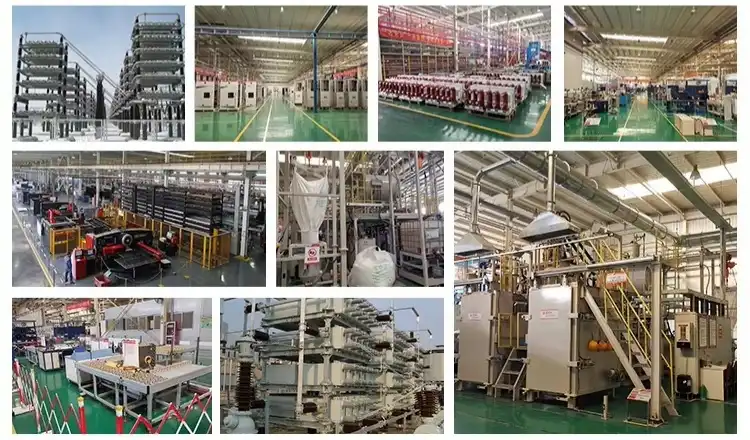
The electrical equipment that Xi'an Xikai makes falls into 7 groups, 34 series, and more than 100 different types. High and low voltage switchgear, dry-type transformers, vacuum circuit breakers, and instrument transformers are all in this range. We know how an indoor current transformer should be placed in a cabinet because we also build switchgear. We also know what the technical and purchasing teams need to approve. People who work in State Grid systems, power engineering, steel and metallurgy, petrochemicals, rail transportation, saving energy and water, construction, protecting the environment, and renewable energy use our products. Our customers like that we can tailor our services to their needs, that our plateau-type equipment can work at heights of up to 4,000 meters, and that our technical specifications meet national and industry standards.
Conclusion
To get accurate readings from an indoor current transformer, you need to match a few core values to the real circuit. The meter or relay must be able to handle the accuracy class, the rated load must match the real secondary load, and the primary ratio must be close to normal current. For metering and protection, you need two separate cores, and epoxy resin casting works well for enclosed switchgear. For this 35kV unit, 20A to 2500A, a 5A or 1A secondary, 50 or 60 Hz, and the GB 20840.2-2014 and IEC 61869 standards are all taken into account. When you do maintenance, make sure the secondary is shorted and the wiring is safe. This will protect both people and data. Quotes should be evaluated based on compliance, test records, dimensions, and delivery planning, not just price, since any of these issues can lead to extra work at the cabinet.
FAQ
1. What is the difference between a 1A and a 5A secondary?
A 5A secondary works well for small panels with short wiring runs. Because lead loss is equal to current squared times wire resistance, a 1A secondary cuts lead loss. This makes it possible for long cable runs to connect the transformer to the meter. No matter what you choose, make sure that the meter or relay that you connect can handle the same rated secondary current.
2. Can one indoor current transformer serve both metering and protection?
Because each job needs its own core, only a design with two cores can do both. A protection core doesn't saturate so the relay can see the fault current, but a metering core does so early to protect meters during faults. Send us both classes and loads, and our engineers will check the arrangement of the windings.
3. Which standards does the 35kV indoor current transformer follow?
It works at 50 Hz or 60 Hz and is in line with GB 20840.2-2014 and IEC 61869-1 and 61869-2. It can handle primary currents of 20A to 2500A and secondary currents of 5A or 1A. To be sure of the class and burden for your own configuration, ask for the datasheet.
Request an Indoor Current Transformer Quote from Xi'an Xikai
Xi'an Xikai makes indoor current transformers with 35kV epoxy resin cast units, adjustable ratios, and equipment for plateaus up to 4,000 meters in height. Feel free to email serina@xaxd-electric.com, amber@xaxd-electric.com, or luna@xaxd-electric.com with your ratio, accuracy class, burden, and cabinet drawing.
References
1. Instrument Transformers – Part 2: Additional Requirements for Current Transformers (IEC 61869-2), 2012
2. Instrument Transformers – Part 1: General Requirements (IEC 61869-1), 2007
3. Instrument Transformers – Part 2: Additional Requirements for Current Transformers (GB 20840.2), 2014
4. IEEE Standard Requirements for Instrument Transformers (IEEE C57.13), 2016
5. IEEE Guide for the Application of Current Transformers Used for Protective Relaying Purposes (IEEE C37.110), 2007
6. Protective Relaying: Principles and Applications, 2014
