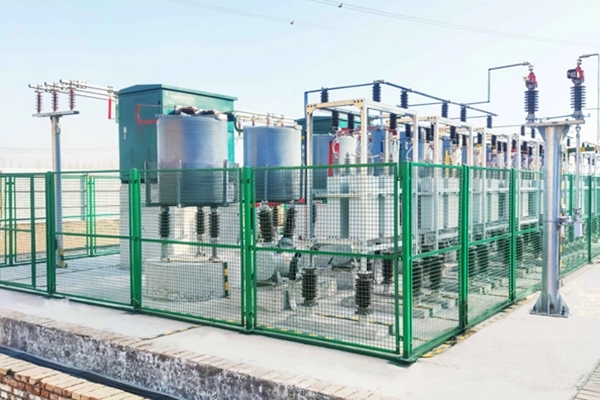
Why Metallized Film Capacitor Is Essential for Low Loss Reactive Power Compensation
2026-06-26 17:43:49
When power factor fees hurt your facility's budget and equipment overheating threatens to stop working, modern reactive power adjustment technology can help. Metallized Film Capacitors are now the most important part of power factor correction systems because they have very low dissipation factors and can fix themselves, which is something that older capacitor technologies can't do. Their special design, which includes vacuum-deposited metal wires that are only 0.02 to 0.1 micrometers thick, lets them work better in harsh industrial settings where every percentage point of efficiency saves money and makes equipment last longer.
 |
 |
Understanding Metallized Film Capacitors and Their Construction
What Makes Metallized Film Technology Different
A Metallized Film Capacitor is different because it uses a new building process to make its structure. In regular film-foil designs, thick metal sheets are sandwiched between insulating layers. This technology, on the other hand, puts a very thin layer of aluminum or zinc directly on polypropylene or polyester films. This method cuts down on volume by up to 60% while keeping the electrical structure.The choice of insulating material has a direct effect on how well it works. Different types of polypropylene are very stable at temperatures ranging from -55°C to +105°C, which makes them perfect for use in outdoor substations and sites at high elevations. This construction's low Equivalent Series Resistance keeps heat production to a minimum during constant operation. This is a very important benefit when adjusting for reactive loads in factories that use CNC machines or data centers that use sensitive server equipment.
Self-Healing Mechanism Explained
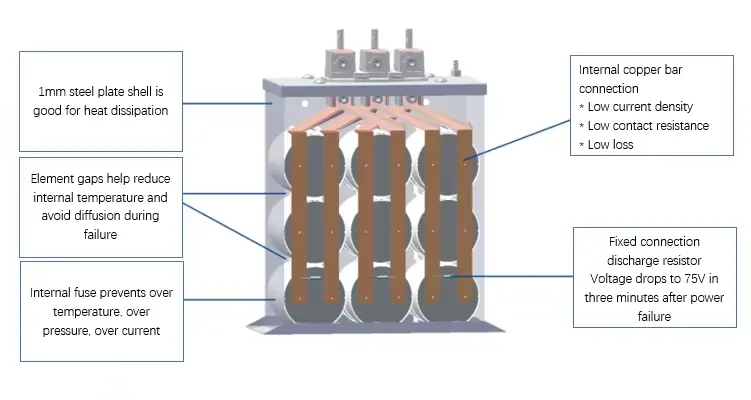
The power to fix itself is a big step forward in reliability engineering. When voltage changes cause a localized breakdown in the insulator, the arc energy burns off the thin layer of metal around the fault point right away. In microseconds, this makes an insulating buffer zone that lets the capacitor bank keep working without breakdowns that keep happening. Unlike electrolytic alternatives that could break or ceramic alternatives that would forever short-circuit, this Metallized Film Capacitor technology keeps the system's purity even when the power goes out.Protocols for testing this ability expose it to shock voltages higher than 2.5kV. After thousands of self-healing events, units keep their capacitance stability within ±3%. This resilience means that utility operators who run transmission networks and building managers who control vital infrastructure don't have to do as much upkeep.
Temperature and Frequency Response Characteristics
Suitability for industrial application is based on operational steadiness across a wide range of environmental conditions. Even when the outdoor temperature changes from -25°C to +50°C, Metallized Film Capacitors keep their rated capacitance and low dissipation factor (tan 0.001). This thermal resistance is very important in places like steel mills where furnaces cause temperature differences or at high altitudes (up to 2,000 meters) where thin air makes cooling less effective.From 50Hz to several kilohertz, the frequency response stays constant, which makes it possible to use in variable frequency drive systems and power electronics converters. When overtones from nonlinear loads move through distribution networks, older capacitor technologies can have resonance problems. The low equivalent series inductance stops these problems.
Performance Benefits for Low Loss Reactive Power Compensation
Quantifying Efficiency Gains in Power Systems
Metallized Film Capacitors have a dissipation factor that is usually less than 0.001 at 20°C and 50Hz. This means that during reactive power adjustment cycles, energy losses stay below 0.1%. This efficiency edge saves about 4,380 kWh per year when a 50kVAR capacitor bank is used for 8,760 hours, compared to units with tan µ values of 0.005.These saves add up across all sites. A hospital with several imaging rooms and HVAC systems could use 500kVAR of adjustment power. According to IEEE transformer loading guides, choosing low-loss technology cuts yearly waste heat by 21,900 kWh and keeps transformers from being overloaded, which extends their life by 15–20%.
Durability Under Electrical Stress
In industrial settings, capacitor banks are constantly stressed by voltage, harmonic distortion, and high currents when motors start up. Metallized Film Capacitor construction can handle surge currents up to 100 times the maximum capacity without electrode delamination, which is a typical way for wound foil designs to fail. The galvanized steel case is protected against dust and unintentional touch with an IP20 rating, and the optimized surface shape lets the heat escape.Accelerated life tests at 1.25 times the standard voltage and highest temperature shows that the devices will work for between 100,000 and 150,000 hours. This durability lowers the total cost of ownership for EPC firms planning building projects that will last 20 years and for utility companies that run substations in remote areas where getting service can be hard.
Comparison with Alternative Technologies
When compared to ceramic capacitors, Metallized Film Capacitor types have 10 times more capacitance density for power loads. Ceramic dielectrics have piezoelectric effects that make noise and microphonic disturbances that can't be used in a hospital or lab. Electrolytic capacitors have a high capacitance, but they break down quickly above 85°C and need to be installed in a way that depends on the polarity, which makes it harder to integrate them into an AC circuit.There are built-in safety benefits to the self-healing failure mode. Compliance with UL 810 and IEC 60384 standards is easy to achieve when capacitors fail in an open circuit instead of a short circuit, which can cause fires. The NFPA 70 electrical code for business buildings and industrial sites says that this design factor must be taken into account.
Applications and Use Cases in B2B Power Systems
Power Factor Correction in Manufacturing Plants
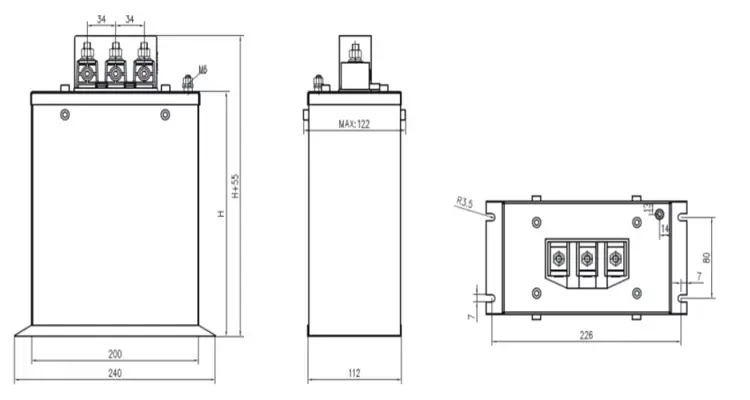
A lot of reaction power is made by assembly lines that use induction motors, welding tools, and pneumatic systems. A normal auto plant might have power factors below 0.75 without being paid for it, which would lead to utility fines of $0.02 to $0.05 per kVAR-hour. Power factor can be fixed to 0.95 or higher by installing capacitor banks set up in Delta or Wye designs with M8 or M10 output blocks.The square shape of the BKMJ makes it easier to place two units next to each other with a minimum 50mm gap, which makes plans in electrical rooms more efficient. Different types of connections—D, Y, YN, or three-phase—can handle voltage levels ranging from 100V to 1,000V, so they can match the needs of equipment without the need for custom building.
Integration with Renewable Energy Systems
High-frequency harmonics and irregular reactive power changes caused by solar inverters and wind turbine converters make the grid voltage less stable. When put at the DC links of an inverter, Metallized Film Capacitors smooth out ripple currents while keeping the voltage stable during cloud changes or strong winds. Because they are not inductive, they can't deal with converter switching frequencies between 4kHz and 20kHz.Case studies from utility-scale systems show that voltage control gets better by 2% to 3% and harmonic distortion gets better to the level required by IEEE 519. These speed improvements let more distributed generation work without having to pay a lot of money for expensive grid infrastructure updates. This is important for transmission companies who are in charge of old networks.
Motor Drive and Automation Systems
DC bus capacitors that can handle ripple currents without overheating are needed for variable frequency drives that run HVAC fans, conveyor belts, and pump stations. Because Metallized Film Capacitor technology has a low ESR, joint temps stay below critical levels even when the device starts and stops many times. This thermal control makes drive devices last longer and cuts down on unplanned downtime in businesses that use continuous processes, like making food or medicines.Capacitor banks can absorb voltage drops during big motor starts, which keeps PLCs from having to restart and servos from moving out of place. Precision machinery worth millions of dollars is kept safe and production plans are kept by keeping voltage control at ±2% during transient events.
Procurement Insights for B2B Clients
Critical Specifications for Selection
To choose the right reactive power adjustment parts, you have to match the electrical factors to the system's features. To account for harmonic overvoltages, voltage ratings should be at least 10% higher than the maximum steady working voltage. To figure out capacitance values, you need to look at the load profiles. For example, a 50kVAR unit is good for normal industrial loads, but data centers may need 100kVAR setups.When adjusting for non-linear loads, frequency tolerance is important. When subjected to harmonic material up to the 13th order, units rated for 50/60Hz operation stay stable. If the outdoor temperature goes above 40°C, temperature derating is needed. To protect against premature age, the effective capacitance must be lowered by 2% to 3% for every 10°C increase.
Evaluating Supplier Capabilities
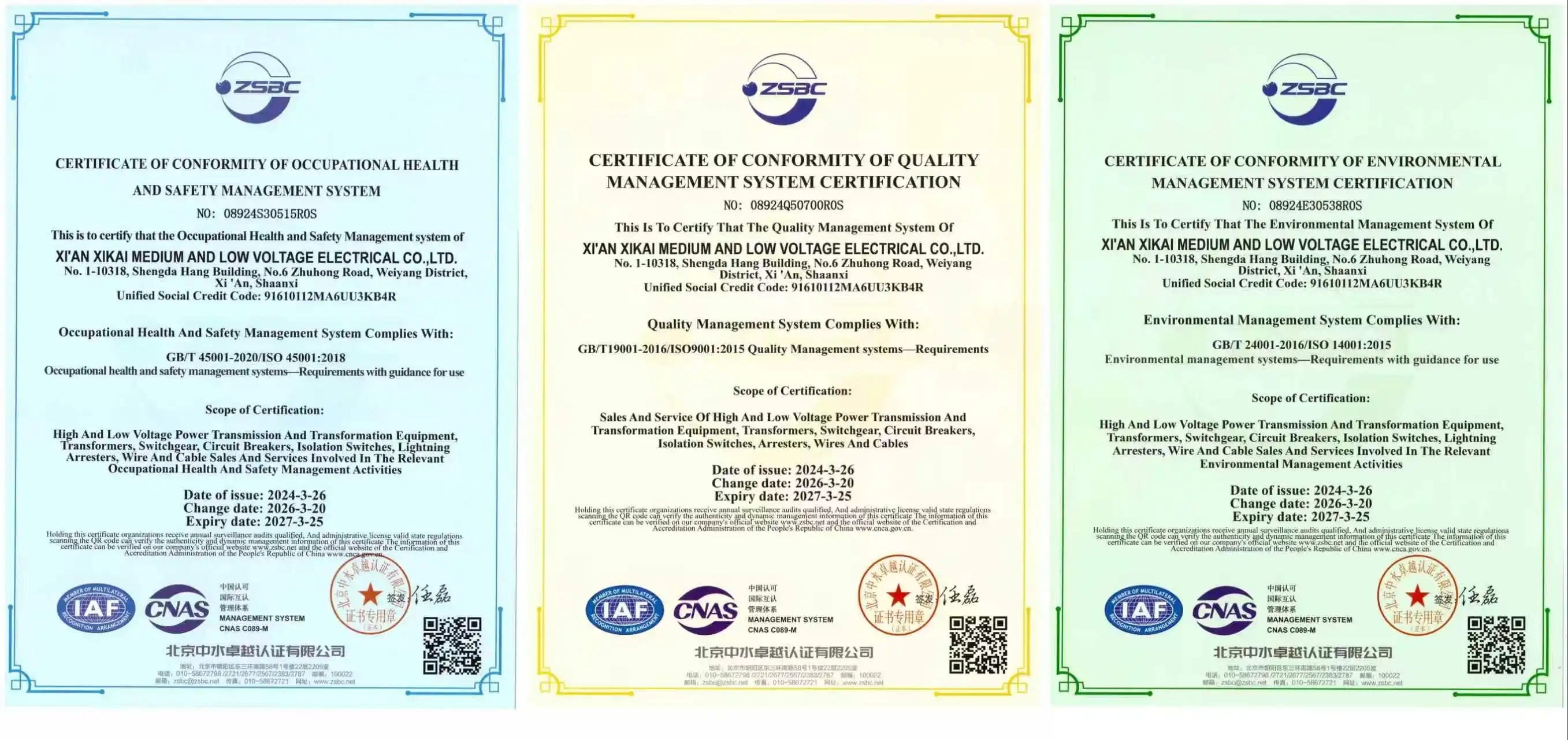
Manufacturers you can trust will have ISO 9001, 14001, or 45001 certifications that show they take quality control, environmental duty, and safety at work seriously. For each production batch, factories should test the dielectric strength, validate the temperature cycles, and check the increased life. Engineering consultants can speed up the project approval process by having access to test results and compliance paperwork.Strategic sellers are different from basic vendors because they can customize their products. Manufacturing freedom is shown by the fact that terminal block sizes (M6, M8, and M10) can be changed based on current ratings, connection setups can be changed to match specific voltage levels, and outdoor-rated enclosures can be made for substation installations. Lead times for special orders are usually between 4 and 6 weeks, which is something to think about when planning building plans.
Managing Inventory and Logistics
Based on the kVAR rates, the minimum order quantity for specialized Metallized Film Capacitor banks is between 10 and 50 units. Buying in bulk can cut unit costs by 15–25%, but you need stock room and cash on hand to make it work. If samples are available, they can be tested on a bench before big purchases are made. This way, the harmonic performance can be confirmed, and the dimensions can be checked to make sure they work with current equipment.Operational risks can be reduced by working with suppliers who offer expert help throughout the lifecycle of a product. Delays in commissioning can be avoided by using installation guides that include information on the required space for airflow, the torque specs for terminal connections, and the best ways to fuse. Project budgets are protected against manufacturing flaws by warranties that last 18 to 36 months and have quick claim handling.
Xi'an Xikai's 50KVAR Self-Healing Capacitor Solution
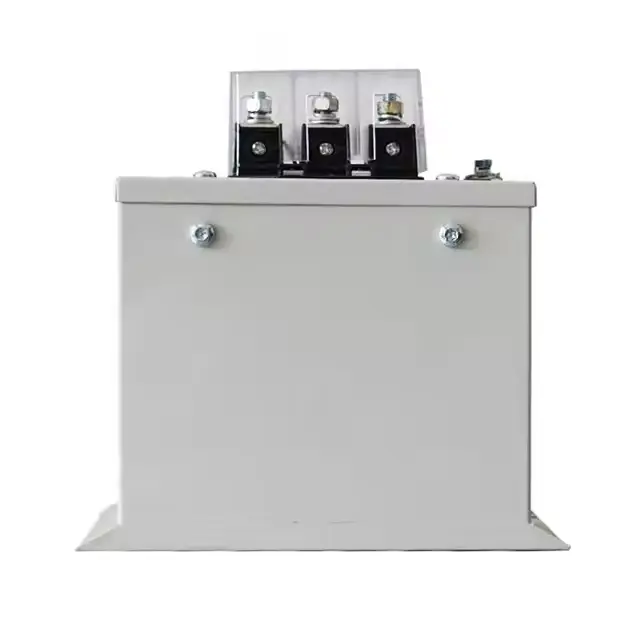
Our 50KVAR Self-healing Capacitor for Power Factor Correction (Square BKMJ model) solves the problems that building managers and system designers are having. Built to last, this unit blends tried-and-true Metallized Film Capacitor technology with a strong galvanized steel frame for indoor placements up to 2,000 meters above sea level.Automatic power factor controls can work with the capacitance deviation of -5% to +10%, and the ultra-low tan ε standard (< 0.001 at 20°C, 50Hz) cuts down on energy waste. Terminal blocks that are already set up can connect anything from small distribution panels to big capacitor banks, which makes installation easier in the field.Performance under real-world stress situations is confirmed by strict testing methods. Each unit goes through high-temperature high-humidity bias testing (85°C / 85% RH / 1000 hours) to make sure it is resistant to wetness, which is the main way capacitors break down. Self-healing validation with voltage spikes checks that the device can rebound from faults, and durability testing at 1.25 times the rated voltage checks for long-term stability.
Future Trends and Innovations in Metallized Film Capacitors
Advanced Materials Development
Within the next five years, research into nanocomposite dielectrics should lead to 30–40% higher capacitance densities. Adding ceramic nanoparticles to polypropylene matrices raises the dielectric constant while keeping the low-loss properties. Because of this progress, Metallized Film Capacitor banks can be made smaller, which makes them easier to fit in electrical rooms with limited area.Using alloys in electrode metallization methods instead of pure aluminum improves the consistency of self-healing and increases operating lifetimes beyond 200,000 hours. These materials can work at higher temperatures (up to 125°C with little cooling), which means they can be used in tough industrial settings like metal smelters and cement kilns.
Smart Grid Integration
Sensors and transmission links are built into next-generation reactive power compensation systems so that they can be monitored in real time. Temperature, current, and voltage monitors that are built in send information to building management systems or SCADA networks, which lets repair plans be planned ahead of time. Algorithms find patterns in capacitance drift that show decline months before they happen, so replacements are planned for planned breakdowns instead of emergency shutdowns.It's easier to integrate into digital substations where equipment shares practical data over Ethernet networks when it works with IEC 61850 communication standards. According to utility test programs, this connection makes the grid 3–5% more efficient by allowing combined volt-VAR optimization across distribution feeders.
Sustainability and Circular Economy
Environmental laws require more and more things to be recyclable and have smaller carbon impacts. Metallized Film Capacitors don't have any dangerous liquids or heavy metals in them, which makes them easier to get rid of when they're no longer needed than PCB-filled units. As part of their efforts to be more environmentally friendly, companies now have take-back programs for metal, steel, and plastic parts that can be recycled.Life cycle studies show that within 6 to 12 months of installation, the energy saved by low-loss operation cancels out the emissions from making. The net carbon decrease per 50kVAR unit over 20 years of service is about 15 metric tons CO2. This is a very important number for companies that want to reach their carbon neutrality goals.
Conclusion
There are technical and financial benefits to using Metallized Film Capacitors in reactive power replacement uses. These benefits come from fundamental advances in material science and decades of improving the manufacturing process. They are reliable, self-healing, have very low loss, and can handle harsh environments, which meets the needs of industrial sites, utility networks, and system designers. As power systems change to use more electricity and green energy, Metallized Film Capacitor technology that is both efficient and long-lasting is required. Strategic component selection based on strict specs, supplier capabilities, and lifetime factors puts companies in a position to handle energy more efficiently while keeping costs low. As materials and smart integration skills keep getting better, this technology will stay at the heart of power quality solutions for decades to come.
FAQ
1.What lifespan can I expect from metallized film capacitors in power factor correction applications?
When used normally, with the right voltage derating and temperature control, these Metallized Film Capacitor units should last between 10 and 20 years, or 100,000 to 150,000 hours. The upper end of this range is usually reached by facilities that keep the temperature inside below 40°C and limit harmonic distortion to the standards set by IEEE 519. Regular thermographic checks that find strange heating patterns allow replacements to be planned ahead of time, before failures affect production.
2.How do metallized film capacitors perform in high-frequency applications compared to other types?
This Metallized Film Capacitor technology is better for frequencies above 1kHz because it has a low Equivalent Series Inductance and almost no dielectric losses. Stable impedance qualities over a wide frequency range are useful for variable frequency drives, switching power supplies, and inverter uses. Electrolytic capacitors have an increasing ESR at higher frequencies, which makes them too hot, while ceramic capacitors produce microphonic noise and piezoelectric effects that mess up high-precision equipment.
3.What selection criteria matter most when specifying capacitors for reactive power compensation?
The voltage value has to be at least 10% higher than the system voltage to account for harmonic overvoltages. Find the needed kVAR by using the recorded power factor and the fix level you want to reach. Be careful not to overcompensate, which can lead to leading power factors. Check that the temperature numbers are accurate for the environment by using the right derating factors. Check to see if the specs for the terminal block meet your fitting torque needs and conductor sizes. Check the supplier's quality certifications, testing methods, and expert help to make sure they will be reliable in the long run and that the project turns out well.
Optimize Your Power Systems with Xi'an Xikai Metallized Film Capacitor Solutions
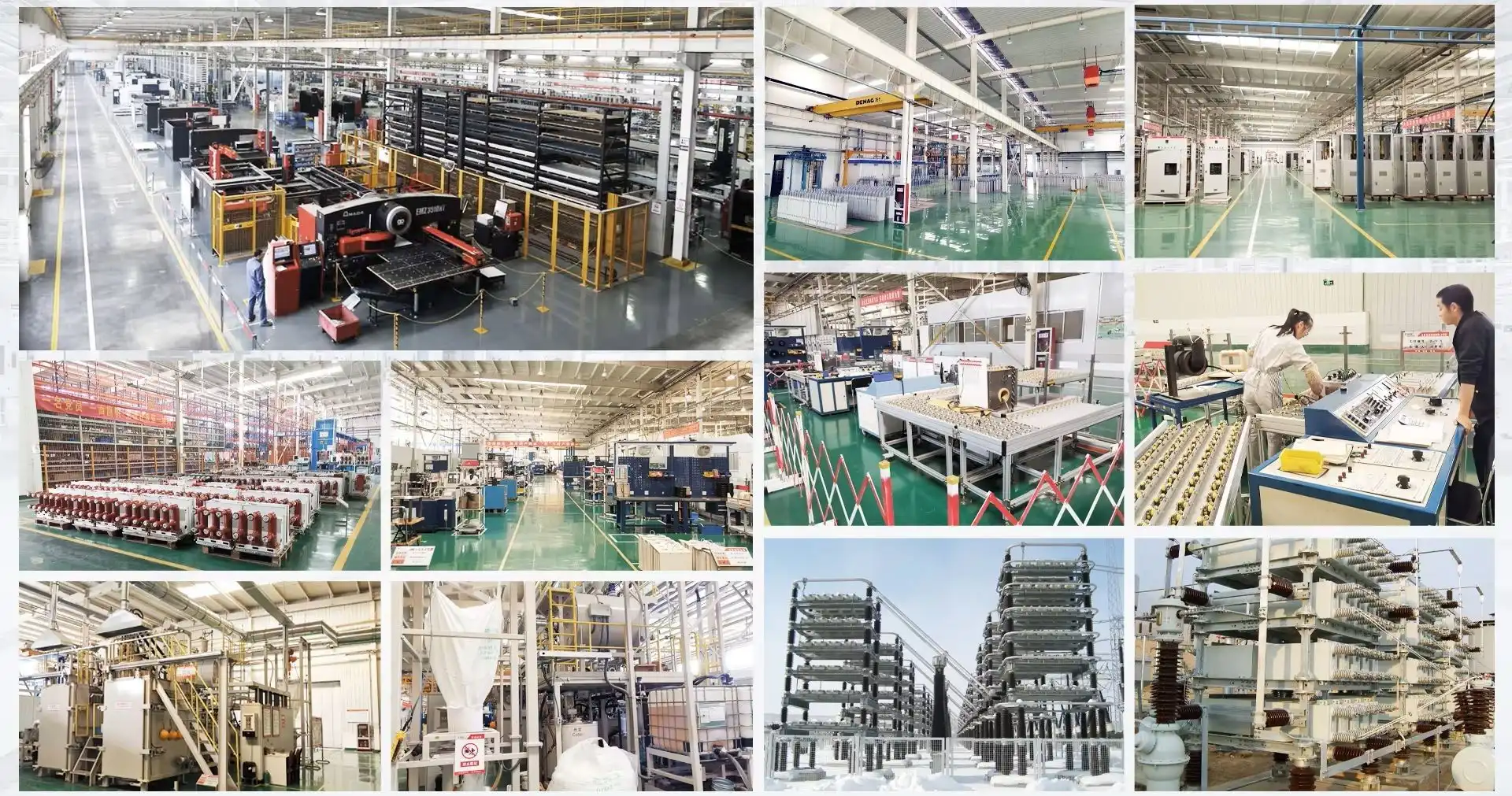
Xi'an Xikai Medium & Low Voltage Electric Co., Ltd. has been a top-notch manufacturing company for more than twenty years and can solve problems with reactive power correction. Our 50KVAR Self-healing Capacitor for PFC is the result of patented innovations, ISO-certified production, and testing in the real world at State Grid sites, industrial complexes, and rail transportation networks. As one of the biggest companies in China that makes Metallized Film Capacitors, we can make solutions that are specific to your power infrastructure needs. For example, we can make equipment that can work at 4,000 meters above sea level or designs that can handle harmonics so that green energy can be used. Our expert team offers full support, including system analysis, help with choosing products, and improvement after installation. Get in touch with our experts at serina@xaxd-electric.com, amber@xaxd-electric.com or luna@xaxd-electric.com to talk about your needs.
References
1. Institute of Electrical and Electronics Engineers. "IEEE Standard 18-2012: IEEE Standard for Shunt Power Capacitors." IEEE Standards Association, 2012.
2. International Electrotechnical Commission. "IEC 60831-1:2014 Shunt Power Capacitors of the Self-Healing Type for AC Systems Having a Rated Voltage up to and including 1000V - Part 1: General - Performance, Testing and Rating - Safety Requirements - Guide for Installation and Operation." IEC, 2014.
3. Electric Power Research Institute. "Power Factor Correction and Harmonic Mitigation in Industrial and Commercial Facilities." EPRI Technical Report 3002005578, 2015.
4. Sarjeant, Walter J., et al. "Capacitive Components for Power Electronics." Proceedings of the IEEE, vol. 89, no. 6, 2001, pp. 846-855.
5. Metallized Film Capacitor Technology Working Group. "Long-Term Reliability Assessment of Self-Healing Capacitors in Utility Applications." International Conference on Power Systems Transients, 2019.
6. National Electrical Manufacturers Association. "NEMA CP1-2017: Shunt Capacitors." NEMA Standards Publication, 2017.