Power Factor Correction in Data Centers: New Strategies for Efficiency
2026-05-21 15:41:03
The bottom line of your business can be hurt by rising energy prices and fines from the power company. To get the most out of Power Factor Correction Capacitor solutions, you should plan them out ahead of time. This can help companies save money on their electricity bills, stop energy loss, and avoid problems with the power company, which can lead to fines that cost a lot of money. It's the difference between how strong someone really is and how strong people think they are. These days, magnetic loads like motors and coils make moving parts that need to be leveled. The power factor of your machine is now one, which saves you money right away.
 |
 |
Understanding Power Factor Correction in Data Centers
The Fundamentals of Reactive Power Management
You can find out what power factor is and how it affects your bill. This number tells you how well the power you get goes through your system. When a magnetic gear is used, the phase of the electricity and power changes. This power just flows through your network; you don't need to do anything with it. This is something that utilities pay close attention to because it means that equipment needs more space and that reactive power makes transmission losses worse. A power factor can tell you how much it costs to run your business. Kilovolt-amperes (kVA), not just kilowatt-hours (kWh), are used to figure out how much energy firms and industries pay for their power. It means you're using more power than you need to do the same amount of work if it's less than 0.95. If your power goes down below a certain level, the company that gives it to you will charge you a fee.
Challenges Posed by Non-Linear Loads
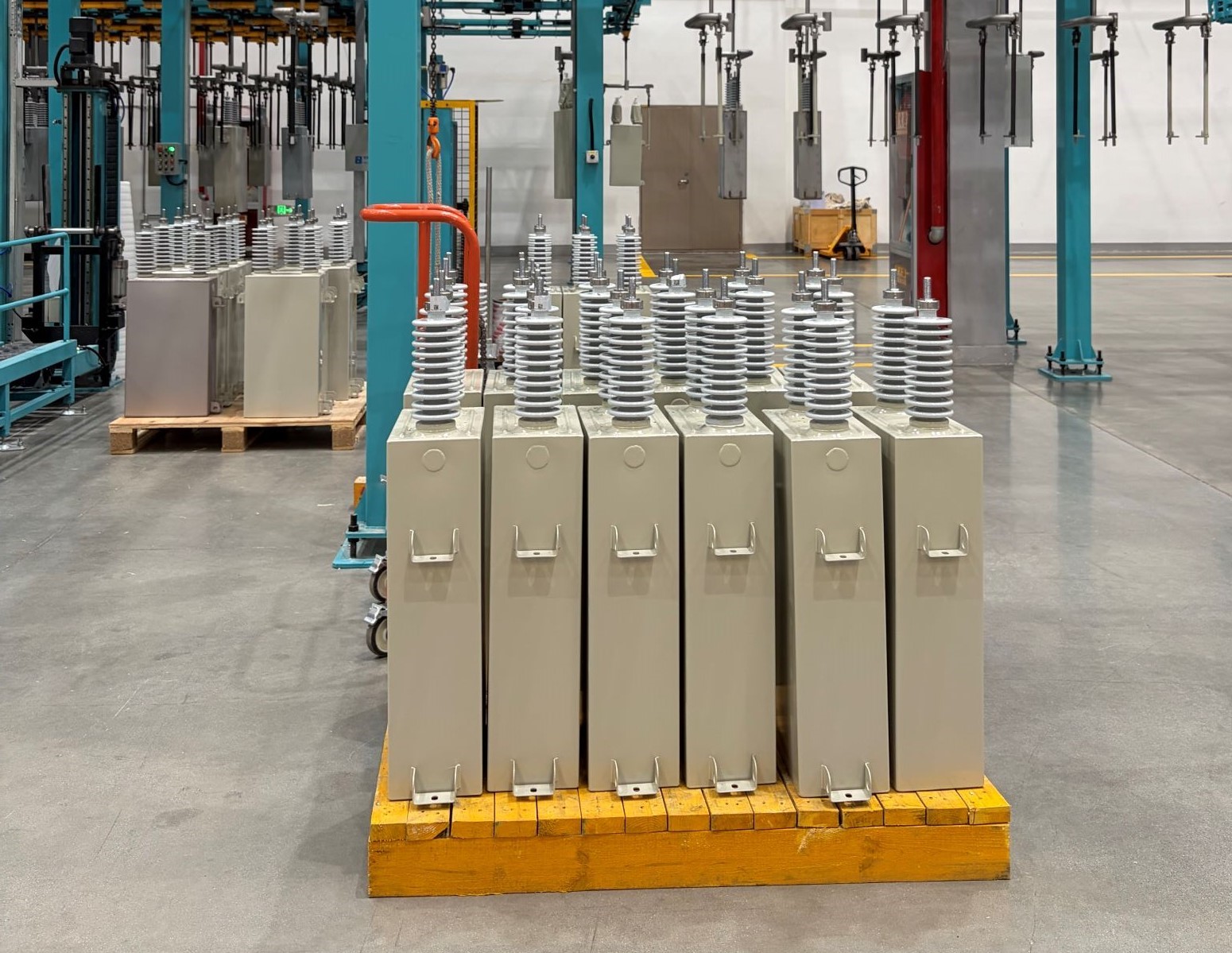
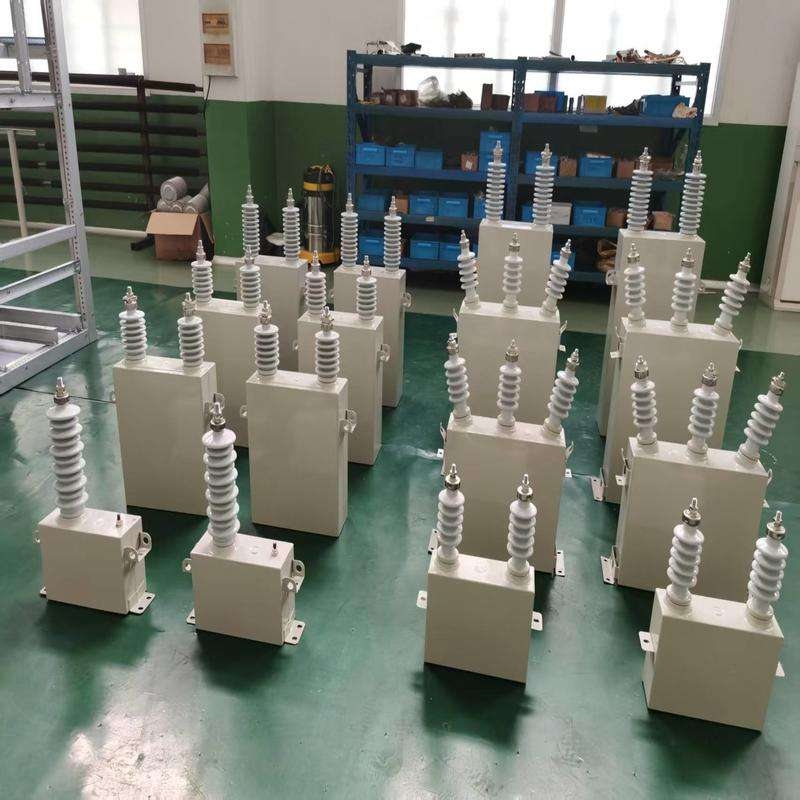
It is better to build dedicated units than regular capacitors. They use insulating films made of polypropylene that are metalized. Small cracks can be fixed by these on their own, so they last longer in tough plant environments. This is how the 50KVAR Self-healing Capacitor for PFC from Xi'an Xikai is made. No matter where you put it, 20 km above sea level or between -25°C and 50°C, the frames will still work. Most capacitors would quickly boil and break when they were put under a steady load of reactive power. But these units don't lose much heat (tan δ < 0.001), so the temperature inside stays as low as it can be. If you see voltage confusion or a capacitor burning, you need to take care of harmonic resonance problems right away. Resonance conditions, Power Factor Correction, Capacitor can kill capacitors within days.
Innovative Strategies for Enhancing Power Factor Correction Efficiency
Limitations of Traditional Fixed Compensation Systems
Fixed Power Factor Correction Capacitor banks always fix unstable power, which makes them perfect for buildings with steady loads. Capacitors are put in right where the motor lines or distribution boxes are. The capacitors should be the right size for the reaction. However, this fix is not needed during light load periods, as it may create a leading power factor. Manual switching requires personnel to adjust banks, which is a labor-intensive process. Legacy contactors cycling millions of operations suffer from contact welding and require frequent replacement, creating unplanned maintenance windows.
Real-Time Monitoring and Adaptive Response
Power quality monitors or multipurpose meters should be placed at the main door and key distribution points to get a good reading of the power factor. These tools measure voltage, current, active power, reactive power, and power factor all at the same time for all three steps. A person who checks their power quality often might find broken equipment or changes in the monthly load that make the power less strong. Modern units like the Xi'an Xikai BKMJ series have self-healing technology that extends service life by fixing small problems automatically. However, over time, damage builds up and lowers output capacity. Watch how the power factor changes at your utility meter. If it slowly goes down even though the load hasn't changed, that means the capacitors need to be replaced.
Selecting the Optimal Power Factor Correction Capacitor for Your Data Center
Evaluating Key Technical Parameters
Strategic procurement demands evaluation of Power Factor Correction Capacitor performance, quality certifications, and total cost of ownership rather than simply comparing unit prices. Make sure that the capacitance range (which is usually between -5% and +10%) matches up with your size figures. The temperature rating should be right for the place where it will be installed. The range of -25°C to 50°C is good for most industrial settings inside, but it might not be enough for substations outside or in harsh climates. Your electrical grid must be compatible with the frequency (50Hz or 60Hz). Using capacitors rated for the wrong frequency causes them to boil and fail early.
Proper Sizing and Efficiency Optimization
To start, do full power quality checks using logging meters that are set up over several weeks to record changes in load under different operating conditions. Pay attention to how the need for reaction power changes when there is a lot of production, some load, and no activity. To find the capacitive kVAR you need, use the formula kVAR = kW × (tan θ₁ - tan θ₂). The power factor angle you start with is θ₁, and the power factor angle you want to reach is θ₂. Pay attention to the amounts of harmonic distortion, because systems with only capacitors won't work in cases where there are a lot of harmonics. Instead, detuned reactor sets are needed.

Procurement Best Practices for Power Factor Correction Capacitors
Strategic Supplier Selection and Evaluation
Identifying qualified Power Factor Correction Capacitor manufacturers requires evaluating production certifications and testing capabilities. ISO 9001 certification indicates established quality management systems during manufacturing. Xi'an Xikai maintains ISO 9001, 14001, and 45001 certifications, demonstrating commitment to quality, environmental responsibility, and occupational safety throughout production. Request test certificates documenting dielectric strength verification, temperature cycling endurance, and dissipation factor measurements for each production batch. Units meeting UL 810 listings provide additional assurance for installations requiring compliance with National Electrical Code (NEC) and NFPA 70 fire safety standards.
Logistics and Technical Assistance Considerations
A mid-sized automotive components manufacturer in the Midwest operated at a 0.82 power factor, incurring monthly penalty charges averaging $4,200. Load analysis revealed that CNC machining centers and robotic welders generated significant reactive power. Installation of an automatic correction system using six stages of capacitor banks improved the power factor to 0.96. The facility eliminated all penalty charges and reduced peak demand by 127 kVA, decreasing monthly electricity costs by $5,800. Equipment investment totaled $38,500, achieving payback within seven months. Additional benefits included reduced voltage drop across distribution feeders and lower operating temperatures in the main transformer.
Future Trends and Innovations in Power Factor Correction for Data Centers
Integration of IoT and Predictive Analytics
Strategic implementation of Power Factor Correction Capacitor systems delivers measurable reductions in electricity expenses while eliminating utility penalties that erode profitability. In order for medical and sensitive tech tools to work right, hospitals and data centers should try to keep their power factors between 0.95 and 0.98. Most people who use State Grid have to pay fines that get worse if they don't follow the rules. These fines are different from government rules. Your power factor will go up if you put the right capacitors in the right places. Quarterly visual inspections and annual electrical testing, measuring capacitance values and dissipation factors, detect gradual degradation before failures occur.
Environmental Compliance and Sustainability
Beyond direct cost savings, improved power factor reduces carbon emissions by Power Factor Correction Capacitor decreasing total energy losses throughout the electrical distribution network. A hospital campus achieved a 12% reduction in electrical system losses after implementing comprehensive corrections, supporting its sustainability reporting and LEED certification goals. Facilities participating in energy efficiency incentive programs often qualify for utility rebates covering 20-40% of correction system costs. Regulatory compliance becomes more manageable as industries face increasingly strict power quality requirements—correction systems provide documented evidence of responsible energy management.
AI-Powered Energy Management Platforms
A growing data center approached maximum transformer capacity limits but faced a nine-month lead time and $280,000 cost for transformer replacement. Power quality analysis showed a 0.88 power factor due to server power supplies and HVAC equipment. Strategic deployment of correction capacitors near major distribution panels improved the power factor to 0.97, effectively releasing 285 kVA of apparent power capacity. This freed capacity allowed the installation of 42 additional server racks without transformer upgrades, supporting revenue growth worth $1.4 million annually. The correction system investment of $52,000 delivered an immediate return while deferring capital expenditure.

Conclusion
Strategic implementation of Power Factor Correction Capacitor systems delivers measurable reductions in electricity expenses while eliminating utility penalties that erode profitability. Understanding power factor fundamentals, selecting appropriate correction technologies, and following systematic implementation procedures ensure optimal results. The 50KVAR Self-healing Capacitor from Xi'an Xikai provides reliable reactive power compensation with self-healing technology, robust construction, and flexible configuration options suitable for diverse industrial applications. Comprehensive load analysis, proper sizing calculations, and adherence to installation standards maximize correction effectiveness and equipment longevity. Real-world case studies demonstrate payback periods typically ranging from six to eighteen months, with ongoing operational benefits including enhanced equipment capacity, improved voltage stability, and reduced system losses supporting both financial and environmental objectives.
FAQ
1 How often should we inspect and replace correction capacitors?
Quarterly visual inspections, checking for physical damage, overheating, or unusual noise, help identify developing problems. Annual electrical testing, measuring capacitance values and dissipation factors, detects gradual degradation before failures occur. Self-healing capacitors typically provide 10-15 years of service in properly designed systems, though harsh environments with frequent switching or high harmonics may reduce lifespan to 7-10 years. Replace units showing more than 10% capacity loss or elevated dissipation factors exceeding manufacturer specifications.
2. How do harmonics affect capacitor selection?
Evaluate existing harmonic levels through power quality analysis—systems with total harmonic distortion exceeding 5% require detuned reactor configurations rather than capacitor-only installations. Verify that protective devices properly coordinate with added capacitor banks and that voltage rise during light-load conditions remains within acceptable limits. Standard catalog items from manufacturers like Xi'an Xikai typically ship within 4-6 weeks for bulk orders, with expedited options available for urgent requirements.
3. Can capacitors be added to existing electrical systems?
Retrofitting proves feasible in most installations if adequate space exists in distribution panels and switchgear capacity accommodates capacitor inrush currents. Custom configurations specifying non-standard voltages, terminal arrangements, or environmental ratings may require 8-10 weeks. Establishing relationships with reliable suppliers and maintaining a strategic inventory of critical spare components minimizes procurement delays during system expansions or emergency replacements.
Partner with Xi'an Xikai: Your Trusted Power Factor Correction Capacitor Supplier
Xi'an Xikai stands ready as your trusted Power Factor Correction Capacitor supplier with proven expertise across industrial, commercial, and utility applications. Our 50KVAR Self-healing Capacitor delivers exceptional performance with self-healing technology, precise capacitance tolerance, and durable galvanized steel construction engineered for demanding environments. Comprehensive technical support, customization capabilities, and reliable delivery schedules ensure successful project execution. Contact our experienced team at serina@xaxd-electric.com, amber@xaxd-electric.com, or luna@xaxd-electric.com to discuss your specific requirements and receive tailored recommendations.

References
1. Institute of Electrical and Electronics Engineers, "IEEE Std 1036-2010: IEEE Guide for Application of Shunt Power Capacitors," IEEE Standards Association, 2010.
2. American Society of Heating, Refrigerating and Air-Conditioning Engineers, "ASHRAE Technical Committee 9.9: Mission Critical Facilities, Data Centers, Technology Spaces, and Electronic Equipment," ASHRAE Handbook—HVAC Applications, 2019.
3. National Fire Protection Association, "NFPA 70: National Electrical Code Article 460—Capacitors," NFPA Standards Council, 2020 Edition.
4. International Electrotechnical Commission, "IEC 60831-1:2014 Shunt Capacitors for AC Power Systems Having a Rated Voltage Up To and Including 1000V—Part 1: General," IEC Technical Committee 33, 2014.
5. U.S. Department of Energy, "Best Practices Guide for Energy-Efficient Data Center Design," Federal Energy Management Program, Advanced Manufacturing Office, 2021.
6. Electric Power Research Institute, "Power Quality Implications of Data Center Load Growth: Reactive Compensation and Harmonic Mitigation Strategies," EPRI Technical Report 3002018621, 2020.