Working Principle of Zero-Sequence Current Transformers
2026-06-08 17:31:25
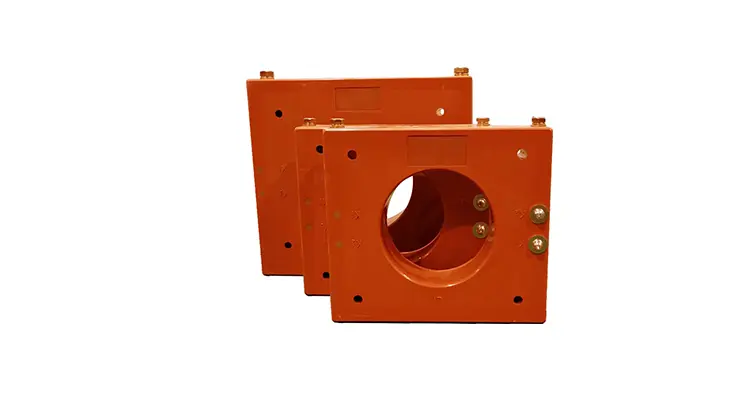
A Zero Sequence Current Transformer finds ground faults by measuring the vector sum of all the currents running through all three-phase wires. This sum is equal to zero when everything is fair. An imbalance causes a measured zero-sequence current when a ground fault happens, like when insulation breaks down or a cable gets damaged. This trouble signal is turned into a proportional secondary output by the device, which is usually 5A or 1A. This output sets off protection switches within milliseconds, cutting off power to the damaged part and stopping any damage to the equipment or safety risks.
 |
 |
Understanding Zero-Sequence Current Transformers
One of the most common and dangerous electrical problems in utility and commercial systems is a ground fault. Finding these problems early keeps people safe, stops huge damage to equipment, and keeps the grid stable. Normal current transformers look at each phase's current to make sure there isn't too much current flowing. Zero-Sequence Current Transformers, on the other hand, are experts at finding earth leakage situations that normal devices often miss.
What Is Unique About Zero-Sequence Detection?
The main difference is the measuring method. Traditional current transformers record load currents to bill or safeguard against overcurrent on separate cables. However, a Zero-Sequence Current Transformer monitors the algebraic total and covers both three-phase conductors and occasionally the neutral conductor. Balanced three-phase systems have no net current flow through the transformer core because the currents cancel each other out. Any ground fault disrupts this equilibrium, delivering a signal dependent on its severity.
Many different areas find this skill to be very useful. Machine shops with sensitive CNC equipment cannot tolerate power quality issues. Data centres must be trustworthy to safeguard IT systems. Hospital life-support equipment requires constant electricity. Power firms manage huge transit networks. If there is a single problem that isn't found, it can cause power outages all over the network. When procurement staff understand transformers, they can purchase equipment that meets corporate goals and risk tolerance.
Core Applications Across Industries
Different usages need different ground fault protection. Rapid fault isolation protects costly switchgear and 11kV distribution systems in corporate buildings from fire. Wind and solar power facilities feature harmonics and unpredictable power patterns that disguise faults. Petrochemical operations in hazardous places require IP67 shelters that can withstand corrosive atmospheres and maintain accuracy.
These practical and environmental elements must be considered in decision-making. A temperature-controlled gadget may fail too soon in desert settings at +85°C. In the same way, offshore wind uses require materials that can withstand more wetness and vibration than what is normally required. Buying teams may identify application-specific solutions instead of generic commodities when they recognise these demands.
Working Principle of Zero-Sequence Current Transformers
The way it works is by using electromagnetic induction and a special core shape that makes it better at finding small, uneven currents. Facility managers and system developers can better evaluate performance standards and fix problems with installs if they understand these technical basics.
Core and Winding Configuration
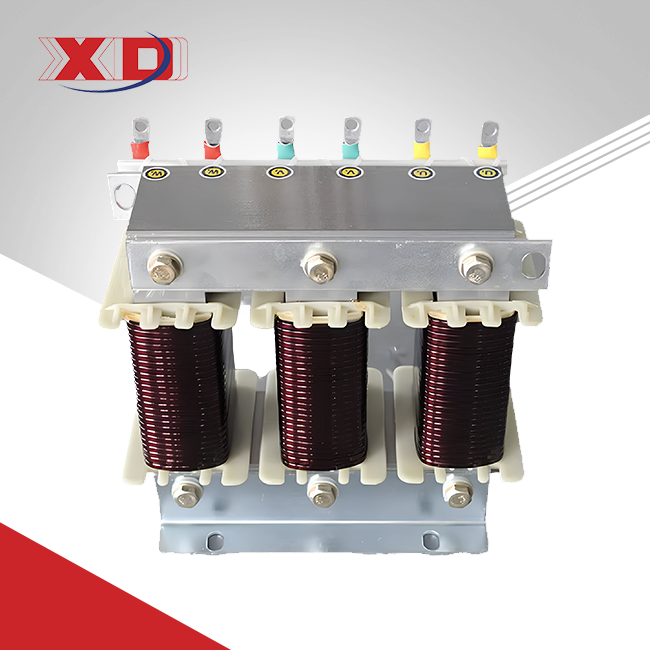
Any Zero Sequence Current Transformer has a toroidal magnetic core made of high-permeability silicon steel or nanocrystalline metals at its centre. This core goes around all the wires that carry electricity without touching them. A secondary spiral goes around the core and has between 100 and 400 turns, based on the current ratio that is needed. If the phase currents stay equal, their magnetic fields cancel each other out inside the core. This means that there is no net flux and no secondary output.
Ground faults disrupt this equilibrium. Current flows through the fault path to earth instead of circuit wires. This imbalances the circuit. This residual current provides a magnetic flux that links the secondary winding and causes a break-related voltage. The transformer ratio, commonly 200:1, 100:1, or 40:1 for safety, controls secondary current flow. A 200:1 ratio on a 20A main fault current generates 0.1A secondary current adequate to activate safety relays.
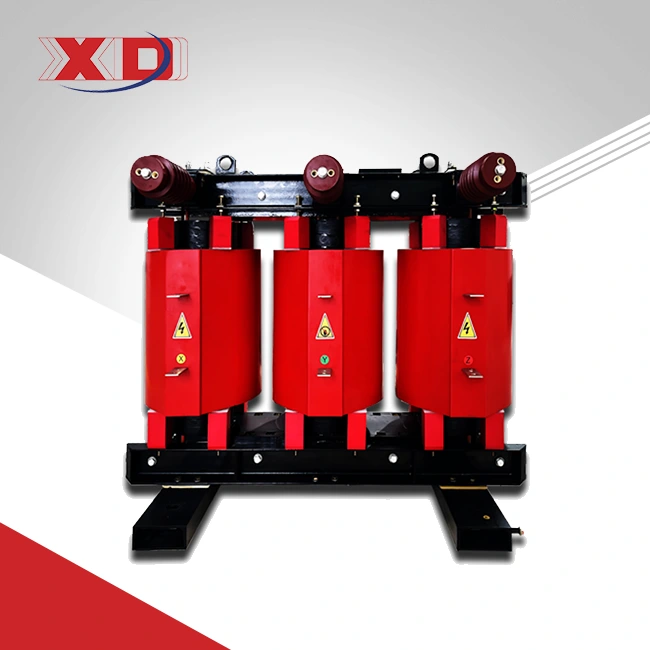
Epoxy-resin-cast designs from Xi'an Xikai outperform oil-paper-protected units in many aspects. Material strength is highest with solid dielectric. It works nicely from -40°C to +85°C. Partial discharge below 5 picocoulombs ensures insulating integrity. This is crucial for equipment that should last 15 years or more with minimum maintenance.
Technical Specifications That Matter
Purchase specifications must cover several interconnected elements. The rated main current, commonly 20A to 1000A for medium-voltage usage, determines the operating range. Secondary current standards—5A for analogue relay systems and 1A for digital protection—determine which devices function with what follows. IEC 61869-2 accuracy classes, such as 3P or 5P, specify how many errors are tolerated in various fault circumstances up to the rating accuracy limit factor.
A transformer's burden capacity is the maximum load resistance it can bear while maintaining expected accuracy. Our devices, capable of handling a 20Ω load at a 200:1 ratio, can power parallel relay coils without impairing measurement precision. Insulation must manage system voltage and safety reserves. A 12kV device serving an 11kV network offers adequate safety margin for short-term overvoltages.
Always follow international norms. Xi'an Xikai Zero-Sequence Current Transformers fulfil GB 20840.2-2014, IEC 61869-1, and IEC 61869-2 standards, making them worldwide accepted and compliant. UL 508 and CE marks simplify North American and European operations. These certifications ensure the safety of the product and the manufacturing process, from tracking raw ingredients to obeying final test criteria.
Wiring Configurations and Installation Methods
There are two basic system installation methods, each serving various purposes. Split-core or open-core designs may be added to current wires without disconnecting due to their hinged magnetic route. This capability is useful during system modifications when extensive downtimes are unacceptable. This capability improves data centre, hospital, and factory security without disrupting operations.
Solid-core versions are more precise and cheaper for new construction projects where wires may be routed through the hole. Core diameters from 120 mm to 300 mm accommodate several wire bundle sizes and bus bar installations. This wiring schematic shows which wires run through the window. All three phases pass in a three-wire arrangement without a neutral. Four-wire systems may feature a neutral depending on their grounding and security needs.
Pay attention to secondary connection orientation to ensure relay operation. When you reverse connections, safety devices may trip during normal operation or not respond at all during a malfunction. Standard terminals (S1, S2, S3, S4) designate tap locations, thus one device may be used for several ratios. This allows facilities that utilise several tools greater flexibility, reducing inventory and making spare part management simpler.
Comparison: Zero-Sequence Current Transformer vs Other Current Transformers
Before making a purchase choice, it's helpful to know how Zero Sequence Current Transformers are different from other types of transformers that serve similar defensive roles. Each technology works with different types of faults and has different levels of awareness, cost, and mounting difficulty.
Functional Distinctions Between Transformer Types
Normal current transformers keep an eye on each phase's current to protect against overcurrent and short circuits. They can pick up faults between phases or from one phase to neutral, but not ground faults unless there is a lot of current flowing through them. Normal overcurrent switches set for hundreds of amps might not pick up a high-impedance ground fault drawing only 2 to 5 amps, which could be fatal to people.
Residual current transformers look like Zero-Sequence Current Transformers, but they are not the same in terms of what they can do and how sensitive they are. Both measure the vector sum of currents, but residual current devices (RCDs) are used to protect people in low-voltage circuits by finding errors as small as milliamperes. Medium-voltage distribution systems use Zero-Sequence Current Transformers to find ampere-level flaws that could damage equipment or make the grid less stable. This difference is important when planning protection, because using an RCD-rated device in an 11kV setting would cause it to trip for no reason due to normal system leakage currents.
Cost-Performance Analysis for Industrial Applications
The budget must balance the original equipment cost with the total cost of ownership, which includes installation, maintenance, and downtime. Zero-Sequence Current Transformer prices vary by accuracy class, load capacity, core size, and environmental grade. Standard 120mm split-core devices with 5P accuracy are the cheapest for daily work. High-precision 3P-class devices with higher load capacity cost more but perform better in critical circumstances where erroneous trips may be disastrous.
Split-core versions cost extra but are simpler to install. Upgrading without shutting down the system guarantees no revenue loss during production interruptions. If a plant earns $50,000 per hour, a power outage to install closed-core transformers is not feasible. A small output drop negates the tool cost.
Low maintenance costs remain for epoxy-cast devices. The tight construction prevents water and other damage to oil-paper patterns. Thermal cycle tests over 24 hours at -55°C to +125°C demonstrate that the product is durable, meaning it will last longer between repairs and have fewer field issues. Facilities that measure mean time between failures (MTBF) show that properly fitted and loaded equipment may last 15 years.
Return on investment must include unincurred expenditures. An undetected ground fault that ruins equipment may cost hundreds of thousands of dollars in repairs and lost productivity. After comparing this danger to the few thousand dollars needed to obtain the correct safety gear, the business case is evident. Purchasing managers shouldn't compare suppliers based on first purchase price. They should also request field performance statistics, warranty conditions, and technical support response time.
Installation, Testing, and Maintenance of Zero-Sequence Current Transformers
The right way to deploy has a direct effect on the accuracy of measurements, the dependability of protection systems, and the safety of people. Common mistakes that hurt system performance can be avoided by following organised steps during installation and testing.
Step-by-Step Installation Guidelines
The first step in getting the site ready is to make sure that the chosen Zero Sequence Current Transformer meets the system requirements. Make sure that the rated voltage, frequency (50 Hz or 60 Hz), main current range, and core diameter all fit the measurements of the wire bundle or bus bar. The position of the mounting should allow enough space for the routing of the conductors and allow entry for future maintenance without having to shut down the system again.
First, open the hinged core and arrange it around the wires to physically install split-core units. Check that all phases being observed pass through the aperture properly. Mixed polarities cause measurement mistakes. Each core connecting surface must match exactly without gaps. Small air gaps may cause machine vibration and accuracy loss. To prevent electromagnetic forces from separating the closure mechanism during a breakdown, secure it according to the manufacturer's torque recommendations.
When connecting secondary wires, pay attention to terminal assignment. Look on device nameplates for ratio taps that fit project criteria. For a 200:1 ratio, use lines S1–S2, and for a 100:1 ratio, connect S1–S3. High voltage from running the generator with the secondary connections open may damage insulation and harm humans. Short empty wires with safety connections or a suitable test switch.
When you ground the generator frame, you reduce noise and safeguard individuals. Run a specialised ground line from the mounting bracket to the closest equipment ground bus using the right-sized wire. Use a single-point grounding arrangement with many transformers in one switch panel to avoid ground loops.
Commissioning Tests and Acceptance Criteria
Pre-energisation testing checks fittings and equipment. The insulation resistance between the secondary windings and grounded frame should be above 100 megohms using a 2500V megohmmeter. Lower numbers indicate moisture contamination or insulation damage that must be repaired before electricity is switched on.
Ratio testing confirms the transformer generates the desired secondary current for a primary input. Portable test equipment injects calibrated currents into the primary opening and evaluates secondary output. For 5P accuracy devices, measured ratios must be within ±3% of printed figures. Deviations beyond the permitted range indicate manufacturing or fitting issues, such as misaligned cores.
Testing links for polarity prevents harmful errors that disable protection switches. While applying a transient DC pulse to the main wires, check the secondary output polarity using a voltmeter or oscilloscope. The correct polarity causes positive deflection. Wire problems result from incorrect polarity.
Within specific limitations, phase angle measurements demonstrate that the secondary current is in phase with the original fault current. Too much phase shift, generally 30 to 60 minutes of arc, indicates a saturated core or excessive load. Lower the associated load impedance or use a larger transformer to address the problem.
Routine Maintenance Best Practices
Zero-Sequence Current Transformers need less maintenance than safety switches or switchgear. Visually inspect the mounting hardware for tightness, the secondary wire connections for overheating or corrosion, and the exterior seals once a year. Facilities that are in toxic settings may need to be inspected every six months.
Testing the insulation resistance on a regular basis—every three years is recommended—looks for signs of wear and tear that happen before breakdowns. Wetness or insulation wear causes readings to drop, which should be investigated. Sudden dips indicate urgent issues.
Burden checking ensures secondary circuits don't get increased loads without safety formula updates. Compare the transformer's load values to the overall connected impedance. Heat may harm secondary windings and reduce accuracy when devices are overloaded.
Documentation preserves institutional knowledge after personnel transfers. Keep installation blueprints, wiring diagrams, commissioning test data, and maintenance logs to document inspection findings and repairs. This content aids system updates and repairs.
How to Choose and Procure the Best Zero-Sequence Current Transformer
To choose the right equipment, you need to match the technical specs to the needs of the application while also taking into account the supplier's skills, shipping times, and the total cost of ownership. A structured review method lowers the risks of procurement and makes sure that everyone is happy in the long run.
Defining Technical Requirements
First, describe the electricity setup where the Zero Sequence Current Transformer will work. Write down the voltage of the system, how it is grounded (solidly grounded, resistance grounded, or ungrounded), the normal load current range, and the highest potential fault current. These factors decide the necessary amounts of insulation, the tolerances for core saturation, and the accuracy class requirements.
Evaluating Suppliers and Products
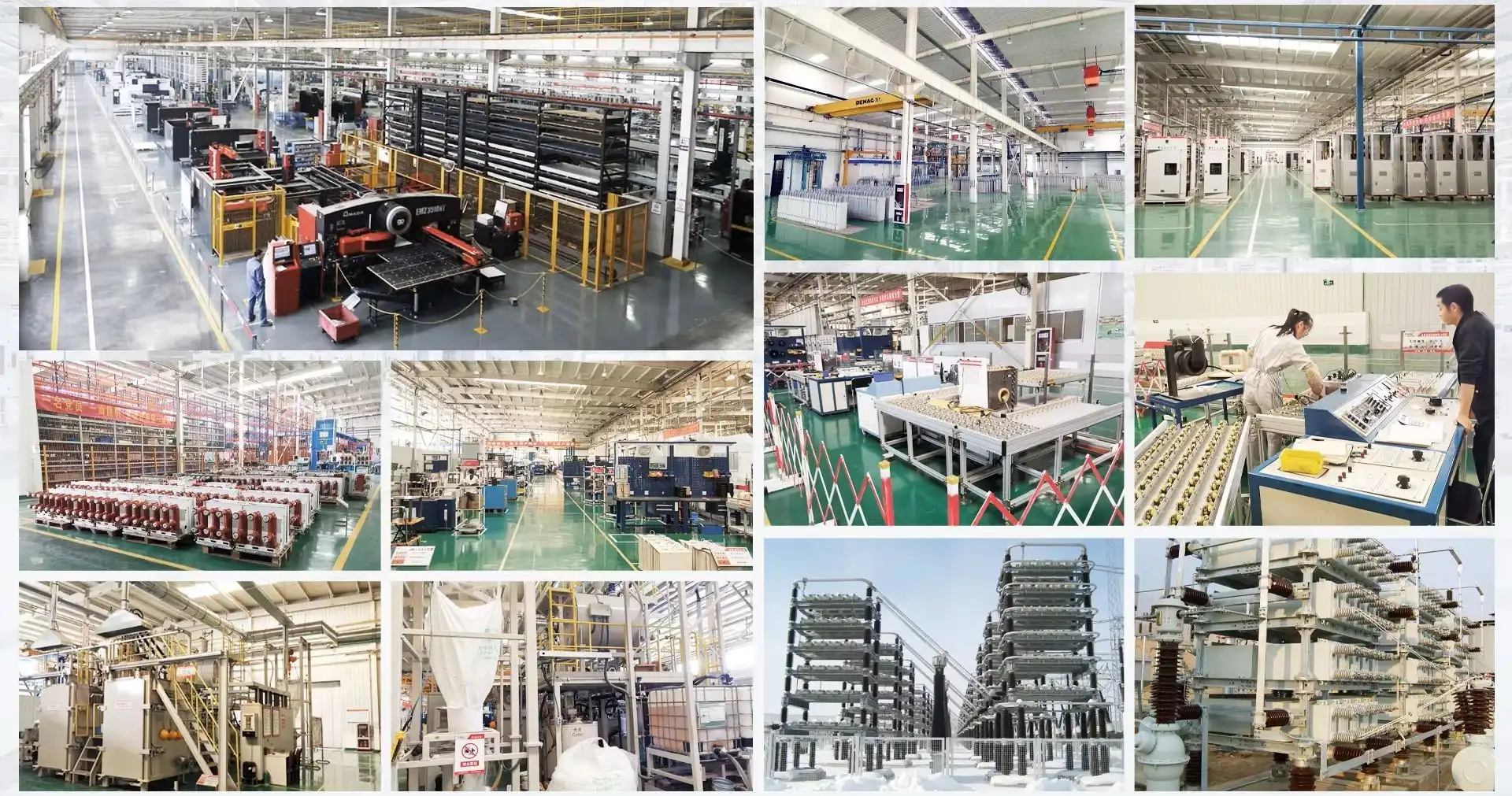
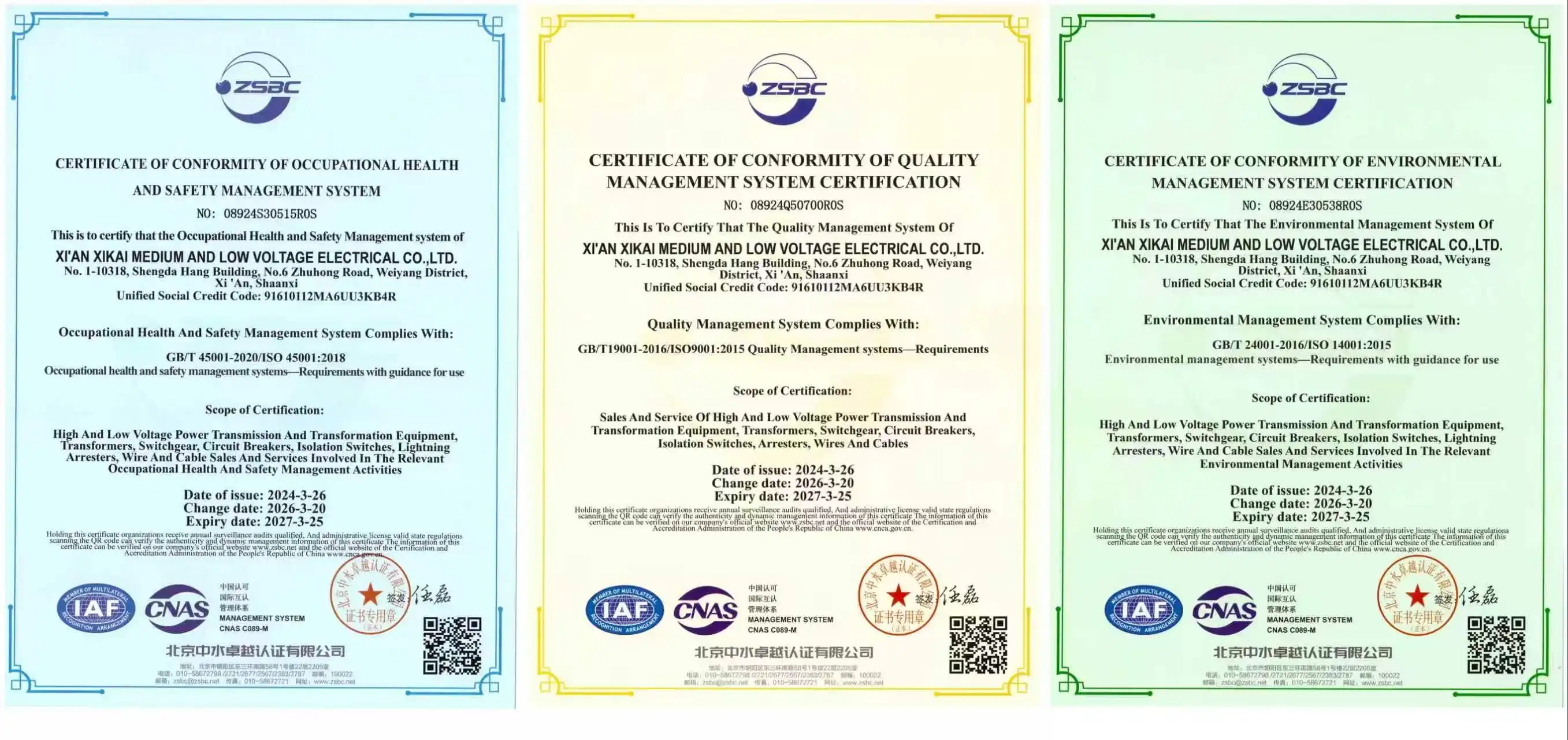
Supplier evaluations go beyond product specs. Manufacturing expertise, quality processes, and after-sales support are also considered. For decades, enterprises like Xi'an Xikai have produced medium-voltage equipment for utility, industrial, and power generating applications. Production locations use automated winding machinery and partial discharge testing machines to ensure worldwide quality.
Certification papers demonstrate government compliance. Verify that the indicated products have type test certifications from accredited labs that satisfy IEC 61869-1 and 2 standards. North American projects must be UL-listed or CSA-certified. European sites require the CE mark and Declaration of Conformity. Request test findings instead than trusting assurances.
For certain needs, customisation is key. Standard stock goods fit most demands, while customised choices are best for unique situations. Custom cores suit large bus bars. Non-standard rates simplify relay coordination. Better seismic ratings satisfy earthquake-prone locations' demands. Suppliers who construct and customise are beneficial for complex tasks.
Strategic Procurement Considerations
Lead times and minimum order quantities affect project schedules and stocking costs. Unique designs take weeks to conceive and produce, whereas stock products may be sent in days. Make sure lead times are explicit, and you know what long-lead items might delay delivery. Discuss reasonable MOQ terms—overbuying loses money and stock space. To balance client requirements with production costs, reliable suppliers help customers choose the proper order size.
Not always is pricing difference more essential than technical support response time. Suppliers with multilingual assistance, thorough instructions, and fast tech help simplify starting issues and system optimisation. Tech assistance from Xi'an Xikai is guaranteed within 48 hours, so consumers may obtain help swiftly regardless of time zone.
Procurement plans should include performance, cost, and source risk. Single-source approaches are easy and use scale to acquire cheaper costs, but they generate dependence problems. Multi-source solutions stabilise the supply chain, but engineers must manage several product lines. Before making long-term purchases, consider the supplier's financial stability, production capacity, and commitment to your product lines.
Qualification testing on representative samples checks performance before major purchases. Buy samples for lab and field testing. Make that the measured performance matches the manual's real-world predictions. List issues and engage with vendors to resolve them before buying more.
Consider the whole cost while negotiating pricing, not simply the unit price. Ask for detailed rates that include tools, shipping, packing, expert documentation, and system setup. Compare international items' landing pricing, including tariffs and commodities. Know the warranty terms and spare part availability to calculate lifetime cost.
Clear delivery and shipping terms are needed. Incoterms for shipping, insurance, and transportation loss should be included. Packing and handling fragile precision equipment is essential. Clarify your needs and examine shipments immediately. Take images of shipment damage and notify the seller immediately to expedite claims.
Conclusion
In industrial, business, and utility settings, Zero Sequence Current Transformers are necessary to find ground faults that could harm people, equipment, or infrastructure. Knowing how they work, how to choose the right ones, and how to install them properly helps procurement workers and facility managers come up with the right answers for each system's needs. Epoxy-resin-cast designs from well-known companies like Xi'an Xikai work reliably and meet international standards, and they don't need much upkeep. Paying close attention to technical requirements, environmental scores, and supplier skills is important for making sure that projects go well. As electrical systems get more complicated and people expect them to work more reliably, buying good safety gear is a smart way to control risk and improve operations. The small cost of good ground fault protection is nothing compared to the damage that could happen from faults that aren't found. This makes these devices very important to today's electrical grid.
FAQ
1. How does a zero-sequence transformer differ from a residual current device?
Both measure uneven current, but Zero-Sequence Current Transformers are used in medium-voltage distribution systems to find ground faults at the ampere level that could damage equipment or make the grid less stable. Low-voltage lines are protected by devices that measure milliampere fluctuations to keep people safe. Different technologies work together in different ways, depending on the voltage grade, sensitivity, and application context. If you use the wrong type, it could lead to poor security or annoying trips.
2. Can zero-sequence protection work in ungrounded systems?
Systems that are grounded or have a high resistance pose special problems. Ground problems reduce the flow of current, so they need to be found carefully while the voltage is being watched. These faults can be found by Zero-Sequence Current Transformers, but they need to be carefully coordinated with the way the system is grounded and how the relays are set up. Talk to security experts to make sure it works with certain grounding methods and has the right level of sensitivity to avoid false trips.
3. What testing verifies transformer accuracy after installation?
Insulation resistance testing (>100 megohms at 2500V), ratio checking (within ±3% of reference), polarity checking (to make sure the phases are in the right order), and burden testing (to make sure the total load impedance is within the value) are all things that should be done during commissioning. These tests confirm that the system and tools are in good shape. Write down the initial results so that you can compare them with later upkeep checks to find patterns of wear and tear that need fixing.
Secure Reliable Ground Fault Protection From a Trusted Zero Sequence Current Transformer Manufacturer
Zero Sequence Current Transformers made by Xi'an Xikai are precisely built and made for demanding industrial and utility uses all over the world. Our epoxy-resin-cast devices are very accurate and well-built. They meet the standards set by GB 20840.2-2014, IEC 61869-1, and IEC 61869-2 and work reliably in temperatures ranging from -40°C to +85°C. Our solutions work well with both new digital safety systems and old analog relays because they have rated main currents from 20A to 1000A and secondary outputs that can be either 5A or 1A. With manufacturing skills that cover 7 product categories and over 100 variants, we can meet the needs of a wide range of projects with both standard and custom-engineered options. Contact our technical specialists at serina@xaxd-electric.com, amber@xaxd-electric.com, or luna@xaxd-electric.com to discuss your specific application requirements, request detailed technical documentation, and receive personalised recommendations ensuring optimal protection system performance.
References
1. IEEE Standards Association. (2018). IEEE Guide for Protective Relay Applications to Transmission Lines. IEEE Power and Energy Society.
2. International Electrotechnical Commission. (2014). Instrument Transformers - Part 2: Additional Requirements for Current Transformers. IEC 61869-2 Standard.
3. Blackburn, J.L. and Domin, T.J. (2014). Protective Relaying: Principles and Applications. Fourth Edition. CRC Press.
4. National Electrical Manufacturers Association. (2016). Requirements for Instrument Transformers. ANSI/IEEE C57.13 Standard.
5. Ziegler, G. (2011). Numerical Distance Protection: Principles and Applications. Fourth Edition. Publicis Publishing.
6. Horowitz, S.H. and Phadke, A.G. (2013). Power System Relaying. Fourth Edition. John Wiley & Sons Ltd.