What is Outdoor Vcb and How Does it Benefit Your Business?
2026-06-08 17:31:27
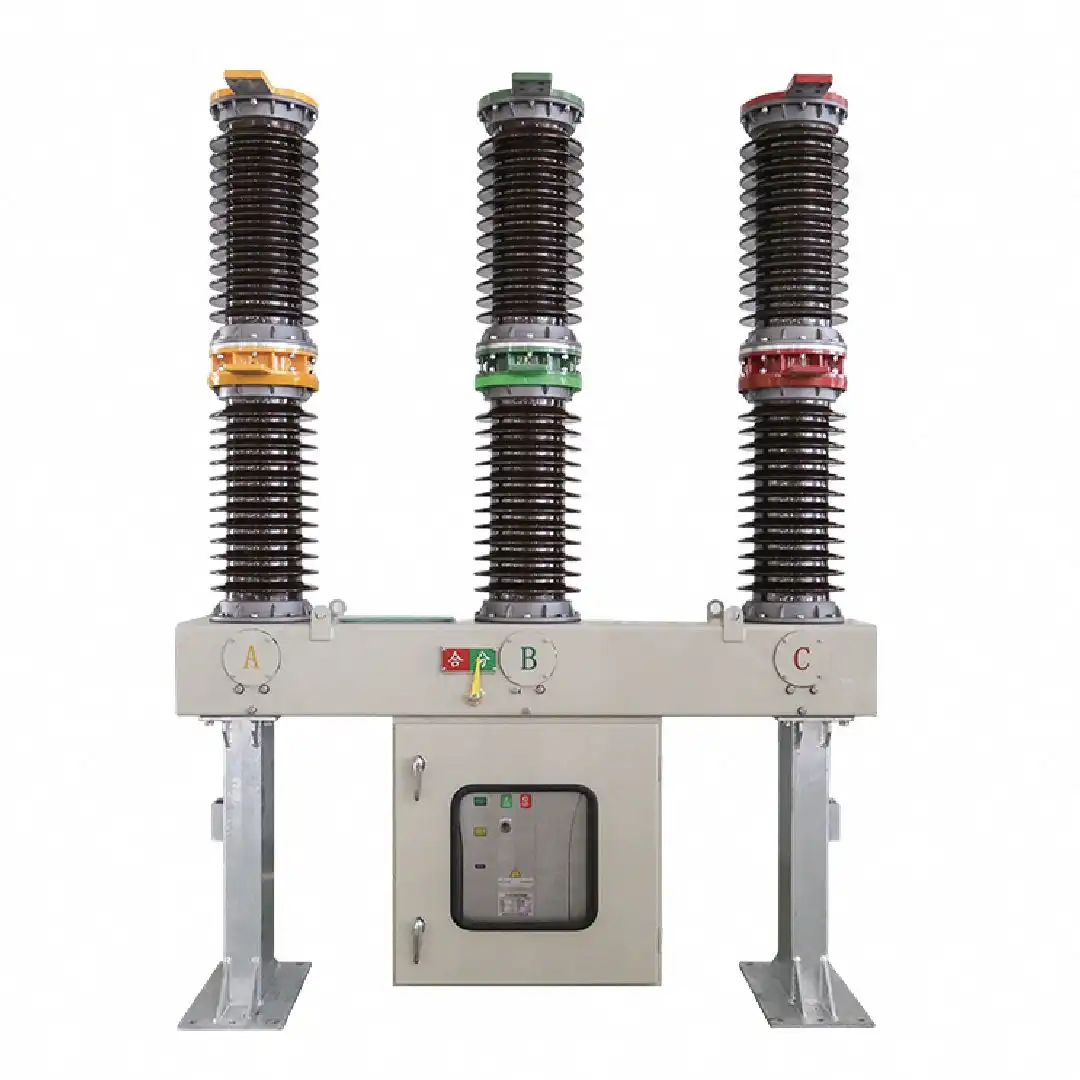
Outdoor Vacuum Circuit Breakers (VCBs) are high-voltage switchgear devices that interrupt electrical currents in outdoor power distribution networks. This method employs a sealed vacuum chamber to quickly and cleanly kill electrical sparks, unlike standard circuit breakers that use oil, air, or SF6 gas. Outdoor VCBs safeguard transmission and distribution infrastructure against overloads and short circuits in harsh weather while avoiding environmental dangers. Knowing how this equipment works and benefits your operations may improve uptime, cost, and safety.
 |
 |
Understanding Outdoor Vacuum Circuit Breakers (VCB)
Core Components and Operating Principles
The Vacuum Circuit Breaker works simply yet intelligently. When your electrical system fails, the breaker's contacts separate in a vacuum bottle. The arc extinguishes within milliseconds because this compartment has no air or gas molecules, preventing ionization. Rapid interruptions minimize downstream equipment damage and maintain system stability.
In a hermetically sealed ceramic or glass enclosure, the vacuum interrupter chamber holds fixed and movable contacts. Opening and closing these connections requires mechanical force from the working mechanism, usually a spring-loaded device. Control units activate protection relays under abnormal situations. Weatherproof enclosure protects internal components from rain, snow, UV radiation, dust, and temperature extremes common in outdoor installations.
Voltage Classifications and Configuration Options
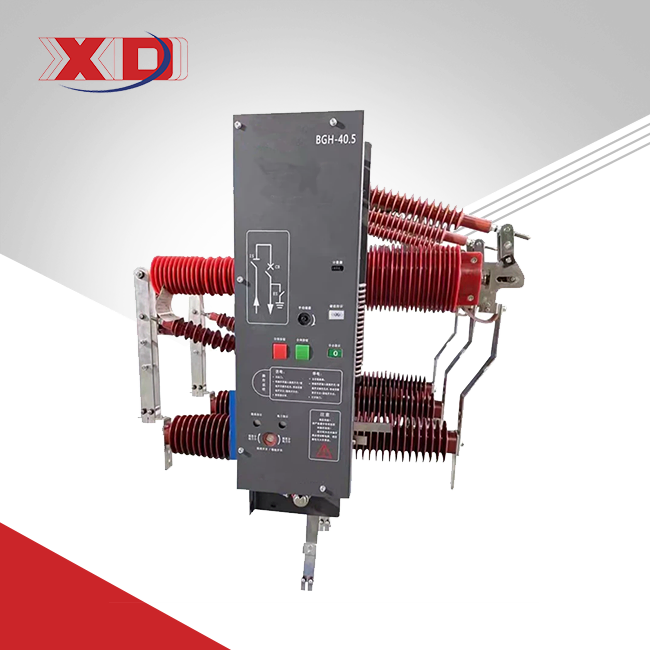
Outdoor Vacuum Circuit Breakers are used in 12kV to 40.5kV systems. Utility-grade distribution networks use devices like the ZW7-40.5, rated at 40.5kV and 50Hz. Available current ratings include 1250A, 1600A, and 2000A to fit industrial and utility load patterns.
Configurations cover many installation circumstances. Pole-mounted designs connect directly into transmission infrastructure, reducing ground space in crowded substations. Ground-mounted models are easier for maintenance. Modular spring-operated system allows rapid field replacements without tools. This compact design reduces installation footprint by up to 40% compared to typical oil breakers while preserving full operating capacity.
Durability Features for Harsh Environments
Outdoor installations need toughness. Modern Vacuum Circuit Breakers fulfill IEEE 693 earthquake-resistant specifications with their strengthened bracket column construction. This is especially important for California, Alaska, and foreign facilities where ground stability considerations affect infrastructure development.
Weather resistance goes beyond structure. In contaminated areas, large creepage distance porcelain sleeves increase anti-fouling and reduce surface tracking and flashovers. This improved insulating design helps coastal facilities fight sea spray, industrial operations fight chemical particles, and desert locations fight dust. Even in temperature changes from -40°C to +60°C, corrosion-resistant coatings and stainless steel hardware keep mechanical components intact for decades.
Advantages of Outdoor Vacuum Circuit Breakers for Businesses
Operational Efficiency and Extended Service Life
Facility managers and utility operators profit financially from operational advantages. Switching procedures waste almost no energy using Vacuum Circuit Breaker technology's 99.9% current-breaking efficiency. Thousands of annual operations add up to significant utility bill reductions.
Standard versions have mechanical endurance ratings of 10,000 cycles, whereas premium models have 20,000. Due to the vacuum bottle's contact design, arc extinction causes less material degradation, unlike oil or air breakers. Modular design improves maintenance efficiency by 30%, decreasing labor expenses and equipment downtime during service intervals.
Environmental and Safety Excellence
Public utility companies and firms with sustainability ambitions increasingly consider environmental impact while making procurement decisions. Completely eliminating SF6 gas—a greenhouse gas with 23,500 times the global warming potential of CO2—from your operations with Vacuum Circuit Breaker technology. The sealed construction eliminates oil leaks that pollute land and groundwater, saving money and fines.
Personnel and infrastructure benefit from safety. Without combustible insulating material, oil-filled equipment is safe from fire and explosion. This is critical for deployments near inhabited areas, hospitals, or data centers where fire suppression systems increase project costs. Arc flash accidents cannot propagate beyond the interrupter due to the sealed vacuum chamber, which contains fault energy that may damage maintenance workers.
Cost-Effectiveness Through Total Ownership Analysis
Procurement teams considering Vacuum Circuit Breakers should consider total cost of ownership, not just purchase price. Throughout their lifespan, Vacuum Circuit Breakers require minimum maintenance. With SF6 and oil alternatives, refilling, testing, and replacing insulating medium wastes resources. The vacuum bottle does not. Scheduled mechanical and exterior connection inspections may be done promptly by field technicians without specialist equipment.
Another cost consideration is downtime reduction. When equipment failures disrupt industry or utility grid services, losses sometimes exceed equipment costs. Vacuum switching technology's dependability and fast fault clearance safeguard income streams. Uptime assurance is especially important for continuous processes like steel mills, chemical plants, and data centers. Real-world examples show these benefits across sectors. Power utilities using Outdoor Vacuum Circuit Breakers have 95% less maintenance outages than traditional equipment. Voltage sag durations were cut by 60%, safeguarding important automated production equipment in manufacturing. Solar and wind energy systems benefit from the breaker's capacity to tolerate repeated switching cycles without performance loss, supporting their intermittent nature.
How to Select the Best Outdoor Vacuum Circuit Breaker Solution?
Matching Technical Specifications to Application Requirements
System analysis is key to procurement success. To provide safety margins, a 40.5kV Vacuum Circuit Breaker feeds 35kV nominal voltage distribution networks. Maximum load forecasts, including growth plans, determine rated current. Oversizing wastes expenditure on superfluous capacity, while undersizing requires premature upgrades.
Breaking capability is commonly neglected in first evaluations. The greatest fault current the breaker may safely interrupt is measured in kiloamperes (kA). Consider transformer ratings, conductor impedances, and upstream protection devices when calculating installation fault current with your electrical engineers. Short-circuit breaking currents from 25kA to 40kA suit most medium-voltage industrial and utility applications.
Certification and Standards Compliance
International standards simplify regulatory clearances and boost procurement trust. IEC 62271-100 sets global performance standards for high-voltage switchgear, assuring safety and operation. IEEE C37.04's North American ratings include grid-specific testing methodologies.
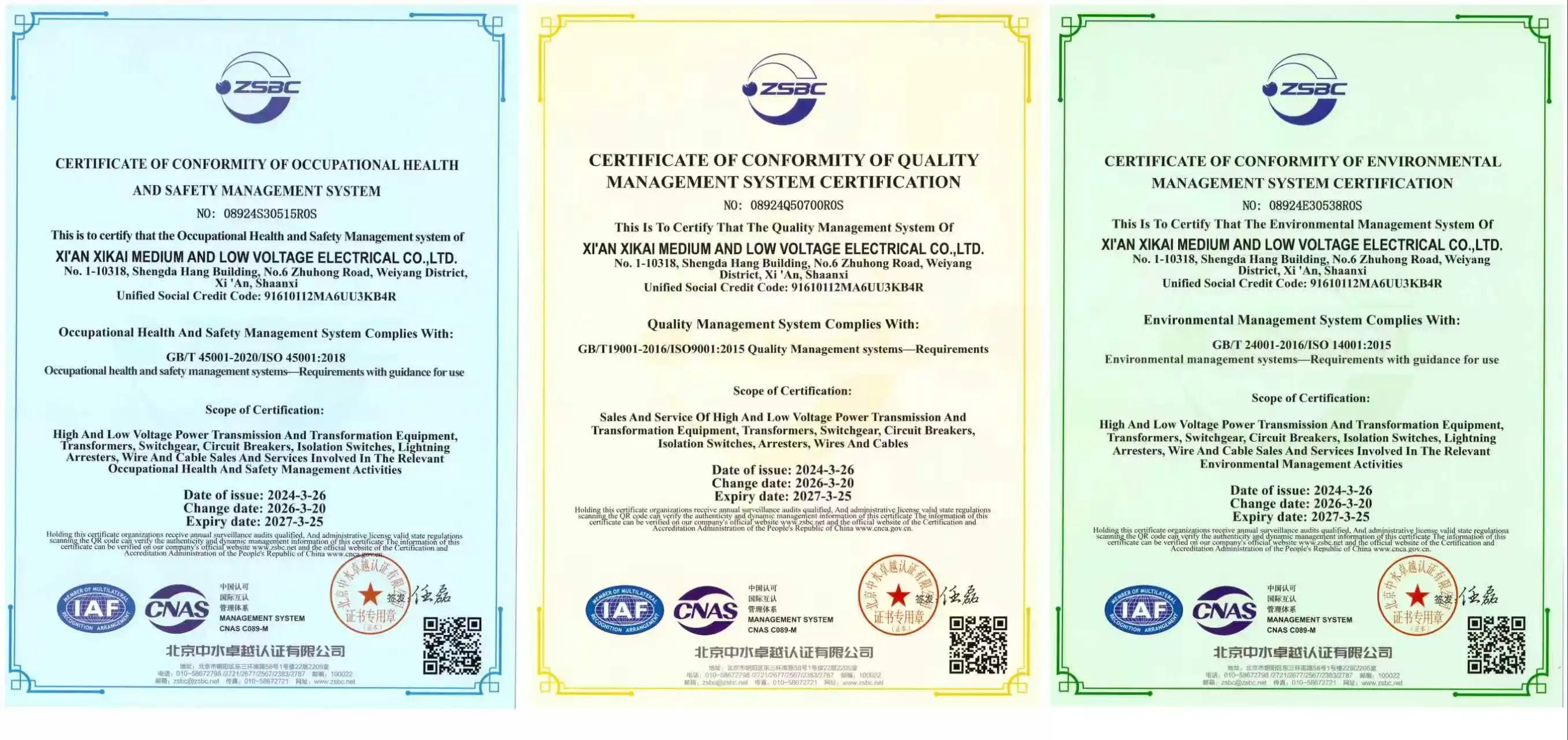
ISO 9001-certified manufacturers demonstrate systematic production control and continual improvement. ISO 14001 environmental management systems demonstrate sustainable production. ISO 45001 OHS standards safeguard workers throughout equipment lifespan. Verifying these certificates during supplier evaluation decreases risk and shows stakeholder care.
Evaluating Suppliers and After-Sales Support
Supplier selection includes service capabilities as well as product specs. Technical help is essential for commissioning new installations and resolving unexpected behavior. Manufacturers that offer 24/7 phone, email, and instant message support reduce issue response times.
Examine warranty terms carefully. From commissioning, standard coverage covers manufacturing faults for 18-24 months. Extended warranties offer peace of mind, especially for mission-critical installations where equipment failure has serious repercussions. Regional inventory centers provide faster repairs than international shipment for each service event, which affects maintenance planning. Multimarket manufacturers differentiate themselves via customization. Buildings in seismic zones need extra fortification. High-altitude installations above 1000 meters require exterior insulation changes for lower air density. Arctic cold, tropical humidity, and desert heat require materials and coatings designed for environmental challenges. Engineering, procurement, and construction organizations handling complicated projects benefit from flexible suppliers that adapt conventional items.
Maintenance and Troubleshooting of Outdoor VCBs
Preventive Maintenance Best Practices
Structured Vacuum Circuit Breaker maintenance procedures improve equipment dependability and lifespan. Most installations should have yearly inspections, with frequency rising for devices with severe duty cycles or hazardous locations. Visual inspections reveal broken insulators, rusted hardware, and moisture ingress before they collapse.
Operating mechanism is the focus of mechanical component examination. Grease pivot points, check spring tension, and check fastener torque to avoid binding and assure consistency. Connectors need maintenance because heat cycling loosens bolted joints. Infrared thermography during load situations detects hot patches indicating high-resistance connections, allowing for preemptive repairs. Electrical testing verifies protective relay coordination and vacuum bottle integrity. High-voltage testing with specialist equipment ensures dielectric strength meets standards. Contact resistance measurements identify current-carrying capacity-reducing erosion or pollution. Qualified workers utilizing calibrated instruments execute these diagnostics to support condition-based maintenance choices.
Common Issues and Resolution Strategies
Operators can experience Vacuum Circuit Breaker failures that prevent shutting or tripping. First, check control voltage—usually 85-110% of rated voltage—to begin diagnosis. This is often caused by DC control system battery low levels. Interlock checks guarantee auxiliary switches, door position sensors, and earthing switches aren't physically blocked. Mechanical binding from corrosion or dirt may need disassembly and cleaning.
Unexpected tripping signals problem requiring investigation or protective relay misoperation. Fault recorder data shows if overcurrent, overvoltage, or other abnormalities caused the occurrence. Regular testing and correction are needed to prevent nuisance trips from relay calibration drift. Lightning, animal interaction, and grass incursion can cause outdoor device failures. All maintenance must follow safety guidelines. Electrical risks are avoided by de-energizing and locking out devices. Charged springs provide mechanical dangers and must be discharged before component removal. Arc flash danger PPE protects workers during live equipment testing. While maintaining equipment that safeguards physical infrastructure, these steps protect your most important asset—your employees.
Procurement Guide for Outdoor VCB
Navigating the Purchasing Process
A procurement journey starts with technical specification development. Working with consultant engineers or internal electrical teams ensures system requirements are met. Electrical factors, ambient circumstances, installation limits, and interface needs with existing infrastructure should be included in RFQs.
Finding reliable Vacuum Circuit Breaker manufacturers needs multi-channel investigation. Trade events, industry journals, and professional networks are beginning places. B2B interactions via online platforms provide technical and commercial comparisons. Supplier websites include product catalogs, technical datasheets, and application guidelines for preliminary evaluations. Evaluation criteria should balance technical and commercial factors. Comparisons must account for scope differences—some vendors supply equipment only, while others give installation supervision, commissioning support, and operator training. Manufacturer location and shipping techniques affect transportation costs. Import tariffs and customs clearance complicate overseas purchasing.
Timeline and Lead Time Considerations
Outdoor Vacuum Circuit Breakers take 8-16 weeks to make, depending on customisation. Inventory-based standard catalog goods ship in 2-3 weeks. Complex projects with engineering changes, specific testing processes, or non-standard ratings take 20+ weeks. Avoid project delays and costly expediting fees by scheduling procurement around these realities.
Factory acceptance testing (FAT) lets you see equipment in action before shipping. This phase, which lasts 2–5 days depending on testing scope, verifies requirements and identifies flaws while simplifying correction. Witness testing travel should be budgeted, especially for overseas procurements.
Partnering with an Experienced Manufacturer
Xi'an Xikai Medium & Low Voltage Electric Co., Ltd. has vast expertise providing electric utilities, industrial facilities, and infrastructure projects. We provide Vacuum Circuit Breakers from 12kV to 40.5kV for almost every medium-voltage need. The ZW7-40.5 outdoor model shows our technical skills with strengthened seismic structures, anti-pollution insulators, and modular field maintenance systems.
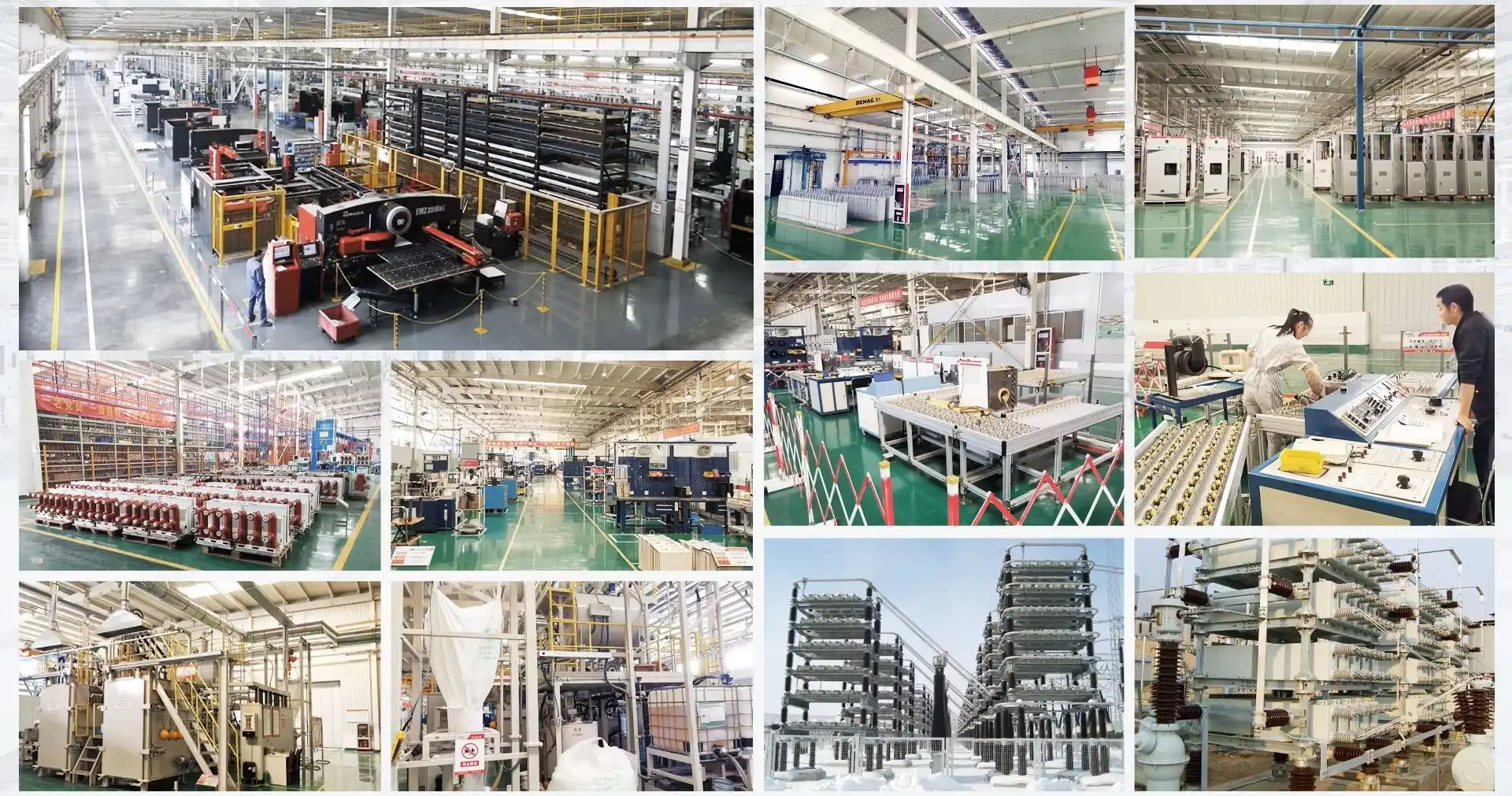
Product dependability comes from manufacturing expertise. Production consistency is achieved by robotic welding and assembly. Every unit is tested for mechanical durability via 10,000+ operation cycles, dielectric strength through 85kV power-frequency withstand tests, and environmental resilience through salt spray, UV exposure, and temperature cycling simulations. Quality management systems accredited to ISO 9001, ISO 14001, and ISO 45001 offer systematic production controls. Customization meets unique needs that catalog items cannot. Plateau installation equipment performs well at 4,000 meters despite decreasing air density impacting exterior insulation. Installations in earthquake-prone areas can be reinforced. Anti-corrosion treatments and material choices adapt items to coastal, industrial, and desert conditions where typical designs degrade quickly.
Conclusion
Outdoor Vacuum Circuit Breakers are reliable, safe, and cost-effective for utility and industrial applications. The removal of hazardous insulating material, little maintenance, and outstanding lifespan provide facility operators, utility companies, and engineering firms strong value propositions. Rapid fault interruption, high breaking capacity, and environmental resilience safeguard critical infrastructure and save lifespan costs. Choosing the right specs, checking supplier credentials, and maintaining properly optimize these benefits. Vacuum switching technology puts your operations at the forefront of industry best practices as electrical infrastructure improves efficiency and sustainability.
FAQ
1. What is the typical service life of an outdoor vacuum circuit breaker?
Outdoor Vacuum Circuit Breakers that are well-maintained last 30+ years. Only mechanical parts of the vacuum bottle need repair at this time. Component wear is determined by operational cycles, with 10,000–20,000 operations typical before significant overhauls.
2. How do outdoor VCBs compare environmentally to SF6 circuit breakers?
Vacuum Circuit Breakers destroy SF6 gas, reducing hundreds of tons of CO2 throughout equipment lifetimes. Unlike SF6 equipment, which requires specific handling and gas recovery, the sealed vacuum construction eliminates environmental discharge during operation or disposal. This environmental benefit impacts buying decisions as sustainability reporting standards grow.
3. What factors most significantly affect procurement lead times?
Lead times depend on customization, testing, and production capability. Standard inventory configurations ship quickly, while engineered-to-order equipment takes design confirmation, component sourcing, and assembly. International purchases take weeks due to factory acceptance testing, shipping issues, and customs. Early supplier participation throughout project planning meets these timelines without jeopardizing schedules.
Partner with Xi'an Xikai for Reliable Vacuum Circuit Breaker Solutions
With established Vacuum Circuit Breaker technology and extensive technical skills, Xi'an Xikai can serve your electrical infrastructure demands. We manufacture items to the highest standards using international quality certifications and decades of industry expertise. Our staff delivers technical assistance, competitive bids, and quick after-sales service throughout your equipment lifespan, whether you run utility transmission networks, industrial facilities, or client power systems. Discuss your needs with our experienced professionals at serina@xaxd-electric.com, amber@xaxd-electric.com or luna@xaxd-electric.com . We tailor Vacuum Circuit Breakers to your application's seismic, altitude, climatic, and operational duty cycles. Xi'an Xikai provides dependable power protection for challenging settings.
References
1. IEEE Standards Association. IEEE Standard for AC High-Voltage Circuit Breakers Rated on a Symmetrical Current Basis – Preferred Ratings and Related Required Capabilities, IEEE C37.04-2018.
2. International Electrotechnical Commission. High-Voltage Switchgear and Controlgear – Part 100: Alternating-Current Circuit-Breakers, IEC 62271-100:2021.
3. Smeets, R. P. P., van der Linden, W. A., & Achterkamp, M. Vacuum Switching Technology: Principles and Applications in Power Systems. Institution of Engineering and Technology, 2019.
4. Zhang, J., Dong, E., & Geng, Y. "Environmental Impact Assessment of Medium-Voltage Switchgear Technologies." Electric Power Systems Research, vol. 195, 2021, pp. 107-118.
5. National Electric Energy Testing Research and Application Center. Reliability Assessment of Medium-Voltage Circuit Breakers in North American Utility Applications. Technical Report, 2022.
6. Electrical Manufacturing & Coil Winding Association. Best Practices for Maintenance and Testing of High-Voltage Circuit Breakers. Industry Guidelines, 4th edition, 2023.