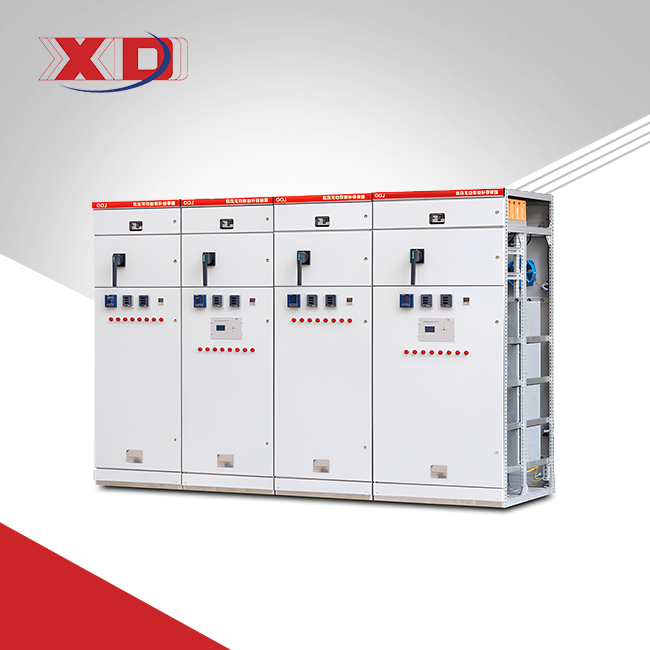
GGJ Low Voltage Reactive Power Intelligent Compensation Device
Your Guide to Choosing the Right Active Harmonic Filter
2025-12-16 15:52:12
Choosing the right Active Harmonic Filter (AHF) is very important for keeping your electrical systems running well and efficiently. This complete guide will help you choose the right AHF by going over all the important things to think about. This way, you can make an educated choice that matches your requirements. We'll go over everything you need to know to choose the best Active Harmonic Filter for your needs, from understanding load analysis to comparing technology and looking at long-term expenses.

How Big Should My Active Harmonic Filter Be? (Load Analysis Guide)
A full load analysis is the first step in figuring out the right size for an Active Harmonic Filter. This method comprises checking the harmonic distortion levels and other features of your electrical system to make sure the AHF can efficiently reduce harmonics without being too big or too little.
How to Do a Load Analysis
1. Find out what the current harmonics are: Power quality analyzers may be used to find Total Harmonic Distortion (THD) and each harmonic order.
2. Find Harmonic Sources: Find the equipment that generates a lot of harmonics, including variable frequency drives or uninterruptible power supply.
3. Check Load Variability: Look at how harmonic levels change throughout normal operating cycles.
4. Think about future growth: Take into account the possibility of the system growing or adding more equipment that generates harmonics.
5. Figure Out How Much: Compensation You Need: Use measurements and analysis to figure out how much harmonic compensation capacity you need.
If you size your AHF correctly, it will work best and you won't have problems like overcompensation or not enough harmonic mitigation. Keep in mind that a filter that is too small could not do a good job of reducing harmonics, while a filter that is too big might cost you more money and make your system less stable.
Important factors to consider while choosing: pay, response time, and standards Compliance
There are a few important things to think about when picking an Active Harmonic Filter to make sure it works well and works with your electrical system.
Current for Compensation
The compensating current capacity of an AHF tells you how well it can fight harmonic distortion. Choose a filter that can manage the harmonic currents in your system, even if they become bigger in the future. If you think your harmonic mitigation requirements may expand over time, look for devices with modular designs that make it simple to add on.
Time to Respond
For harmonic mitigation to work well, the reaction time has to be quick, particularly in systems where loads change quickly. To make sure that power quality is steady, look for AHFs that respond in the millisecond range. This will help them quickly react to changes in harmonics.
Meeting Standards
Make that the AHF follows all the rules and standards that apply to its business, including IEEE 519 for controlling harmonics in electrical power systems. Compliance makes sure that the filter satisfies safety and performance standards, which gives you piece of mind and keeps you from having to deal with legal or operational problems.
By carefully considering these important factors, you may choose an Active Harmonic Filter that meets your individual demands for reducing harmonics and will work well for a long time.
A Comparison of AHF Technologies: IGBT-Based and Multi-Level Inverter Designs
When choosing an Active Harmonic Filter, it's important to know the distinctions between IGBT-based and multi-level inverter designs so you can make the best choice.
IGBT-Based AHFs
IGBT (Insulated Gate Bipolar Transistor) based filters are noted for their high switching frequency and quick reaction times. They are great at compensating for harmonics, particularly for lower-order harmonics. IGBT-based solutions are frequently smaller and cheaper for smaller applications.
Inverter with many levels AHFs
Multi-level inverter designs employ a sequence of voltage steps to make the output waveform more like a sine wave. This method cuts down on switching losses and electromagnetic interference, which makes them great for applications that need a lot of power. Multi-level inverters are frequently more efficient and better able to manage greater voltage levels.
When deciding between these technologies, think about your individual demands, such as power rating, harmonic spectrum, and efficiency. Each has its pros and cons, and the best one for you will depend on the specifics of your system and your aims for reducing harmonics.
Things to think about before installing: parallel operation, CT placement, and communication protocols
To get the most performance out of your Active Harmonic Filter, you need to install it correctly. When setting up a system, it's important to think about things like the ability to run in parallel, where to put the current transformer (CT), and how to communicate.
Working in Parallel
If you need redundancy or have a bigger system, look for AHFs that can run in parallel. This feature lets many units function together without any problems, which makes the system more reliable and scalable. Make sure the AHF you choose can handle a lot of load-sharing so that it can work well in parallel settings.
Putting the CT in the right place
For successful harmonic detection and correction, it is important to put the CT correctly. To get the full load current, the CTs should be put in at the point of common coupling (PCC) or as near to it as practicable. The AHF gets accurate information for best performance when CTs are the right size and in the right place.
Rules for Communication
Choose an AHF that has communication protocols that work with the systems you already have. Modbus, Profibus, and Ethernet/IP are some of the most common protocols. You can monitor, control, and record data from anywhere with seamless connectivity with your building management system or SCADA network. This makes it easier to manage and fix problems with the whole system.
Total Cost of Ownership: Finding the right balance between the initial cost and the long-term savings on energy
When looking for Active Harmonic Filters, it's important to think about the total cost of ownership (TCO) and not just the original purchase price. A full TCO study looks at things like how much money you can save on energy, how much it will cost to keep the system running, and how much downtime you may be able to avoid.
Initial Cost vs. Savings Over Time
High-quality AHFs may cost more up front, but they usually save more energy and are more reliable over time. To figure out the payback time and long-term financial advantages, figure out how much energy you might save by improving the power factor and lowering harmonic distortion.
Reliability and Maintenance
Think about how much care various AHF models need and how long they are projected to last. Units with strong designs and high-quality parts may cost more up front, but they may also cost less to maintain and last longer, which lowers the total cost of ownership over time.
How well it works and how well it works
Check how well the AHF works under different load circumstances. Units with higher efficiency may cost more at first, but they may save a lot of energy during their lifetime. Also, think about how well the filter keeps the power quality up, as this might affect how long and how well other electrical devices in your system work.
You may choose the best Active Harmonic Filter for your electrical system by carefully considering these criteria. This will provide you the optimum balance between initial cost and long-term value, making sure that your system works well and is cost-effective.
Conclusion
It's very important to choose the proper Active Harmonic Filter since it may have a big effect on how well, efficiently, and reliably your electrical system works. You may choose the right AHF for your requirements by carefully thinking about things like load analysis, compensation current, reaction time, and technological alternatives. To make a fully educated choice, don't forget to look at the entire cost of ownership, which includes long-term energy savings and maintenance needs. If you have the correct AHF, your electrical infrastructure will have better power quality, lower energy expenditures, and longer-lasting equipment.
FAQ
1. How frequently should you clean an Active Harmonic Filter?
Depending on the manufacturer's recommendations and the environment in which the filters are used, Active Harmonic Filters should be maintained every 6 to 12 months. Some newer AHFs, on the other hand, include self-diagnostic features that may warn users of possible problems, making maintenance based on the status of the AHF possible.
2. Is it possible to employ Active Harmonic Filter in renewable energy systems?
Yes, more and more renewable energy systems, especially solar and wind power plants, are using Active Harmonic Filters. They assist reduce harmonics that inverters add and enhance the overall quality of the electricity, making sure that the grid connection standards are met.
3. How can I tell whether my electrical system requires an Active Harmonic Filter?
Use a power analyzer to do a power quality study to see whether you require an Active Harmonic Filter. An AHF may be helpful if your Total Harmonic Distortion (THD) is more than 5% or if you're having problems like circuit breakers tripping for no reason, transformers overheating, or voltage distortion. Also, if you have a lot of non-linear loads or are getting power factor penalties, an AHF might be a useful answer.
Experience Xi'an Xidian's Best Active Harmonic Filter Solutions
We at Xi'an Xidian are proud to provide the most advanced Active Harmonic Filter solutions that satisfy the highest standards for businesses and industries. Our AHFs use cutting-edge technology and are built to last, providing the best harmonic mitigation and energy efficiency. We have a lot of expertise managing power quality and are always looking for new ways to do things. We provide tailored solutions that make sure your electrical systems work at their best and last for a long time.
Are you ready to improve the quality of your electricity and lower your energy costs? Get in touch with our knowledgeable staff at Xi'an Xidian now to learn more about how our Active Harmonic Filters can help your business. For a tailored consultation, please email us at serina@xaxd-electric.com. This is the first step toward a more dependable and efficient electrical system.
Are you looking for a reliable Active Harmonic Filter manufacturer? Xi'an Xidian is the best company to work with for new, high-grade power quality solutions.
References
- IEEE. (2022). IEEE Std 519-2022 - IEEE Recommended Practice and Requirements for Harmonic Control in Electric Power Systems.
- Akagi, H., Watanabe, E. H., & Aredes, M. (2017). Instantaneous Power Theory and Applications to Power Conditioning. Wiley-IEEE Press.
- Dugan, R. C., McGranaghan, M. F., Santoso, S., & Beaty, H. W. (2012). Electrical Power Systems Quality. McGraw-Hill Education.
- Chaoui, A., Gaubert, J. P., & Krim, F. (2020). Power quality improvement using adaptive fuzzy logic control of active power filter. Electric Power Systems Research, 183, 106-118.
- Singh, B., Al-Haddad, K., & Chandra, A. (1999). A review of active filters for power quality improvement. IEEE Transactions on Industrial Electronics, 46(5), 960-971.
- Rashid, M. H. (Ed.). (2017). Power Electronics Handbook. Butterworth-Heinemann.