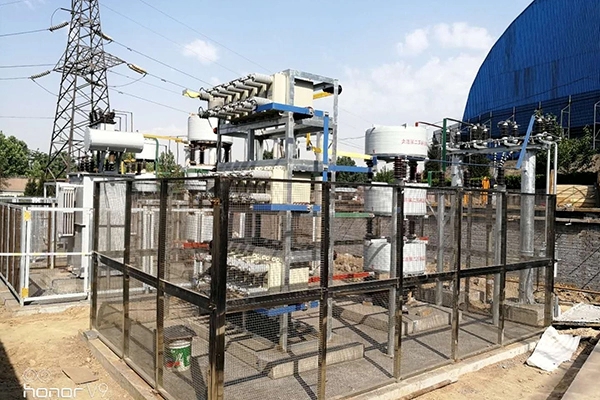
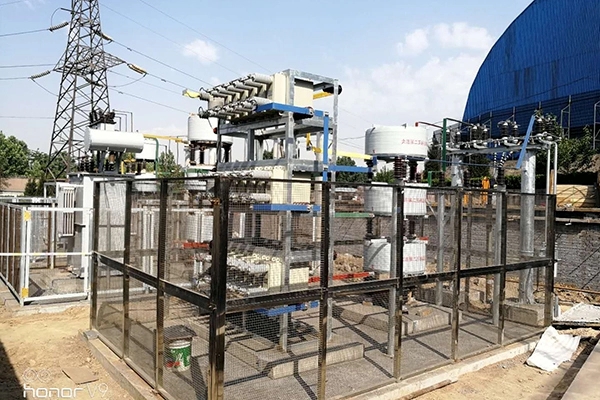
Zero-Sequence vs. Standard CTs: Your Guide to Power Safety
2026-06-05 11:46:16
Picking the right current transformer is very important for keeping industrial sites, power lines, and business buildings safe from ground faults. Standard phase current transformers miss earth leakage currents, but a Zero Sequence Current Transformer finds them. This keeps equipment from breaking down and saves money on repairs. This guide makes it clear how these specialized devices are different from regular CT scanners. It does this to assist procurement teams, system integrators, and facility owners in making choices that protect operations and staff while still following international standards.
 |
 |
Understanding Zero-Sequence Current Transformers (ZCTs)
What Makes Zero-Sequence Detection Different?
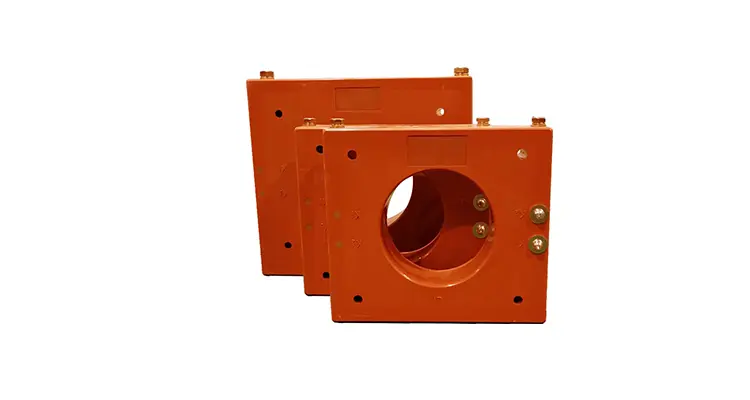
In a three-phase system, a Zero Sequence Current Transformer keeps an eye on the vector sum of all the phase currents. In normal conditions, these currents cancel out perfectly, leaving no net current. Imbalance happens when insulation breaks or a wire touches ground. This is when ground fault protection kicks in. Standard CTs only measure individual phase loads. These devices, on the other hand, surround all wires at once and can find leaks as small as 20mA, even in harsh conditions from -40°C to +85°C.
These epoxy resin-cast models work effectively in 11kV/400V networks at 50/60Hz frequencies. They can handle main currents ranging from 20A to 1000A and secondary outputs of 5A or 1A. Following the rules set by GB 20840.2-2014 and IEC 61869-1/2 makes sure that they work with safety relays all over the world. This means that they can be used in data centers that need to keep running and in factories where machine downtime means lost production.
Core Applications in Power Systems
Supervision of the grounding system is the main use case. These transformers are used by utility companies at distribution substations to separate faulty areas before they affect a large area. They keep the power on for life-supporting equipment in hospitals, and EPC firms use them as part of security plans for green energy projects where inverter harmonics make it harder to find faults.
The open-core design lets it be added to current lines without stopping service, which is a problem that often comes up with old infrastructure. When used with DL11/0.2 type relays set to 0.1A, systems keep the total secondary impedance below 10Ω, which makes sure that the relays turn on when the primary remaining current hits 10A. This response stops arc flashes that put people in danger and damage equipment.
Comparing Zero-Sequence CTs and Standard Current Transformers
Functional Distinctions That Matter
Standard current transformers, which are usually placed on separate phases, measure load current for billing and overcurrent safety. A Zero Sequence Current Transformer is a special kind of security that finds ground faults that happen outside of the normal load path. This difference is important when planning protection coordination schemes because the ability to choose between backup and main protection decides whether a single cable fault shuts down the whole building or just a branch circuit.
Residual current devices use math to figure out zero-sequence current by adding up three different CT outputs. This can lead to mistakes in the result because of mismatched ratios and phase angle errors. This problem isn't a problem with dedicated zero-sequence transformers because they only have one core and can achieve ±1% accuracy even when finding errors that are only 3% of the rated current. This is a very important ability for quickly isolating faults in solar farms and offshore wind installations.
Accuracy Classes and Protection Reliability
Protection-class accuracy has a direct effect on how well a transfer works. Our models keep the accuracy we set from 5% to 120% of the rated current, so they always trip in the same way at different fault levels. Standard metering-class CTs get too hot when there is a fault, so they can't be used for security tasks that need to accurately reproduce current during abnormal circumstances.
When choosing accuracy classes, keep in mind that in 660V neutral-earthed systems, DL11/2 relay setups with 1A settings need 60A of main current to work. The same transformer can power both GI series relays for protecting MCC feeders and AC-operated auxiliary relays for motor circuits. This makes the transformer very flexible, which makes it easier for repair teams to keep track of all the parts they need for different setups.
Advantages and Installation Considerations
One zero-sequence device can replace three normal CTs and summation circuits, which is a huge savings in terms of money. Less complexity makes something more reliable because there are fewer places where things can go wrong. There are some restrictions on installation. All enclosed wires must have enough space around them, and errors can be caused by magnetic fields from nearby busbars if minimum separation lengths aren't kept.
Split-core versions are useful for retrofitting situations where disconnecting the cables isn't possible. Epoxy housing with an IP67 rating can handle moisture in deep caves and corrosive environments close to chemical manufacturing equipment. When facility managers look at the total cost of ownership, they need to take into account things like installation work, ongoing maintenance needs, and the expected service life in real-world settings rather than lab conditions.
Installation and Maintenance Guide for Zero-Sequence Current Transformers
Site Assessment and Positioning Best Practices
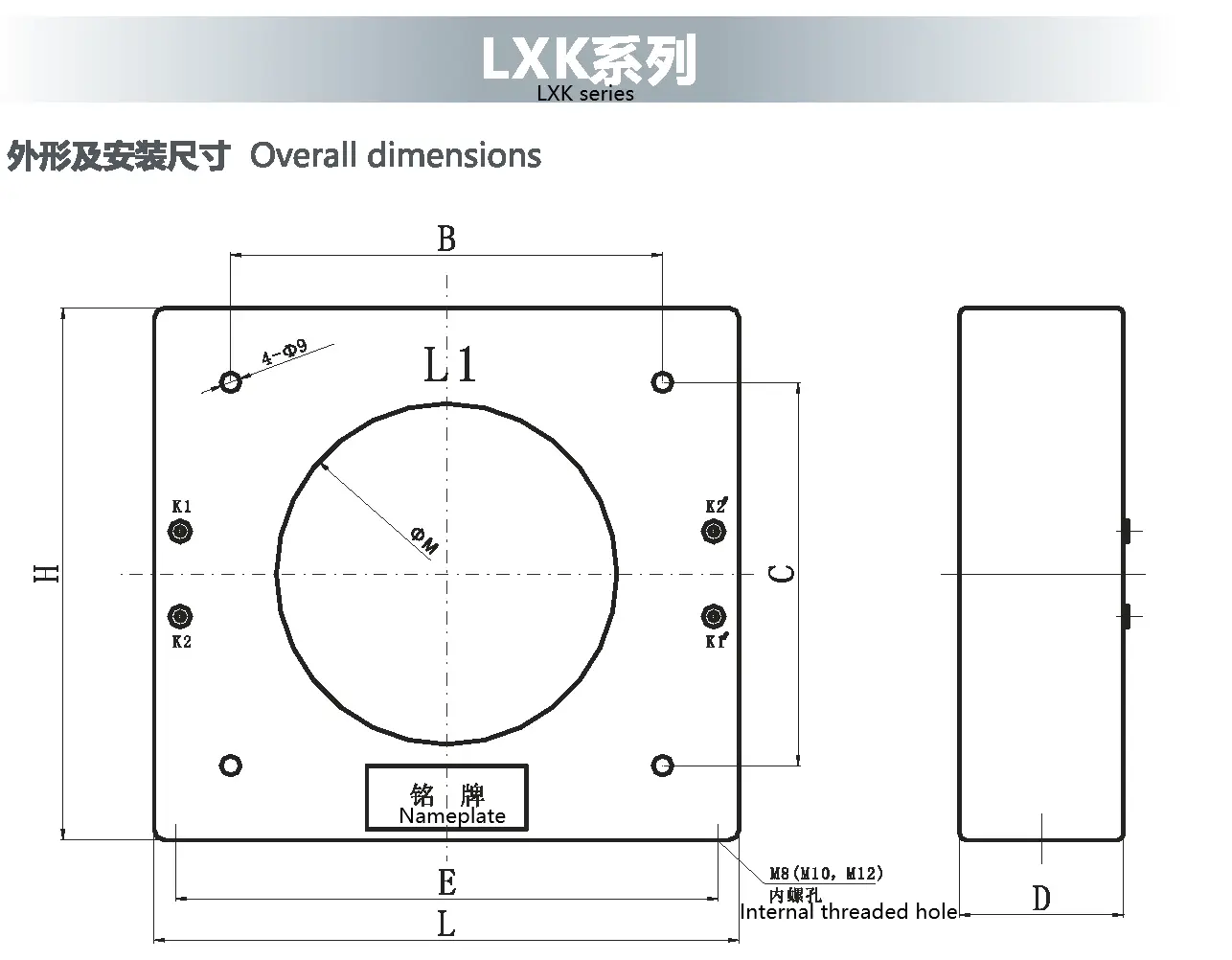
Making sure that all phase conductors and neutrals (if needed) pass through the CT opening is the first step in a proper installation. Grounding conductors should stay outside. Core sizes range from 120 mm to 300 mm, which can fit a variety of wire bundles. However, exact sizing is needed to keep insulation from being stressed mechanically. To keep electromagnetic interference that messes up low-level signals to a minimum, put transformers at least 300 mm away from magnetic contactor coils and variable-frequency drives.
Mechanical security is more important than the direction of the mount—vibration from nearby equipment can break terminal connections over time. On our Zero Sequence Current Transformer LJZ-4 line, terminal marks S1 through S4 show where to tap for ratios of 200:1 (10/0.05A), 100:1 (10/0.1A), and 40:1 (10/0.25A), with secondary loads of 20Ω, 6Ω, and 1.5Ω at 0.8–1.0 power factor. Choosing the right tap strikes a balance between awareness and the load that the switch needs to carry.
Addressing Common Installation Challenges
Grounding techniques often lead to misunderstanding. One contact on the secondary winding needs to be grounded near the transformer to keep dangerous voltages from building up when the insulation inside fails. However, having more than one ground point causes currents to flow, which sends out fake residual signals. Our technical paperwork says that when wire runs are longer than 50 meters, there should only be one point of grounding at the relay cabinet. This stops ground loops and keeps people safe.
When checking for insulation, you need to pay close attention. Putting 2500V between the windings and the mounting clamps should produce resistance greater than 100MΩ. Verification once a year finds moisture intrusion before it hurts performance. Newer systems can handle 2000V (RMS) for one minute without flashover, which proves the quality of the manufacturing process. Even though these tests are simple, they stop annoying trips that make operators lose faith in safety systems.
Routine Testing and Maintenance Protocols
Primary injection testing is still the best way to make sure something is correct, but secondary injection testing can be used when planned breaks are not possible. Put 10A through the relay and make sure the pickup is within the range of tolerances. This test only takes a few minutes but confirms the whole safety chain, from the transformer to the relay contacts. Auditors are happy with documentation trails, and they help with replacing choices when performance drops.
During our 24-hour validation tests, we heated and cooled the system from -55°C to +125°C. This makes sure that it works reliably even when temperatures change with the seasons, which can put stress on epoxy bonds and winding insulation. Coronal activity speeds up aging, so partial discharge readings below 5pC show good manufacturing quality. By taking these proactive steps, the average time between failures is pushed past 15 years. This lowers the lifecycle costs for site managers who have to balance capital budgets with reliability goals.
How to Choose the Right Zero-Sequence Current Transformer for Your Needs
Defining Technical Requirements
How sensitive an earth fault detector is depends on how the grounded system is set up. High-resistance grounded systems limit fault current to 5–10A, which means they need sensitive transformers with ratios that can read relay settings at the milliamp level. Solidly grounded systems can create kiloamp fault currents that need to be built with strong materials and high short-time temperature values. It doesn't matter what kind of environment something is in—desert substations have to deal with dust and high heat, while marine substations have to deal with salt fog corrosion.
Utility companies put a high priority on IEC 61869-6 compliance to make sure that digital outputs work with SCADA systems and that faults can be found automatically. For compatibility with older electromechanical switches, industrial buildings usually use a 5A secondary output. On the other hand, new construction uses 1A secondary outputs, which save money on wires and make starting safer. We agree with both options because we know that infrastructure is updated over time instead of being replaced all at once.
Comparing Global Manufacturers and Certifications
Certifications of a product back up claims of efficiency. Siemens works on small designs for switchgear that doesn't have a lot of room, while ABB's products focus on smart grid integration with Modbus RTU transmission. With a split-core design, Schneider makes it easy to make changes in the future, and Eaton's standards are aimed at North American markets with UL 508 compliance. GE and L&T work on utility-scale projects where standard specs make buying things easier across multiple sites.
Datasheets have important information that isn't just the main specs. For example, burden curves show how accuracy decreases as linked impedance rises, and thermal rating graphs show how much power can be used during temporary problems. Our 100% tracked copper windings and ISO 9001/14001 certifications show that we use strict production methods. The 98% recyclable materials also meet the needs of companies that are increasingly relying on sustainability requirements when making purchases.
Procurement Strategies and Supplier Evaluation
Lead times change based on the supply of raw materials, so knowing what your suppliers have in stock is helpful for planning your project. Different companies set their prices in different ways. For example, commodity makers offer cheaper unit costs but less flexibility, while specialty providers charge more for application engineering support and faster reaction times. Our 24-hour technical help in multiple languages solves a common problem where language hurdles make it take longer to fix problems during important installation stages.
Support after the sale includes more than just the guarantee terms. Total purchase costs over many years or decades depend on how easy it is to get new parts, calibration services, and help with problems in the field. Utility companies that are in charge of thousands of devices spread out across many substations appreciate suppliers that offer regional service centers and standardized testing methods that make repair programs run more smoothly. When figuring out lifetime value, these practical factors often matter more than the original purchase price.
Case Studies and Practical Applications of Zero-Sequence CTs
Industrial Facility Success Stories
By switching to our LXB-ф150 Zero Sequence Current Transformers with DL11/0.2 relay coordination, a car assembly plant in North America got rid of the frequent ground faults that stopped production every week. In the past, residual schemes that used three different CTs had problems with makers' ratio mismatches, which led to 15% measurement errors that stopped them from tripping reliably at low fault levels. The single-core design made things better right away. The average time between work stops went from 168 hours to over 2,000 hours, and unnecessary trips were cut by 85%.
A person who runs a data center and is in charge of important servers asked us to make the LJZ-4 series because it has a 200:1 ratio and sensitive 0.1A relay settings that can find insulation degradation before it fails completely. The split-core design made it possible to install during a repair window without moving loads, which was worth the extra 20% cost compared to solid-core options. Facility experts said they were able to find a developing wire fault that would have caused unexpected downtime that would have hurt customer operations.
Utility Grid Protection Enhancements
Protecting both overhead and underground lines with different impedances is hard for people who work in distribution systems. A utility company in the Midwest put standard LJM busbar-type transformers in 1,200 country distribution points. This made it easier to find faults and cut the average time it took to fix them from 90 minutes to 35 minutes. The most important thing they learned was that transformer performance was the same in all locations. This got rid of the factors that made protection studies and coordination analysis harder in the past.
It's important to make sure that the loads are properly matched. For example, some of the first installations had protection failures that couldn't be explained until tests in the field showed that the resistance of the relay coils had grown over time, going beyond the capacity of the transformers. Problems were fixed by replacing them with modern microprocessor switches that put little strain on the system. They also added problem recording features that made debugging faster. This shows why upgrading a safety system should include all of its parts at once instead of replacing transformers one at a time.
Future Integration with Digital Infrastructure
As part of smart grid projects, more transformers with digital outputs than just analog current inputs are needed. Our plan includes models with built-in sensors that provide constant monitoring of the insulation, alerts for planned repair, and safe communication methods that meet the standards for critical infrastructure cybersecurity. Integration with building management systems lets site managers connect ground fault events to the state of equipment, which lets them figure out what went wrong and stop it from happening again.
Edge computing will allow local processing that can tell the difference between short-lived ground problems and long-lasting events that need to be isolated from the circuit. This will cut down on unnecessary trips while keeping safety gaps. With these improvements, ground fault prevention can now be an active part of predictive maintenance strategies instead of just an emergency reaction. This is in line with a larger trend in the industry toward condition-based maintenance that makes the best use of assets.
Conclusion
To choose between zero-sequence and standard current transformers, you need to know what their main jobs are. Standard current transformers measure load current, while zero-sequence transformers protect against ground problems. Facility managers get the most out of their investments when they choose devices that meet the needs of the safety relay, the surroundings, and the limitations of the installation. Our epoxy-cast Zero Sequence Current Transformer models have a history of stability and come with current features like split-core retrofitting and compliance with international standards. They can be used in a wide range of situations, from hospital emergency power systems to utility distribution networks. If you place these devices correctly, keep them in good shape, and buy them with care, they will protect people and tools for decades to come.
FAQ
1. What makes zero-sequence transformers different from regular CTs?
For measuring and overcurrent safety, standard current transformers measure the currents in each phase. Zero-sequence devices pick up the sum of all phase currents, which is zero when everything is working normally but not when there is a ground problem. Because of this, they can find sensitive earth faults that phase CTs can't. This makes them necessary for supervising grounding systems and making sure workers are safe in both strongly grounded and resistance-grounded systems.
2. Can zero-sequence transformers work in power sources that aren't grounded?
As long as the switch sensitivity and transformer ratio are right for the job, these transformers can work in high-resistance grounded systems with fault currents of up to 10A. When our LJ-Φ75 series is paired with DD-11/60 relays, it works well with 15mA relay settings and 2A main trigger current. This shows that it is suitable for systems where limited ground fault current makes detection harder. Systems that aren't grounded and don't have a planned ground path don't create enough current for standard protection methods.
3. How do I verify the correct accuracy class for my application?
For protection purposes, accuracy must be kept even when there is a fault, usually at the class 5P or 10P level according to IEC standards. Metering classes like 0.5 and 1.0 get too full during problems, so they can't be used. Check the minimum working current and highest load listed by the relay maker, and then make sure the transformer stays accurate across this range. Our expert team helps with coordination studies that make sure the characteristics of the transformer and the needs of the safety relay are compatible so that the system works reliably.
Partner with Xi'an Xikai for Advanced Ground Fault Protection Solutions
In North America, Xi'an Xikai provides complete Zero Sequence Current Transformer options that meet the strict needs of manufacturing facilities, utility providers, and system integrators. Our epoxy-cast transformers meet international standards (IEC 61869-1/2, GB 20840.2-2014) and have useful features like split-core installation and multi-ratio taps, so they can be used for everything from 11kV distribution to 400V industrial systems. As a known producer of Zero Sequence Current Transformers, we offer rated primary currents ranging from 20A to 1000A and have shown that our products work well in harsh conditions.
Our engineering team is there to help with applications throughout the whole procurement process. Get in touch with our experts at serina@xaxd-electric.com, amber@xaxd-electric.com, or luna@xaxd-electric.com to talk about your needs. We have reasonable prices, dependable delivery times, and detailed documentation that makes it easier to add our products to security systems that are already in place.
References
1. IEEE Guide for the Application of Current Transformers Used for Protective Relaying Purposes, IEEE Standard C37.110-2007, Institute of Electrical and Electronics Engineers, 2007.
2. International Standard for Instrument Transformers - Part 2: Additional Requirements for Current Transformers, IEC 61869-2:2012, International Electrotechnical Commission, 2012.
3. Blackburn, J.L. and Domin, T.J., Protective Relaying: Principles and Applications, Fourth Edition, CRC Press, 2014.
4. Application of Ground Fault Protection Methods for Low-Voltage Power Systems, IEEE Transaction on Industry Applications, Volume 53, Issue 4, Institute of Electrical and Electronics Engineers, 2017.
5. Zocholl, S.E., Motor Analysis for Engineers and Technicians: Current Transformer Applications and Selection, Schweitzer Engineering Laboratories, 2011.
6. Guide for Protective Relay Applications to Distribution Lines, IEEE Standard C37.230-2007, Institute of Electrical and Electronics Engineers, 2007.
_1783910818781.png)