3 Phase Capacitor Bank: Types, Functions, and Applications
2026-04-14 16:15:49
When energy bills keep going up and power quality problems happen often, building managers and engineers need to know about reactive power compensation. A 3 Phase Capacitor Bank is a special group of capacitor units set up in either a Star or Delta configuration to provide delayed reactive power straight to industrial electrical networks. This equipment brings the power factor back to one, gets rid of utility fines, lowers distribution losses, and keeps voltage levels stable in factories, data centers, hospitals, and utility systems across the US.

Understanding 3 Phase Capacitor Banks: Basics and Functions
What Is a 3 Phase Capacitor Bank and Why Does It Matter?
A lagging power factor happens in industrial buildings where motors, generators, and HVAC systems draw inductive loads all the time. Because of this waste, utilities have to provide more current, which raises transmission losses and puts a strain on the infrastructure. 3 Phase Capacitor Bank units solve this problem by providing reactive power in the area. This cancels out the effects of induction and brings the power factor closer to 1. This leads to lower demand charges, less wire heating, and longer device life.
Core Components and Operating Principles
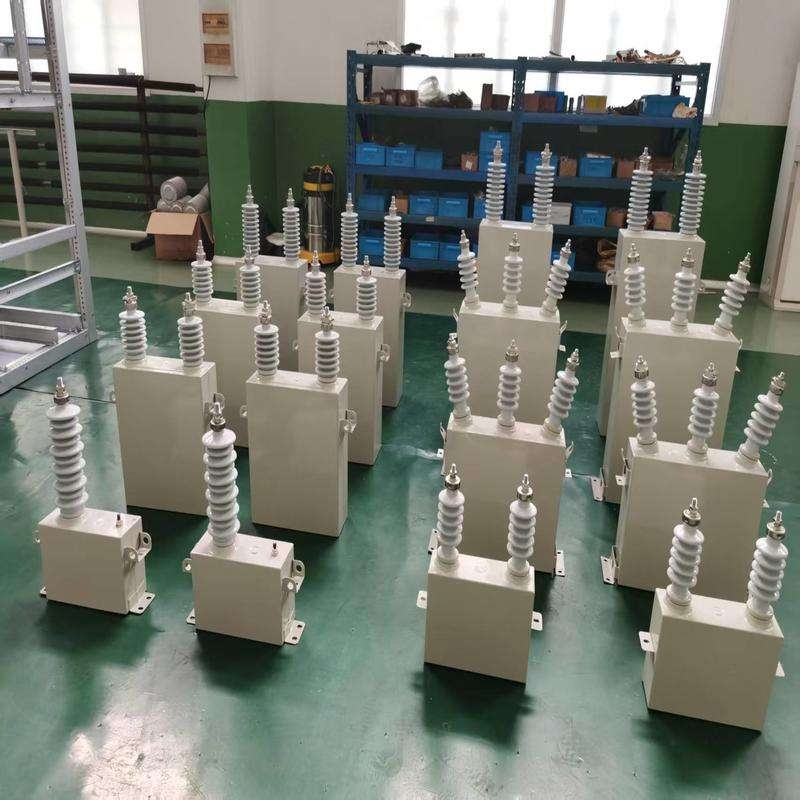
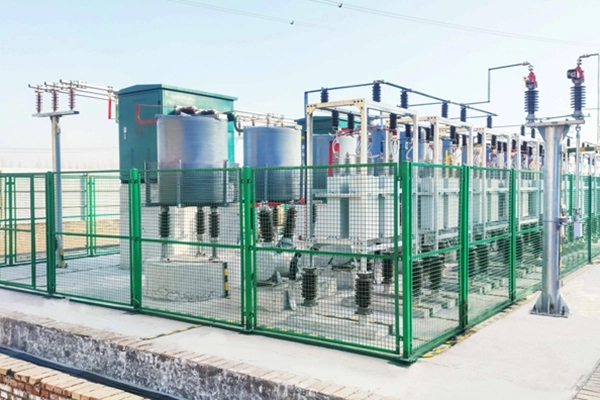
3 Phase Capacitor Bank systems are helpful for three-phase systems because they handle reactive compensation across all three phases at the same time. Metalized polypropylene film capacitors with self-healing electrical features are connected through strong bus bars and safety devices inside each bank. When inductive loads are turned on, the capacitor bank releases stored energy in the opposite direction. This cancels out the magnetic fields that make the system less efficient. This process keeps going all day, changing based on changes in the load. This idea is shown by our 10kV three-phase filter capacitor. This unit can be used for both indoor and outdoor setups because it can handle medium-voltage uses up to 10kV and frequencies between 50 and 60Hz. It was made to work effectively in temperatures ranging from -40°C to +45°C, so it can be used in both cold places and hot deserts. This 3 Phase Capacitor Bank keeps the grid stable even when extreme weather happens, with a wind load resistance of up to 35m/s and an earthquake strength rating of level 8.
Typical Industrial Applications
To get rid of power factor fees on CNC machines and robotic production lines, factories use capacitor banks. They are used by data centers to keep sensitive computers safe from power drops caused by changing cooling loads. Life-supporting equipment in hospitals needs stable power, and business buildings can cut costs by making the HVAC system work better. Utility companies put these banks at substations to keep transmission networks stable and make room for adding green energy. Our 10kV unit has advanced harmonic filtering technology that cuts harmonic distortions by up to 70%. This keeps sensitive equipment safe from frequency pollution. This feature comes in handy in places that use varying frequency drives, welding tools, or LED lighting systems that create harmonic currents. The low dissipation factor of less than 0.1% reduces energy loss, which directly leads to lower operating costs over the 15-year service life made possible by self-healing dielectric technology.
Types of 3 Phase Capacitor Banks and How to Choose the Right One
Fixed Capacitor Banks
Fixed 3 Phase Capacitor Bank systems offer constant reactive power correction, which works well for buildings with steady, regular loads. These systems are easy to use and reliable because they link straight to the bus without using any switching mechanisms. Fixed banks are often preferred by factories with ongoing production lines because they need less upkeep and don't have switching transients. Not having contactors cuts down on failure spots and keeps assembly costs low. Stable banks, on the other hand, can't address changes in load. Facilities with changing operating plans may get too much power during times of low demand, which can cause the voltage to rise and damage equipment. To match the output of the capacitor with the lowest predicted load levels, careful size calculations are needed.
Automatic Power Factor Correction Banks
Smart controls and contactors in automatic banks turn capacitor stages on and off based on real-time measures of power factor. These systems adapt quickly to changing loads and keep the best adjustment throughout all operating cycles. Automatic systems are very helpful for places like data centers, hospitals, and businesses whose energy needs change all the time. The processor constantly calculates power factor while keeping an eye on voltage and current. The system turns on more capacitor steps when the power factor falls below the goal level. As loads go down, steps cut out to keep leading power factor situations from happening. This flexibility saves the most energy and keeps devices safe from electric stress.
Detuned Filter Banks
Facilities that handle a lot of irregular loads should think about using detuned banks with series reactors. Harmonic resonance can damage regular capacitors and mess up sensitive circuits. These arrangements stop it. The reactor makes a tuned circuit that stops certain harmonic frequencies but lets reactive power with a fundamental frequency move easily. This idea is built into our 10kV three-phase filter capacitor, which effectively blocks harmonics over a wide frequency range. This system works well for green energy setups that have harmonic pollution from inverter-based generation. To keep power quality standards and keep transformers from getting too hot, wind farms and solar panels that are linked to utility lines need this safety.
Selection Framework for Procurement Professionals
To pick the best 3 Phase Capacitor Bank setup, you need to carefully look at a number of technical factors. The voltage grade must match the standard voltage of the machine, plus the right amount of safety margin. To figure out capacity, you need to do a load study and find the total reactive power shortage that needs to be fixed. The type of connection (Star vs. Delta) changes how voltage stress is distributed and how harmonics are handled. For outdoor projects, environmental conditions are very important. The IP54+ waterproof design of our 10kV unit keeps it working even in dust, water, and high temperatures. The ability to work at altitudes of up to 2,000 meters makes sure that it works right in high places where air density affects cooling and insulating strength. Pollution level III or IV approval proves that the product can be used in workplace settings with airborne contaminants. Standards like IEC 60871, IEEE 18, and UL 810 should be checked for compliance. These approvals make sure that the product works with North American energy standards and insurance requirements. Global interoperability is ensured by CE marking on tools going to international sites. Validation by a third party, such as independent lab testing, adds to the trust in performance promises.
Installation, Maintenance, and Troubleshooting of 3 Phase Capacitor Banks
Proper Installation Practices
A careful site evaluation is the first step to a successful 3 Phase Capacitor Bank deployment. Electrical workers have to check the area they have access to, the weather, and how close they are to the main distribution equipment. Indoor setups need enough air flow to get rid of the heat that is produced while they are working. Outdoor units need shelters that can withstand the weather, have good drainage, and are made of UV-resistant materials. To keep terminal points from getting too hot, electrical connections need exact pressure specs. When you have loose connections, you get resistance, which makes heat that breaks down insulation and shortens the life of parts. The National Electrical Code says that grounding devices must provide low-impedance routes for fault currents. Having good grounding also reduces electromagnetic radiation that can mess up control systems nearby. Protection planning is another important thing to think about when installing something. Upstream circuit breakers and fuses need to work with the internal safety devices of the capacitor bank to make sure that only some functions work when there is a fault. For safety reasons, our 10kV unit has overpressure termination features that physically break the circuit if the internal gas pressure rises because of a failure. This feature stops catastrophic ruptures that put people and nearby equipment at risk.
Maintenance Protocols
Regular inspections keep capacitor banks working well and extend their useful life. As part of the yearly maintenance, all terminal connections should be tightened again to account for the effects of temperature cycles. Overheating can be seen by looking for things like darkened insulation or swollen capacitor cases. Infrared thermography finds hot spots before they break, which lets you change parts before they break. Capacitance testing makes sure that each unit stays within the allowed range of errors. Usually, degradation shows up as less capacitance or more loss factor. Under controlled settings, testing equipment measures these factors and compares the results to the initial numbers that were recorded during commissioning. If the deviation is more than 5%, units need to be replaced to keep the system balanced. Maintaining the ventilation system makes sure that there is enough cooling. Filters need to be cleaned or replaced so that airflow doesn't get slowed down. The working of the fan should be checked to make sure it is turning in the right direction and there is no noise from the bearings. Control circuit checking makes sure that the relay works, the contactors work, and the safety devices are calibrated.
Troubleshooting Common Issues
Problems with overheating are usually caused by harmonic overflow or not enough air flow. By measuring voltage total harmonic distortion, you can see if nonlinear loads are bigger than what was expected by the designer. When THDv levels get above 5%, detuning reactors need to be added or filter-type capacitor banks need to be replaced. Temperature readings taken at several locations inside the box show where cooling is lacking and needing improvements like new fans or changed ducts. Nuisance trips mean that the safety settings are wrong or that there is a temporary overvoltage situation. Switching transients that stress capacitor dielectric materials are picked up by oscilloscope analysis. When turning on big banks of capacitors, inrush current limiters might be needed to keep the voltage from dropping and affecting other loads. Reactors or pre-insertion resistors make the process of energization smooth. Capacitor failure analysis looks at the actual data to find out what went wrong. When cases get swollen, it means that dielectric breakdown is causing pressure to build up inside. When fuses blow, it means that there is a short circuit and the parts that are damaged need to be replaced. Self-healing metallized film technology in current capacitors lets them get back to normal after small breakdowns, but repeated failures wear them down.
Energy Efficiency and Cost Benefits of Using 3 Phase Capacitor Banks
Quantifying Energy Savings
Installing a 3 Phase Capacitor Bank improves power factor above 0.95, eliminating utility penalties and reducing billing demand. Lower current decreases I²R losses by up to 45%. Equipment runs cooler, extending lifespan and reducing maintenance and downtime costs significantly.
Sizing Calculations and Capacity Planning
Proper sizing of a 3 Phase Capacitor Bank ensures effective compensation without overcorrection. Engineers calculate kVAR needs based on load and target power factor. Automatic staged banks adjust to load changes, preventing leading power factor and maintaining stable voltage conditions.
Return on Investment Analysis
A 3 Phase Capacitor Bank typically achieves ROI within 12–36 months through energy savings and avoided penalties. Long service life, reduced maintenance, and utility incentives improve total value. Additional benefits include lower emissions and alignment with corporate sustainability and efficiency goals.
Leading Brands and Procurement Tips for 3 Phase Capacitor Banks
Evaluating Manufacturers and Suppliers
Global 3 Phase Capacitor Bank suppliers vary in quality and specialization. International brands like ABB, Siemens, and Schneider Electric offer advanced R&D and reliability at higher cost. Local manufacturers such as Xi’an Xikai provide competitive pricing, broad product lines, and strong regional support.
Procurement Strategy Considerations
Effective 3 Phase Capacitor Bank procurement balances cost, delivery, and flexibility. Direct purchasing reduces markup, while distributors improve availability. Bulk orders and long-term agreements lower costs. Customization ensures system compatibility, and managing lead times with multiple suppliers reduces project delays and risks.
Certification and Quality Verification
Certifications ensure 3 Phase Capacitor Bank quality and compliance. ISO 9001 confirms consistent manufacturing, while IEC and UL standards verify safety and performance. Testing methods like dielectric checks and lifecycle simulations validate reliability. Strong technical support and engineering services further ensure proper integration and long-term operation.
Conclusion
3 Phase Capacitor Bank units are an important part of managing the quality of power in factories and lowering energy costs. Knowing the technical differences between set, automatic, and detuned configurations helps you make design choices that are in line with how the facility works. Installing it correctly, keeping it in good shape, and fixing problems before they happen will get you the best return on your investment and make sure it works well for 15 years. The economic benefits go beyond lower energy bills; they also include protecting tools, making assets last longer, and helping the environment. By choosing qualified makers with track records, full certifications, and quick technical support, you can build relationships that will continue to be valuable long after you buy the equipment.
FAQ
1. How often should repair checks be done on capacitor banks?
Under normal working conditions, most industrial uses are satisfied with yearly thorough inspections. Facilities that are subject to a lot of harmonic noise or high temperatures may benefit from reviews every six months. Each checkup should check that the connections are tight, measure the capacitance values, and check how well the air system works.
2. Can capacitor banks be changed to fit the needs of a specific facility?
Manufacturers let you make a lot of changes to voltage levels, reactive power capacities, housing materials, and control system connections. Custom configurations are made to fit particular needs like limited room, harsh environments, and compatibility with other property management systems. Lead times are usually 4 to 6 weeks longer than for normal goods.
3. What risks are there when power factor adjustment isn't done right?
Facilities that don't get enough reactive power compensation have to pay energy penalty charges that raise their monthly costs by 10 to 25 percent. A bad power factor also lets too much current flow, which speeds up the age of wire insulation and overheats the transformer. More equipment breaks down and operations are less efficient, which has financial effects that go beyond the cost of energy.
Partner with Xi'an Xikai for Reliable Power Factor Correction Solutions
Choosing the right 3 Phase Capacitor Bank maker has long-lasting effects on how well a system works. Xi'an Xikai offers solutions that are specifically designed for harsh industrial settings by combining cutting-edge engineering with a history of excellent manufacturing. Our 10kV three-phase filter capacitors have self-healing dielectric technology, safety features that prevent explosions, and full weather protection for temperatures ranging from -40°C to +45°C. With approvals that meet IEC 60871, IEEE 18, and UL 810 standards, our goods meet the strict utility requirements in North America and give your operations the dependability they need. Send an email to serina@xaxd-electric.com, amber@xaxd-electric.com, or luna@xaxd-electric.com to talk to our expert team about your unique application needs. We offer custom solutions, low prices for large sales, and ongoing help to make sure your power system works at its best.

References
1. Institute of Electrical and Electronics Engineers. (2020). IEEE Standard for Shunt Power Capacitors. IEEE Standard 18-2020.
2. International Electrotechnical Commission. (2019). Shunt Capacitors for A.C. Power Systems Having a Rated Voltage Above 1000V - Part 1: General. IEC 60871-1:2014+AMD1:2019.
3. Sankaran, C. (2017). Power Quality. CRC Press, Boca Raton, Florida.
4. National Electrical Manufacturers Association. (2018). Shunt Power Capacitors. NEMA CP1-2018.
5. Dugan, R.C., McGranaghan, M.F., Santoso, S., and Beaty, H.W. (2012). Electrical Power Systems Quality. Third Edition, McGraw-Hill Education, New York.
6. Electric Power Research Institute. (2016). Application Guide for Capacitor Banks on Utility Distribution Systems. EPRI Technical Report 3002008214.