Outdoor Disconnect Switch Applications in Power Transmission
2026-05-13 16:08:21
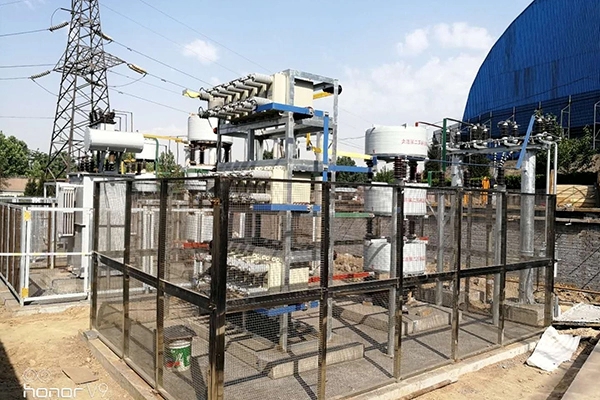
Outdoor disconnect switches are the most important safety feature for handling high-voltage cable networks. They keep people and equipment safe. During repair, an outdoor disconnect switch safely turns off power lines that are rated between 40.5kV and 252kV. This is done by isolating obvious electrical circuits. Instead of stopping fault currents like circuit breakers do, these switches make a physical air gap that ensures there is zero energy flow. This is a basic requirement in substations, factories, and green energy installations. Their waterproof design means they can handle high temperatures, ice buildup, and UV light, which makes them essential for keeping the grid running smoothly.
 |
 |
Understanding Outdoor Disconnect Switches in Power Transmission
What Makes Outdoor Disconnect Switches Essential
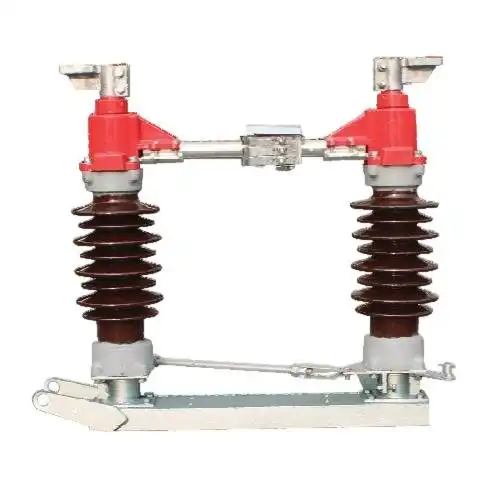
An Outdoor disconnect switch is basically different from an indoor one because it is weatherproofed and has longer creepage distances. These gadgets can handle voltages of up to 252kV and keep their dielectric strength even when it rains, fogs with salt, or there is pollution. The main purpose is to allow visible disconnection, so workers can check the air gap between contacts before they start repair work on transformers or transmission lines. Hot-dip galvanized steel frames used in modern designs won't rust in coastal areas for 25 years or more. The pins and bearings made of stainless steel in the transmission system prevent rust-related problems that happen with carbon steel options. This choice of material directly lowers the lifecycle costs for utility companies that are in charge of thousands of switchgear setups in a wide range of temperatures.
Core Components and Operational Principles
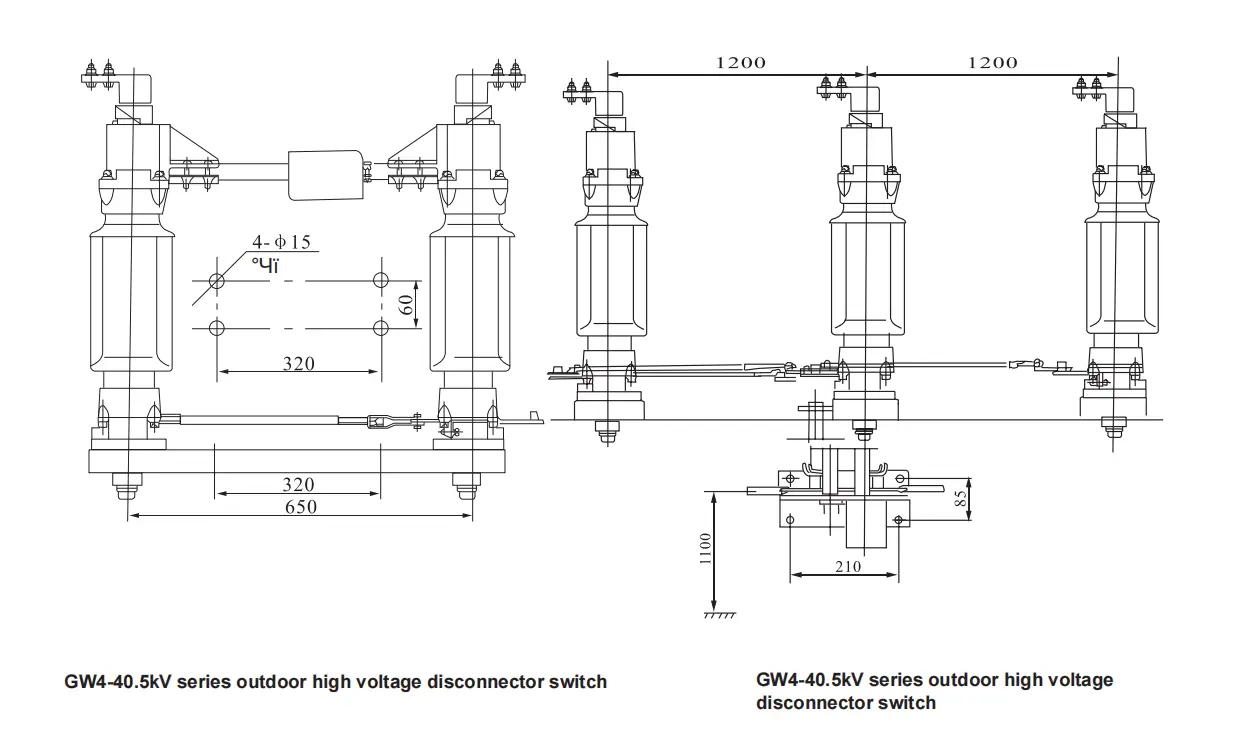
The contacts in a three-pole horizontal spinning outdoor disconnect switch are what make it work. Externally squeezed stainless steel contact springs keep the pressure fixed for more than 300+ open-close cycles without needing to be adjusted. The operating mechanism turns the middle support insulator by 71°. This makes the electrical moving contact touch the fixed contacts along a short path of friction. This keeps the mechanical wear to a minimum during each operation. Grading rings and covers around the contact points improve the spread of the electric field, which is a key part of stopping corona discharge at voltages above 220kV. Radio frequency interference that could mess up transmission gear in close control rooms is lessened by this design. Busbar connections that are flexible can adapt to changes in temperature, and copper plates that are bent make replacements easier during planned repair times.
Safety Features for Industrial Environments
For OSHA safety, the option to Lockout/tagout workers is still a must. Mechanical interlocks keep main disconnectors and earthing switches from being closed at the same time, which would cause terrible short circuits. The fan-shaped lockout plates spin at the same time, ensuring the operation sequence: the main switch opens, the earthing switch closes to discharge residual charges, and the cycle starts over when the power is turned back on. Aluminum metal shapes help heat escape, stopping hotspots that damage insulation at contact points. Devices that can handle a steady current of 6300A go through thermal imaging tests to make sure their temperature rise stays below 40°C above ambient. This is a measure that keeps insulation from wearing out in data center power lines that are running at 95% capacity.
Key Applications of Outdoor Disconnect Switches in Power Transmission
Substation Line Isolation and Maintenance Access
Outdoor disconnect switches make safe work zones fort Outdoor disconnect switches s transformer repair in 252kV substations that serve cities. In a normal process, the circuit breaker opens when there is a load, the outdoor disconnect switch opens to make the isolation clear, the earthing switch closes to get rid of any capacitive currents, and then techs use portable meters to make sure there is no voltage before entering the electrified zone boundarieFor factories that use CNC machines, repair windows must be shorter than four hours so that they don't lose more than $50,000 in production each time something goes wrong. When paired with motor-operated systems, horizontal spinning designs can go from open to closed in less than 15 seconds, while older vertical-break models needed 45 seconds. This speed advantage directly means less downtime during planned maintenance.
Renewable Energy Integration and Grid Stability
Desert solar farms that produce 100MW have special problems: the temperature can reach 85°C, sandstorms wear down barrier surfaces, and voltage changes when clouds cover the sky for short periods of time. In dirty areas, outdoor disconnect switches with silicone-coated insulators keep the 31 mm/kV creepage distance, which stops flashovers that would cut off whole production blocks from the grid. At 4,000 meters above sea level, wind farm substations need equipment that is rated for a hill. Less dense air lowers the dielectric strength by 30%, which means that insulators need to be bigger and contact gaps need to be longer. The GW4 series solves this problem by improving the E-field distribution. Computer models show that voltage gradients stay below 3kV/mm even at 0.6 atmospheric pressure, which means they will work reliably in sites in the Andes or the Himalayas.
Fault Management in Distribution Networks
In less than 100 milliseconds, safety switches trip circuit breakers when transmission lines have problems. The next set of switches uses outdoor disconnect switches to cut power to damaged areas while keeping power on healthy feeds. The emergency power system of a hospital might use a different route through additional 138kV lines. This reconfiguration relies on disconnect switches that can finish their jobs within minutes of the network being restored. For data centers that need to be up 99.999% of the time, disconnect switches are built into N+1 redundant electricity designs. Automatic shift switches move load to backup lines while work is done on one 40.5kV feeder. This keeps the server running. The mechanical durability requirement is 2,000 cycles over 20 years. This can be met with sealed bearings that don't need to be maintained and contact surfaces that stay lubricated even after constant spinning.
How to Choose the Right Outdoor Disconnect Switch for Power Transmission
Technical Specifications Matching
The system's standard voltage plus a 20% safety margin is used to choose the voltage grade. To deal with short-term overvoltages during capacitor bank switching, a 138kV transmission network needs 145kV-class Outdoor disconnect switches. Current capacity must be able to handle both continuous heat loading and short-circuit resistance. For example, a 3150A device can handle normal load and 40kA fault currents for one second while relay coordination delays happen. The lengths and materials of insulators are determined by the environment. Coastal facilities less than 10 km from the sea need 35 mm/kV of creepage distance, while rural facilities only need 25 mm/kV. Temperature changes from -40°C to +85°C require rubber seals that can keep their flexibility up to 125°C. Silicone is better than EPDM at UV protection, which is important for installations that last 30 years or more without replacing any parts.
Evaluating Supplier Capabilities
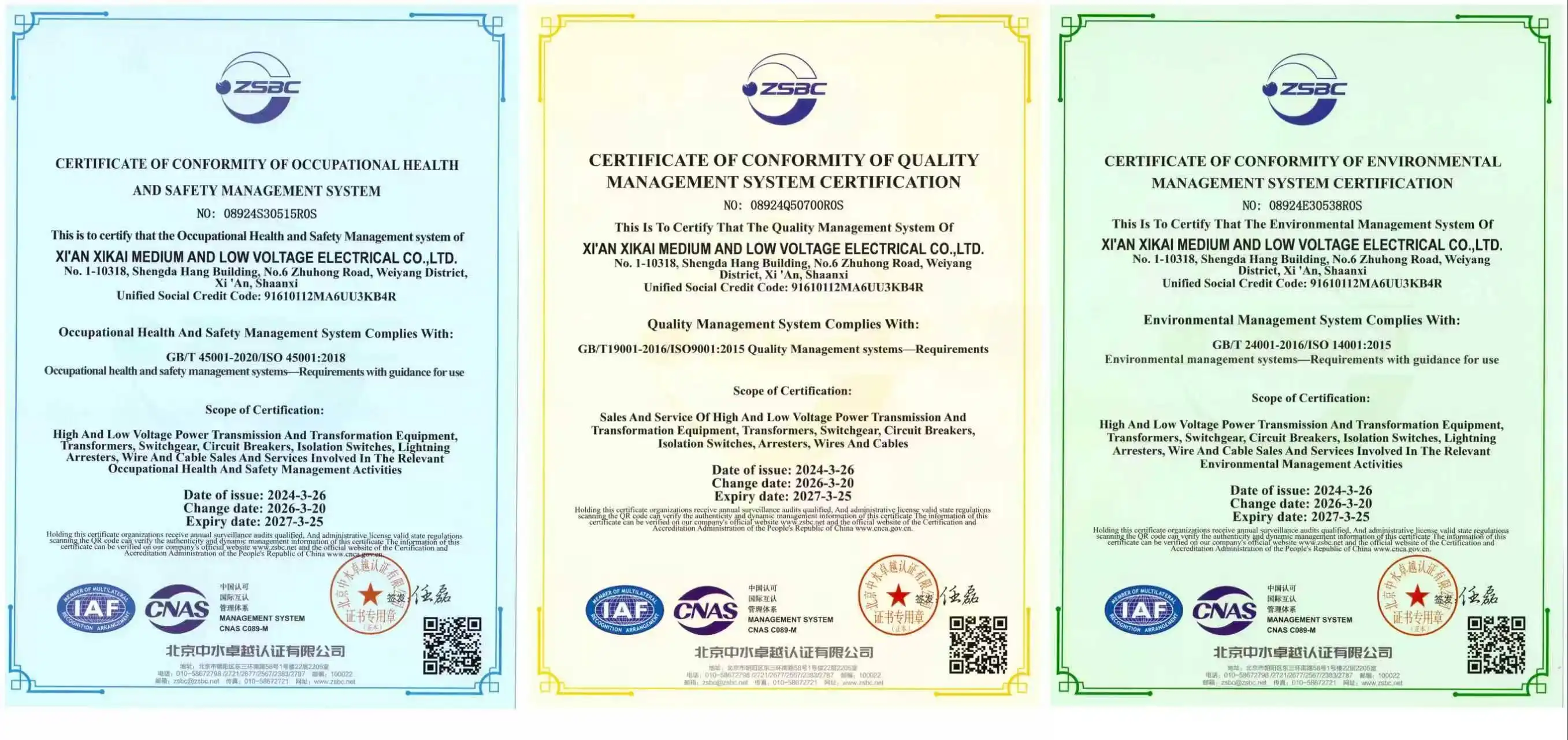
Certification files are used by procurement teams to evaluate makers. Type testing for mechanical durability, dielectric strength, and the ability to make short circuits is confirmed by IEC 62271-102 compliance. The IEEE C37.32 certification proves that the product works according to the ANSI norms that North American utilities favor. When a factory has ISO 9001, it shows that it has quality systems that track materials from raw steel to final testing. This is needed for accident investigations to have proof. Customization choices set engineering partners apart from commodity sellers. Dual-side mounting gives installers more options when generator configurations change as a center grows. Pre-assembled modular kits cut down on wiring mistakes in the field. For example, a single worker can install a three-pole assembly in six hours instead of two days for stick-built options, which saves $8,000 per unit in labor costs.
Price-Performance Balance for Bulk Procurement
Electric Power Construction (EPC) companies that are bidding on 50MW solar projects look at Outdoor disconnect switches more than just the buying price. A $12,000 disconnect switch needs to be oiled every six months, which costs $800 a year in upkeep work. Maintenance-free options that cost $15,000 get rid of this ongoing cost and pay for themselves in five years. They also lower the safety risks that come with technicians working near powered equipment. When a maker offers a 25-year warranty on galvanized structure parts but only a 5-year warranty on other parts, it shows that they are confident in the quality of the materials. Some sellers offer performance bonds that promise 98% availability during contract times. If failures happen that cause unplanned outages, the provider will be fined. This risk shift is appealing to utility companies that face fines from regulators for causing customer interruptions that go over certain yearly limits.
Installation, Wiring, and Maintenance Best Practices
Pre-Installation Verification and Site Preparation
Inspections of the foundation show that the spacing between the pin bolts is within ±5 mm of what the manufacturer's plans show. Misalignment puts force on the frame while it's working, which cuts its mechanical life from 2,000 rounds to 800. Before mounting, the concrete must be at full strength after 28 days of drying. Loading it too soon makes tiny cracks that let water in and rust the steel over many years.IEEE guidelines say that torque-controlled fitting is needed for busbar terminations. If connections are not torqued properly, high-resistance points can form that reach 150°C, and if they are torqued too much, aluminum wires will crack. When calibrated torque tools apply 200 N·m to M16 fasteners, contact resistance stays below 100μΩ. This is proven by checking with a micro-ohm meter before the fasteners are powered on.
Routine Inspection Protocols
Visual checks every three months find insulation tracking, discolored contacts, and loose fasteners. Using infrared thermography during peak loads can find temperature differences of more than 40°C above the ambient temperature. These are early signs that the contact pressure is dropping and needs to be adjusted. Every year, mechanical cycling tests make sure that the working force stays within the range specified by the maker, which for motor-driven mechanisms is usually 150 to 300 N·m. Every five years, 80% of the maximum voltage is applied across open contacts during dielectric testing. This checks the stability of the insulation. This test doesn't damage the material and finds moisture or UV damage before flashovers happen. If you test the contact resistance below 120μΩ for 3150A ratings, it means that the pressure is good. Values above this level cause the contacts to need to be cleaned or the springs to be replaced during planned breaks.
Regulatory Compliance and Safety Procedures
According to OSHA 1910.269. Trained electrical workers must use approved testing methods to confirm that the power has been turned off. Portable voltage monitors that are rated for system voltage make sure there is no potential before grounding groups are put in place. Accidents caused by generated voltages on parallel lines or backfeed through distribution transformers can't happen with the test-before-touch procedure at the sites of Outdoor disconnect switches.NFPA 70E arc flash tests figure out how much incident energy there is at the sites of disconnect switches. Personal safety equipment needs are based on the results. For example, 40 cal/cm² at 252kV substations means full arc-rated suits are needed, while 8 cal/cm² at 40.5kV installations means face shields and flame-resistant clothes are needed. Putting calculated danger levels on each device saves repair teams during emergency switching operations.
Future Trends and Innovations in Outdoor Disconnect Switch Technology
IoT-Enabled Monitoring and Predictive Maintenance
Smart sensors built into contact parts. Outdoor disconnect switches send temperature and pressure data to SCADA systems in real time. Machine learning systems look at patterns and can tell 90 days in advance when a bearing will fail based on small changes in the frequency of vibrations. Because of this early warning, replacements can be planned for planned outages instead of having to deal with forced outages that cost $150,000 per hour in lost industrial production. Wireless connection units get rid of the need for expensive wire runs to switchyards that are far away. Solar farm Outdoor disconnect switches can be linked to central tracking units through LoRaWAN networks that cover 15 kilometers. This cuts the cost of installation by $3,000 per device. Battery-powered monitors that get their power from current transformers don't need to be serviced for 10 years, so technicians don't have to make as many site visits, which wastes time and resources.
Advanced Materials for Extreme Conditions
Composite insulators with silicone rubber housings and fiberglass cores are 60% lighter than porcelain insulators, which makes them easier to place in areas that need seismic bracing. Surfaces that are hydrophobic quickly lose water, so insulation works even when it's freezing rain, and conductive ice layers cover porcelain. Twenty years of field tests show that there have been no brittle fractures, while porcelain breaks 2% of the time from mechanical shocks during shipping. Coatings made of nanotechnology on contact areas stop oxidation, which makes the protection higher over time. Silver-tungsten metals keep their conductivity after 5,000 cycles without needing to be cleaned, while bare copper needs to be cleaned every 500 cycles. This improvement is especially helpful for unmanned substations that are in rural areas and can only be reached by chopper, which costs $5,000 per visit.
Sustainable Design and Circular Economy Principles
Manufacturers who follow the Design for Disassembly principles make switches with flexible parts that can be swapped out with standard tools. End-of-life recycling programs get back 95% of the materials that are used. For example, steel frames are sent back to foundries, copper lines are used to make new wire, and aluminum alloys are turned into new profiles. This closed-loop method is better for the environment and gives points that cover 8–12% of the cost of new tools. As utilities work toward their net-zero goals, being able to see the full carbon effect of the products they buy becomes a requirement. When bids are being evaluated, suppliers who track the stored energy from the gathering of raw materials to the production process stand out. A 252kV disconnect switch made from recovered steel cuts CO₂ emissions by 1.2 tons compared to a switch made from new steel. This is a big difference when you add it up over 500-unit substation projects.
Conclusion
Choosing the right Outdoor disconnect switch saves the stability of the grid and keeps costs low over many years of service. Technical specs that meet the needs of voltage, current, and the surroundings make sure that the new system will work with the old one. By looking at certifications, customization options, and warranty terms, a supplier review can help find partners who can help with long-term business goals. Installation accuracy and regular maintenance protect the design's performance. New technologies offer predicted features that turn reactive maintenance into strategic asset management. As the use of green energy grows and the grid is updated faster, these basic parts are still needed for safe and effective power transfer networks that serve the utility, commercial, and industrial sectors.
FAQ
1. What voltage ratings do outdoor disconnect switches cover?
Outdoor disconnect switches can usually handle voltages ranging from 12kV for distribution to 765kV for extra-high voltage transmission lines. The GW4 line covers a voltage range of 40.5kV to 252kV, which covers most industry and utility needs. When choosing the voltage, you have to think about both the system's normal voltage and any brief overvoltage factors. For example, a 138kV network needs 145kV-class equipment to handle switching transients without putting stress on the insulation.
2. How are their upkeep needs different from those of circuit breakers?
Because their mechanisms are easier and they don't have to do arc interruption duty as often, disconnect switches need less upkeep than circuit breakers. If you don't have breaks, you only need to have checks once a year. However, checking the contact resistance is still very important. Values above 120μΩ mean that the contacts need to be cleaned, while breakers can handle higher resistance because of the short current flow during stoppage.
Partner with Xi'an Xikai for Reliable Power Transmission Solutions
The Xi'an Xikai Medium & Low Voltage Electric Co., Ltd. has been making high-voltage Outdoor disconnect switches for utility companies, manufacturing sites, and EPC firms across North America for more than twenty years. Our GW4 line is made of hot-dip galvanized steel that is strong and doesn't need any upkeep. It also has IEC and IEEE certifications that meet the strictest procurement requirements. Our engineering team creates custom solutions and offers expert help 24 hours a day, seven days a week. This includes plateau-rated equipment for high-altitude sites and custom creepage distances for coastal environments. Get in touch with our experts at serina@xaxd-electric.com, amber@xaxd-electric.com, or luna@xaxd-electric.com to talk about your outdoor disconnect switch needs and get suggestions that are tailored to your situation and will improve efficiency and total cost of ownership.
References
1. International Electrotechnical Commission. "High-Voltage Switchgear and Controlgear – Part 102: Alternating Current Disconnectors and Earthing Switches." IEC Standard 62271-102, 2018.
2. Institute of Electrical and Electronics Engineers. "IEEE Standard Requirements for Outdoor Apparatus Bushings." IEEE Std C37.32-2020, 2020.
3. National Fire Protection Association. "Standard for Electrical Safety in the Workplace." NFPA 70E, 2021 Edition.
4. Electric Power Research Institute. "Transmission Line Reference Book: 115-345 kV Compact Line Design." EPRI Publication, 2019.
5. Occupational Safety and Health Administration. "Electric Power Generation, Transmission, and Distribution." OSHA Regulation 1910.269, U.S. Department of Labor, 2020.
6. Cigré Working Group B3.27. "Outdoor High Voltage Disconnectors: Reliability Surveys and Maintenance Strategies." Technical Brochure 682, International Council on Large Electric Systems, 2017.