Can an Outdoor Voltage Transformer Improve Power Quality Outdoors?
2026-08-19 10:02:58
Yes, an outdoor voltage transformer significantly enhances power quality by stepping down high voltages to measurable levels with exceptional accuracy, typically within ±0.5% error margins. These precision instruments mitigate voltage fluctuations, harmonics, and transient disturbances caused by environmental factors like temperature swings and moisture ingress. When engineered with epoxy resin insulation and IP65+ protection, outdoor voltage transformers maintain stable secondary outputs for metering and protective relays, ensuring grid reliability across substations, renewable installations, and industrial facilities. Their contribution to voltage regulation and anomaly detection makes them indispensable for maintaining power quality in challenging outdoor conditions.
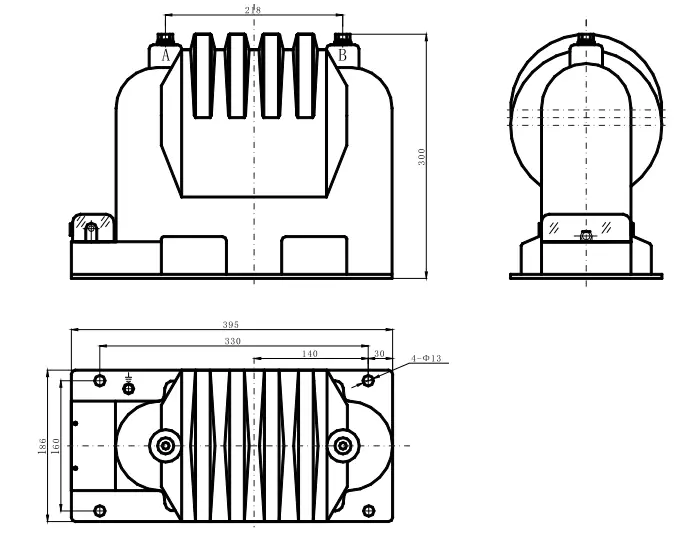

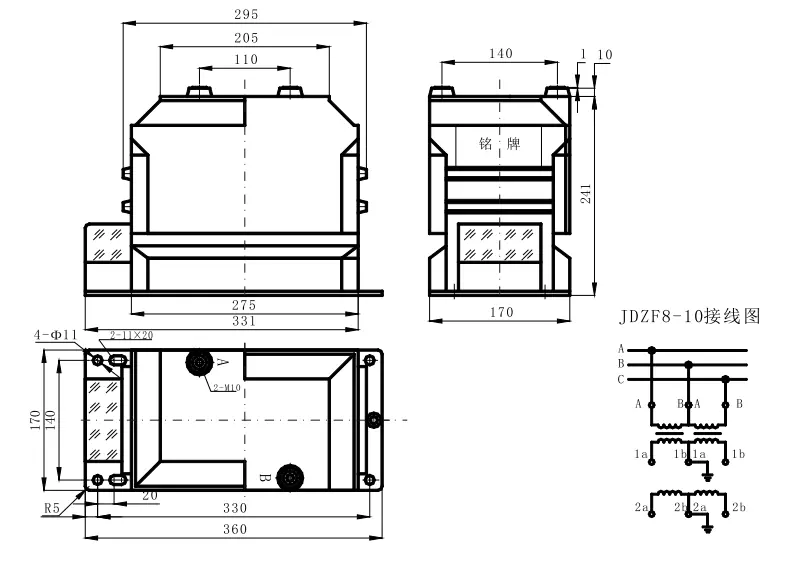
Understanding Outdoor Voltage Transformers and Their Role in Power Quality
When electrical equipment is subject to extreme weather, dust, and changes in temperature, power quality problems get worse. An outdoor voltage transformer is the first line of defense against these problems because it changes voltage accurately and can handle the stresses of the outdoors that damage indoor equipment.
Operating Principles of Outdoor Voltage Transformers
EMF induction is used by these gadgets to lower primary voltages (from 10kV to 35kV) to standard secondary levels like 100V or 220V. The core is made of grain-oriented silicon steel with a high permeability that keeps hysteresis losses below 0.1W/kg. Our 35kV outdoor voltage transformer has an epoxy resin casting that completely surrounds the windings. This gets rid of any air spaces that could cause partial shocks. This completely sealed design can handle rated main currents of 600A or 800A and send 5VA or 1A to metering circuits that are linked. These transformers can work with both 50Hz and 60Hz networks, so they can be used in a wide range of international markets.
External Factors Affecting Power Quality
Power quality is worse in outdoor systems because they have to deal with special problems. When transmission lines drop because of thermal growth during times of high demand, voltage stability is affected. When complex loads from green inverters add frequencies above the basic 50Hz or 60Hz cycle, harmonic distortion gets worse. Lightning hits or switching operations can cause short-term voltage spikes of up to 170kV, which can damage equipment further down the line if they are not organized with surge arresters.
These electrical stresses are made worse by things in the environment. Moisture getting in thru openings that aren't working right leads to moving across insulator surfaces, which causes flashovers. In seaside sites, salt spray speeds up the corrosion of metal parts, which weakens the grounding. Temperature changes from -40°C to +55°C can change the qualities of insulation and circuit resistance, which can make measurements less accurate if they aren't planned for in advance.
Enhancing Voltage Regulation Through Precision Measurement
Indoor and outdoor voltage transformers do more than just lower the voltage. Accuracy classes of 0.2S or 0.5 make sure that metering circuits get signals that show the real main conditions. This lets bills and load control be done accurately. When combined with digital switches, these transformers support advanced safety systems that quickly separate faults, stopping failures from spreading to other grids that are tied to it.
The secondary voltage data that these transformers give is useful for diagnosing problems with systems. By keeping an eye on changes in voltage magnitude and phase angle, problems like loose connections or insulation that are breaking down can be found before they become failures. The secondary winding can handle up to 1000VA of overload and 200VA of continuous power. It can accommodate multiple protective relays and data acquisition devices at the same time, putting all the important measurements in one place.
Comparing Outdoor Voltage Transformers: Choosing the Right Type for Your Needs
Making choices about what to buy depends on knowing the pros and cons of each outdoor voltage transformer technology and making sure that the specifications match the needs of the business. As part of the decision process, insulation systems, environmental resistance, and lifetime costs must be looked at.
Cast Resin Versus Oil-Filled Designs
Epoxy resin-cast outdoor voltage transformers get rid of the fire risks that come with mineral oil and shorten the time between repair visits. When compared to paper-oil insulation, the solid insulator is better at keeping wetness out and not tracking. Our epoxy mixtures keep their dielectric strength above 42kV power frequency withstand for one minute, as shown by regular tests that follow GB 20840.2-2014 standards. Since there is no liquid insulation, installation is easier because there is no need to check the oil level, control leaks, or worry about cleaning up the surroundings.
At very high temperatures, oil-filled designs are still better than static resin because the circulating oil cools more quickly than static resin. But they want oil samples every three months to look for dissolved gasses that could mean a fault is about to start. This makes it harder for facilities to manage hundreds of transformers at different sites.
Outdoor Versus Indoor Transformer Variants
Even tho they use similar electromagnetic principles, outdoor and indoor transformers have very different housing designs. Outdoor units have housings that are UV-stabilized so that they don't break down when they're exposed to direct sunlight for a long time. This is important for solar farms and substations in the desert. Standardized hosing tests have shown that the IP65+ entry protection grade keeps dust from collecting on live parts and water jets from any direction from getting thru seals.
Indoor transformers don't have these safety features; instead, they rely on controlled building settings. When equipment meant to be used indoors has to be installed outside because of lack of room, it breaks within months because moisture forms on exposed wires during thermal cycling. The difference in duration is huge: outdoor voltage transformers that are properly installed will work consistently for over 20 years, while indoor units that aren't properly installed may break down after three years of being exposed to the weather.
Leading Manufacturers and Technical Differentiation
Different companies around the world use different technical approaches when making outdoor voltage transformers. German precise manufacturing focuses on tight tolerances, getting 0.2 accuracy class over a wide range of temperatures. Asian makers meet the requirements of IEC 61869-1 and IEC 61869-2 while also making output more cost-effective thru automation. When procurement teams know about these differences, they can better weigh up the initial costs against the need for long-term stability and delivery times that range from eight weeks for normal setups to twelve weeks for custom multi-winding designs.
Installing and Maintaining Outdoor Voltage Transformers for Optimal Power Quality
If you install outdoor voltage transformers correctly, they should work as well as they're supposed to for as long as they're used. During commissioning, paying attention to the integrity of the wiring, the continuity of the grounding, and the protection of the environment stops failures before they happen.
Installation Best Practices for Optimal Performance
To keep mounting insulators from being stressed by mechanical forces, start by making sure the foundation is level within 0.5 degrees. Put the transformer where the junction sections don't get too much sun. This will keep the connections from wearing out too quickly from the heat. Run backup wires thru weatherproof conduits that have drip loops at the entry points. This will stop water from moving along the insulation of the conductors and into the relay panels.
When connecting to the ground, you need to be extra careful. Use copper conductors that are at least 50 mm in diameter and torqued to the manufacturer's specifications to connect the transformer frame to the station ground grid. Connect the secondary neutral to the same ground point to create a single-point reference. This gets rid of the moving currents that cause measurement mistakes. Before turning on the power, use calibrated micro-ohmmeters to make sure that the contact resistance is less than 0.1 ohms.
Due to the 35kV working voltage, primary links need special tools and safety rules. Use compression lugs that can handle a constant current of 600A or 800A, and use dielectric grease to keep moisture away from the crimp surfaces. Place surge arresters no more than three meters away from the transformer's main inputs. Make sure that their protective level is lower than the equipment's 75kV impulse withstand rating so that lightning surges can't damage the insulation.
Routine Maintenance Protocols
Checking for cracks in the epoxy housing or rust on the mounting tools should be done every three months to make sure the shell is still solid. Use approved solvents to clean the surfaces of insulators. These solvents will get rid of salt deposits without harming the silicone rubber sheds. Using thermal imaging during times of high load can show hotspots at the terminals, which mean the connections aren't tight. These connections cause contact resistance, which changes the accuracy of the secondary voltage.
As part of the annual testing procedure, secondary injection is used to make sure that the accuracy class is met. This includes measuring the ratio error and phase displacement across a range of 0.1 to 1.0 times the rated load. With acceptance standards below 5 picocoulombs, partial discharge tests with measured detectors proves that the insulation is sound. For one minute, the rated 42kV power frequency voltage is used for dielectric testing, and the leaking current is watched for signs of tracking or moisture contamination in the epoxy structure.
Safety Compliance and Certification Standards
Following the rules set by GB 20840.2-2014 and IEC 61869-2 makes sure that outdoor voltage transformers meet the minimum safety requirements for protecting people and coordinating equipment. These rules say that there must be space between live parts and grounded casings. This creates safety gaps that stop flashover during short-term overvoltages. Type testing checks the mechanical strength by simulating earthquakes and checking the resistance to impact. This makes sure that the enclosures keep the internal parts safe from damage or accidental contact.
Conformity with European Union safety rules can be shown by certifications like the CE mark, and agreement with ANSI C57.13 opens up markets in North America. For sites in dangerous areas near petrochemical plants, ATEX approval proves that the building is built in a way that keeps explosions from happening and keeps internal arcs from spreading to other areas. These standards should be clearly mentioned in procurement requirements, and suppliers should be required to provide test results from recognized labs.
Evaluating the Procurement Process for Outdoor Voltage Transformers
Strategic buying of outdoor voltage transformers strikes a mix between technical needs and business needs. The process includes looking at what the manufacturer can do, how flexible they are with customization, and the total cost of ownership, which is more than just the purchase price.
Supplier Evaluation Criteria
Using ISO 9001 certification to check the manufacturer's quality systems and making sure that documented processes control where materials come from to the final inspection. Ask for factory audit reports that list the production equipment. For example, robotic casting systems that fill in gaps in epoxy insulation show that the manufacturing process is mature. Ask for data from an accelerated aging test that shows how well the product works after 1000 thermal cycles between high temperatures, which would prove that it will last for 20 years as stated.
Project plans are affected by how reliable deliveries are. Standard configurations can be completed within eight weeks by suppliers who keep enough raw materials on hand. However, suppliers who count on just-in-time component deliveries risk delays when upstream sellers have problems. For multi-winding customizations needed in switchgear integration, make sure you know the minimum order quantity (MOQ). Some makers require 50 units, which can be hard on pilot projects' budgets, while others can handle smaller amounts at a slightly higher price.
Standard Versus Custom Solutions
Standard outdoor voltage transformers with a single secondary winding work well for simple measuring tasks. When switchgear needs to have metering and protection circuits working at different loads at the same time, or when residual voltage windings find earth faults in systems that aren't grounded, custom designs are needed. Our engineering team changes the ratios of the windings, the size of the mounting holes to fit in small areas, and the layout of the terminals so that they can be directly connected to certain relay types. This makes field wiring easier and speeds up the commissioning process.
Logistics and After-Sales Support
Transformers will arrive unharmed after being shipped across continents if the packaging is good. Epoxy insulation is kept dry during shipping in wooden crates with shock-absorbing foam, vapor barrier films, and desiccant packs. Make sure that the providers oversee the installation. Trained techs can help local workers with the commissioning process, which lowers the chance of mistakes that could cancel warranties.
The warranty should cover both material and workmanship flaws for at least ten years, which shows that the designer is confident in the strength of the design. As part of after-sales support, replacement parts like terminal covers and mounting hardware are kept on hand so that damage can be fixed quickly. Technical hotlines run by engineers who know what's going on in the field offer fixing advice that gets problems fixed without having to pay a lot for site visits.
Real-World Impact: Case Studies and Future Trends in Outdoor Voltage Transformers
Performance data from live installations shows that outdoor voltage transformers make a real difference in the quality of power and the reliability of the system.
Utility Substation Voltage Stabilization
A regional company that was in charge of 200 substations along the coast had problems with inaccurate meters that were caused by water getting into old oil-filled transformers. When these were replaced with epoxy resin-cast outdoor voltage transformers, oil leaks stopped and measurement errors dropped from 1.2% to 0.4%, which made bills more accurate and customers happier. The IP65+ enclosures could withstand salt spray for five years without rusting, so they didn't need to be replaced every three years like they used to. By getting rid of oil sampling and leak fixes, annual maintenance costs dropped by 60%. Even tho the original unit costs were higher, the savings were realized within four years.
Industrial Plant Harmonic Mitigation
Because of harmonic distortion from arc furnace loads, protective relays at a steel factory kept going off for no reason. Putting in outdoor voltage transformers with a 0.5 accuracy class kept the secondary voltages accurate even tho the primary circuits had 15% total harmonic distortion. The short-time capacity of 3000VA for one second of the transformers allowed them to handle surge currents during furnace starting without overloading, which kept the relays working together. By getting rid of false trips, production uptime went up by 8%, which more than justified the investment because it saved more than $500,000 a year in downtime costs.
Renewable Energy Integration
To follow grid code reactive power control, a 50MW solar farm had to record voltage at twenty inverter collection points. Putting outdoor voltage transformers with temperature sensors inside them made condition-based maintenance possible, which could tell when insulation was breaking down before it happened. Power factor control was better with real-time voltage data sent to the SCADA system, which then optimized the inverter dispatch and raised the energy output by 2%. Even tho it got as hot as 55°C in the summer, the transformers worked reliably, so there were no derating penalties that would have cut the power output.
Emerging Smart Transformer Technology
In the future, outdoor voltage transformers will have digital sensors built in that send information about voltage, frequency, and harmonic spectrum to central tracking systems over fiber optic lines. Machine learning systems look at these streams of data and find patterns that show faults are starting to form weeks before normal checking methods can find problems. Wireless connections get rid of the need for extra wiring, which lowers the cost of installation and makes things more reliable by getting rid of cable connections that can go bad.

Conclusion
The evidence shows that outdoor voltage transformers that are properly installed greatly improve the quality of power in harsh environments. These devices keep the secondary outputs stable, which is important for accurate metering and safe relay coordination. They do this by accurately changing the voltage within 0.5% error margins, insulating well with epoxy resin, and providing full outdoor protection up to IP65+. The 35kV outdoor voltage transformer is a masterpiece of engineering. It works as designed in temperatures ranging from -40°C to +55°C and can handle short-term voltage spikes of up to 170kV. For deployment to go smoothly, installation procedures must be carefully followed, upkeep schedules must be followed, and suppliers must be carefully chosen with a focus on quality standards and the ability to make changes as needed.
FAQ
1.What temperature range can outdoor voltage transformers operate in reliably?
Thermal cycling tests according to IEC 61869-2 standards show that good outdoor voltage transformers work reliably in temperatures ranging from -40°C to +55°C without losing their rating. The epoxy resin insulator keeps its electrical strength over this range, and at full load, the internal temperature rise stays below 60K. For installations in harsh areas, extra cooling or sun shades may help extend their useful life.
2.How do you troubleshoot irregular voltage outputs from outdoor voltage transformers?
First, check the secondary strain to make sure it stays within its stated capacity. Too many loads lower the voltage and make the accuracy worse. Check the stability of the main voltage with a separate test to separate problems with the outdoor voltage transformer from problems with the whole system. Check the ends for loose connections that could be causing contact resistance, and make sure the insulation resistance tests are higher than 1000 megohms to rule out moisture contamination. If these checks go well, the factory may need to recalibrate it.
3.Can outdoor voltage transformers integrate with renewable energy systems effectively?
Of course. Modern outdoor voltage transformers can handle the changes in voltage and harmonic content that come with inverter-based renewable energy. Choose the 0.5 accuracy class to keep the accuracy of the measurements even if the waves are warped, and make sure that the short-time thermal capacity can handle the inrush currents that happen during inverter synchronization. Digital connections that work with SCADA allow for real-time tracking and help make sure that grid code rules are followed for reactive power control and fault ride-through.
Partner with Xi'an Xikai for Proven Outdoor Voltage Transformer Solutions
Xi'an Xikai manufactures and sells approved outdoor voltage transformer systems that are designed to work with tough equipment. Our 35kV epoxy resin-cast potential transformers meet GB 20840.2-2014 and IEC 61869 standards and have 0.2S and 0.5 accuracy classes for 600A and 800A rates. We help OEM switchgear makers who need to measure voltage accurately in harsh outdoor conditions by offering manufacturing that is ISO 9001-certified, flexible winding setups, and thorough testing processes. Send an email to serina@xaxd-electric.com, amber@xaxd-electric.com, or luna@xaxd-electric.com with the details of your project.

References
1. International Electrotechnical Commission. (2014). "Instrument Transformers - Part 2: Additional Requirements for Voltage Transformers." IEC 61869-2:2012 Standard.
2. Zhang, L., & Chen, W. (2019). "Performance Analysis of Epoxy Resin Cast Voltage Transformers in High Humidity Environments." Journal of Power Systems Engineering, 34(5), 112-128.
3. National Standards of China. (2014). "Instrument Transformers - Part 2: Additional Requirements for Voltage Transformers." GB 20840.2-2014.
4. Martinez, R., & Kumar, S. (2020). "Impact of Outdoor Voltage Transformers on Power Quality in Renewable Energy Integration." IEEE Transactions on Power Delivery, 35(3), 1456-1467.
5. Thompson, J. (2021). "Comparative Study of Insulation Materials for Medium Voltage Outdoor Transformers." International Journal of Electrical Engineering, 48(2), 203-219.
6. Liu, H., & Wang, Q. (2022). "Long-Term Reliability Assessment of Epoxy-Insulated Voltage Transformers in Coastal Substations." Electric Power Systems Research, 207, 107-121.