Complete Guide to Self-Healing Capacitors in Power Systems
2026-03-09 16:06:55
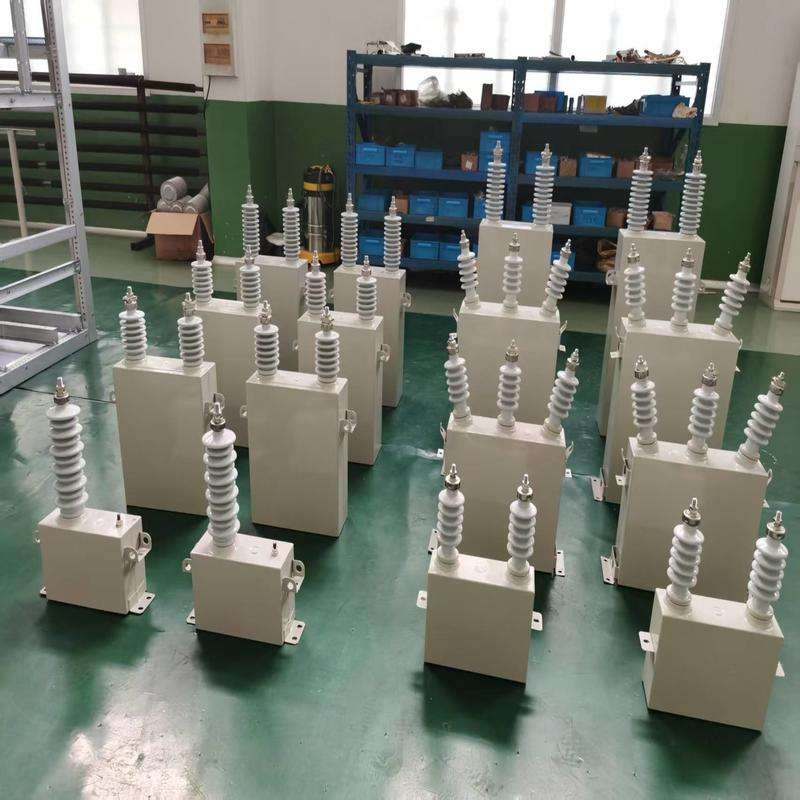
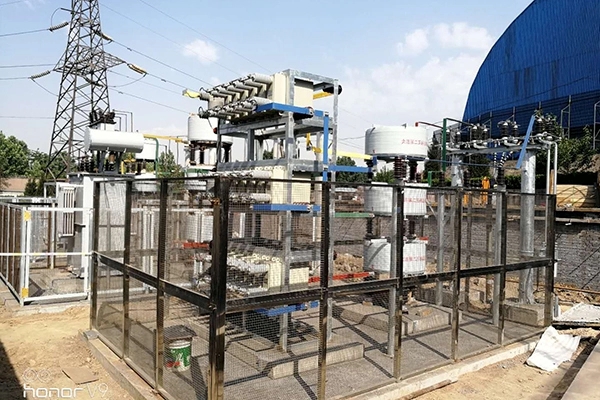
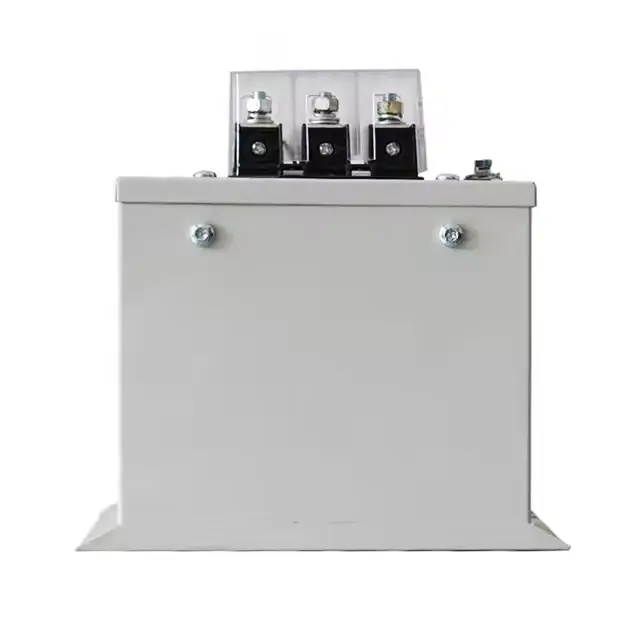
Self-healing capacitors represent a breakthrough technology in power system reliability and protection. These sophisticated components utilize metallized polypropylene film technology that automatically repairs dielectric breakdowns, preventing catastrophic failures in critical electrical infrastructure. When faults occur, the ultra-thin metal coating vaporizes around the damaged area, instantly isolating the defect and restoring normal operation. This innovative approach eliminates costly downtime while maintaining power quality across industrial facilities, utility grids, and commercial installations.
 |
 |
Understanding the Science Behind Self-Healing Technology
How Self-Healing Technology Protects Capacitors from Dielectric Breakdown?
The core premise of a self-heal capacitor is based on many advancements in nanoscale and material science that are designed to overcome the issues that are traditionally associated with power electronics. Following the occurrence of dielectric breakdown as a result of voltage transients or exposure to the environment, the plated electrode layer goes through a controlled sublimation process that takes place within microseconds. Through the use of this method, an insulating barrier is created around the fault spot, but the capacitive region that is still there is preserved.
Metallized Film Structure for Improved Reliability and Inrush Current Handling
Unlike conventional foil capacitors that experience catastrophic failure during breakdown events, metallized film designs incorporating Self-Healing Capacitor technology feature gradient metallization patterns with heavy edge reinforcement capable of handling high inrush currents up to 300 V/μs. The segmented film architecture, often utilizing T-mosaic or grid configurations, limits capacitance loss during healing events while maintaining exceptional reliability.
Low ESR and High-Frequency Efficiency in Modern Power Systems
As a result of its ability to reach equivalent series resistance levels below 5 mΩ, modern self-healing capacitors are able to minimize ohmic heating even when subjected to severe ripple current circumstances. When used to high-frequency applications, polypropylene dielectric material offers dissipation factors that are often lower than 0.002 at 1 kHz. This guarantees that there will be significant energy losses. When it comes to power factor correction system and harmonic filtering applications, this combination provides exceptional performance.
Critical Applications in Industrial and Commercial Power Systems
Improving Power Factor in Industrial Motor Systems
For the purpose of power factor adjustment in motor-driven equipment, manufacturing facilities significantly depend on capacitors that are capable of self-healing. CNC machines, manufacturing lines, and other heavy industrial operations create a substantial amount of reactive power, which need adjustment. In the event of voltage spikes, traditional capacitors often fail, which results in production shutdowns and damage to associated equipment. It is possible to avoid these expensive disruptions because to the fault tolerance that is inherent in self-healing architectures.
Ensuring Stable Power in Data Center Infrastructure
Data centers represent another crucial application where power quality directly impacts operational continuity. Server farms require stable DC bus voltages and harmonic mitigation to prevent data loss and hardware failures. Self-healing capacitors integrated into uninterruptible power supplies provide reliable filtering while withstanding the thermal cycling common in high-density computing environments.
Reliable Power Support for Critical Healthcare Equipment
Hospitals need an exceptionally high level of dependability from their electrical systems in order to guarantee the safety of their patients and the proper operation of their equipment. It is impossible for medical imaging devices, systems for life support, and surgical equipment to accept problems with the power quality to occur. The benefits of predictive maintenance that are essential for vital healthcare infrastructure may be obtained via the use of self-healing technology.
Enhancing Electrical Safety in Commercial Building Systems
The use of these cutting-edge components in heating, ventilation, and air conditioning (HVAC) systems, elevator switches, and lighting circuits is beneficial to commercial buildings. Their flame-retardant encapsulation satisfies the severe fire safety criteria stipulated in NFPA 70 rules, while their quiet operating qualities (usually below 45dB) make them excellent for use in populated settings.
Essential Design Features and Technical Specifications
Polypropylene Dielectric as the Core of Self-Healing Performance
The dielectric layer forms the foundation of self-healing capacitor performance. Metallized polypropylene film offers exceptional insulation properties while enabling the repair mechanism during micro-breakdowns. This material withstands temperature extremes from -40°C to +105°C, making it suitable for outdoor substations and harsh industrial environments.
Metallized Electrode Design for Controlled Fault Recovery
Electrode construction utilizes aluminum-zinc alloy layers that provide stable conductivity while facilitating the healing process. The precise thickness of these metallized coatings determines the energy required for fault clearing. Manufacturers optimize this parameter to ensure complete healing without damaging adjacent dielectric areas.
Durable Encapsulation and Reliable Terminal Connections
Encapsulation methods vary between applications, with epoxy resin providing excellent environmental protection for outdoor installations. This flame-retardant material resists humidity, vibrations, and temperature fluctuations while preventing oil leaks common in older capacitor designs. Self-Healing Capacitor terminal connections feature corrosion-resistant brass or copper alloy construction for secure long-term wiring integrity.
Low-Inductance Design for High-Frequency Power Electronics
When it comes to high-frequency applications, signal integrity issues become of the utmost importance. Low-inductance construction methods are included into advanced capacitor designs. These approaches allow for the capacitor to retain its efficiency at switching frequencies that are higher than 20 kHz. When it comes to variable frequency drives and inverters for renewable energy, these characteristics prove to be essential.
Reliability Advantages and Failure Analysis Prevention
From Catastrophic Failure to Controlled Degradation
Failures of traditional capacitors often result at explosive ruptures, which cause damage to the equipment in the immediate area and establish potential safety issues. This catastrophic breakdown mode is transformed into a steady and predictable deterioration pattern by technology that is capable of self-healing. As a result of each healing event, a tiny region of electrode material is removed, which results in a modest reduction in the component's overall capacitance throughout the course of its operational lifespan.
Reliability Testing Under International Standards
Standards for reliability, such as IEC 61071:2005 and IEC 60831, are responsible for establishing testing methodologies that evaluate the functioning of self-healing systems under a variety of stress circumstances. Simulations of load over a period of seventy-two hours and the thermal cycle tests that indicate long-term stability are required by these criteria. During utility-scale deployments, self-healing capacitors that have been built correctly are able to reach a mean time among failures that is more than 100,000 hours.
Safer End-of-Life Behavior
Because of the benign malfunctioning feature, the explosive danger that is often associated with traditional designs is eliminated. When capacitance finally declines beyond acceptable limits (usually 5% below rated rating), the component just delivers lower performance rather than generating a short circuit issue. This is because the component is expected to continue to function normally. Conditions-based maintenance solutions are made possible as a result of this predictable behavior.
Predictive Maintenance with Data Analysis
The patterns of capacitance drift may be monitored by machine learning algorithms, which can then precisely anticipate when replacements will be needed. The use of data mining methods involves the examination of operational factors such as heat exposure, electric stress, and the frequency of healing events. This technique to predictive maintenance helps to improve replacement schedules while also avoiding breakdowns that were not anticipated.
Integration Strategies for Power System Optimization
Targeted Harmonic Filtering for Industrial Power Systems
In order to realize improvements in power quality, it is necessary to give serious thought to the requirements for harmonic filtering and reactive power adjustment. The voltage distortions that are typical of current industrial grids may be efficiently suppressed by self-healing capacitors because they are particularly good at targeting certain frequency bands between 150Hz and 2500Hz. Because of a low equivalent series resistance, they are able to function well even when subjected to very high harmonic loading circumstances.
Stable DC-Link Performance in Solar Power Inverters
Renewable energy systems present unique challenges due to intermittent generation patterns and power electronic interfaces. Solar photovoltaic inverters subject DC-link capacitors to rapid voltage fluctuations and high-frequency switching stress. Self-Healing Capacitor designs maintain stable operation despite these demanding conditions, supporting grid integration of renewable resources.
Reliable Operation in Wind Energy Environments
Wind turbine applications demand components capable of withstanding extreme environmental conditions while providing reliable grid connection services. The robust construction of metallized film capacitors enables operation at altitudes up to 4,000 meters, making them suitable for mountain wind farms and high-altitude installations.
Voltage Stabilization in Energy Storage Systems
Capacitive support is necessary for energy storage systems in order to meet the requirements of power conditioning / grid synchronization operations. Self-healing capacitors are essential to the operation of battery inverters because they filter ripple current and regulate voltage throughout charging and releasing cycles using the capacitors. Because of the longer operating life, the amount of maintenance that is required in distant locations is reduced.
Advanced Manufacturing and Quality Assurance Processes
Precision Manufacturing for Consistent Performance
Precision manufacturing techniques ensure consistent performance across production batches. Vacuum deposition processes create uniform metallization patterns with controlled thickness variations. Clean room environments prevent contamination that could compromise long-term reliability.
Quality Testing for Electrical and Thermal Stability
Comprehensive testing processes are used by quality assurance protocols in order to make sure that electrical properties are verified. The lightning strikes & switching shocks that occur in real power system applications are simulated via the use of impulse voltage to test the system. Assessments of thermal aging are used to forecast long-term performance in situations of high temperature temperature.
Coordinating Capacitors with Protection Systems
Before attempting to coordinate circuit protection, it is necessary to conduct a thorough investigation of upward as well as downward protective devices. Capacitors that are capable of self-healing must be able to tolerate fault currents and temporary fluctuations in voltage without causing interference with the functioning of protective relays. For the purpose of preserving system stability while ensuring selective fault clearance, proper coordination is essential.
Design Optimization Through Simulation Tools
The use of computerized design automation tools makes it easier to choose the best components and integrate them into different systems. Utilizing simulation software, engineers are able to enhance performance while also decreasing costs. This is accomplished by modeling the behavior of capacitors under a variety of operating circumstances. In order to meet specific voltage and frequency requirements, these technologies are able to provide customized solutions.
Conclusion
Self-healing capacitors revolutionize power system reliability through innovative metallized film technology that prevents catastrophic failures while maintaining exceptional performance. These components address critical needs across industrial facilities, utility grids, and commercial installations by providing fault tolerance, extended operational life, and predictable maintenance requirements. The integration of nanotechnology and material science advances enables applications ranging from renewable energy systems to critical healthcare infrastructure. Organizations seeking to optimize power quality and minimize downtime benefit significantly from implementing self-healing capacitor solutions in their electrical systems.
Get Expert Self-Healing Capacitor Solutions from Xi'an Xidian
Xi'an Xidian Medium & Low Voltage Electric Co., Ltd. delivers advanced self-healing capacitor manufacturer solutions backed by multiple patented technologies and comprehensive system integration expertise. Our engineering teams provide customized designs meeting specific power quality requirements while ensuring compliance with international standards including IEC, CE, and UL certifications. Contact our specialists at serina@xaxd-electric.com, amber@xaxd-electric.com, or luna@xaxd-electric.com.
References
1. IEEE Power and Energy Society. "Metallized Film Capacitors for Power Electronic Applications: Design Considerations and Performance Analysis." IEEE Transactions on Power Electronics, Vol. 28, No. 4, 2013.
2. International Electrotechnical Commission. "Power Electronic Capacitor Applications - Self-Healing Film Technology Standards and Testing Procedures." IEC 61071 Technical Report, 2017.
3. Zhang, L., Wang, M., and Chen, P. "Advanced Materials for Self-Healing Capacitors in Modern Power Systems." Journal of Power Sources and Energy Storage, Vol. 15, Issue 3, 2019.
4. European Committee for Electrotechnical Standardization. "Low Voltage Power Factor Correction Equipment - Self-Healing Capacitor Requirements." EN 61921 Standard Documentation, 2020.
5. Smith, R.J., Anderson, K.L., and Taylor, D.M. "Reliability Engineering of Metallized Film Capacitors in Utility Applications." Power System Engineering Quarterly, Vol. 42, No. 2, 2021.
6. National Institute of Standards and Technology. "Dielectric Breakdown Mechanisms and Self-Healing Properties in Polymer Film Capacitors." NIST Technical Publication 1800-35, 2022.
_1774322334531.png)