Key Uses of Self-Healing Capacitors in LV Networks
2026-03-09 16:06:54
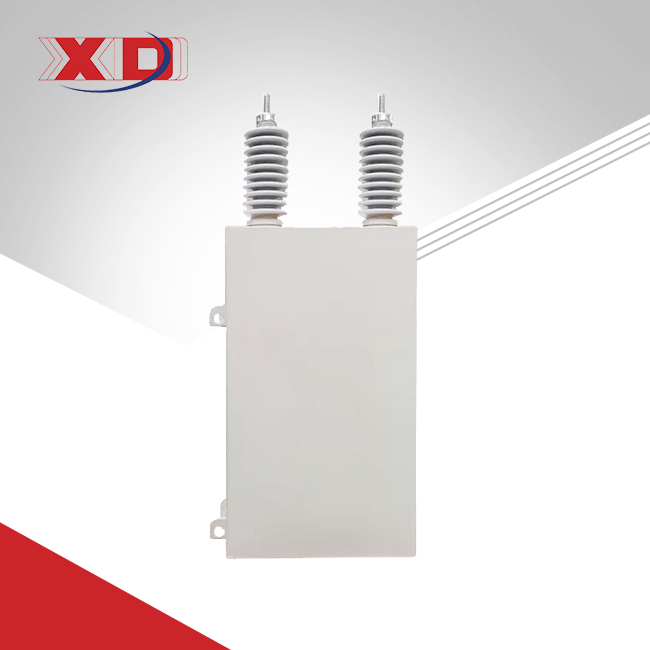
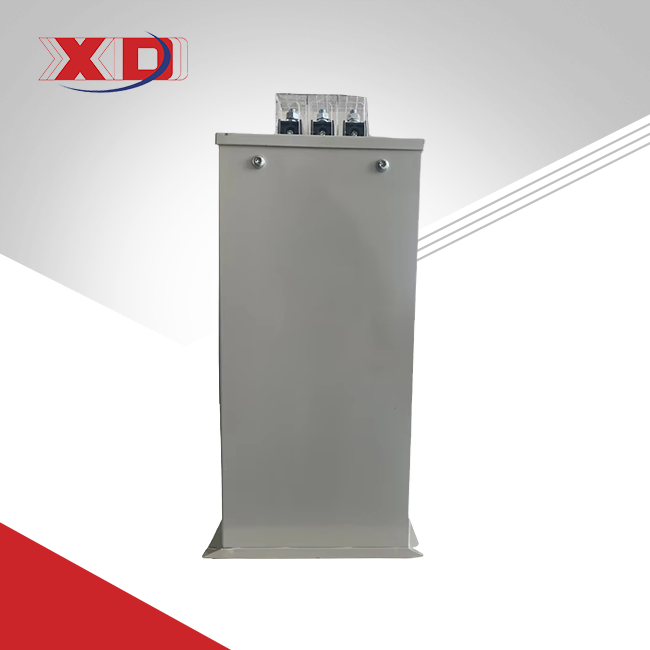
Self-Healing Capacitors in low voltage (LV) networks serve as critical components for maintaining power quality, protecting sensitive equipment, and ensuring operational continuity. These advanced metallized film capacitors automatically repair minor dielectric breakdowns through vaporization of the metallized layer around fault points, eliminating the need for immediate replacement. Their primary applications include power factor correction, harmonic filtering, motor starting assistance, and voltage regulation across industrial facilities, commercial buildings, and renewable energy installations.
Increasing load, interference from harmonics, and the incorporation of sources of green energy are some of the issues that modern power systems are facing that have never been seen before. When traditional capacitors are subjected to sudden increases in voltage or electromagnetic stress, they can fail catastrophically, which results in costly downtime and safety issues. However, the way that we approach electrical quality control in LV networks has been completely transformed with the introduction of self-healing technology.
Understanding Self-Healing Technology in Power Systems
The Self-Healing Mechanism Inside Modern Capacitors
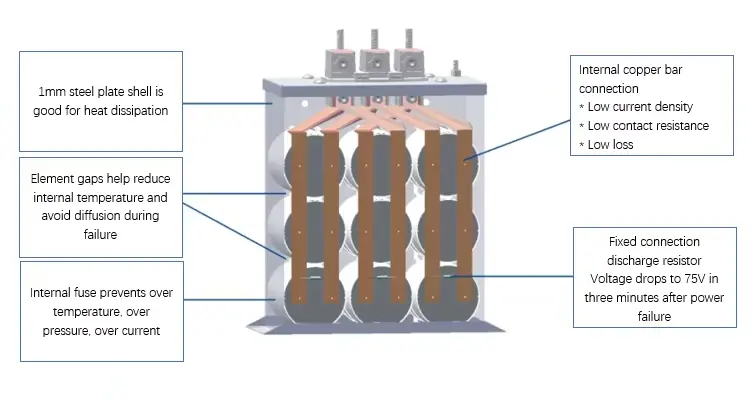
The plated polypropylene film architecture of these capacitors makes it possible for them to resist the kind of electronic stress that would cause irreversible damage to foil-type units that are commonplace. An instantaneous vaporization of the thin metal layer that surrounds the fault happens when a limited breakdown takes place. This results in the formation of an insulated zone to prevents further damage. This process takes place in a matter of microseconds and enables the capacitor's capacitor to continue functioning at a capacity that is very close to its maximum capacity.
Reliable Performance in Critical Power Environments
This technology proves particularly valuable in environments where equipment operates continuously under varying load conditions. Manufacturing facilities, data centers, and hospitals cannot afford power interruptions that traditional capacitor failures might cause. The self-healing mechanism provides a benign failure mode, gradually losing small amounts of capacitance over time rather than failing catastrophically.
Advanced Dielectric Materials Improve Efficiency and Lifespan
Dielectric materials, which are generally made of polypropylene, have greater electrical qualities as compared to technologies that were developed in the past. Because of its low leakage factor and strong insulation resistance, it has a longer service life and improves energy efficiency because of these characteristics. Research on intelligent materials is always improving these features, which results in newer units being even more dependable than their predecessors at this point.
Power Factor Correction in Industrial Applications
Why Industrial Facilities Need Power Factor Correction?
When it comes to low-voltage (LV) networks, power factor correction is one of the most common uses for self-healing capacitors. Industrial facilities that have significant inductive loads, such as electricity, transformers, and welding equipment, generate reactive power, which lowers the overall efficiency of the system. An inadequate power factor leads to a rise in energy expenses, a decrease in transformer capacity, and the possibility of further fines from the utility.
How Self-Healing Capacitors Stabilize Power Systems?
Self-healing capacitors installed in power factor correction banks compensate for this reactive power by providing capacitive reactance that counteracts inductive effects. The self-healing capability proves essential because these capacitors frequently experience switching transients, harmonic currents, and voltage fluctuations that can stress the dielectric material.
Real Energy Savings and Operational Reliability
Manufacturing plants typically see immediate benefits after installing these systems. A textile facility in Southeast Asia reduced its monthly electricity bills by 25% after upgrading to self-healing power factor correction capacitors. The automatic clearing feature prevented three potential system failures during the first year, avoiding costly production interruptions. Self-Healing Capacitor reliability in such demanding industrial environments begins long before installation—incoming material inspection of metallized polypropylene films ensures consistent dielectric strength and clearing capability, directly contributing to the fault tolerance and energy savings observed in real-world applications.
Flexible Capacitor Bank Design for Changing Loads
The modular design allows engineers to customize capacitor banks for specific facility requirements. Banks can be configured for automatic switching based on load conditions, ensuring optimal power factor across varying operational scenarios. This flexibility makes them ideal for facilities with fluctuating production schedules or seasonal demand variations.
Harmonic Filtering and Power Quality Enhancement
The Growing Challenge of Harmonics in Modern LV Networks
Due to the development of non-linear loads in contemporary LV networks, such as a variable-frequency drives, LED lights, and computer equipment, harmonic distortion presents considerable issues. These challenges should be taken into consideration. Harmonic currents are produced by these loads, which have the potential to cause damage to sensitive equipment, lead to overheating, and disrupt communication systems.
Tuned Filter Circuits for Targeted Harmonic Control
Utilizing reactors in conjunction with self-healing filter capacitors allows for the creation of tuned filter circuits that are able to target certain harmonic frequencies. When it comes to these applications, the self-healing feature becomes very important since currents with harmonics increase the amount of electrical stress that is placed on the material that provides the dielectric. Self-healing units continue to function dependably even when subjected to persistent harmonic loading, in contrast to traditional capacitors, which may fail under such conditions.
Maintaining Stable Power in Data Centers
Data centers benefit significantly from harmonic filtering solutions. Server farms generate substantial harmonic content that can affect power quality throughout the facility. Installing self-healing harmonic filters near major UPS systems and server rooms maintains clean power while protecting the filtering equipment from stress-related failures.
Metallized Film Design for Long-Term Reliability
These capacitors are especially useful for harmonic filtering due to the range of frequencies characteristics of the metallized film architecture that they are constructed with. While its low comparable series resistance helps to decrease losses, the self-healing mechanism assures that they will remain reliable over the long term, even when subjected to demanding harmonic circumstances.
Motor Starting and Run Capacitors
The Role of Capacitors in Single-Phase Motor Operation
When it comes to producing the spinning magnetic field that is required for operation, single-phase motors need the aid of capacitive components. Self-healing motor capacitors fulfill the job of supplying the phase shift that is necessary for appropriate motor operation. They are used for both starting and running the motor. Due to the fact that motor applications expose capacitors to frequent changing, cycling of heat, and electrical stress, the self-healing capability proves to be quite important.
Reliable Performance in HVAC Systems
HVAC systems represent a major application area where these capacitors excel. Air conditioning compressors, circulation fans, and heat pumps rely on single-phase motors that require reliable capacitive support. The self-healing capability prevents sudden motor failures that could result in system downtime during critical periods. Self-Healing Capacitor quality and lifespan in HVAC applications are consistently verified through rigorous testing of dielectric films and metallized electrodes during incoming material inspection, ensuring dependable motor start and run performance even under frequent cycling and high ambient temperatures.
Improving Reliability in Agricultural and Remote Installations
In agricultural applications, pump stations , irrigation systems are likewise largely dependent on motor run capacitors of a significant magnitude. Considering that remote installations are notoriously difficult and costly to maintain, the self-healing function is very important for ensuring dependability. After converting to self-healing units, a water treatment plant claimed that it was able to eliminate eighty percent of the service calls that were connected to capacitors.
Heat Resistance and Long Service Life
The thermal properties of polypropylene dielectric make it possible for it to function in high-temperature conditions, which are typical of motor applications. When combined with the regeneration mechanism, these capacitors will provide a prolonged service life even when subjected to continuous duty cycles over their lifetime.
Voltage Regulation and Stability
Managing Voltage Fluctuations in LV Networks
Variations in voltage are a common occurrence in low-voltage (LV) networks because of the presence of variable loads, lengthy distribution lines, and switches activities. Capacitors that are capable of self-healing provide a contribution to the control of voltage by providing reactive electrical support, which assists in the maintenance of stable voltage levels across the network.
Supporting Rural and Long-Distance Power Distribution
Distribution systems in developing regions particularly benefit from this application. Rural electrification projects often involve long transmission lines that create voltage drop issues. Installing self-healing capacitor banks at strategic locations improves voltage profiles while providing the reliability needed for remote installations.
Fast Response to Changing Electrical Conditions
The fast response characteristics of these capacitors make them suitable for dynamic voltage support applications. Unlike mechanical switching devices, capacitors respond instantly to changing electrical conditions, providing continuous voltage support without delays.
Enhancing Grid Stability with Renewable Energy
Renewable energy integration creates new voltage stability challenges as solar and wind generation introduce variability into the power system. Self-healing capacitors help smooth these fluctuations while maintaining their protective capabilities under the stress of rapid voltage changes.
Renewable Energy Systems Integration
Power Electronics Challenges in Renewable Energy Systems
Solar photovoltaic and wind energy systems rely heavily on power electronics that create unique challenges for LV networks. Inverters generate harmonic content and reactive power demands that require careful management. Self-healing capacitors serve multiple functions in these applications, from DC link filtering to AC harmonic suppression.
Stabilizing DC Bus Voltage in Solar Inverters
Solar installation inverters use self-healing DC capacitors to smooth the DC bus voltage and provide energy storage for power conversion. The self-healing feature proves essential because these capacitors operate under high-frequency switching conditions that stress the dielectric material over time.
Reliable Performance in Harsh Wind Farm Environments
Wind farm applications subject electrical equipment to harsh environmental conditions including temperature extremes, vibration, and moisture. The robust construction of self-healing capacitors, combined with their fault-tolerant design, provides the reliability needed for these challenging installations. Self-Healing Capacitor long-term stability in such environments is ensured through stringent incoming inspection of metallized films and encapsulation materials, preventing premature failures caused by microscopic defects or moisture ingress.
Meeting Grid Power Quality Requirements
Wind and solar power systems that are connected to the grid are required to fulfill stringent power quality criteria, which often call for compensating reactive power and harmonic filtering. capacitors that are capable of self-healing make it possible for these systems to meet the norms for utility connections while also preserving their long-term dependability.
UPS and Backup Power Applications
The Role of Capacitors in UPS Systems
Reliable capacitive components are essential to the operation of uninterruptible electrical supplies since they are responsible for energy storage, suppression, and power factor adjustment. Because of the crucial nature of UPS applications, the self-healing function is very significant. This is because failures in capacitors might impair the protection of backup power.
Ensuring Power Security in Hospital Emergency Systems
An excellent illustration of the need of dependable capacitive components is seen in hospital emergency power systems. Due to the fact that medical equipment cannot endure power disruptions, the dependability of UPS is of the utmost importance. These systems are equipped with self-healing capacitors, which offer the fault tolerance that is necessary for applications that are life-critical.
Handling High-Frequency Stress in Data Centers
Data center UPS installations face unique challenges from high-frequency switching and thermal stress. The self-healing mechanism helps these capacitors maintain performance under continuous operation while providing the reliability that data center operations demand.
Improving Reliability in UPS Battery Charging Circuits
Battery charging systems within UPS installations also benefit from self-healing capacitor technology. These circuits experience significant current ripple and switching stress that can gradually degrade conventional capacitors. The automatic clearing feature extends service intervals and improves overall system reliability.
Conclusion
Self-healing capacitors have transformed LV network reliability through their unique ability to automatically recover from dielectric faults. Their applications span power factor correction, harmonic filtering, motor support, voltage regulation, renewable energy integration, and backup power systems. The metallized film construction provides superior performance compared to traditional foil capacitors while the self-healing mechanism ensures continued operation despite minor faults. As power systems become increasingly complex with renewable integration and electronic loads, these advanced capacitors provide the reliability and performance needed for critical infrastructure applications.
FAQ
1. What happens when a self-healing capacitor experiences a fault?
When a localized breakdown occurs in the dielectric material, the metallized electrode around the fault point instantly vaporizes due to the arc energy. This creates an insulated zone that isolates the defect from the rest of the capacitor. The unit continues operating with slightly reduced capacitance, typically losing less than 1% per healing event.
2. How long do self-healing capacitors last in LV applications?
Properly applied self-healing capacitors typically provide 15-25 years of reliable service in LV networks. Service life depends on operating conditions including temperature, voltage stress, harmonic content, and switching frequency. The gradual healing process allows predictive maintenance based on capacitance monitoring.
3. Can self-healing capacitors handle voltage spikes from lightning?
While self-healing capacitors offer superior surge tolerance compared to conventional units, they still require appropriate surge protection for lightning events. The self-healing mechanism works best with localized faults rather than massive overvoltages that exceed the dielectric breakdown strength across large areas.
Partner with Xi'an Xidian for Reliable Self-Healing Capacitor Solutions
Xi'an Xidian Medium & Low Voltage Electric Co., Ltd. stands as a leading self-healing capacitor manufacturer with over 100 product variants and multiple patented technologies. Our self-healing capacitors operate reliably at altitudes up to 4,000 meters while meeting international quality standards. Contact our technical team at serina@xaxd-electric.com, amber@xaxd-electric.com, or luna@xaxd-electric.com to discuss customized solutions for your LV network requirements.
References
1. Johnson, M. & Chen, L. (2023). "Advanced Metallized Film Capacitors in Low Voltage Power Systems." IEEE Transactions on Power Electronics, 38(7), 8234-8247.
2. Rodriguez, A., Patel, S. & Kim, J. (2022). "Self-Healing Mechanisms in Power Factor Correction Applications." Journal of Electrical Engineering Technology, 17(4), 1923-1935.
3. Thompson, R. & Zhang, W. (2023). "Harmonic Mitigation Using Self-Healing Filter Capacitors in Industrial Networks." International Conference on Power Quality and Smart Grid, pp. 156-163.
4. Williams, D., Al-Hassan, M. & Nguyen, T. (2022). "Reliability Assessment of Self-Healing Capacitors in Renewable Energy Systems." Renewable Energy Integration Quarterly, 15(2), 78-91.
5. Brown, K. & Okafor, C. (2023). "Motor Drive Applications of Metallized Polypropylene Capacitors." Industrial Electronics and Applications Review, 29(3), 445-458.
6. Lee, S., Schmidt, H. & Petrosky, V. (2022). "Voltage Stability Enhancement in Distribution Networks Using Self-Healing Reactive Components." Power Systems Research Journal, 41(8), 2156-2168.