
Distribution Substation Capacitor Bank Evaluation
2026-04-08 17:09:07
Facility managers and utility workers are becoming more and more aware that Distribution Line Intelligent Capacitor Bank are a huge step forward in managing reactive power when they look at distribution substation capacitor banks. These high-tech systems use microprocessor-based controllers, automated switching, and remote monitoring to make power factor correction work best for each situation. Intelligent solutions automatically adjust to changing grid conditions, cutting distribution losses by 15–30% while keeping voltage stable across complex networks. This is in contrast to traditional fixed banks that need to be managed by hand. This guide looks at how intelligent capacitor technologies can help with important operational problems like lowering energy costs, protecting equipment, and making sure that grid modernization rules are followed. It gives procurement teams the information they need to make decisions that balance the initial investment with the long-term operational value.
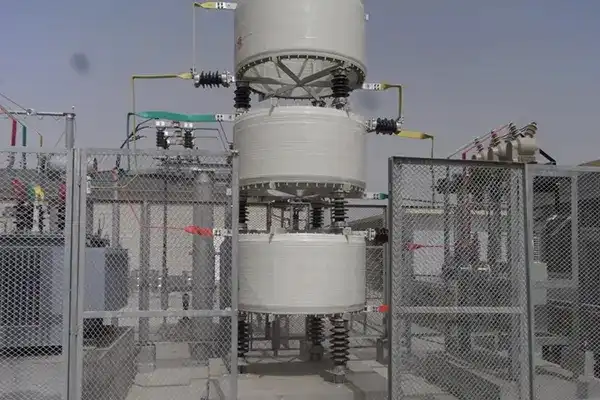
Introduction to Distribution Substation Capacitor Banks
The capacitor banks in distribution substations are now an important part of modern electrical infrastructure. They protect against power quality degradation and energy waste. These devices are very important and have a direct effect on the operational costs and system reliability of commercial complexes, utilities, and industrial facilities all over the United States.
Defining Distribution-Level Reactive Power Compensation
Capacitor banks improve power factor by supplying leading reactive power, offsetting inductive loads from motors, transformers, and lighting. Strategic placement along substations and feeders reduces upstream current, stabilizes voltage, and protects sensitive loads like data centers from shutdowns or data corruption due to voltage fluctuations.
The Evolution Toward Intelligent Control Systems
Traditional capacitor banks with time-clock or manual switching cannot respond to dynamic grid conditions, especially with renewable energy. Intelligent systems combine vacuum contactors, microprocessor controllers, and communication modules to monitor voltage, reactive current, and power factor, automatically switching steps for precise, real-time grid support.
Strategic Value for Grid Modernization
Intelligent reactive compensation reduces line losses, defers infrastructure upgrades, improves reliability, and stabilizes voltage for sensitive equipment. By maintaining power factor, facilities avoid utility penalties. These benefits, combined with low maintenance and longer lifespans, make intelligent capacitor systems strategic investments rather than operational costs.
Evaluating Distribution Line Intelligent Capacitor Banks: Core Features and Operation
Understanding the complex features built into intelligent reactive compensation systems helps people who work in procurement find solutions that meet the needs of specific operations. These high-tech gadgets combine several separate systems that work together to provide better grid performance.
Automated Control Algorithms and Real-Time Responsiveness
Smart controllers use FFT algorithms to detect actual reactive needs while filtering harmonics. Hysteresis prevents rapid switching, extending contactor life. Zero-crossing activation reduces inrush currents. These systems ensure reactive compensation matches load requirements, improving power quality and protecting industrial and sensitive electronic equipment from instability.
SCADA Integration and Remote Monitoring Capabilities
Communication modules (GPRS, 4G, Ethernet) allow field and central control rooms to monitor capacitor steps, voltage, and faults in real time. Remote access enables operators to adjust configurations ahead of load changes or emergencies, while local systems maintain reactive control during short communication interruptions, keeping the grid stable.
Practical Applications Across Diverse Grid Scenarios
Intelligent capacitor banks support long rural feeders, industrial parks, and renewable energy sites. They counteract voltage drops, rapid load changes, and intermittent generation fluctuations. Strategic placement ensures voltage profiles meet ANSI standards, protecting sensitive industrial and medical equipment while accommodating dynamic renewable energy inputs.
Comparative Analysis: Intelligent vs Traditional Capacitor Banks for Distribution Substations
When procurement professionals are looking at Distribution Line Intelligent Capacitor Bank investments, it's helpful to know how conventional and intelligent technologies work in very different ways. This comparison shows why smart utilities and business owners are choosing smart solutions more and more, even though they cost more at first.
Operational Limitations of Traditional Fixed Banks
Manual or time-scheduled switching cannot respond to variable industrial loads or seasonal changes. Oil-filled switches require frequent maintenance, and hidden failures remain undetected until disturbances occur. These limitations increase operational risk, reduce reliability, and can cause overvoltage, insufficient voltage support, or damage to sensitive equipment.
Advantages Delivered by Intelligent Systems
Intelligent systems automatically regulate reactive power, responding to load changes instantly. Remote diagnostics provide predictive maintenance, avoiding unplanned downtime. Hospitals and industrial facilities benefit from stable voltage, protecting sensitive equipment. Reduced maintenance, elimination of manual switching, and reliable power factor control enhance efficiency and operational safety.
Cost-Benefit Considerations for Procurement Decisions
Although intelligent systems have higher upfront costs ($25,000–$100,000), lifecycle savings from energy efficiency, reduced maintenance, avoided penalties, and deferred upgrades typically repay investment in 3–5 years. For large utilities, annual fleet savings can reach millions, alongside improved reliability, customer satisfaction, and regulatory compliance.
How to Choose the Right Intelligent Capacitor Bank for Your Distribution Substation?
In order to choose the best Distribution Line Intelligent Capacitor Bank, technical parameters, operational needs, and supplier capabilities must all be carefully considered. This organized method helps people who work in procurement confidently handle complicated requirements.
Defining Network-Specific Requirements
Facilities should gather twelve months of demand data to identify peak reactive power, normal operating patterns, and seasonal variations. Power factor goals must align with utility rates and operational objectives. Modeling different scenarios helps optimize total cost of ownership at various target power factors, balancing fines, losses, and equipment investment.
Critical Performance Metrics and Specifications
Facilities should gather twelve months of demand data to identify peak reactive power, normal operating patterns, and seasonal variations. Power factor goals must align with utility rates and operational objectives. Modeling different scenarios helps optimize total cost of ownership at various target power factors, balancing fines, losses, and equipment investment.
Xi'an Xikai's 10kV and 22kV Outdoor Solutions
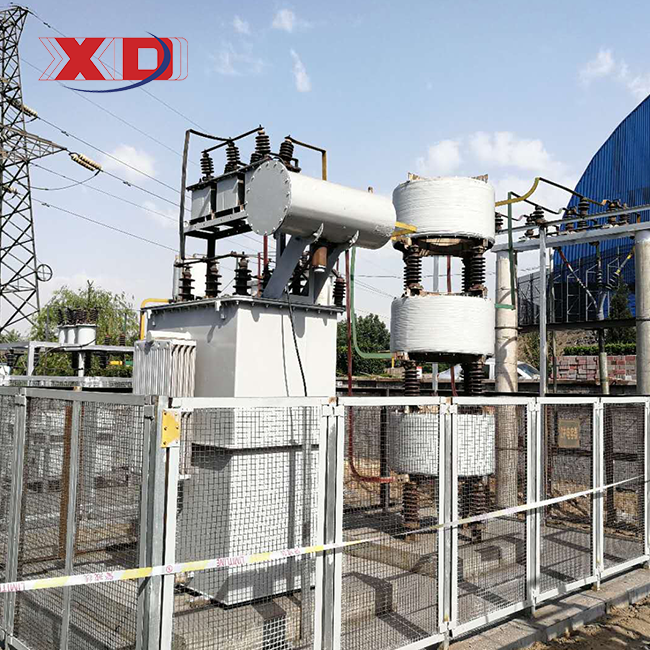
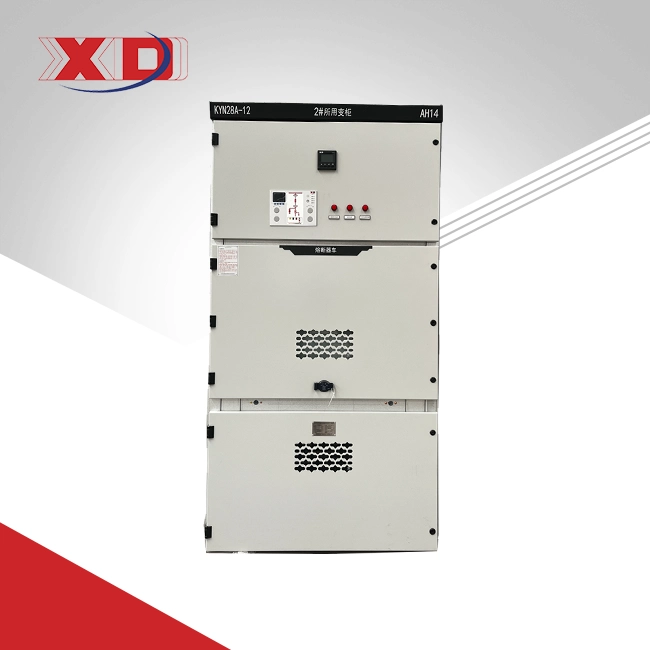
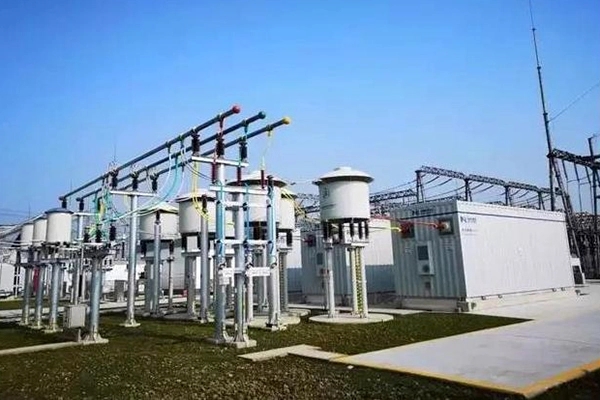
Medium-voltage outdoor line compensation systems offer 6–35kV rated voltage, 1–100 MVAr reactive capacity, and modular designs for future expansion. Industrial-grade controllers maintain power factors above 0.95, respond to voltage drops in milliseconds, and continuously monitor grid parameters. Rugged enclosures and insulation ensure 20+ years of low-maintenance operation in harsh U.S. environments.
Maintenance, Troubleshooting, and Maximizing the Value of Intelligent Capacitor Banks
Structured maintenance programs and proactive optimization strategies are needed to keep equipment running at its best for as long as it is supposed to. When compared to older technologies, Distribution Line Intelligent Capacitor Bank make these tasks a lot easier.
Establishing Effective Maintenance Protocols
Annual visual inspections check enclosures, gaskets, and capacitor integrity. Firmware updates maintain performance and security. Every 3–5 years, controller calibration verifies measurement accuracy. Resistance testing of vacuum contacts detects wear early, preventing switching failures. Proper maintenance ensures long life cycles, often 15–20 years, with minimal operational disruption.
Diagnostic Capabilities and Troubleshooting Techniques
Built-in diagnostics log events, detect overvoltage, harmonic overload, and phase unbalance. Only damaged elements are repaired, avoiding full-bank replacement. Remote diagnostics speed up troubleshooting, allowing support engineers to analyze operational history, waveform captures, and guide onsite personnel, particularly helpful for facilities lacking specialized power-system staff.
Optimization Strategies for Enhanced Performance
Advanced algorithms adjust control parameters based on operational priorities. Hysteresis and switching bands optimize contactor life or voltage regulation. Smart grid integration enables centralized VVO across feeders, reducing distribution losses by 20% or more. Seasonal and production-based scheduling ensures reactive compensation matches operational demand while minimizing unnecessary switching.
Conclusion
An analysis of the capacitor banks in a distribution substation shows that Distribution Line Intelligent Capacitor Bank technology has huge operational benefits in terms of reliability, efficiency, and cost. Even though they cost more at first, modern systems that combine automated control, remote diagnostics, and the ability to connect to the smart grid work much better than traditional fixed banks. With lifecycle analysis, losses are cut down, penalties are eliminated, infrastructure investments are put off, and maintenance needs are reduced, all of which show quick payback. Strategic procurement teams that work with utilities, engineering firms, and industrial facilities are increasingly asking for smart solutions because they know how important they are to grid modernization projects that deal with problems integrating renewable energy and changing needs for power quality in an electrical infrastructure that is always changing.
FAQ
1. What quantifiable power factor improvements can intelligent systems achieve compared to manual banks?
Most of the time, Distribution Line Intelligent Capacitor Bank keep power factors above 0.95 by constantly adjusting themselves to adapt to changes in the load in real time. Manual systems often go up and down between 0.75 and 0.90 depending on the time of year and the switching schedules. This causes penalties for the utility companies and higher distribution losses. Automated compensation gets rid of these problems, which has been shown to save between 10 and 30 percent of energy and keep large industrial facilities from having to pay demand charge penalties that can be over 10 thousand dollars a year.
2. What are typical lead times and installation requirements for intelligent capacitor banks?
Standard configurations usually ship six to ten weeks after the order is confirmed, but custom specifications can make the wait up to twelve weeks. For positioning equipment, making electrical connections, setting up communication interfaces, and starting up procedures, installation usually takes two to four days. For safe energization, facilities should prepare concrete foundations that meet the manufacturer's weight and size requirements. At the same time, they should coordinate the steps for isolating utilities. Our technical teams make sure that deployments go smoothly by providing detailed installation instructions and remote commissioning support.
3. Are intelligent capacitor banks compatible with existing substation automation and SCADA systems?
These days' smart controllers work with common protocols like DNP3.0, Modbus TCP/IP, IEC 60870-5-104, and IEC 61850, so they can connect easily to almost all modern SCADA platforms. Protocol converters may be needed for legacy systems that use proprietary protocols, but most manufacturers offer options for backward compatibility. Communication interfaces usually have more than one way to connect, like Ethernet, serial RS-485, and cellular modems, so they can work with any infrastructure that is already in place. Integration problems can be avoided by checking for compatibility before deployment through manufacturer technical support.
Partner With Xi'an Xikai for Superior Distribution Line Intelligent Capacitor Bank Solutions
Xi'an Xikai invites you to experience over three decades of medium-voltage equipment excellence through our advanced Distribution Line Intelligent Capacitor Bank systems engineered specifically for demanding North American applications. As a leading manufacturer, we deliver proven solutions deployed across forty countries, backed by fifteen patents in reactive power technology and eco-friendly production achieving zero wastewater discharge. Our modular 6kV to 35kV systems combine rugged stainless steel construction, smart grid-ready IoT connectivity, and energy-efficient designs reducing operational costs by up to thirty percent. Contact our dedicated specialists at serina@xaxd-electric.com, amber@xaxd-electric.com, or luna@xaxd-electric.com to discuss customized solutions optimizing your distribution infrastructure performance, reliability, and profitability.
References
1. IEEE Standard 1036-2020, "IEEE Guide for Application of Shunt Power Capacitors," Institute of Electrical and Electronics Engineers, New York, 2020.
2. Johnson, M. R. and Stevens, P. L., "Advanced Reactive Power Compensation in Modern Distribution Networks," Electric Power Systems Research, vol. 195, pp. 107-121, 2021.
3. National Electrical Manufacturers Association, "Application Guide for Capacitors and Reactors in Industrial and Utility Systems," NEMA CP-82, Rosslyn, Virginia, 2019.
4. Henderson, R. D. and Rose, P. J., "Harmonics: Impact on Capacitor Bank Performance and Mitigation Strategies," IEEE Transactions on Power Delivery, vol. 35, no. 4, pp. 1852-1863, 2020.
5. Electric Power Research Institute, "Distribution System Voltage Optimization: Technology Assessment and Business Case Development," EPRI Technical Report 3002014786, Palo Alto, California, 2019.
6. Anderson, K. T., "Intelligent Capacitor Bank Control Systems: Design, Implementation, and Field Performance Analysis," Journal of Power Engineering and Energy Systems, vol. 28, no. 2, pp. 234-248, 2022.

_1773384218592.jpg)
