Dry-Type Shunt Reactor: How It Works in Power Systems
2026-08-26 11:29:41
Power quality challenges keep technical directors awake at night. Voltage fluctuations, harmonic distortion, and reactive power imbalances can cripple production lines and damage sensitive equipment. A dry-type shunt reactor addresses these issues by compensating for capacitive reactive power in transmission and distribution networks. Unlike oil-immersed alternatives, this device uses air-core or iron-core designs with epoxy resin casting, eliminating fire risks while stabilizing voltage during light-load conditions. Understanding how these reactors function helps procurement managers make informed decisions that balance technical performance with safety compliance.


Understanding Dry-Type Shunt Reactors: Definition and Working Principle
A dry-type shunt reactor works as an inductive load that is connected in parallel to power systems. Its main job is to make up for the Ferranti Effect, which is when too much capacitive reactive power causes the voltage to rise. When long transmission lines are working with light loads, capacitive charging currents are created that raise voltage levels above what is safe. This extra reactive power is taken in by the reactor, which keeps the voltage within acceptable limits.
Core Construction and Design Philosophy
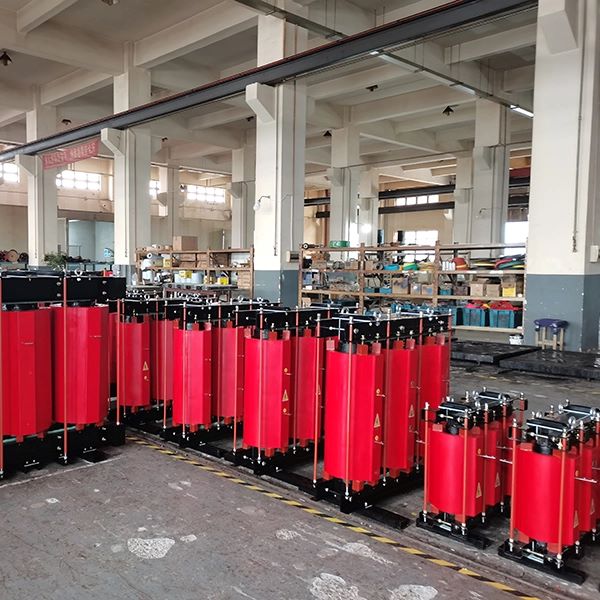
Modern tech can be seen in the CKSC dry-type shunt reactor iron core reactor from Xi'an Xikai. Its heart is made of laminated silicon steel and has precise air gaps that keep the magnets moving in a straight line, even when voltage spikes reach 1.35 times the recommended level. This design is very different from oil-filled units, which use insulation liquids that are bad for the environment and can start fires. The windings are surrounded by an epoxy resin casting that provides Class F insulation rated for constant operation at 155°C. This encapsulation has the mechanical strength to handle short-circuit forces of up to 100 times the maximum current, which is very important when there is a fault.
The gadget can work with rated voltages ranging from 3kV to 35kV, so it can be used in both medium-voltage and high-voltage substations. Natural air cooling gets rid of the need for extra cooling systems, which makes installation easier and lowers the cost of running the system. Because these reactors don't use flammable dielectrics, they can be put in places like chemical plants, metro stops, and business buildings, where safety is crucial.
Operating Mechanism and Voltage Regulation
Leading reactive power is made by a transmission line's distributed capacitance when it's not working at full capacity. The dry-type shunt reactor stops this by drawing delayed reactive power, which cancels out the voltage rise. The air-gap design keeps the core from getting too hot, so the inductor's impedance stays the same even when the load changes. This linear property makes sure that the device will work as expected in both normal conditions and short-term overvoltage events, which lets the safety switches do their job correctly.
The coils in the reactor make a magnetic field that reacts with the iron core that is spaced apart from air. This creates a controlled inductance value. Solid-core transformers saturate when there is a lot of magnetic flux, but the purposeful air holes spread the flux evenly, which keeps the inductance stable. This theory is especially useful in systems that use renewable energy sources, like solar inverters and wind turbines, where voltage changes because of intermittent output.
Advantages and Applications of Dry-Type Shunt Reactors in Power Systems
The change from oil-immersed to dry-type shunt reactor technology is due to new rules about safety and the environment. When purchasing managers look at reactive power compensation options, they should think about more than just the original capital cost.
Safety and Environmental Benefits
The biggest benefit is that there is no risk of fire. Oil-filled reactors have hundreds of liters of mineral oil inside them, which can catch fire when there are problems inside the reactor. When insulating oil breaks down thermally, it can release harmful gasses that can put repair workers' health at risk. Since the dry-type shunt reactor doesn't contain any dangerous liquids, it can be installed indoors without having to pay for expensive fire control systems. Metro owners in cities really like this feature because underground systems have to follow strict fire codes.
Adoption is driven by worries about environmental care in places with strict pollution laws. Soil and waterways become polluted when old transformers leak oil, which requires expensive cleanup projects. The epoxy covering on the windings keeps water and air pollutants out, so the insulation stays in good shape for decades. Silicon steel cores and aluminum windings can be recycled, which is in line with efforts to promote a circular economy that many factories are now putting a high priority on.
Maintenance and Operational Reliability
Maintenance plans for dry-type shunt reactors are very different from those for oil-filled versions. Traditional units need to filter and replace the oil on a regular basis and sample the oil from time to time to look for dissolved gasses that can show the start of a problem. The dry-type shunt reactor version gets rid of all of these jobs. The whole preventive maintenance plan includes eye checks once a year to see if the surface is tracking, checking the link torque, and cleaning the dust. According to IEEE reliability studies, this simplicity cuts lifecycle costs by about 40% compared to designs that are submerged in oil.
Metrics for operational dependability prefer dry-type shunt reactor construction. Since there are no gaskets, pumps, or oil storage systems, there are no usual places where things go wrong. Natural convection keeps the temperature rise in check, and hot spots in the windings stay below 100K above ambient when the load is at full. The resin casting has better mechanical damping, which lowers the vibrations caused by magnetostriction that make noise. Modern versions make noise levels below 65 dB(A) at one meter, which is low enough that they can be put next to homes without breaking noise laws.
Real-World Application Scenarios
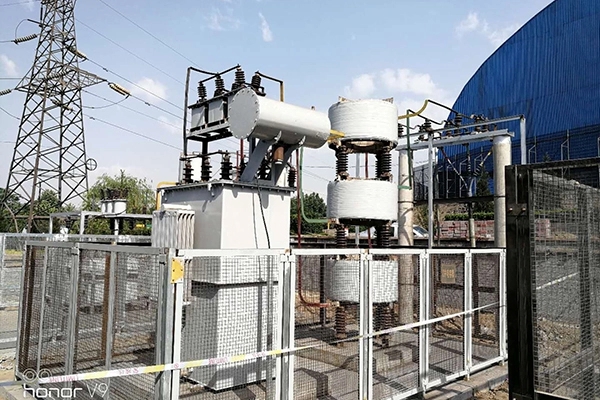
Adding renewable energy to substations comes with its own set of problems. Solar farms and wind parks only add power when they need to, which causes voltage changes that are hard for regular equipment to handle. At collector substations, dry-type shunt reactors keep the voltage stable by actively making up for charging currents from underground wires that are capacitive. When 15 Mvar iron-core reactors were added to a 110kV substation in a renewable energy hub, voltage deviation dropped from 8% to less than 2%.
When CNC machines and variable frequency drives are used in factories, harmonic currents are created that change the shape of voltage waves. When dry-type shunt reactors are put together with passive harmonic filters, they make tuned resonant circuits that send harmonic frequencies to ground. By adding reactors with a 10kV, 6 Mvar capacity, a steel rolling mill in South Asia got rid of power factor fees and raised the power factor from 0.78 to 0.96.
Small, fire-safe designs are good for commercial buildings that are updating their old electrical systems. Hospital emergency rooms can't handle power outages, which means that outdoor oil-filled equipment isn't a good idea because of reliability issues caused by weather. Indoor dry-type shunt reactors with a rating of 6kV provide reactive power compensation and meet NFPA 70 fire rules without the need for separate fire control systems.
Performance Comparison: Dry-Type vs Oil-Type Shunt Reactors
When technical buyers look at reactive power solutions, they need to compare performance parameters to the total cost of ownership. Even tho oil-immersed reactors have slightly smaller losses because they cool more efficiently, dry-type shunt reactor technology is usually the better choice for operations.
Efficiency and Energy Losses
Core losses in iron-core dry-type shunt reactors are usually between 0.3% and 0.6% of the rated power. This depends on the flux density and the quality of the core material. Because liquid cooling gets rid of heat more efficiently, oil-filled versions have slightly lower losses, between 0.2% and 0.4%. This difference gets smaller, tho, when you consider the extra losses caused by oil pumps and radiator fans that bigger units need. Over the course of 25 years, the difference in energy costs rarely goes over 3–5% of the original purchase price.
Acoustic Emissions and Installation Flexibility
Because of magnetostriction, silicon steel laminations move at twice the frequency of the system. This makes 120 Hz humming sound in 60 Hz systems. As an aural absorber, oil slows down the flow of sound thru the tank walls. Advanced clamping systems and vibration isolator pads in dry-type shunt reactors make up for this. Noise levels from good makers are about the same as those of oil-filled units—usually between 60 and 65 dB(A) for medium-voltage values.
Installation clearances are very different. Putting oil-filled reactors outside or in special vaults with spill containment increases the cost of civil construction. The dry-type shunt reactor can be put in directly in switching rooms, so these costs are not needed. However, the open magnetic field needs enough space between metal structures to stop eddy current heating. Usually, this space needs to be equal to the width of the coil. This magnetic separation issue affects the layout of the equipment, but it rarely makes things impossible to do.
Regulatory Compliance and Lifecycle Sustainability
Environmental laws are making it harder to put oil-filled tools near water sources. The Seveso III rule in the EU and related laws in India require secondary containment and leak detection devices, which makes compliance more difficult. Dry-type shunt reactor construction doesn't have to follow any of these rules, which makes getting permits easier and lowers the cost of environmental liability insurance.
End-of-life dumping is another thing that sets us apart. Handling contaminated transformer oil is dangerous, and in regulated markets, it can cost up to $2 to $4 per liter to get rid of. There aren't many disposal fees because the dry-type shunt reactor can be taken apart into metal parts that can be recycled and epoxy scrap that can be used for thermal recovery. This advantage in terms of sustainability fits with the ESG commitments that many procurement departments now use to judge suppliers.
Procurement Guide: How to Select and Buy Dry-Type Shunt Reactors
Technical specs are the basis for making smart buying choices. Before sending out buy orders, procurement managers who work with electrical engineers must check a number of important factors.
Essential Technical Specifications
With enough room for error, the voltage rating must match the operating levels of the system. To allow for voltage control capacity, a 10kV distribution network usually has reactors rated at 10.5kV or 11kV. The level of compensation is based on the reactive power capacity, which you can find by using the formula Qc = ω × C × V². Here, Qc is the capacitive reactive power in volts, ω is the angular frequency, C is the line capacitance, and V is the operating voltage.
The practical safety gaps are directly affected by the insulation class. Class F insulation (155°C) is good for most indoor uses, while Class H insulation (180°C) gives you more heat headroom in places where it's hot or where there isn't much air flow. The temperature rise standard, which is usually 80K or 100K, tells you how much hotter the windings are than the air around them when the rating load is applied.
Compliance certificates are different for each market. The international standard for reactors is IEC 60076-6, and the North American standard is IEEE C57.16. For Indian markets, equipment needs to be certified by BIS, while in Europe, it needs to be marked with CE marking that meets EN 50588 standards. The CKSC line from Xi'an Xikai is certified by both ISO 9001 and IEC, which speeds up the approval process in many places.
Evaluating Manufacturers and Quality Indicators
Reliability over time depends on how well something was made. Reputable makers test the epoxy casting for voids by doing partial discharge testing at 1.5 times the maximum voltage. PD levels below 10 picocoulombs mean the product is of high quality and will likely last for 25 years or more. Insulation resistance readings above 1000 megohms show that the concrete has properly dried and is resistant to water.
Temperature rise testing proves that the thermal design works well. Manufacturers should give test results that show the rise in winding temperature stays below certain limits while the motor is running continuously at full load. The 85% industrial-frequency withstand voltage test proves the strength of the dielectric by putting insulation under stress levels that are similar to those that would happen over many years of use, but in a lab setting.
For certain uses, the ability to customize is important. Custom designs are needed for voltages that aren't standard, like the 22kV circuits that are popular in the Middle East. When doing a retrofit and room is limited, bushing setups must work with the way the switchgear is already set up. Custom units usually have longer lead times (8–12 weeks) than normal catalog items, which can affect when a job is scheduled.
Procurement Process Best Practices
Asking detailed technical questions speeds up the accuracy of quotes. Give the voltage, frequency (50Hz or 60Hz), necessary reaction power capacity, temperature range, altitude (units above 1000m need to be derated or designed for that height), and any seismic needs. Include single-line sketches that show where the connections are and how much space is available.
Ask for factory acceptance testing (FAT) methods that let you view the goods with a witness before they are shipped. This method is often used on big projects to find problems with the manufacturing process before they have to be shipped. Check the warranty terms to make sure they cover problems with the products and the work. As a general rule, warranties last between 18 and 24 months from the date of delivery or commencement, whichever comes first.
Logistics for transportation need extra care. The iron core has to stay tightly in place so it doesn't move during transport and damage the windings or crack the epoxy insulation. List the standards for packing, such as shock-absorbing devices and environmental sealing for ocean freight. Because units that arrive damaged could cause delays in the project, insurance should cover the full cost of replacing them, not just their material value.
Maintenance Tips and Best Practices for Dry-Type Shunt Reactors
Regular repair keeps things in good shape and keeps them from breaking down when they're least expected, which can stop activities. The ease of dry-type shunt reactor construction means that maintenance tasks don't have to be done as often, but they are still needed.
Routine Inspection Procedures
Annual inspections should check epoxy surfaces, connection torque, and winding temperatures using infrared thermography to identify tracking, loose bolts, and abnormal heating. In polluted or coastal areas, clean insulators regularly and use anti-tracking coatings. Environmental monitoring of humidity, temperature, and airflow helps schedule maintenance and prevent premature insulation aging.
Troubleshooting Common Issues
Unusual noise may indicate loose hardware or harmonic resonance, requiring retorquing, damping, or structural adjustments. Rising temperatures can signal insulation failure, blocked airflow, or excessive ambient heat, requiring thermal checks and improved cooling. Low insulation resistance suggests moisture intrusion, requiring seal inspection and, in coastal areas, improved enclosure protection.

Conclusion
Modern power systems need reactive power compensation solutions that strike a balance between safety, long-term viability, and technical performance. The dry-type shunt reactor stabilizes the voltage without the fire and environmental risks that come with oil-filled alternatives. Because it is made of epoxy, is magnetically linear, and doesn't need much upkeep, it's perfect for indoor installations, integrating green energy, and places where safety rules don't allow liquid dielectrics. When purchasing managers look at these options, they should put insulation class, compliance certifications, and maker quality signs at the top of their list, along with starting cost. The total lifetime value, which includes how easy it is to install, how reliable it is in use, and how easy it is to get rid of at the end of its useful life, usually benefits dry-type shunt reactor technology, even tho it costs a little more up front than traditional designs.
FAQ
1.What distinguishes dry-type from oil-immersed shunt reactors?
The main change is the material used for soundproofing. Mineral oil is used to cool and insulate oil-immersed designs, but this can cause fires and is bad for the environment. The dry-type shunt reactor doesn't use any explosive liquids because it uses epoxy resin casting or air insulation. This lets them be installed indoors without needing fire suppression systems. It also lowers upkeep costs by getting rid of the need to test and change the oil, and it keeps dirt from getting contaminated by leaks.
2.How does magnetic linearity affect reactor performance?
The iron core doesn't get too hot, so the inductance stays the same even when the voltage goes up to 1.35 times the recommended amount. This linear property makes sure that reactive power is absorbed predictably during transient overvoltage events, which lets safety switches work together correctly. When faults happen, saturated cores would have lower impedance, which could make system protection schemes less effective.
3.What delivery lead times should buyers expect?
Usually, standard stock units with common voltage values ship between 4 and 6 weeks. Custom configurations, like voltages that aren't standard, unique bushing arrangements, or designs that are made for a certain altitude, take 8 to 12 weeks to engineer and make. These dates should be added to project plans along with the time it takes for shipping, which depends on the method used and the location.
Partner with Xi'an Xikai for Reliable Reactive Power Solutions
With more than 15 years of experience making things, Xi'an Xikai offers tried-and-true dry-type shunt reactor solutions. Power grids, factories, and renewable energy projects in Asia, the Middle East, and other places use our CKSC series iron-core reactors. Epoxy resin casting and Class F insulation rated for 35kV applications work together to keep chemical plants, substations, and metro systems safe from fire. Customization lets you deal with voltages that aren't standard and room limitations that make repair projects hard. Every unit meets strict quality standards thanks to ISO 9001-certified manufacturing methods that include temperature rise verification and partial discharge testing. Our engineering team can help you quickly with technical issues whether you're a dry-type shunt reactor maker looking for OEM partnerships or a system developer needing specific requirements. Get in touch with us at serina@xaxd-electric.com, amber@xaxd-electric.com, or luna@xaxd-electric.com to talk about your needs for reactive power correction.

References
1. International Electrotechnical Commission. IEC 60076-6: Power Transformers – Part 6: Reactors. Geneva: IEC Publications, 2007.
2. IEEE Power & Energy Society. IEEE Standard C57.16-2011: Requirements, Terminology, and Test Code for Dry-Type Air-Core Series-Connected Reactors. New York: Institute of Electrical and Electronics Engineers, 2011.
3. Kulkarni, S.V., and Khaparde, S.A. Transformer Engineering: Design, Technology, and Diagnostics. 2nd ed. Boca Raton: CRC Press, 2013.
4. Heathcote, Martin J. The J&P Transformer Book: A Practical Technology of the Power Transformer. 13th ed. Oxford: Newnes, 2007.
5. Harlow, James H., ed. Electric Power Transformer Engineering. 3rd ed. Boca Raton: CRC Press, 2012.
6. Ryan, Hugh M., ed. High Voltage Engineering and Testing. 3rd ed. London: Institution of Engineering and Technology, 2013.