Epoxy Resin Indoor Voltage Transformer: Benefits and Design
2026-08-04 11:19:20
An indoor voltage transformer using epoxy resin encapsulation represents a significant advancement in electrical measurement and protection technology. These fully enclosed electromagnetic devices transform high-voltage levels to measurable, safe values for metering and protection circuits. Unlike conventional oil-immersed units, epoxy resin models eliminate leakage risks while delivering superior dielectric strength, making them essential for modern substations, industrial facilities, and commercial complexes where safety, precision, and space efficiency are paramount.


Understanding Epoxy Resin Indoor Voltage Transformers
Indoor voltage transformers encased in epoxy resin are complex electrical tools that change high voltages into standard secondary voltages that can be used by measurement and safety equipment. The epoxy resin compound has better insulation properties than most materials, making a strong barrier against electrical breakdown while staying the same size across a wide range of temperatures.
Core Operating Principles
When the main winding is linked to a high-voltage system, it causes a proportional voltage to be present in the secondary winding. This is how these transformers work. As part of the epoxy resin encapsulation process, the core and winding unit are vacuum-cast. This gets rid of any air spots inside that could cause partial discharge or corona damage. This way of making things makes sure that the insulating performance stays the same over the life of the transformer.
Construction Types and Applications
Grain-oriented silicon steel cores are used in modern designs to reduce hysteresis losses and boost magnetic flux efficiency. For uses that need great accuracy under a range of load situations, laminated core variants give the best performance. Manufacturers like Xi'an Xikai sell 35kV indoor voltage transformers with dual-wound secondary coils that keep metering circuits (0.2/0.5 accuracy class) and protection circuits (3P/5P class) electrically separate. This stops interference and makes sure measurements are accurate.
Technical Specifications That Matter
When procurement professionals look at possible transformer solutions, they should pay attention to a few important factors. Standard distribution system setups can work with input voltage ratings of 35kV and output voltage ratings of 10kV. Frequency compatibility of 50/60Hz makes it usable all over the world, and rated primary currents of 600A and 800A meet the needs of a wide range of loads. Meeting the requirements of IEC 61869-1, IEC 61869-2, and GB 20840.2-2014 ensures safety and interoperability in global markets.
Major Benefits of Epoxy Resin Indoor Voltage Transformers
Finding the right indoor voltage transformer technology has a direct effect on how reliable operations are, how safe they are, and how much they cost in the long run. Epoxy resin models have measurable benefits that help facility managers, utility companies, and engineering firms with important issues.
Enhanced Safety and Environmental Protection
Epoxy resin shielding is much safer from fire than oil-filled options because it is not flammable. Facilities that have sensitive equipment or are in small areas gain the most from this built-in safety feature. The lack of liquid insulation eliminates the risk of polluting the environment, making it easier to follow the stricter environmental rules that are being made. Epoxy resin transformers can handle short-circuit currents of up to 40kA for one second. This gives them strong protection during fault conditions without affecting the structure's strength.
Superior Electrical Performance
When the dielectric strength is high, designs can be made smaller without sacrificing insulation margins. When the partial discharge level is below 10pC, the insulation doesn't break down slowly, so it lasts longer than 30 years under normal working conditions. Epoxy resin's thermal stability means that it keeps working the same at temperatures ranging from -40°C to +70°C. This means that it can be used in places with harsh weather, like plateaus or deserts. Because these units can work at a wide range of temperatures, they can be used with Xi'an Xikai's high-altitude tools that can work at up to 4,000 meters.
Operational Cost Advantages
With epoxy resin technology, maintenance needs are greatly reduced. Unlike oil-filled transformers that need to have their dielectric tested and fluid replaced on a regular basis, epoxy units don't need any care during their working life. This lessening of routine maintenance means less downtime and lower labour costs. Improvements in energy economy, made possible by low-loss core materials and optimal winding configurations, lead to lower operating costs after decades of continued use. The low upkeep needs and high efficiency make the total cost of ownership very appealing, which makes the higher original investment fees worth it.
Space Efficiency and Installation Flexibility
Small sizes, about 400mm x 300mm x 200mm for 35kV models, make them easy to install in places where space is limited for switchgear. Wall-mountable designs get rid of the need for separate generator rooms, which lowers the cost of building a facility. The lightweight design makes it easier to move during installation and lowers the load that needs to be put on the structure. Configurations for cable sockets for main connections make setup easier and stop unexpected short circuits that could damage the system's integrity.
All of these benefits directly meet the operational needs of our target markets. When factories can measure electricity accurately, they can keep their machines running longer. Precise voltage tracking keeps critical computer equipment safe in data centers. Hospitals make sure that critical medical systems always have good power. By combining accurate real-time voltage data with digital tracking tools, utility companies make the grid more stable.
Design Principles and Key Components
Inside epoxy resin indoor voltage transformers are complex engineering parts that come from years of studying materials science, electromagnetic theory, and manufacturing methods. Knowing these design principles helps buying teams compare different options and choose the best setups.
Core and Winding Encapsulation Technology
Grain-oriented silicon steel laminations in the core of the transformer keep eddy current losses to a minimum and improve the flow of magnetic flux. The primary and secondary windings are made up of high-purity copper conductors, and the accuracy of the transformation depends on the exact turn ratios. In the vacuum-casting method, liquid epoxy resin is added at a controlled temperature and pressure, making sure that it goes all the way around all the core parts and wound layers. This gets rid of the air gaps that could have made weak spots easy for partial discharge to start.
Thermal Management Strategies
Epoxy glue is a good thermal conductor compared to air, which means it makes it easier for heat to move from inside to outside. When used in harsh industrial settings, the fully enclosed design keeps dust and moisture out, which could lower performance. The epoxy matrix's mechanical integrity is confirmed by thermal cycling tests that show it can withstand repeated cycles of expanding and contracting caused by changes in load and ambient temperature.
Standards Compliance and Safety Features
Following IEC 61869-1 and IEC 61869-2 makes sure that foreign protection relay systems and metering tools can work together. During system faults, built-in main fuses with a rating of XRNP1-10/0.5A protect the transformer windings from damaging overcurrents. These built-in safety features get rid of the need for extra fusing hardware, which makes installation easier and takes up less room on the panel. Power frequency withstand voltage testing at 70kV for one minute checks the quality of the insulation before it leaves the plant.
Installation and Integration Guidelines
An environmental survey is the first step in a proper installation to make sure that the conditions in the area are within the working limits. Epoxy transformers can handle higher temperatures than many other options, but they need to be kept in places with good air to keep temps from rising too quickly. For mechanical mounting to work, the attachment must be strong enough to withstand earthquakes and electromagnetic forces during short circuits. Separate terminal blocks must be used to keep the metering and safety circuits from accidentally connecting with each other on the secondary wire. Using cable socket primary connections that work with ZT-15/200 elbow plugs or T-type connectors for higher currents makes installation easier and makes it easier to make changes in the future.
Comparing Epoxy Resin Indoor Voltage Transformers to Other Types
To choose the best indoor voltage transformer technology, you need to know what the pros and cons of each design are. All of the technologies have their own pros and cons that make them better or worse for different things.
Oil-Filled Versus Epoxy Resin Models
Oil-immersed transformers have been used for a long time and have been shown to be reliable in outdoor installations. But using them inside makes fire safety more important and requires infrastructure to stop leaks. Regular upkeep and oil checking add to the work that needs to be done. Epoxy resin options get rid of these problems while keeping the same level of electrical performance. The extra cost of epoxy technology is often worth it in places where fire safety rules require pricey suppression systems for oil-filled equipment.
Dry-Type Air-Insulated Transformers
Basic dry-type transformers with air or cast resin insulation are cheaper options that can be used for less demanding tasks. Because they take up more space and are less resistant to environmental pollution, they can't be used in harsh industrial settings or places with limited room. Epoxy resin indoor voltage transformers have better partial discharge resistance and longer insulation life. This is especially true in places with a lot of humidity, where moisture entering dry-type units speeds up the ageing process.
Performance Metrics Comparison
There are a number of performance measures that need to be carefully looked at when comparing supplier offers from companies like Siemens, ABB, Schneider, and Xi'an Xikai. The accuracy class has a direct effect on the accuracy of revenue meters. Units with an accuracy class of 0.2 are ideal for custody transfer uses. The maximum continuous load capacity is based on the thermal rise limits. Short-circuit withstand rates make sure that the system will still work after a fault. Partially discharge amounts below 10pC mean that the product was made well and will last a long time. Manufacturers put a lot of faith in their products by offering warranties that last between 12 and 24 months.
Application-Specific Selection Criteria
For industrial plants that have variable frequency drives that cause harmonic distortion, they need transformers with more load capacity to keep their accuracy when the conditions aren't sinusoidal. Data centers try to leave as little of a trace as possible and work with digital metering systems. Utility substations focus on dual-ratio configurations that let the grid be rearranged without having to replace any equipment. When EPC companies buy parts for client projects, they weigh the initial cost against the value over the product's lifetime, choosing suppliers with good expert support and short lead times (less than 12 weeks).
Procurement and Maintenance Best Practices
When you buy epoxy resin indoor voltage transformers strategically, you don't just negotiate prices; you also look at the suppliers, make sure the specifications are met, and plan for the lives of the transformers. These practices help people avoid making mistakes that cost a lot of money and make the most of long-term value realisation.
Supplier Evaluation Framework
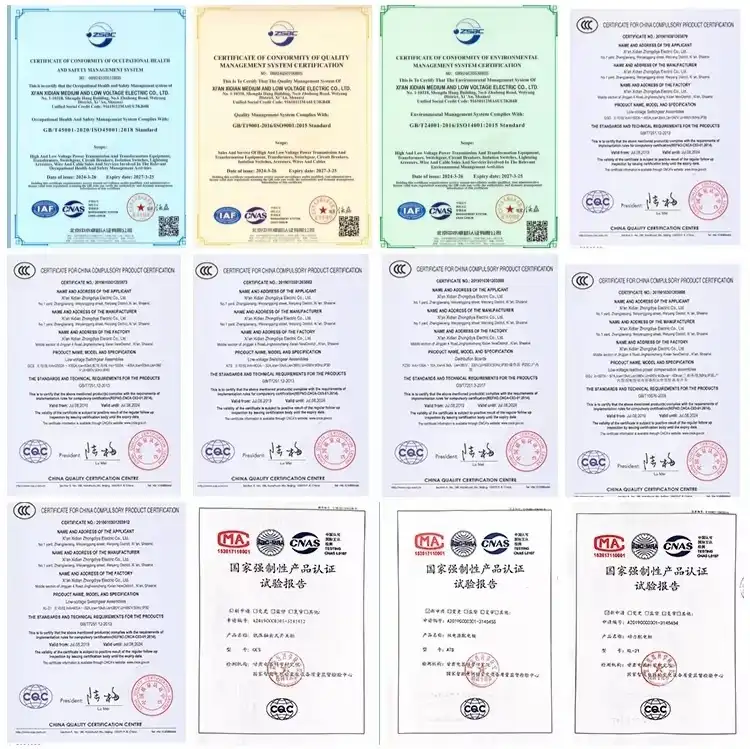
Certification portfolios are objective proof of the ability to make something. Having ISO 9001 quality management certification makes sure that work methods are always the same. The ISO 14001 environmental license shows that you are dedicated to using safe methods. The health and safety of workers is protected by ISO 45001 approval. Product certifications like CE marking, UL listing, and RoHS compliance make it easier for regulators in target markets to approve the product. Intellectual property collections of suppliers, especially patents for unique epoxy formulas or winding methods, show how technologically advanced and creative they are.
Technical Specification Validation
A thorough review of the specifications keeps people from getting confused, which could delay the project. The accuracy of the voltage ratio over the full load range, from 25% to 100% of the maximum load, guarantees accurate measurements even when the system conditions change. The highest temperature that can rise is rated by its thermal class. Materials rated Class E (120°C) and Class F (155°C) can be used in a variety of installation settings. Seismic suitability testing makes sure that structures are safe in areas that are prone to earthquakes. This is especially important for sites in the western United States.
Logistics and Lead Time Management
Usually, catalogue items ship within 8 to 12 weeks. Customised configurations, on the other hand, need 14 to 16 weeks for engineering, purchasing, and production. Emergency replacement times are cut down when suppliers keep regional inventory distribution centers open. Transportation issues include the size limits of goods lifts and the maximum weight of lifting tools. Shipping doesn't damage weak epoxy insulation surfaces when there are clear rules about how to package them.
Maintenance Program Implementation
In normal situations, epoxy resin transformers don't need any upkeep, but they do need to be inspected every so often to make sure they're still working right. Every year, thermographic surveys look for strange heating patterns that could mean that connections are loose or there are problems inside. Cracks or discolouration on the epoxy surface can be seen under a microscope, which could mean that it got too hot or is being damaged by the environment. Secondary checks of the wires make sure that the terminations are solid and there is no rust. Testing the insulation condition every five years with power frequency withstand voltage equipment is necessary, but it's worth it because it requires stopping service for a short time and using special high-voltage test equipment.
Common Installation Pitfalls
When installation is done wrong, it can cause mechanical stress that can lead to cracks spreading inside the epoxy matrix. To spread loads out evenly, lifting tools must contact specific lifting points. When transformers are stored in unconditioned areas, they are exposed to changes in temperature and moisture buildup before they are installed. Connection errors, especially when the polarity is reversed on dual-ratio configurations, lead to wrong measurements that make protection coordination less reliable. Not enough grounding can cause shocks and short-term overvoltages that speed up ageing.
These practices for buying things and keeping them in good shape help engineering teams choose the right solutions, facility managers keep services running smoothly, and utility companies make the most of their asset management programs. The disciplined method lowers the total cost of ownership and raises the level of operating availability.
Conclusion
Epoxy resin indoor voltage transformers are a developed technology that has been shown to be reliable, safe, and work well in a wide range of settings. Their non-flammable insulation, maintenance-free operation, and small size meet the needs of engineering firms, utility companies, and industrial facilities. The 35kV models with 0.2/0.5 accuracy class measurement capabilities and IEC 61869 compliance give modern power systems accurate voltage change. Paying close attention to choosing the right provider, making sure the specs are correct, and following best practices for installation guarantees a successful job and years of trouble-free service.
FAQ
1. What accuracy class should be specified for revenue metering applications?
For uses that need custody-grade measurements for revenue metering, you need 0.2 accuracy class transformers that can keep their accuracy within ±0.2% from 25% to 100% rated voltage. This specification makes sure that billing is correct and that all rules are followed for business deals between utilities and big industrial users.
2. How do epoxy resin transformers perform in high-altitude installations?
Standard indoor voltage transformers made of epoxy resin work consistently at heights of up to 1,000 meters without losing power. When installing at higher elevations, especially above 2,000 meters, you need plateau-type designs with bigger gaps around the outside to make up for the lower air density. Xi'an Xikai makes special equipment for plateaus that can work at elevations of up to 4,000 meters.
3. Can these transformers integrate with digital substation automation systems?
Modern epoxy resin transformers can work with digital devices because their secondary outputs are compatible and can connect to smart electronics. With dual-ratio configurations, the grid can be rearranged without having to change any actual tools. In IEC 61850-compliant substations, the low partial discharge properties stop electromagnetic interference that could mess up digital transmission signals.
Contact Xi'an Xikai for Your Indoor Voltage Transformer Needs
Xi'an Xikai Medium & Low Voltage Electric Co., Ltd. is ready to help you with your power system needs by providing state-approved epoxy resin indoor voltage transformer options. Standard 35kV models that we can make have 0.2/0.5 accuracy class performance, are compliant with IEC 61869, and have been proven to work reliably in industrial, utility, and business settings. We understand the strict needs of buying workers because we have multiple patented technologies, ISO 9001/14001/45001 certifications, and a lot of experience working with State Grid systems.
Our expert team offers full application engineering support, including helping with the creation of specifications, defence coordination studies, and the design of custom configurations. Our manufacturing methods are very flexible, so they can meet the needs of any project, whether you need regular catalogue items with 12-week lead times or specialised plateau-rated equipment for high-altitude installations. As a well-known provider of indoor voltage transformers, we follow strict quality control procedures to make sure that every unit meets international standards before it is sent out.
Reach out to our dedicated support team at serina@xaxd-electric.com, amber@xaxd-electric.com, or luna@xaxd-electric.com to talk about the problems you're having with your application. We'd love the chance to show you how Xi'an Xikai's precision-engineered voltage transformers can make your electrical infrastructure more reliable while lowering costs over its lifetime.
References
1. IEEE Standards Association. "IEEE Guide for Application of Instrument Transformers in Power Systems." IEEE Std C57.13-2016, Institute of Electrical and Electronics Engineers, 2016.
2. International Electrotechnical Commission. "Instrument Transformers—Part 1: General Requirements." IEC 61869-1:2020, International Electrotechnical Commission, Geneva, 2020.
3. Zhang, Wei and Liu, Hongming. "Advanced Epoxy Resin Composite Materials for High Voltage Insulation Applications." Journal of Electrical Engineering and Technology, vol. 15, no. 3, 2020, pp. 1247-1260.
4. National Electrical Manufacturers Association. "Instrument Transformers: Requirements, Terminology, and Test Procedures." NEMA Standards Publication TR 1-2016, National Electrical Manufacturers Association, Rosslyn, 2016.
5. Chen, George and Davies, Anthony. "The Influence of Defects on the Short-Term Breakdown Characteristics and Long-Term DC Performance of LDPE and XLPE." IEEE Transactions on Dielectrics and Electrical Insulation, vol. 27, no. 4, 2020, pp. 1184-1192.
6. Electric Power Research Institute. "Transformer Maintenance Guide." EPRI Technical Report 1021870, Electric Power Research Institute, Palo Alto, 2018.