High Voltage Shunt Capacitor: What Engineers Must Know?
2026-04-13 16:38:58
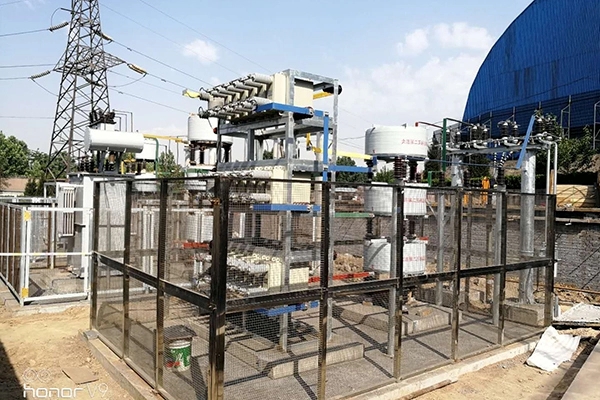
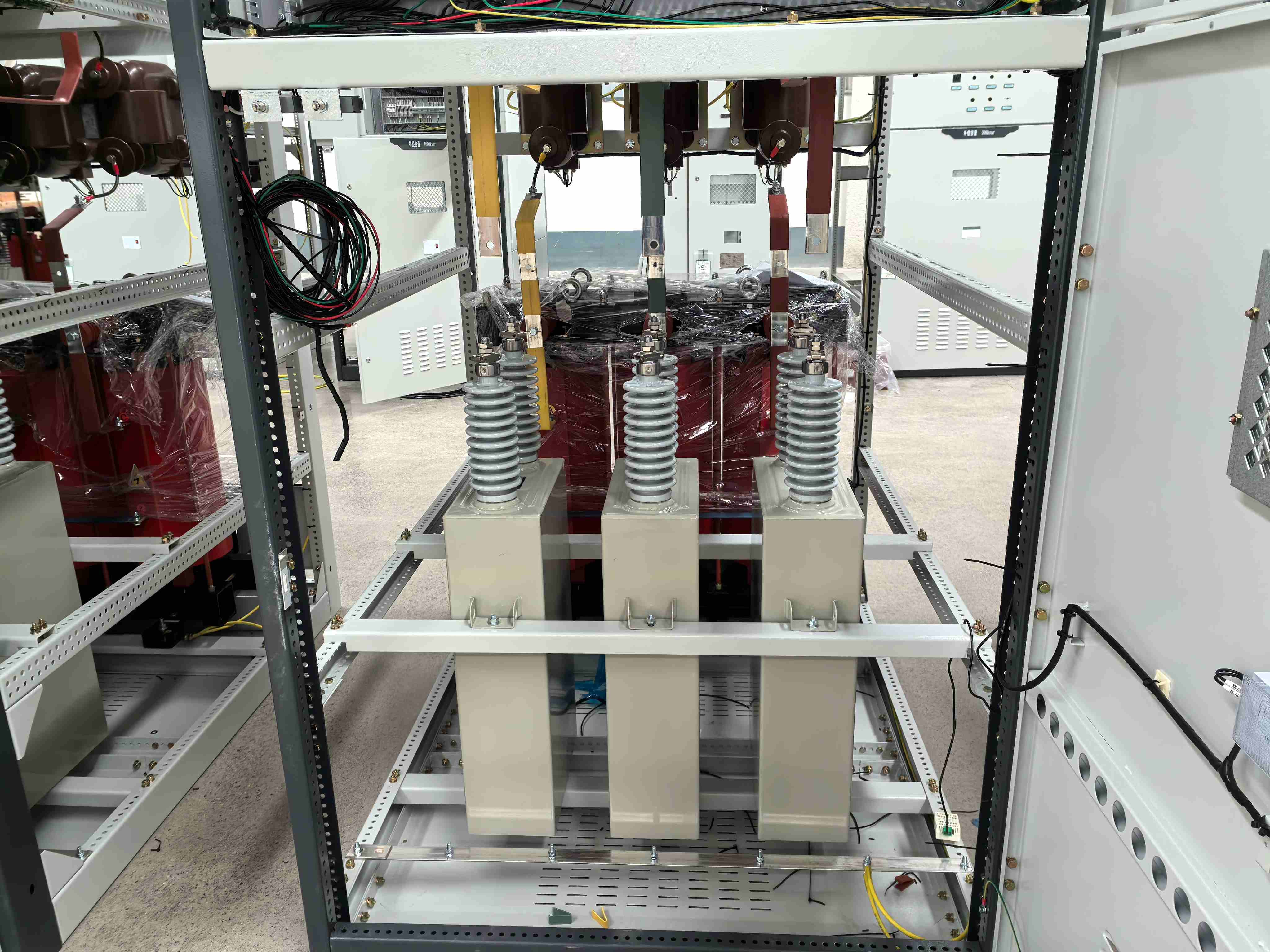
Power system engineers need to know that High Voltage Shunt Capacitor units are the main way that reactive power is balanced, voltage is kept stable, and power factor is fixed in transmission and distribution networks. These gadgets connect in line with electrical loads and add reactive capacitive power to balance out inductive loads like those from motors, transformers, and arc burners. By lowering demand charges, reducing energy waste, and improving voltage profiles, shunt capacitor banks save money and make equipment last longer in utility substations, renewable energy installations, and industrial facilities.
Introduction
More and more pressure is being put on modern electrical systems to work quickly while still meeting strict standards for power quality. Utility companies charge industrial sites extra when the power factor falls below certain levels. On the other hand, data centers and hospitals can't have voltage changes that damage sensitive equipment. Transmission system workers have a hard time keeping the grid stable when green energy sources add changes. By supplying dependable reactive power support, High Voltage Shunt Capacitor technology handles these issues.
Engineers, procurement managers, and system designers can use this guide to learn more about procurement and get better at it. Knowing the details about capacitors, how they should be used, and how often they need to be maintained helps you make smart choices that improve system performance and lower the overall cost of ownership. We look at basic working principles, different application environments, and give you useful advice on how to choose and keep these important power system parts.
Understanding High Voltage Shunt Capacitors
Working Principle and Fundamental Design
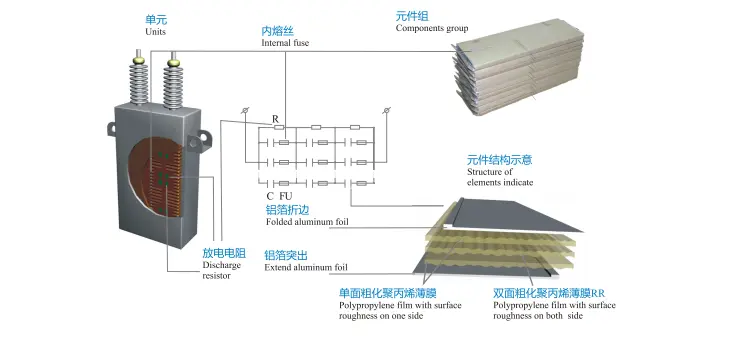
Shunt capacitors store electricity in an electric field that exists between two metallic plates that are divided by a dielectric material. When they are linked across power lines, they draw leading current, which cancels out the delayed current that inductive loads make. This reactive power adjustment makes the power factor closer to one by lowering the phase angle between the voltage and the current. As the frequency goes up, the capacitive reactance goes down. This makes these devices very good at fixing certain harmonic problems when set up correctly with series reactors.
Metallized polypropylene film is often used as the dielectric medium in physical building because it has good dielectric strength, low loss, and self-healing qualities. All-film dielectric systems are used in modern designs. These are often filled with recyclable synthetic fluids like benzyl toluene to get rid of air gaps and stop partial discharge. Aluminum foil electrodes are precisely cut with a laser and held in stainless steel cases that won't rust. Porcelain or silicone rubber bushings protect against flashover.
Classification and Configuration Options
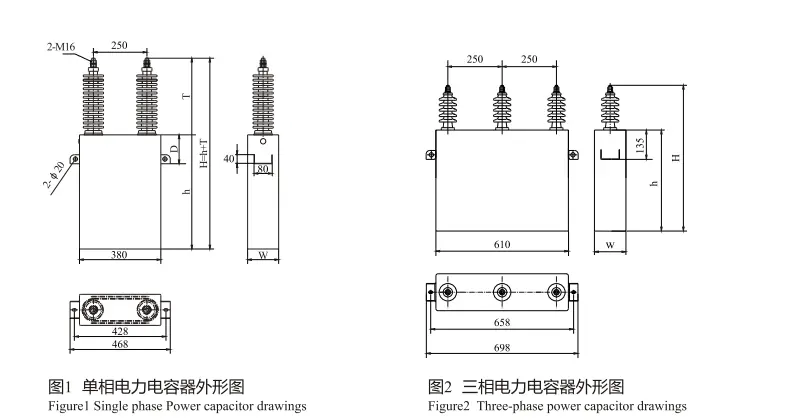
There are two types of capacitor banks: stable setups and automatically switched systems. Fixed banks are always on, so they can handle steady base loads. Switched banks, on the other hand, turn on based on demand, so they can adapt to changes in load during operating cycles. Power factor relays or programmable logic devices are used to handle contactors or vacuum circuit breakers in automatic switching systems.
You can choose between dry-type and oil-immersed versions of the configuration. There are fewer environmental issues with dry-type units because they don't leak liquids, and they are easier to install and maintain. For high-capacity uses, oil-immersed versions offer better cooling. Scalable capacity additions are possible with modular building, which lets engineers exactly match reactive power needs while keeping the system flexible for future growth.
Technical Specifications and Selection Parameters
For distribution systems, voltage levels usually range from 2.4kV to 36kV, and units can be stacked to handle higher transfer voltages. The method for calculating reactive power output is Q = ω × C × V², where kVar generation is defined by angular frequency, capacitance, and voltage squared. When engineers figure out the total bank capacity, they have to take into account capacitance variation limits, which are usually given as -5% to +10%.
The dielectric loss factor (tan δ) shows how much energy is lost in the insulation material. High-quality insulation has numbers below 0.0002, or 0.02%. When loss factors are low, running costs go down and the temperature stays cooler. Measurements of insulation resistance confirm the integrity of the dielectric, and scores of impulse withstand voltage prove the ability to protect against lightning surges. Discharge resistors built into units lower the residual voltage to a safe level—usually below 75V within 10 minutes of disconnecting the power—protecting both the repair staff and the equipment that is attached.
Core Benefits and Applications
Operational and Economic Advantages
High Voltage Shunt Capacitor systems improve power factor, reduce reactive power demand, and eliminate penalty costs. They lower transmission losses, stabilize voltage, and increase system capacity without upgrades. These efficiency gains also support environmental goals by reducing energy consumption and emissions.
Industrial and Utility Applications
High Voltage Shunt Capacitor solutions are widely used in heavy industry, substations, and renewable energy systems to stabilize voltage and manage reactive power. Advanced designs with self-healing features ensure durability, high efficiency, and safe operation under extreme conditions and fluctuating loads.
Comparative Analysis with Alternative Solutions
High Voltage Shunt Capacitor systems offer a cost-effective, low-maintenance alternative to synchronous condensers and SVCs. With no moving parts and scalable design, they provide reliable long-term performance, making them ideal for steady-state reactive power compensation in industrial and utility applications.
Design Principles and Maintenance Best Practices
Engineering Considerations and Sizing Methodology
Designing a High Voltage Shunt Capacitor system requires load analysis of kW, kVar, and power factor to ensure proper sizing and avoid overcompensation. Harmonic studies guide reactor selection, while standards like IEEE and IEC ensure safe voltage ratings, insulation coordination, and reliable performance.
Maintenance Strategies and Fault Prevention
High Voltage Shunt Capacitor reliability depends on inspections, thermal scans, and electrical testing of capacitance, insulation, and power factor. Protective relays prevent failures, while trend monitoring supports predictive maintenance. Proper conditions ensure 20–30 years lifespan, avoiding accelerated aging from heat, harmonics, and overvoltage.
Procurement Insights and Brand Overview
Manufacturer Evaluation and Product Selection
To choose the right capacitor suppliers, you need to look at their professional skills, the quality of their products, and their assistance throughout the product's life. Leading companies keep large testing labs that make sure their goods meet foreign standards. Power factor correction from ABB covers voltages from distribution to transmission, with a focus on flexible systems and built-in safety. Siemens focuses on going digital by providing capacitor banks with built-in sensors that allow cloud-based analytics tools to predict repair needs.
General Electric's capacitor technology is designed to work in difficult environments, with construction that is tough enough to withstand high temperatures and dirty air. Eaton offers complete solutions for reducing harmonics that include capacitors and active filters for sensitive business settings. Schneider Electric's EcoStruxure platform links capacitor banks to larger energy management systems, making the best use of reactive power distribution across buildings.
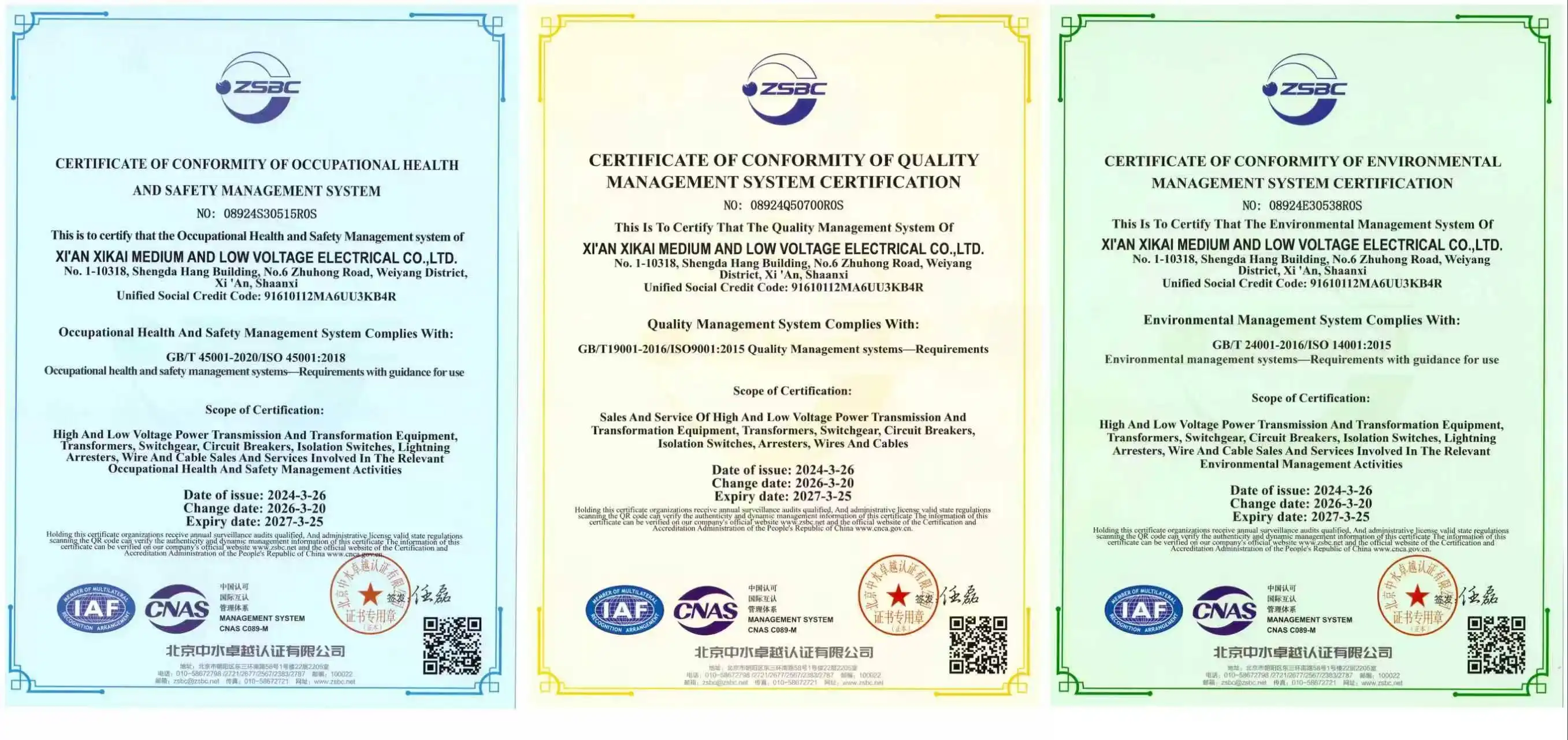
Regional companies like Xi'an Xikai make products that are specific to certain businesses. The company has been making equipment for over 30 years that meets the needs of the mining, power production, and heavy industrial sectors. The equipment can be used at heights of up to 4,000 meters. Patented technologies and ISO 9001-certified production make sure that the quality is always the same, and full testing proves that the products meet IEC, IEEE, and GB standards. This is shown by the BKMJ0.4KV series, which was designed to work in underground arc furnaces and has an explosion-proof design, operates quietly (below 45dB), and is made of flame-retardant materials that meet NFPA 70 fire codes.
Commercial Considerations and Procurement Best Practices
Different makers and product types have very different pricing models. When compared to oil-immersed units, dry-type units usually cost more, but they are easier to install and comply with environmental regulations. Internally fused capacitors are more expensive than externally fused ones, but they protect the elements at the element level, which keeps downtime to a minimum. When you arrange bulk buying deals for multiple setups or standards programs, the unit cost goes down by a lot.
Lead times range from 6 to 16 weeks for normal stock items and from 20 to 30 weeks for custom voltage ratings, special bushings, or combined harmonic filter configurations. Schedules for purchases should include rules for plant testing, shipping (especially for foreign orders that need to be shipped by sea), and receiving inspections. Strategies for managing inventory weigh the costs of keeping things in stock against the risks to the project schedule. For example, banks with a lot of capacity may only need a small amount of important backups on hand.
When makers are competing, their technical help skills set them apart. Help from application engineers during the planning step makes sure that the right size and configuration are used. Installation control services make sure that the placing, closure, and security are all coordinated. As part of commissioning support, the system is first turned on and operators are trained. Ongoing expert guidance answers practical questions, figures out what's wrong, and gives advice on how to plan for capacity growth.
Conclusion
High Voltage Shunt Capacitor units are a tried-and-true, low-cost way to handle reactive power in utility and commercial settings. By knowing basic working principles, unique needs for each application, and the right way to do maintenance, engineers can come up with solutions that improve performance and make money. A full analysis of the manufacturer's skills, product details, and assistance throughout the product's lifecycle makes sure that choices about procurement are in line with practical goals. As power systems get more efficient and use more green energy, reactive power adjustment through shunt capacitor technology is still needed to keep the grid stable and keep facilities making money.
Frequently Asked Questions
1. What safety precautions are essential during capacitor installation?
Before you touch the capacitor connections, make sure that all the circuits are turned off and that there is no voltage by using the right test tools. Even after being disconnected, stored charge can still cause shocks, so always ground the connections with a shielded earthing stick, even if they have internal discharge resistors. Before handling, make sure that the discharge resistor works and that the voltage has dropped below 75V. Use shielded tools that are rated for the system voltage, keep the right distances between things according to NFPA 70E's arc flash rules, and make sure that only trained electricians do the installation work. When working with mechanical parts, you need to be careful because the units are heavy and easily broken, and drops or hits can damage the links inside them.
2. How can I identify failing capacitors before catastrophic failure?
Keeping an eye on key factors shows problems as they happen. Cases that are bulging show that interior gas is being produced because of dielectric breakdown or too much heat stress. They need to be replaced right away to avoid breaking. When capacitance readings drop by more than 10% from the original values, it means that an element has failed. As tan δ goes up, it means that the dielectric is breaking down. Strange noises like humming, buzzing, or cracking can be a sign of internal arcing or broken connections. When thermographic scans show that some units are much hotter than nearby units, it means that there are problems with the internal resistance or harmonic overloading.
3. What are typical procurement lead times from established manufacturers?
Standard stock items from big manufacturers usually ship 6 to 12 weeks after an order is placed, as long as there isn't a backlog of work. Because of the need for technical validation and testing, wait times are extended to 16 to 20 weeks for custom designs that include non-standard voltage ratings, unique mounting arrangements, or built-in harmonic filters. For international shipping, it takes an extra 4 to 6 weeks for ocean freight from Asian makers to clear customs. When planning a project, these schedules should be used along with backup dates, especially for work that is very important to the schedule.
Partner with Xi'an Xikai for Reliable Power Solutions
Xi'an Xikai Medium & Low Voltage Electric Co., Ltd. has a lot of experience making High Voltage Shunt Capacitor units for difficult utility and commercial uses all over the world. Our engineering team creates unique reactive power solutions that are backed by strict ISO 9001-certified production and thorough testing processes. Our dedication to quality is shown by the BKMJ0.4KV series, which has been tested and proven to work in harsh conditions such as steel mills and green energy systems. Get in touch with our technical experts at serina@xaxd-electric.com, amber@xaxd-electric.com, or luna@xaxd-electric.com to talk about your needs. We offer fast after-sales service, cheap prices for large projects, and application engineering support to make sure your power systems work efficiently for decades.
References
1. IEEE Standards Association. IEEE Std 18-2012: IEEE Standard for Shunt Power Capacitors. Institute of Electrical and Electronics Engineers, 2012.
2. International Electrotechnical Commission. IEC 60871-1:2014 Shunt Capacitors for A.C. Power Systems Having a Rated Voltage Above 1000 V - Part 1: General. IEC, 2014.
3. Arrillaga, J., and Watson, N.R. Power System Harmonics, 2nd Edition. John Wiley & Sons, 2003.
4. Glover, J.D., Sarma, M.S., and Overbye, T.J. Power System Analysis and Design, 6th Edition. Cengage Learning, 2017.
5. National Electrical Manufacturers Association. NEMA CP1-2017: Shunt Capacitors. NEMA, 2017.
6. Schlabbach, J. Reactive Power Compensation: A Practical Guide. John Wiley & Sons, 2013.