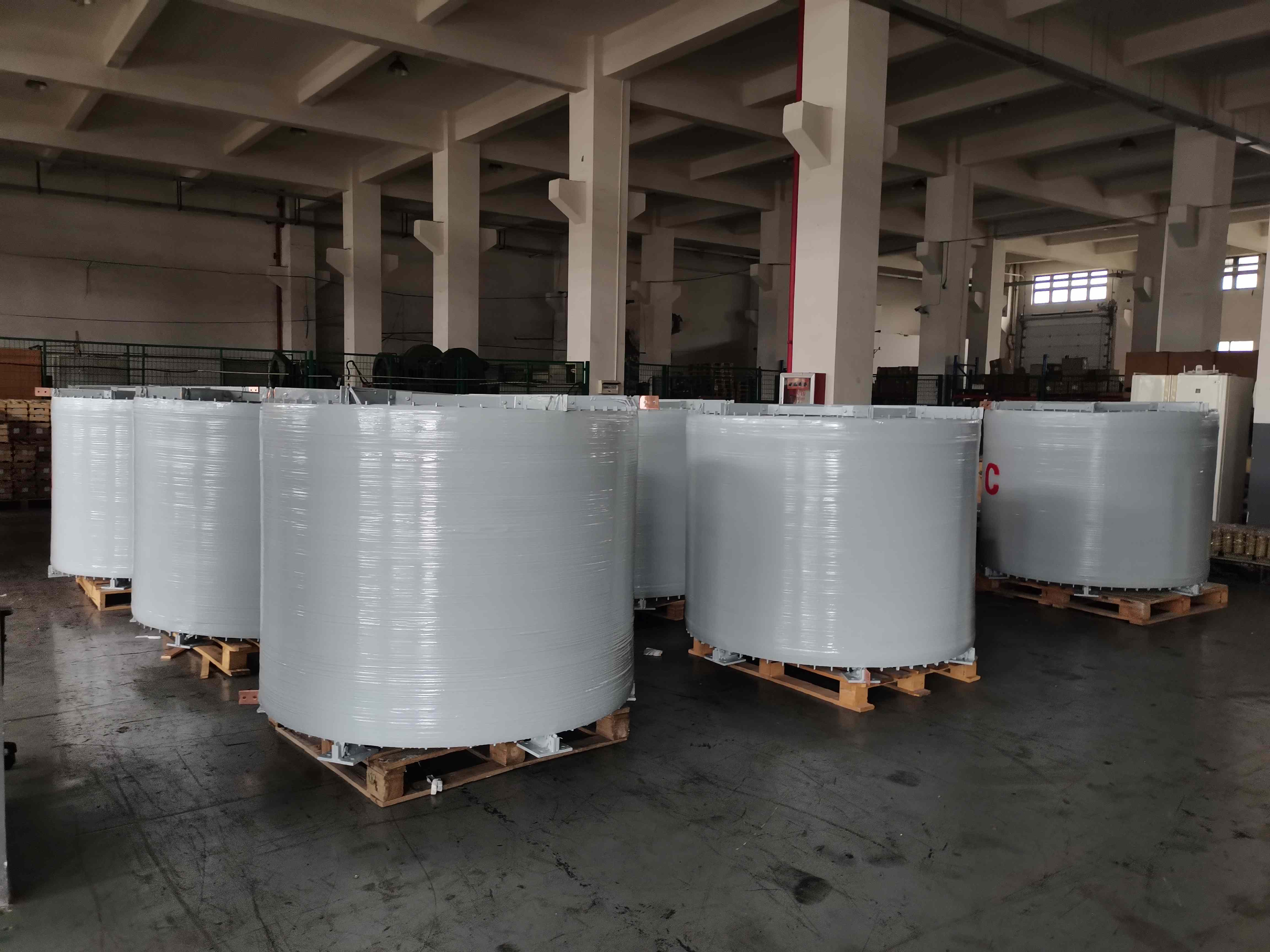
How Does a Submerged Arc Furnace Work?
2026-04-09 15:47:22
A submerged arc furnace (SAF) operates by generating intense electrical arcs beneath the surface of the raw material charge, creating temperatures exceeding 2,000°C to facilitate metallurgical reactions. The electrodes—typically made of graphite—penetrate the furnace burden and discharge electricity into the conductive charge, producing molten metal or alloys. This process demands stable, high-quality electrical power, where specialized equipment like a submerged arc furnace capacitor plays a vital role in correcting power factor, reducing reactive power losses, and maintaining voltage stability throughout continuous smelting operations.
 |
 |
Understanding the Submerged Arc Furnace Operation
Optimizing Space and Efficiency in Low-Voltage Power Systems
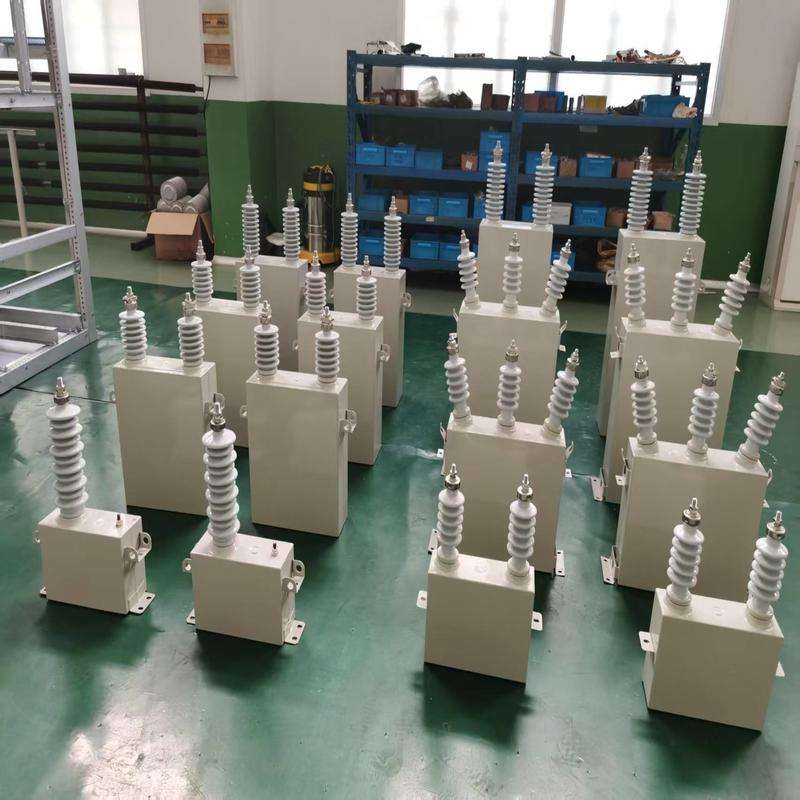
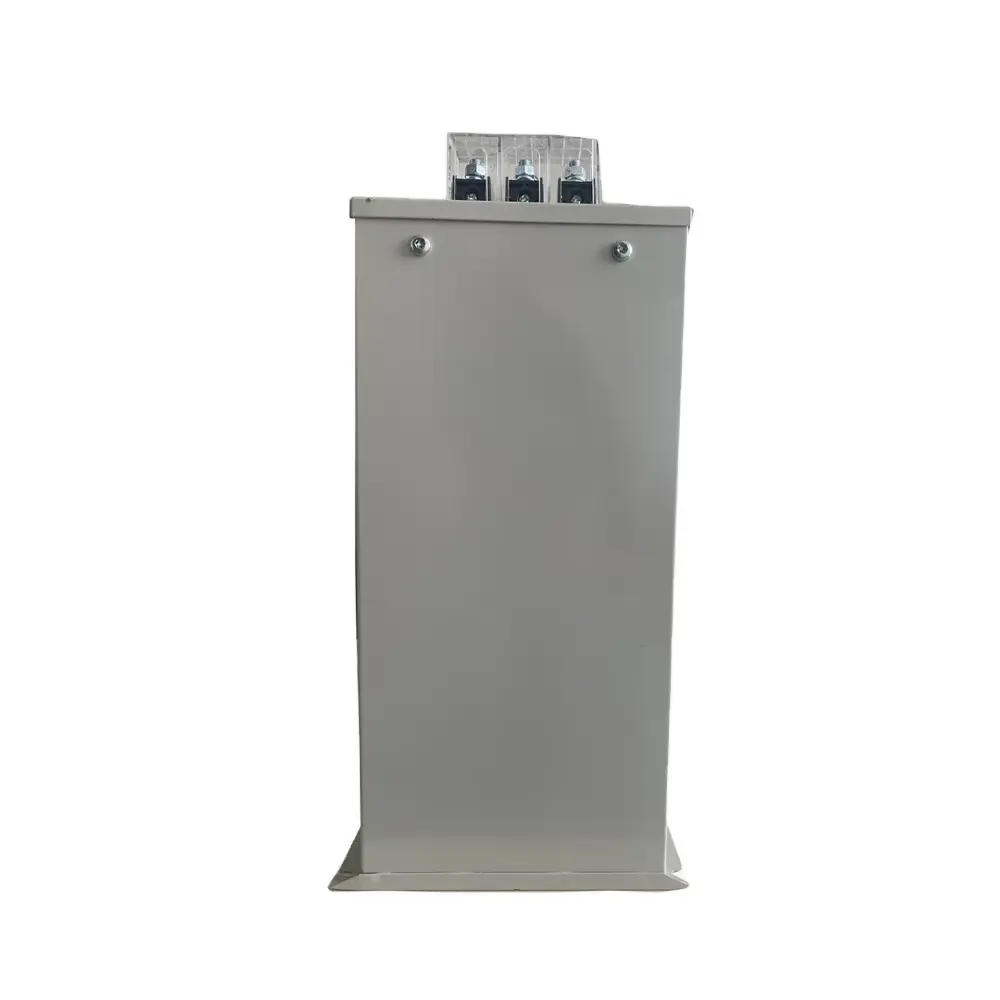
Today's ways of distributing electricity need to find a balance between performance and space efficiency. A Submerged Arc Furnace Capacitor is a special kind of reactive power compensation device made for systems with ratings below 1000V, which are common in factories, data centers, and office buildings. Automatic Power Factor Correction (APFC) panels are more efficient when they are rectangular than when they are cylindrical. This is because rectangular units don't leave empty spaces when they are mounted in arrays, while cylindrical units do.
Self-Healing Dielectric Technology for Enhanced Reliability
The main material used in these capacitors is metallized polypropylene film, which can heal itself. When voltage spikes cause minor dielectric breakdowns, the metallization vaporizes around the fault zone, isolating the problem and restoring functionality in milliseconds. This inherent fault tolerance greatly increases operational lifespan, which lowers the number of unplanned maintenance tasks that cause production schedules to be thrown off.
Adapting to Harsh Environments with Robust Design Features
Dependability is directly affected by how resilient the environment is. The square capacitors from Xi'an Xikai work reliably in temperatures from -25°C to 50°C and at heights of up to 2000 meters, helping facilities in a wide range of geographical areas with their operational problems. The configurations of terminal blocks (M6, M8, or M10) change based on the power ratings. This makes it easier to connect to existing busbar systems and cuts down on the time needed for installation.
Submerged Arc Furnace Capacitor: Function and Benefits
Correcting Power Factor to Eliminate Reactive Losses
When inductive motors, transformers, and HVAC equipment are powered by electricity, they produce inductive reactive power. This makes the voltage and current waveforms differ in phase. This misalignment forces utilities to send more current that doesn't do any good, which leads to higher transmission losses and voltage drops at load endpoints. When these inductive loads are connected parallel to a Submerged Arc Furnace Capacitor, they add capacitive reactance that cancels out the phase lag. This makes the power factor closer to 1.
Reducing Energy Costs and Unlocking System Capacity
Utility companies charge manufacturing businesses a lot of money when they use heavy induction motors, welding equipment, and compressors. If a building uses 500kVA of power and the power factor is 0.65, it wastes 400kVAR of reactive power, which can lead to monthly surcharges that can be more than $15,000 a year. Adding shunt capacitor banks of the right size raises the power factor back to 0.95 or higher, which stops the penalties and frees up transformer capacity for useful loads. When adding equipment to an existing panel, the square form factor is especially useful because it doesn't take up any extra space.
Improving Thermal Performance and Equipment Lifespan
Reducing reactive current through power factor correction makes the whole distribution system more efficient. Lower current levels lower I²R losses in cables, transformers, and switchgear, turning heat that would have been wasted into capacity that can be used. A petrochemical plant with a 0.70 power factor measured conductor temperatures above 75°C during peak production. After correction, temperatures stayed stable at 52°C, which increased the life of the insulation and decreased the need for cooling. When it comes to getting rid of heat, flat surfaces help air flow convectively between units.
Comparing Submerged Arc Furnace Capacitors with Alternatives
Space Efficiency and Installation Advantages of Square Designs
The performance and cost of capacitor banks are fundamentally affected by geometry. While cylindrical capacitors are often cheaper per kVAR, they make it harder to pack things into rectangular panels. A Submerged Arc Furnace Capacitor usually needs 25–30% less panel volume than a cylindrical design of the same size. This means that enclosures have to be bigger and panel builders have to pay more for materials. EPC contractors say that the flat contact surfaces of square units make it easier to connect busbars, which cuts installation time by about 15%.
Film vs. Electrolytic Capacitors: Performance and Lifespan Trade-Offs
When engineering teams are looking at capacitor options, they have to decide between film and electrolytic technologies. Each has its own benefits. Metallic polypropylene film capacitors last longer and are more stable across a wide range of temperatures. They keep capacitance within tight limits for over 100,000 hours of service life. When used in smaller spaces, electrolytic capacitors are more efficient, but they wear out faster in harsh industrial settings and usually need to be replaced every 5 to 7 years.
Total Cost of Ownership Considerations
The upfront costs of acquisition must be weighed against operational savings and maintenance costs in order to figure out the total cost of ownership. Putting $18,000 into capacitor banks with a 0.95 power factor pays for itself in 5.3 months through avoided fines and lower losses. The system will continue to save over $40,000 a year for the next 10 to 15 years. Voltage stabilization stops annoying trips and equipment damage that cost money in other ways as well. In the car industry, an unplanned production stoppage can cost $22,000 per minute.
Procurement Guide for Submerged Arc Furnace Capacitors
Critical Selection Parameters
Calculating the reactive power requirement correctly stops both under-compensation and over-compensation from happening. When compensation is too low, it leads to leading power factor conditions that can cause voltage rise and resonance problems. To start the calculation, the current power factor must be found using utility billing data or power quality analyzers on-site. The amount of compensation that needs to be made is found using the formula kVAR = kW × (tan θ₁ - tan θ₂). A Submerged Arc Furnace Capacitor matching the voltage rating to the nominal system voltage keeps things from breaking down too soon.
Evaluating Supplier Credentials and Certifications
Certifications like ISO 9001, ISO 14001, and ISO 45001 make sure that companies follow good safety practices, take care of the environment, and use quality management systems that keep the supply chain honest. Xi'an Xikai's commitment to continuous innovation in response to changing industry challenges is shown by its adherence to these international standards and participation in advanced research programs. Validation of reference projects gives buyers confidence in supplier relationships that haven't been tested yet.
Understanding Pricing Structures and Value Propositions
Strategies for buying capacitors are greatly affected by changes in the global supply chain. Standard rating lead times are usually between 4 and 6 weeks, while custom configuration lead times can be anywhere from 8 to 12 weeks. Bulk buying saves you money because when you buy more than 100 units, you can often get 12–18% off the price of the smaller quantities. Working with companies that make modular product families lets you buy things in stages that match the stages of a project.
Enhancing SAF Capacitor Performance and Longevity
Engineering Improvements That Extend Service Life
The capacitor industry is always making progress in materials science to improve performance and make the industry last longer. With dry-type resin impregnation and nitrogen-filled designs, there are no risks of oil leakage. This makes it easier to meet environmental standards and lowers the risk of fire in sensitive applications. Using new metalworking methods that include zinc-aluminum gradient edge thickening makes it easier to handle current, which lets higher kVAR ratings fit into a Submerged Arc Furnace Capacitor in smaller spaces.
Installation Best Practices for Maximum Reliability
When something is installed correctly, it sets the stage for reliable long-term use. Before installing something, you need to make sure that the temperature in the electrical room stays between -25°C and 50°C and that there is enough wall space for the required 50mm spacing. Coordination of protective devices is important for electrical integration. For capacitor circuits to work, they need special fuses or circuit breakers that are the right size according to standard codes. Discharge resistors or reactors must lower the remaining voltage to less than 50V within one minute of being disconnected.
Case Evidence of Performance Optimization
Success stories from implementations show that capacitors work in all kinds of industries. After putting 600kVAR of square capacitors on four production lines, an automotive stamping plant in the Midwest cut its monthly electricity costs by $6,200. The power factor went up from 0.68 to 0.96, which stopped the utility penalties and cut the load on the transformer by 18%. The square design made it possible to retrofit within existing switchgear lineups without making any changes to the facility. The project was finished during a planned maintenance weekend with no effect on production.
Conclusion
Understanding square capacitor technology reveals the critical role that electrical power quality plays in metallurgical efficiency and operational costs. These systems change the switching of capacitors automatically based on the real-time state of the grid, making the systems as efficient as possible while also supporting demand response programs. Proper selection, installation, and maintenance of reactive power correction solutions deliver quantifiable returns through eliminated utility penalties, reduced distribution losses, extended equipment life, and improved process stability. As energy costs continue rising, facilities that invest in robust electrical infrastructure like the Submerged Arc Furnace Capacitor position themselves for sustained competitive advantage.
FAQ
1. What makes a submerged arc furnace capacitor different from regular capacitors?
A Submerged Arc Furnace Capacitor divergently features square or rectangular geometry which makes it easier for convective cooling to work because it spreads heat over more flat surfaces. Tests show that square capacitors keep their capacitance values stable through 20% more thermal cycles than similar cylindrical units. While round designs might have slightly lower manufacturing costs, the higher costs of installation that come with the need for bigger enclosures usually cancel out any savings that were made at first.
2. How do I know when capacitors need replacement?
Regular maintenance keeps capacitors working longer and stops system failures from spreading. Visual checks should be done every three months to record any case bulging, terminal discoloration, or insulation degradation. Using precision bridges to measure capacitance once a year confirms that output stays within the -5% to +10% tolerance band; significant deviation signals mean that the device is getting close to the end of its useful life and needs to be replaced. Thermal imaging during operation finds developing problems like high contact resistance.
3. Can capacitors alone solve all power quality issues in SAF operations?
Capacitor banks effectively address reactive power compensation and power factor correction, but harmonic content needs to be looked at by engineers because harmonic currents can get stronger through capacitive reactance. Detuned reactor integration is needed when harmonic distortion is more than 5%. This is because series reactors move the resonance point below the main harmonic frequencies made by variable frequency drives. When you connect it to building management systems and SCADA networks, you can see the power quality from all angles.
Partner with Xi'an Xikai for Reliable Submerged Arc Furnace Capacitor Solutions
Xi'an Xikai Medium & Low Voltage Electric Co., Ltd. is one of China's biggest factories for making medium and low-voltage electrical equipment. This gives them economies of scale that allow them to offer competitive prices without lowering quality standards. Manufacturing over 100 different types of seven main product categories shows that the company has a lot of engineering knowledge. As a leading Submerged Arc Furnace Capacitor manufacturer, we offer comprehensive technical support including application engineering help, commissioning advice, and troubleshooting tools to lower project risk and speed up deployment times. Contact our specialists at serina@xaxd-electric.com, amber@xaxd-electric.com, or luna@xaxd-electric.com to discuss how our power factor correction solutions can reduce your energy costs, eliminate utility penalties, and enhance furnace productivity.

References
1. International Electrotechnical Commission (2014). IEC 60831-1: Shunt Power Capacitors of the Self-Healing Type for A.C. Systems Having a Rated Voltage up to and Including 1000V - Part 1: General - Performance, Testing and Rating.
2. Bowman, B. & Krüger, K. (2009). Arc Furnace Physics. Verlag Stahleisen GmbH, Düsseldorf, Germany.
3. Institute of Electrical and Electronics Engineers (2014). IEEE Std 519-2014: Recommended Practice and Requirements for Harmonic Control in Electric Power Systems.
4. Peterson, R.D. & Bowers, D.L. (2018). Power Quality Engineering in Submerged Arc Furnace Operations. Iron & Steel Technology, Volume 15, Issue 8, pp. 76-89.
5. Tanguy, J.M. & Santana, P. (2016). Reactive Power Compensation Technologies for Heavy Industrial Loads: Technical and Economic Comparison. IEEE Transactions on Industry Applications, Volume 52, Issue 4, pp. 3321-3329.
6. National Electrical Manufacturers Association (2019). NEMA CP1-2019: Shunt Capacitors - Standard Publication. Rosslyn, Virginia, United States.