How does Static var generator reduce kva demand?
2026-06-30 16:18:17
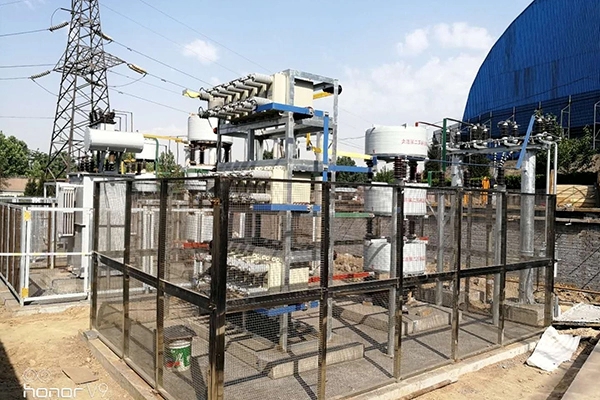
Static Var Generators reduce kVA demand by dynamically managing reactive power within electrical systems. When industrial facilities operate motors, transformers, and other inductive loads, reactive power increases apparent power (kVA) without contributing to productive work. An SVG-Static Var Generator continuously monitors power factor deviations and injects or absorbs precise amounts of reactive current in real-time, maintaining power factor near unity (0.99). This optimization directly lowers kVA demand, reducing utility penalties and freeing up system capacity for productive operations.
 |
 |
Understanding the Problem: What Causes High kVA Demand?
The Hidden Cost of Reactive Power
Energy that moves back and forth between the source and the load without doing any work is called reactive power. In factories, data centers, and hospitals, inductive devices like motors and generators use a lot of reactive power. This use raises perceived power readings (kVA) even when active power (kW) stays the same. This causes utilities to charge demand charges and lowers the total efficiency of the system.
Limitations of Traditional Compensation Methods
For decades, capacitor banks have been the solution. Because they only provide reactive electricity, inactive devices have issues. Capacitors banks may overcompensate when load is low, raising power factor and voltage. Their block-based stepped switching can't keep up with fast-changing loads, therefore they have pay coverage gaps.Synchronous condensers enable dynamic control but need maintenance. Their spinning machinery requires frequent inspections, bearing replacements, and custom cooling systems. They can't be utilized in factories where load varies every millisecond since their reaction times are in seconds. Variable frequency drives and electronics cause harmonic distortion, making reactive power management tougher. Capacitor banks may boost harmonic frequencies, damaging sensitive devices and activating bothersome safety relays.
Principle of Static Var Generator and How It Works to Reduce kVA Demand
Core Operational Technology
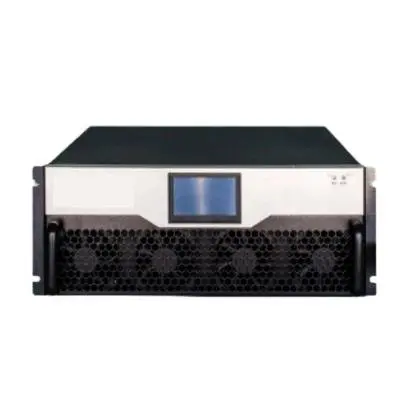
Power electronic converters built on IGBTs are used in Static Var Generators to provide controllable voltage. Through a connection inductor, the device is linked to the power system, making a voltage source converter design. At the place of connection, real-time sensors measure voltage and current. They send this information to digital signal processors, which run control routines in a matter of microseconds.The control system figures out how much reactive current is needed by looking at how the voltage and current patterns relate to each other in terms of phase. The SVG creates leading reactive current when the system detects lagging power factor, which happens when inductive loads are the main load. When leading power factor shows up, on the other hand, the device provides lagging reactive current. Static Var Generators are different from inactive ones because they can work in both directions.
Technical Superiority in Response Speed
Full compensation reaction from our SVG-Static Var Generator happens in 15 milliseconds, and dynamic changes happen in less than 50 microseconds. This quick response is because there are no motorized moving parts. IGBT circuits can switch at rates higher than 5 kHz, which lets the output current be changed smoothly. Traditional Static Var Compensators with thyristor-controlled reactors need at least one power cycle (20 milliseconds at 50 Hz) to change output, which means they aren't good enough to protect delicate manufacturing processes.Through closed-loop control, the gadget keeps the power factor at 0.99. Embedded algorithms constantly compare the recorded power factor to the setpoint and change the gate signals to the IGBTs to keep goal values. This accuracy stops the over-compensation and under-compensation loops that happen with fixed capacitor installs.
Comparative Advantages Over Legacy Equipment
Capacitor banks offer steady reactive correction in clear steps, usually between 50 kVAr and 400 kVAr per stage. Each change event adds transients and reduces the amount of control that can be fine-tuned. Static Var Compensators (SVCs) are made up of thyristor-controlled reactors and capacitors. They have a changeable output but produce harmonics because of the way the thyristors fire at different angles.While SVGs and STATCOMs (Static Synchronous Compensators) both use similar power electronic designs, STATCOMs often need higher voltage ratings and more complicated setups. Because our control algorithms are better and the power stage design is better, our approach needs 20–30% less fixed capacity than standard SVC systems to do the same amount of compensation. The flexible design makes it easier to increase capacity; to add compensation capability, just add more power units instead of redoing whole systems.
Benefits of Using Static Var Generators for kVA Reduction and Industrial Applications
Quantifiable Demand Reduction
For the same kW load, kVA demand goes down by about 15% when power factor goes from 0.85 to 0.99. If a building uses 1,000 kW of power and the power factor is 0.85, the perceived power is 1,176 kVA. The visible power drops to 1,010 kVA after reactive correction is added to get a power factor of 0.99. This 166 kVA drop has a direct effect on utility usage charges, which make up 30 to 50 percent of the cost of energy for businesses.Demand charges based on peak kVA consumption are used to punish utilities with low power factors. When the power factor drops below 0.95, many rate structures charge extra, with the fees going up over time. Keeping the power factor at 0.99 gets rid of these fines and lowers costs all through the distribution system. I²R losses in wires, transformers, and switches go down when the power factor goes up and the current flow goes down.
Enhanced Voltage Stability and Power Quality
In addition to lowering kVA, Static Var Generators keep voltage levels stable across all of a building's distribution systems. Power quality problems happen when voltage drops during times of heavy load and rises during times of light load. When manufacturing equipment is used outside of its rated voltage range, it works less efficiently and wears out faster. To keep their accuracy, CNC machines, robots, and automatic production lines need voltage that stays stable within ±5%.Within microseconds, our device reacts to changes in voltage by adding or taking away reactive power to smooth things out. When a motor starts, the voltage can drop by more than 10%. To keep the voltage stable, the SVG sends reactive current to support it, which keeps nearby equipment from being too affected. This ability to support dynamic voltage is especially useful in places with a lot of big motor loads or where operations are close to the end of long distribution lines.
Operational and Economic Advantages
Longer equipment life is another advantage. Because they transport less energy, motors, transformers, and other power distribution devices operate cooler with larger power factors. Lower operating temperatures limit insulation deterioration, requiring less replacement and maintenance. Transformer capacity is available for usable loads as reactive current decreases. This delays costly infrastructure upgrades. SVG-Static Var Generators need less maintenance than capacitor banks. Due to dielectric degradation, capacitors must be changed every 5–8 years. Switching capacitor banks with mechanical contactors wear down and require periodic inspection and replacement. Our power circuit system's 100,000-hour or greater lifespan requires no frequent part replacements. Cooling fans and control system calibration are examined during normal maintenance.
Energy efficiency goes beyond cost savings. Many facilities reduce energy usage by 3–8% after adopting comprehensive reactive compensation. Better voltage patterns and reduced distribution system current allow equipment to function closer to its rated settings, increasing efficiency. These enhancements boost production in data centers and semiconductor manufacturing, where power quality affects yield and server uptime.
Selecting the Right Static Var Generator for Your Industrial Needs
Critical Selection Criteria
The kVA number must match the reactive power needs of the building. To get the right size, you need to look at past data on power factor, figure out the worst-case reactive demand situations, and take into account how much the load will grow in the future. Systems that are too small fail to meet the goal power factor during high demand, and systems that have too much capacity raise capital costs for no reason. A load profile study should look at how reactive power changes during work shifts, seasonal trends, and when equipment is turned on and off.Response time requirements are important, especially for uses where loads change quickly. Reactive power transients that last milliseconds are made by metal forming machines, spark welders, and big motor starts. Equipment with reaction times longer than 50 milliseconds can't handle these shocks well. The full reaction time of our SVG-Static Var Generator is less than 15 milliseconds, which makes sure that even the most demanding apps are fully protected.
Lifecycle costs are greatly affected by how efficiently operations are run. Power systems always lose energy because of switching losses and transmission losses. High-quality devices have rates of more than 98%, which means that less than 2% of the reactive power that is handled is lost as heat. Lower-efficiency equipment costs more to run and may need better cooling systems, which makes installation more difficult.
Manufacturer Landscape and Product Positioning
Leading global suppliers offer a range of flexible pay options, each with its own unique features. Using modular multilevel converter designs, ABB's PCS6000 STATCOM systems are designed for utility-scale uses with rates up to 150 MVAr. Siemens focuses on SIVACON SVG products that work well with their wider range of power distribution products, with a focus on small sizes for setups with limited room. Schneider Electric's AccuSine product line is designed to work in business buildings and comes in pre-engineered packages that are best for HVAC and lighting loads.By mixing advanced power electronic design with useful industrial engineering, Xi'an Xikai offers competitive options. Our flexible design can handle tasks ranging from 50 kVAr to several MVAr, and the voltage levels can be anywhere from 400V to 35kV. The recommended input of 400V (±20%) works with most low-voltage industrial distribution systems, and the ability to work with both 50Hz and 60Hz frequencies means it can be used in sites around the world without having to make any changes to the design.
Procurement Considerations
Different reactive correction systems have very different levels of installation difficulty. Configurations that are placed on the wall or a rack work well for retrofitting where floor room is still limited. Cabinet-integrated systems put together SVG modules, isolation switches, monitoring equipment, and extra power sources into a single unit. This makes installation easier and cuts down on field wires. All three options are available from us, so specification teams can choose the best style for their facility's needs.It's important to think carefully about maintenance service deals. Comprehensive agreements that include online tracking, yearly checks, and priority access to extra parts lower operating risk. Our support system includes factory-trained field service techs, expert help available 24 hours a day, seven days a week, and grid analysis services to make compensation plans work better. These features are especially useful during commissioning, when the control settings need to be fine-tuned to fit the conditions at the spot.
Practical Guidance: Implementing SVG in Your Power System
Site Assessment and System Planning
A detailed review of the power quality is the first step to a successful deployment. Voltage, current, power factor, and frequency data should be recorded by measuring tools every second during several production runs. This information shows trends of reactive power demand, points out harmonics that are causing problems, and gives numbers for voltage control needs. To properly describe transient changes caused by starting a motor, welding, or other cycling loads, high-speed recording is needed.Electrical single-line models need to be changed to show how things are set up now. Accurate models show the best places to connect things so that they work well and are easy to install. Putting adjustment equipment near large reactive loads gives better voltage support than putting it all in one place at the service door. In factories with production areas that are spread out geographically, multiple distributed SVG units often work better than a single big system.
Installation Best Practices
Setting up the control screen is an important part of setup. Target power factor, voltage regulation setpoints, response speed adjustments, and safety limits are some of the parameters that need to be tuned for each site. Starting with conservative choices lets workers gradually improve the system as they see how it works in different situations. Our SVG-Static Var Generator has full human-machine interfaces that show working parameters in real time, past trends, and diagnostic data that helps with effective commissioning.Following wiring standards makes sure that the system works safely and reliably. To connect to the power system, you need the right overcurrent safety, separation switches so that repair workers can get to the connection, and the right grounding. Studies of circuit breakers show that safety devices work selectively, isolating problems without turning off the power to healthy parts of the distribution system for no reason. Our technical paperwork includes specific standards for connecting things that are in line with NEC, IEC, and local electrical codes.
Performance Monitoring and Optimization
Continuous tracking confirms the kVA decrease and finds ways to make things better. Within the first month of going live, most sites see a 10-15% drop in demand. More savings may be found through better control methods as the research goes on. Changes in seasonal load, work schedules, or building expansions mean that compensation options need to be looked at every so often.Modern systems have built-in troubleshooting tools that make fixing problems easier. Diagnostic screens show the state of each power module's operation, as well as the DC bus voltage levels, the function of the cooling system, and communication connections. Automated alarms let workers know when something is wrong before it breaks down. Expert techs can check how well a system is working and suggest changes without having to go to the site to do so. This cuts down on response times and production interruptions.
Conclusion
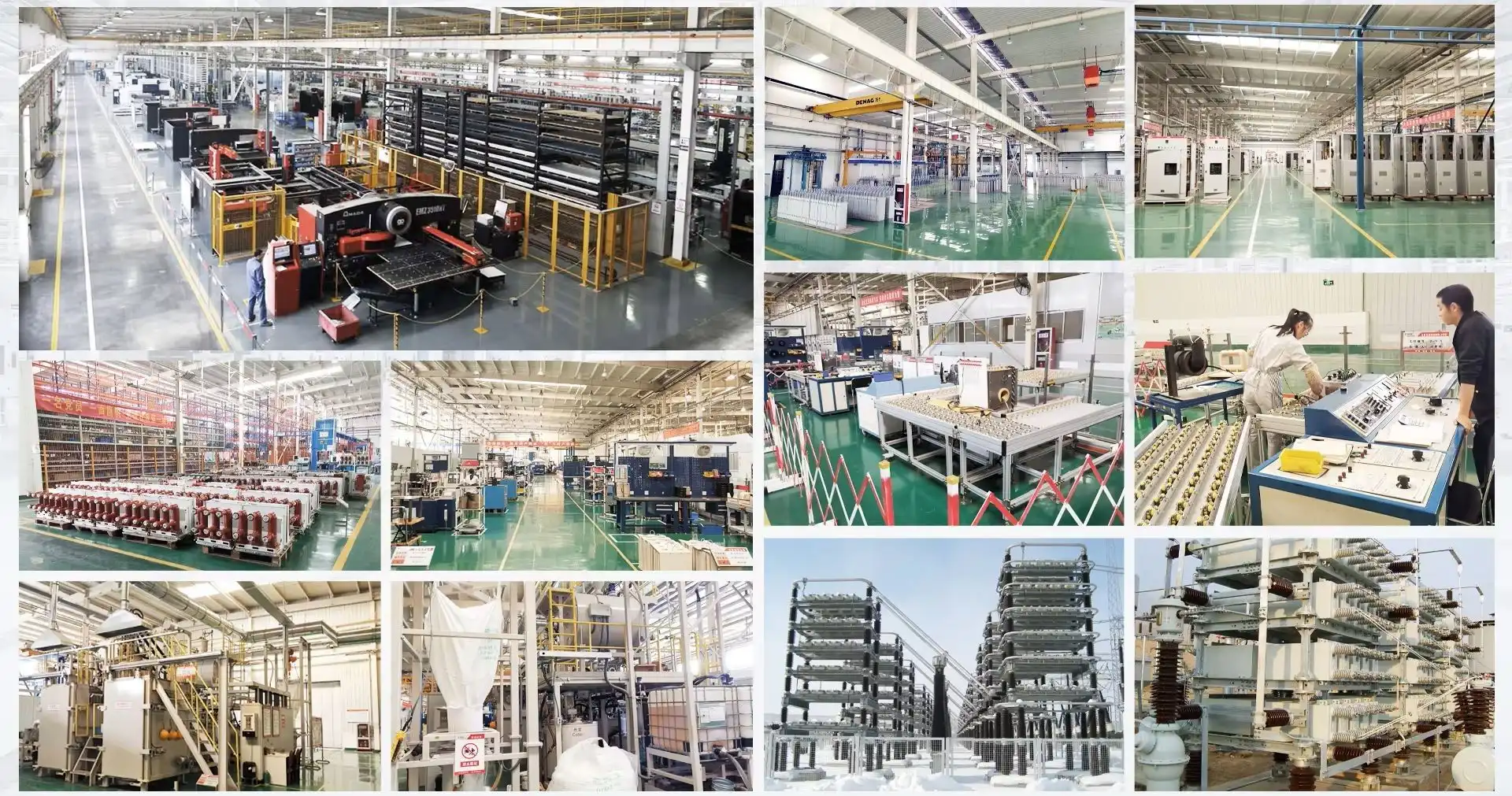
Static Var Generators are a tried-and-true way to lower kVA usage, lower utility costs, and improve the quality of power in industrial buildings. When you combine microsecond reaction times, exact power factor control, and low maintenance needs, you get great economic returns. Implementation is especially important for companies that use secret manufacturing processes, mission-critical data centers, or facilities that have to pay high demand charges.To choose the right tools, you need to carefully look at the reactive power needs, system configurations, and practical goals. Xi'an Xikai has a wide range of products that can be used for different voltage and volume needs. Their experienced tech teams and quick service networks are also there to help. Our SVG-Static Var Generator technology is the result of decades of research and development in power electronics, years of field-proven dependability, and a dedication to raising standards for industrial power quality.
FAQ
1.Can Static Var Generators Replace Existing Capacitor Banks?
Static Var Generators can, in fact, fully replace capacitor banks or work with them in a mixed setup. Pure SVG setups get rid of problems with harmonic resonance, overcompensation, and capacitor switching transients. In hybrid methods, capacitors handle the base reactive load while SVGs handle dynamic changes. This could cut the SVG capacity needs by 30 to 40 percent.
2.What Response Time Do Static Var Generators Achieve?
Full compensation reaction from our SVG-Static Var Generator happens in 15 milliseconds, and dynamic changes happen in less than 50 microseconds. This performance is much better than SVC reaction (20–40 milliseconds) and capacitor bank switching (200–500 milliseconds). This means that SVGs can protect sensitive processes from sudden changes in load and voltage.
3.Are Static Var Generators Suitable for All Industrial Applications?
Static Var Generators work great in places where loads change often, power quality standards are strict, or harmonic situations are difficult to deal with. Ideal uses include factories with many motors, places that work with metal, data centers, hospitals, and places that use green energy. The technique can be used in almost any industry that needs voltage support and reactive correction.
Partner with Xi'an Xikai for Advanced Reactive Power Solutions
Are you ready to lower your kVA needs and improve the power quality in your building? Xi'an Xikai offers complete SVG-Static Var Generator options backed by a wide range of manufacturing skills and technical know-how. Our tech teams do site assessments, unique system designs, and full lifecycle support to make sure you get the most out of your investment. Get in touch with our experts right away by emailing Serina at serina@xaxd-electric.com, Amber at amber@xaxd-electric.com, or Luna at luna@xaxd-electric.com. As a well-known provider of SVG-Static Var Generators, we're dedicated to helping business owners improve their operations by using cutting-edge power quality technology.
References
1. IEEE Standard 1547-2018, "IEEE Standard for Interconnection and Interoperability of Distributed Energy Resources with Associated Electric Power Systems Interfaces," Institute of Electrical and Electronics Engineers, 2018.
2. Hingorani, N.G., and Gyugyi, L., "Understanding FACTS: Concepts and Technology of Flexible AC Transmission Systems," Wiley-IEEE Press, 2000.
3. Akagi, H., Watanabe, E.H., and Aredes, M., "Instantaneous Power Theory and Applications to Power Conditioning," John Wiley & Sons, 2017.
4. IEC 61000-4-30:2015, "Electromagnetic Compatibility (EMC) – Part 4-30: Testing and Measurement Techniques – Power Quality Measurement Methods," International Electrotechnical Commission, 2015.
5. Singh, B., Chandra, A., and Al-Haddad, K., "Power Quality: Problems and Mitigation Techniques," John Wiley & Sons, 2015.
6. Rashid, M.H., "Power Electronics Handbook: Devices, Circuits and Applications," Butterworth-Heinemann, 4th Edition, 2017.