
How Grading Rings Improve Outdoor Disconnect Switch Performance
2026-10-29 17:10:40
Grading rings improve outdoor disconnect switch performance by spreading the electric field around high-voltage contacts and terminals. Sharp or compact metal parts concentrate stress in the surrounding air and insulation. That stress can start corona, radio interference, and early aging, especially at wet, dusty, or salty sites. A smooth, correctly sized ring lowers the peak stress and keeps the voltage gradient more even. A ring does not replace grounding, protection, creepage design, or testing, so we treat it as one part of a verified assembly. Below, we explain how it works and how we apply it in the GW10 High Voltage Disconnect Switch.
What an Outdoor Disconnect Switch and a Grading Ring Do
How an Outdoor Disconnect Switch Works
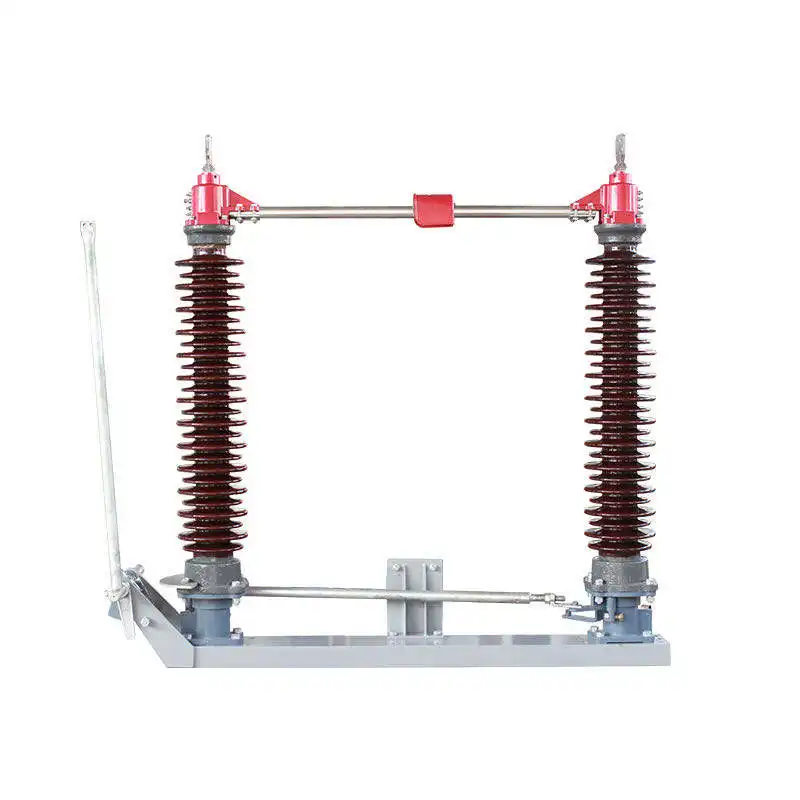
An outdoor disconnect switch is a machine that safely opens a circuit so that crews can work on equipment. It makes a clear space of air between the live wires and the working equipment. The switch is usually found in a substation next to breakers, busses, and transformers when the voltage being sent is between 126 and 550 kV. It only works when the circuit has very little current flowing through it, so it can't be used instead of a circuit breaker. The contacts, arms that carry current, post insulators, operating mechanism, and base are the main parts. It takes many years for each part to handle the maximum power, the weather, and the forces of a short circuit.
What a Grading Ring Does
It is a smooth metal ring or cover that is put next to a high-voltage contact, terminal, or insulation end. Around sharp edges and parts with a small radius, electric stress goes up. Corona can form when the local field is stronger than air, which is about 30 kV/cm in normal situations. That's because rings have bigger radii, which means they spread the potential over a bigger area and lower the peak field. Engineers put rings where there is a lot of field concentration, like at the ends of contacts and on the ends of lines. Because low-voltage equipment doesn't need one very often, the choice depends on the voltage level and the shape.
Common Outdoor Disconnect Switch Performance Problems
Electrical, mechanical, and weather stress all come together at outdoor sites. The insulation and the moving parts are all being pushed to their limits by rain, fog, salt spray, dust, ice, and changes in temperature. When a post insulator is polluted, its withstand level goes down. This makes creepage distance an important design factor in heavily polluted areas. Corrosion can make bearings and parts stiffer and increase the resistance to touch. That's not all. Corona, partial discharge, and radio noise are also risks of sharp geometry. Any of these things can cause a flashover or an unexpected power outage. A high-voltage substation power loss costs a lot. A form that is resistant to weather helps with water but doesn't get rid of field focus.
How Grading Rings Improve Outdoor Disconnect Switch Performance
The Field-Control Mechanism
Grading rings work by making the effective radius bigger at the point of high potential. To cut the peak value, make the surface bigger and smoother. This is because the field strength near a conductor goes up as the radius goes down. To make the voltage drop along the nearby insulator more even, the ring also shapes the equipotential lines. At the end of the insulator, where moisture and dirt already raise the risk, that lowers the stress. Since there is less stress in the area, the corona starts at a higher power and radio interference goes down. Because the benefit changes based on voltage, ring size, position, height, and humidity, we use simulations and tests to judge the whole assembly, not just the ring.
Design Factors for Grading Rings
The ring is made to match the rated voltage, insulation level, current, and short-circuit duty. Changes in the field depend on the tube's diameter, cross-section, surface finish, and distance between grounded and fully charged parts. Material is also important. Copper, aluminum alloy, and stainless steel all have different levels of conductivity, strength, and corrosion resistance. Also, mixing metals can lead to galvanic attack. The ring can't get in the way of the moving arms or cut off any gaps. Before there is a prototype, electromagnetic simulation can predict the field, and type testing can confirm the result. A badly placed ring can even cause stress to build up, so it's important to follow the installation instructions very carefully when it comes to orientation and spacing.
Outdoor Disconnect Switch Comparison: With and Without Grading Rings
A basic outdoor disconnect switch that doesn't have field-control parts is easier to build and has fewer parts, making it good for many low-voltage uses. It's harder to control the field concentration when the voltage is high or the air is dirty. More stress is spread out in a system with grading rings and contact shields, but it needs more engineering, better proof, and tighter factory control. Rings deal with electrical stress, not overcurrent, so neither design can be used instead of fuses, breakers, grounding, or short-circuit safety. People who buy 220 kV or more power weigh the extra engineering costs against the risk of an outage.
GW10 High Voltage Disconnect Switch: Grading Rings in Practice
Contact-Area Field Control in the GW10
The GW10 High Voltage Disconnect Switch is an outdoor disconnect switch with a vertical pantograph and a single column that works with 126–550 kV systems and can handle up to 5000 A of current. It's in line with IEC 62271-102. When we put grading rings and covers around the contacts, the E-field is spread out more evenly and there is less radio frequency disturbance. There is a lot of stress in the contact area because that's where the pantograph arms close on the fixed contact. Stainless contact springs that are squeezed from the outside keep the pressure stable, and the short friction movement during operation keeps the moving parts from wearing out too quickly. At the most important places, field control and steady touch pressure work together.
Materials and Mechanism Built for Harsh Sites
These are the main materials and structural parts that make the GW10 strong in hot, polluted, or coastal areas.
- Corrosion and wear control: The hot-dip galvanized steel parts and the stainless steel transmission system, which includes pins, bushings, joints, and bearings, don't rust even when the air is humid, salty, or dirty. Externally compressed stainless steel contact springs add stable contact pressure that doesn't rust, and the moving parts don't wear out as quickly when they're in use because of the short friction travel.
- Heat and serviceability: The aluminum alloy shape helps get rid of heat, and the conductive parts are linked by bendable busbar connections. Regular upkeep work is cut down by the design that doesn't need it. It's easier to service copper plates that are bent, and the base can be put on either side to fit different bay plans and retrofit work.
These features go after the most common reasons for power outages at extra-high-voltage sites: heat, corrosion, and wear on the contacts.
Ratings, Installation, and Verification Points
You can mount the GW10 on either side of the base, which is helpful for tight bays and retrofit layouts. It can handle 126–550 kV and up to 5000 A. As an EPC team working on 220 kV and 330 kV projects, you should ask for the type-test report, data on peak and short-time short-circuit withstand, mechanism endurance records, and creepage distance for your pollution class before you get the job. If you ask, we can send you product drawings and test paperwork, and we'll make sure that the setup works with the voltage of your project. Always make sure that the reports you read cover your exact grade.
Selecting, Installing, and Verifying an Outdoor Disconnect Switch
Select by System and Environment
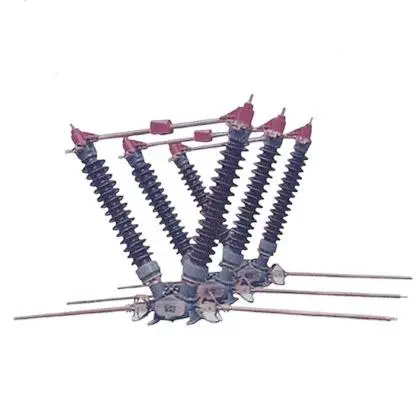
Start from the system instead of the ampere rating. Name the rated voltage, rated current, short-circuit level, pollution class, altitude, weather range, and any needs for wind or earthquakes. Based on the available bay space, pick a single-column, double-column, or three-column layout. IEC TS 60815-1 tells us how to choose an insulator for polluted conditions. For heavy pollution, we need a longer creepage distance. Since air strength drops at high elevation, clearances and ring sizes need to be looked at again. Dependability of the mechanism is just as important as electricity ratings, since an outdoor disconnect switch that won't work can keep a room from being used. Find out how the seller checks the travel and contact pressure.
Installation, Wiring, and Inspection
The ratings are safe if they are installed correctly. If the bases aren't level, the insulators will tilt and the contacts will not line up correctly. Before you lift, check the post insulators for cracks, match the data on the nameplate to what's written in the contract, and manually move the mechanism all the way through its stroke. Check the positioning, spacing, cleanliness, attachment, and distance from grounded parts of places where grading rings are attached. Write down how much torque you find on nuts and wire connections. For our GW7-series disconnectors, the manuals say that the insulators and contact surfaces should be cleaned and oiled on a regular basis, and that the pin joints should be inspected for cracks and after any serious short circuit.
Testing, Standards, and Documentation
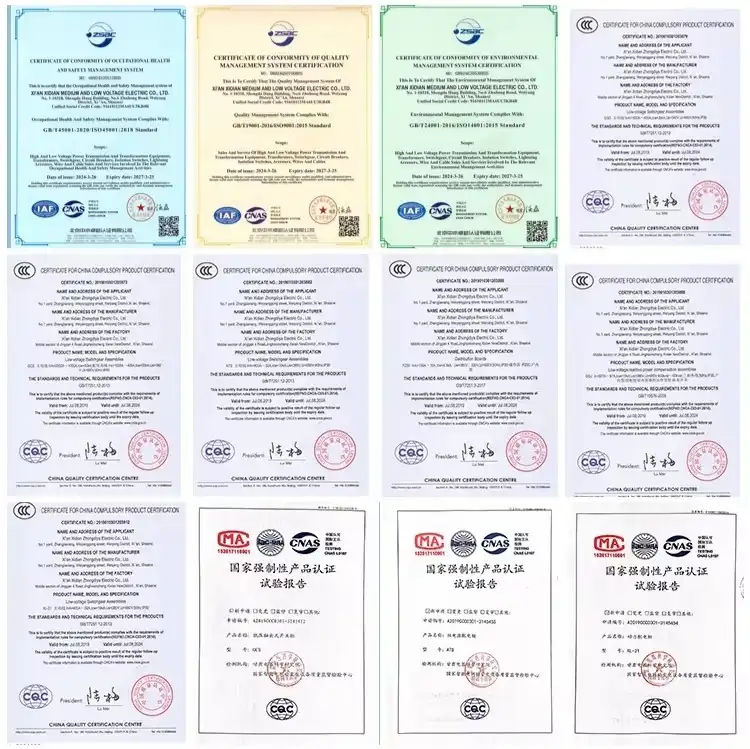
Tests are the only way to get objective evidence of performance. Some of the most common tests are temperature rise, short-circuit withstand, mechanical endurance, corona or partial-discharge assessment, and salt-fog or rust testing for use in coastal areas. IEC 62271-102 covers AC disconnectors, and IEEE C37.30.1 tells AC high-voltage air switches in North America what they need to do. IEEE Std 4 talks about how to test for high voltage. Ask for type-test reports, routine-test records, drawings, and records of the grading rings. Make sure that the tested configuration, which includes rings and shields, is the same as the one you buy. A report on a different arrangement doesn't back up your own.
Choosing a Manufacturer and Applying Grading Rings Where They Matter
What to Check in an Outdoor Disconnect Switch Manufacturer
Don't just look at the unit price. You should ask about design experience at your voltage, testing in-house, material inspection, traceability of the assembly, torque checks, final testing, and packaging for export. Standard products make delivery faster, and custom configurations can be made to fit specific ratings, dimensions, terminals, or documents. Lifecycle cost includes things like documentation, engineering help, installation work, lead time, spare parts, and warranty. Don't just look at unit cost. For an outdoor disconnect switch project with 3 to 20 sets, ask how the seller makes sure that each batch is consistent, since each unit needs to match the type-tested design.
Where Grading Rings Add the Most Value
Rings work best when the voltage is high, the insulator geometry is complicated, the wire is dirty, and it is exposed to the weather for a long time. Coastal substations need field control and materials that won't rust. For industrial and utility areas that shake, change temperatures, and have a lot of fault current, rings that stay in place and line up are needed. Plateau sites need to pay more attention to clearances because the dielectric strength drops when the air is thinner. For retrofits, check the measurements, terminals, clearances, certificates, and how the system works before adding anything that hasn't been tested. If you bolt on a ring without trying it first, it could change the gaps and cause more damage than good.
Xi'an Xikai Manufacturing Capability
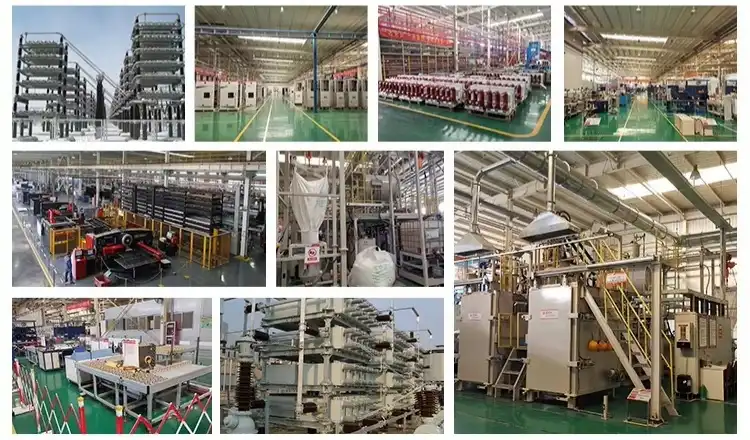
Xi'an Xikai Medium & Low Voltage Electric Co., Ltd. makes switchgear, dry-type transformers, vacuum circuit breakers, instrument transformers, and prefabricated substations. Their products fall into 7 groups, 34 models, and over 100 variants. Up to 4,000 meters above sea level, our plateau-type equipment can be used. State Grid systems, power engineering, steel, petrochemical, rail, water, and renewable energy projects all use our goods. We have a number of patented technologies and can change designs to fit the needs of each project. For your outdoor disconnect switch order, our experts can talk about ring layout, creepage, and test documents.
Conclusion
Grading rings make outdoor disconnect switches work better by spreading the electric field around the high-voltage contacts, connections, and ends of the insulator. This lowers peak stress, delays corona, and cuts down on radio interference, which is most important at 126–550 kV, high altitudes, and polluted air. Their worth depends on the size, placement, type, and testing of the rings, and they should not be used instead of creepage design, grounding, or protective devices. This idea is used in the GW10, which has grading rings and covers at the contacts, steel parts that don't rust, stable contact springs, and rates of up to 5000 A. Sound selection starts with system data, then careful installation, and ends with type-test and routine-test records that match the assembled product that was sent.
FAQ
1. Should there be a grading ring on every outdoor disconnect switch?
No, low-voltage designs don't need one very often. When there is a lot of field stress, extra-high-voltage units like the 126–550 kV GW10 use rings and shields. Type-test data and the outdoor disconnect switch design made by the manufacturer tell us what we need.
2. Can I add a grading ring to a switch that's already there?
After the maker makes sure it fits. Rings change the shape and size of the field, so they need to be validated. Unapproved changes can add new stress points.
3. Can a grading ring be used instead of grounding or creepage distance?
Not at all. Rings manage the electric field. Surface contamination is dealt with by creep distance, and fault protection is handled by grounding, fuses, and breakers. All of them are used in sound design.
Request an Outdoor Disconnect Switch Solution from Xi'an Xikai
The GW10 High Voltage Disconnect Switch from Xi'an Xikai is available for projects with 126–550 kV and comes with grading rings, contact shields, and proof of testing. Send your voltage, current, pollution class, and quantity to serina@xaxd-electric.com, amber@xaxd-electric.com, or luna@xaxd-electric.com if you need an outdoor disconnect switch manufacturer that can help you with configuration and plateau-rated designs. To find out more, go to xaxd-electric.com.
References
1. IEC 62271-102: High-voltage switchgear and controlgear – Alternating current disconnectors and earthing switches (2018)
2. IEC TS 60815-1: Selection and dimensioning of high-voltage insulators intended for use in polluted conditions – Definitions, information and general principles (2008)
3. IEEE Std C37.30.1: Standard Requirements for AC High-Voltage Air Switches Rated Above 1000 V (2011)
4. IEEE Std C37.32: Standard for High-Voltage Switches, Bus Supports, and Accessories – Schedules of Preferred Ratings, Construction Guidelines, and Specifications (2002)
5. IEEE Std 4: Standard for High-Voltage Testing Techniques (2013)
6. High Voltage Engineering: Fundamentals, Kuffel, Zaengl, and Kuffel (2000)