
Outdoor Disconnect Switch With Pantograph Design: How It Works
2026-10-29 17:10:37
An outdoor disconnect switch with pantograph design isolates high-voltage equipment by moving scissor-type conductive arms up and down between the line terminal and a fixed contact on the overhead conductor. When the operator opens the switch, the arms fold and leave a visible air gap that crews can check from the ground. When the operator closes it, the arms rise and engage the fixed contact under spring pressure, which carries current with low resistance. The switch isolates circuits but does not clear faults, so a circuit breaker still handles that job.
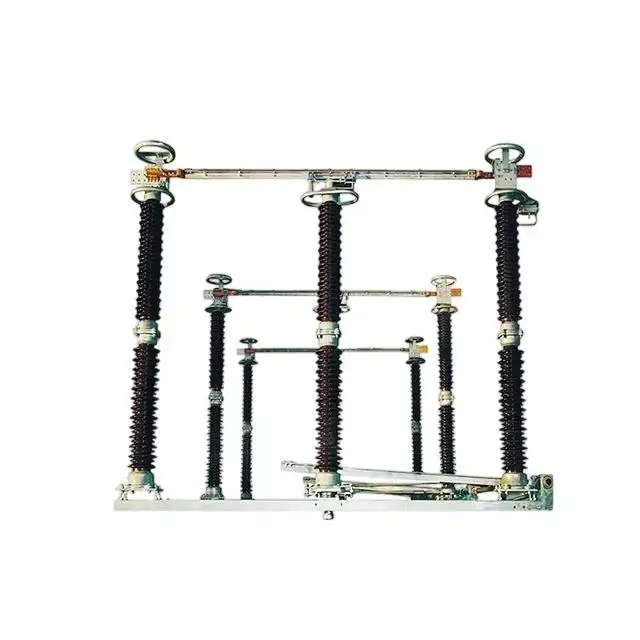
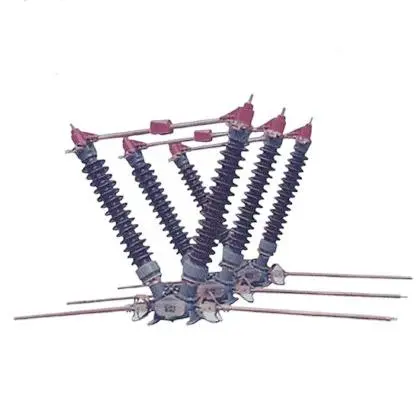
I wrote this guide for design institute engineers, EPC project managers, and utility buyers who specify 126–550 kV equipment. You will see how the mechanism works, which test evidence matters for an outdoor disconnect switch, and how the GW10 High Voltage Disconnect Switch from Xi'an Xikai fits heavy-duty substations.
What Is an Outdoor Disconnect Switch With Pantograph Design?
Definition and Purpose
Crews can safely disconnect a line, busbar, or circuit breaker from the rest of the system before maintenance with an outdoor disconnect switch. A disconnector is a mechanical switching device that provides an isolating distance when it is in the open position, according to IEC 62271-102. The pantograph version creates that distance with conductive arms that fold and rise or fall. This is not the same as the small 30- or 60-amp AC disconnects that are usually found next to HVAC units. Low-voltage power supplies use those boxes to isolate small loads. In transmission and substation circuits, where an outage costs a lot more, a pantograph disconnector is used.
Main Components of the GW10 Design
A single-column vertical pantograph layout is used in the GW10 High Voltage Disconnect Switch, which is an outdoor disconnect switch for 126–550 kV. The pantograph arms are on top of a base that holds the support insulator. The arms are made of an aluminum alloy profile that carries current while helping dissipate heat. The gearbox system is made up of pins, bushings, joints, and bearings made of stainless steel. Parts made of hot-dip galvanized steel provide corrosion protection and are designed to withstand outdoor exposure. Flexible busbar connections let electricity flow through moving parts, and bent copper plates simplify maintenance. Contact pressure is maintained by stainless steel springs that are compressed from the outside. Operators, interlocks, and grounding switches are chosen based on the project requirements. Before the drawings are approved, I check the exact setup with the design institute.
Typical Applications
Electricity grids, power plants, and substations with ratings between 126 and 550 kV use our GW10 range. Some common applications are isolating the busbar, isolating the line, and isolating transformers or circuit breakers for service. At the collection substation, the same type of outdoor disconnect switch is used for renewable energy projects that connect at transmission voltage. The single-column design makes it easier for an EPC contractor building a 220 kV or 330 kV yard to keep the phase spacing and equipment footprint manageable. These requirements are usually checked early in the layout drawings by the design institute. Make sure that the nominal system voltage and the rated voltage class match before you finalize the bay designs for a US project.
How a Pantograph Outdoor Disconnect Switch Works
Closed Position and Contact Pressure
The pantograph arms are fully extended when this outdoor disconnect switch is closed, and the upper contact is engaged with the fixed contact. Stainless steel contact springs that are compressed from the outside press the contact surfaces together. Stainless steel provides good corrosion resistance, helping maintain stable contact pressure in outdoor service when the material and surface treatment are properly specified. Low contact resistance is maintained by steady pressure, and at rated current, low resistance helps limit heating. The GW10 can handle up to 5000 A, and the profile made of aluminum alloy helps the arms dissipate heat. Flexible busbar connections let electricity flow through moving joints without relying only on sliding contact surfaces. I look over a datasheet with a design institute. The first things we look at are the contact pressure and temperature rise data.
Opening and Closing Sequence
The operator either activates the motor operator to open the switch or turns the manual handle. The linkage folds the pantograph arms down, and the operating shaft turns. When the moving contact separates from the fixed contact, an air gap becomes visible. Because the GW10 has short friction travel, sliding movement is kept small. This helps reduce wear on contacts and joints during operation. After that, locks and interlocks are engaged before any maintenance is done. To close, personnel remove the people and temporary grounds as required by the approved switching procedure, release the interlocks, operate the drive, and use the position indicator and a visual check to make sure the contact is fully engaged. This is the operating sequence that should be followed for an outdoor disconnect switch according to the approved project procedure.
Isolation Versus Protection
There are a lot of specification mistakes that start with mixing up four different switching and protection functions. A disconnector provides a visible isolating gap. A load-break switch is designed to interrupt specified load current. A circuit breaker interrupts fault current and can also switch normal operating current within its rated duty. A fuse provides overcurrent protection by melting when its rated current conditions are exceeded. As per IEC 62271-102, a disconnector can open or close circuits that carry very little current, such as the capacitive current in short bus sections. So I suggest that you open the circuit breaker first, then the disconnector, and then close them in the reverse order, subject to the approved switching procedure. Do not think of the outdoor disconnect switch as a fault-protection device, but as part of the isolation and safety process.
Why Use a Pantograph Design for Outdoor Electrical Isolation?
Visible Gap and Compact Layout
A pantograph opens vertically, so the isolating gap hangs in the open air where crews can see it easily. That supports the shutdown and tagout steps and maintenance checks when utility rules allow them. Most of the time, single-column vertical designs need less ground space than horizontal-break designs since the gap opens up instead of sideways. Designers can put the mechanism on either side of the GW10 base, so they can face it toward the repair path or fit it into a tight bay during an upgrade. You still need to share yard drawings early so that everyone knows about the phase spacing, bus height, and conductor type. An outdoor disconnect switch that matches the plan on paper keeps changes from having to be made on-site.
Corrosion and Pollution Resistance
Heavy pollution and salt fog are the things that EPC teams worry about the most. The metal parts of an outdoor disconnect switch are exposed to air, moisture, and pollutants in coastal or industrial environments. The GW10 has parts made of hot-dip galvanized steel and a drive system made of stainless steel, providing corrosion resistance for outdoor service when the materials and coatings are properly maintained. Just as important is the insulator creepage distance. The level of site pollution is ranked from "very light" to "very heavy" by IEC 60815 and is linked to a certain creepage distance per kilovolt. We'll come up with an insulator creepage distance that fits your site class if you tell us what it is. We then put that value into the contract instead of assuming that it is already there.
Contact Design and Electric Field Control
When the voltage is very high, the buildup of the electric field around the contacts can lead to radio and corona interference. The GW10 puts shields and grading rings at the contacts. These make the electric field spread out more evenly and can reduce radio frequency interference. The bent copper plates make maintenance easier, and the aluminum alloy profile helps heat escape. This is why the design aims for normal service to require minimal maintenance. These features, along with a stable contact spring system, make up a well-built outdoor disconnect switch. When you look over type-test reports, make sure they have radio interference voltage results. That one line tells you how the maker handles field control at the contacts.
Outdoor Disconnect Switch Ratings, Standards, and Selection
How It Compares With Other Switch Types
There is no need for a pantograph on every outdoor disconnect switch. For simple low-voltage isolation, like a 30-amp or 60-amp HVAC disconnect, blade-type and enclosure-type units may be less expensive. At lower voltages, fused versions offer both isolation and overcurrent protection. At 126 kV and above, protection is done by circuit breakers, while the disconnector provides the required isolation and does not clear faults. There are also horizontal types of high-voltage designs from Xi'an Xikai. These include the GW7B-363 three-column horizontal rotary switch and the GW11A-363 double-column horizontal pantograph switch. Single-column versions that go up and down, like the GW10, work well in places where the floor space or bus setup makes a vertical gap suitable.
Electrical Ratings and Standards
An outdoor disconnect switch should have a rating for its voltage, current, frequency, number of poles, short-time withstand current and duration, peak withstand current, insulation levels, creepage distance, and height. It works with voltages from 126 to 550 kV and has a rated current of up to 5000 A. The GW10 meets the requirements of IEC 62271-102. For US projects, the applicable IEEE and IEC requirements should be checked against the project specification, including the specified relationship between peak withstand current and short-time withstand current. Utilities in North America may also need IEEE C37.30.1, which is for AC high-voltage air switches with a rating of more than 1000 V. Check that each requirement is in line with your contract.
Verification Before Purchase
For any outdoor disconnect switch, I want the paperwork to match the nameplate before I accept the order. You can ask for type-test reports that include tests for dielectric performance, temperature rise, short-time and peak withstand current, mechanical endurance, and radio interference voltage. There are three types of mechanical endurance classes in IEC 62271-102: M0, M1, and M2. Find out which class the report covers. The package should come with records of routine tests, drawings, bills of materials, and assembly guides. Check the IP code under IEC 60529 for control cabinets and operator boxes. Weatherproof does not necessarily mean waterproof, so check the specified enclosure protection level. Check the contract to make sure that the voltage, frequency, current, fault rating, terminal layout, operating direction, and control method are all correct. A mistake found on paper is much less expensive than one found in real life.
Outdoor Disconnect Switch Installation and Maintenance
Installation and Alignment
Begin with the inspection when you get there. Make sure the fasteners are tight and look at the packing lists, nameplate data, and any damage you can see on the insulators and conductive parts. The installation instructions for models like the GW11A state that the three single-pole bases should be set on supports that are all the same height. They also specify using a level to make sure the base and top surfaces are level before mounting so that the insulators don't lean. Put the insulators together according to the numbers on the marks, and make sure the center line is aligned with the base plane. Once that is done, line up the pantograph arms with the fixed contacts. Follow the approved engineering plans and local instructions when installing the outdoor disconnect switch. This guide does not replace them.
Commissioning Checks
Once the device is mounted, it should be operated by hand first. The handle should be easy to turn, it should stop firmly in both the open and closed positions, and the auxiliary switch should work correctly when it changes states. When the output shaft turns 100 degrees on the GW7B-363, our handbook checks that the secondary switch works. After that, check the motor operator and any locks. Check the grounding continuity, measure the contact resistance and insulation resistance, and make sure that the position indicators match the actual contact position. Write down the results of every test of an outdoor disconnect switch and keep the sheet with the project files. Those records help the owner figure out what to look for in future inspections.
Maintenance Routine
The GW10 is designed to work without major repairs during normal use. A planned inspection still helps keep a busbar isolation system reliable when the equipment is difficult to remove from service. Our GW7 series manuals say to check them every five years and after a severe short circuit. During a visit, clean the insulators and contact areas of dirt, apply conductive grease where the manual specifies it, look for loose pins and bolts and cracks in the insulators, and make sure the manual operating mechanism works correctly. Cut the time between visits in places with a lot of pollution, salt exposure, or frequent operations. Keep records for every outdoor disconnect switch in the yard so that you can perform checks and plan for spare parts.

Conclusion
A pantograph outdoor disconnect switch separates high-voltage equipment by folding conductive arms to make an air gap that can be seen. It should never be used instead of a circuit breaker to clear a fault. This design is used by the GW10 for systems with 126–550 kV and currents of up to 5000 A. To deal with corrosion, contact pressure, and field control, it has galvanized steel, a stainless steel transmission system, contact springs that are compressed from the outside, and grading rings with shields. Buyers should match the creepage distance to the pollution class of the site, ask for type-test reports that cover withstand current and mechanical endurance, and compare the contract to IEC or IEEE requirements. The isolating function stays reliable throughout the service life when the equipment is correctly aligned, commissioned, recorded, and regularly inspected.
FAQ
1. Does an outdoor disconnect switch interrupt fault current?
No. It isolates equipment after a circuit breaker or another suitable protection device has interrupted the current. Breakers, fuses, and protection relays are used to clear or control short circuits and overcurrents.
2. How do the pantograph arms move?
The operating shaft is turned by a person or a motor. The linkage then extends or folds the arms vertically between the line terminal and the fixed contact. This changes the size of the isolating gap and opens or closes the switch.
3. What documents should I request from a supplier?
Ask for type-test results, routine test records, quality records, warranty terms, lists of spare parts, and installation instructions. Each document should be matched to the exact configuration you want to buy.
4. How does it differ from an HVAC disconnect?
A 30 or 60 amp HVAC disconnect is a small, enclosed switch that cuts power to one piece of equipment at low voltage. For 126–550 kV lines, an outdoor disconnect switch must have insulators, clearances, and a creepage distance that is appropriate for the site conditions.
Request an Outdoor Disconnect Switch Quote From Xi'an Xikai
Xi'an Xikai has equipment for plateaus that can work at heights of up to 4,000 meters and can be set up in configurations needed for difficult projects. Are you looking for a company that makes outdoor disconnect switches for a 126–550 kV site? Please email serina@xaxd-electric.com, amber@xaxd-electric.com, or luna@xaxd-electric.com with your system's voltage, current, short-circuit level, pollution class, altitude, and quantity. For sites with a lot of pollution, our GW10 has a transmission system made of stainless steel and galvanized steel. We will suggest a setup and give you information about it. To find out more, go to xaxd-electric.com.
References
1. IEC 62271-102: High-voltage switchgear and controlgear – Alternating current disconnectors and earthing switches, 2018
2. IEC 62271-1: High-voltage switchgear and controlgear – Common specifications, 2017
3. IEEE C37.30.1: Standard Requirements for AC High-Voltage Air Switches Rated Above 1000 V, 2011
4. IEC 60815-1: Selection and dimensioning of high-voltage insulators intended for use in polluted conditions – Definitions, information and general principles, 2008
5. IEEE 693: Recommended Practice for Seismic Design of Substations, 2018
6. IEC 60529: Degrees of protection provided by enclosures (IP Code), 1989