How Indoor Potential Transformers Work: 4 Essential Roles Explained
2026-06-09 15:52:23
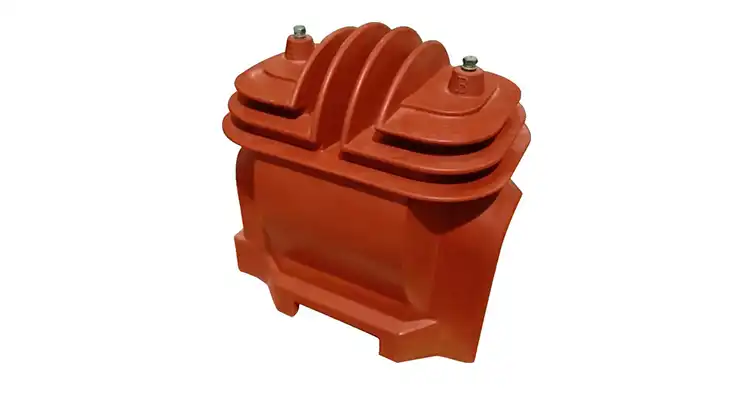
Indoor Potential transformers are important parts of electrical systems because they lower high main voltages to normal secondary outputs that can be used by tracking, metering, and safety equipment. These electromagnetic devices work by using induction to lower 24kV main voltages to safe levels like 110V or 480V. They do this by using silicon steel cores and precision windings. Their four main functions—measuring voltage, integrating protective relays, measuring energy, and isolating electricity—make them essential in modern substations, factories, and office buildings where accurate monitoring of power quality has a direct effect on equipment longevity and operational uptime.
 |
 |
Understanding Indoor Potential Transformers: Core Operating Principles
What Makes Voltage Transformers Essential for Power Systems
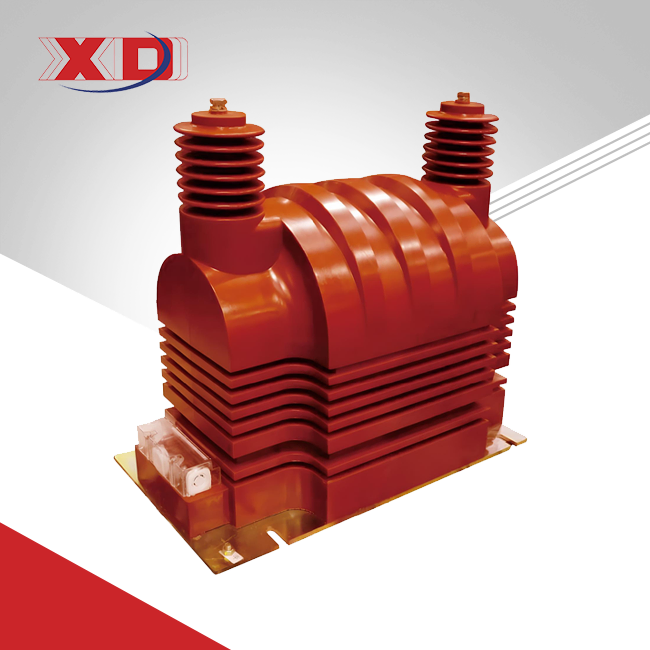
An Indoor Potential transformer is a precise tool that safely lowers high voltage levels to levels that can be read by standard measuring tools. In contrast to current transformers, which deal with power, these voltage tools only care about keeping phase relationships and voltage ratios correct. When your building is running at 24kV, connecting normal 120V meters straight to the equipment would destroy it right away. Through electromagnetic coupling, the transformer fills in this gap, lowering the voltage while keeping the relative accuracy within 0.2% to 0.5% of the target range.
Laminated silicon steel plates that keep eddy current losses to a minimum are used in the electromagnetic design. The primary windings lead to the high-voltage buswork, and the secondary windings power SCADA systems, protective switches, and digital meters. This setup makes sure that the tracking equipment gets clean, proportional voltage readings and isn't exposed to any dangerous primary potentials.
How Electromagnetic Induction Achieves Voltage Transformation
Faraday's law of electromagnetic induction is at the heart of how it works. Alternating current runs through the main winding, which makes the magnetic field in the core change. Based on the number of turns, this field causes a voltage to be proportional in the secondary winding. A normal 24kV unit with a 480V output keeps a ratio of 50:1, which means it has 50 primary turns for every secondary turn.
Phase displacement is still very important for the accuracy of safe transmission. Good units, like the epoxy resin-cast models from Xi'an Xikai, keep phase mistakes below 30 minutes of arc, which makes sure that relay coordination works right when there is a fault. The fully sealed design stops water from getting in and partial release, which are common ways for older oil-filled designs to fail.
The Four Essential Roles in Modern Electrical Infrastructure
1. Voltage Measurement: Accurate analog-to-digital processors in modern metering systems need stable voltage standards. The accuracy class of the Indoor Potential transformers decides how reliable the measurements are. For example, Class 0.2 units offer revenue-grade accuracy for energy billing, while Class 0.5 units are best for industrial monitoring. Power quality monitors in your data center need this stability from Indoor Potential transformers to find voltage sags, swells, and harmonic distortion before they damage server equipment.
2. Protection System Integration: To figure out impedance and trip time, distance relays, overvoltage protection, and synchronization circuits need correct voltage inputs. Three Indoor Potential transformers set up in a wye design might be used as part of a factory's safety system to find single-phase problems in 16 milliseconds. To keep accuracy from dropping during joint operations, the transformer's burden capacity (measured in VA) must be higher than the loads tied to the relays.
3. Energy Metering: For utility bills, revenue metering needs to be accurate enough to be tracked over decades of service. Multiple meters can be connected without voltage drop in the 30VA to 200VA secondary output range. Parallel secondary connections from a single main source make it possible for hospitals and business buildings to submeter energy costs so that they are paid for by specific departments or tenants.
4. Electrical Isolation: The transformer keeps high-voltage main lines and low-voltage secondary equipment from touching each other. This safety shield keeps ground fault currents from hurting sensitive electronics and protects the people who are maintaining meters. People are safe when lightning hits or switching surges happen because of reinforced insulation systems rated for 17.5/55/105kV impulse withstand levels.
Technical Specifications Driving Performance and Reliability
Accuracy Classes and Their Impact on System Precision
The levels of accuracy are based on the IEC 61869-3 standards, which say what the biggest ratio and phase mistakes can be when the device is loaded to certain levels. Class 0.2 transformers keep ratio errors within ±0.2% from 25% to 100% rated load. This makes them good for custody metering, where a 0.5% mistake can cost a big facility thousands of dollars a year. Class 0.5 units are a cheap way to power non-revenue use cases like power factor correction tools and process tracking.
Long-term stability is affected by temperature factors. Epoxy resin coating is better at conducting heat than porcelain housings, so it keeps the accuracy even when the temperature runs from -25°C to +55°C. What kind of insulation you use depends on the conditions in your building, like whether it's a climate-controlled data center or a steel mill with rough conditions.
Load Capacity and Burden Management
The number of devices you can connect before accuracy starts to drop is shown by the rated secondary output (VA). A 200VA unit can handle multiple digital meters, sensors, and relay sources at the same time. To find the total load, add up the impedances of all the connected devices and the resistance of the lead wires. When the maximum load is exceeded, the voltage drops and phase angle mistakes happen, which makes it harder for the protective relays to work together.
These days, digital switches use very little power (often less than 0.1VA per phase), so you can put 20 or more units on a single Indoor Potential transformer. Older electrical switches may need 5VA each, which quickly uses up all the available power. When updating older substations, comparing the real load on Indoor Potential transformers to the nameplate rates stops measurement errors that hide power quality issues.
Insulation Levels and Dielectric Strength Requirements
The 17.5/55/105kV insulation grade tells you the volts that the power can handle for one minute, for lightning strikes, and for switching impulses. These numbers must be higher than the system's working voltages by a safe amount. A 24kV distribution system usually works at 13.8kV phase-to-ground, which means that 17.5kV power frequency withstand is enough for normal situations, and 105kV impulse capability guards against sudden overvoltages.
Vacuum testing during production makes sure that the epoxy casting has no holes in it. It has been proven that Xi'an Xikai's vacuum casting process gets rid of the air pockets that cause dielectric breakdown. This is shown by partial discharge levels of less than 10pC at 1.5 times the rated voltage. This quality control makes the service last longer than 30 years in most indoor settings.
Real-World Applications Across Industrial Sectors
Manufacturing Plant Voltage Monitoring Systems
Indoor Potential transformers are used all the way through the electricity distribution system in factories. At the main service entry, three units set up in a delta shape watch the incoming utility voltage for control of the power factor adjustment capacitor. Inside the factory, extra transformers connect to motor control centers and let variable frequency drives adjust for changes in supply power that cause process changes.
Stable power is needed for CNC cutting to keep the spindle speed accurate. A 0.5% drop in voltage can change cutting speeds enough to change the limits for size on precise parts. Real-time tracking with transformer-fed analyzers causes upstream transformers' tap changers to make changes automatically, which keeps the voltage within ±2% of the set level.
Utility Substation Protection and Control
Indoor Potential transformers are used as the main way that transmission and distribution substations measure voltage for distance protection, bus differential schemes, and synchrophasor measurement units. A normal 115kV substation might have 12 to 15 voltage transformers that serve different safety zones. The devices need to stay accurate even when there is a fault, and the core voltages change a lot. This calls for strong ferro-resonance reduction designs.
IEC 61850-compliant digital outputs are becoming more and more important for smart grid connectivity. In older systems, transformers send voltage signals in the form of analog data. In newer systems, combining units turn these signals into digital data that can be sent over fiber optics to central safety systems. This design lowers the cost of copper wiring and raises internet security by encrypting communications.
Commercial Building Energy Management
Submetering is a way for hospitals, shopping stores, and office buildings to make sure that renters or departments pay their fair share of energy costs. A hospital center might put in more than 40 Indoor Potential transformers in different buildings. These would feed building management systems that keep track of how much power is used by wing, floor, and major equipment. This detailed information shows areas where demand response could be used, which could lower high demand charges by 15 to 20 percent.
Adding renewable energy makes managing power more difficult. Rooftop solar inverters can raise the voltage when there isn't much load on the system, which could set off the overvoltage safety. Voltage transformers placed in smart ways give feedback to inverter volt-VAR control methods that manage reactive power input and keep voltage within ANSI C84.1 limits.
Selecting the Right Voltage Transformer for Your Application
Matching Technical Requirements to Operational Needs
Before making a purchase choice, you need to know what the main system voltage is, what the secondary output you want, and how accurate it needs to be. Revenue metering needs Class 0.2S devices that are very accurate and don't put too much strain on the system. On the other hand, safe relaying can handle Class 0.5 or even 1.0 units. The insulation class depends on the voltage level in your building. For example, systems with a voltage level between 1 and 36kV are built differently than systems with a voltage level above 36kV.
For foreign projects, frequency consistency is important. European 50Hz networks need different core designs than 60Hz networks in North America. Many modern Indoor Potential transformers list ratings for both 50 and 60 Hz, but you should check the real performance data instead of thinking that they will work. When there are harmonic loads from varying frequency drives and LED lights, the core saturation characteristics change with frequency. This makes the accuracy less accurate.
Comparing Leading Manufacturers and Technologies
With wide ranges of products, ABB, Siemens, and Schneider Electric lead the global market. Siemens focuses on digital integration features, while ABB's cast plastic designs work well in tough conditions. Schneider focuses on lowering costs over the life of a product by extending the time between repair visits. Chinese companies, like Xi'an Xikai, offer good alternatives because they meet foreign standards (IEC 61869-1/2, GB 20840.2-2014) and offer short wait times and localized expert support.
Different levels of performance show up in scores for temperature stability and seismicity. In areas prone to earthquakes, factories need devices that are approved by IEEE 693 and have been tested to 1.5g peak ground acceleration. When it comes to thermal cycling durability, the epoxy casting method makes a difference. Vacuum-cast units can handle 10,000+ thermal cycles, while atmospheric pressure molding only handles 3,000–5,000.
Procurement Strategies for Large-Scale Projects
Setting up preferred vendor ties with companies that offer engineering support during the planning phase is helpful for EPC firms and system integrators. When you get involved early on, you can change the voltage ratios, mounting arrangements, and secondary connection arrangements to fit the needs of your project. A project for a data center might call for non-standard 24kV/208V ratios so that UPS systems can be directly fed without the need for extra step-down transformers.
When compared to buying things one at a time, buying in bulk usually saves you 12 to 18% on the cost. Lead times are very different. Standard goods from US manufacturers take 16–20 weeks to arrive, while well-known Chinese sellers like Xi'an Xikai deliver in 3–4 weeks through North American regional warehousing. When comparing basic 1-year factory repair guarantees to complete 5-year coverage that includes on-site replacement, lifetime costs are lower with the latter.
Future Technologies Reshaping Voltage Measurement Infrastructure
Digital Smart Grid Integration Trends
IEC 61850 communication standards make it possible for protection equipment from different manufacturers to work together. Next-generation Indoor Potential transformers have intelligence built in. Microprocessor-based tracking keeps an eye on things like accurate drift, insulation degradation, and thermal age in Indoor Potential transformers. Predictive maintenance algorithms look at these factors and plan replacements before a major failure causes unplanned outages.
Electromagnetic transformers are being replaced by optical voltage monitors. Instead of ferromagnetic cores, these devices use the Pockels effect or electro-optic crystals to measure voltage by changing the polarization of light. At the moment, they are expensive, but as output grows, the prices could drop below those of regular transformers within ten years. This would have benefits like not being affected by electromagnetic interference and having a smaller impact on the center.
Sustainability and Energy Efficiency Initiatives
Core loss decrease has a direct effect on how well the grid works. Modern amorphous metal cores cut no-load losses by 70% compared to silicon steel, which means that thousands of installed units save measurable amounts of energy. By choosing low-loss designs, a utility company with 10,000 transformers can save about 2.5 GWh a year, which is the same as lighting 230 homes.
Manufacturers use reusable materials and remanufacturing projects because of the ideas behind the circular economy. Epoxy resin casting makes recycling more difficult than oil-filled designs, which has led to studies into bio-based epoxy formulations and mechanical separation methods. Lifecycle environmental studies are becoming more and more required by regulations, which affects buying choices in ways other than upfront costs.
Adapting to Evolving Grid Architectures
Traditional ways of protecting power systems are put to the test by microgrids and scattered energy supplies. For power to run in both directions, Indoor Potential transformers need to be put in places that weren't being watched before. This means that networks that use a lot of green energy will need 30–40% more equipment. As a result, transformer makers have come up with small models that can fit in small areas in urban substations and on rooftops.
Hybrid AC/DC substations with special voltage measuring tools are needed for high-voltage DC cable integration. Even though resistive divider technology is used instead of electromagnetic induction in DC voltage transformers, AC-side tracking is still very important for controlling the converter station. Knowing about these changes in architecture helps buying teams choose the right tools for infrastructures that will last 20 years.
Conclusion
Indoor Potential transformers are still very important for making sure that electrical systems are safe, accurate, and reliable in business, utility, and industrial settings. Their four main jobs—precise voltage measurement, safety integration, revenue tracking, and electrical isolation—have a direct effect on how well operations run and how much energy costs are managed. To choose the right pieces, you have to weigh the project's unique needs against the manufacturer's powers, load capacity, insulation levels, and accuracy classes. As smart grid technologies and environmental laws change infrastructure, keeping up with digital integration trends, low-loss designs, and new optical tracking technologies will help your business succeed in the long run. When you work with experienced suppliers, you can be sure that you will have access to reliable, compliant goods that come with expert help for the life of the equipment.
FAQ
1. What is the difference between potential transformers and current transformers?
Indoor Potential transformers lower the voltage for measuring tools by using secondary circuits with high impedance and almost no resistance. Current transformers work with low-impedance secondary circuits that are almost short-circuited to step down the current. Both separate the electricity, but they measure different things—voltage sensing vs. current sensing. Both types are usually needed for protective relay methods to figure out power, resistance, and direction.
2. How often should indoor potential transformers be tested?
How often routine maintenance is done depends on how important the application is and the factors in the surroundings. Installing revenue meters needs to be checked for accuracy every 4 to 8 years to keep control transfer tracking. For industrial tracking purposes, tests may be done every 10 years. Once a year, the surface should be looked at visually to look for cracks, darkening, or tracking lines. Before accuracy goes down, thermographic scanning finds internal spikes that mean the windings are breaking down, or the load is too heavy.
3. Can I install outdoor-rated transformers indoors?
Outdoor-rated units with waterproof covers can be used indoors, but they cost more than they need to. Indoor designs are more compact because they don't need rain covers, UV-resistant coats, or longer creepage distances to protect against pollution. On the other hand, putting indoor units outside cancels guarantees and increases the chance of them breaking early due to changes in temperature and moisture. Performance and value are best when environmental standards are matched to the real installation conditions.
Partner With Xi'an Xikai for Reliable Indoor Potential Transformer Solutions
Xi'an Xikai Medium & Low Voltage Electric Co., Ltd. has been making high-quality Indoor Potential transformers that meet IEC 61869 standards for more than 25 years and are known in more than 30 countries. Our 24kV epoxy resin-cast units offer ≤0.5% ratio accuracy and 30/80/200VA output choices, making them suitable for demanding uses in places like data centers and utility substations. As a well-known company that makes Indoor Potential transformers, we can offer unique voltage ratios, fast 3-week lead times for large orders, and full technical support through regional teams. Get in touch with our application engineers at serina@xaxd-electric.com, amber@xaxd-electric.com, or luna@xaxd-electric.com to talk about the needs of your project.
References
1. Institute of Electrical and Electronics Engineers, "IEEE Standard for Instrument Transformers," IEEE C57.13-2016, New York, 2016.
2. International Electrotechnical Commission, "Instrument Transformers - Part 3: Additional Requirements for Inductive Voltage Transformers," IEC 61869-3:2011, Geneva, 2011.
3. Zhang, W., Chen, L., "Performance Analysis of Epoxy Resin Cast Voltage Transformers Under Harmonic Distortion," Journal of Electrical Engineering & Technology, Vol. 15, No. 3, 2020, pp. 1247-1256.
4. American National Standards Institute, "Electric Power Systems and Equipment - Voltage Ratings (60 Hertz)," ANSI C84.1-2020, Washington DC, 2020.
5. Blackburn, J.L., Domin, T.J., "Protective Relaying: Principles and Applications," Fourth Edition, CRC Press, Boca Raton, 2014, Chapter 8: Voltage Sensing and Protection.
6. National Fire Protection Association, "National Electrical Code," NFPA 70-2023, Quincy, Massachusetts, 2023, Article 450: Transformers and Transformer Vaults.