How Lightning Arresters Protect Your Power System from Strikes?
2026-01-20 15:57:53
Lightning arresters serve as the critical defense mechanism that protects electrical power systems by redirecting dangerous surge currents safely to ground during lightning strikes. These specialized surge protection devices instantly transform from insulators to conductors when voltage exceeds predetermined thresholds, effectively channeling excess electrical energy away from sensitive equipment. Industrial facilities, data centers, hospitals, and utility companies rely on lightning arresters to prevent catastrophic equipment damage, maintain operational continuity, and safeguard substantial capital investments in electrical infrastructure.
|
|
|
Understanding Lightning Arresters and Their Role in Power Systems
Lightning arresters are advanced surge protection devices that protect power systems from lightning and switching activities. Under normal operating circumstances, these devices act as insulators with exceptionally high resistance, allowing power passage without interference. The arrester's resistance reduces rapidly within microseconds after lightning strikes or voltage surges, producing a low-resistance channel that directs dangerous surge currents to ground.
Operating Principles of Metal Oxide Varistor
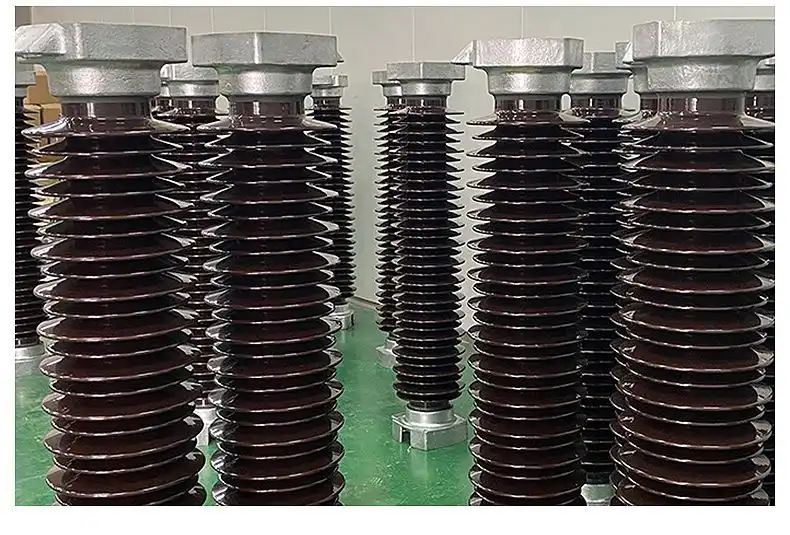
Modern lightning arresters use Metal Oxide Varistor (MOV) technology, which uses zinc oxide blocks in series in protective housings. Non-linear voltage-current characteristics make zinc oxide's resistance fall exponentially with voltage. This unique characteristic makes the arrester undetectable during regular operations but provides immediate surge protection. Polymer casing around zinc oxide blocks has benefits over porcelain. Advanced polymers withstand UV light, pollution, and temperature changes. Hydrophobic coatings on these housings reduce tracking and flashover, which may damage system dependability.
Lightning Protection System Types and Uses
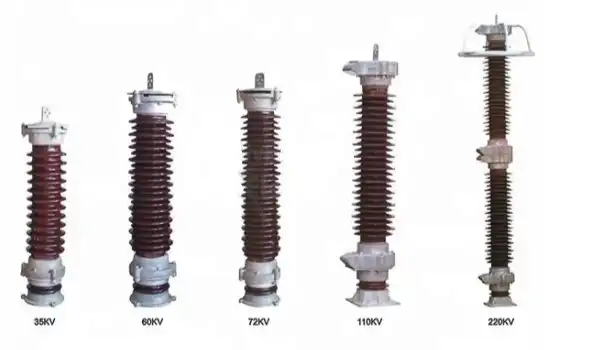
Lightning protection systems include device categories for different voltages and uses. Distribution class arresters safeguard industrial and commercial medium voltage systems. These devices safeguard transformers, switchgear, and motor control centers from 3kV to 36kV. Utility substations and transmission networks use transmission class arresters to safeguard 69kV and higher systems. These arresters have improved surge management and are designed to handle high voltage mechanical pressures. Power transformers, circuit breakers, and control systems are best protected by station class arresters. These devices use numerous zinc oxide blocks in series to manage high surge energy and maintain voltage coordination with protected equipment.
Key Considerations for Selecting Lightning Arresters for Industrial and Commercial Applications
System voltage ratings, climatic factors, and protection coordination must be considered while choosing lightning protection. To maintain consistent functioning without premature aging, the arrester's MCOV must match the system's typical operating voltage. The arrester's discharge voltage rating must also safeguard connected equipment and coordinate with other protective devices.
Technical specs and voltage ratings
Voltage rating is the key to arrester power system compatibility. The arrester's rated voltage is its highest continuous voltage without deterioration. This rating must surpass the arrester's maximum line-to-ground voltage under typical system circumstances, including load switching and ground fault overvoltages. The arrester protects connected equipment based on discharge voltage. Lower discharge voltages protect better but need more arrester actions. Higher discharge voltages increase operating margins but may stress protected equipment during surges.
Environmental and Installation Considerations
Environmental factors strongly impact lightning arrester selection and performance. To avoid salt contamination, coastal installations need pollution resistance. Chemical-emitting industrial areas need corrosion- and contamination-resistant housing. External insulation must be corrected for decreasing air density at high altitudes. Temperature affects arrester lifespan and performance. Extreme cold may affect zinc oxide properties, whereas high heat hasten aging. Modern arresters include temperature adjustment and thermal management to preserve function over large temperature ranges. In earthquake-prone areas, mechanical integrity during ground motion may avoid subsequent electrical failures. Seismic lightning arresters use strengthened mounting mechanisms and flexible connections to withstand structure vibrations without losing electrical integrity.
Installation and Maintenance Best Practices for Optimal Protection
Lightning arrester performance and lifespan depend on proper installation. Installation placement impacts protection and maintenance capability. Arresters should be near to protected equipment to reduce surge voltage losses and lead length. However, safe operation and maintenance access need suitable clearances.
Grounding and Connection
Lightning arrester performance and system protection depend on grounding system quality. For quick surge current dissipation, the arrester ground connection must be low-impedance to the station grounding grid. High grounding resistance may raise the arrester's discharge voltage, lowering protection and possibly interfering with other protective devices. lessen ground lead length to lessen inductance effects that raise protected equipment voltage during fast-rising surge currents. Best performance comes from direct mounting to grounded buildings or short, straight ground leads. Multiple ground connections minimize grounding impedance and improve surge management. Connection techniques must be reliable under regular operational pressures and faults. Thermal cycling does not loosen bolted connections with proper contact surfaces and torque. Welded connections are permanent but need careful installation and maintenance.
Preventive Maintenance and Monitoring
Regular inspections detect arrester issues before they harm equipment or fail protection. Housing damage, tracking marks, loose connections, and contamination should be visually inspected. Internal heating from infrared thermography may indicate zinc oxide deterioration or moisture penetration. Electrical testing quantifies arrester performance. Zinc oxide aging or moisture contamination may be detected by leakage current measurements under applied voltage. Power factor testing detects arrester capacitance and losses that may reveal internal issues. Modern systems continuously check arrester function. These systems monitor arrester life-affecting surges, leakage current, and environmental conditions. Advanced monitors offer predictive maintenance and decrease inspection expenses with remote data access and alarms.
Purchasing and Procurement Insights for Lightning Arresters
Lightning arresters must be purchased balancing initial costs with long-term value factors including dependability, maintenance, and service life. Quality arresters from recognized manufacturers operate better and last longer, justifying the greater initial investment via lower maintenance costs and system dependability.
Assessing Suppliers and Quality
Supplier certification assesses production, quality, and technical support. Established manufacturers have extensive testing and quality control processes to assure product performance. ISO 9001 quality management and ISO 14001 environmental management certifications show systematic quality control and continual development in manufacturing. Product certifications and testing ensure arresters fulfill industry standards and performance criteria. IEEE and IEC standards describe arrester reliability and compatibility testing and performance requirements. Independent third-party testing certifies manufacturer claims and standard compliance. Technical help is crucial for complicated applications and unique needs. Application engineers at manufacturers may do system studies, coordination evaluations, and unique solutions to maximize protection performance. Technical documents and training guarantee correct installation and maintenance.
Value Engineering and Cost Analysis
Ownership costs include purchase, installation, maintenance, and replacement during the arrester's lifespan. Premium items may cost more upfront, but their dependability and longevity frequently minimize overall expenditures. Warranty extensions and maintenance plans may reduce risk. Standardization reduces inventory, simplifies maintenance, and boosts volume price. Applications may demand particular arrester designs or ratings, therefore standardization must be balanced. Careful system requirements assessment reveals standardization options without sacrificing protection. Lifecycle cost modeling calculates the economic advantages of arrester choices throughout their estimated service lifetimes. Besides purchase price and installation costs, these models should incorporate indirect costs including downtime hazards, maintenance labor, and replacement schedule consequences.
Company Profile & Lightning Arrester Solutions
Xi'an Xidian Medium & Low Voltage Electric Co., Ltd. is one of China's major medium and low-voltage electrical equipment manufacturers, providing superior system integration services for power distribution solutions globally. Our product offering includes 34 series and over 100 variations in seven primary categories, including specialist lightning protection systems for industrial and commercial applications.
Advanced Tech and Manufacturing Excellence
Advanced polymer technology and rigorous design engineering provide our lightning arresters outstanding protection. Traditional designs fail due to moisture infiltration, whereas these devices seal well. Improved sealing systems enable constant performance in different environmental conditions and prolong operating life beyond 25 years in typical applications. Continuous improvement in materials science and production techniques gives our arresters good aging performance. High-purity zinc oxide elements are rigorously tested to assure uniformity and predictable performance over time. Safe pressure relief prevents catastrophic failures and maintains system integrity during surges. Our manufacturing facilities have various patented technologies for bespoke grid layouts and operations. We keep our lightning protection systems ahead of the competition by adding smart grid compatibility and IoT monitoring to premium versions.
Applications in Many Industries
National and industrial standards are reached by our plateau-type equipment at elevations up to 4,000 meters. This service is for hilly and high-altitude consumers where decreasing air density may degrade regular equipment. Through extensive research and development, core goods dominate local markets and meet worldwide advanced standards. State Grid systems, power engineering projects, steel and metallurgy facilities, petrochemical plants, rail transportation networks, energy and water conservancy projects, construction, environmental protection systems, and renewable energy installations use our solutions. Our products' extensive praise illustrates our dedication to providing personalized, dependable solutions that meet client needs. Engineering teams collaborate with clients to create application-specific settings that improve protection performance within budget and deadline.
Frequently Asked Questions
1. How long should industrial lightning arresters last?
When properly placed and maintained, industrial lightning arresters last 25–30 years. Environmental circumstances, surge exposure frequency, and maintenance quality affect service life. Regular monitoring and preventative maintenance may uncover aging patterns and optimize replacement scheduling to avoid unexpected failures.
2. How do lightning arresters safeguard electronics?
Lightning arresters reduce voltage spikes to safe levels for sensitive electronics. The arrester carries surge current to ground and clamps voltage across protected devices during lightning or switching surges. This integrated protection safeguards computers, control systems, and communication devices.
3. How often should lightning protection systems be maintained?
Depending on climatic conditions and application requirements, lightning protection systems need maintenance every one to five years. Annual visual checks reveal housing degradation and contaminants. Every three to five years, comprehensive electrical testing quantifies arrester condition and performance trends.
Contact Xi'an Xidian for Lightning Arrester Solutions
Xi'an Xidian's engineering team stands ready to provide customized lightning arresters solutions that meet your specific operational requirements. Our lightning arrester manufacturer capabilities include rapid prototyping, custom voltage ratings, and specialized environmental adaptations for challenging applications. Contact our technical experts at serina@xaxd-electric.com, amber@xaxd-electric.com, or luna@xaxd-electric.com to discuss your surge protection needs and receive detailed specifications.
References
1. IEEE Standards Association. "IEEE Guide for the Application of Metal-Oxide Surge Arresters for Alternating-Current Systems." IEEE Std C62.22-2019, Institute of Electrical and Electronics Engineers, 2019.
2. International Electrotechnical Commission. "Metal-Oxide Surge Arresters without Gaps for AC Systems." IEC 60099-4 Standard, International Electrotechnical Commission, 2020.
3. Cigre Working Group A3.25. "Guide for Application of IEC 60099-4 Metal Oxide Surge Arresters in Medium Voltage Networks." Technical Brochure 756, Cigre International Council on Large Electric Systems, 2018.
4. Hinrichsen, Volker and Klaus Steinfeld. "Metal Oxide Surge Arresters in High Voltage Power Systems: Fundamentals and Applications." Power Systems Engineering, Berlin: Springer Publications, 2021.
5. Martinez, Jose A. and Felipe Castro-Aranda. "Lightning Performance Analysis of Distribution Systems Using Electromagnetic Transients Programs." IEEE Transactions on Power Delivery, vol. 35, no. 2, 2020, pp. 1145-1153.
6. National Institute of Standards and Technology. "Lightning Protection for Critical Infrastructure: Assessment Methods and Design Guidelines." NIST Technical Publication 1842, United States Department of Commerce, 2019.
_1774404811357.png)
_1774324496045.png)