How Vacuum Circuit Breakers Improve Reliability in Industrial Power Systems
2026-06-22 15:46:43
Vacuum Circuit Breakers make industrial power systems more reliable by stopping fault currents inside a protected vacuum room. Without air, there is no way for an arc to continue, so there are no fire risks. Compared to standard oil or SF6 options, this technology offers better arc quenching, longer mechanical life (over 20,000 operations), and less upkeep needs. Vacuum Circuit Breakers keep factories, data centers, hospitals, and power lines running all the time by lowering the risk of contact erosion and insulation failures. This directly protects profits and operational safety.
 |
 |
Understanding Vacuum Circuit Breakers and Their Role in Power Systems
What Is a Vacuum Circuit Breaker?
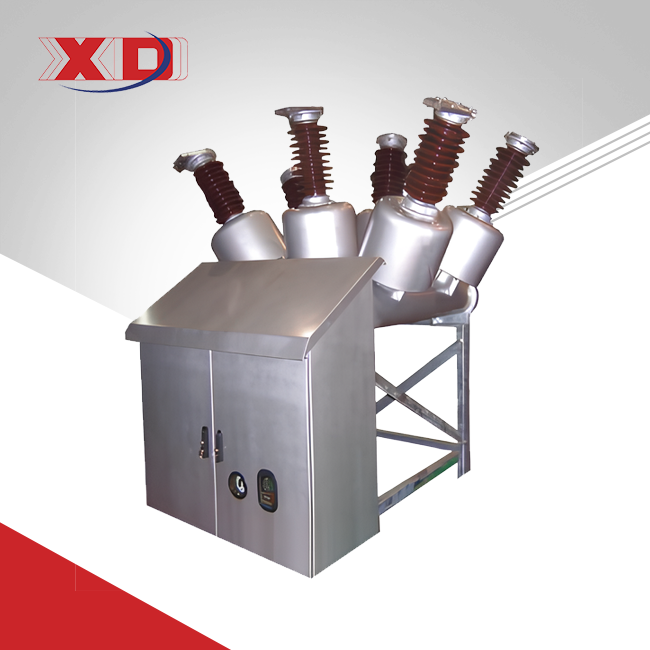
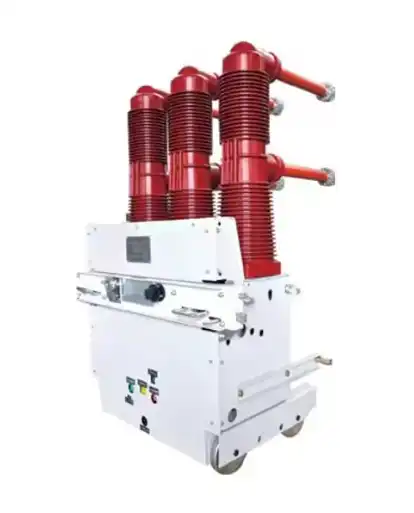
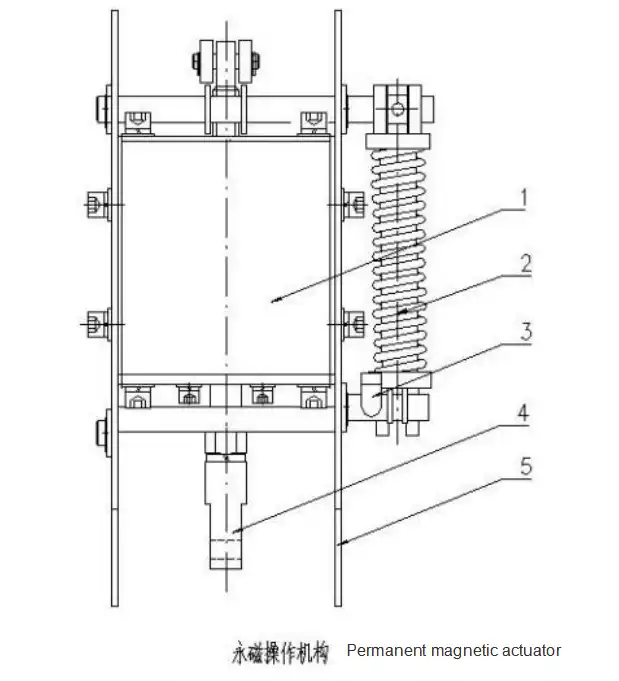
A Vacuum Circuit Breaker works by splitting electrical contacts inside a room that is completely empty. The dielectric strength of the vacuum quickly puts out arcs when the fault is interrupted. The main parts are a Vacuum Interrupter that holds the fixed and moving contacts, a spring-loaded system that moves the contacts, and insulation materials that stop flashovers from happening outside the device. When a fault happens, the mechanism quickly opens the contacts. The vacuum's natural ability to stop arcs means that the arc between them disappears in microseconds. Because this system doesn't use oil or heated gas, Vacuum Technology is safer and takes up less space by nature.
How Vacuum Technology Outperforms Traditional Breakers?
There are clear benefits to Vacuum Interrupters when compared to SF6, air, and oil circuit breakers. SF6 breakers need to be checked for gas leaks often and release greenhouse gases that are bad for the environment. Oil breakers, on the other hand, need to have their insulation oil tested often and face fire risks. Even though they are simple, air circuit breakers make a lot of arc noise and need bigger contact gaps. Additionally, Vacuum Interrupters work quietly, don't need any consumable media, and can break up to 40.5kV with a small size. The vacuum has a fast dielectric recovery speed that stops short-circuit currents over 31.5kA in just two cycles. This keeps equipment further down the line from getting damaged by heat.
Environmental and Operational Benefits
Vacuum Circuit Breaker technology is in line with environmental laws because it gets rid of harmful fluids and lowers carbon footprints. The tight vacuum cylinder in a Vacuum Circuit Breaker keeps dust, wetness, and corrosive gases from getting inside, making these devices perfect for harsh industrial settings. Studies from the IEEE Power & Energy Society show that Vacuum Circuit Breaker interrupters have 80% lower contact wear rates than air breakers, meaning they don't need servicing for ten years. This durability lowers lifetime costs directly and helps sites meet ISO 14001 environmental standards.
Key Factors That Influence Reliability in Industrial Power Systems
Common Reliability Challenges in Industrial Environments
Industrial power systems are constantly at risk of arc problems, which happen when insulation breaks down, mechanical wear from switching operations, and voltage drops when motors start up or capacitor banks get charged. According to study from the Uptime Institute, a single unplanned outage in a data center can cost $9,000 per minute. In manufacturing, downtime can damage supply lines and make customers less likely to trust a company. To protect life-support systems, hospitals and other important facilities must have 99.99% uptime, which means that proactive fault interruption is a must.
How Vacuum Interrupters Mitigate These Risks
There are three ways that Vacuum Interrupters deal with these problems. Rapid arc extinction stops fault energy from building up, which keeps transformers and bus bars from getting too damaged. Because there are no carbon deposits, which are typical in oil breakers, the contact resistance stays below 100 microhms over thousands of processes. Misalignments caused by vibrations are kept to a minimum when moving parts are light. Misalignments are a common cause of secondary fails. A case study of a utility company in the Midwest showed that replacing old oil breakers with vacuum units cut fault-related outages by 63% over three years and repair hours by 55%.
Real-World Impact on System Uptime
Vacuum Circuit Breakers can handle many motor starts without contact welding, which is helpful for factories that use CNC machines. When modular UPS systems are used in data centers, they need breakers that work with upstream safety relays. Vacuum units are great at this because they can precisely stop current flow. Utility substations that use changeable renewable energy sources rely on vacuum breakers to handle harmonic distortions without tripping for no reason. This keeps the grid stable when the output of solar or wind power changes.
Comparing Vacuum Circuit Breakers with Other Types: Making Informed Decisions
Technical Performance Across Breaker Technologies
Vacuum Circuit Breakers, SF6, air, and oil breakers can be chosen based on power class, stopping duty, and environmental restrictions. In the 12kV to 40.5kV range, vacuum breakers are most common. Their small size makes them perfect for indoor equipment like KYN28 and KYN61 cabinets. Above 72kV, SF6 breakers are still common because they provide better arc cooling in high-voltage situations. However, legal pressure from the Paris Agreement is pushing study into vacuum alternatives, even at transmission voltages. Oil breakers are still used in older grids, but they may be phased out because they are expensive to get rid of and fire rules don't allow them to be installed indoors according to NFPA 70E standards.
Maintenance and Lifecycle Considerations
Maintenance times are very different for each technology. Every 10,000 processes, or five years, Vacuum Interrupters only need to be inspected. This is done by visually checking the bellows seal and lubricating the mechanism. SF6 breakers need to be tested for gas purity and leaks once a year, which costs an extra $2,000 to $5,000 per unit per year. Oil breakers need to be analyzed for dissolved gases and filtered oil every three months, which takes forty hours of work each year. To keep carbon from building up, air breakers need to have their arc chutes cleaned every 2,000 actions. Because of these problems, Vacuum Technology is the best option for businesses that care more about their total cost of ownership than their initial cash spending.
Choosing the Right Breaker for Specific Applications
Teams in charge of buying things should look at things like voltage levels, the ability to break short circuits, and the mechanical durability class. Class M2 breakers with 20,000+ operations are needed in a pharmaceutical company that does a lot of batch processing. Class M1 units with 2,000 cycles are enough for a substation that doesn't do much switching. External insulation is affected by altitude; systems above 1,000 meters need to be derated or have longer creepage distances. Facilities near the coast can benefit from coats that don't rust and IP65 shelters that keep salt spray out. Xi'an Xikai's ZN85 series is a good example of these things to think about because it has dual-voltage setups for different grid standards and IoT-ready sensors for integrating predictive maintenance.
 |
 |
Maintenance, Installation, and Technical Considerations for Optimized Performance
Installation Best Practices for Indoor Switchgear
Making sure the environment meets the manufacturer's requirements is the first step in a proper installation. If the daily average humidity is less than 95%, the ZN85 works consistently between -15°C and +40°C. In tropical areas, it needs temperature control, and in subalpine climates, it needs heated shelters. To mount the breaker in a KYN61 cabinet, the racking mechanism must be perfectly aligned so that it can be put in and taken out without any problems. This stops mechanical binding, which speeds up wear. To keep connections from coming free and causing resistive heating, it's important to stick to the torque specs for the wires, which are usually 10-15 Nm for control ends and 40-60 Nm for power lugs.
Preventive Maintenance and Troubleshooting Strategies
The working mechanism, not the Vacuum Interrupter itself, is what routine maintenance is for. This is because the sealed room doesn't need any service on the inside. Every 2,000 processes, or once a year, techs should check the bearing noise in the motor that charges the spring, use force gauges to make sure that the closing spring stores energy, and use an oscilloscope to make sure that the timing of the secondary switch is correct. By using lithium-based grease to lubricate pivot points, you can stop friction from building up and slowing down contact velocity, which is a key factor for the ability to halt an arc.
There are set procedures for fixing common problems. Control voltage that is too low (check 85–110% of normal), closing springs that are not charged, or mechanical interlocks from earthing switches that are active are common reasons why doors don't close. Misaligned protection relays may cause nuisance trips, which needs time-current curve analysis to make sure discrimination with devices upstream. Contact welding is rare in Vacuum Circuit Breakers but can happen under very heavy short-circuit service. It shows up as the failure to open and requires replacing the interrupter, which can be done in less than four hours with the right tools.
Compliance with International Safety Standards
Following standards protects you from legal responsibility and makes sure your insurance covers you. In IEC 62271-100, the standards for type testing are laid out. These include the ability to make and break short circuits, the maximum mechanical endurance, and the maximum temperature rise. UL 1066 certification lets you put it in North American buildings, and CE marking lets you sell it in Europe. Buildings that want to get LEED or BREEAM green building standards should keep records of how vacuum breakers work and what materials they are made of. According to IEEE 1584, an arc flash danger analysis should include the breaker's fault stoppage time, which is usually 30 to 50 milliseconds for vacuum units. This is so that the incident energy levels can be correctly calculated and PPE can be chosen.
Procurement Insights and Soft Brand Integration for Global B2B Clients
Evaluating Technical Specifications During Procurement
Buyers have to figure out what the numbers on datasheets mean so they can match the skills of tools with the needs of the system. Rated voltage, like 40.5kV, is the highest line-to-line voltage that can be sustained over time, while BIL (Basic Impulse Level), which is 185kV, shows how well something can handle a lightning spike. To keep things from getting too hot, the rated average current (1250A to 3150A choices) should be 25% higher than the peak load. The most important criterion is that the short-circuit breaking current must be equal to or greater than the estimated fault current at the installation point of the breaker, which is found by analyzing the system's impedance.
Delivery times depend on how customized the item is. Standard stock items usually ship within 4 to 6 weeks. However, wait times can be up to 10 to 14 weeks for engineered-to-order setups that need special interlocking sequences or dual-language HMIs. When you buy in bulk for rollouts at more than one place, you can get savings of 8–15% and better scheduling for production. Payment terms usually go like this: 30% down payment, 60% before shipment, and 10% after commissioning. However, repeat customers may be able to negotiate net-60 terms with bank promises.
Trusted Global Manufacturers and Supply Chain Considerations
Leading companies in the industry, such as Siemens, ABB, and Schneider Electric, keep a large installed base and make extra parts available for decades at a time. This is very important for managing assets over the long term. In emerging countries, regional manufacturers often offer better value because they can offer localized expert help and faster service response times. Checking a supplier's credentials means looking at their ISO 9001 quality certifications, plant audit reports, and guarantee terms. Reliable suppliers offer 18–24 month coverage that includes replacing defective products on-site.
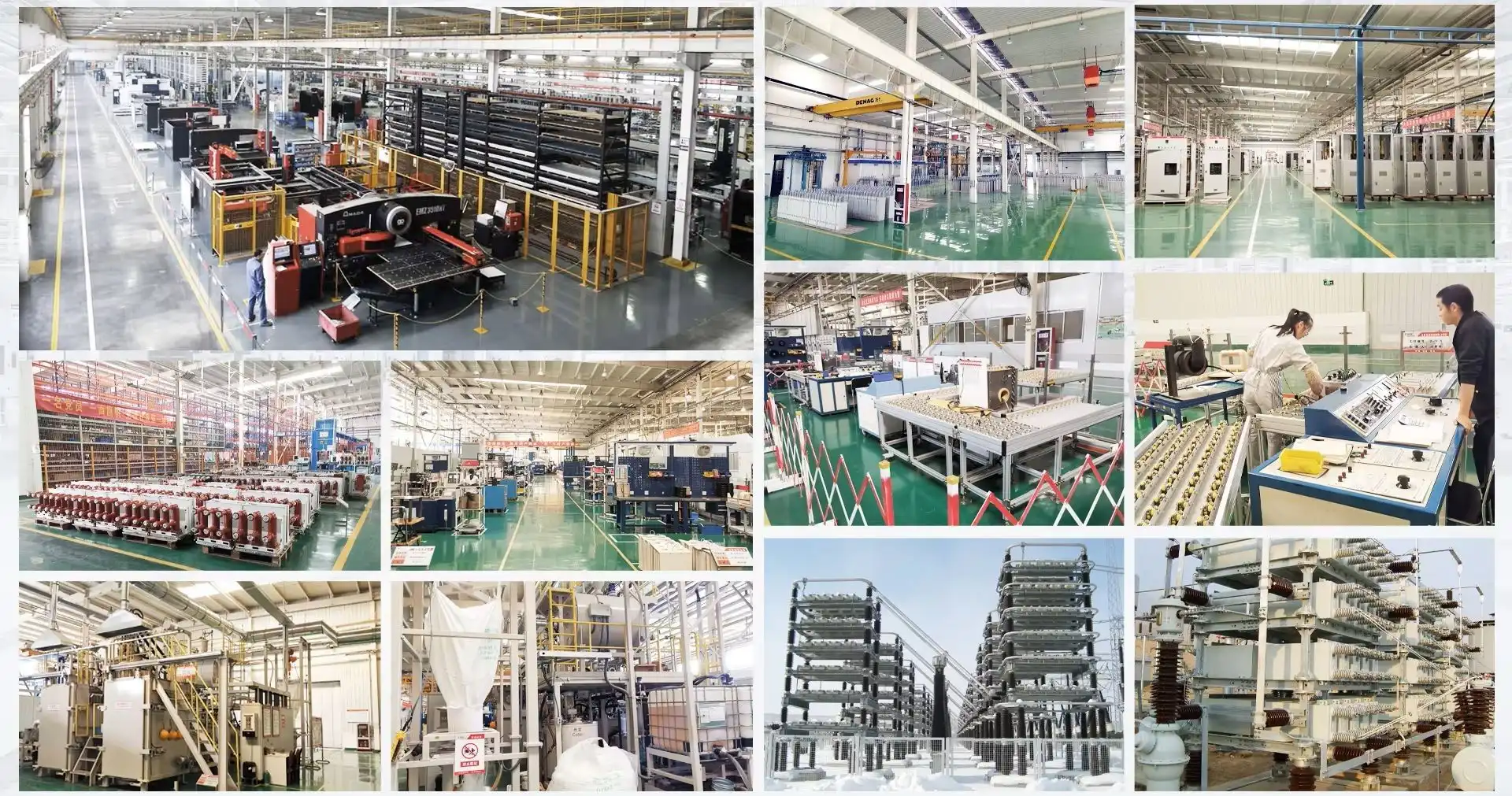
Xi'an Xikai is one of China's biggest factories that makes medium-voltage equipment. It offers complete solutions for seven product groups and more than 100 different models. Our Vacuum Circuit Breakers work perfectly with KYN61 switchgear thanks to pre-engineered fitting connections. This makes installation 30% easier than with alternatives that have to be modified in the field. Plateau-rated equipment works reliably at elevations up to 4,000 meters, meeting the needs of infrastructure in hilly areas where standard units need to be derated a lot. Several unique technologies in arc interruption and mechanical durability support performance that has been proven by uses in petrochemical complexes, State Grid systems, and rail transportation networks. Global markets have different voltage standards, transmission methods, and environmental factors that need to be taken into account.
Conclusion
For industrial power systems working between 12kV and 40.5kV, Vacuum Circuit Breakers offer the best combination of dependability, safety, and lifetime economy. The Vacuum Technology arc extinction technology they use gets rid of fire risks, makes upkeep 60% easier than with oil alternatives, and lasts longer than 20,000 processes. By using Vacuum Interrupters that don't wear out contacts, run quietly, and follow changing environmental rules, manufacturing plants, data centers, hospitals, and power grids can improve their uptime in a measured way. For proper selection, technical specs must be matched to fault current levels, ambient conditions, and operational job cycles. Best practices for installation and care ensure the highest return on investment. Working with certified makers guarantees access to tried-and-true designs, quick expert help, and the supply of spare parts for a long time.
FAQ
1. What advantages do vacuum circuit breakers offer over SF6 technology?
Vacuum Circuit Breakers interrupters get rid of the greenhouse gas emissions and costs of keeping an eye on leaks that come with SF6 systems, but they still do a good job of stopping at middle voltage levels. Over decades of use, the sealed vacuum box doesn't need to be refilled with gas, which makes operations simpler and lowers the risk to the environment.
2. How often do vacuum circuit breakers require maintenance in industrial settings?
Maintenance is usually done every 10,000 processes or five years, whichever comes first. It includes lubricating the mechanisms and checking them visually. In contrast, oil breakers need to be serviced every three months, and SF6 units need to have their gas quality checked once a year. This means that over the equipment's lifetime, 70% less repair work will be needed.
3. Can vacuum breakers integrate with existing protection relays and SCADA systems?
Modern Vacuum Circuit Breakers have extra contacts and motorized mechanisms that work with standard 110VDC or 220VAC control methods and connect easily to microprocessor-based switches through hardwired trip/close signals. Optional IoT-ready sensors allow contact via Modbus TCP or IEC 61850 for real-time tracking in remote control systems, which helps with predictive maintenance analytics.
Partner with Xi'an Xikai for Superior Vacuum Circuit Breaker Solutions
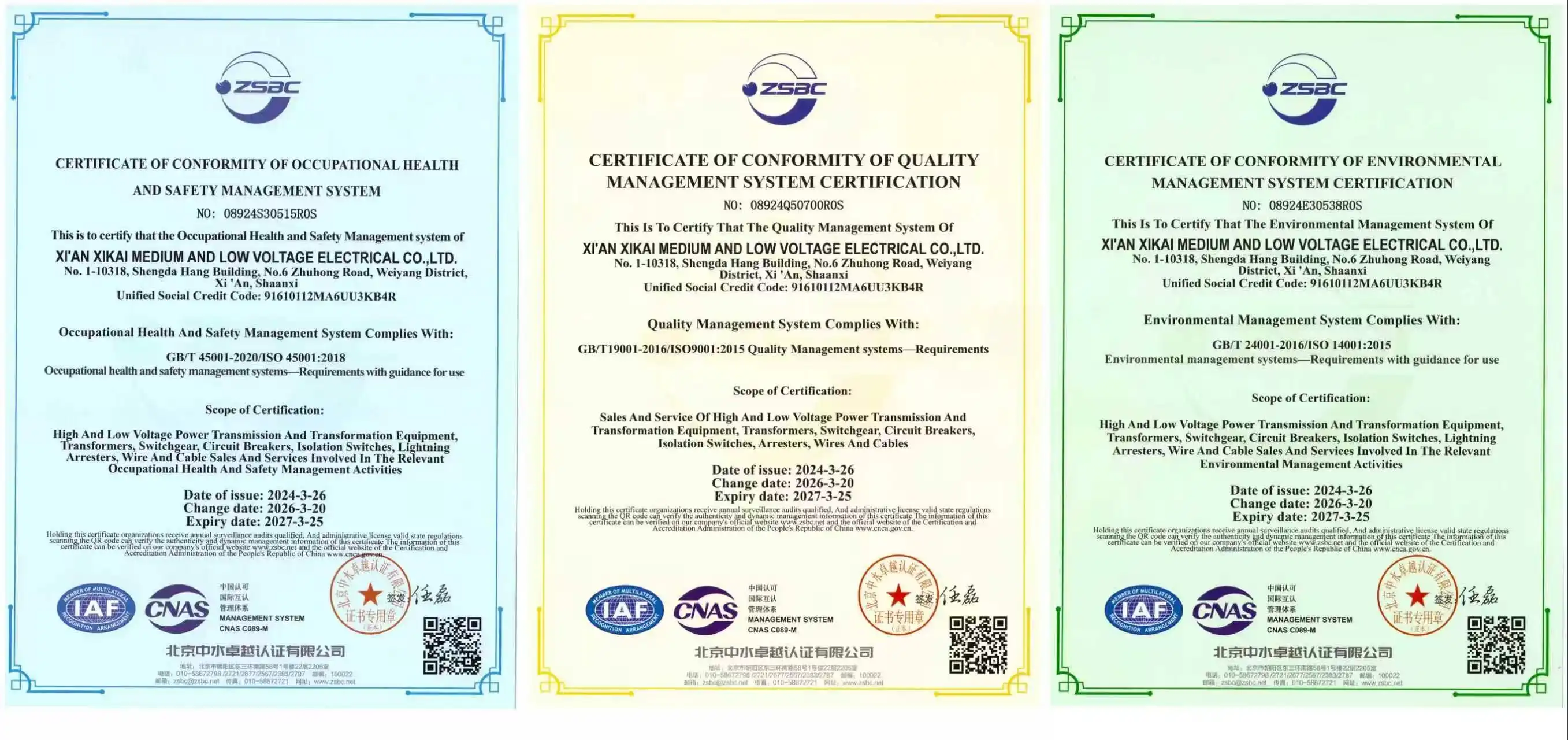
To make power systems more reliable, you need to work with a Vacuum Circuit Breaker maker that has technical know-how, a track record of performance, and quick customer service. Xi'an Xikai's full line of products, including the ZN85 series, which is made for 40.5kV uses in tough settings, is all ISO 9001-certified for quality. Our unique Vacuum Interrupter designs can withstand more than 20,000 mechanical operations while still meeting the requirements of IEC 62271-100. They are backed by strict factory testing procedures that confirm their dielectric strength and thermal stability.
Our engineering team can help you with custom solutions that take into account things like altitude, humidity, and communication protocol needs, whether you're in charge of a manufacturing plant that needs to switch duty often, a data center that needs to be up 99.99% of the time, or a utility substation that integrates renewable energy. You can email our dedicated experts at serina@xaxd-electric.com, amber@xaxd-electric.com, or luna@xaxd-electric.com to talk about technical details, ask for proof of certification, or get competitive quotes for your future projects.
References
1. IEEE Standards Association, IEEE Std C37.04-2018: IEEE Standard for Ratings and Requirements for AC High-Voltage Circuit Breakers with Rated Maximum Voltage Above 1000 V, Institute of Electrical and Electronics Engineers, New York, 2018.
2. International Electrotechnical Commission, IEC 62271-100:2021 High-voltage switchgear and controlgear – Part 100: Alternating-current circuit-breakers, Geneva, Switzerland, 2021.
3. Slade, Paul G., The Vacuum Interrupter: Theory, Design, and Application, Second Edition, CRC Press, Boca Raton, Florida, 2017.
4. National Fire Protection Association, NFPA 70E: Standard for Electrical Safety in the Workplace, 2021 Edition, Quincy, Massachusetts, 2020.
5. Uptime Institute, Annual Outage Analysis 2023: The Causes and Impacts of Data Center Outages, New York, 2023.
6. Greenwood, Allan, Vacuum Switchgear, Institution of Engineering and Technology, London, United Kingdom, 1994.