
HV Shunt Capacitor Complete Set: Buyer’s Guide for Power Systems
2026-10-26 17:22:58
If you manage procurement for a utility grid, industrial substation, or large outdoor power station, sourcing the right HV shunt capacitor complete set is one of the most consequential decisions you will make. This guide covers what these systems do, how to compare them, what to look for when buying, and how to keep them running long-term. Whether you are sourcing a single unit or placing a batch order of 3–20 sets, the information below will help you buy with confidence.
What Is an HV Shunt Capacitor Complete Set?
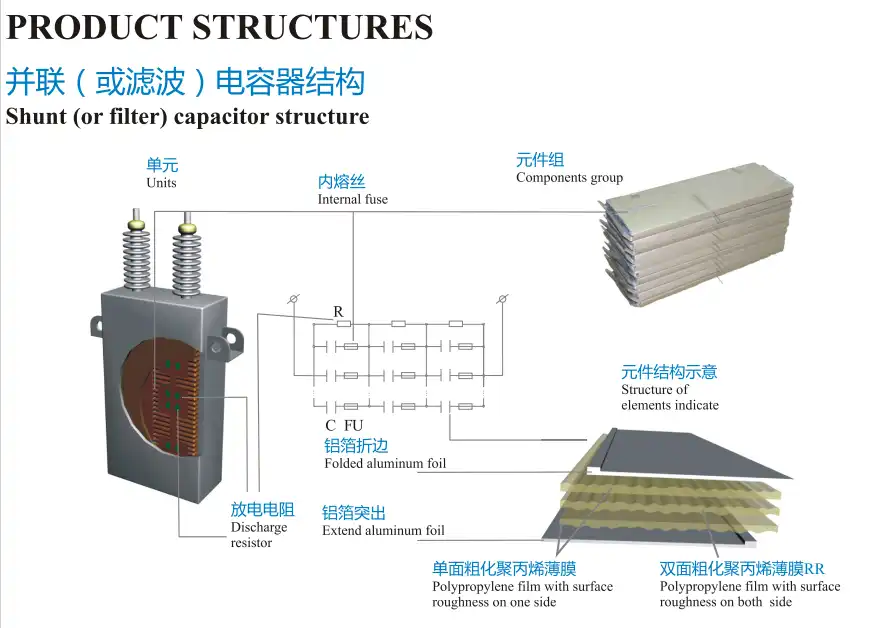
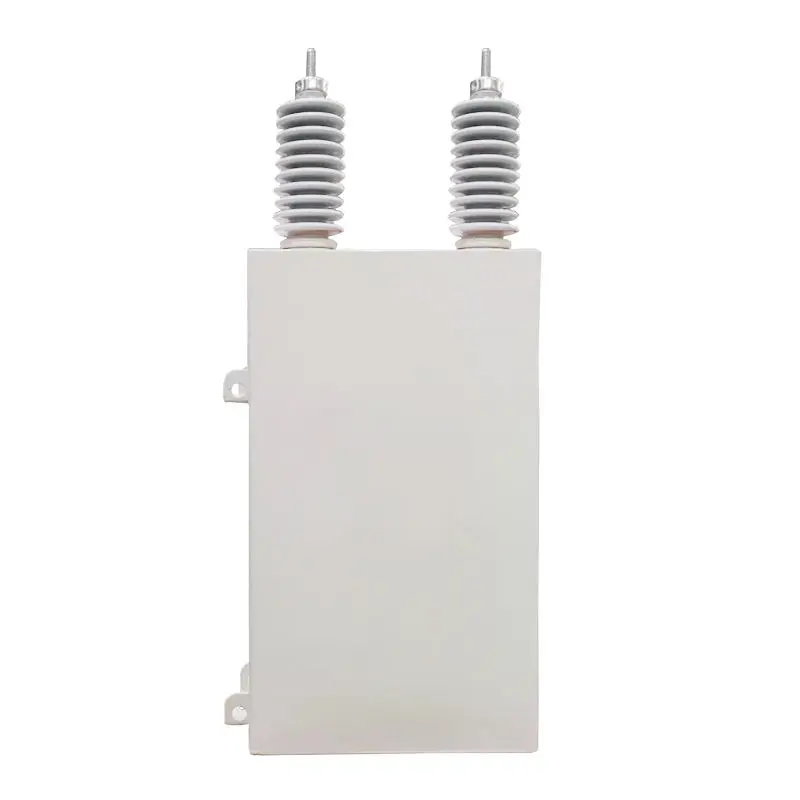
Assemblies called HV shunt capacitor complete sets are used in high-voltage power systems (usually 6kV or higher) to control the flow of reactive power, fix the power factor, and keep the voltage stable across transmission and distribution networks. Capacitor banks, series reactors, discharge coils, zinc oxide surge arresters, grounding switches, and safety relay panels are all built into one unit that works together.
The whole set is meant to work as a system, unlike separate capacitor units. To get rid of the 5th, 7th, or 3rd harmonics, the series reactors are set to reactance rates of 1%, 6%, or 12–13%. After being disconnected, the discharge coil lowers the voltage to below 50V in five seconds, which meets IEC and IEEE safety standards. The safety switch checks for uneven voltage and current to stop problems before they spread to the whole grid.
An HV shunt capacitor complete set is a useful and tried-and-true solution for outdoor substation operators who have to deal with inductive loads, changing voltage, or grid code compliance requirements.
Comparing HV Shunt Capacitor Complete Sets Against Alternatives
Shunt Capacitor Sets vs. Series Capacitor Sets
When shunt capacitor sets are connected in parallel with the load, they provide reactive power and fix the power factor where they are installed. When you connect series capacitor sets in line with the transmission wire, the effective resistance goes down over long distances. For most industrial and substation uses, shunt configurations give a faster return on investment (ROI) because they lower I²R losses at the load end without changing the infrastructure at the transmission level.
Shunt Capacitor Sets vs. Synchronous Condensers
Synchronous condensers can continuously change reactive power and can both make and take in reactive power. But they use spinning equipment, which means they cost more to buy, need more upkeep, and take up more space. It is much cheaper to use an HV shunt capacitor complete set for most fixed or step-switched compensation situations, but it still provides the same voltage support.
Key Performance Benchmarks
Buyers usually look at voltage values (6kV to 220kV), bank capacity (1 Mvar to 60 Mvar), and loss factor (tan ε ≤ 0.0003 at 20°C) when comparing goods from big brands like ABB, Siemens, Schneider Electric, Eaton, and GE. The Xi'an Xikai AKW Outdoor Frame-type Reactive Power Compensation Device has a power range of 300 kV to 240 MV at system voltages of 6kV and above. This makes it a competitive choice for utility, industry, and renewable integration projects.
How to Choose the Right HV Shunt Capacitor Complete Set
Match Electrical Specifications to Your System
Start by figuring out the voltage of your machine and the amount of reactive power you need to make up for. The AKW device works with voltages from 6kV and up, and its range of scales from 300 kV to 240 Mvar. This gives procurement teams options for working with substations of different sizes. Check the reactance rate of the series reactor based on your harmonic profile: 6% or 7% to get rid of the 5th harmonic, and 12–14% if the 3rd harmonics are the most important.
Prioritize Environmental Adaptability
When it comes to outdoor substations in places with dust storms, heavy rain, ice, or a lot of UV light, environmental scores are more important than price alone. When shopping for an enclosure, make sure it has an IP54 or IP55 grade, UV-resistant insulators, frame coatings that won't rust, and a confirmed working temperature range. The AKW device works from -25°C to +45°C and is protected by IP54/IP55. It also has a large creepage distance that prevents tracking failures caused by pollution, which is a real plus for buying teams in Central Asia, Africa, and other tough environments.
Before you choose a vendor, you should make sure they meet these basic requirements:
- Protection rating: IP54 minimum for outdoor frame installations; IP55 for high-humidity or coastal environments.
- Seismic performance: High mechanical strength and seismic resistance are required for installations in seismically active zones.
- Creepage distance: Larger creepage distances reduce flashover risk in high-pollution areas (IEC 60815 pollution class III or IV).
- Maintenance interval: Modular construction and corrosion-resistant materials directly affect how often field teams need to intervene.
These criteria directly address the concerns about reliability that operators have when they are in charge of outdoor equipment during extreme seasonal changes. Choosing a set that meets all four criteria lowers the total cost of ownership and cuts down on unplanned outages.
Evaluate Lead Time and Batch Procurement Terms
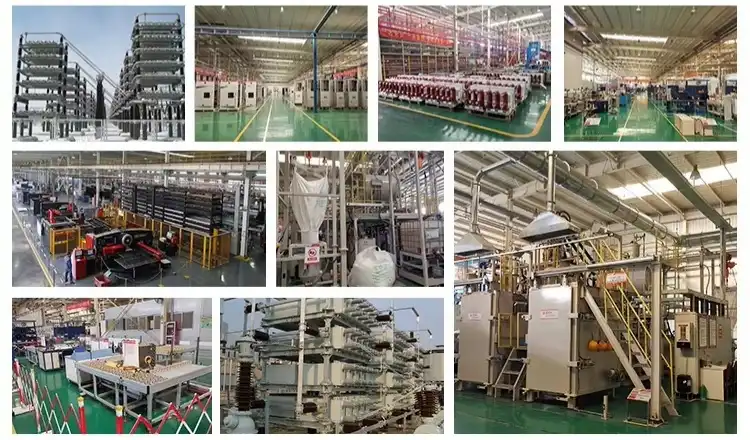
Usually, it takes two to four months from the time the specifications are given to the time the goods are delivered. For orders of 3 to 20 sets, make sure the provider can keep the quality of production the same across all units and provide unified paperwork for the grid operator to send in. The ISO 9001-certified production line at Xi'an Xikai puts every unit through 23+ quality checks, from checking the raw materials to the final high-voltage test. This ensures that each batch is delivered in the same way.
Procurement Guide for HV Shunt Capacitor Complete Sets
Identifying Qualified Suppliers
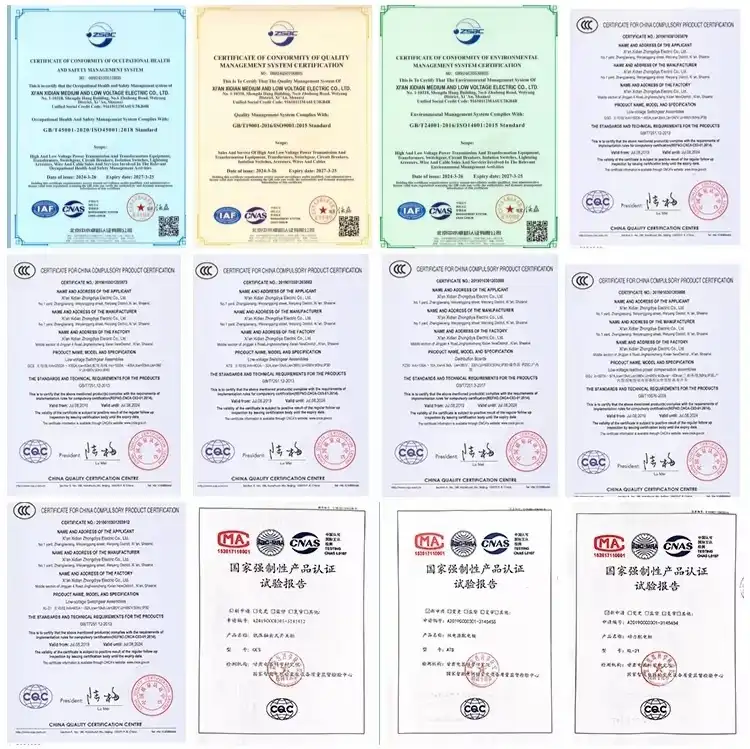
A trustworthy company that sells HV shunt capacitor complete sets should be in line with IEC 60831 and IEEE 18, be certified by ISO 9001, and offer test results from a third party. Xi'an Xikai has helped China's National 863 Program and has more than 15 patents for equipment that fixes reactive power. Its goods are used in power lines in more than 30 countries, which gives procurement managers reference places they can check out.
Understanding Quotation Factors
The cost of a reactive power compensation bank depends on its rated voltage, total Mvar capacity, protection relay grade, enclosure specification, and how much it can be customized. If you want to get a quote, you need to include your system voltage, the Mvar you need, harmonic data, the environmental conditions, and any grid code references. This lets the seller set up properly and avoids needing to make expensive changes later on.
Warranty and After-Sales Support
The AKW Outdoor Frame-type Reactive Power Compensation Device is made of high-grade metals and vacuum-impregnated capacitors, and it is meant to last 15 years or more. Xi'an Xikai provides technical support 24 hours a day, seven days a week, helps with installation, and allows customization for voltage ratings between 11kV and 33kV. They also offer harmonic filter options to meet the needs of different regions.
Troubleshooting and Maintaining Your HV Shunt Capacitor Complete Set
Common Faults and Early Indicators
The most common problems in the field are capacitor units swelling (which means the internal dielectric is breaking down and gas is being produced), insulators tracking (which is caused by surface contamination), and busbar connections coming loose during temperature cycle. Swelling is a very clear sign that the unit is about to break down; it needs to be changed right away. Tracking on an insulator usually looks like a discolored or carbonized surface, and it can be fixed by cleaning and re-coating.
Scheduled Maintenance Practices
Maintenance is usually done once a year on most HV capacitor bank installations. Some important jobs are checking the torque on the connections between the busbars, reading the capacitance of each unit to see if the internal fuse is working, looking for oil leaks, and making sure the safety relay trip setpoints are correct. Check the frame coating and hardware for corrosion when installing frames outside, especially after winter freeze-thaw cycles.
When to Contact the Manufacturer
If the capacitance is more than -5% off from what it says on the package, if the protection relays keep going off for no clear reason, or if damage is found to the frame or insulators after a weather event, you should contact the manufacturer for help. The technical team at Xi'an Xikai can do remote diagnostics and coordinate service in the field.
Conclusion
It's not enough to just match the voltage and capacity numbers to find the right HV shunt capacitor complete set for an outdoor substation. How well the equipment works over its lifetime is affected by its environmental longevity, safety grades, harmonic suppression design, and the infrastructure for supporting the provider. The AKW Outdoor Frame-type Reactive Power Compensation Device meets these needs with tested specs across a wide range of voltage and capacity, making it a good choice for utility and industry procurement teams that are in charge of outdoor setups in harsh weather.
FAQ
1.What voltage ratings are standard for an HV shunt capacitor complete set?
Most distribution-level sets cover 6kV to 66kV. Transmission-level sets extend to 220kV and above. The AKW device starts at 6kV and scales to match substation requirements up to 240 Mvar total capacity.
2.How often should maintenance be performed?
Annual inspections are the industry norm. Each cycle should include capacitance measurement, connection torque verification, insulator cleaning, and protection relay calibration. Outdoor frame installations in dusty or corrosive environments may warrant semi-annual visual checks.
3.Why does reactance rate selection matter?
The reactance rate of the series reactor determines which harmonics are filtered. A 6–7% reactor suppresses 5th harmonics and above; a 12–14% reactor is required when 3rd harmonics are present. Selecting the wrong rate risks resonance, which can damage the capacitor bank and connected equipment.
4.What causes capacitor unit swelling?
Swelling results from internal partial discharge or dielectric breakdown that generates gas inside the sealed can. It is a definitive end-of-life indicator. The unit must be replaced before it ruptures. A properly calibrated unbalance protection relay should have tripped the bank before swelling becomes visible.
5.Is outdoor installation in extreme climates feasible?
Yes, provided the equipment is specified accordingly. The AKW device operates from -25°C to +45°C with IP54/IP55 protection and UV-resistant insulators, making it suitable for desert, high-altitude, and sub-arctic outdoor substation environments.
Request a Quote from Xi'an Xikai — HV Shunt Capacitor Complete Set Supplier
The AKW Outdoor Frame-type Reactive Power Compensation Device is sold by Xi'an Xikai to utilities and businesses in over 30 countries. It is used in 6kV distribution networks and large outdoor substations in harsh climates. As a well-known HV shunt capacitor complete set manufacturer, we can help with bulk purchases by providing full documentation, custom configurations, and direct technical contact.
Reach our team today:
References
1. IEC 60871-1: Shunt Capacitors for A.C. Power Systems Having a Rated Voltage Above 1000V — Part 1: General. International Electrotechnical Commission, 2014.
2. IEEE Std 18-2012: IEEE Standard for Shunt Power Capacitors. Institute of Electrical and Electronics Engineers, 2012.
3. IEC 60831-1: Shunt Power Capacitors of the Self-Healing Type for A.C. Systems with a Rated Voltage Up to and Including 1000V. International Electrotechnical Commission, 2002.
4. Mohan, N., Undeland, T. M., & Robbins, W. P. Power Electronics: Converters, Applications, and Design. John Wiley & Sons, 2003.
5. Acha, E., & Madrigal, M. Power Systems Harmonics: Computer Modelling and Analysis. John Wiley & Sons, 2001.
6. Transmission and Distribution Electrical Engineering. Heathcote, M. J. (Ed.). Newnes/Elsevier, 2008.