Improving Power Quality With an SVG Connection Reactor
2026-09-11 16:57:43
An SVG connection reactor is the inductive interface component that links a Static Var Generator's voltage source inverter to the utility grid. It suppresses high-frequency PWM switching harmonics, limits di/dt to protect IGBTs, and enables smooth bidirectional reactive power exchange. Without a properly engineered SVG connection reactor, harmonic contamination exceeds IEEE 519 limits, control loops lose inductance stability, and compensation accuracy degrades. For SVG manufacturers and grid-tied equipment designers, selecting the right SVG connection reactor directly determines whether the entire compensation system performs as specified under dynamic load conditions.


Understanding SVG Connection Reactors and Their Role in Power Quality
More and more nonlinear loads, like variable-speed drives, inverter-based renewables, and arc furnaces, are being added to modern power grids. These loads constantly add harmonic currents and need reactive power. A Static Var Generator solves both issues at the same time by quickly switching IGBTs, but this switching process creates carrier-frequency harmonics in the 2 kHz–10 kHz range. The part that stops those waves from getting to the grid is the SVG connection reactor.
How the Reactor Interfaces With the VSI Bridge
There is a reactor between the converter bridge and the point where the grid runs through it. By showing a set impedance at both the fundamental frequency and the switching frequency, it changes the inverter into a controlled current source. From no load to at least 120% to 150% of rated current, inductance must stay linear. Any saturation in that range causes inductance to collapse, which messes up the SVG control loop and puts the IGBT at risk of breaking down during voltage sags—exactly when compensation is needed the most.
Why Standard Line Reactors Cannot Substitute
In order to keep fundamental frequency losses low, standard 50/60 Hz line reactors have bigger lamination stacks and wider air gaps. They aren't made to deal with hysteresis and eddy current losses between 3 kHz and 10 kHz switching frequencies. When you try to use them instead of the originals in an SVG circuit, the core gets too hot, you can hear magnetostriction noise above 65 dB, and the total harmonic distortion (THD) goes up at the point of common coupling, which is directly against the rules set by IEEE 519.
Technical Comparison: SVG Connection Reactor vs Other Reactive Power Solutions
Dynamic Performance, Linearity, and High-Frequency Loss Management
When procurement engineers look at reactive power solutions, they often compare SVG technology to other options like capacitor banks, passive LC filters, thyristor-switched SVC systems, or STATCOM configurations. There are different trade-offs for each device.
Capacitor banks have a low cost of capital, but they only offer stepped correction that is not dynamic, and they pose resonance risks when harmonics are present. SVC thyristor systems react in about one cycle, which is fast enough for small changes in load but not fast enough for the millisecond-level changes that happen when renewable energy is added. The VSI design of STATCOM topologies is the same as that of SVG systems, and their speeds are about the same. However, the theoretical reaction time will depend on the quality of the SVG connection reactor.
Pay close attention to the technical features that make the SVG connection reactor stand out. In terms of speed, these are the main things that set a purpose-built SVG connection reactor apart from other options:
- Inductance linearity to 120%–150% of rated current: A multi-gap core structure of the SVG connection reactor made of 0.23 mm to 0.30 mm grain-oriented silicon steel spreads the air gap to stop stray flux and keep the device from getting too hot at high currents. IEC 60076-6 says that the variation in inductance must stay below 5% at the highest rating current.
- High-frequency loss management: Transposed multi-strand conductors or foil winding reduce skin-effect and proximity-effect losses at switching frequencies. This keeps winding temperatures within Class H (180 °C) or Class C (200 °C) limits even when PWM loading is on all the time.
- Noise attenuation through VPI treatment: Vacuum Pressure Impregnation stops laminations and windings from vibrating, lowering magnetostriction noise to below 65 dB, which is necessary for switchgear rooms that are inside.
- Partial discharge below 10 pC: High dv/dt stress from IGBT switching requires that insulation integrity be checked by PD testing. This will keep the dielectric from breaking down too soon over the reactor's 20-year design life.
All of these features work together to make sure that the SVG system's control algorithm gets a stable, reliable inductance value throughout the whole working range, not just when everything is normal. When procurement teams only define rated inductance and voltage class without checking linearity curves and high-frequency loss data, they often find performance gaps in the field that need to be fixed at a high cost.
Applications and Industry Use Cases of SVG Connection Reactors
For Xi'an Xikai's SVG connection reactor to work, the voltage levels must be between 0.4 kV and 10 kV, the temperature must be between -10 °C and +45 °C, the humidity must be at its highest level (95%), the height must be up to 1,000 m, and the earthquake strength must be 8 degrees. Installation inside is normal. Based on these factors, the spread will cover a large area in many areas.
Industrial Manufacturing
When the motor starts up in CNC machines and assembly line drive systems, nonlinear load currents can reach surge levels of up to 100 times the rated capacity. The SVG connection reactor limits di/dt, protects the inverter semiconductors, and keeps the accuracy of the power factor correction that keeps utilities from charging extra. Measured drops in THD of 30% to 50% are common in manufacturing retrofit projects.
Renewable Energy Grid Interconnection
Inverters for wind and solar power create irregular reaction power needs that older grid equipment wasn't designed to meet. An LCL filter design, in which the SVG connection reactor acts as the inductor on the inverter side, reduces switching ripple by a factor equal to the cube of frequency. This makes it much better at blocking high frequencies than a simple L filter with the same total inductance. In Europe and Australia, grid operators have made this design a standard for inverter-based output above 1 MW.
Substation Voltage Regulation
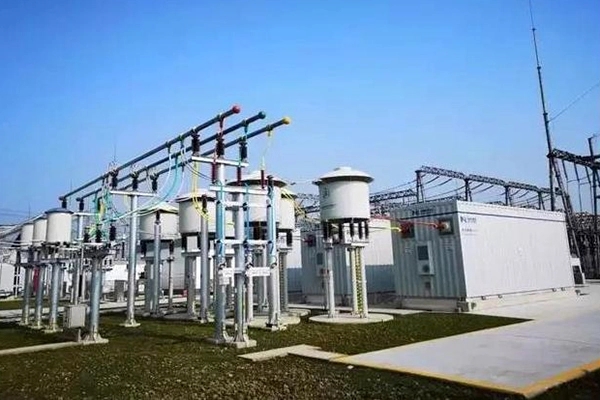
Rapid reactive compensation keeps the bus voltage stable at the substation level, protecting it from harmonics that come from renewable inverters and changing industrial loads. The dry-type iron-core design at Xi'an Xikai, which includes Class H/F insulation and automated foil winding for consistent inductance tolerance, keeps the machine running smoothly even when it's used 24 hours a day, seven days a week, without any liquid cooling infrastructure.
Procurement Guide: Selecting an SVG Connection Reactor Supplier
Quality Validation, Lead Time, and Global Certification
A trustworthy SVG connection reactor manufacturer should show proof of five quality checks: inductance linearity curves checked at 0%, 100%, and 120%–150% of rated current; heat-run tests replicating full harmonic load spectra; lightning impulse tests for grid switching surges; noise level measurements after VPI treatment; and partial discharge tests confirming levels below 10 pC. Every batch of products made by Xi'an Xikai goes through thermal imaging, humidity simulation, and ISO 9001, ISO 14001, and CCC certification audits.
Lead time is a real problem for SVG manufacturers who place initial prototype orders before system-level execution. Xi'an Xikai can do sampling and joint commissioning cycles within a two- to three-month window. After that, orders can be placed in quantities ranging from fifty to three hundred units per month. You can get SVG connection reactors with CE, UL, CCC, and BIS licenses to meet the needs of the markets in North America, Europe, India, and Australia.

Conclusion
A well-designed SVG connection reactor is not a standard inactive part. If the SVG system meets its dynamic compensation performance goals in the field, it will depend on its inductance linearity, high-frequency loss profile, insulation class, and noise behavior. The SVG connection reactor from Xi'an Xikai covers 0.4 kV to 10 kV, is certified to IEC 60076-6 and IEEE C57.16, and is made using ISO 9001 quality systems. It gives SVG makers a solid technical base for making products for demanding grid uses in many markets.
FAQ
1. Why does inductance linearity matter so much for SVG systems?
The SVG control loop gets the wrong plant model when the inductance drops at high current. The controller then sends out orders to fix things based on a number that doesn't exist anymore. This can cause the current to go too high, the system to become unstable, or the protective circuit to trip when compensation is most needed, like when the voltage drops. The measure that stops this failure mode is keeping the inductance deviation below 5% up to 150% of the maximum current.
2.Can an air-core reactor replace an iron-core SVG reactor?
Air-core reactors have a real linearity advantage because their inductance stays the same no matter how much current is flowing through them. They do, however, produce strong stray magnetic fields, need a lot more room, and are usually put in place outside. Iron-core designs with segmented multi-gap structures offer similar uniformity in a small package that fits inside SVG boxes and can be used in cabinets.
3.What causes noise in SVG reactors, and how is it controlled?
The main source of noise is magnetostriction in the lamination stack, which is caused by high-frequency harmonic flux. High-pressure Vacuum Pressure Impregnation and multi-step lap joints keep the layers from vibrating. The noise levels of Xi'an Xikai's VPI-treated units are low enough for indoor placements and meet the needs of switchgear rooms.
Connect With Xi'an Xikai for Your SVG Reactor Requirements
For makers of SVG connection reactors, Xi'an Xikai Medium & Low Voltage Electric Co., Ltd. helps them with unique inductance parameters, multi-voltage setups, and compliance certifications for markets around the world. Get in touch with our engineering team directly to talk about your sample requirements, plan for commissioning, or needs for bulk buying. You can email us at serina@xaxd-electric.com, amber@xaxd-electric.com, or luna@xaxd-electric.com, or go to xaxd-electric.com to see our full list of SVG connection reactor suppliers and ask for a technical advice.

References
1. IEEE Std 519-2022, IEEE Standard for Harmonic Control in Electric Power Systems, Institute of Electrical and Electronics Engineers, 2022.
2. IEC 60076-6, Power Transformers – Part 6: Reactors, International Electrotechnical Commission, 2007.
3. IEEE C57.16-2011, IEEE Standard Requirements, Terminology, and Test Code for Dry-Type Air-Core Series-Connected Reactors, Institute of Electrical and Electronics Engineers, 2012.
4. Liserre, M., Blaabjerg, F., & Hansen, S., "Design and Control of an LCL-Filter-Based Three-Phase Active Rectifier," IEEE Transactions on Industry Applications, Vol. 41, No. 5, 2005.
5. Mohan, N., Undeland, T. M., & Robbins, W. P., Power Electronics: Converters, Applications, and Design, 3rd ed., John Wiley & Sons, 2003.
6. Teodorescu, R., Liserre, M., & Rodríguez, P., Grid Converters for Photovoltaic and Wind Power Systems, Wiley-IEEE Press, 2011.
_1774322334531.png)