Why SVG Connection Reactor Design Matters for Grid Stability
2026-09-11 16:57:40
When engineers integrate a Static Var Generator into a medium or low-voltage grid, the SVG connection reactor is rarely the headline component — yet it determines whether the entire system performs or fails. Acting as the inductive interface between the voltage source inverter (VSI) bridge and the utility grid, this reactor suppresses high-frequency PWM switching harmonics, limits di/dt stress on IGBTs, and enables smooth bidirectional reactive power flow. Without a properly designed SVG connection reactor, voltage regulation becomes erratic, harmonic distortion climbs above IEEE 519 limits, and inverter hardware degrades prematurely. Getting the design right is not optional — it is the foundation of grid stability.


Understanding SVG Connection Reactors and Their Operating Principles
What Makes an SVG Reactor Different from a Standard Line Reactor
A normal line reactor is made for a fundamental frequency of either 50 Hz or 60 Hz. On the other hand, an SVG connection reactor needs to stay magnetically linear while handling switching harmonics that usually range from 2 kHz to 10 kHz. That needs a completely different approach to the materials and structure. Low-loss grain-oriented silicon steel laminations, which are usually 0.23 mm to 0.30 mm thick and put together in a multi-gap segmented air-gap pattern, make up the center. This shape spreads the flux evenly, stops fringing-flux spikes, and keeps the inductance stable from no current up to 120–150% of the rated current without reaching saturation.
Core Design Principles That Drive Performance
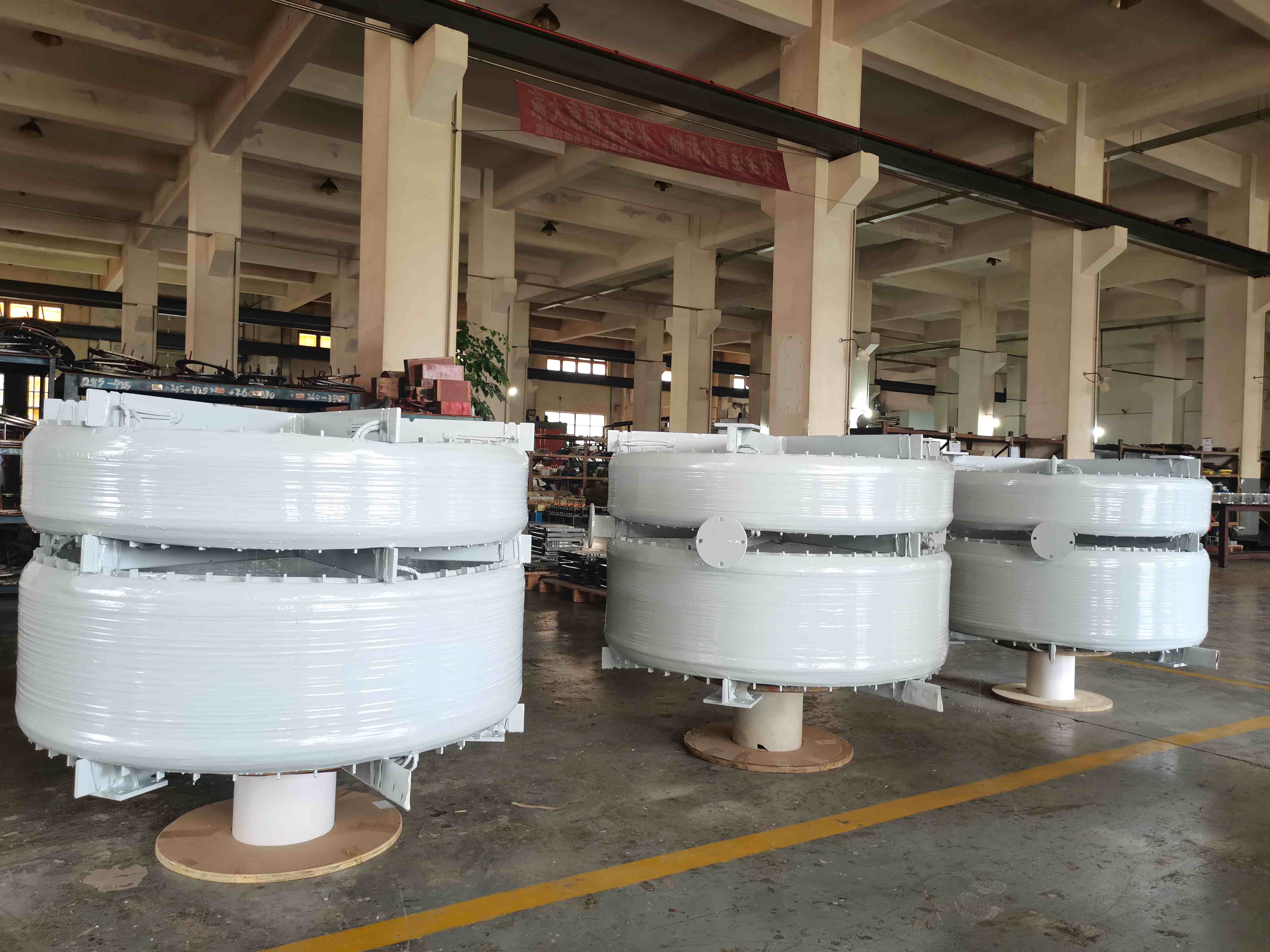
To stop the skin-effect and proximity-effect losses that are caused by high-frequency harmonic currents, foil winding or inverted multi-strand conductors are used. Vacuum Pressure Impregnation (VPI) on Class H (180 °C) or Class C (200 °C) insulation systems gives two benefits at the same time: dielectric strength that can handle the sharp dv/dt pulses from IGBT switching and mechanical rigidity that stops magnetostriction vibration. For indoor cabinet setups, noise levels are usually kept below 65 dB. Performance standards are checked against IEC 60076-6 and IEEE C57.16, which are the two standards that serious SVG manufacturers look for in qualified suppliers.
Why Quality SVG Connection Reactor Design Is Critical for Grid Stability
Inductance Linearity, Loss Management, and Harmonic Compliance
There are a lot more harmonics in power grids now than there were ten years ago. Switching noise is added to the distribution bus by large-scale solar inverters, variable-frequency drives, and charging stations for electric vehicles. When the reactor connecting an SVG to that bus saturates from transient overcurrent, its inductance falls. This means that the SVG control loop gets a messed-up feedback signal, current spikes without control, and IGBTs can fail in microseconds.
A well-designed SVG connection reactor gives the grid the following main speed traits:
- Inductance linearity up to 150% rated current: Keeping the inductance drop below 5% at maximum current keeps the SVG control algorithm from losing its ability to accurately regulate voltage drops right when they happen the most. When R&D leaders are looking for reactor sources, linearity is the one thing they talk about most often.
- Ultra-low winding losses below 0.5%: Lower copper and core losses in the SVG connection reactor directly lead to lower operating temperatures, longer insulation life, and measured reductions in building energy spend. This is especially important for SVG systems that are used all the time in industrial substations.
- Harmonic attenuation compliant with IEEE 519: An LCL filter reactor combination that is tuned correctly can lower total harmonic distortion (THD) at the point of common coupling to well below 5%. This meets the requirements for utility interconnection in North America, Europe, and Australia.
These qualities don't exist in a vacuum; they work together. If a reactor has good stability but high winding losses, it will warm when it's under full harmonic load. This will damage the insulation, which shortens the service life. A dedicated SVG grid reactor is different from a general-purpose choke that has been repurposed because it has balanced design optimization across all three dimensions.
SVG Connection Reactor vs. Other Reactive Compensation Technologies
High-Frequency Performance, Space Efficiency, and Insulation Integrity
Purchasing engineers often wonder if a regular iron-core line reactor or an SVC (Static Var Compensator) thyristor-controlled reactor can be used instead of a custom-built SVG reactor. The answer depends on the task at hand, but in high-frequency settings, the performance gap is big.
It is not possible for a normal line reactor to optimize the air gap for PWM switching rates. When the overcurrent level is low, its core gets too hot, and its insulation isn't rated for the repeated dv/dt stress of IGBT switching. An SVC thyristor reactor can only switch at the fundamental frequency, so it can't be used as the inductive link for a voltage-source inverter. Air-core reactors have perfect linear inductance, but they produce strong stray magnetic fields and take up a lot more space—usually three to five times more than an iron-core unit of the same size—so they can't be used in indoor switchgear cabinets.
There is a clear technical niche for the SVG connection reactor: it has a small iron-core structure, multi-gap linearity, and VPI insulation that can handle high-frequency stress. This set of features is unbeatable for SVG makers who put grid-side reactors and LCL filter reactors into small boxes.
Procurement Considerations for SVG Connection Reactors
Technical Specifications Buyers Must Verify
Before giving a seller permission to build a prototype, procurement managers and R&D leaders should check the following factors when looking for an SVG connection reactor:
- Inductance linearity: make sure there is less than a 5% drop from no load to 150% of the rated current
- Hot-spot temperature rise: verify through IEC 60076 heat-run tests with a full harmonic load spectrum
- Partial discharge level: PD values for the SVG connection reactor must be less than 10 pC to make sure the insulation stays intact under high-frequency PWM voltage stress.
- Noise level: get measured data instead of guesses, especially for installations inside where sound levels are limited
- Lightning impulse withstand: make sure the wire can handle switching shocks from the grid
Supplier Reliability and Lead Time
Manufacturers of SVG platforms make prototypes of new platforms every two to three months and then start making 50 to 300 units per month. During the commissioning phase, how quick the provider is is just as important as the electrical factors of the reactor. Large utility and industry users need a paper trail that shows that the products they buy were made in a way that meets ISO 9001 quality standards, ISO 14001 environmental standards, and CE, CCC, UL, and BIS marks. Along with unit price, you should also look at how long it takes from prototype to delivery and whether or not the seller can help with algorithm co-tuning.
Maintenance and Troubleshooting Best Practices
Thermal Management, Torque Integrity, and Inductance Matching
Dry-type SVG reactors are designed to be low-maintenance, but failing to check them regularly can cause failures that can be avoided. The main cause of faster thermal aging is dust building up in the ventilation air channels. Blocked airflow raises temperatures in winding hotspots, which speeds up insulation degradation exponentially, according to Arrhenius thermal degradation models. In polluted industrial settings, air ducts should be cleaned at least every three months.
The torque at the terminal connection should be checked every so often. Over time, vibrations caused by magnetostriction can loosen bolted connections. This makes resistance spikes that can be found with local thermal imaging before they become flaws. When noise levels rise noticeably during operation, it's usually because of either loose core lamination clamps or resonance between the reactor and a nearby harmonic source. Swept-frequency vibration testing can be used to find out which is the problem.
To keep the current regulator bandwidth from getting messed up, any new reactor for an SVG system where the reactor and inverter control algorithm are set together must have an inductance value that is within ±3% of the original. Field engineers sometimes forget to do this during commissioning, but it has a direct effect on the speed of SVG response and the accuracy of compensation.

Conclusion
The SVG connection reactor is where power devices and grid infrastructure meet, and the quality of its design determines how well the SVG system works in every way. Inductance linearity, high-frequency loss management, insulation longevity, and noise control are not marketing terms; they are engineering standards that say if a grid stability system is useful in a substation or not. Companies that make SVG that want to compete in tough markets, like those in the US, Europe, India, or Australia, need reactor providers that know these needs at the system level, not just the component level. That level of technical alignment is what keeps both project deadlines and product performance safe.
FAQ
1. Why does inductance linearity matter so much for SVG performance?
The SVG control loop gets wrong information when the inductance drops when the current is high. This makes the system either not correct reactive power enough or too much, which can cause instability or, even worse, IGBT protection trips just when voltage compensation is most needed.
2. Can a standard line reactor replace a dedicated SVG grid reactor?
No, standard reactors are made to work with 50/60 Hz frequencies and don't have the multi-gap core shape or high-frequency insulation that are needed to safely handle PWM switching harmonics. If you use one in an SVG program, it could get too hot, the insulation could break, and you might not be following the IEEE 519 THD rules.
3. What maintenance does a dry-type SVG reactor require?
Cleaning the air ducts on a regular basis to stop dust from causing thermal aging, checking the torque on the links between the terminals to stop vibrations from causing hotspots to form, and listening for early signs of core lamination movement or resonance conditions are all things that need to be done.
Partner with Xi'an Xikai for Precision SVG Connection Reactor Solutions
Xi'an Xikai makes SVG connection reactors that are designed to meet the exact needs of modern SVG integration — covering voltage ranges from 0.4 kV to 10 kV, rated for indoor installations up to seismic intensity 8, and validated through ISO 9001, ISO 14001, CE, UL, CCC, and BIS certification. As a trusted SVG connection reactor manufacturer with over 15 years of grid solutions experience, we support prototype co-tuning through full production ramps. Reach our engineering team directly at serina@xaxd-electric.com, amber@xaxd-electric.com, or luna@xaxd-electric.com, or visit xaxd-electric.com to review detailed specifications.

References
1. IEEE Std 519-2014 — IEEE Recommended Practice and Requirements for Harmonic Control in Electric Power Systems, IEEE, 2014.
2. IEC 60076-6 — Power Transformers – Part 6: Reactors, International Electrotechnical Commission, 2007.
3. IEEE C57.16-2011 — IEEE Standard Requirements, Terminology, and Test Code for Dry-Type Air-Core Series-Connected Reactors, IEEE, 2011.
4. Mohan, N., Undeland, T. M., & Robbins, W. P. — Power Electronics: Converters, Applications, and Design, John Wiley & Sons, 2003.
5. Liserre, M., Blaabjerg, F., & Hansen, S. — "Design and Control of an LCL-Filter-Based Three-Phase Active Rectifier," IEEE Transactions on Industry Applications, 2005.
6. Holmes, D. G., & Lipo, T. A. — Pulse Width Modulation for Power Converters: Principles and Practice, IEEE Press / Wiley-Interscience, 2003.
_1783910818781.png)