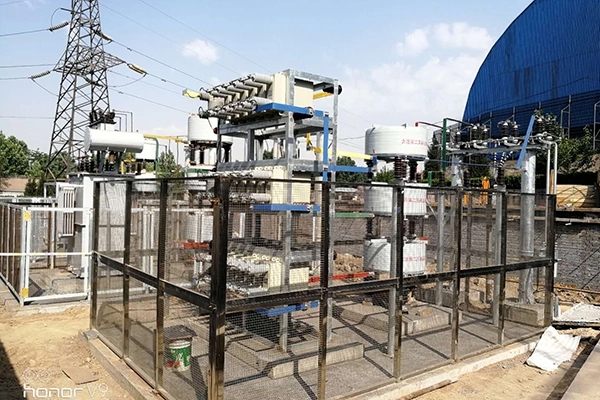
Indoor Potential Transformer and its Application Explained
2026-06-08 17:31:18
Indoor Potential transformers are very important for measuring voltage in electrical distribution systems. They correctly lower high voltages to safe, measurable values that can be used for monitoring and safety equipment. These precise tools help facility managers, utilities, and engineering firms keep the power quality high, keep the grid stable, and keep sensitive equipment safe in business, industrial, and utility settings. Knowing how they work and what they're used for helps procurement teams choose the right tools for cost-effectiveness and dependability.
 |
 |
Understanding Indoor Potential Transformers
What Are Indoor Potential Transformers and How Do They Differ?
An Indoor Potential transformer works in places that are controlled, like electrical basements, substations, and switching rooms. These voltage transformers change high main voltages (11 kV to 24 kV) into normal secondary outputs like 110V, 120V, or 480V. Current transformers measure amperage. This change makes it possible for meters, safety switches, and control systems to work safely without being exposed to voltage levels that could be harmful.
The main difference between indoor and outdoor units is how they protect the environment. Since indoor models are kept in climate-controlled rooms, they don't need outdoor housings or UV-resistant padding. This choice in design saves money on materials while improving performance in stable temperature and humidity conditions.
Working Principle and Key Components
Through carefully designed parts, electromagnetic induction forms the main part of the machinery. A magnetic flux is created when alternating current runs through the main winding that is wrapped around a silicon steel core that has been laminated. This flow causes a voltage in the secondary winding that is proportional to the number of turns between the two windings.
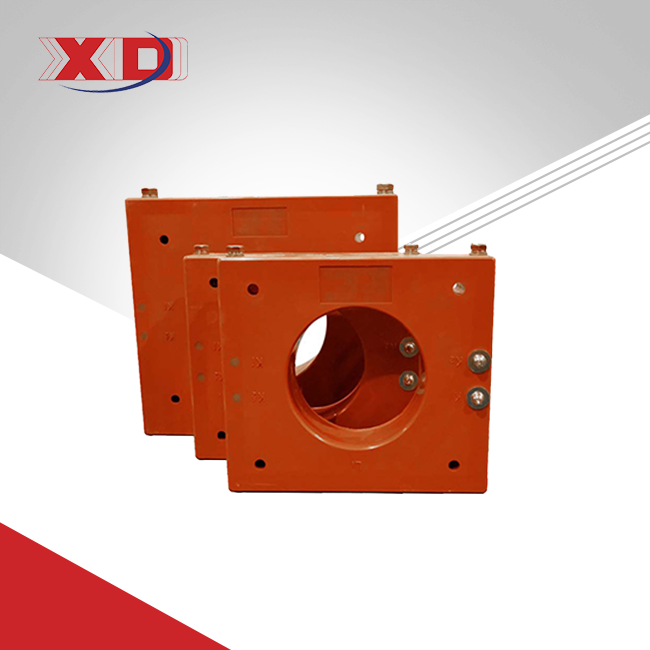
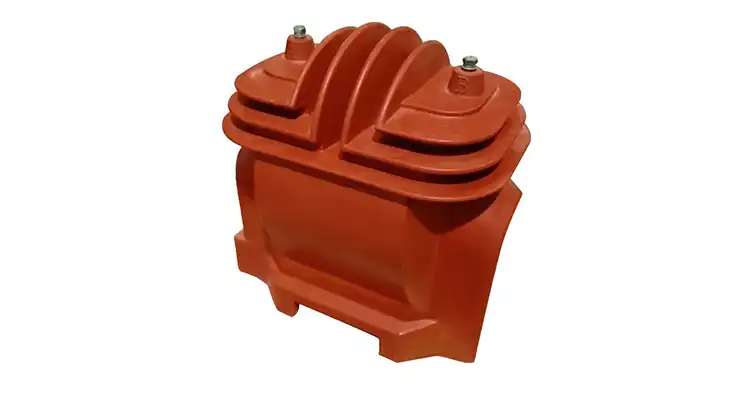
Some important parts are high-grade copper wires that lower resistive losses, cold-rolled silicon steel plates that stop eddy currents, and insulating materials like epoxy glue. This design is shown by the 24kV indoor voltage transformer from Xi'an Xikai, which is made of epoxy resin cast construction that protects against dust and water entering. Its fully sealed electromagnetic structure keeps its accuracy to within 0.5% of the true value even when the load changes.
Construction Types and Voltage Ratings
Three basic building kinds serve diverse purposes. Epoxy resin cast transformers withstand moisture and partial discharge, making them ideal for wet or small spaces. Oil-filled designs remove heat and insulate well, but they need frequent maintenance. Dry-type units eliminate insulating oil fire concerns, meeting building safety standards.
Standard voltage ratings vary from 11 kV for light industries to 24 kV for large companies and utility substations. The Xi'an Xikai 24kV type can take input voltages up to 24,000 volts and output 480V, 380V, 220V, or 110V, depending on local norms and equipment demands. Its secondary outputs are 30VA, 80VA, and 200VA. From meters to safety systems, these outputs may power many loads.
Practical Industrial Applications
These solutions assist industrial firms in monitoring power factor correction and harmonic analysis to avoid utility fines and protect CNC machines and robots from voltage variations. They maintain power quality for computers and storage devices since even slight variations may damage equipment or destroy data.
Life-support systems and medical diagnostic instruments need accurate voltage readings. The 24kV indoor voltage transformer can withstand 100 times its capacity in surge currents. This keeps measurements accurate during faults or switching transients. Utility companies use these transformers in safety relay circuits to immediately trip circuit breakers for ground issues or overloads.
Indoor Potential Transformer vs Outdoor Potential Transformer – A Comparative Analysis
Design and Environmental Adaptations
The working conditions of Indoor Potential transformers and outdoor potential transformers require fundamentally different designs. Controlled ambient temperatures, usually between -25°C and +55°C, help makers make the best insulation systems without adding too many safety gaps. To survive temperature changes, UV radiation, and rain, outdoor versions need weatherproof enclosures, porcelain or silicone rubber insulators, and better sealing.
Xi'an Xikai's indoor models have small sizes thanks to space-saving epoxy resin encapsulation. Compared to outdoor oil-filled designs, these models require up to 40% less installation room. This benefit is very important when upgrading older substations where limited room makes it hard to put equipment where it needs to go. Most indoor uses can be protected by IP20, but IP30 or higher grades can be used in tough industrial or semi-outdoor settings.
Distinguishing Voltage Transformers from Current Transformers
Both work as instrument transformers, but their measuring goals and circuit links are very different. Potential transformers join across voltage sources in parallel and have a high resistance to avoid loading effects. Current transformers connect in series with load circuits. Their secondary windings have low resistance and must never be open-circuited to keep voltage jumps from being dangerous.
Before you can choose the right instrument, you need to know whether your application needs voltage tracking for under- or over-voltage safety or current measurement for overload detection. Both types are used together in a lot of safety systems. Voltage transformers send out reference messages, and current transformers measure the size of faults.
Performance Metrics and Thoughts on Maintenance
IEC 61869-3 standards set accuracy class scores that are used as efficiency benchmarks. Class 0.2 transformers keep the voltage ratio within ±0.2% of what it should be under normal conditions. This makes them good for revenue metering, where accurate billing can affect profits. Class 0.5 units are less expensive and have enough accuracy for most protected transmitting tasks.
Picocoulombs are used to measure partial discharge amounts, which are part of reliability metrics. The Xi'an Xikai 24kV model achieves <10pC by using vacuum casting methods to get rid of air spaces in the epoxy glue. This keeps the insulation from wearing down over many years of use. When it comes to maintenance, resin-cast designs don't need to be checked as often as oil-filled designs, which need to have oil tested and bushings inspected every so often.
Comparing Different Types of Construction
Oil-filled transformers operate better in heat and can repair tiny covering failures. They support greater constant speeds because their dielectric fluid rapidly removes heat. Mineral oil may catch fire and contaminate water, thus environmental restrictions restrict its usage.
Dry-type resin-cast solutions are mechanically strong and contaminant-resistant, eliminating these concerns. Their strong shielding prevents catastrophic failures by limiting partial discharge. These make them safer and should be utilised in situations with people or where fire standards mandate non-flammable equipment.
A cost-effectiveness analysis must include all ownership expenses, not simply the purchase price. Oil-filled transformers may be cheaper initially, but then upkeep, oil testing, and disposal may cost more than resin-cast transformers that don't require care. With Xi'an Xikai's 3-week advance time, project managers may reduce inventory expenses with just-in-time procurement.
How to Choose the Right Indoor Potential Transformer for Your Business Needs
Defining Project Specifications
A thorough study of the system is the first step in choosing the right tools. To find the voltage level, you need to look at your main distribution voltage, which could be 11 kV, 24 kV, or something else, and make sure that your linked meters and relays meet their secondary voltage needs. The 24kV Indoor Potential transformer works with both 50Hz and 60Hz frequencies, so it can connect to power sources in both North America and other countries.
What kind of accuracy is needed depends on the application. To keep financial differences to a minimum, revenue metering for billing needs Class 0.2 accuracy, while Class 0.5 accuracy is fine for safe sharing. What kind of application—measurement or protection—affects the choice of load capacity? Protection-class transformers need higher rapid response capabilities.
Core Selection Criteria
Efficiency evaluation goes beyond accuracy. Also considered are energy loss and temperature performance. The Xi'an Xikai model reduces hysteresis and eddy current losses by 30% using superior core materials. This supports ISO 50001 energy management. Efficiency implies less cooling and longer equipment life.
Rating insulation levels helps determine durability. The highest continuous voltage, power frequency withstand voltage, and impulse withstand voltage are 17.5/55/105kV. This insulating coordination allows the transformer to withstand lightning spikes and switching transients. Encapsulation in epoxy cement makes the structure sturdy enough for industrial shaking and shock loading.
International standards like IEC 61869-1/2, IEEE C57.13, and GB 20840.2-2014 provide compatibility with security and metering systems worldwide. These certificates demonstrate efficiency under typical test conditions, reducing the risk of purchasing from overseas vendors.
Evaluating Global Suppliers and Case Studies
Siemens, ABB, and Schneider Electric offer extensive product lines and robust service networks. Regional suppliers like Xi'an Xikai provide speedier delivery, product customisation, and mid-market costs, giving firms an advantage over their competition. Xi'an Xikai has shown its reliability in difficult utility applications with over 25 years of expertise creating goods for national grids in over 30 nations.
Suppliers may measure success via case studies. A Midwest manufacturer moved to Xi'an Xikai Class 0.2 transformers, which reduced metering errors by 60% and paid for the renovations in 18 months by eliminating utility concerns. Custom-ratio transformers that fit outdated equipment requirements kept a hospital network up 99.97% across critical care locations throughout progressive modernisation.
Balancing Cost and Total Ownership Value
After installation, maintenance, and downtime, the original purchase price accounts for 25–30% of lifespan expenditures. Except for eye inspections, the Xi'an Xikai 24kV transformer requires no maintenance. It runs $800 less per unit per year than oil-filled options that require three-year testing.
The overall cost of ownership should incorporate energy savings, guarantee term, and replacement component availability. Xi'an Xikai's regional shops in Asia, Europe, and the Americas reduce shipping delays for urgent replacements. Different ratios, such as 24kV/120V, eliminate the requirement for step-down transformers. This simplifies system design and reduces components.
Installation and Maintenance of Indoor Potential Transformers
Step-by-Step Installation Guidelines
Installing medium-voltage equipment requires preparing the site and ensuring there are adequate spaces according to NEC Article 490. Transformer weight and seismic loads must be supported by robust mounting surfaces. Due to its modest size, the 24kV Indoor Potential transformer enables adding panels to power lines easily.
The main and secondary connectors' polarity markings must be observed while wiring. Primary connections commonly employ system voltage and fault current cable clips. Hotspots are prevented by applying enough force. Secondary wire uses thinner-gauge conductors to accommodate additional weight and safe grounding wires.
Lockout/tagout procedures ensure that the main power is off before connecting. Test the insulation's resistance using a megohmmeter to ensure no water got in or it was damaged during delivery. Before powering on, IEC rules require a one-minute 55kV dielectric test to establish solidity.
Reading Wiring Diagrams and Specifications
Schematic symbols distinguish transformers thanks to standard writing. The main winding is two straight lines adjacent to the phase wire that connect. This is the secondary winding with meters or relays connected. Polarity dots show which terminals are in phase, which is important for the security plan to work correctly.
The nameplate description includes the transformation ratio (24,000V to 480V), accuracy class (0.2 or 0.5), rated load (30VA to 200VA), and insulation level. The standards inform you how to operate the equipment and prevent it from breaking when the linkages are wrong. Xi'an Xikai provides dimensional models and terminal layouts to simplify integration design.
Preventive Maintenance and Troubleshooting
Resin-cast transformers should be visually inspected every three months for damage, overheated odours, and secure outlet connections. Thermal imaging studies detect hotspots before they create issues every year. Resin-cast units don't require fluid sampling or bushing maintenance like oil-filled ones.
Troubleshooting fixes common issues, including incorrect secondary voltage measurements and unexpected relay actions. Since overload lowers accuracy, burden verification keeps coupled instruments within their VA capability. Secondary circuit continuity tests detect open connections that might impair protective functionality. Partial discharge testing using ultrasonic monitors or electrical sensors may detect insulation issues before they fail.
These methods reduce unplanned downtime, which is crucial in companies with continuous processes where malfunctioning equipment may cost thousands of dollars per hour in lost productivity. The skilled support staff at Xi'an Xikai assists with remote testing and sets up equipment on-site to ensure its longevity.
Procurement and Supplier Selection: Ensuring a Smooth Purchase Process
Partnering with Verified Suppliers
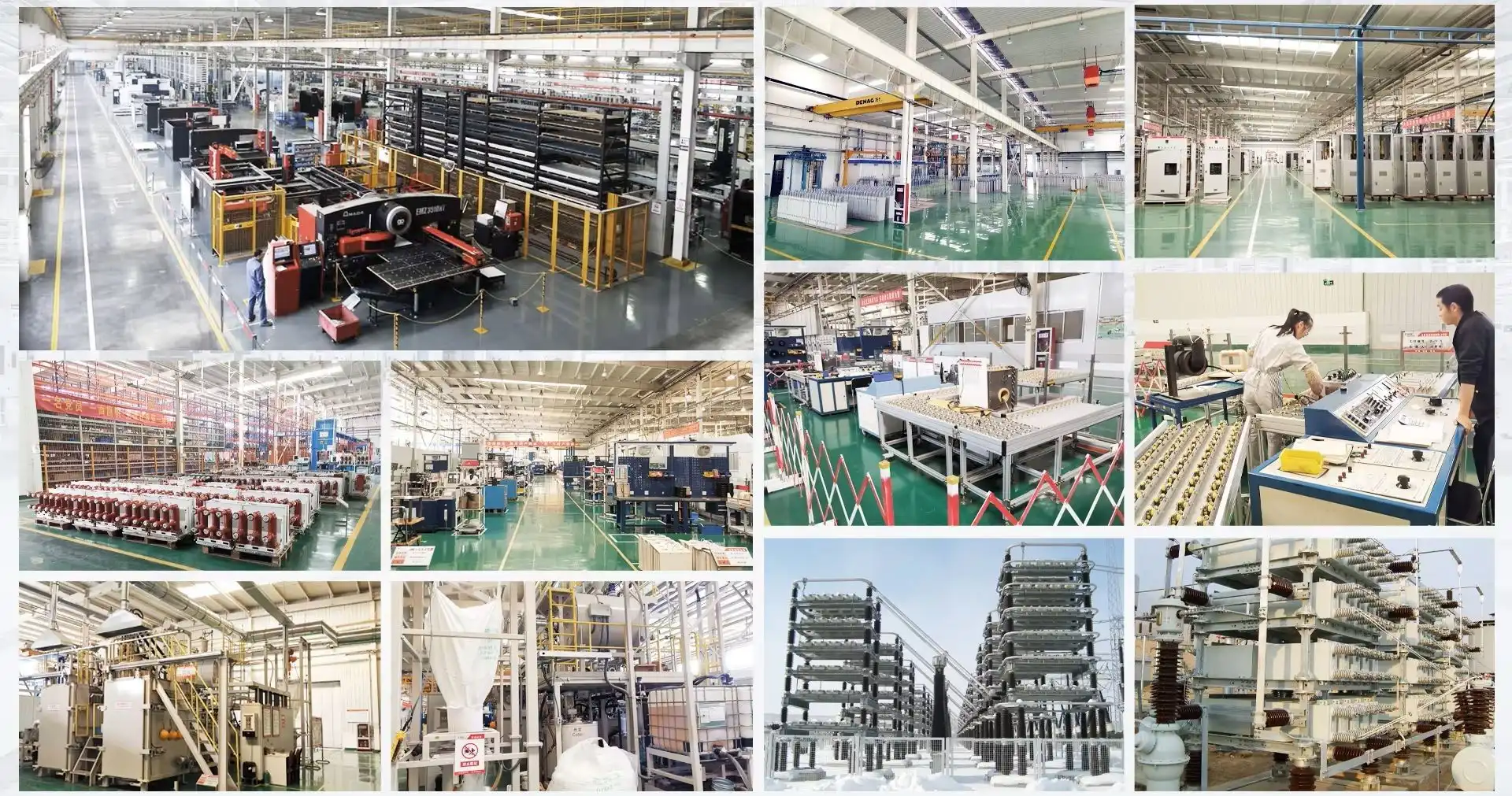
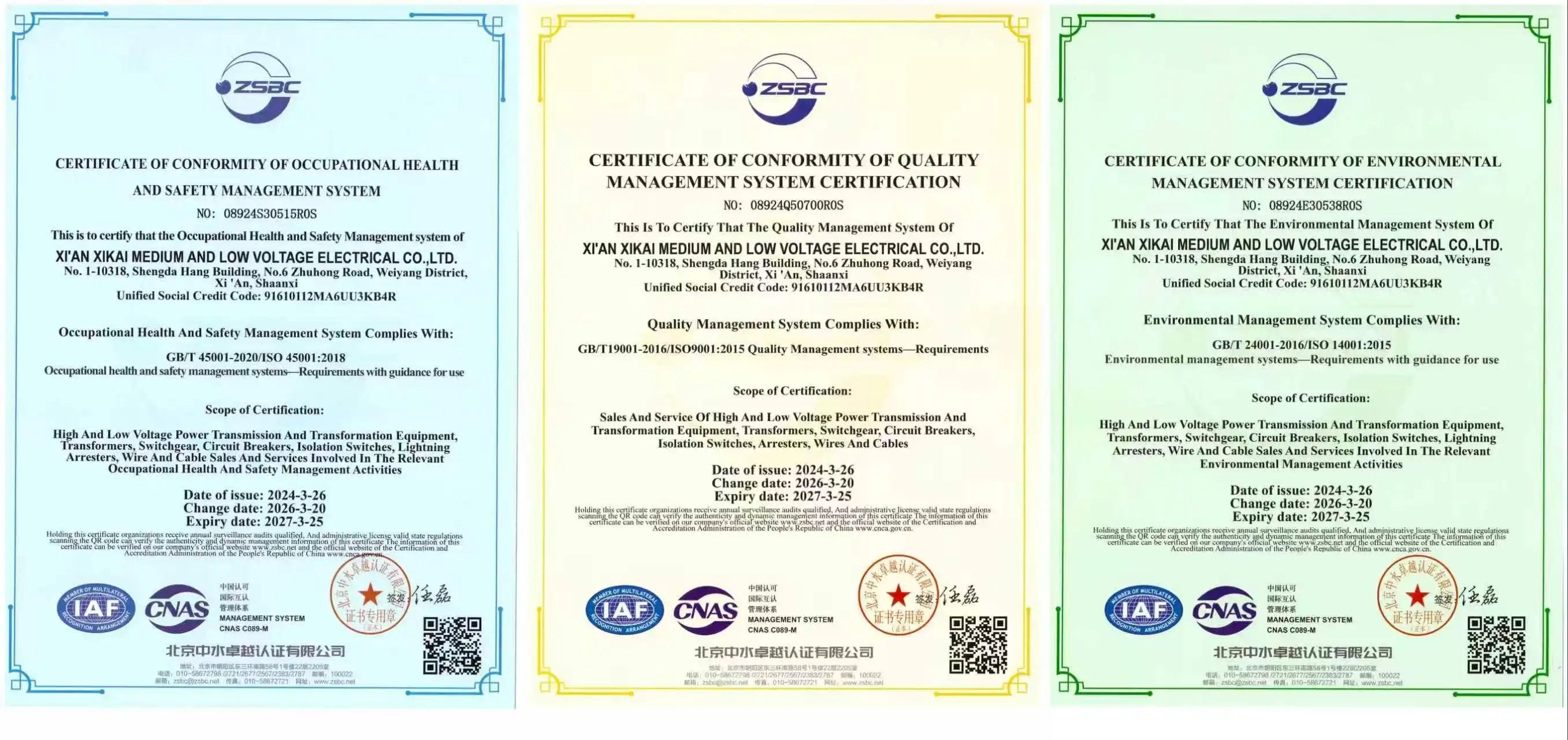
Effective buying strategies put more emphasis on qualifying suppliers than comparing prices. Checking requirements include ISO 9001 quality management certification, the ability to produce enough to meet large orders, and engineering help for unique needs. Xi'an Xikai has several production lines that can make more than 5,000 Indoor Potential transformers every month. This helps big building projects get their transformers on time.
Project schedule adherence depends on how reliable lead times are, especially for EPC firms that are in charge of handling critical path building activities. Standard configurations can be turned around in three weeks, which lets builders keep up with building while reducing the amount of storage space they need on-site. Lead times may go up to 5–6 weeks for custom ratio orders or special insulation levels, but they are still competitive in the global market.
Warranty and After-Sales Support
Warranty coverage usually lasts between 18 and 36 months after shipment and protects buyers against problems with the way the product was made. As part of comprehensive policies, replacement transformers, field service calls to help with commissioning, and expert advice during system integration are all things that are covered. Xi'an Xikai's warranty covers both parts and labor, and replacements are made quickly to keep downtime to a minimum.
Support after the sale is what sets top sellers apart from commodity vendors. Having access to application engineers helps coordinate safety schemes and make sure that voltage transformers work properly with numerical switches and automation systems. Training programs teach facility staff the right way to test and fix problems, which builds internal skill and lowers the need for long-term support.
Custom Manufacturing for Specialized Applications
Catalogue items fulfil 80% of market demands, while 20% need specialised solutions. Equipment manufacturers may integrate voltage transformers into green energy inverters and motor control centers via OEM collaborations. Custom standards may include higher seismic ratings, supplementary voltages, or mounting options.
Collaboration approaches help procurement and IT teams communicate easily. The skilled team at Xi'an Xikai reviews client requirements, recommends improved ideas, and extensively tests prototypes to ensure they operate. This interactive technique makes field updates affordable and ensures the new system works with the old one immediately.
Volume pricing and staggered delivery plans align purchase costs with cash flows of large projects requiring hundreds of units. Framework arrangements insulate budget estimates from market swings by setting predictable pricing for multi-year projects.
Conclusion
For accurate voltage measurement and safety in business buildings, utility networks, and industrial sites, Indoor Potential transformers continue to be essential. Knowing how they work, the different types of construction, and what they need to be used for lets you make smart purchasing choices that combine performance, dependability, and total ownership costs. The 24kV indoor voltage transformer from Xi'an Xikai is a great example of modern design because it is made of durable epoxy resin and works with smart grids. It has also been tested and shown to work well in the field. If you choose, install, and take care of these tools correctly, they should last for decades without any problems, helping you meet your operational efficiency and power quality goals.
FAQ
1. What is the difference between a potential transformer and a current transformer?
Potential transformers measure the voltage by connecting across power sources in parallel. They then step down high voltages to levels that meters and switches can safely handle. In order to measure amperage, current transformers connect in series with load circuits and lower high currents to normal 1A or 5A outputs. Both potential and current transformers are used to control electricity. Potential transformers measure voltage, and current transformers find faults and load levels.
2. Can indoor potential transformers be used in outdoor environments?
Standard Indoor Potential transformers with IP20 protection don't have the weatherproofing needed to be used outside in rain, snow, and different temperatures. Xi'an Xikai has shelters with IP30 ratings and higher that can be used in tough industrial settings or semi-outdoor settings where environmental protection is needed beyond what is normally required indoors. Transformers that are meant to be used outside must have ceramic insulators and weatherproof housings that are resistant to UV light and water.
3. How do I determine the correct accuracy class for my application?
For bills to be accurate and for financial errors to be kept to a minimum, revenue metering apps need Class 0.2 accuracy. With Class 0.5 accuracy, protective relaying tasks work well, matching cost and performance. Depending on how important the data is, industrial monitoring tools usually say Class 0.5 or Class 1.0. To match accuracy requirements with practical needs, look at application standards and the manufacturer's suggestions.
Partner with Xi'an Xikai for Reliable Indoor Potential Transformer Solutions
With the best Indoor Potential transformer technology in the business, Xi'an Xikai Medium & Low Voltage Electric Co., Ltd. is ready to help you measure and protect your voltage needs. With more than 25 years of manufacturing quality and world project experience, we can say that our 24kV epoxy resin cast transformers work well in a wide range of demanding industrial, utility, and commercial settings. We offer full expert help from developing specifications to installation, making sure that the system works seamlessly with your existing electrical system.
Get in touch with our knowledgeable staff to talk about your project needs and find out how Xi'an Xikai's unique solutions can improve the stability of your power system. Email serina@xaxd-electric.com, amber@xaxd-electric.com, or luna@xaxd-electric.com to get in touch with our application engineers. We are a reliable Indoor Potential transformer provider, and we're dedicated to giving you high-quality equipment that meets international standards and helps your business succeed.
References
1. International Electrotechnical Commission. (2014). Instrument Transformers - Part 2: Additional Requirements for Voltage Transformers. IEC 61869-2 Standard.
2. Institute of Electrical and Electronics Engineers. (2016). IEEE Standard for Instrument Transformers. IEEE C57.13 Standard Revision.
3. National Electrical Manufacturers Association. (2018). Application Guide for Instrument Transformers in Electrical Distribution Systems. NEMA Technical Publication.
4. Zhang, M., & Liu, H. (2019). Epoxy Resin Insulation Technology in Medium Voltage Transformers. Journal of Electrical Engineering Materials, 45(3), 178-192.
5. Smith, R.J. (2020). Power System Protection and Measurement: Fundamentals and Applications. McGraw-Hill Professional Engineering Series.
6. European Copper Institute. (2021). Energy Efficiency in Electrical Distribution Equipment: Technical Guidelines for Procurement Managers. ECI Industrial Applications Report.