Indoor Vacuum Circuit Breakers (VCB): A Comprehensive Guide
2026-08-10 10:58:40
When power distribution systems fail, downtime costs spiral rapidly—manufacturing plants lose productivity, data centers risk critical outages, and hospitals jeopardize patient safety. An indoor vacuum circuit breaker serves as the frontline defense against these scenarios, offering medium-voltage protection that combines environmental responsibility with operational reliability. This guide explores how vacuum technology transforms electrical safety for industrial facilities, utility operators, and system integrators seeking dependable interruption solutions that minimize maintenance burdens while maximizing uptime across demanding applications.

Introduction
Effective and durable protective mechanisms are needed for modern electrical infrastructure. Indoor vacuum circuit breakers are used in medium-voltage distribution systems, particularly in small spaces with environmental regulations. These devices employ vacuum to quench arcs, unlike previous systems that use oil or sulphur hexafluoride gas. This means they don't release carbon gases and can consistently stop industrial and business faults.
Global B2B procurement specialists, including purchasing managers in charge of facility improvements and OEMs creating bespoke switchgear, are increasingly using indoor vacuum circuit breaker solutions. For decades, ABB, Siemens, GE, Eaton, and Schneider Electric have tested the technology in the field, creating quality standards and giving extensive warranties. This book covers circuit breakers' technical features, maintenance, and purchase alternatives, which are crucial for buyers.
What is an Indoor Vacuum Circuit Breaker?
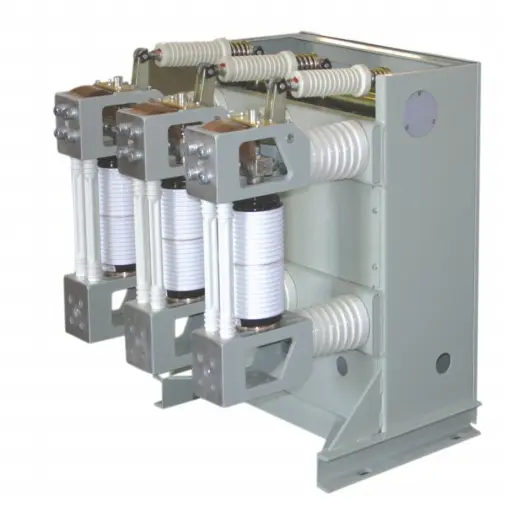
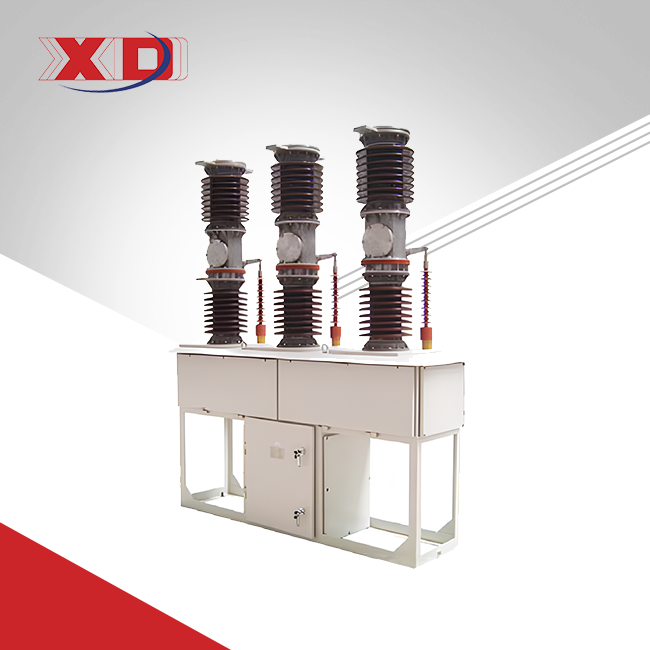
An indoor vacuum circuit breaker is a high-performance switching device designed to stop the flow of current in medium-voltage electrical systems, which are usually between 3.6 kV and 40.5 kV. The most important new feature is its vacuum interrupter, which is a sealed chamber with fixed and movable contacts that work in a vacuum. When contacts separate during a fault, the lack of air stops the arc from continuing, which lets the current stop quickly—within milliseconds.
Core Components and Architecture
The device is made up of three main parts that work together:
- The sealed Vacuum Interrupter Chamber is protected by ceramic or glass to maintain pressure levels below 10-4 Pa. Contact materials, mainly copper-chromium alloys, conduct well and don't wear down readily from repeated arc exposure. Oxidation can't proceed in a vacuum; therefore, contact usually lasts over 30,000 mechanical processes.
- Contact is moved by permanent magnets or spring-charged motors. Energy storage systems compress springs during charging. This allows them to open faster than 1 m/s. This speed ends the arc before energy builds up and damages the contacts. Magnetic motors have simpler mechanics and are easier to maintain, yet spring systems are still employed in low-cost circumstances.
- Insulating Structure and Support Frame: Epoxy resin coats hoover bottles to make them sturdy and clean. Fixed and retractable designs suit diverse installations. For permanent installations, fixed types are best, but retractable models can be quickly replaced during repair windows without turning off nearby circuits.
Arc Extinction Process
When everything is working normally, closed contacts carry the rated current with very little resistance heating. When a fault is found, the trip order is sent, which releases stored energy to separate the contacts. As soon as the gap opens, the current flows through the ionized metallic vapor for a short time. The vacuum's dielectric strength returns almost instantly after the current zero-crosses, which stops the arc from starting up again. This process is over in 20 to 50 milliseconds, so there isn't much thermal stress on the equipment around it.
Key Advantages and Maintenance of Indoor Vacuum Circuit Breakers
The move toward vacuum technology is based on clear practical advantages over other options. Facilities that use CNC machines for manufacturing or data centers that power server infrastructure need protection systems that keep planned and unplanned downtime to a minimum.
Environmental and Operational Superiority
Indoor vacuum circuit breaker designs get rid of SF6 gas, which is a greenhouse gas 23,500 times more powerful than CO2 at warming the planet. California and the European Union are putting more and more restrictions on the use of SF6. This means that vacuum technology can meet environmental requirements without having to be retrofitted. The sealed vacuum chamber also stops oil leaks that pollute buildings and need to be disposed of as hazardous waste.
Electrical durability is better than air-magnetic options because the arc break is always the same, no matter what the weather is like. Changes in humidity, changes in altitude, or airborne particles that damage air breakers' surface insulation don't have much of an effect on vacuum interrupters. This dependability is very important near the coast, where salt spray speeds up rusting, or in factories where metal dust builds up.
Maintenance Requirements and Lifecycle Management
The time between routine inspections is 12 to 24 months, while oil breakers only need to be checked every three months. During maintenance, mechanical parts are more often replaced than arc-quenching media. Technicians check for contact wear by looking at stroke markers on the working mechanism. When the amount of wear builds up to a certain level (usually 3–5 mm of total loss), the interrupter needs to be replaced.
Some common troubleshooting situations are:
- Failure to Close: Make sure the control voltage at the close coil is 85–110% of its rated value. Check to see if the spring charging motor works and that the mechanical latch engages.
- Contact Welding: Happens when the over-travel adjustment isn't good enough or when the rated short-circuit stopping capacity is exceeded. To replace the vacuum bottle, the specs must be matched to the values of the current switchgear.
- Insulation Loss: Power frequency withstand tests, which are usually 42 kV for 24 kV equipment, are done once a year to make sure the dielectric is still intact. When tests fail all of a sudden, it means that moisture got in or there are cracks in the epoxy covering that need to be fixed right away.
Under normal conditions, the vacuum interrupter should last between 20 and 30 years. The main cost over the life of the product after the initial purchase is replacing it. This means that the total cost of ownership is lower than with technologies that need to be maintained more often.
Comparing Indoor Vacuum Circuit Breakers with Alternatives
When making a procurement decision, you have to compare performance characteristics to the needs of the application. It is important to understand the differences between indoor and outdoor configurations, vacuum versus SF6 technologies, and the subtleties of terminology to make sure that specifications are correct.
Indoor versus Outdoor Applications
Indoor vacuum circuit breakers are made to be small and work with metal-enclosed switchgear. Temperatures between -15°C and +40°C, relative humidity below 95%, and heights of less than 1,000 meters are all examples of controlled settings. Outdoor models have weatherproof covers and extra padding to protect them from high temperatures, UV light, and smog buildup.
Facility planners who choose indoor types save space because the typical footprints are 800 to 1000 mm wide, which lets more than one circuit be placed in electrical rooms that are limited in size. Outdoor units need more space around them for entry paths and exterior insulation, so they are better for substations than building installs.
Vacuum versus SF6 Technology
Because SF6 circuit breakers have better dielectric strength, they can be made smaller by reducing the distance between contacts. But environmental concerns lead to regulatory phase-outs, and companies stop making new SF6 products. Vacuum technology works the same as interruption technology but doesn't require handling gas. This means that there is no need for regular refilling, leak tracking, or end-of-life gas recovery processes.
When switching, operational noise levels are less than 50 dB, which is better than the 70–80 dB levels that come from SF6 arc extinction. In business buildings, where equipment choices are based on how comfortable the people who work there are, this difference is important.
Terminology and Selection Criteria
"Vacuum interrupter circuit breaker" refers to devices that use vacuum interrupter technology. It is the same thing as an indoor vacuum circuit breaker when talking about medium-voltage uses. The requirements for the purchase should say:
- Rated Voltage: The highest voltage that the machine can safely handle, such as 12 kV, 24 kV, or 36 kV.
- Rated Current: The maximum amount of current that can flow continuously without going over the limits for temperature rise (usually between 630 A and 3,150 A).
- Short-Circuit Breaking Capacity: The highest fault current that the gadget can safely cut off, given in kA (25 kA to 40 kA is the normal range).
- Mechanical and Electrical Endurance: Number of cycles of operation before heavy repair (10,000–30,000 for mechanical and 50–100 electrical at rated capacity).
By matching these parameters to load profiles and fault study results, you can avoid either not specifying enough, which could damage the equipment, or specifying too much, which would make the costs go up for no reason.
Procurement Guide: Buying Indoor Vacuum Circuit Breakers for Your Business
To get through the procurement process, you have to balance technical needs with business needs. Utility companies that run transmission networks put grid safety first, while owners of industrial facilities try to get the most efficiency and lower energy costs.
Decision Criteria for B2B Buyers
- Breaking Capacity Alignment: Look into system faults to find out how much short-circuit current is available at the installation site. To allow for future load growth, choose devices that are rated 20–30% higher than their estimated maximums. Breakers that are too small can fail severely during problems, while units that are too big cost more than they need to.
- Rated Voltage and Current Matching: Using the right voltage ratings for the system is important. For example, 12 kV equipment should be used to protect 11 kV networks, and 24 kV units should be used for 22 kV distribution. To avoid annoying trips caused by inrush currents during motor starts or transformer energization, current rates should be at least 25% higher than peak demand.
- Lifecycle Cost Analysis: Figure out how much the product costs to buy and how much it will cost to maintain over its 25-year lifespan. The longer check gaps and lack of consumables (SF6 gas, oil) in vacuum technology usually make up for the higher initial costs within 7 to 10 years.
Trusted Manufacturers and Brand Evaluation
In many real-world circumstances, ABB, Siemens, GE, Eaton, Schneider Electric, L&T, Mersen, and Toshiba have proven dependable. IEC 62271-100 certification should be considered while assessing manufacturers. Regional approvals like UL listing (US) or CCC marking (China) may be needed for product installation.
Technical Support Infrastructure: Local service centers, spare parts stocks, and technical consultations determine long-term operational success. For critical usage, warranties may be extended beyond 12–24 months.
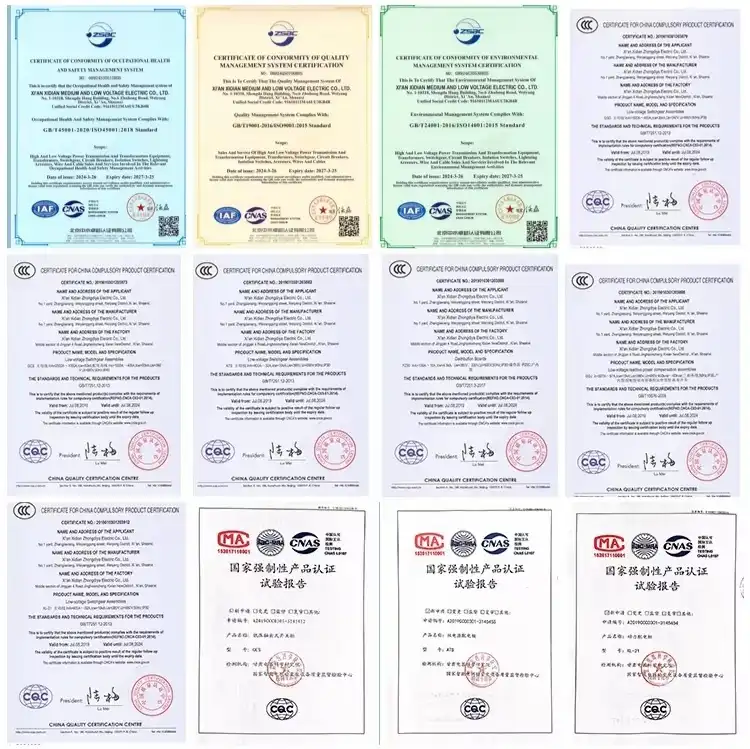
New manufacturers from low-cost countries give possibilities. ISO 9001-certified Xi'an Xikai Medium & Low Voltage Electric Co., Ltd. provides indoor vacuum circuit breaker solutions and has operational experience in steel metallurgy, petrochemical, and rail transportation.
Procurement Workflow Optimization
Structured inquiry processes can help you buy things more quickly:
- Specification Development: Make a list of the system's factors (voltage, current, breaking capacity), the environment's variables (temperature, humidity, altitude), and the machine's needs (fixed/withdrawable measurements). Ask for proof of agreement when you first ask questions.
- Quotation Comparison: Look at all the costs over the whole lifecycle of a product instead of just the purchase price when judging proposals. Think about delivery times, payment terms, and the availability of support after the sale.
- Sample Testing: For large-scale operations, get sample units to test in the field. Before agreeing to full orders, make sure that the new equipment can work with the old switchgear, and that repair areas are easy to get to.
When you buy in bulk, especially when you agree to a multi-year agreement, the price may go down by 10 to 15 percent for orders over 20 units.
Installation, Troubleshooting, and Safety Best Practices
The right installation steps and ongoing operating rules protect both people and equipment investments. Not following the manufacturer's instructions or electrical rules can cancel warranties and put people in danger.
Pre-Installation Site Preparation
Before delivering, make sure that the device's scores are in line with its surroundings. The ZN63-VS1 line, which is typical of current indoor vacuum circuit breaker designs, says:
- Ambient Temperature: -15°C to +40°C is the working range. Thermal management tools are needed for installations in places that don't have climate control.
- Humidity Limits: The maximum humidity is 95% RH per day and 90% RH per month. Coastal or tropical installations may need dehumidifiers.
- Altitude Compensation: Standard rates are used below 1,000 meters. As you go up in elevation, the external air insulation strength goes down, so you need to lower the voltage or make custom high-altitude configurations.
- Seismic Resistance: The ≤MSK-8 intensity rating makes sure that the system can work in areas with moderate earthquakes. Sites that are higher than this need to be strengthened against earthquakes.
- Air Quality: Absence of corrosive gases, flammable vapors, or conductive dust. Filtered containers are needed for installations close to chemical processes.
As part of preparing the foundation, platforms must be leveled to within ±2 mm, and there must be enough space for the chassis to be pulled out—usually 1,200 mm of front access and 600 mm of back clearance for wire terminations.
Assembly and Commissioning Steps
- Mechanical Installation: Place fixed breakers on mounting rails and activate grounding connections before installing hardware. For withdrawable equipment, alignment must be verified, and test, disconnect, and service positions must engage easily without binding. Misalignment causes contact misalignment and overheating.
- Electrical Connections: Torque primary circuit terminals to manufacturer specifications using calibrated tools. Under-tightening causes micro-arcing, weakening connections. Insulation supports crack overtightening. Secondary wiring for control circuits, extra contacts, and protective relay interfaces is connected using equipment schematic diagrams.
- Commissioning Tests: Perform factory approval tests, including contact resistance measurement (<100 microohms), insulation resistance testing (>1,000 megohms at 2.5 kV DC), and power frequency withstand voltage verification.
Common Operational Issues and Resolutions
- Refusal to Trip: Check the continuity of the trip coil circuit, the output contacts of the protective relay, and the freedom of the mechanical latch. Motion is stopped when corrosion or dirt builds up in connection pivots.
- Excessive Contact Erosion: Too much wear too soon means that the device is being used at full capacity or with uneven current flow between stages. Look at the load patterns and fault records to find any strange situations.
- Nuisance Tripping: The sensitivity settings on overcurrent switches might need to be changed. If relay coordination doesn't have enough time delays, inrush current from transformers or motors starting up can look like a fault.
Safety Protocols and Regulatory Compliance
People who work on powered equipment must follow NFPA 70E (United States) or an international standard that is similar in terms of electrical safety. Clothing that can withstand arcs, insulated gloves that can handle system voltage, and face shields for switching operations are the bare minimum of personal protective equipment.
Lockout/tagout procedures keep power from being turned on by accident during maintenance. Take away the stored energy from the spring mechanisms before you get to the internal parts. Compressed springs store enough force that if they suddenly release it, it could seriously hurt you.
Safety audits are done once a year to make sure that OSHA rules are being followed. These audits make sure that equipment is properly grounded, warning labels can be seen, and emergency plans are ready. Keeping records of inspection results, repair work, and safety events helps with managing liability.
Conclusion
Indoor vacuum circuit breaker technology is a mature and reliable answer to the problems that industrial facilities, utility companies, and system integrators face when they need to distribute medium-voltage power. Environmental compliance, less maintenance, and long operational life all work together to meet the core business needs of increasing uptime, making sure power quality, and keeping lifecycle costs low. Knowing the design of the parts, the pros and cons of different technologies, and the right way to buy things helps people make smart decisions that protect important infrastructure investments. As environmental rules and regulations get stricter, vacuum interruption technology helps them be successful in the long term while still meeting changing environmental standards.
FAQ
1. How long does an indoor vacuum circuit breaker typically last?
Depending on the model, mechanical life ratings range from 10,000 to 30,000 operations. Electrical life, measured by full rated current interruptions, lasts between 50 and 100 cycles. When installed correctly and used normally, with few faults, indoor vacuum circuit breakers can last for 25 to 30 years before they need to be replaced. Regular maintenance and following the boundaries set by the surroundings have a big effect on the real lifespan.
2. Can I retrofit vacuum breakers into existing switchgear cabinets?
Dimensional standards and electrical contact matches are needed for two things to work together. Many new designs for indoor vacuum circuit breakers meet IEC standards for frame measurements that can be removed. This makes it possible to replace old oil or air magnetic units. Before you buy, make sure that the secondary wire connection works with the mounting hole patterns and conductor spacing. Xi'an Xikai has retrofit options for KYN28 configurations and other popular switchgear systems.
3. What environmental advantages do vacuum breakers provide?
The main environmental benefit is getting rid of SF6 greenhouse gases, which helps with regulatory phase-outs in places that care about the environment. The sealed vacuum design keeps oil from getting into the groundwater and soil, which lowers the cost of getting rid of hazardous waste. Because the facility doesn't need a gas compressor or oil pump, it uses less energy while it's running, which helps lower its carbon footprint. All of these things work together to help companies reach their sustainability goals and make sure they follow the rules.
Partner with Xi'an Xikai for Reliable Vacuum Circuit Breaker Solutions
Choosing the right indoor vacuum circuit breaker maker can have an effect on how well it works for decades. Xi'an Xikai Medium & Low Voltage Electric Co., Ltd. has a lot of experience with more than 100 different types of equipment and 7 main product categories. They work on important infrastructure projects like State Grid installations and renewable energy integration. Our ZN63-VS1 line offers rated currents ranging from 630 A to 3,150 A and can work at heights up to 4,000 meters. It is backed by several patented technologies and ISO standards, such as ISO 9001, ISO 14001, and ISO 45001.
Xi'an Xikai's engineering teams offer personalized consultations that are tailored to your unique application needs, whether you're looking to replace old infrastructure or build new distribution systems. Get in touch with our technical experts at serina@xaxd-electric.com, amber@xaxd-electric.com, or luna@xaxd-electric.com to talk about your needs. As a reliable manufacturer and supplier, we offer full support from developing specifications to commissioning and lifecycle maintenance.
References
1. IEEE Standard C37.04-2018, "IEEE Standard for Ratings and Requirements for AC High-Voltage Circuit Breakers with Rated Maximum Voltage Above 1000 V," Institute of Electrical and Electronics Engineers, New York, 2018.
2. Slade, Paul G., "The Vacuum Interrupter: Theory, Design, and Application," CRC Press, Boca Raton, Florida, 2017.
3. International Electrotechnical Commission, "IEC 62271-100:2021 High-voltage switchgear and controlgear – Part 100: Alternating current circuit-breakers," Geneva, Switzerland, 2021.
4. Greenwood, Allan, "Vacuum Switchgear," Institution of Engineering and Technology, London, United Kingdom, 1994.
5. Cigré Working Group A3.27, "The Impact of the Application of Vacuum Switchgear at Transmission Voltages," Cigré Technical Brochure 680, Paris, France, 2017.
6. National Electrical Manufacturers Association, "NEMA SG 4-2020: Alternating Current High-Voltage Circuit Breakers," Rosslyn, Virginia, 2020.
_1774322334531.png)