Oil Immersed Transformers Explained: How They Work and Their Role in Power Systems
2026-06-01 16:01:23
Electrical power networks depend on oil-immersed distribution transformers to convert high-voltage electricity into lower voltages for industrial, commercial, and domestic use. Mineral oil in these transformers insulates and cools internal components. Knowing how these units work and their strategic position in power systems helps facility managers, utility companies, and engineering firms make decisions that improve grid reliability, downtime, and operating costs.
 |
 |
Understanding Oil-Immersed Distribution Transformers
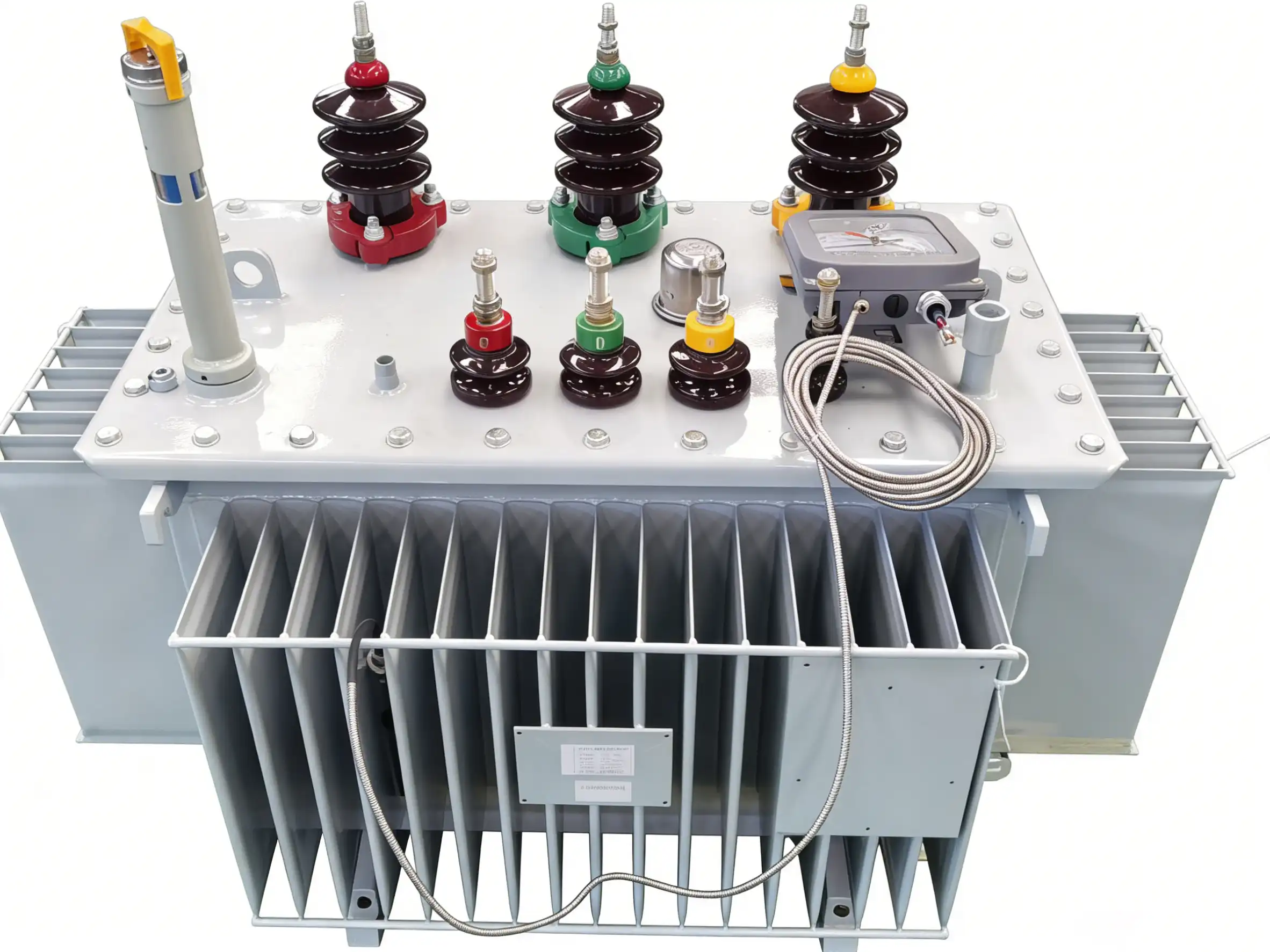
These transformers use electromagnetic induction and a magnetic core with copper or aluminum windings bathed in dielectric oil. A magnetic field from alternating current in the main winding produces voltage in the secondary winding, stepping voltage up or down according to system needs.
The Anatomy of Oil-Filled Power Equipment
Several key components operate together during building. Magnetic cores manufactured of grain-oriented silicon steel decrease hysteresis losses and enhance energy efficiency. Insulated primary and secondary windings surround this core to avoid electrical problems. The assembly rests in a sturdy steel tank filled with transformer oil, which insulates energized sections and absorbs heat from the windings and core during operation. The unit's capacity and use dictate whether tank-mounted radiators or cooling fins use natural convection or forced-air cooling to disperse this heat.
How Oil Enhances Performance and Longevity?
Transformers can tolerate greater voltages in smaller casings due to mineral oil's dielectric characteristics. Natural convection in the oil transfers heat from hot places in the windings to tank walls and radiators. Thermal management boosts equipment lifespan to 25–30 years for well-maintained devices. The oil seals internal components from ambient moisture, a main cause of insulation failure, preventing oxidation. Advanced tap changers in recent designs allow dynamic voltage adjustment without de-energizing the unit, preserving consistent output during grid fluctuations.
Key Advantages for Critical Infrastructure
In reliable-critical settings, oil-immersed designs shine. Their overload resistance is stronger than many alternatives, enabling 120% to 150% of rated capacity for lengthy periods—critical during peak demand or emergencies. Their small size and power capacity make them ideal for space-constrained substations. For installations near hospitals, schools, or residential districts, noise levels are usually around 50 dB. Oil cooling performs well in arctic and desert temperatures due to its thermal stability.
Comparing Oil-Immersed and Dry-Type Distribution Transformers
Multiple transformer technologies are evaluated by procurement teams before equipment selection. Understanding the pros and cons of oil-filled and dry-type units helps determine which technology is suitable for certain operations and regulations.
Cooling and Load Capacity Differences
Oil-immersed Distribution Transformers dissipate heat better than dry-type or cast resin ones. Higher continuous load ratings and overload tolerance are possible with liquid cooling since it transfers thermal energy more effectively than air. A 1500 kVA oil-filled transformer performs similarly to a dry-type transformer but takes up less space. Space surcharges and heavy loads make this advantage notable in high-capacity applications like data centers and industrial facilities.
Dry-type transformers use air as the cooling medium, relying on convection or forced ventilation. While adequate for moderate loads, they require larger surface areas and derating at high temperatures. They have greater winding temperatures than oil-cooled units under identical loading circumstances and stricter temperature increase limitations. Indoor installations with oil containment issues favor dry-type systems because they reduce fire concerns from combustible liquids.
Maintenance and Environmental Considerations
Oil-immersed units need strict upkeep. Annual dissolved gas analysis (DGA) testing reveals early problems before they fail. Oil sampling checks moisture, acidity, and breakdown voltage to maintain dielectric integrity. Tank inspections and leak detection protect the environment. These criteria increase operational complexity but discover faults early to minimize costly unexpected downtime.
Dry-type transformers require less intensive maintenance—visual inspections and infrared thermography suffice for most applications. They reduce fire risks and oil spills, easing permitting and environmental compliance. In severe industrial environments, their exposed windings collect dust and pollutants, limiting lifetime without enclosure protection.
Lifecycle Cost Analysis
Initial purchase prices favor oil-immersed systems for better capacity ratings and cheaper kVA costs. Energy losses are reduced over decades by their high efficiency—98.5% or greater. Despite greater maintenance costs, oil-filled transformers offer a superior total cost of ownership for utility-scale applications and big industrial sites. Dry-type units work well in smaller commercial installations where fire safety requirements require non-flammable technology and easier maintenance overrides efficiency.
Common Issues and Maintenance of Oil-Immersed Transformers
Maintenance must be proactive to extend asset life and prevent breakdowns. Understanding typical failure types helps engineering teams design condition monitoring algorithms that spot issues early, safeguarding important infrastructure investments.
Identifying Warning Signs Before Failure
The most evident concern is oil leaks from gasket degeneration, tank corrosion, or bushing seal failures. Even minor leaks reduce cooling efficiency and introduce moisture. When cooling systems are obstructed, oil circulation slows, or loads exceeds design limitations, overheating develops. Moisture, oxygen, and temperature stress eventually degrade cellulose paper and oil dielectric strength. High moisture indicates insulation deterioration, hydrogen and acetylene imply arcing, and ethylene indicates overheating.
Preventive Maintenance Protocols
Scheduled inspections avoid most failures. Visually inspect for leaks, oil levels, gauge readings, and damage quarterly. The minimum breakdown voltage per IEC 60422 is 30 kV, and annual oil testing analyzes moisture (below 20 ppm), acidity (under 0.03 mg KOH/g), and dissolved gases. Hot patches in infrared thermography indicate connectivity or loading issues. Turn-to-turn defects and electrical integrity are checked using winding resistance measurements. Performing contact resistance and timing tests on load tap changers eliminates switching failures that affect voltage control.
Advanced Diagnostic Technologies
Current condition monitoring technologies make Oil-immersed Distribution Transformer maintenance predictive. Online DGA monitors track dissolved gas concentrations, alerting operators to issues weeks before traditional testing. Real-time hot spot temperature data from fiber optic sensors in windings allows accurate load management. Partial discharge detection devices find insulation problems early when intervention costs are minimal. When used with adequate maintenance, these solutions prevent unexpected outages by 95%, supporting data center, hospital, and factory uptime targets.
Procurement Guide for Oil-Immersed Distribution Transformers
Technical needs, budget limits, and supplier capabilities must be balanced during specification and purchase. Clear procurement criteria prevent costly specification mistakes and quality difficulties while matching equipment to operational needs.
Defining Technical Requirements
Choosing capacity starts with load analysis. Consider linked load, diversity factors, and growth margins—typically 20%–30% for industrial applications. Voltage ratings must match primary distribution (10, 35, or 110 kV) and secondary use (0.4 kV for North American systems). Winding arrangement and insulation class depend on input voltage. Efficiency ratings affect running expenses; look for DOE or 98.5% full-load efficient machines. Impedance parameters impact fault current estimates and protective device coordination.
Environmental factors shape mechanical design. Coastal installations need corrosion-resistant tanks and stainless steel fittings. Derate or chill high-altitude areas over 1000 meters. Seismic zones need IEEE 693 earthquake-standard tank construction and reinforced mounting. Oil compositions and thermal management systems must withstand -40°C in the cold and 55°C in the desert.
Evaluating Manufacturers and Suppliers
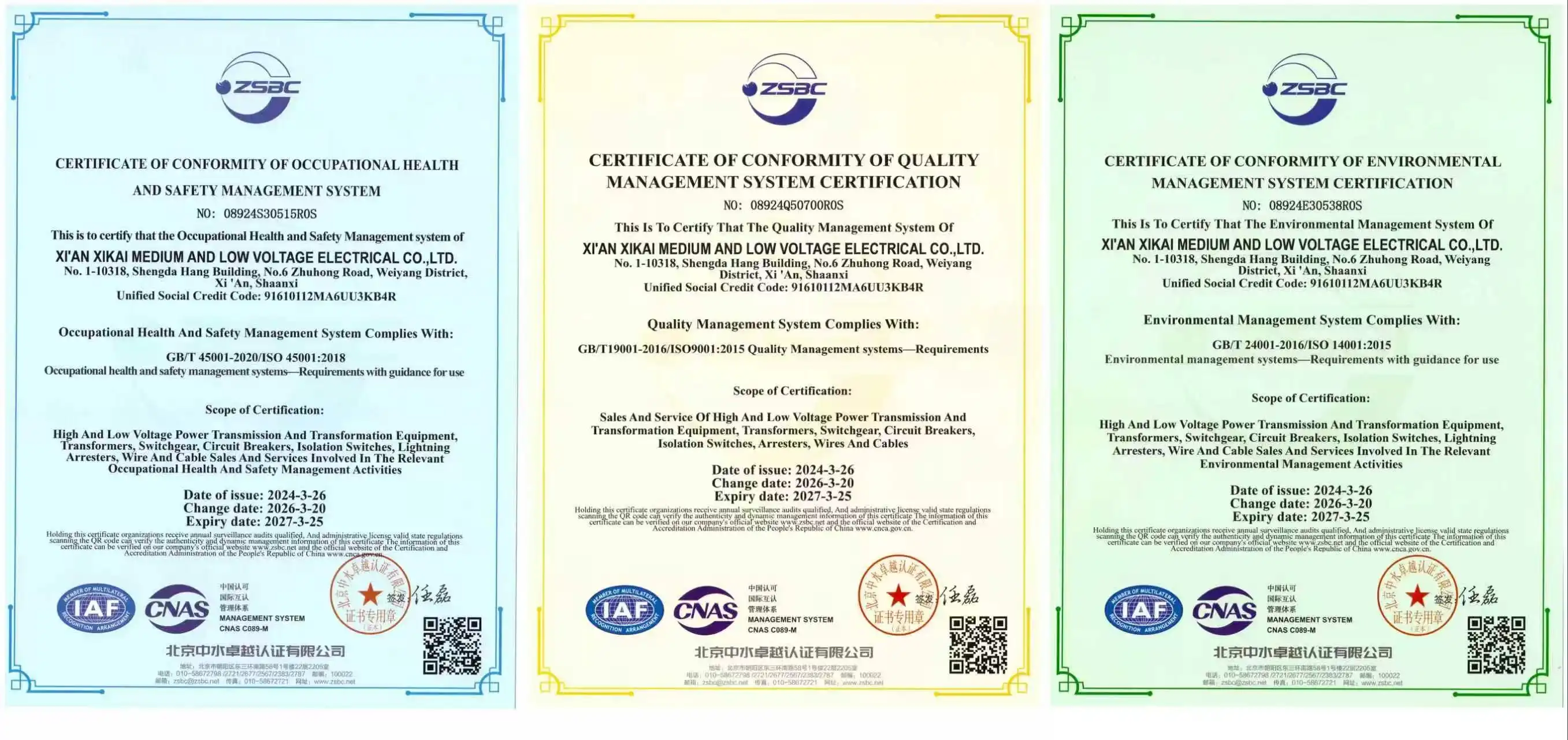
Established manufacturers have solid track records and extensive support. Siemens, ABB, and Schneider Electric have substantial documentation and service infrastructure. Regional manufacturers provide competitive prices and customisation. Xi'an Xikai has 25 years of transformer design experience, many patents, and rigorous quality procedures. Grain-oriented steel core testing reduces hysteresis losses, 24-hour pressure testing on welded tanks ensures leak-free operation, and IEC 60076, ISO 9001, CE, UL, and GOST-R certifications are met.
Streamlining the Ordering Process
Standard setups take 8 weeks, bespoke designs 16 weeks. Account for shipment duration—international orders require additional logistical preparation. Initial orders should include protection relays, temperature gauges, bushing current transformers, and neutral grounding resistors. Delivery should match construction timelines to prevent site storage difficulties. Large transformers above 10,000 kg require specific rigging. Plan commissioning support—many vendors offer starter services to ensure installation and energization.
Performance Across Diverse Applications
Utility, industrial, and renewable energy applications benefit from Oil-immersed Distribution Transformers' versatility. Understanding their strengths helps match technology to project needs.
Industrial and Mining Operations
Transformer reliability is needed in heavy industrial. Factory, mine, and oil refinery environments include dust, humidity, vibration, and variable frequency driving harmonic loads. We use IP55 enclosures and corrosion-resistant tanks that can endure coastal salt spray and chemicals. The units serve surge demands during process starting or equipment switching with 150% overflow capacity for two hours. Investments in seismically active areas are protected by Zone 4 earthquake-resistant designs. -40°C to 55°C temperature tolerance prevents derating in harsh temperatures.
Renewable Energy Integration
Solar and wind installations are difficult. Inverter generation causes intermittent loads and harmonic distortion. Without thermal stress, our renewable energy models withstand 125% intermittent demands and fast power swings. Low-loss designs maximize ROI with fewer than 3% losses at 30% loading, frequent during off-peak generating. To eliminate trips caused by voltage mismatches, voltage management within ±0.5% guarantees seamless grid synchronization. Weather-dependent generation causes frequent heat cycling, although enhanced oil compositions retain dielectric integrity.
Utility Grid Applications
Transmission and distribution operators value reliability and efficiency. Amorphous core solutions fulfill EU EcoDesign standards and reduce distribution network system losses with 99% efficiency. Optimized core designs reduce no-load losses by 30% compared to silicon steel cores, saving money since transformers are always activated. Modular designs ease grid expansion and equipment standardization. Tap changers regulate voltage as load patterns alter daily and seasonally. Water cannot enter sealed tanks with nitrogen blanketing, prolonging oil life to match transformer service length without oil replenishment.
Future Trends and Innovations in Oil-Immersed Transformers
Technological advancements improve Oil-immersed Distribution Transformer performance, efficiency, and environmental compatibility. Keep up with new innovations to assist procurement teams select long-term equipment for developing grid systems.
Enhanced Materials and Efficiency Gains
Advanced core materials such amorphous metal alloys cut core losses by 70% over silicon steel, but higher costs limit usage to efficiency-critical applications. New natural ester oil compositions increase fire safety, biodegradability, and thermal performance. If spilled, these vegetable-based oils degrade quickly, decreasing environmental responsibility in sensitive areas. In lab tests, nanofluid insulating oils may increase heat transfer efficiency by 20% to 40%, allowing smaller designs or higher ratings within tank dimensions.
Smart Grid Integration and Digital Monitoring
Networked sensors on IoT-enabled transformers give unparalleled operational insight. Predictive analytics platforms receive real-time load current, oil temperature, environmental parameters, and dissolved gas concentrations. Operations trends are analyzed by machine learning systems to forecast maintenance weeks in advance. Remote tap changer control reduces system losses by 2% to 5% by coordinating voltage regulation across distribution networks. These capabilities support utility smart grid programs and industrial facility energy management systems, providing operating insights that conventional equipment could not.
Regulatory Drivers and Environmental Standards
More rigorous efficiency rules change transformer markets. The US DOE requires distribution transformers to be efficient, driving manufacturers toward low-loss designs. Higher European EcoDesign standards spur core material and winding optimization innovation. Environmental requirements on insulating oil disposal and spill containment tighten. Manufacturers produce transformer bases with closed-loop oil recycling and secondary containment. These regulatory constraints accelerate adoption of environmentally friendly technology while keeping the advantages that make Oil-immersed Distribution Transformers essential for high-capacity applications.
Conclusion
Modern power systems rely on Oil-immersed Distribution Transformers for their superior thermal performance, load capacity, and endurance. They are popular for challenging applications where downtime is costly because to their reliability in varied settings including arctic mining sites and desert solar farms. These transformers need disciplined maintenance but reward proactive care with decades of reliable service and improved efficiency that lowers operational expenses. Oil-immersed designs are changing with digital monitoring and upgraded materials to stay relevant in tomorrow's electrical infrastructure as smart grid technologies and renewable energy integration increase.
FAQ
1. How does oil temperature affect transformer lifespan?
Oil temperature directly affects insulation ageing. Insulation life is cut in half for every 8°C over rated operating temperature. Maintaining top oil temperature below 95°C during typical operation protects IEEE C57.91 loading recommendations' 20-year thermal life expectancy. Fiber optic monitoring prevents winding hot spots from overheating and accelerating insulation deterioration.
2. What maintenance frequency prevents unexpected failures?
DGA testing is sufficient for transformers under 10 MVA under normal loads. Biennial testing helps units above 10 MVA or 80% constant loads. According to IEEE C57.106 maintenance guidelines, emergency testing is required after through-fault occurrences over 10 times rated current or sustained overloading above 130% for longer than 24 hours.
3. Can oil-immersed transformers operate in high-altitude regions?
Altitude influences cooling and dielectric strength. Derating by 0.5% every 100 meters of elevation or increased cooling systems to compensate for decreasing air density is needed above 1000 meters. Above 2000 meters, high-altitude bushings may be needed for exterior insulation. Through better heat management and strengthened insulation, we deliver altitude-compensated solutions for operations up to 4000 meters.
Partner With Reliable Oil-Immersed Distribution Transformer Experts
Xi'an Xikai provides reliable transformers with engineering support and quality assurance. Our Oil-immersed Distribution Transformers power utility substations and industrial sites globally, where dependability affects operational continuity. With 25 years of manufacturing experience and many patented technologies, we tailor designs to match your voltage (10 kV, 35 kV, or 110 kV input), environmental, and performance criteria. Our IP55-protected devices cut no-load losses by 30% and operate from -40°C to 55°C. To meet IEC 60076, ISO 9001, CE, UL, and GOST-R requirements, each transformer undergoes grain-oriented steel core verification, 24-hour tank pressure testing, and electrical parameter validation. We provide 10-year warranties and 24/7 technical support. Contact our engineering team at serina@xaxd-electric.com, amber@xaxd-electric.com, or luna@xaxd-electric.com to discuss your project.
References
1. IEEE Standards Association. (2011). IEEE Standard C57.91: Guide for Loading Mineral-Oil-Immersed Transformers and Step-Voltage Regulators. Institute of Electrical and Electronics Engineers.
2. International Electrotechnical Commission. (2011). IEC 60076-1: Power Transformers – Part 1: General. IEC Central Office, Geneva, Switzerland.
3. Heathcote, Martin J. (2007). J & P Transformer Book: A Practical Technology of the Power Transformer, 13th Edition. Newnes Publishers, Oxford, United Kingdom.
4. Harlow, James H. (2004). Electric Power Transformer Engineering, Second Edition. CRC Press, Boca Raton, Florida.
5. U.S. Department of Energy. (2016). Energy Conservation Program: Energy Conservation Standards for Distribution Transformers. Federal Register, Vol. 81, No. 84.
6. Lapworth, J.A., and McGrail, A.J. (2003). Transformer Insulation Life Assessment. IEEE Electrical Insulation Magazine, Vol. 19, Issue 1, pp. 3-11.