
Ultimate Guide to Outdoor Vacuum Circuit Breaker Tips for Buyers?
2026-06-01 16:01:24
Choosing the correct outdoor vacuum circuit breaker protects your investment, ensures uninterrupted operations, and meets strict safety criteria. Understanding outdoor vacuum circuit breakers helps you preserve equipment and profitability, whether managing a data center, utility transmission network, or industrial electrical system. This artical covers everything from technological basics to procurement techniques so you can reliably choose devices that suit operational needs and offer long-term dependability.
 |
 |
Understanding Outdoor Vacuum Circuit Breakers
What Makes Vacuum Circuit Breakers Essential for Outdoor Systems?
In fault circumstances, outdoor Vacuum Circuit Breakers destroy electrical arcs with vacuum interrupters. Without ionized gas, contacts separate in a sealed vacuum chamber when current flow stops, preventing arcing. This device outperforms oil or air breakers, which use fluid or compressed air to quench arcs.
Space-constrained substations benefit from these devices' low installation footprint. Utility firms and industrial operators are prioritizing sustainability, and vacuum technology reduces hazardous SF6 greenhouse gases. Vacuum Circuit Breakers include weather-resistant casings, corrosion-proof materials, and improved insulation for outdoor use.
Core Components and Operating Principles
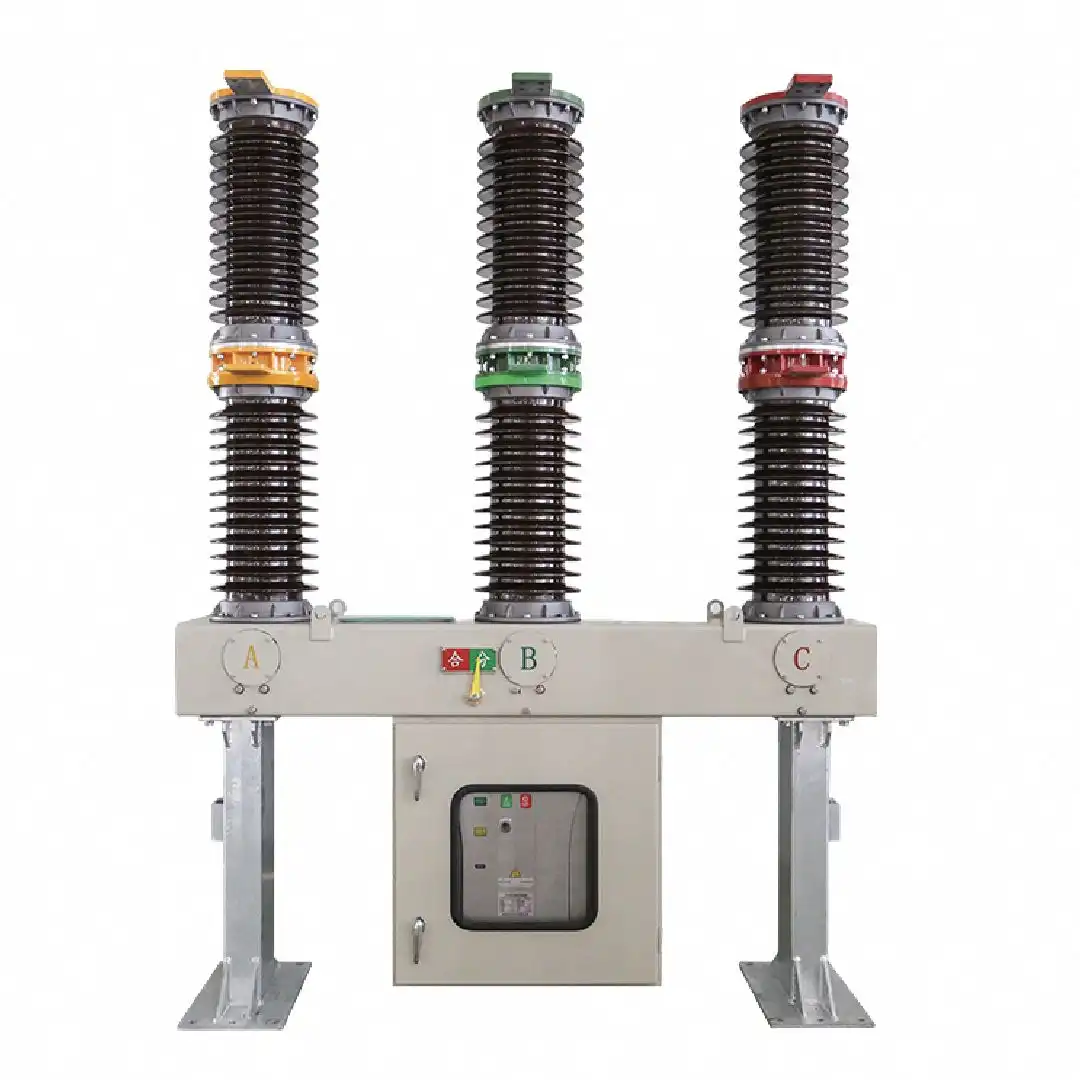
A typical outdoor Vacuum Circuit Breaker has vacuum interrupters, a spring-operated mechanism, insulating supports, and protective housings. The vacuum interrupter has ceramic or glass-enclosed fixed and movable contacts. Current flows via blocked connections during normal operation. Within milliseconds after a failure, the working mechanism separates the contacts and the vacuum prevents arc re-ignition, isolating the connections safely.
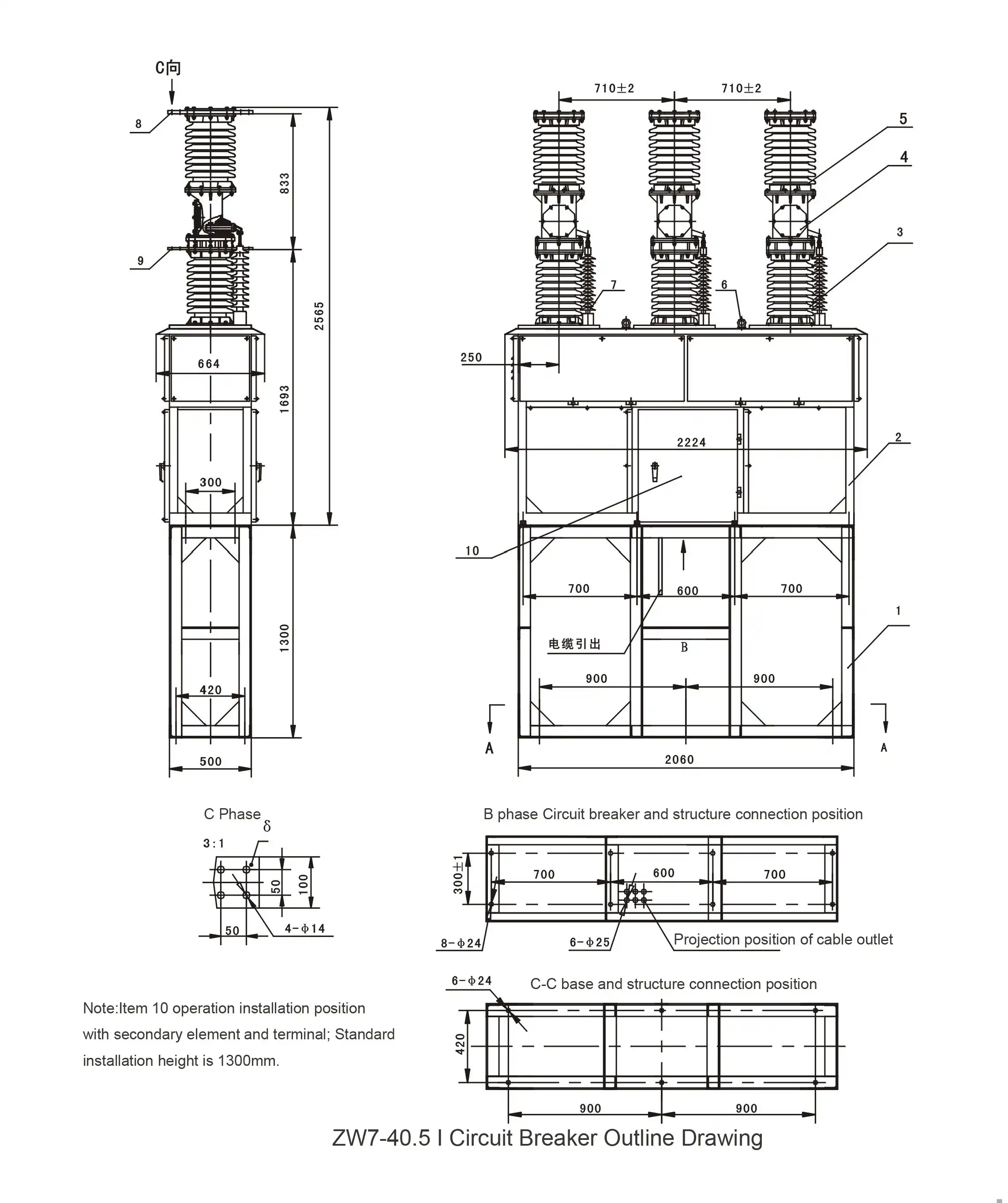
Use the ZW7-40.5 model. A modularized spring-operated mechanism simplifies maintenance and ensures constant performance throughout 10,000+ mechanical movements in this 40.5kV device. Installations in earthquake-prone areas benefit from its reinforced bracket column construction, which meets IEEE 693 specifications. Large creepage distance porcelain sleeves avoid flashovers in coastal or industrial dusty or humid situations.
Typical Outdoor Applications Across Industries
These devices stabilize power distribution networks during faults. Utilities use them in medium-to-high voltage substations to prevent cascade failures. Vacuum Circuit Breakers safeguard critical machinery in factories, steel mills, and chemical processors against voltage spikes and short circuits.
Solar farms and wind turbine substations use these breakers to handle intermittent power generation and grid connectivity. Railway electrification systems may switch often without degrading performance. Data centers and hospitals use Vacuum Circuit Breakers for their dependability and low maintenance. Power supply directly affects operations and safety.
Comparing Vacuum Circuit Breakers to Other Circuit Breaker Types
Environmental Impact and Sustainability Considerations
SF6 circuit breakers are effective but generate greenhouse gases 23,500 times stronger than CO2. SF6 consumption is being restricted in California and the EU due to worldwide regulatory pressure. Vacuum Circuit Breakers avoid this issue, making them the ethical choice for carbon footprint-tracking and green certification companies.
Fire-prone oil circuit breakers generate hazardous waste by replacing dielectric oil regularly. High-pressure compressor systems for air blast breakers increase energy use and maintenance. Vacuum technology avoids these issues with sealed, maintenance-free interrupters that need no consumables.
Operational Performance and Reliability
Vacuum Circuit Breakers break well for their size. The ZW7-40.5 minimizes energy loss during fault interruption with 99.9% current-breaking efficiency. Short circuits can harm equipment less than oil or air breakers due to millisecond response times.
Mechanical endurance is superior. While oil breakers need servicing after 3,000 cycles, vacuum versions last beyond 10,000. This reduces downtime and lifetime costs, which are crucial for facilities where every minute of interruption affects production or customer service.
Maintenance Demands and Total Cost of Ownership
Analysis of total cost of ownership shows the economic benefits. Purchase prices may be greater than oil models, but operating savings add up quickly. Maintenance periods are 3-5 years vs yearly oil breaker checks. The absence of dielectric fluid changes eliminates material and disposal expenditures.
Labor requirements drop significantly. Modular devices like the ZW7-40.5 allow personnel to change parts in hours rather than days. This efficiency multiplies across hundreds of substations, freeing up maintenance staff and lowering contractor costs for utility companies with hundreds of substations.
Key Technical Specifications and Safety Features for Buyers
Critical Specifications to Evaluate
Rated voltage is the breaker's maximum continuous system voltage. Common outside ratings include 12kV, 24kV, and 40.5kV. The ZW7-40.5 fits North American and worldwide transmission systems at 40.5kV and 50Hz.
Rated current implies constant current capacity. Options usually vary from 630A to 3,150A. The ZW7-40.5 matches load needs without over-specifying equipment with 1,250A, 1,600A, and 2,000A versions.
Interrupting capacity is the maximum fault current the Vacuum Circuit Breaker may safely break. This parameter must surpass installation worst-case short circuit predictions. IEC 62271-100 and IEEE C37.04 devices fulfill worldwide benchmarks, ensuring performance under different grid situations.
Environmental Protection Standards for Harsh Conditions
Equipment in outdoor installations faces high temperatures, dampness, UV radiation, and airborne pollutants. IP65+ ingress protection prevents dust and water entry. The corrosion-resistant shell and large creepage distance porcelain sleeves of the ZW7-40.5 enhance service life in harsh conditions.
Insulation strength depends on altitude—standard ratings assume 1,000 meters. Above this level, installations need derating or insulation. Mountain substations and high-altitude industrial locations can use plateau-operated devices like Xi'an Xikai's 4,000-meter-tested versions.
Arc Flash Mitigation and Interlock Systems
Arc flashes endanger people and equipment. Modern Vacuum Circuit Breakers are arc-resistant and work with relays to identify faults before energy builds up. Mechanical interlocks prohibit risky tasks like opening disconnectors under load or entering live compartments.
Breakers with visible break signs help maintenance workers to evaluate safety before accessing equipment. Secondary control voltage monitoring keeps working mechanisms within prescribed limits (usually 85%-110% of rated voltage), preventing incomplete or failed operations that might compromise systems.
Maintenance Requirements and Warranty Considerations
Operating mechanisms must be inspected yet vacuum interrupters do not need internal maintenance. Check fastener tightness and moving part lubrication every 2,000 operations or 3-5 years. Comprehensive warranties for interrupters and mechanisms show confidence in their goods and protect against premature failures.
Documentation quality important too. Troubleshooting unforeseen difficulties is faster with clear maintenance manuals, wiring diagrams, and expert help. Suppliers with 24/7 technical support and spare parts stocks reduce component replacement downtime.
Procurement Guide: How to Buy the Right Outdoor Vacuum Circuit Breaker?
Assessing Load Demands and System Compatibility
Record your electrical system's characteristics. Find maximum continuous current and load growth forecasts. Find worst-case short circuit current using utility failure data or network modeling tools. Values set minimum rated current and interrupting capacity for the Vacuum Circuit Breaker.
Check switchgear and control system compatibility. CT ratios must match protective relay settings. The ZW7-40.5 supports middle-mounted or side-installed CTs for flexible metering and protection. To guarantee optimal setup, communicate CT needs while ordering.
Evaluating Environmental Factors
Construction depends on site circumstances. Coastal installations need corrosion-resistant coatings or hardware. Increased creepage distances on insulators improve polluted industrial areas. Seismic zones necessitate reinforced structures and verified mounting techniques like the ZW7-40.5's bracket column.
Extreme temperatures alter component ratings. Standard devices work from -40°C to +40°C, although severe temperatures may require heating or cooling. Desert UV exposure increases insulation breakdown unless materials withstand sun radiation. Request environmental test certificates for your installation.
The Leading Manufacturers and Support Networks
Global corporations like ABB, Siemens, Schneider Electric, and GE have large product ranges and service networks. Regional manufacturers provide competitive prices and customisation. One of China's top medium and low-voltage equipment manufacturers, Xi'an Xikai, offers competitive pricing and proven performance in State Grid systems, rail transportation, and renewable energy.
Assess after-sales support. North American suppliers supply replacement parts faster than offshore suppliers. Having technical help during business hours speeds up troubleshooting. Improvements in maintenance staff training reduce reliance on contractors.
Purchasing Channels and Lead Time Management
Direct manufacturer purchases offer the greatest cost for big orders but take 8-12 weeks for common setups. Authorized wholesalers stock popular models at higher rates for speedier delivery. Select channels based on urgency and budget.
Bulk purchase agreements guarantee phased project cost and availability. Contract negotiations should coordinate delivery timetables with construction milestones to reduce storage expenses and damage. Staged deliveries are recommended for projects that exceed warranty coverage start dates.
Best Practices and Tips for Long-Term Performance
Site Preparation and Installation Procedures
Good foundation design avoids mechanical stress and vibration. Mounting surfaces must meet manufacturer criteria for levelness, usually ±2mm over the footprint. NFSA 70E requires equipment clearances for safe operation and maintenance of the Vacuum Circuit Breaker.
Cable terminations need care. Use calibrated equipment to torque all connections to prescribed values—over-tightening destroys conductors and under-tightening causes highly resistant junctions that overheat. Apply anti-oxidants on aluminum connections to prevent corrosion. Check phase sequences before energization to avoid equipment damage or protective device miscommunication.
Environmental Protection Measures
Equipment without inherent protection needs weatherproof enclosures. Sunshades relieve thermal stress in hot areas, prolonging insulation life. Drains protect cable trenches and equipment bases from flooding. Schedule insulator cleaning in high-pollution regions to eliminate conductive dust before tracking routes form.
For harsh conditions, consider climate-controlled kiosks. Equipment life is greatly extended by moderate temperatures and low humidity, especially electronic control components and auxiliary systems. Reduced failure rates and longer service intervals justify the extra expense.
Operational Safety Protocols and Training Essentials
Only authorized people should access electrified equipment. Conduct arc flash hazard evaluations to determine maintenance PPE levels. Prevent backfeeding and equipment damage by teaching operators suitable switching sequences and upstream-downstream synchronization.
Operations drills keep crews sharp. Practice emergency procedures like fault response and equipment isolation to help staff handle problems. Logbooks help address reoccurring issues and prove regulatory compliance during audits by recording all switching actions.
Indicators for Upgrading or Replacing Equipment
Monitor trip frequency—increasing fault interruptions may signal system faults that need examination rather than breaker replacement. As mechanical operation counts reach 10,000 operations, proactive replacement planning begins. Contact resistance measures show worsening; results over 20% above baseline demand study.
Physical checks detect issues early. Discoloration on insulators indicates tracking, corrosion on hardware indicates moisture penetration, and working mechanism oil leaks. Thermal imaging during operation detects hot areas before breakdowns. Address findings immediately to avoid catastrophic failures during vital operations.
Integrating Advanced Technologies
Smart grid compatibility prepares infrastructure for upgrade. Breakers using IEC 61850 communication protocols work smoothly with digital substations for centralized control. Condition monitoring systems track contact wear, operating mechanism health, and ambient conditions, replacing time-based maintenance regimens.
Digital relays and contemporary circuit breakers offer advanced protection mechanisms that electromechanical devices cannot. Adaptive protection alters settings based on system setup, enhancing dependability during emergencies. Remote operation reduces site visits, staff expenditures, and off-hours response times.
Conclusion
Technical criteria, environmental factors, and total cost of ownership must be considered while choosing outdoor Vacuum Circuit Breakers. When matched to application needs, these devices offer unrivaled dependability, environmental advantages, and operating efficiency. Buyers may properly specify equipment by understanding rated voltage, interrupting capacity, environmental ratings, and safety features. Your electrical infrastructure runs securely and reliably for decades when you deal with manufacturers with strong support networks, extensive warranties, and proven performance across various installations. Modern modular construction, earthquake resilience, and pollution tolerance are used in the ZW7-40.5 for utility, industrial, and renewable energy applications globally.
FAQ
1. What is the typical operational lifespan of outdoor vacuum circuit breakers?
Good outdoor Vacuum Circuit Breakers last 30+ years with proper maintenance. Many devices surpass mechanical life limits of 10,000 operations (Class M2) due to cautious design margins. Installations in temperate climates with regular maintenance endure longer than those in tough situations with scattered maintenance. The vacuum interrupter is maintenance-free, however operational mechanisms need lubrication and inspection every 3-5 years to last.
2. How do vacuum circuit breakers compare against SF6 environmentally?
By eliminating SF6 gas, Vacuum Circuit Breakers reduce greenhouse gas emissions by thousands of tons of CO2 throughout equipment lifespan. SF6 leakage during operation and disposal increases global environmental liability. Sealing vacuum technology eliminates air leakage, improving company sustainability and easing regulatory compliance. Lifecycle assessments demonstrate vacuum breakers reduce environmental effect by 80% over SF6 alternatives for manufacture, operation, and disposal.
3. Which maintenance procedures reduce downtime?
Condition-based monitoring lowers maintenance and detects issues early. Contact resistance should be measured periodically; results above 20% indicate wear. Check functioning mechanisms for lubrication and mechanical clearances every 2,000 operations. Polluted insulators need semi-annual cleaning to avoid tracking. Thermal imaging during operation detects issues before failure. Maintaining complete maintenance logs helps anticipate component lifecycles, enabling proactive replacement during scheduled outages rather than emergency repairs.
Partner with Xi'an Xikai for Your Vacuum Circuit Breaker Needs
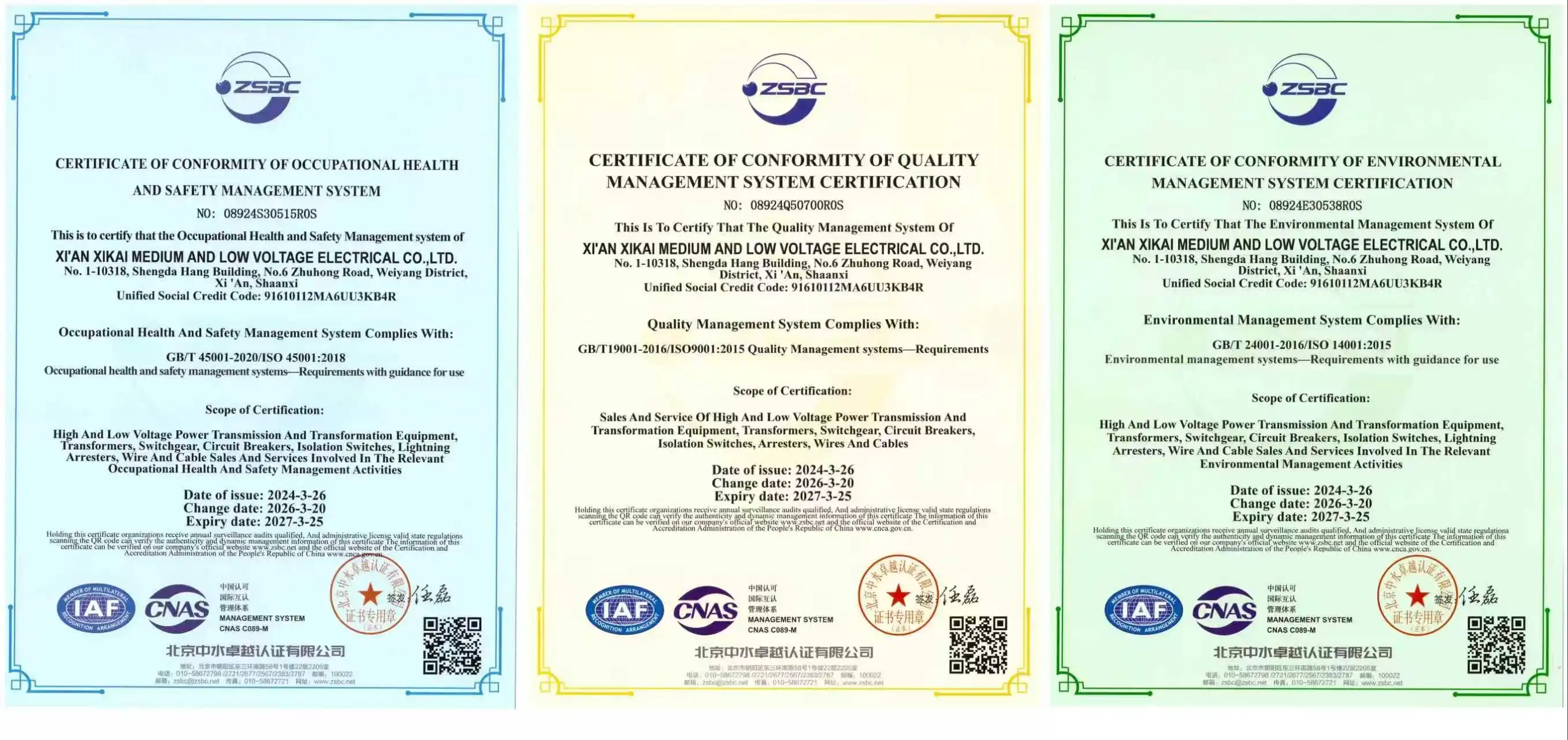
Working with professional Vacuum Circuit Breaker manufacturers that understand your operating goals simplifies outdoor Vacuum Circuit Breaker procurement. One of China's major medium- and low-voltage electrical equipment manufacturers, Xi'an Xikai provides solutions for State Grid systems, rail transportation, renewable energy, and heavy industry. Our ISO 9001, 14001, and 45001-certified ZW7-40.5 outdoor Vacuum Circuit Breaker meets IEC and IEEE standards and is modular, earthquake resilient, and pollution resistant.
Our help includes specification review, installation, and maintenance. Engineers help with load estimates, environmental studies, and system integration planning to pick the best equipment. To discuss your needs, contact our technical professionals at serina@xaxd-electric.com, amber@xaxd-electric.com, or luna@xaxd-electric.com.
References
1. IEEE Standards Association. "IEEE Guide for Seismic Qualification of Electrical Equipment." IEEE Std 693-2018, Institute of Electrical and Electronics Engineers, 2018.
2. International Electrotechnical Commission. "High-voltage switchgear and controlgear – Part 100: Alternating-current circuit-breakers." IEC 62271-100:2021, International Electrotechnical Commission, 2021.
3. Chen, Weigen, and Li Hongkun. "Vacuum Arc: Physics and Application in Circuit Breakers." Xi'an Jiaotong University Press, 2017.
4. National Fire Protection Association. "Standard for Electrical Safety in the Workplace." NFPA 70E-2021, National Fire Protection Association, 2020.
5. Slade, Paul G. "The Vacuum Interrupter: Theory, Design, and Application." CRC Press, 2017.
6. U.S. Environmental Protection Agency. "SF6 Emission Reduction Partnership for Electric Power Systems." EPA 430-R-19-002, Environmental Protection Agency, 2019.


_1783910818781.png)

