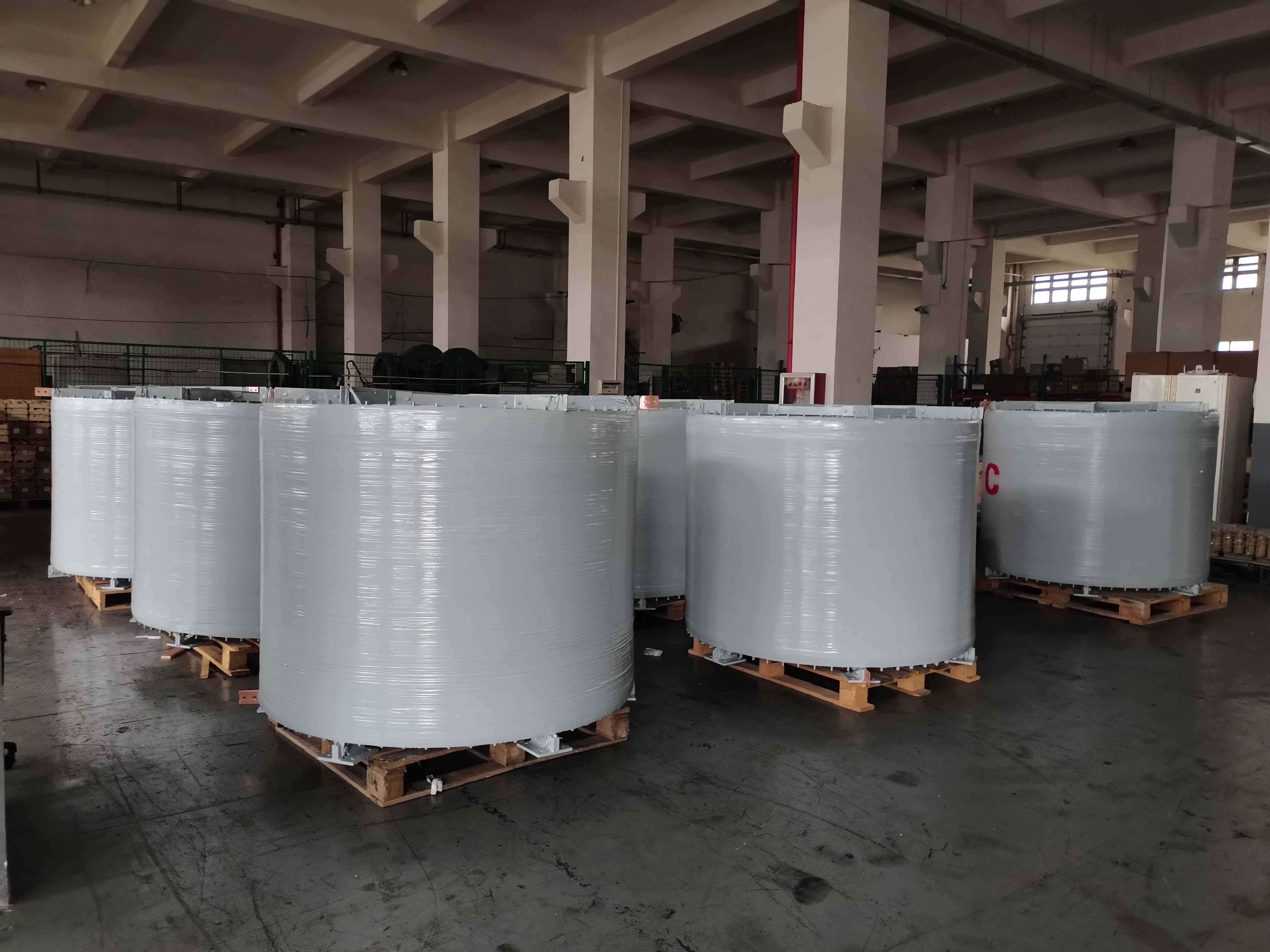
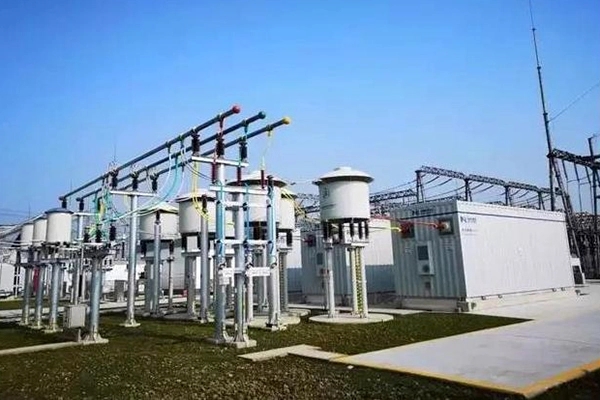
Outdoor vs Indoor Vacuum Circuit Breaker: Which One Fits Your Application?
2026-06-02 15:59:10
Environmental exposure, installation space, voltage, and maintenance determine whether to use outdoor or inside Vacuum Circuit Breakers. Utility substations and open-air installations benefit from outdoor Vacuum Circuit Breakers' weather-resistant casings and increased insulation to withstand temperature extremes, humidity, and pollution. Data centers, hospitals, and factories use indoor models with compact design and building management system integration. Understanding these differences helps you choose the best switchgear for your operations, safeguarding sensitive equipment and optimizing uptime and cost-efficiency.
 |
 |
Understanding Vacuum Circuit Breakers: Key Components and Operation Principles
What Defines a Vacuum Circuit Breaker?
The Vacuum Circuit Breaker extinguishes electrical arcs during fault interruption, making it ideal for 12kV to 40.5kV Medium-Voltage to high-voltage applications. No flammable liquids or greenhouse gases make Vacuum Circuit Breakers safer and easier to maintain than oil or SF6 gas breakers. In the core assembly, fixed and moving contacts are enclosed in a vacuum bottle, a spring-operated mechanism operates quickly, and insulating supports preserve dielectric strength. The vacuum rapidly quenches the arc by preventing ionized particles from conduction when contacts split during a fault.
How Vacuum Arc Quenching Works?
Arc extinction in vacuum requires molecule-free ionization. Metal vapor from electrodes causes a short arc when connections fail. This vapor condenses on contact surfaces in microseconds in vacuum, usually before AC systems' current zero-crossing point. Rapid quenching reduces energy loss and electrode degradation, increasing mechanical life beyond 10,000 cycles. Modern designs use longitudinal magnetic field contacts to evenly disperse the arc, decreasing localized wear and preserving breaking capacity over time.
Core Advantages Over Traditional Technologies
Vacuum Circuit Breakers solve major utility and industrial problems. For establishments with delicate electronics or severe environmental restrictions, they remove fire and oil contamination dangers compared to oil-filled units. Vacuum technique reduces greenhouse gas emissions compared to SF6 alternatives, meeting company sustainability goals and California and EU regulatory requirements. Because there are no fluids to test or gases to replenish, maintenance intervals are years rather than months, lowering total cost of ownership and improving system availability—critical for data centers and hospitals where downtime means revenue loss or patient safety.
Differences Between Outdoor and Indoor Vacuum Circuit Breakers
Structural Adaptations to Environmental Stress
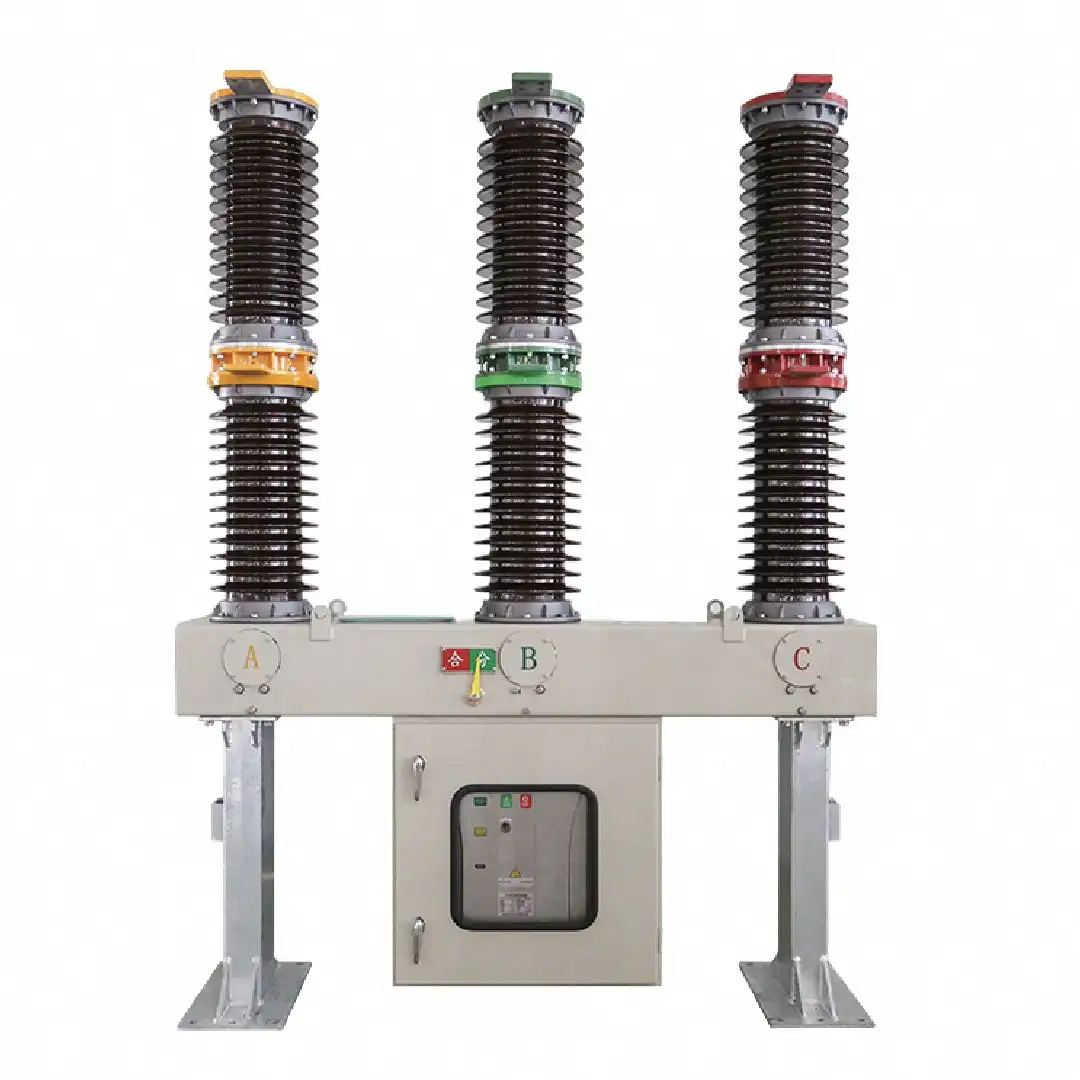
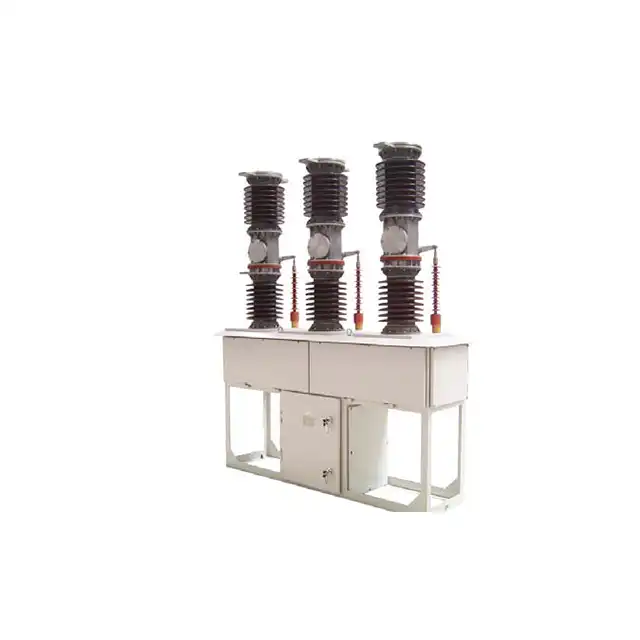
Outdoor Vacuum Circuit Breakers include strengthened bracket columns and large-creepage porcelain sleeves for environmental protection. This is shown by the ZW7-40.5 type, rated at 40.5kV with current choices of 1250A, 1600A, and 2000A, and its modularized spring-operated mechanism. In contaminated environments where salt spray, industrial dust, and agricultural chemicals might damage ordinary insulators, porcelain insulation performs. UV-stabilized materials prevent deterioration in solar farm installations, while corrosion-resistant coatings on metal enclosures last in coastal substations and chemical facilities.
Indoor models emphasize space economy and integration. The ZN12-12 and VS1-24 series conform to this idea with small footprints for metal-clad switchgear cabinets like KYN28 and XGN15. These devices use air-insulated or solid-embedded pole technology to reduce clearance and maintain insulation in regulated conditions. Manufacturers without weather-sealing components can save money on projects that use equipment in temperature-controlled substations or industrial buildings.
Installation and Maintenance Considerations
Outdoor Vacuum Circuit Breakers must be pole-mounted or pad-mounted with seismic restraint, especially in earthquake-prone areas. California and Japanese utilities must have the ZW7-40.5's reinforced construction fulfill IEEE 693 seismic criteria to continue operations after earthquakes. Technicians clean insulators and check gasket seals to prevent moisture infiltration during maintenance. The modular spring mechanism in devices like the ZW7-40.5 allows component swapping onsite without tools or vacuum chamber access, reducing maintenance time by 30%.
Indoor installations need precise building system coordination yet benefit from regulated conditions. Digital relays and Modbus or IEC 61850 protocols connect circuit breakers to centralized monitoring systems for predictive maintenance. For safe operation, the VS1-12 side-mounted version for fixed switchgear must verify mechanical interlocks with earthing switches and cabinet doors. Maintenance cycles last 2,000 operations or 3-5 years and focus on moving part lubrication rather than environmental deterioration, shifting operating costs from reactive repairs to regular inspections.
Performance Metrics and Reliability
Lightning-induced surges and temperature cycling damage porcelain insulators in outdoor units. Quality manufacturers evaluate the ZW7-40.5 for 85kV/1min power-frequency withstand voltage and 185kV lightning impulse withstand. These strategies maintain dependability over 99.5% in transmission networks, when one loss can cause grid instability affecting thousands of end-users.
Indoor Vacuum Circuit Breakers have space limits that reduce heat dissipation. High-current applications, especially data centers with constant loads near capacity, can avoid thermal runaway with proper ventilation. The KYN61-40.5 switchgear-compatible ZN12-40.5 variant uses heat sinks and forced-air cooling to keep contact temperatures safe under protracted overload circumstances, safeguarding the breaker and downstream equipment.
How to Choose the Right Vacuum Circuit Breaker for Your Application?
Evaluating Technical Parameters
Any selection decision starts with rated voltage and current. Utility transmission lines at 40.5kV require outdoor Vacuum Circuit Breakers like the ZW7-40.5, which can handle 2000A at 50Hz. Industrial park distribution networks may use 12kV or 24kV indoor units such as the VS1-12 or VS1-24, matched to transformer secondary voltages and load profiles. A 25kA rating is sufficient for most commercial applications, but heavy industrial locations with substantial motor loads may need 31.5kA or greater to resolve bolted defects without contact welding.
Switching frequency affects mechanical life. Breakers in renewable energy farms operate often with low load current but high inrush transients due to capacitor bank switching. Class C2 Vacuum Circuit Breakers for capacitive loads protect capacitor elements against voltage escalation with re-ignition suppression. Motor control applications require breakers with stronger closure mechanisms and thermal cycling-optimized contact materials to handle inrush currents six to eight times rated values.
Matching Environment to Design
Desert substations in Arizona or the Middle East need dust-resistant outdoor breakers with thermal stability from -40°C to +60°C. Even when coated with small sand particles, the ZW7-40.5's large-creepage porcelain insulation retains dielectric strength, and its reinforced construction resists thermal expansion pressures that shatter lesser designs. Marine-grade coatings and stainless steel hardware safeguard coastal installations from salt-induced corrosion throughout utility asset 30-year lifespans.
Low EMI and accurate backup generator coordination are needed for indoor hospital or semiconductor production applications. Vacuum interrupters make less noise than air-blast breakers, although grounding and shielding are still necessary. Pure switching waveforms safeguard variable-frequency motors and power supplies in medical imaging equipment and cleanroom HVAC systems thanks to the ZN12-12's incorporated pole architecture, which removes parasitic capacitances from external tracking pathways.
Application-Specific Comparisons
Outdoor breakers at trackside substations, where space is ample but accessibility is constrained, enhance railway electrification systems. The ZW7-40.5's modular design allows fast component replacement during maintenance periods, minimizing train schedule interruptions. The 99.9% current-breaking efficiency decreases energy loss during traction load changes, cutting transit agencies' operational expenses for hundreds of breakers across urban networks.
Indoor switchgear rooms with small VS1 or ZN series breakers are preferred in centralized Medium-Voltage manufacturing operations. Centralized relay panels simplify power quality monitoring although rated enclosures include arc flash dangers. Standardized footprints simplify cabinet assembly and decrease engineering hours, speeding up project timeframes and increasing fixed-price contract profitability for EPC businesses building these installations.
Market Solutions and Leading Brands of Vacuum Circuit Breakers
Evaluating Global Manufacturers
Siemens, ABB, and Schneider Electric have extensive product ranges and decades of experience. Siemens' 3AH and 3AF platforms lead European dependability, whereas ABB's VD4 series leads heavy industry high-current applications. Schneider Electric's EcoStruxure integration attracts digital transformation and remote monitoring facilities. Mitsubishi, Hyundai, and Xi'an Xikai offer cost-effective solutions with proven technology for growing markets and municipal utilities.
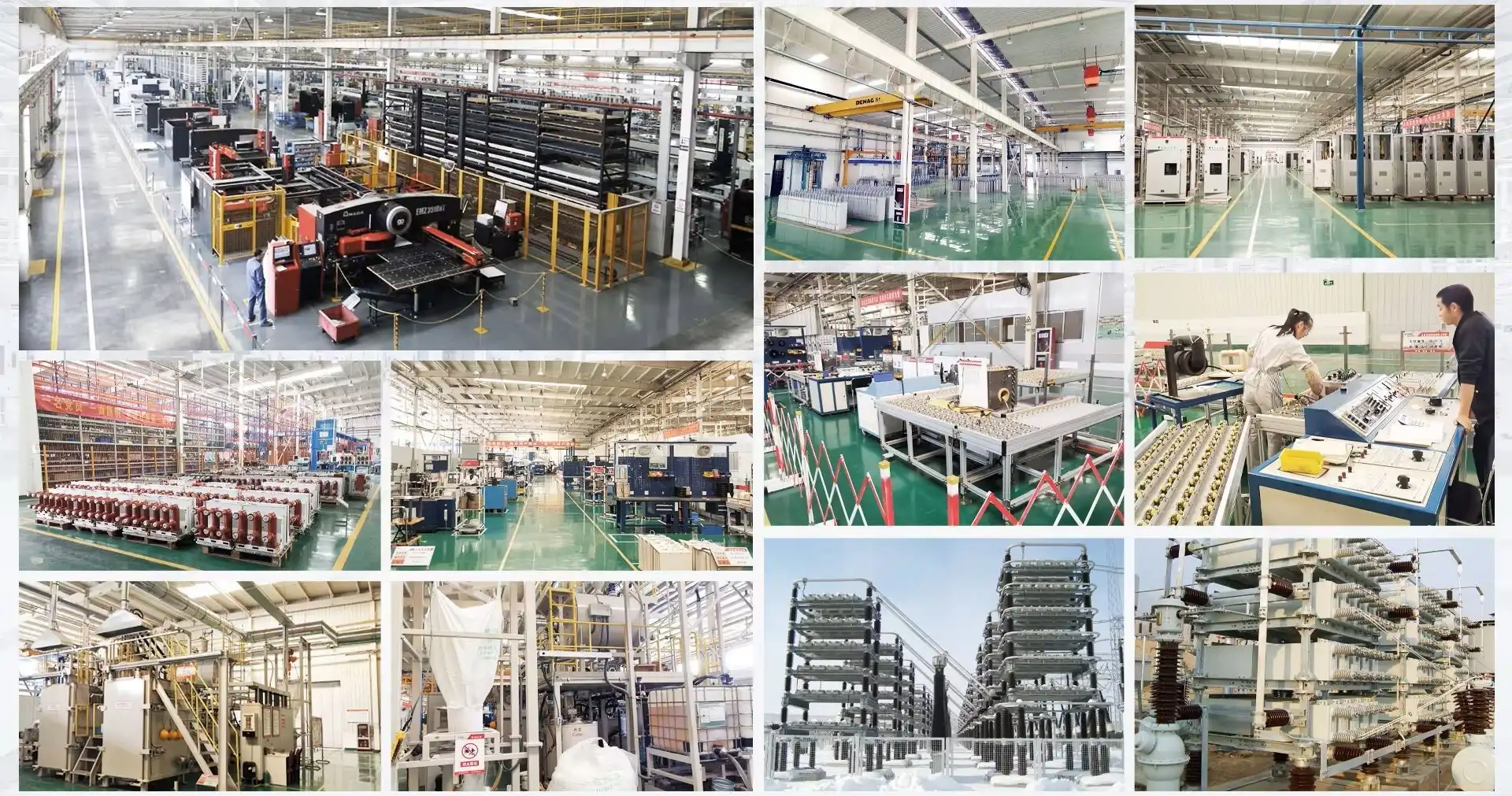
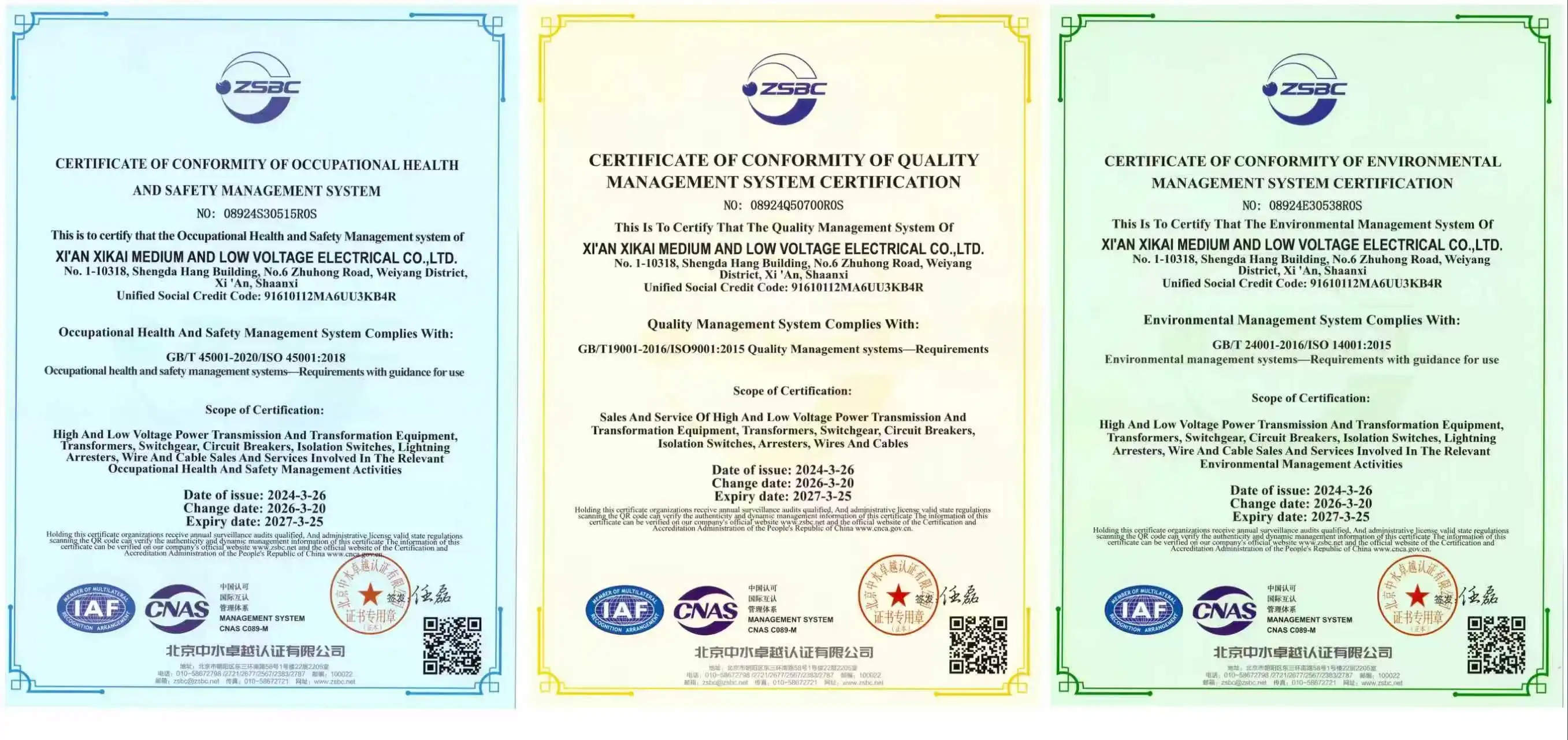
One of China's major Medium-Voltage equipment manufacturers, Xi'an Xikai uses robotic welding and automated assembly lines. We provide seven product categories, including the ISO 9001, ISO 14001, and ISO 45001-certified ZW7-40.5 outdoor Vacuum Circuit Breaker and ZN12/VS1 indoor series. Plateau-rated equipment performs well at elevations up to 4,000 meters, solving problems in highland South America and Central Asia where thin air hinders insulation coordination. Several patents cover spring mechanism and Vacuum Circuit Breaker designs, distinguishing competitive tender assessments.
Procurement Considerations and Support Infrastructure
Supplier lead times range from 6 weeks for normal configurations to 16 weeks for seismic or high-altitude variations. Established product lines have single-unit minimum order numbers, but bespoke enclosures or voltage ratings may require 5-10 units to justify tooling expenditures. Warranty periods are 18-24 months from commissioning or 24-36 months from shipment, whichever comes first, with extended coverage for essential infrastructure projects.
Technical support distinguishes quality providers from inexpensive ones. We respond quickly to system integrator commissioning issues and operator unexpected travels through regional offices and distributor networks 24/7 in many languages. Spare parts logistics stock consumables like auxiliary switches and anti-condensation heaters at critical warehouses for next-day delivery, reducing downtime to hours. Maintenance staff learn effective testing and troubleshooting methods in training programs, reducing lifetime support costs.
Case Studies: Successful Implementations of Outdoor and Indoor Vacuum Circuit Breakers
Outdoor Deployment in Harsh Environments
Oil circuit breakers at a 40.5kV transmission substation supporting agricultural irrigation loads failed repeatedly for a southwestern US regional utility. Cold winters and hot summers above 50°C reduced oil dielectric characteristics, while windblown dust polluted bushing insulators. Moving to ZW7-40.5 outdoor Vacuum Circuit Breakers eliminated oil maintenance and cut unexpected outages by 87% over three years. Heavy dust between yearly cleaning cycles did not affect large-creepage porcelain insulators, and reinforced seismic structures sustained magnitude 5.2 shocks without alignment deviations. Maintenance personnel replaced components 30% quicker during planned outages, increasing labor efficiency and lowering contractor costs.
Indoor Integration in Commercial Facilities
Switchgear improvements were needed to expand imaging departments and EMR data centers at a metropolitan hospital complex. Under local emissions reduction standards, SF6 breakers experienced regulatory pressure, but central electrical room space limits prevented equipment footprint expansions. ZN12-12 indoor Vacuum Circuit Breakers in small XGN15 cabinets eliminated greenhouse gas reporting and saved 40% more floor space for expansion. IEC 61850 connections with the building management system provided predictive maintenance warnings that planned inspections during low-census periods, eliminating patient care disturbances. Faster clearing times improved arc flash incident energy estimations, easing PPE needs and improving technician comfort during regular operations.
These implementations show how Vacuum Circuit Breaker selection solves operational problems. Indoor variants enhance space usage and system integration in controlled situations, while outdoor units address environmental durability issues in exposed sites. Both increase dependability, safety, and total cost of ownership, proving the technology's viability in many applications.
Conclusion
Environmental circumstances, voltage needs, and operating considerations must be considered while choosing outdoor or indoor Vacuum Circuit Breakers. Weatherproof and seismically resilient outdoor variants like the ZW7-40.5 are ideal for utility transmission networks and industrial areas exposed to harsh weather. For data centers, hospitals, and factories, indoor variations emphasis compact design and building system integration. Both technologies meet sustainability goals and minimize lifespan costs by being safer and less maintenance-intensive than oil or SF6. Partnering with experienced manufacturers provides proven designs, quick technical support, and dependable spare parts logistics to preserve your investment for decades.
FAQ
1. What factors most significantly influence vacuum circuit breaker lifespan?
Operating conditions and upkeep determine longevity. Outdoor units in polluted or coastal locations need frequent insulator cleaning to prevent tracking failures, whereas inside Vacuum Circuit Breakers benefit from regulated conditions that lengthen contact life. Circuit breakers that operate often with capacitor banks or motor starters wear out faster than static load devices. Lubricate working mechanisms every 2,000 operations or 3-5 years to avoid binding and delay fault clearance. Manufacturers employing precision-machined components and comprehensive factory testing provide baseline dependability, with credible suppliers exhibiting field performance over 30 years.
2. Can outdoor vacuum circuit breakers be installed indoors and vice versa?
Outdoor breakers may be used indoors, but their huge insulators and weather-sealed enclosures waste space and money. Moisture, UV deterioration, and temperature cycling damage non-weatherized indoor equipment put outside quickly. To optimize insulating coordination and material selection, manufacturers develop each variety for appropriate situations. Misapplication violates warranties and endangers safety, making procurement specification critical.
3. How do vacuum circuit breakers compare to SF6 and oil alternatives in safety?
Vacuum technique removes oil-filled fire dangers and SF6 breakers' potent greenhouse gases, both major benefits for ecologically minded operators. Arc extinction in enclosed rooms reduces maintenance staff arc flash dangers. Lack of combustible or poisonous compounds simplifies end-of-life disposal, saving environmental cleanup costs. As pollution and safety rules tighten, vacuum solutions become more popular.
Partner with Xi'an Xikai for Your Medium-Voltage Protection Needs
Reliable power distribution starts with the proper Vacuum Circuit Breaker provider who knows your operating difficulties and provides proven solutions. Using manufacturing scale and technical knowledge, Xi'an Xikai customizes layouts for seismic zones, high-altitude installations, and difficult climates. With ISO-certified quality systems and extensive technical support, our ZW7-40.5 outdoor and ZN12/VS1 indoor models deliver the reliability utility networks, industrial plants, and commercial buildings need. To discuss your needs and obtain thorough quotes, email our technical team at serina@xaxd-electric.com, amber@xaxd-electric.com or luna@xaxd-electric.com.
References
1. IEEE Standard C37.04-2018, "IEEE Standard for Ratings and Requirements for AC High-Voltage Circuit Breakers with Rated Maximum Voltage Above 1000 V," Institute of Electrical and Electronics Engineers, 2018.
2. IEC 62271-100:2021, "High-voltage switchgear and controlgear – Part 100: Alternating current circuit-breakers," International Electrotechnical Commission, 2021.
3. Slade, P.G., "The Vacuum Interrupter: Theory, Design, and Application," CRC Press, Taylor & Francis Group, 2017.
4. CIGRE Working Group A3.27, "Vacuum Switchgear," Technical Brochure 671, International Council on Large Electric Systems, 2016.
5. Zhang, J., and Tan, Y., "Comparative Analysis of Medium-Voltage Circuit Breaker Technologies for Industrial Distribution Systems," IEEE Transactions on Industry Applications, Vol. 55, No. 4, 2019.
6. National Electrical Manufacturers Association, "Application Guide for AC High-Voltage Circuit Breakers Rated on a Symmetrical Current Basis," NEMA SG 4-2020, 2020.