What is a Vacuum Circuit Breaker and Why is it Essential?
2026-06-02 15:59:08
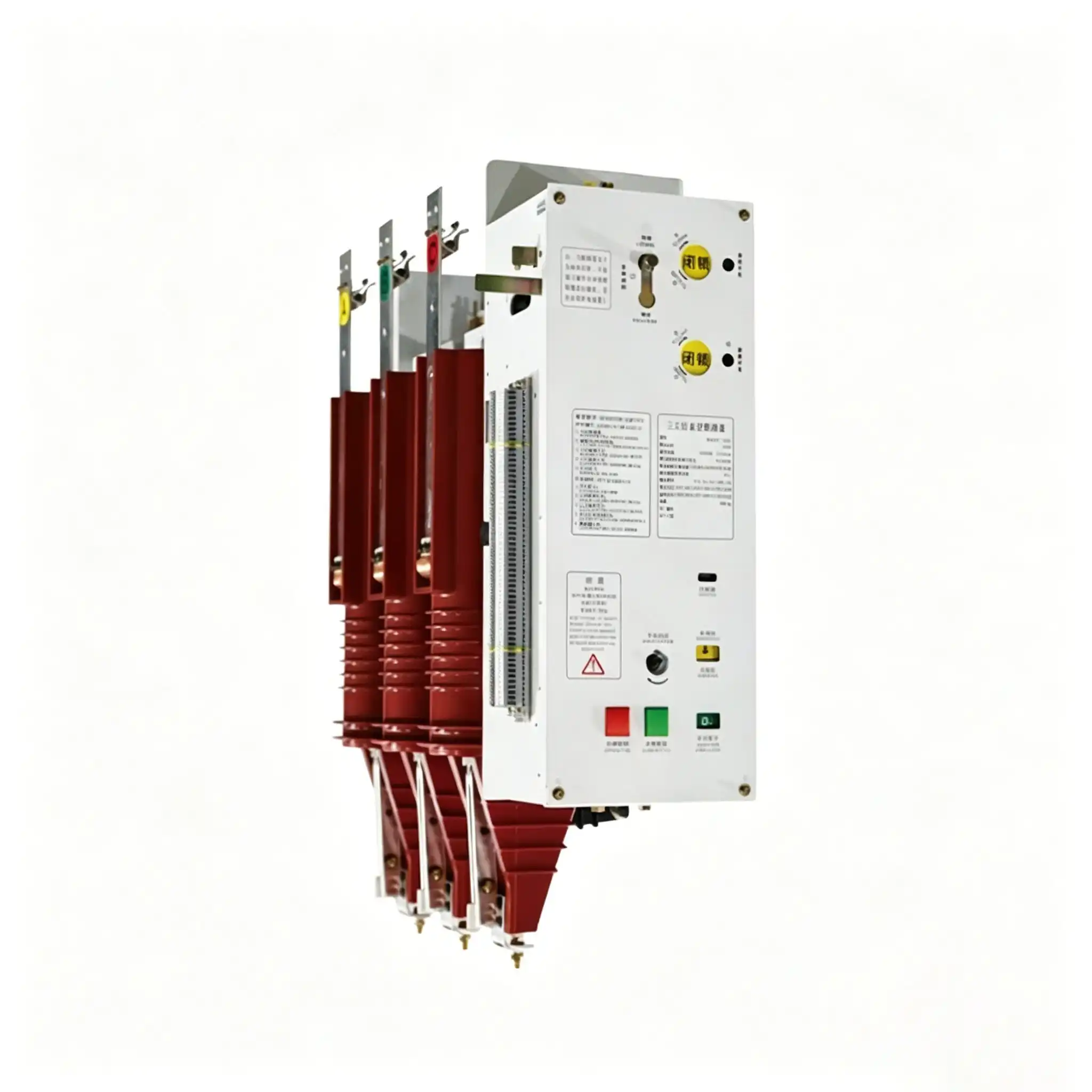
In medium-voltage power systems, a Vacuum Circuit Breaker interrupts fault currents by quenching arcs with vacuum. When separating electrical contacts in a sealed vacuum chamber, the arc fades quickly due to the lack of air molecules, providing quicker fault isolation than oil or gas-filled alternatives. Because it provides superior safety, minimal maintenance, extended operational life, and environmental compliance, this technology is essential for industrial facilities, utility operators, and system integrators managing power distribution networks where downtime means revenue loss.
Understanding Vacuum Circuit Breakers: Definition and Working Principle
How Vacuum Technology Interrupts Electrical Arcs?
Vacuum Circuit Breakers use different physics than standard designs. When a problem is identified, two electrical contacts in the vacuum interrupter, a sealed chamber with pressure below 10⁻⁴ Pa, separate. In this near-perfect vacuum, arcing electrons cannot clash with gas molecules to continue ionization. Metal vapor from contact erosion condenses on internal shields, extinguishing the arc in milliseconds. The BGH model specs show that the breaker may restore insulation strength in 0.1 seconds due to quick dielectric recovery.
Comparing this technique to others shows its benefits. Oil circuit breakers use decomposing mineral oil to make hydrogen gas that cools arcs, but carbon deposits require frequent cleaning. SF6 gas breakers are well-insulated yet environmentally problematic since sulfur hexafluoride has 23,500 times the global warming potential of CO2. Air blast breakers require high-pressure compressors and sophisticated piping, increasing installation and energy use.
Key Design Parameters for Industrial Applications
Engineers assessing medium-voltage switchgear must review various technical specs. The device protects 12kV distribution networks in manufacturing facilities, data centers, and commercial complexes. Standard U.S. industrial power systems use the BGH Vacuum Circuit Breaker at this voltage class and 50Hz frequency. From motor control centers to transformer feeders, 630A and 1250A current capabilities meet load needs.
Device breaking capacity is the largest fault current it can safely interrupt. Copper-chromium alloys balance conductivity and arc resistance to manage short-circuit currents above 25kA in modern vacuum interrupters. For Class M2 devices, the mechanical endurance rating—often 10,000 operations—indicates how many open-close cycles the spring mechanism may tolerate before inspection. Durability affects total cost of ownership for uptime-focused facilities.
Advantages and Applications of Vacuum Circuit Breakers in Industrial Settings
Environmental and Operational Superiority
Using vacuum technology instead of SF6 or oil solves several operational issues. Lack of combustible liquids minimizes fire threats in oil circuit breakers, especially in confined places like petrochemical plants or underground substations. Environmental compliance is easy without greenhouse gas monitoring, oil leak control, or hazardous waste disposal contracts. Organisations seeking ISO 14001 or ESG certification benefit from this connection.
Maintenance is much shorter than alternatives. Traditional breakers need periodic oil dielectric, SF6 gas purity, or compressed air system maintenance. Inspection intervals of 2,000 operations or 3-5 years keep vacuum interrupters sealed throughout their lifespan. The BGH model's modular spring system lets operators change the actuator module without affecting vacuum chambers or principal conductors. This design cuts MTTR by 60% compared to prior technology.
These are the main benefits of Vacuum Circuit Breakers in harsh environments:
- Arc Extinction Speed: The vacuum medium interrupts current within 5-10 milliseconds after contact separation, reducing stress on variable frequency motors and delicate instruments. This speed prevents semiconductor component failures in data center UPS systems due to voltage transients.
- Compact Footprint: Eliminating oil tanks or gas compartments saves 40% space compared to equivalent-rated oil breakers. This downsizing makes retrofitting legacy switchgear possible in space-constrained locations like hospitals updating 1970s-era electrical rooms or industrial plants expanding capacity without building additions.
- Silent Operation: Air blast breakers make explosive noise, although switching operations are below 75dB. This concerns in office towers and hospitals because acoustic disruptions impede operations.
- Temperature Resilience: Modern IP65 enclosures like the BGH type can resist temperatures from -40°C to +55°C. Without supplemental heating or cooling, Montana mining operations and Arizona desert solar farms retain protection dependability.
These benefits produce financial results. Vacuum Circuit Breakers have 20% cheaper overall ownership costs than SF6 equivalents over 25 years, including purchase price, maintenance labor, environmental compliance costs, and replacement intervals. Without auxiliary equipment like compressors or pumps, parasitic power usage drops by 150 watts per breaker, saving big installations energy.
Industrial Use Cases Driving Adoption
Ideal applications include motor-intensive manufacturing operations. As manufacturing batches cycle, arc furnace steel mills rotate loads often, yet Vacuum Circuit Breakers operate well. Over decades of rigorous usage, the mechanical endurance rating maintains reliability. Where conveyor systems, refiners, and dryers require constant switching, pulp and paper mills profit.
Renewable energy integration presents distinct issues that vacuum technology solves. As clouds modify panel output, solar farms need breakers to regulate bidirectional power flows and voltage swings. Wind projects need systems that can isolate generators during grid interruptions and survive extreme weather. Environmental certification, smart grid compatibility, and optional IoT sensors for SCADA integration make the BGH model ideal for these applications.
Data centers need reliable breakers to avoid long outages. Maintenance-free vacuum interrupters reduce scheduled downtime. Their quick fault clearing prevents voltage sags that corrupt data or harm server power supply. Life-safety systems in hospitals require fail-safe electrical protection. The three-station integration design simplifies maintenance and improves worker safety by merging the circuit breaker, disconnecting switch, and grounding switch.
Comparing Vacuum Circuit Breakers with Other Circuit Breaker Technologies
Side-by-Side Performance Analysis
Procurement managers must make difficult switchgear selection selections for new and retrofit projects. A systematic comparison reveals technical and economic trade-offs between competing technologies. Vacuum Circuit Breakers work well in medium-voltage applications from 3.6kV to 40.5kV, MCCBs in low-voltage systems below 1kV, and SF6 at transmission-class voltages beyond 72kV.
Major distinction is environmental effect. Under EPA Clean Air Act rules, SF6 breakers with 5-15 kg of gas per pole must be monitored for leaks. Aging equipment leaks 0.5% annually, releasing greenhouse gas equivalent to 18,000 miles of driving. Secondary containment and spill response are needed for oil breaker groundwater pollution. Vacuum technology solves both issues, easing site permits and compliance.
Costs vary greatly amongst breaker types. Oil circuit breakers have the lowest initial purchase price but average $800-1,200 per unit in yearly oil testing, replacement, and disposal costs. Though gas replenishment and leak repair costs mount over decades, SF6 breakers have high acquisition prices and extended service intervals. Vacuum Circuit Breakers compete with alternatives within 7-10 years due to their low upfront and ongoing expenses.
Operations affect application suitability. Air blast breakers function well for frequent switching but require compressed air infrastructure, increasing complexity. They are undesirable for noise-sensitive settings because to their characteristic sound. In transmission substations, SF6 breakers perform extreme breaking responsibilities but are overkill for distribution. The best vacuum designs are sturdy enough for industrial fault levels yet compact and quiet enough for interior deployments near populated environments.
Selection Criteria for Specific Requirements
When comparing choices, voltage rating comes first. Distribution systems at 12kV or 24kV match the Vacuum Circuit Breaker capability. BGH's 12kV rating serves industrial networks supplying motor control centers, lighting panels, and transformer secondaries. SF6 alternatives are more prevalent above 35kV owing to insulation coordination requirements, however vacuum technology can be used.
Breaking capacity must meet short-circuit study system fault levels. A facility with 25kA fault current needs 31.5kA or greater breakers for safety. Under-specifying breaking capability can cause explosions or flames if the breaker cannot interrupt maximum fault current. Modern vacuum interrupters use sophisticated contact materials and magnetic field coils to compress arcs for comfort.
Maintenance access and technician expertise affect technology choice. Vacuum Circuit Breakers' simplicity—no gas handling certificates, oil samples, just periodic visual inspections and mechanical lubrication—is preferred by facilities without electrical maintenance staff. Established SF6 initiatives may continue to harness expertise, but worker retirements and knowledge transfer issues favor simpler technology.
Acquisition price, installation labor, commissioning costs, planned maintenance over estimated service life, unscheduled repair likelihood, replacement component prices, and disposal fees should be included in total cost of ownership calculations Spreadsheet models with these variables show Vacuum Circuit Breakers' economic advantages for medium-voltage applications, especially when considering manufacturing facility maintenance outage opportunity costs.
Procurement and Supplier Insights for Vacuum Circuit Breakers
Market Dynamics and Purchasing Strategies
Consolidated manufacturers dominate the worldwide medium-voltage Vacuum Circuit Breaker market with broad product ranges and distribution networks. Siemens' 3AH series combines German engineering with digital integration. The modular VD4 platform from ABB lets clients create breakers for unique applications using standard components. Schneider Electric's Evolis range has plug-and-play designs to speed up commissioning.
Asian manufacturers have acquired market share via competitive price and quality improvements. Larsen & Toubro (L&T) supplies IEC and IS-certified goods to India. Mitsubishi Electric's VCB products use Japanese precision manufacturing, although North American distribution is restricted. Hyundai Heavy Industries targets budget-conscious clients ready to wait longer with value items.
Xi'an Xikai is a trusted provider with production and technical expertise. Our BGH Vacuum Circuit Breaker line is the result of 18 years of R&D, including China's 863 Program to advance power equipment technology. System integrators may buy entire switchgear solutions from one vendor because the product catalog has seven key categories and over 100 variations. The width simplifies procurement logistics and ensures component compatibility.
Bulk purchases save a lot. Larger orders of 50+ units usually save 12-18% over single-unit purchases. Using one manufacturer for several projects reduces spare parts inventories and technician training costs. These economies boost project profitability and quality for utility engineering, procurement, and construction businesses.
Evaluating Supplier Capabilities
Technical datasheet interpretation needs test protocol knowledge. IEC 62271-100 specifies mechanical endurance (Class M0–M2), electrical endurance (Class E0–E2), and short-circuit making/breaking responsibilities for high-voltage switchgear. Verifying specifications reference these standards verifies tests, not private measures that conceal comparability. The BGH model's IEC 62271-100, ANSI C37.04, and GB/T 1984 compatibility proves international design validation.
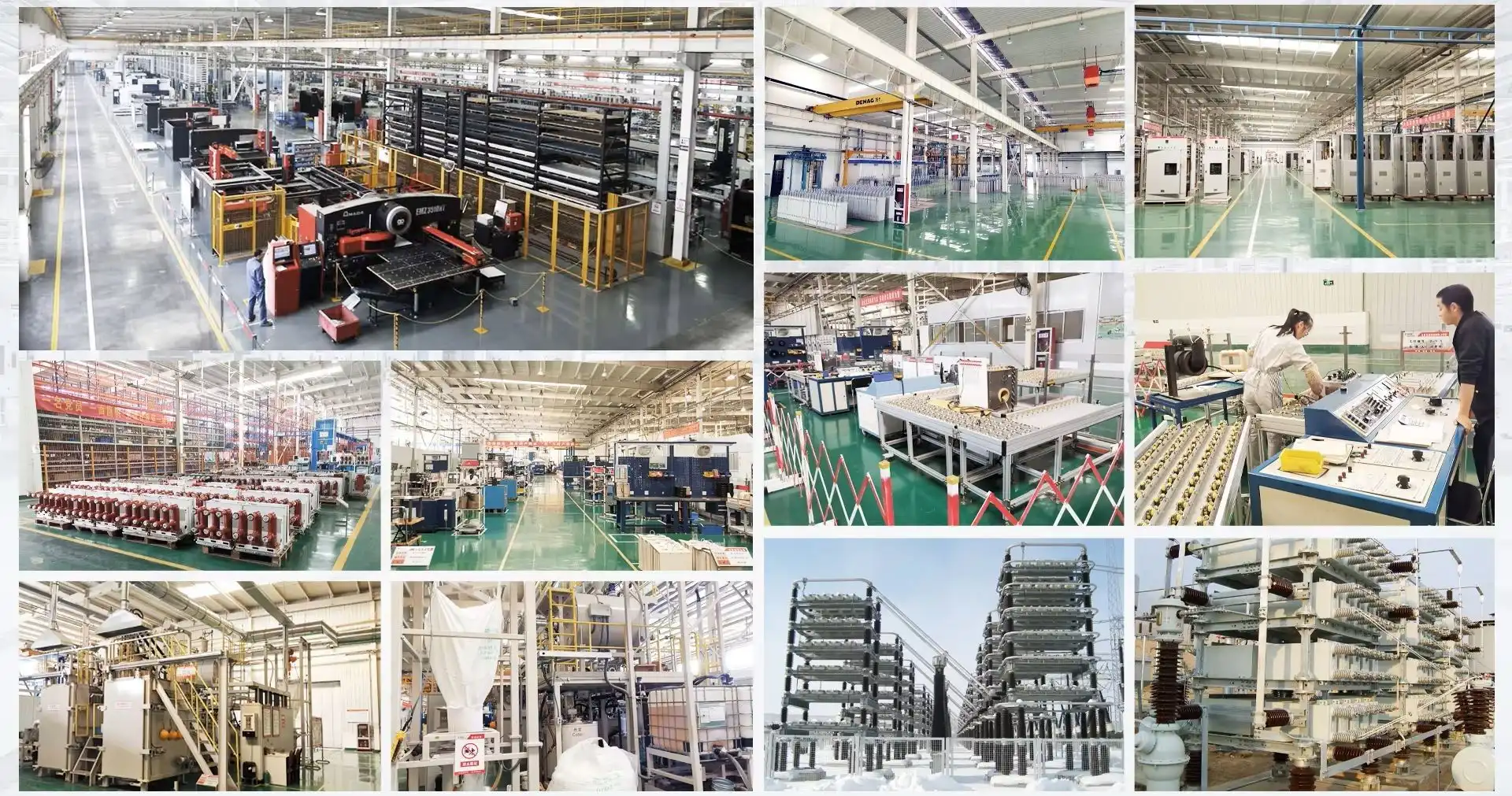
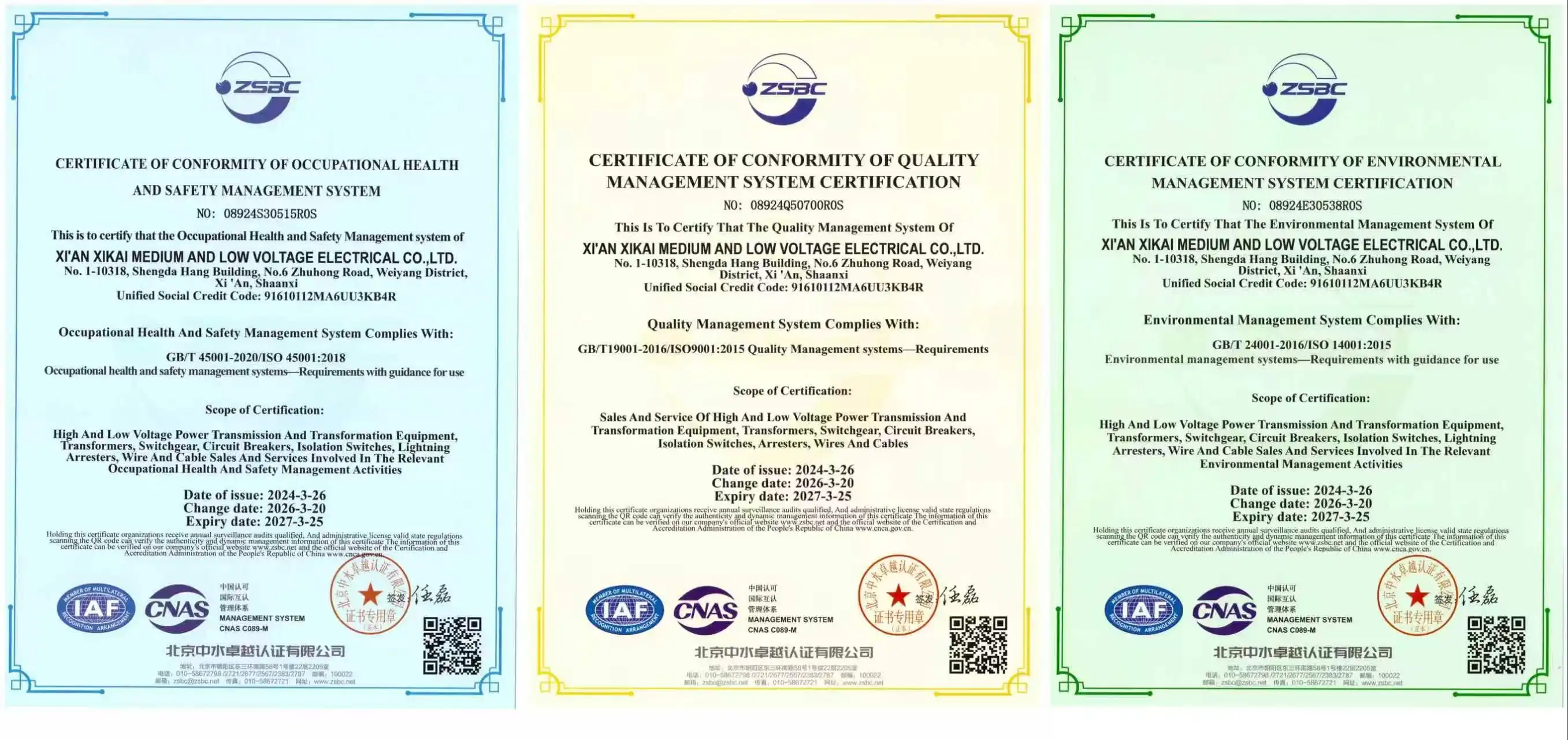
Manufacturing quality indicators go beyond specs. ISO 9001 certifies quality management systems oversee manufacturing, whereas ISO 14001 certifies environmental management. Before shipping, procurement teams can verify performance promises with factory acceptance tests (FATs)—mechanical endurance cycling, dielectric withstand testing, and temperature rise readings. Our factories do 23 quality checks on every component, including X-ray contact alloy purity testing and environmental simulation chambers that simulate harsh working conditions.
After-sales assistance affects long-term satisfaction. Avoid costly specification mistakes with responsive technical service teams answering application inquiries throughout design. Local parts availability reduces equipment downtime while replacing parts. Maintenance technicians learn new equipment faster through training. Technical assistance is available nationwide, and large purchases with specific configurations like integrated surge arresters or smart monitoring systems take 6-8 weeks to deliver.
Outside of marketing, customer references provide useful insights. Peer firms using comparable technology can provide realistic performance statistics like maintenance intervals, supplier responsiveness during unexpected failures, and product integration ease. Operating installations show equipment in real life, not labs.
Conclusion
Vacuum Circuit Breakers are mature, established technology that meets important electrical infrastructure demands. Their environmental benefits, maintenance ease, and operational stability make them ideal for medium-voltage applications from 3.6kV to 40.5kV. Industrial facilities benefit from decreased downtime, lifetime costs, and safety compared to oil or SF6. As electrical systems become increasingly complicated with renewable energy integration and smart grid needs, vacuum breaker technology evolves with IoT sensors, SCADA compatibility, and enhanced diagnostics for predictive maintenance. Choosing suppliers based on manufacturing quality, technical assistance, and after-sales service assures project success for new installations or infrastructure upgrades.
FAQ
1. What is the expected operational lifespan of a vacuum circuit breaker?
When used as specified, Vacuum Circuit Breakers last 25-30 years. Class M2 devices like the BGH type have a mechanical endurance rating of 10,000 operations, indicating minimum cycles before inspection. This barrier may be reached in 10-15 years for facilities that changeover often, although uncommon uses can last three decades. The sealed vacuum chamber requires minimal maintenance, however the spring working mechanism needs lubrication every 2,000 operations or 3-5 years for dependability.
2. Can existing oil or SF6 breakers be replaced with vacuum technology during retrofits?
Physical compatibility and electrical ratings determine Vacuum Circuit Breaker retrofitting into vintage switchgear. The tiny size of current designs like the BGH series allows immediate replacement in existing cabinets, however mounting dimensions and busbar configurations must be verified. The voltage rating, current capacity, and breaking duty must meet or exceed original specifications. Control circuit voltage and auxiliary contact configurations must be checked for protection relay compatibility. We provide engineering advice to determine retrofit feasibility and suggest models for specific installations.
3. How do altitude and environmental conditions affect vacuum circuit breaker performance?
Standard Vacuum Circuit Breakers work well at 1,000 meters. Beyond this height, exterior air insulation strength declines 1% per 100 meters, necessitating derating or improved insulation. Optimized creepage distances and solidified insulating structures keep Xi'an Xikai's plateau-type equipment performing well at 4,000 meters. The BGH model's IP65 certification protects against dust and moisture infiltration in coastal, desert, and industrial locations with airborne pollutants.
Partner with Xi'an Xikai for Your Vacuum Circuit Breaker Needs
With manufacturing competence and extensive technical assistance, Xi'an Xikai provides reliable power distribution systems. We supply the BGH line of Vacuum Circuit Breakers for medium-voltage applications in manufacturing facilities, data centers, and utility substations as a leading supplier. Our modular spring-operated mechanism performs well in harsh duty cycles and is IEC certified for global conformity. Our 6-8 week delivery timetables, affordable bulk pricing, and technical consultancy services ease specification procedures for procurement teams. Discuss your needs and obtain personalized proposals from our engineering team at serina@xaxd-electric.com, amber@xaxd-electric.com or luna@xaxd-electric.com.
References
1. IEEE Standards Association. "IEEE Std C37.04-2018: IEEE Standard for Ratings and Requirements for AC High-Voltage Circuit Breakers with Rated Maximum Voltage Above 1000V." Institute of Electrical and Electronics Engineers, 2018.
2. International Electrotechnical Commission. "IEC 62271-100:2021 High-voltage switchgear and controlgear – Part 100: Alternating current circuit-breakers." IEC Central Office, Geneva, Switzerland, 2021.
3. Slade, Paul G. "The Vacuum Interrupter: Theory, Design, and Application." CRC Press, Boca Raton, Florida, 2017.
4. Greenwood, Allan. "Vacuum Switchgear." Institution of Engineering and Technology, London, United Kingdom, 1994.
5. Pillai, S. Krishna and B. Somanathan Nair. "Power System Protection and Switchgear." McGraw Hill Education, New Delhi, India, 2019.
6. American National Standards Institute. "ANSI C37.06-2009: AC High-Voltage Circuit Breakers Rated on a Symmetrical Current Basis—Preferred Ratings and Related Required Capabilities for Voltages Above 1000 V." ANSI Standards Committee, Washington D.C., 2009.