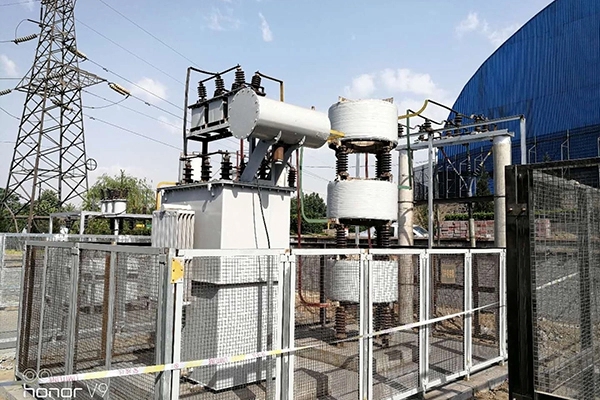
Polymeric Lightning Arrester for AC system: Key Benefits
2026-08-20 16:19:16
When your equipment procurement depends on reliable surge protection, choosing the right polymeric lightning arrester for AC system becomes a business-critical decision. These advanced devices combine superior electrical performance with practical advantages that matter to export-oriented distributors supplying international power projects. Our experience at Xi'an Xikai shows that understanding the technical strengths and operational benefits drives confident purchasing decisions, especially when serving diverse markets across Africa, Southeast Asia, and South America.
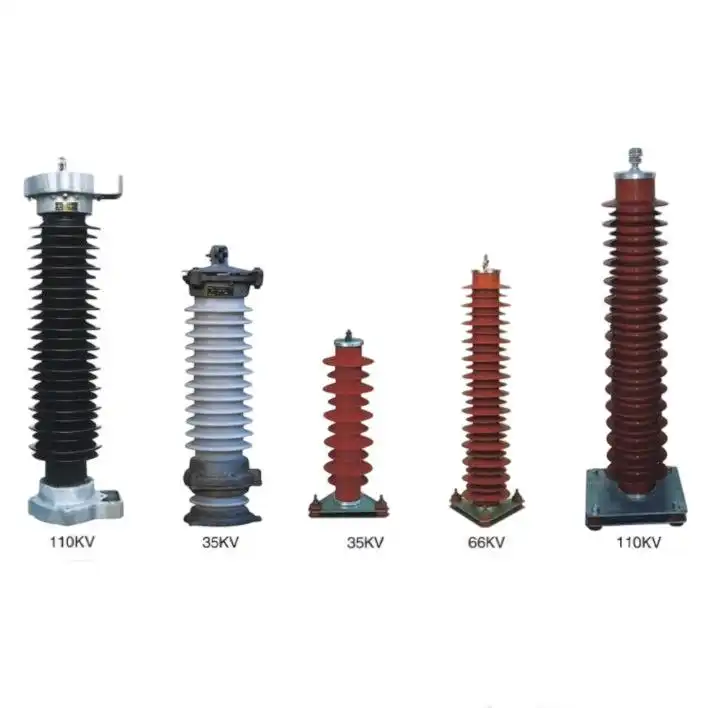

What Is a Polymeric Lightning Arrester and How Does It Work?
As a barrier between your valuable electrical infrastructure and sudden voltage surges, a polymeric lightning arrester for AC system does its job. In contrast to older designs made of porcelain, this technology uses a composite silicone rubber housing along with zinc oxide varistors to make a security system that is sensitive and long-lasting.
Operating Principle of Metal Oxide Technology
The core of our YH10W-216/562W Lightning Arrester Polymeric MOA is made up of nonlinear zinc oxide blocks that react right away to changes in voltage. As long as the rated voltage of 216kV is maintained, the arrester keeps its high resistance, which lets the system work without any problems. When lightning hits or switching operations cause dangerous spikes, the resistance drops very quickly, sending the extra current to ground safely. Transformers, switchgear, and other important equipment are kept from permanent damage by this voltage clamping action.
The two-unit system offers redundancy, which means that protection will continue even if one piece starts to break down partially. The device meets the strict IEC 60099-4 standards needed for foreign power station projects. It has a DC reference voltage of ≥314kV and a creepage distance of 31mm/kV.
Polymer Housing Advantages Over Traditional Materials
Export wholesalers face a number of problems when they try to sell traditional porcelain arresters. They're heavy, which makes shipping more expensive and makes installation harder at faraway project sites. Even worse, they're easily broken while being shipped or when heated, which can cause expensive returns and project delays.
These problems are fixed by our plastic housing. The UV-resistant silicone rubber can handle temperatures ranging from -40°C to +85°C and still keep its functional integrity. The hydrophobic properties of the material actively push away water and surface contaminants, stopping pollution flashover in coastal or industrial areas where salt spray and flying particles speed up the breakdown of regular insulators.
For procurement managers who are in charge of shipping between countries, the weight decrease means direct savings in operations. A similar level of protection in porcelain might weigh three times as much, which would raise freight costs and require special tools for moving.
Key Benefits of Using Polymeric Lightning Arresters in AC Systems
When bidding on substation projects, choosing a polymeric lightning arrester for AC systems gives you real benefits that make you more competitive.
Enhanced Durability and Extended Service Life
The sealed design completely blocks moisture from getting in, which is the main reason why metal oxide varistor breaks down. Our triple-sealing process, which has been tested with helium leaks and soaking in hot water, ensures that the inside parts stay dry for more than 25 years. This dependability cuts down on service claims and keeps your customers' good impressions of you.
The UV light, ozone, and changes in temperature don't age the polymer material. We have proof that installations in deserts can work continuously at temperatures above 50°C without losing any performance. This temperature stability is very important for your clients who run substations in harsh environments where equipment problems cost a lot of money in lost time.
Superior Electrical Performance Characteristics
Response time during surge conditions tells us if sensitive equipment will survive a lightning strike. Voltage spikes are stopped by the YH10W-216/562W in less than 1 microsecond before they spread thru the distribution network. Not only does this quick action protect the main equipment, but it also saves secondary sensors, communication systems, and control circuits.
Low leakage current, usually less than 50µA at 0.75 U1mA, means the varistor is working properly and not making much heat during normal service. This feature makes it possible for the product to work reliably at full continuous operating voltage (Ucov) without the chance of heat runaway that comes with cheaper products.
Installation and Maintenance Simplicity
The lightweight design makes it easier to handle during installation, which saves money on labor and lowers safety risks. A two-person crew can safely place and secure units that would need special tools to move if they were made of porcelain. This benefit is very helpful for projects that need to be done in remote areas where renting a crane or special gear is expensive or not available.
Maintenance needs stay low throughout the whole life of the system. Visual inspections once a year are enough for most situations, and measuring the leakage current on a regular basis to confirm the internal health. Because they are protected, porcelain insulators don't need to be cleaned or treated on a regular basis when they are in polluted areas.
Economic Benefits Through Lifecycle Cost Analysis
Initial buying price is only a small part of the total cost of owning. When judging suppliers, these economic factors should be taken into account:
The lighter shipping weight cuts your landing cost by 15 to 25 percent compared to porcelain alternatives. Another 10 to 15 percent of installation work is saved because things are easier to handle. With a 25-year service life, these benefits are even greater because you won't have to pay for regular upkeep or replacing.
For distributors who serve price-conscious customers, these cumulative savings make it possible for them to bid competitively while still keeping their margins healthy. Your clients will enjoy lower installation costs and upkeep budgets, which will help you keep doing business with them in the future.
How to Choose the Right Polymeric Lightning Arrester for Your AC System
For proper specification, technical parameters must be matched to the needs of the application and the environment in which the polymeric lightning arrester for AC system will run.
Defining Technical Requirements
First, look at the system voltage ratings. The constant operating voltage (Ucov or MCOV) must be higher than the highest phase-to-ground voltage when the voltage is normal and when there is a brief overvoltage. For 220kV transmission systems, an arrester rated at 216kV and having an MCOV of 176kV is the right amount of protection.
Lightning regularity and contact level affect the amount of current that can be discharged. The average discharge current limit of 10kA is good for most substation uses. For extra safety, installations with a lot of exposure or connections for renewable energy sources might need 20kA ratings.
Material choice is affected by environmental factors. For sites above 3,000 meters, the creepage distance needs to be changed to account for the less dense air. Our plateau-type designs work perfectly at elevations up to 4,000 meters, meeting the needs of hilly areas in Central Asia and South America.
Supplier Selection Criteria
Verification testing is your main tool for making sure the quality of your work. Manufacturers you can trust give you Factory Acceptance Test (FAT) reports that show:
- DC Reference Voltage Test (U1mA): Measures voltage at 1mA DC current to make sure the varistor stack is working properly and meets or exceeds specs.
- Residual Voltage Testing: This checks the level of protection against standard 8/20¼s impulse waveforms at the normal discharge current. It makes sure that the device stops voltage within safe limits for protected equipment.
- Sealing Performance Verification: Immersion or pressure tests in water shows that the housing is solid, avoiding failures caused by moisture that cause 60% of problems in the field with poor goods.
- Partial Discharge Measurement: This test confirms that there are no internal voids or contamination, with readings usually below 10pC at 1.05 times Ucov for equipment used in power plants.
Ask for certifications like test reports of the IEC 60099-4 type and paperwork for ISO 9001 quality management. These credentials show that the product is consistently made and that the design has been checked by independent labs.
Negotiating Bulk Purchase Terms
By committing to a certain amount of goods, you can get better prices and make sure that current projects can keep getting supplies. When you talk to manufacturers about terms, make sure you cover these important points:
Set up blanket buy agreements that cover your yearly needs and include planned delivery dates. This method strikes a balance between the costs of keeping goods and the ease of obtaining it. It is especially useful when working on multiple projects in different countries at the same time.
Make it clear what customization options are available for voltage levels or mounting setups that aren't normal. When manufacturers have engineering freedom, they can change designs to fit the needs of a specific job without having to wait too long or pay more.
There should be clear language in the warranty that says the product will be replaced or tested in the field if the leakage current or reference voltage moves too far outside of acceptable limits during the coverage time. This should cover both material defects and performance degradation.
Installation, Maintenance, and Troubleshooting Best Practices
When you put something correctly, it works better and safer for longer.
Step-by-Step Installation Protocol
Making the site ready starts with making sure there is enough solid support. Compared to porcelain, polymeric arresters don't put as much mechanical stress on mounting brackets, but they still have to be able to handle wind loads and earthquake forces in order to meet local building codes.
When connecting to the ground, you need to be very careful. Use cables that are the right size for the highest discharge current to connect the arrester ground terminal straight to the substation ground grid. Cut down on the length of the ground lead to lower the inductive voltage drop when surge currents rise quickly. Surge dissipation works best when ground resistance is less than 10 ohms.
Place arresters so that there are enough electrical space between them and nearby charged equipment and grounded buildings. Based on system voltage and pollution levels, IEC guidelines set minimum approach lengths. Check all of the gaps before the final fitting.
Routine Maintenance Guidelines
Routine annual inspections keep things reliable. Check the housing surfaces for damage, tracking marks, or loss of hydrophobicity, which can be seen by water sheeting instead of beading. Small amounts of surface dirt usually don't affect performance, but heavy deposits might need to be gently washed off with clean water.
Every year, use clamp-on milliamperas to measure leaking current when it is dry. If the instrument allows it, record both the total current and the resistive component. Readings that stay below 100 µA mean that the operation is healthy. Sudden jumps above 200µA or growth trends from one year to the next should be carefully looked into and possibly replaced.
Check the stability of the ground link by looking at it and taking a thermographic picture while it is loaded. Infrared scans can show hot spots that are caused by loose connections. These spots mean that there is more resistance, which makes security less effective.
Common Troubleshooting Scenarios
High leakage current is usually caused by moisture getting in thru broken seals or old varistor. If the results are higher than 500μA, the polymeric lightning arrester for AC system should be taken out of service and tested in a lab, where the DC reference voltage and power frequency voltage-current properties should be measured. When compared to factory test results, the level of decline can be seen.
Damage to a home from theft or animals needs to be fixed right away. Even small cracks in the seal should lead to replacement instead of repair attempts when it comes to protecting against moisture. Because the construction is sealed, the internal parts can't be fixed in the field.
When protection fails for no clear reason even tho arresters seem to be working, it's usually because of bad grounding. Check the links all the way from the arrester end to the main ground mat and measure the resistance of the ground grid. Resistance goes up when corrosion or loose hardware makes protection less effective.
Procurement Guide: Where and How to Buy Polymeric Lightning Arresters
Strategic sourcing promises high-quality goods at the best possible price and with the most reliable delivery.
Identifying Qualified Manufacturers
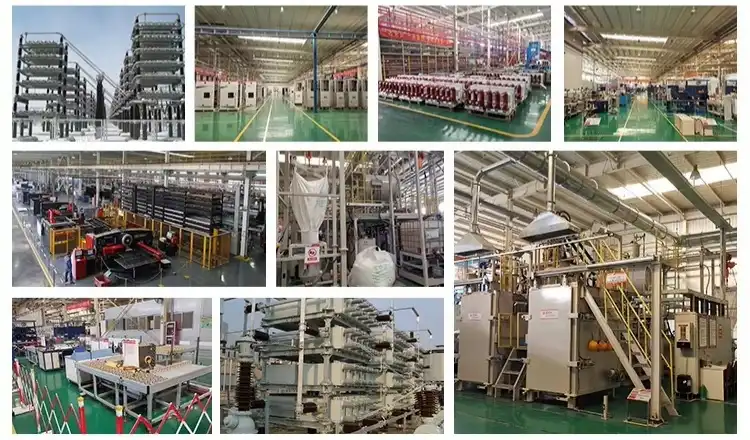
When it comes to price, professional help, and customization options, working directly with manufacturers is the best way to go. One of China's biggest factories for making medium and low-voltage electrical equipment is run by Xi'an Xikai. The factory can make enough to meet both immediate needs and planned releases for installations that happen over the course of a project.
Our product line includes over 100 different types of products in 7 main groups. This makes it easier to handle the supply chain because you only have to buy one thing. This range is important for putting together full substation projects that include switchgear, transformers, circuit breakers, and protection devices.
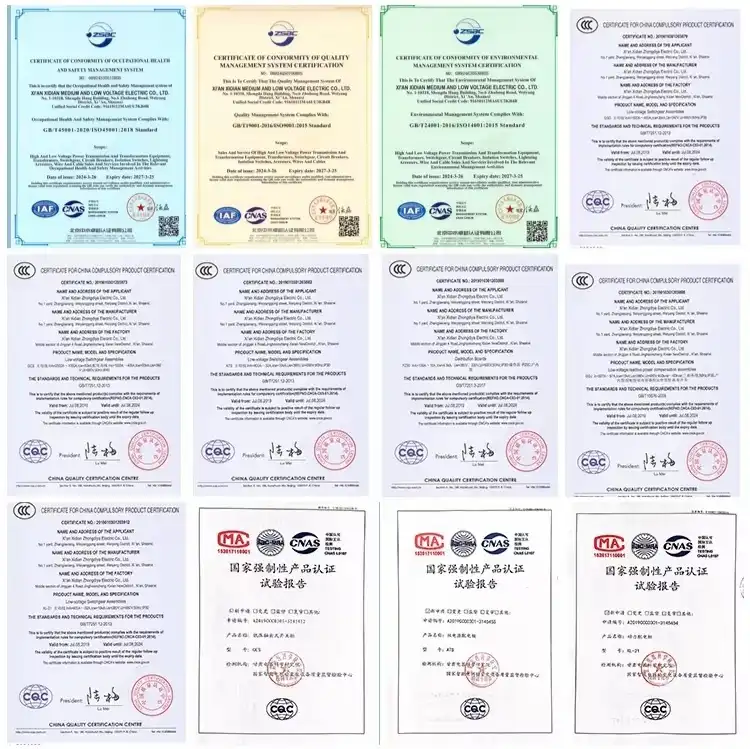
Check the production certificates, such as ISO 9001 for quality management, ISO 14001 for environmental systems, and ISO 45001 for health and safety at work. These standards, which are known all over the world, show that there is a mindset of process discipline and ongoing growth, which leads to consistent product quality.
Understanding Pricing Factors
Unit prices change depending on a number of factors. The voltage rating determines how much material is needed and how hard it is to make. Higher ratings need more varistor blocks and bigger polymer housings. The nominal discharge current capacity changes the diameter of the varistor and its ability to absorb energy, which in turn changes the cost of the materials.
The number of orders has a big effect on the price. Standard catalog items for common voltage classes can be shipped quickly and at a reasonable cost. Custom specs for odd ratings or special testing needs come with higher prices that cover the costs of building and setting up the production line.
The rules of shipping have a big effect on landing costs. Know the meanings of the Incoterms (FOB, CFR, or CIF) and how they affect who bears the cost and risks. When shipping a mix of goods, combining containers makes the most of freight economy for wholesalers putting together full equipment packages.
Warranty and After-Sales Support
Full warranty coverage keeps your investment safe. Standard terms should cover problems in the material or the way it was made for at least 18 months after delivery or 12 months after the product is put into service. More security is provided by covering more important apps.
Having access to technical help is important throughout the duration of a product. Having access to application engineering during the specification and bidding stages helps make designs better fit the needs of the project. Errors that hurt performance or safety can be avoided with field help during installation and testing.
Long-term serviceability is ensured by the availability of spare parts. Even tho sealed plastic arresters don't allow component replacement, keeping a stock of whole units for important installations lowers the risk of downtime when replacement is needed after years of service.
Conclusion
Technical performance, financial value, and supply chain reliability must all be considered when choosing the best polymeric lightning arrester for AC system. Polymer technology has many benefits, such as being lightweight, resistant to environmental damage, long-lasting, and requiring less upkeep. These benefits directly give distributors that serve foreign power markets a competitive edge. If you know about these benefits and use strict criteria to choose your suppliers, your business will be set up for successful project completion and happy, long-term customers. Our experience shows that spending time on proper specifications and working with makers who care about quality and customer service pays off over many years of reliable equipment use.
FAQ
1.What distinguishes polymeric arresters from metal oxide arresters?
"Metal oxide arrester" refers to the surge-absorbing parts inside (zinc oxide varistors), and "polymeric" refers to the material on the outside of the frame. The electrical parts in both systems are the same, but the way the insulators are built is different. Composite silicone rubber housings are used in polymeric forms; they are less likely to break, lighter, and better at keeping out pollution than porcelain housings. This mix gives better mechanical and environmental properties while keeping the same level of electricity safety.
2.How long do polymeric lightning arresters typically last in service?
Under normal working conditions and with proper installation and care, the expected service life is more than 25 years. The sealed design stops the degradation caused by wetness that shortens the life of porcelain arresters. Accelerated age tests that mimic decades of changing temperatures, UV exposure, and contamination show that the material will be stable over time. Leakage current measurements done once a year for condition tracking allow early discovery of degradation, allowing planned replacement before failure happens.
3.Can these arresters operate reliably in tropical and desert climates?
The silicone rubber shell works well in temperatures ranging from -40°C to +85°C, which is almost all of the climate zones on Earth. Surfaces with hydrophobic properties actively shed water in humid tropical environments, stopping the surface from tracking. Ultraviolet stabilizers keep things from breaking down in high-altitude deserts with a lot of sun. Because they can be used in a lot of different environments, polymeric designs are great for foreign projects that cross many different areas.
Partner with Xi'an Xikai for Complete Surge Protection Solutions
With more than 20 years of experience making these things, Xi'an Xikai is ready to help you with your polymeric lightning arrester for AC system needs. As a major provider of medium and low-voltage electrical equipment, we offer IEC-certified goods that are in line with international standards. We also keep our prices low, which is very important for distributors who want to sell goods abroad.
Our engineering team helps you choose the right equipment for your specific application environments by giving you technical advice during the project specification phase. We tailor our services to meet the specific needs of substations in Africa, factories in Southeast Asia, and power networks in South America. These needs include voltage standards, altitude requirements, and pollution levels. We make your supply chain easier by being able to deliver basic setups within 3–7 days and giving you flexible MOQ terms for large orders.
Email serina@xaxd-electric.com, amber@xaxd-electric.com, or luna@xaxd-electric.com to talk about your project needs with our experienced export team. We provide thorough technical datasheets, affordable quotes, and full help after the sale. Visit xaxd-electric.com to see our full line of products and learn how our production skills can help you become a more trusted producer of polymeric lightning arresters.
References
1. International Electrotechnical Commission. "Surge Arresters – Part 4: Metal-Oxide Surge Arresters Without Gaps for A.C. Systems." IEC Standard 60099-4, Fourth Edition, 2014.
2. Zhang, Wei and Liu, Jianguo. "Performance Analysis of Polymeric Housed Metal Oxide Surge Arresters in Contaminated Environments." IEEE Transactions on Power Delivery, Volume 33, Issue 2, April 2018.
3. Electric Power Research Institute. "Transmission Line Arresters: Application Guidelines and Field Experience." EPRI Technical Report 1022017, Palo Alto, California, 2016.
4. Lat, Mustafa V. "Thermal Stability and Aging Characteristics of Polymer Housed Surge Arresters." High Voltage Engineering Symposium Proceedings, Cardiff University, September 2019.
5. Hinrichsen, Volker. "Metal-Oxide Surge Arresters: Fundamentals and Applications in Medium-Voltage and High-Voltage Systems." Siemens AG Technical Monograph, Berlin, 2015.
6. Abdul-Malek, Zulkurnain and Yousof, Mohd Fairouz. "Diagnostic Assessment of Polymeric Surge Arresters Through Leakage Current Analysis." International Journal of Electrical Engineering and Informatics, Volume 11, Number 3, September 2019.